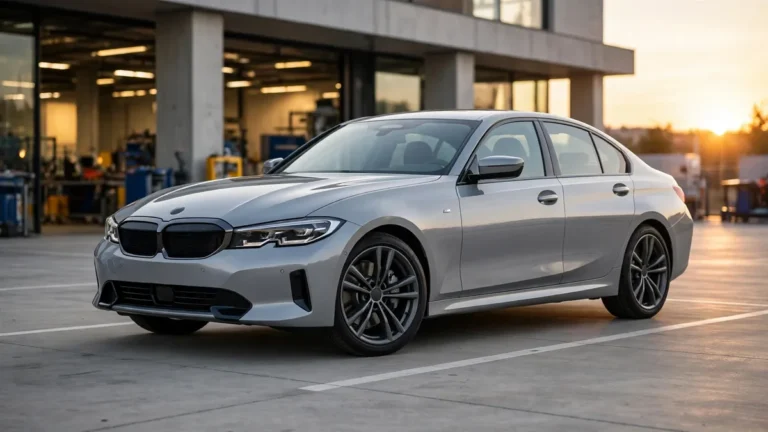
BMW 3 Series TPMS Reset: E90, F30, and G20 Are All Different — Do It Right
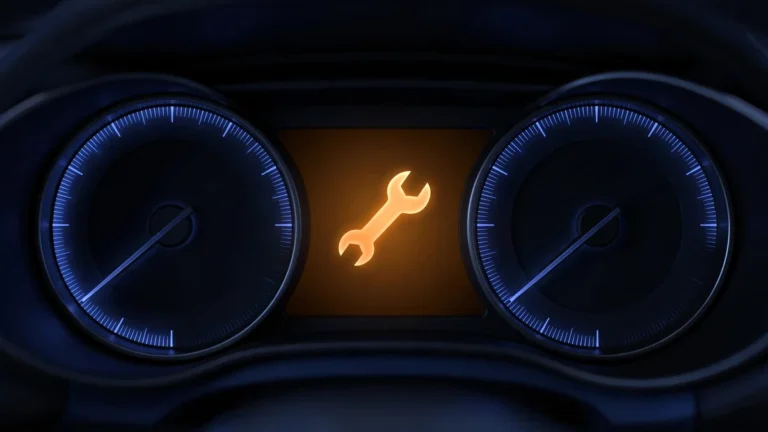
A BMW 3 Series TPMS reset is a two-minute job — but only if you know which of two completely different tire-monitoring systems your car actually has. The E90 generation (2006–2011) mostly uses the indirect Flat Tire Monitor (FTM), which watches wheel speeds through the ABS sensors and has no electronics in the wheels at all. The F30 (2012–2018) and G20 (2019–present) use a direct RDC/TPM system with radio sensors bolted inside every wheel. Mix them up and you will chase a reset procedure that can never work.
That confusion is everywhere online. Several page-one results describe a physical “TPMS reset button” under the hazard switch that does not exist on any E90, F30, or G20 — and one widely-copied guide labels the entire 2006–2018 3 Series “indirect,” which the F30’s own owner’s manual contradicts. This guide gives the correct procedure per generation, verified against owner’s-manual excerpts, BMW technical training material, and tire-industry service guides. It sits alongside the complete 3 Series guide in our Maintenance & DIY coverage.
The short answer
A BMW 3 Series TPMS reset starts the same way every time: set all four tires to the door-placard pressure when cold. Then: E90 — use the BC button on the turn-signal stalk (scroll to the tire symbol, press once, hold ~5 seconds until the checkmark appears) or iDrive: Vehicle Info → Vehicle Status → RESET; then drive. F30 — iDrive: Vehicle Info → Vehicle status → Perform reset → start the engine (do not drive) → Perform reset; drive above 19 mph/30 km/h until the wheels turn green. G20 — iDrive: My Vehicle → Vehicle Status → Tire Pressure Monitor → start the engine → Perform reset; then drive. The reset completes automatically while driving, and there is no physical reset button on any of these cars.
In this guide
- The FTM vs RDC split most guides get wrong
- Pick your generation: the exact reset method
- E90 reset: stalk method and iDrive method
- F30 reset: iDrive “Perform reset”
- G20 reset: My Vehicle menu path
- Quick-reference: every generation at a glance
- The relearn drive: why you have to drive
- Reset vs relearn: not the same thing
- Reset won’t complete: troubleshooting
- Sensor replacement: when and what it costs
- Seasonal wheel swaps and aftermarket wheels
- Frequently asked questions
The FTM vs RDC split most guides get wrong
BMW has fitted two fundamentally different tire-pressure monitoring architectures to the 3 Series, and nearly every generic “reset” article treats them as one thing. Here is the real split:
| System | How it detects a flat | Which 3 Series has it | Wheel electronics | What the display shows |
|---|---|---|---|---|
| FTM (Flat Tire Monitor) | Compares wheel speeds via ABS/DSC sensors; a soft tire has a smaller rolling radius and spins faster | E90/E91 sedans and wagons (2006–2011) | None | Status only; no per-wheel pressures |
| RDC / TPM (Tire Pressure Monitor) | Radio sensors inside each wheel measure pressure and temperature, transmitting to the car | E92/E93 coupes and convertibles (2007–2013); all F30 (2012–2018); all G20 (2019–present) | Yes — one sensor per wheel, sealed battery | Per-wheel status; gray during reset, green when active |
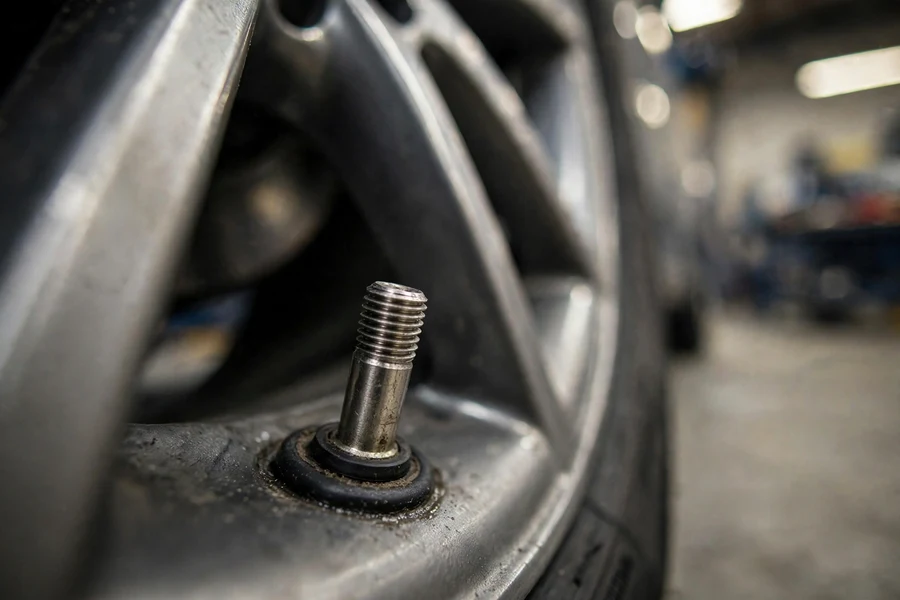
A few things this table corrects. First, the E90 coupe and convertible (E92/E93) differ from the sedan: they carry direct sensors, while the E90/E91 sedan and wagon use indirect FTM. A tire-industry TPMS guide for the 2009–2013 E90 documents both — FTM “does not use tire pressure sensors in the tires,” while TPM “uses tire pressure sensors installed in the tires” — with separate reset procedures for each (Modern Tire Dealer’s E90 TPMS reference, based on Mitchell 1 repair data). Metal valve stems mean sensors inside; plain rubber stems mean FTM.
Second, the F30 is a direct-sensor car, despite one widely-copied guide listing the 2006–2018 3 Series as entirely “indirect.” The 2013 F30 owner’s manual states that “sensors in the tire valves measure the tire inflation pressure” and warns that tire sealant “may damage the TPM wheel electronics.” Third, no physical reset button exists on the E90, F30, or G20 — older BMWs had one near the console, and outdated guides still describe it. On your car the reset lives in the cluster menu (E90) or iDrive (E90/F30/G20).
Pick your generation: the exact reset method
Indirect FTM — no wheel sensors. Reset via the BC button on the turn-signal stalk (non-iDrive cars) or iDrive: Vehicle Info → Vehicle Status → RESET, then drive.
- Drive requirement: initialization completes automatically while driving, with no further feedback.
- Watch out: E92/E93 coupes and convertibles have direct sensors instead — same stalk sequence, but a sensor can fail.
- Baseline matters: the system learns current wheel speeds as “normal,” so reset only with all four tires at correct cold pressure.
Direct RDC — sensors in every wheel. iDrive only: Vehicle Info → Vehicle status → Perform reset → start the engine (do not drive) → Perform reset again.
- Drive requirement: wheels show gray during reset; drive above 19 mph/30 km/h briefly and the set pressures become the reference values. Green wheels = active.
- Watch out: the trip can be interrupted — the reset resumes when you drive again.
- New sensors: the car registers correct 433 MHz sensors automatically during the drive; no dealer tool needed.
Direct RDC — sensors in every wheel. Reset via iDrive: My Vehicle → Vehicle Status → Tire Pressure Monitor → start the engine (do not drive) → Perform reset → confirm.
- Drive requirement: the calibration completes automatically during normal driving.
- Watch out: labels vary slightly between iDrive 7 and iDrive 8/8.5 — follow the menu structure, not a memorized label.
- New sensors: like the F30, the car learns correct sensors on its own during the drive.
E90 reset: stalk method and iDrive method
First, confirm which system your E90-generation car has. Sedans and wagons (E90/E91) use the indirect FTM; coupes and convertibles (E92/E93) use direct TPM sensors — the stalk and iDrive sequences below are near-identical for both. The golden rule comes first: inflate all four tires to the door-placard pressure when cold. The FTM learns current wheel speeds as its reference, so resetting with one tire at 26 psi teaches the car that 26 psi is “normal.”
Without iDrive: the turn-signal stalk (BC button)
- Set all four tires to the specified pressure, then start the engine.
- Lightly push the rocker button on the turn-signal stalk up or down, repeatedly, until the tire-pressure symbol appears in the cluster display accompanied by the word RESET.
- Press the BC button on the end of the stalk once to confirm your choice of the Flat Tire Monitor.
- Press and hold the BC button for approximately five seconds, until a checkmark appears next to INIT in the display.
- Drive. Initialization completes automatically during the drive — there is no further feedback and no confirmation message.
With iDrive: the Control Display soft key
- Set all four tires to the specified pressure.
- With the ignition on, press MENU and go to Vehicle Info → Vehicle Status.
- Select RESET — the initialization menu appears.
- Start the engine, but do not drive.
- Start the initialization with RESET.
- Drive. The initialization is completed while driving; like the stalk method, it can be interrupted at any time and resumes automatically.
F30 reset: iDrive “Perform reset”
The F30 reset is iDrive-only — there is no stalk shortcut for the direct system. The steps below are taken from the 2013 F30 owner’s manual:
- Set all four tires to the specified pressure.
- Ignition on, engine off. On iDrive, select “Vehicle Info” → “Vehicle status”.
- Select “Perform reset”.
- Start the engine — do not drive away.
- Carry out the reset with “Perform reset” a second time.
- Drive away. The tires are shown in gray on the Control Display while resetting.
Completion is automatic and has a concrete trigger: after driving faster than 19 mph/30 km/h for a short period, the tire pressures you set are accepted as the reference values. A completed reset turns the wheels green with “Tire Pressure Monitor (TPM) active” on the display. Trips can be interrupted freely — the reset resumes the next time you drive. The manual’s useful corollary: a flat tire may be reported even with correct pressures if a reset was never carried out, because the system is comparing against stale reference values.
G20 reset: My Vehicle menu path
The G20 follows the same philosophy with an updated menu structure (owner’s-manual-based reset guide covering all three generations):
- Set all four tires to the specified pressure.
- Ignition on, engine off. Press MENU, then go to My Vehicle → Vehicle Status → Tire Pressure Monitor.
- Start the engine — do not drive away.
- Select “Perform reset” (or “Reset tyre pressure,” depending on market) and confirm.
- Drive normally. The calibration completes automatically during driving.
One caveat: menu labels drift between iDrive 7 and iDrive 8/8.5 (“Tire Pressure Monitor” vs. “Tyre pressure monitor,” “Perform reset” vs. “Reset tyre pressure”). The path — My Vehicle, Vehicle Status, the tire-pressure entry — is stable across versions, so follow the structure rather than memorizing a label.

Quick-reference: every generation at a glance
| Generation | System | Reset method | Menu path / sequence | Drive to complete |
|---|---|---|---|---|
| E90/E91 (sedan, wagon) | FTM (indirect) | Stalk or iDrive | Stalk: scroll to tire symbol + RESET → BC once → hold BC ~5 s until ✓ by INIT. iDrive: Vehicle Info → Vehicle Status → RESET | Drive normally; completes silently |
| E92/E93 (coupe, convertible) | TPM (direct) | Stalk or iDrive | Same stalk sequence, or iDrive Settings → TPM → Reset TPM | Drive; completes automatically |
| F30 | RDC/TPM (direct) | iDrive only | Vehicle Info → Vehicle status → Perform reset → start engine (don’t drive) → Perform reset | Briefly over 19 mph/30 km/h; gray wheels → green = done |
| G20 | RDC/TPM (direct) | iDrive only | My Vehicle → Vehicle Status → Tire Pressure Monitor → start engine → Perform reset | Normal driving; completes automatically |
The relearn drive: why you have to drive
The button presses only arm the reset — the car finishes it while moving. On the indirect FTM, the system samples wheel speeds across a range of driving speeds to learn what “normal” looks like per corner. On the direct RDC system, the wheel sensors sleep when parked to save their batteries and only broadcast once the wheels turn, sending ID, pressure, and temperature.
The car also uses the drive to work out which sensor sits on which corner: in turns, each wheel travels a slightly different distance, and the module matches sensor IDs to wheel speeds through those differences. Gentle corners therefore teach positions faster than a straight highway cruise. Practically, plan on 10–20 minutes of mixed driving. On the F30 the manual’s own threshold is explicit — briefly over 19 mph/30 km/h — after which the set pressures become the reference values and the display turns green. Interrupted trips are fine on every generation; the reset resumes when you drive again.
Reset vs relearn: not the same thing
Guides (and tire shops) use “reset” and “relearn” interchangeably. They are different operations, and knowing which you need saves a pointless shop visit:
| Reset | Relearn | |
|---|---|---|
| What it does | Tells the car: “the pressures you see now are the correct baseline” | Teaches the car the IDs and positions of the wheel sensors |
| When you need it | After adjusting pressures, rotating tires, or swapping wheel sets | After installing brand-new sensors the car has never seen |
| How it happens | You start it (stalk or iDrive), then drive | Automatic during the post-reset drive — no tool needed for correct sensors |
| Can you skip it? | No — without a fresh baseline the system compares against stale values | Yes, by cloning: copy the old sensors’ IDs onto the new ones and the car never notices |
The practical upshot: on a BMW, a reset almost always includes the relearn as part of the drive cycle — there is no separate owner-level relearn procedure, unlike some brands that need a trigger tool at each wheel. If a shop tries to charge you a separate “TPMS relearn service” after a routine tire change on an F30 or G20, question it.
Reset won’t complete: troubleshooting
When the light survives a textbook reset, the cause is almost always one of these — check them in order:
| Symptom | Likely cause | Fix |
|---|---|---|
| Warning returns minutes after a reset | A tire is genuinely still low — slow puncture, or the baseline was set while a tire was low | Check all four pressures cold. Fix the leak, re-inflate, reset again |
| Display stuck on gray wheels / “resetting” after long drives | A wheel without TPM electronics, a non-transmitting sensor, or radio-frequency interference | Confirm every wheel has a sensor (metal stems); move away from the interference source and reset again |
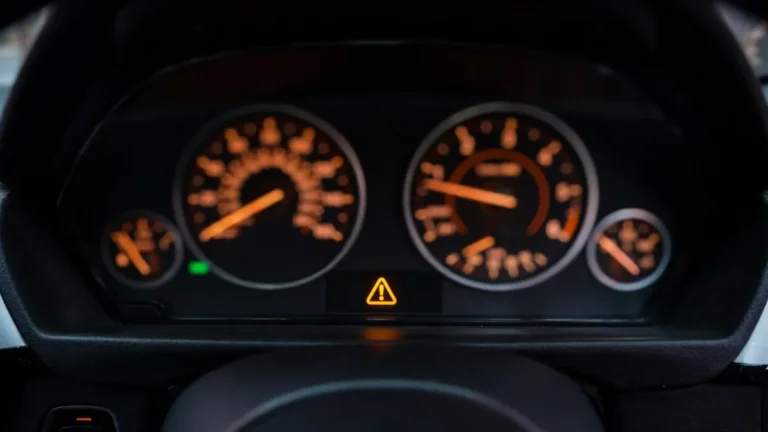
| “TPM malfunction” — lamp flashes ~1 min then stays solid | System fault, not low pressure: dead sensor battery, failed sensor, damaged wiring, or an incomplete reset | Scan with a BMW-capable tool (Carly, BimmerLink, INPA) to find the corner, then replace the sensor |
| All four wheels yellow right after attempting reset | The reset failed to adopt the pressures as reference values | Redo it with the engine running and the car stationary; verify pressures first |
| Intermittent warnings with correct pressure | Dying sensor battery, or RF interference from aftermarket electronics / metallic tint | A tire shop’s TPMS tool reads each sensor’s battery state — replace aging sensors proactively |
| E90 FTM: repeated false warnings | Baseline learned at the wrong pressure; uneven wear or staggered sizes; or an ABS/DSC wheel-speed fault | Re-baseline at correct pressures; investigate uneven wear; scan the DSC module |
| Warning appeared right after a tire shop visit | Sensor damaged during mounting, or sealant used — the F30 manual warns sealant “may damage the TPM wheel electronics” | Have the shop test each sensor; damaged sensors are replaced, not repaired |
Never reset to silence a real warning without checking pressures first. The reset teaches the car that current pressures are correct — resetting over an actual flat blinds the system to it. On run-flats (marked RSC on the sidewall), the owner’s manual allows continued driving at up to 50 mph/80 km/h for roughly 50 miles/80 km with a damaged tire; without run-flats, do not continue driving on a flat.
Sensor replacement: when and what it costs
Every direct-system sensor (E92/E93, F30, G20) contains a sealed, non-replaceable battery — the battery is the sensor’s lifespan. Most begin fading after 5–7 years, with typical total life of 7–10 years and earlier failures in harsh climates (BMW TPM repair cost guide). When the battery dies, the whole sensor is replaced; there is no sanctioned way to open a sealed BMW sensor and swap the cell.
Replace sensors when a BMW-capable scan or a tire shop’s TPMS tool shows a dead or weak battery on a corner, when a sensor is physically damaged (cracked during mounting, corroded valve stem), or proactively at a tire change once the car is 7+ years old — paying for mounting and balancing twice costs more than replacing all four sensors with the tires.
| Route | Typical cost per wheel | Notes |
|---|---|---|
| DIY (sensor only, during a tire change) | ~$25–$75 for the part | Aftermarket 433 MHz sensors; must be the exact application for your chassis |
| Independent BMW specialist | $150–$250 | Part plus mounting/balancing labor; a BMW repair guide puts sensors at $75–$200 per part plus 1–2 hours labor |
| Dealer | $200–$300+ | OEM sensor plus dealer labor rates |
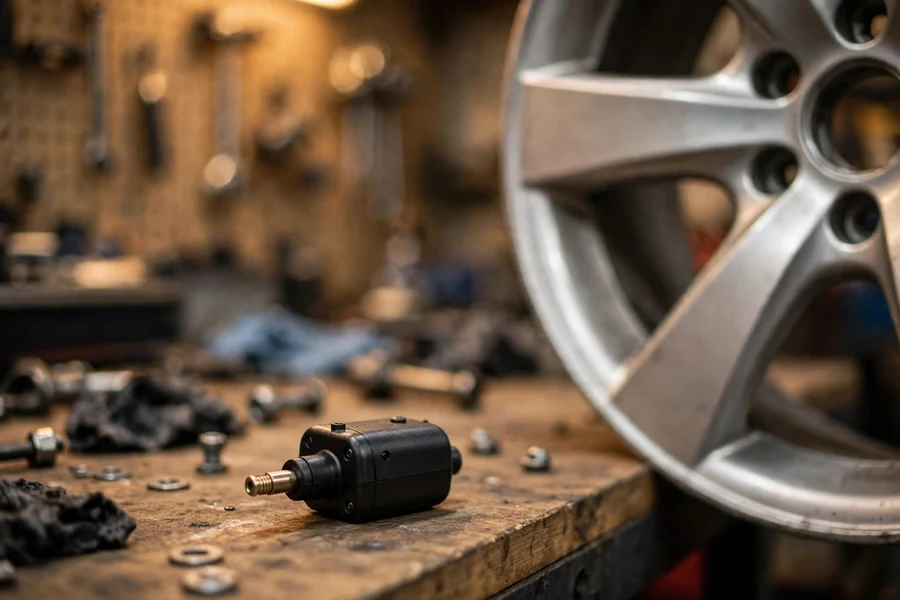
Aftermarket sensor notes. US BMWs use 433 MHz sensors — 315 MHz units (a different market’s frequency) will never pair. Two flavors exist: pre-programmed sensors built for your exact chassis, which the car learns automatically during the relearn drive, and programmable/universal sensors, which a tire shop must program before mounting. The premium option is cloned sensors: the shop copies your old sensors’ IDs onto the new ones, so no relearn is needed. Run the iDrive reset after installation so the system adopts the new sensors and fresh baselines.
Seasonal wheel swaps and aftermarket wheels
Wheel-swap season is where TPMS ownership gets real, so plan the sensor strategy with the wheels:
- Winter set with its own sensors (F30/G20): fit 433 MHz sensors to the winter wheels once. Clone the summer set’s IDs for zero-fuss swaps; otherwise each seasonal change just needs the standard iDrive reset plus a relearn drive.
- Winter wheels without sensors: the system flags a malfunction all winter and you lose monitoring entirely — sensors in both sets are the better answer.
- TPMS service kits: whenever a tire is dismounted, replace the rubber grommet, valve core, and nut — a few dollars that prevent the slow leaks sensors get blamed for.
- E90 FTM cars: swaps are trivial — no sensors to move or buy. Re-inflate the new set to placard pressure and run the stalk or iDrive reset.
- Aftermarket wheels: confirm they accept clamp-in TPMS sensors (most do); buy sensors for your chassis, not “universal” ones, unless a shop is programming them.
- Storage: keep off-season wheels clean, dry, and near placard pressure — sensors sleep when stationary, so storage does not drain batteries.
Frequently asked questions
The bottom line on a BMW 3 Series TPMS reset: identify your system first — indirect FTM on E90 sedans and wagons, direct RDC sensors on E92/E93 coupes and convertibles, all F30s, and all G20s — then follow the matching procedure above. For the bigger picture on each generation’s systems and quirks, see the complete 3 Series guide.
Procedures were cross-checked against the 2013 F30 owner’s manual (menu path and the 19 mph/30 km/h drive requirement), a Mitchell 1–based tire-industry guide (E90 FTM vs TPM systems and stalk/iDrive sequences), BMW technical training material on FTM operation, and owner’s-manual-derived guides for the G20 menu path. Exact iDrive labels vary between iDrive versions — follow the menu structure when a label differs. The E92/E93 direct-sensor fitment is corroborated by multiple specialist sources but carries medium-high confidence. Cost figures are estimates from a BMW repair guide and vary by region and shop. Last verified: September 2026.