High-Mileage BMW 3 Series — Smart Buy or Money Pit?
There is a particular kind of used-car listing that makes BMW shoppers nervous: the 3 Series with 110,000, 140,000, even 170,000 miles, priced thousands below cleaner examples. Is it a bargain or a money pit? The honest answer is that it can be either — and the difference is almost never the mileage figure itself. This guide is specifically about high-mileage 3 Series cars (100,000+ miles): which engines age gracefully, what wears out and when, how much reserve cash to hold back, and the exact inspection that separates the gems from the grenades. For the general used-buying process, see our used 3 Series buying guide; for the full inspection procedure, our pre-purchase inspection guide. Here, we cover only what changes once the odometer crosses six figures.
On this page
- The mileage myth: why history beats the odometer
- Engine by engine at 100k+ miles
- What actually wears out past 100,000 miles
- First-year reserve budgets
- The high-mileage PPI: what changes
- Red flags: walk away
- Green flags: strong buy signals
- Interactive: high-mileage risk & reserve estimator
- Interactive: buy or walk away scorer
- Negotiating a high-mileage car
- High-mileage FAQs
The mileage myth: why history beats the odometer
A 130,000-mile 3 Series with a folder of dealer service records, fresh cooling components, and a fastidious owner is a fundamentally better car than a 70,000-mile example with gaps in its history, deferred maintenance, and three previous owners who all “drove it gently.” This is not folk wisdom — it is mechanics. Wear items (water pumps, gaskets, bushings, shocks) fail on age and heat cycles as much as mileage, and a maintained car has had them replaced while a neglected one is carrying all of them as deferred bills.
The data backs the intuition loosely: our existing maintenance planning figures suggest budgeting $1,500–$2,500 annually for a 3 Series past 60,000 miles at an independent specialist, and that band holds surprisingly well into high mileage — provided the car was maintained all along. What breaks budgets is not mileage but deferred maintenance compounding: the $800 control-arm job ignored for two years becomes a $800 job plus two ruined tires plus an alignment, and the weeping oil-filter housing becomes a failed serpentine belt that gets ingested into the engine. High-mileage cars simply have more of these chains in progress. Your job as a buyer is to find the car where the previous owner already paid for them.
Engine by engine at 100k+ miles
Not all 3 Series engines age the same way. Here is the honest high-mileage assessment of each, assuming you are shopping in the 100,000–170,000-mile range:
| Engine | In | High-mileage verdict | The one thing to verify |
|---|---|---|---|
| N52 (NA I6) | E90 325i/328i/330i | Excellent — mechanically simple, no turbos, long-lived | Cooling system refresh done (pump, thermostat, expansion tank) |
| N54 (twin-turbo I6) | E90 335i (2007–2010) | Risky but rewarding — budget for turbo/wastegate and injector work | Turbos replaced or healthy; HPFP/injector history |
| N55 (turbo I6) | E90 335i (2011–13), F30 335i | Good — fewer issues than N54, still a turbo six at age | Valve-cover and oil-filter-housing gaskets; charge pipe |
| N20/N26 (turbo I4) | F30 320i/328i | Conditional — fine with documented timing-chain care, expensive without it | Timing-chain and guide service records (non-negotiable) |
| B46/B48 (turbo I4) | F30 330i, G20 330i | Excellent — the safest modern four-cylinder bet | Coolant and oil service regularity |
| B58 (turbo I6) | F30 340i, G20 M340i | Excellent — the safest modern six-cylinder bet | Cooling-system health; tune history if modified |
The pattern is clear: naturally aspirated sixes (N52) and modular B-family engines are the low-drama choices, while the early turbo engines demand specific documentation. The N20/N26 deserves emphasis because it is the trap: these are fine engines if the timing chain system was serviced, but a stretched chain or failed guide at high mileage means engine-out-level bills. “No record of timing work” on a 120,000-mile N20 is not a maybe — it is a price reduction of the full job or a walk-away. Similarly, the N54 is not the reliability disaster the internet claims, but at 130,000+ miles you should assume the turbos are on borrowed time and price accordingly.
What actually wears out past 100,000 miles
Regardless of engine, every 3 Series past 100k miles is living on the same set of wear items. Here is what to expect, in rough order of appearance:
- Cooling system (80k–120k): electric water pump, thermostat, expansion tank, hoses. The single most predictable high-mileage bill. Our PPI data point stands: an original pump at high mileage implies a $1,000+ near-term bill — budget it even if the car runs perfectly today.
- Oil-filter-housing and valve-cover gaskets (80k–130k): seepage is near-universal with age. Minor seep is a maintenance item; active dripping onto the serpentine belt is urgent, because a shredded belt can be drawn into the engine.
- Suspension (100k–150k): control-arm bushings, thrust arms, shocks, and strut mounts. Symptoms: vague steering, clunks over bumps, uneven tire wear. A full refresh transforms the car — and costs accordingly.
- Charge pipe (turbo models, any age past 80k): the factory plastic pipe cracks under heat and boost. Cheap part, but a cracked one causes drivability faults.
- Turbos (N54 especially, 120k+): wastegate rattle is the tell. N55/B58 turbos last longer, but nothing turbocharged is lifetime.
- Transmission and differential fluids: BMW’s “lifetime fill” claim should be ignored past 100k. Fresh fluid is cheap; a worn ZF 8HP is not.
- Battery, alternator, starter (100k–150k): age items, not mileage items — but high-mileage cars are old cars.
The key insight: none of this is mysterious. Every item above is a known quantity with a known cost, which means a thorough PPI converts “high-mileage risk” into a specific dollar figure. The cars to fear are not the ones with worn parts — they are the ones where nobody has looked.
First-year reserve budgets
Separate two numbers in your head: the routine annual maintenance ($1,500–$2,500 at an independent specialist, per our planning figures) and the first-year catch-up reserve — the money you hold back for the deferred items the PPI will find. Even the best high-mileage car will need something in year one. Here are realistic reserve bands by scenario:
| Scenario | First-year reserve | What it covers |
|---|---|---|
| Well-documented N52 or B48/B58, clean PPI | $1,500–$2,000 | Fluids, minor gaskets, one wear item |
| Average-history B48/B58 or N55, minor PPI findings | $2,000–$3,000 | Cooling refresh or suspension work, plus basics |
| N20/N26 with timing documentation, or N54 with turbo history | $2,500–$3,500 | Engine-specific big-ticket buffer |
| Thin records, any engine, or PPI finds deferred work | $3,500–$5,000+ | Catch-up maintenance across systems — or walk away |
These are independent-specialist prices; dealers typically add 40–60%. The discipline that makes high-mileage ownership work: do not spend the reserve on the purchase price. If your total budget is $15,000, buy a $12,000 car and keep $3,000 back — not a $14,500 car with $500 of hope. Every high-mileage horror story starts with a buyer who spent everything on the car and had nothing left for the water pump.
The high-mileage PPI: what changes
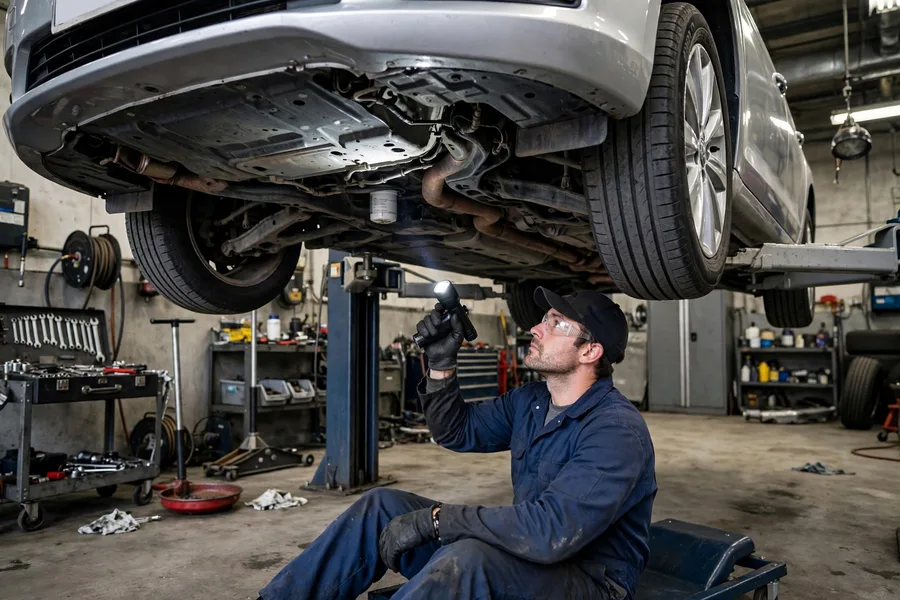
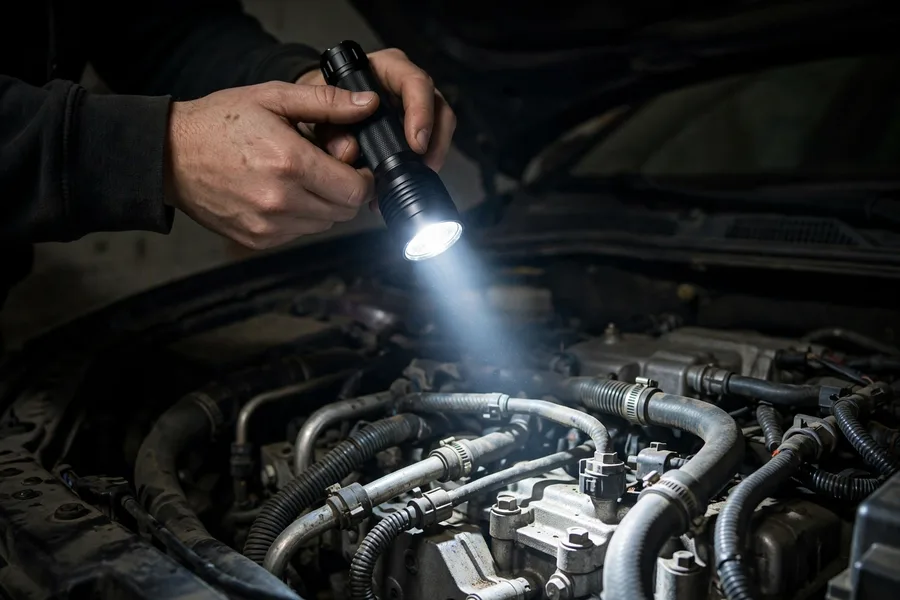
A standard pre-purchase inspection ($200–$300 at an independent BMW specialist) checks the car’s general condition. On a 100k+ mile car, the inspection needs a different emphasis — you are not looking for perfection, you are building a priced list of everything the car needs. Tell the specialist the mileage upfront and ask for these additions to the normal checklist:
- Cooling-system pressure test — non-negotiable. Finds the weeping expansion tank and seeping hoses that a visual check misses.
- Boost-leak / smoke test (turbo models) — reveals cracked charge pipes and tired intercooler connections.
- Underbody and subframe inspection — high-mileage cars in salt states hide rust at subframe mounting points and brake lines.
- Full fault-code scan with history — not just current codes. Stored and shadow codes reveal intermittent issues the seller “fixed” by clearing.
- Oil analysis (optional, ~$30) — a lab report on bearing wear metals and coolant contamination. Cheap peace of mind on N20/N26 and N54 cars.
- Tire-date and tread-depth log — mismatched or aged-out tires on an xDrive car are a transfer-case risk, not just a tire bill.
- Service-history audit — the specialist should reconcile the records against the mileage: are the intervals plausible, are the big jobs (water pump, chain, gaskets) actually documented?
Ask the shop for the findings as a priced work list, not just a pass/fail. “Needs rear shocks soon” is a feeling; “rear shocks, $700 fitted” is a negotiation tool. The full procedure is detailed in our pre-purchase inspection guide — the list above is what you add for six-figure odometers.
Red flags: walk away
- No service records at all on a 100k+ mile car. Not “some records” — none. You cannot price what you cannot see.
- Cleared fault codes with a fresh reset — monitors not ready at scan time means someone hid something recently.
- Coolant in the oil or oil in the coolant — head-gasket territory. Walk away regardless of price.
- N20/N26 with no timing-chain documentation past 100k miles — unless the price already reflects the full job and you will do it immediately.
- Structural rust — subframe mounts, strut towers, brake lines. Surface rust on bolts is normal; rot is terminal.
- Salvage or flood title — at high mileage, the discount never compensates for the unknowns.
- Seller refuses a PPI — the universal tell. There is always a reason, and it is never good.
- Multiple deferred systems at once — cooling and suspension and gaskets and tires. One system is maintenance; four is neglect.
Green flags: strong buy signals
- Thick service folder with consistent intervals — especially oil changes at 7,500–10,000 miles rather than the full BMW interval.
- Cooling system already refreshed — receipts for water pump, thermostat, and expansion tank in the last 40,000 miles.
- One or two long-term owners — fewer owners means fewer mysteries.
- Recent suspension or bushing work — the car will drive like it has 60,000 fewer miles than the odometer says.
- Stock and unmodified — or modified with receipts from a known specialist. Unknown tunes at high mileage are a gamble.
- Matching quality tires with even wear — signals alignment health and an owner who did not cheap out.
- Seller encourages the PPI and offers the records before you ask.
High-mileage heroes: what 200,000-mile cars have in common
Talk to BMW specialists and a pattern emerges: the 3 Series cars that sail past 200,000 miles are not lucky — they are maintained. The owners change oil every 7,500 miles or less (not the 15,000-mile factory interval), they replace the cooling system before it fails, they fix oil leaks when they are seeps rather than drips, and they address suspension wear before it eats tires. The specific engine matters less than this discipline; specialists report healthy 200k+ examples of everything from N52s to N20s, while neglected B58s have died young.
There is a second common thread: highway miles. A 150,000-mile car that spent its life commuting 60 highway miles a day is mechanically younger than a 90,000-mile car that spent a decade doing cold-start short trips. Highway miles mean fewer heat cycles, fewer cold starts (the highest-wear engine event), steadier oil temperatures, and less brake and suspension abuse. When a seller says “mostly highway miles,” verify it with the records — consistent mileage accumulation year over year is the tell — but if true, it is a genuine positive, not sales patter.
Your first month: the 100k baseline service
Whatever the PPI finds, every high-mileage 3 Series you buy deserves a baseline service in the first month — the previous owner’s habits are now your problem, and fluids are the cheapest insurance in car ownership. Budget roughly $400–$800 at an independent specialist:
- Engine oil and filter — start your own interval clock from day one, regardless of what the seller claims.
- Transmission fluid and filter (if no record of it being done) — the ZF 8HP responds beautifully to fresh fluid; this is the highest-value service on a high-mileage automatic.
- Differential and transfer-case fluids (xDrive) — same logic, smaller bill.
- Brake fluid flush — hygroscopic fluid degrades with age; a two-year-old flush is overdue, not fresh.
- Coolant check/replace — if the system was not recently refreshed, at minimum verify concentration and condition.
- Cabin and engine air filters — cheap, and their condition tells you how the car was kept.
Do this even if the car “just had a service.” Sellers’ definitions of servicing vary wildly, and $600 of fluids buys certainty. Our 3 Series maintenance schedule lays out the full ongoing cadence once the baseline is set.
When high-mileage makes sense — and when it does not
High-mileage buying is not for everyone. It makes the most sense for DIY-capable owners (a $1,200 shop bill is often $300 in parts), second-car buyers who can tolerate downtime, and enthusiasts who actually enjoy the maintenance relationship. It makes the least sense as a stretched-budget primary car: if you need absolute reliability for a 50-mile commute and cannot afford surprises, a lower-mileage car or a cheaper-to-run alternative is the rational choice, however tempting the price.
Be honest about your tolerance. The math only works if you hold the reserve and spend it on maintenance instead of modifications for the first year. Buyers who immediately spend $2,000 on wheels for a 140,000-mile car with an original water pump are not buying a bargain — they are financing a breakdown. The high-mileage 3 Series rewards the patient and punishes the impulsive, which is exactly why the patient ones get such good cars for the money.
Hidden costs beyond the repair bills
Repairs dominate the conversation, but three quieter costs matter at high mileage. Insurance is the good news: liability and comprehensive on a 12-year-old 3 Series is cheap, and many owners sensibly drop collision coverage once the car’s value falls below the point where premiums make sense. Fuel is neutral: a 328i’s real-world economy does not meaningfully degrade with mileage if the engine is healthy, though neglected spark plugs and thermostats can cost you 2–3 mpg. Downtime is the real hidden cost — a high-mileage car will spend more days in the shop than a new one, so factor in alternative transport or schedule work around your calendar. None of these are deal-breakers, but they belong in the budget alongside the water pump.
Model-year sweet spots for high-mileage hunters
If you are specifically hunting high-mileage value, some model years are structurally better bets than others. The 2011–2013 E90 328i (N52) is the classic pick: the last of the naturally aspirated sixes, old enough to be cheap, simple enough to be durable, with every common issue documented to death by the enthusiast community. The 2016–2018 F30 330i/340i (B46/B48/B58) is the modern pick: the modular engines’ strong reliability record plus a much newer chassis, still depreciating into the value zone.
The years to approach with extra caution are not bad cars — they just demand more verification. 2012–2014 F30 328i cars sit in the N20’s highest-risk window for timing-chain issues; buy only with documentation. 2007–2010 E90 335i cars are the N54 era: fantastic performance value, but assume the turbos are original and price accordingly. And any 3 Series from a salt-belt state needs the underbody inspection emphasized in the PPI section regardless of year. Within these guardrails, the “best” high-mileage year is simply the one with the thickest service folder — which brings us back to the only rule that matters: buy the history, not the odometer.
Interactive: high-mileage risk & reserve estimator
Select the engine, mileage, history, and your DIY ability — the estimator returns a risk rating, a first-year reserve range, and the top watch items. All 108 combinations are modeled.
Interactive: buy or walk away scorer
Check every statement that is true for the car you are considering. Five checks, one verdict.
Negotiating a high-mileage car
High-mileage negotiation is refreshingly rational — it is arithmetic, not theater. The PPI gives you a priced work list; every item on it is a discount argument. The formula: offer = market price for a sorted example − cost of deferred work − inconvenience factor. A 130,000-mile 328i needing $2,200 of cooling and suspension work is not a $9,000 car with problems — it is a $6,800 car. Present it that way, with the specialist’s quote in hand, and most private sellers will engage.
One final note on private-party paperwork: verify the title is clean and in the seller’s name, confirm there are no outstanding liens, and complete the sale at your bank or the DMV rather than in a parking lot. High-mileage cars attract curbstoners — unlicensed flippers posing as private sellers — so be wary of sellers who cannot answer basic history questions or who have multiple cars listed. A genuine long-term owner is your best ally in this market; their knowledge of the car is worth more than any discount.
Three tactics work specifically well here. First, lead with the records gap: missing history is the seller’s problem to discount for, not yours to gamble on. Second, bundle, don’t nickel-and-dime: “the PPI found $2,800 of work, so I’m at $X” lands better than eight separate arguments. Third, know your walk-away number before you arrive — high-mileage cars are abundant, and the strongest negotiating position is genuinely not needing this particular one. If the seller will not meet the arithmetic, thank them and keep looking. The next 130,000-mile car with a thick folder is already listed somewhere.
High-mileage FAQs
How many miles is too many for a BMW 3 Series?
There is no universal number. A maintained N52 or B58 with 170,000 miles and full records is a better buy than a neglected N20 with 90,000 miles and no history. Condition, records, and engine-specific documentation (timing chain on N20/N26, turbos on N54) matter far more than the odometer reading.
Should I buy a 3 Series with over 150,000 miles?
Only with full service history, a clean specialist PPI, and a first-year reserve of $3,000 or more. At that mileage you are buying the previous owner’s maintenance habits — verify them with receipts, not claims. N52 and B-family engines are the safest candidates at very high mileage.
What is the most expensive thing that goes wrong on a high-mileage 3 Series?
Engine-specific items top the list: timing-chain failure on an unserviced N20/N26, turbocharger replacement on a high-mileage N54, and head-gasket issues from neglected cooling on any engine. Among universal wear items, a full cooling-system refresh and suspension overhaul are the biggest predictable bills — roughly $1,000+ and $1,500+ respectively at an independent specialist.
Is a dealer or private seller better for a high-mileage BMW?
Private sellers are usually better at high mileage: you can meet the owner, judge how the car was kept, and get the records firsthand. Dealers (non-BMW) selling 130k-mile 3 Series cars often know the least about them. Either way, the PPI matters more than the seller type — never skip it.
Can a high-mileage 3 Series be a reliable daily driver?
Yes — thousands of owners daily-drive 150k+ mile E90s and F30s. The formula is unglamorous: buy on history, keep up with maintenance at an independent specialist ($1,500–$2,500/year planning figure), and fix small problems before they cascade. A sorted high-mileage 3 Series is more reliable than a neglected low-mileage one.