BMW Pre-Purchase Inspection for a Used 3 Series
Short answer: A proper BMW pre-purchase inspection has two halves: your own 60-minute walkaround (documents, body, engine bay, electronics, test drive) and a specialist PPI on a lift with BMW-specific diagnostics. Run the DIY checklist first to eliminate bad cars, then pay an independent BMW specialist $150–$300 (owner-reported range) to scan every module, pressure-test the cooling system, and check the generation-specific weak points — E90 cooling and oil leaks, F30 N20/N26 timing chain, G20 electronics and recalls — before you sign.
A used BMW 3 Series rewards a careful buyer and punishes a hurried one. The difference between a great E90, F30 or G20 and a money pit rarely shows in listing photos — it lives in service records, cooling-system history, oil-leak patterns and the fault codes only a BMW-capable scan tool sees. This is the inspection companion to our used BMW 3 Series buying guide, which covers which generation to buy and what to pay: here we go deep on how to check the car, in the order a specialist would.
Use the two tools below the way a buyer would. The PPI risk scorer takes the car you are considering — generation, mileage, history, seller type and price — and ranks your risk while prioritizing the checks. The checklist tracker turns every section into a printable punch list for the viewing.
In this guide
- What a specialist PPI covers (and what it does not)
- Section 1: Documents and history
- Section 2: Body, paint and accident repair
- Section 3: Engine bay
- Section 4: Underbody and lift inspection
- Section 5: Electronics and interior
- Section 6: The test drive
- Generation weak points: E90, F30, G20
- PPI risk scorer
- What a PPI costs
- How to find a BMW specialist inspector
- Printable checklist tracker
- Red flags: when to walk away
- Frequently asked questions
What a specialist PPI covers (and what it does not)
A professional pre-purchase inspection is typically one to two hours on a lift: underbody visual sweep, BMW-specific fault-code scan across all modules, cooling-system pressure test, brake and tire measurement, suspension check, and a road test, ending in a written report with photos. What it does not do is guarantee the future — it documents the car’s condition that day. Treat the report as a snapshot plus a repair forecast, not a warranty.
Your own checklist comes first. Owner forums are full of buyers who paid for a PPI on a car a ten-minute walkaround would have disqualified — mismatched VINs, fresh undercoating hiding leaks, a warning the seller “just cleared.” The sections below run in inspection order: paperwork before paint, paint before engine, engine before the drive. A car that fails early never reaches the lift.
Section 1: Documents and history — do this before you touch the car
- Match every VIN. The 17-character VIN on the dash plate, the door-jamb sticker and the title must agree character for character. Check the component stickers inside the door shuts and under the hood too — missing or mismatched stickers suggest replaced panels. One wrong character is a walk-away.
- Run the free federal checks. Enter the VIN at the NHTSA recall lookup for open safety campaigns, then run it through the NICB’s free VINCheck for theft and total-loss/salvage flags. Both are free and take minutes. NHTSA’s lookup only shows roughly the last 15 years of campaigns — on an older E90, call a BMW dealer’s service department with the VIN.
- Buy a paid history report on finalists only. CARFAX or AutoCheck pull DMV, insurer, auction and service records: accidents, title brands, mileage readings, fleet use. But they only know what was reported — a clean report is not proof of a clean car. Read our 3 Series reliability by year notes alongside it to tell pattern failures from anomalies.
- Demand complete service records. On a 3 Series the records matter more than the mileage: oil changes at reasonable intervals, cooling-system work, brake fluid every two years, transmission service. No records at 80,000+ miles is not a negotiating point — it is a reason to keep looking.
- Verify the title and liens. The physical title should be in the seller’s name, free of liens, with no brands (salvage, rebuilt, flood, lemon). A seller who “hasn’t transferred it yet” is selling you someone else’s problem.
- Ask about timing-chain settlement work on N20/N26 cars. Shopping a 2012–2015 328i or 320i? Ask whether the timing-chain and oil-pump-drive-chain settlement work was performed, with paperwork. The Gelis v. BMW class action (final approval February 2021, reported by CarComplaints and Bloomberg Law) covered N20/N26 engines built through February 2015 with repair reimbursement and extended warranty benefits; BMW denied the allegations. Documented chain work meaningfully de-risks the car — see our N20 vs N26 guide.
Section 2: Body, paint and accident repair
Accident repair is the biggest hidden value-killer on a used 3 Series — and the easiest to detect if you know where to look. Do this in daylight, on dry pavement, with the car clean.
- Walk the panels for paint mismatch. Crouch at bumper height and sight down each side: panels should share one shade and one orange-peel texture. Compare bumper-to-bumper and panel-to-panel. A repainted panel is not automatically a dealbreaker — an undisclosed one is a lie about the car’s history.
- Check panel gaps and edge seals. Gaps around the hood, trunk, doors and headlights should be even side to side. Uneven gaps or wavy seals point to panel removal. Under the hood and trunk, factory spot welds look uniform; blobs of aftermarket sealer mean bodywork.
- Look for overspray. Check door jambs, trunk and hood edges, and windshield trim for overspray or tape lines. Peer under the bumpers — a detailer never reaches there, but a paint gun does.
- Bring a paint-depth gauge. A $30–$60 gauge is the best money in used-car buying: factory BMW paint reads roughly 100–150 microns, consistent panel to panel. Double the neighbor’s reading means repaint; far higher means filler.
- Check the known rust spots. Jack points, lower door edges, the trunk floor under the mat (taillight-seal leaks show here), and E90 rear subframe mounts. Surface rust on suspension parts is normal; bubbling paint is not.
- Read the glass. All windows should carry matching markings and date codes near the build year. A newer windshield is normal; mismatched side glass suggests a side impact.
Section 3: Engine bay — cold start tells the truth
Insist the car is stone cold when you arrive — a seller who “warmed it up for you” has hidden the cold-start listen, the single most informative minute of the inspection. Touch the hood; if it is warm, reschedule.
- Listen at startup. On N20/N26 F30 cars, a diesel-like rattle for the first seconds is timing-chain guide wear. Ticking that fades is usually lifters; knocking that stays is a walk-away. Blue smoke on startup means valve-stem seals; persistent white smoke means coolant is burning.
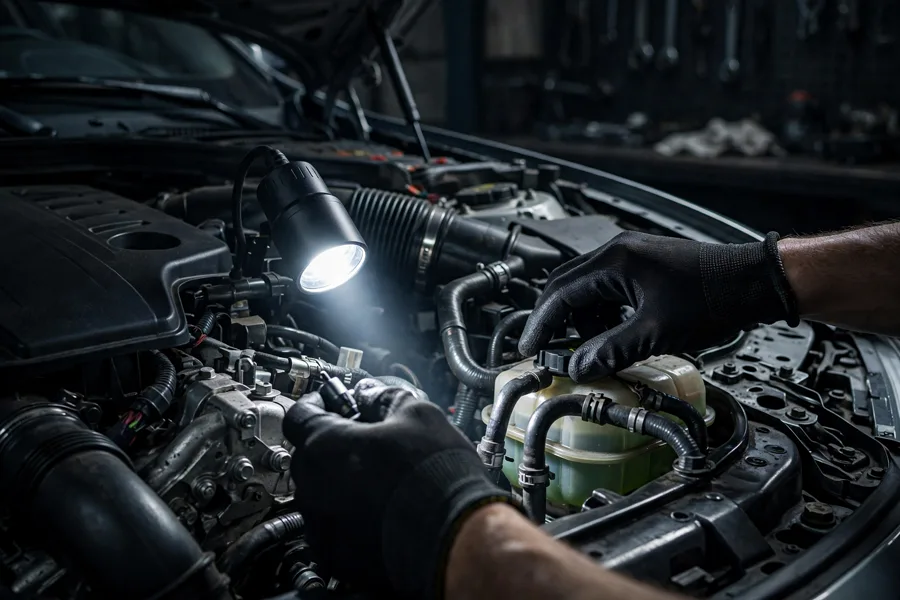
- Hunt for oil leaks. The classic seep points: valve-cover gasket (oil along the cover edge, burning smell at stoplights), oil filter housing gasket (oil down the block — on N5x engines it can drip onto the belt), and the oil pan. A steam-cleaned bay on a high-mile car hides seepage. Our oil leak guide maps each leak point and its repair cost.
- Interrogate the cooling system. Check the expansion tank for cracks, yellowing or chalky residue at the cap; confirm the coolant is the correct blue BMW formula — not green universal coolant. Ask: has the water pump or thermostat been replaced, and when? Original electric pumps rarely survive past 80,000–100,000 miles; a high-mile car on its original pump is a near-term $1,000+ bill. See water pump failure symptoms and the correct coolant type.
- Check oil and belts. Oil should be amber-to-dark brown, not milky and not smelling of fuel. Inspect the serpentine belt for cracking — a belt shredded by an oil leak is a known N5x failure mode.
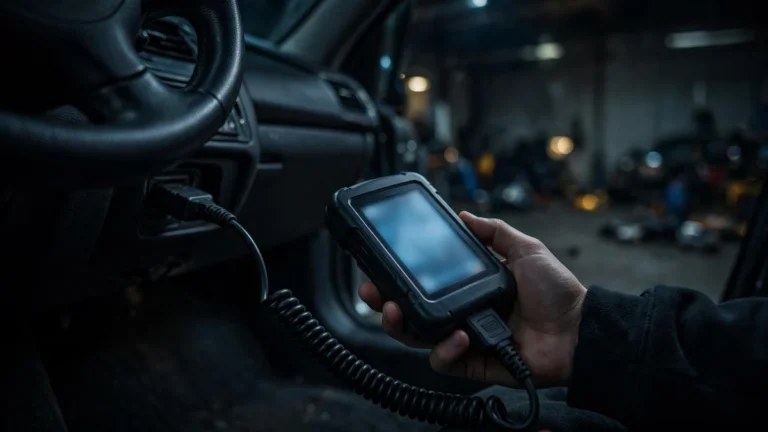
- Scan every module. A BMW-capable tool (ISTA, Carly, BimmerLink, pro-grade Autel — see our OBD2 scanner picks) reads codes a generic reader misses. Stored codes across modules — or a suspiciously clean slate on a 120,000-mile car — both demand explanation. Also confirm battery registration: an unregistered replacement causes chronic faults (see our battery drain guide).
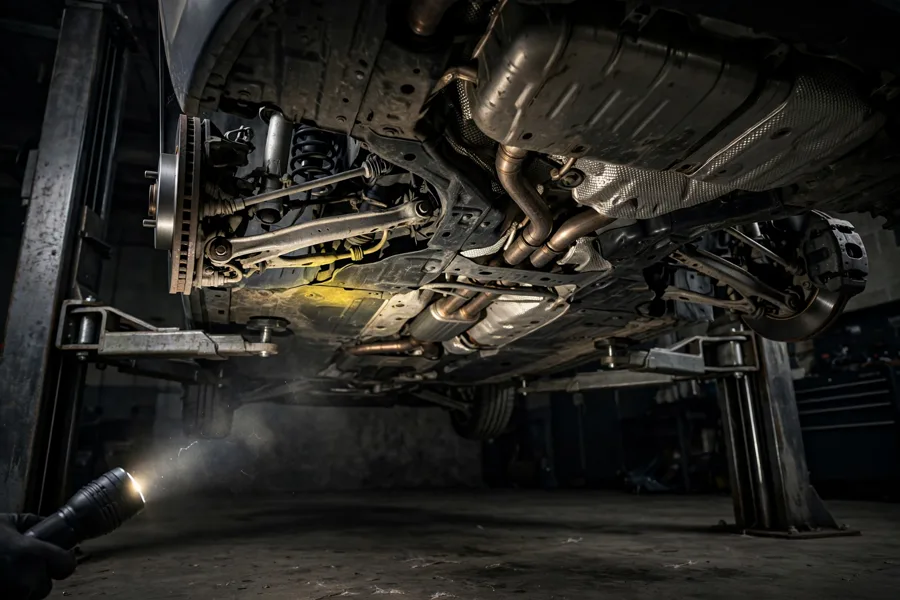
Section 4: Underbody and lift inspection
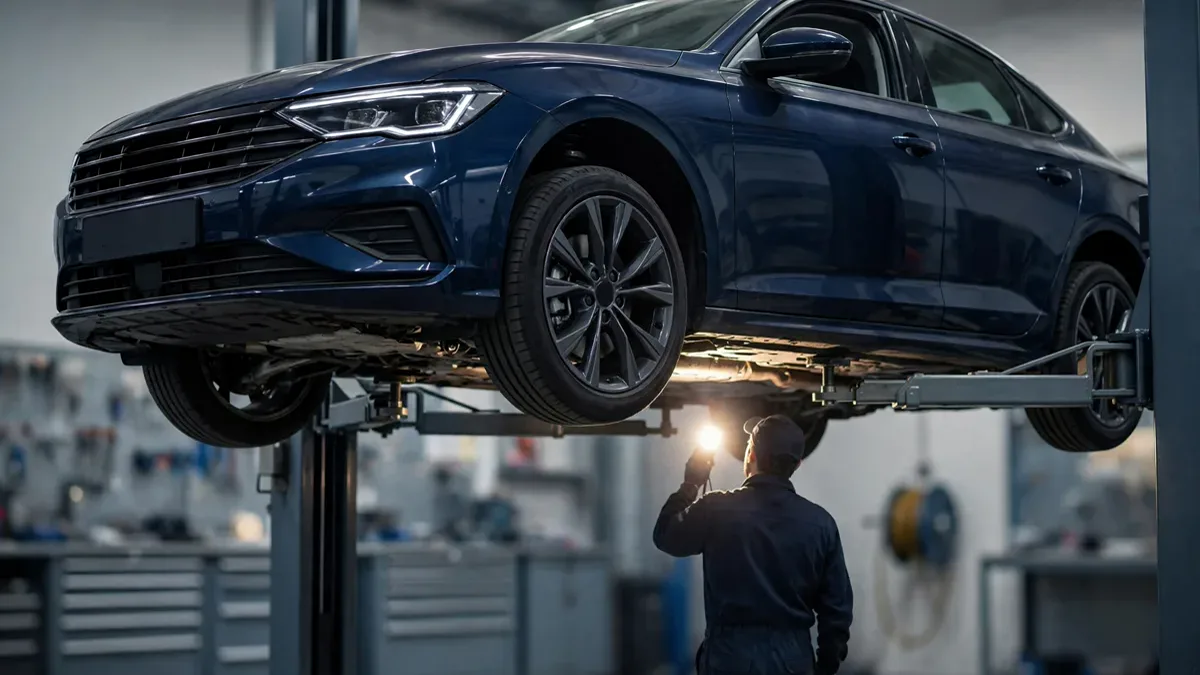
This is the part you cannot do in a driveway, and the core of what the specialist PPI buys. If the seller will not allow a lift inspection, that refusal is your answer.
- Look for leaks from below. Oil at the pan rail, pinkish-red ATF at transmission cooler lines, coolant at hose junctions, differential oil at the rear cover. Fresh undercoating on a 15-year-old car deserves suspicion — it is the classic way to hide seepage and rust.
- Check the subframe and bushings. Pry at the control-arm bushings and thrust arms: cracked, torn or weeping bushings mean clunks over bumps and a near-term suspension refresh. Inspect E90 rear subframe mounts closely — cracking here is the generation’s structural weak point.
- Inspect brakes, lines and the fuel system. Measure pad thickness and rotor condition (thin pads and scored rotors are a near-term bill — see brake pad costs), and check steel brake and fuel lines for corrosion.
- xDrive extras. All four tires should match in size and be within a few 32nds of tread — mismatched tires can damage the transfer case. Check the transfer case and front differential for leaks and ask when their fluids were last serviced; BMW’s “lifetime fill” claim is widely ignored by specialists.
Section 5: Electronics and interior
Electrical faults are the most tedious 3 Series problems to chase. Test everything — a seller rushing you past the gadgets is hiding the repair bill.
- Cycle every function. iDrive and screen, navigation, Bluetooth, every window including one-touch, sunroof, locks from every handle, mirrors, heated seats, climate hot and cold, parking sensors. On G20s also cycle driver-assistance features — adaptive cruise, lane keeping, blind-spot monitors.
- Watch the warning-light ballet at startup. At ignition-on (engine off), every warning light should illuminate, then extinguish after startup. A light that never illuminates (check-engine, airbag) has been tampered with — a classic concealment. Any light that stays on needs a code read before you proceed.
- Check the battery and charging. Many 3 Series “electrical gremlins” are a weak battery or a replacement that was never registered. Check the battery’s age sticker and confirm steady voltage. Scuffed terminals or a booster pack in the trunk mean the car has been fighting electrical issues.
- Sniff and feel the interior. Musty smells mean water intrusion (sunroof drains, trunk seals, door membranes); sweet smells mean a heater-core leak. Check under the floor mats and in the spare-tire well for dampness. Heavy air freshener is camouflage, not a feature.
Section 6: The test drive — 20 minutes, bad roads included
Around-the-block drives hide everything. Plan a route with a cold start, stop-and-go traffic, a full-throttle highway merge, and broken pavement.
- Start cold, idle and listen. Rough idle that smooths out can mean carbon buildup or tired injectors; a flashing check-engine light under load means active misfire — end the drive. The temperature gauge should climb to center and stay there.
- Judge the transmission hot and cold. The ZF 8-speed should shift smoothly with no flare, slam or hesitation, in automatic and manual modes, at light and full throttle. Ask when the fluid was last serviced — “lifetime fill” cars past 100,000 miles without service are on borrowed time.
- Drive over bad pavement on purpose. Clunks point to control-arm bushings or sway-bar links — consumables and a legitimate negotiating lever. Shimmy under braking means warped rotors; wandering at speed suggests alignment or worn front-end parts.
- Full-throttle merge. Turbo cars should pull cleanly to redline with no hesitation, smoke or drivetrain warnings. Stuttering under boost can mean charge-pipe, coil or injector issues — any drivetrain malfunction warning is a stop-and-scan moment.
- Verify heat, A/C and charging. Run the heater hard (heater-core leaks show as sweet smells and fogging), then the A/C at full cold. Watch the charging indicator — charging weakness strands 3 Series owners regularly.
Generation weak points: what each 3 Series hides
The checklist above catches universal problems. These are the generation-specific failures your specialist should hunt.
| Generation | Years | Pattern failures to verify | The one question to ask |
|---|---|---|---|
| E90 / E92 / E93 | 2006–2013 | Electric water pump and thermostat (60k–100k), valve-cover and oil-filter-housing gasket leaks, rear subframe mount cracking, window regulators, blower-motor wiring | “What cooling-system parts have been replaced, and when?” |
| F30 | 2012–2019 | N20/N26 timing-chain guide wear (class-action era through Feb 2015 builds), water pump/thermostat/expansion tank, charge pipe on N55 cars, oil filter housing leaks | “Has the timing chain been serviced, and is there settlement paperwork?” |
| G20 | 2019–present | Early-2019 software and sensor glitches, open recall campaigns, 330e high-voltage battery health, electric water pump at higher miles, oil-change history on B46/B58 | “Are all recall campaigns closed, with dealer proof?” |
E90 (2006–2013): cooling is the headline — original pumps and thermostats rarely survive past 100,000 miles. Oil leaks are when, not if: budget for valve-cover and oil-filter-housing gaskets if undone. Inspect the rear subframe mounting points for cracking and cycle every electrical accessory twice. N54 335i cars add fuel-pump, wastegate and injector risks — only with deep records. Cross-shopping? See our E90 vs F30 breakdown.
F30 (2012–2019): the timing chain dominates. On 2012–early-2015 N20/N26 cars, cold-start chain rattle means worn guides, and a skipped chain kills the engine — stated plainly, many still run original chains. Settlement repair paperwork is the gold standard; a quiet cold start with full oil-change history is the silver. Also verify the cooling trio (pump, thermostat, expansion tank), the charge pipe on N55 cars, and ZF 8-speed transmission service.
G20 (2019–present): the most reliable 3 Series generation in decades, so inspection shifts to electronics and history. Cycle every driver-assistance feature — 2019 first-year cars carry the most software glitches. Run the VIN for open recalls first. On the 330e, verify high-voltage battery health and charging. The B46/B58 still use electric water pumps and plastic cooling parts, so keep the 60,000–100,000-mile cooling vigilance at higher mileages and confirm timely oil changes.
PPI risk scorer: which checks matter most for your car
Not every candidate needs the same scrutiny. Answer five questions about the car and the scorer ranks your risk and prioritizes this guide’s checks — so your specialist’s hour goes where the danger is.
PPI risk scorer
Five questions about the car. Scores are relative risk — every car still needs the full checklist.
What a PPI costs
Inspection prices are not fixed — they vary by city and shop. The bands below are owner-reported ranges from BMW buyer forums, not quotes; call two or three shops before booking.
| Inspector | Owner-reported range | What you typically get |
|---|---|---|
| Independent BMW specialist | $150–$300 | Lift inspection, BMW-specific scan, cooling pressure test, written report with photos |
| BMW franchise dealer | $200–$400+ | Billed as an hour or two of shop labor; thorough on newer cars, but some dealers decline older ones |
| Add-ons (either) | +$50–$150 | Compression or leak-down test if engine health is in doubt |
Context: a $200 inspection on a $9,000 E90 that finds a $2,500 cooling-and-gasket backlog just saved you the purchase. A “cheap” cursory look that misses it is the most expensive inspection of all. Ask what is included before you book — a real PPI puts the car on a lift and scans BMW-specific modules; a walkaround plus a generic OBD-II read is not a PPI.
How to find a BMW specialist inspector
A specialist knows an N20 rattle at startup is a timing chain and an unregistered battery causes phantom faults. Finding one takes an afternoon:
- Ask your local BMW Car Club of America chapter. Chapter members keep informal lists of trusted independent shops, and a “who does PPIs near me” post returns battle-tested answers. The highest-signal source.
- Search BMW-specific shop directories. Directories like BimmerShops list independent BMW specialists by city with reviews — filter for shops that advertise pre-purchase inspections.
- Interview two or three shops. Do you put the car on a lift, scan BMW-specific modules, pressure-test the cooling system, and provide a written report with photos? Hesitation on any of these disqualifies them.
- Never use the seller’s mechanic. For a distant car, pay a specialist near the car — many will inspect from a lift visit and walk you through the report by phone.
- Confirm price and scope in writing before you book. The cheapest quote that skips the lift is not a bargain.
Printable checklist tracker
Work through the article’s checks at the viewing and tick them off here — the bar shows how much of the car you have verified. (Print this page from your browser for a paper copy; ticks live on this page only.)
PPI checklist tracker
0 of 29 checks complete
Documents & history
Body & paint
Engine bay
Underbody
Electronics
Test drive
Red flags: when to walk away
Some findings are negotiating points (worn bushings, thin brake pads). These are not — any one ends the deal, no matter the price.
- VIN mismatch anywhere. Dash, door jamb and title must agree. A wrong character is not a typo — it is a different car’s identity.
- Title brands or no title in hand. Salvage, rebuilt, flood or lien issues do not get “priced in” — they get walked away from.
- Cold-start timing-chain rattle on an N20/N26 car with no documented chain service. You are buying an engine replacement on installment.
- Milky oil or persistent white exhaust smoke. Coolant in the oil or combustion chamber means head-gasket failure or worse.
- Warning lights that never illuminate at startup. Someone removed the bulb or coded out the light to hide a fault — assume the worst about everything else they told you.
- Fresh undercoating plus a steam-cleaned engine bay on a high-mile car for sale: legitimate alone, concealment together.
- A seller who refuses the lift or the scan. “My mechanic just looked at it” is not an inspection. Refusal is the answer.

Run the checklist, score your risk, book the specialist, and let the report — not the excitement — make the decision. If you have not settled on a generation yet, our used 3 Series buying guide covers which years to target and what to pay, and the maintenance schedule shows what the car will cost to keep. A good 3 Series is one of the best used cars on the road; a bad one is one of the most expensive. The inspection tells them apart.
Frequently asked questions
How much does a BMW pre-purchase inspection cost?
Owner-reported: $150–$300 at an independent BMW specialist, $200–$400+ at a dealer, plus $50–$150 for compression or leak-down testing. Confirm the quote covers a lift inspection, a BMW-specific module scan and a cooling-system pressure test.
Should I use a BMW dealer or an independent specialist for the PPI?
For most used 3 Series cars, an independent BMW specialist: they see aging E90s and F30s daily, know the pattern failures, and typically charge less. Dealers suit newer G20s but some decline deep inspections past about ten years old. Never use the seller’s own mechanic.
What is the N20/N26 timing chain issue, and how do I check for it?
Early F30 328i/320i cars with N20/N26 engines (built through February 2015) can suffer timing-chain guide wear that lets the chain skip — an engine-killing failure behind the Gelis v. BMW class-action settlement (repair reimbursement and extended warranty coverage). Cold-start the car yourself and listen for chain rattle, and ask for settlement-related repair paperwork. Our N20 vs N26 guide shows how to identify the engine.
Can a PPI catch hidden accident damage or title problems?
Partly. A good inspector spots repaint and structural repair with a paint-depth gauge and a lift inspection — but title brands, odometer issues and unreported accidents live in paperwork. Run the VIN matching, NHTSA recall lookup, NICB VINCheck and paid history report before the mechanical inspection.
Is a PPI worth it on a certified pre-owned BMW?
CPO cars passed a dealer inspection and carry warranty coverage, so a full independent PPI is less critical — but still cheap insurance. At minimum, run the VIN checks and verify all recalls are closed.