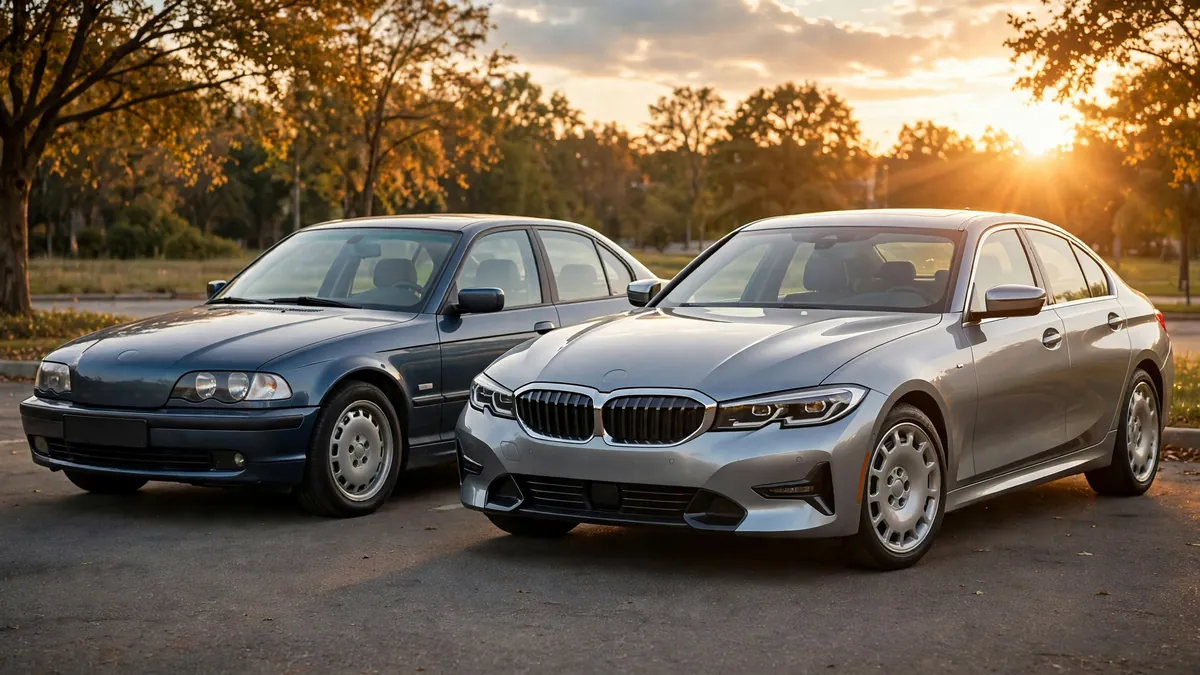
BMW E90 vs F30: Which Used 3 Series Is the Smarter Buy?
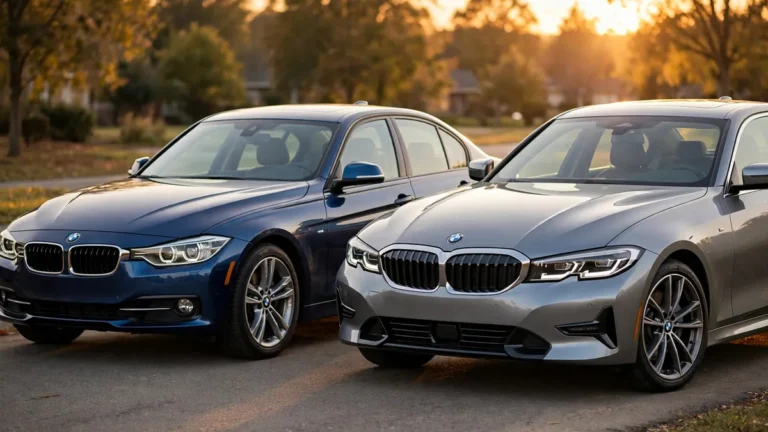
If you are cross-shopping a used 3 Series, the bmw e90 vs f30 debate is really a question about what kind of driver you are. The E90 (2006–2011) is the last old-school BMW: hydraulic steering and a silky naturally aspirated inline-six. The F30 (2012–2018) is the modern one: turbocharged, thriftier, roomier, and tech-loaded — but with electric steering enthusiasts never forgave. Both are cheap now; only one is the smarter buy for you.
This comparison covers the full picture: head-to-head specs with sourced numbers, the steering and driving-feel divide, the engines that define each generation, the reliability issues that matter, and real running costs. Pair it with our used 3 Series buying guide and the complete 3 Series guide.
The short answer
For the bmw e90 vs f30 decision, the smarter buy depends on your priorities: the E90 (2006–2011) is cheaper, steers better, and its N52 six is famously durable, while the F30 (2012–2018) is newer, about 18% thriftier (26 vs 22 mpg combined), and quicker — but early N20 engines carry timing-chain risk. Budget buyers: E90. Daily drivers: post-2015 F30.
In this guide
- Head-to-head specs
- Hydraulic vs electric steering
- How they drive
- Engines compared
- Interior, tech & space
- Reliability compared
- Running costs
- Which should you buy?
- The verdict
- FAQs
Head-to-head specs: E90 vs F30 by the numbers
The hard data first: the 328i of each generation, plus the entry-level F30 320i, as rear-wheel-drive automatics — the most common used spec. Six-cylinder models follow below. ⚠️ marks a single-sourced figure; captions explain the sourcing.
| Spec | E90 328i (2010) | F30 328i (2013) | F30 320i (2013) |
|---|---|---|---|
| Model years (sedan) | 2006–2011 | 2012–2018 | 2013–2018 (US) |
| Engine | 3.0L inline-6, naturally aspirated (N52) | 2.0L turbo inline-4 (N20) | 2.0L turbo inline-4, detuned (N20) |
| Power | 230 hp @ 6,500 rpm | 240 hp @ 5,000–6,000 rpm | 180 hp @ 5,000 rpm |
| Torque | 200 lb-ft @ 2,750 rpm | 255 lb-ft @ 1,250–4,800 rpm | 200 lb-ft @ 1,250–4,500 rpm |
| 0–60 mph | ≈6.2 s | 5.6–6.0 s | 7.1 s est. (6.7 s tested) |
| Transmission | 6MT / 6-speed auto | 6MT / 8-speed ZF auto | 6MT / 8-speed ZF auto |
| Drivetrain | RWD or xDrive AWD | RWD or xDrive AWD | RWD or xDrive AWD |
| Curb weight | 3,362 lb | 3,360–3,461 lb | — |
| EPA city / hwy / combined | 18 / 28 / 22 mpg | 23 / 33 / 26 mpg | 23 / 35 / 28 mpg |
| Steering | Hydraulic | Electric (EPS) | Electric (EPS) |
| Wheelbase | 108.7 in | 110.6 in | 110.6 in |
Two takeaways: the F30 328i’s 255 lb-ft from 1,250 rpm (vs 200 lb-ft at 2,750), plus two extra gears, makes it feel far stronger than its 10-hp edge suggests — and 26 mpg combined vs 22 means about 15% less fuel burned per mile.
| Spec | E90 335i (2011, N55) | F30 335i (2013, N55) | F30 340i (2016+, B58) |
|---|---|---|---|
| Power | 300 hp @ 5,800 rpm | 300 hp @ 5,800–6,400 rpm | 320 hp @ 5,500–6,500 rpm |
| Torque | 300 lb-ft @ 1,200–1,500 rpm | 300 lb-ft @ 1,200–5,000 rpm | 330 lb-ft @ 1,380–5,000 rpm |
| 0–60 mph | 5.4 s (manual, BMW claim) | ≈5.3 s ⚠️ | — |
| EPA combined | 22 mpg (19/28) | 26 mpg (23/32) | — |
| Curb weight | ≈3,550 lb ⚠️ | — | — |
The difference that matters most: hydraulic vs electric steering
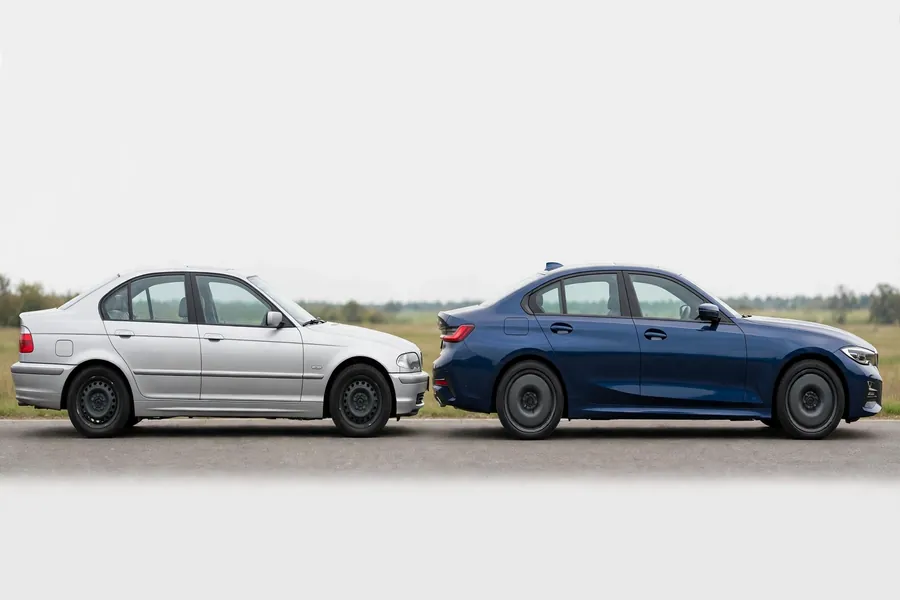
Ask owners who have lived with both what separates them, and the conversation lands in the same place: the steering. The E90 was the last 3 Series with hydraulic power steering — heavier, direct, rich with feedback. The F30 switched to electric power steering: lighter and more isolated, especially around center. On a back road the gap is not subtle — it is the single biggest reason driving enthusiasts keep choosing E90s.
Two caveats: BMW improved F30 steering with firmware updates — later cars are meaningfully better than 2012–2013 models, though still not E90-good. M Sport or M Adaptive suspension also narrows (not closes) the gap. If steering feel is your top priority, the E90 wins outright; if it ranks behind comfort, economy, and tech, the F30’s steering becomes a non-issue within a week.
How they drive: size, suspension, and the 8-speed automatic
The F30 grew — wheelbase up 1.9 inches, length past 182 — with more rear-seat space and high-speed stability. It also went soft: the standard tune is comfort-biased where the E90, especially with the Sport package, stays flatter and more connected — the move from “sport sedan” to “luxury sport sedan, in that order.” The E90’s trade-off is a ride that can turn harsh on run-flats.
The F30’s trump card is the ZF 8-speed automatic — one of the best conventional automatics ever fitted to a sedan, and a big reason the turbo F30 is both faster and thriftier than the E90. Both generations offer a proper 6-speed manual on rear-drive cars: increasingly rare and worth a premium to the right buyer. Both offer xDrive AWD — skip it unless you genuinely need it, since it adds weight, complexity, and cost.
- E90: firmer, more connected, better steering; harsher on run-flats and broken roads.
- F30: softer and more refined; M Sport / M Adaptive suspension restores much of the athleticism.
- Gearboxes: the ZF 8-speed beats the E90’s 6-speed auto; manuals are enthusiast gold in both.
- Size: the F30 is the better family car and cruiser; the E90 feels more wieldy in town.
- Efficiency tech: auto start-stop and ECO PRO mode are F30-only.
Engines compared: N52 vs N20, and the 335i question
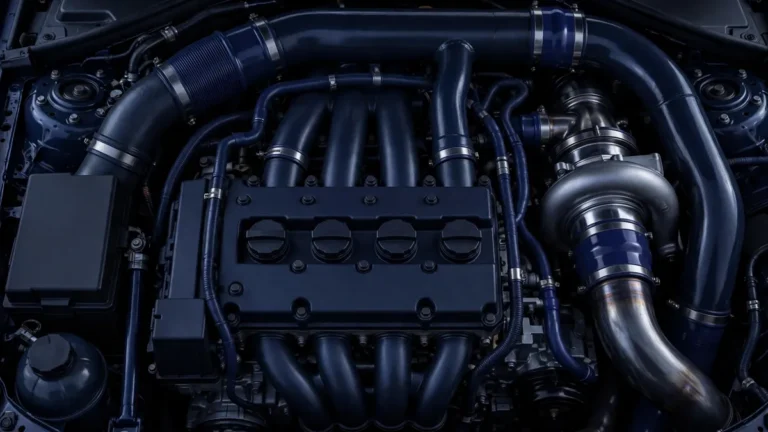
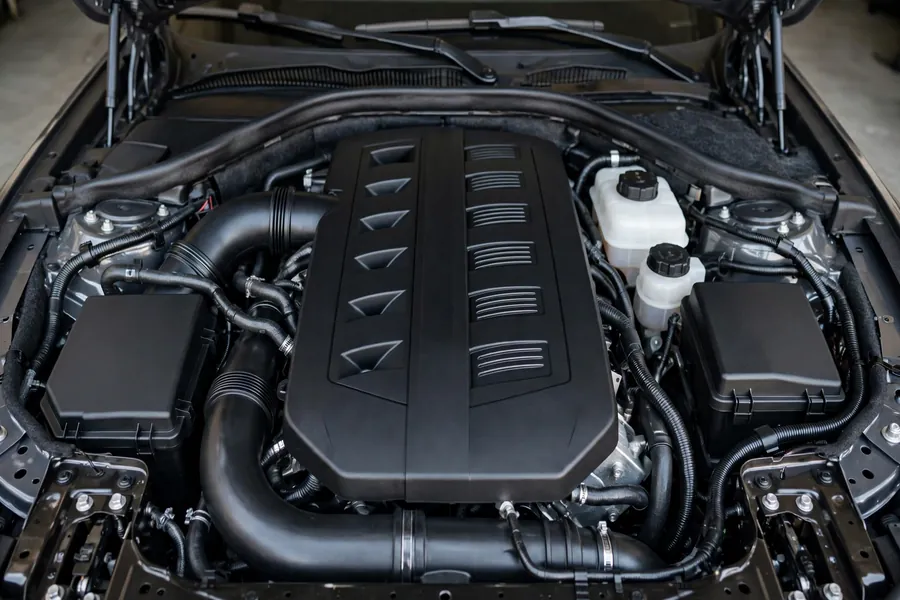
The E90 328i’s N52 3.0-liter inline-six is naturally aspirated: linear response, a 7,000-rpm redline, and one of the sweetest sounds BMW ever put in a base 3 Series. It is widely regarded as the most durable engine here — no turbo, no direct-injection carbon issues. What it lacks is mid-range punch: you work the gearbox to keep it on boil.
The F30 328i’s N20 2.0-liter turbo four flips the formula: peak torque from 1,250 rpm, stronger everyday acceleration, far better economy. The trade-offs are character — coarse near redline — and one caveat on early cars (see below). The 320i is a detuned N20 (180 hp vs 240) with nearly identical economy and a lower price; the two variants are compared in our N20 vs N26 guide.
Then the 335i question. A 2007–2010 E90 335i carries the twin-turbo N54 — legendary tuning potential, but the most problem-prone engine here (fuel pump, injectors, turbos). The 2011 E90 335i and every F30 335i use the single-turbo N55: same 300 hp, fewer headaches. The 2016+ F30 340i gets the B58 — the closest thing to fast and worry-free in this comparison.
Interior, tech, and space
The E90’s cabin is praised for solidity — doors, boot lid, and switchgear feel hewn from something substantial, and owners frequently rate its build quality above the F30’s. The downside is the tech: early iDrive feels ancient, with small screens and clunky menus.
The F30 counters with a roomier cabin, a cleaner dash with the floating display, and much faster iDrive. But cost-cutting shows: sticky door handles and occasional trim creaks are common complaints. Note for both generations: no factory Apple CarPlay or Android Auto, and the early F30’s 3G telematics are defunct — don’t pay extra for connected services on a 2012–2015 car. If a newer cabin is the priority, read our F30 vs G20 comparison first.
Reliability compared: what actually goes wrong
No invented scores — just the failure patterns owners and mechanics report most, backed by documented factory campaigns. See our 3 Series reliability by model year.
E90 328i (N52) — the safe pick. Its issues are wear items, not design defects:
- Electric water pump: the best-known N52 weak point; expect it around every 80,000–100,000 miles (owner consensus).
- Valve cover and oil filter housing gaskets: both leak with age; fix the latter promptly — oil can reach the drive belt.
- DISA valve, eccentric shaft sensor: classic higher-mileage drivability culprits, both well-documented DIY jobs.
E90 335i (N54, 2007–2010) — the exciting risk. The headline issue was the high-pressure fuel pump: BMW issued recall 10E-A02 and extended HPFP coverage to 10 years / 120,000 miles — now expired by age. Also expect piezo injectors (the final “Index 12” design is the one to have; replacements must be coded), wastegate rattle, the brittle plastic charge pipe, intake-valve carbon buildup, and the N52’s electric water pump. The 2011 N55 car sidesteps the worst of this list.
F30 328i/320i (N20, 2012–2015) — check the chain. Early N20s can suffer timing chain and oil pump drive chain guide failure — worn plastic guides that can destroy the engine. BMW revised the components around early 2015, and a US class-action settlement (finalized 2021) extended coverage to 8 years / 100,000 miles — now lapsed by age. A pre-2015 N20 without documented chain service should be budgeted as a chain-job car.
Pre-purchase rule for 2012–2015 F30 328i/320i: insist on a stone-cold start and listen for a 1–3 second rattle from the top/rear of the engine — the classic early sign of chain-guide wear. Check the build date (early-2015+ cars have revised parts) and ask for receipts. A preventative chain job runs several thousand dollars at a shop — price it into any offer.
F30 330i/340i (2016+, B48/B58) — the sweet spot. The facelift cars’ modular engines have no equivalent systemic issue, and owner consensus rates the B58 especially highly. Remaining F30 concerns are niggles: gummy door handles, sunroof-drain leaks, and the usual age-related oil seeps.
Both generations: cooling-system plastics, suspension bushings, and oil leaks are wear items on any 10–20-year-old BMW. A pre-purchase inspection by a BMW-specialist independent shop is the highest-value money in this comparison — see the checklist in our used 3 Series buying guide.
Running costs: fuel, prices, and maintenance
The F30 costs more to buy but less to fuel; the E90 is cheaper up front with simpler maintenance. Bands below are approximate September 2026 asking prices — condition, mileage, and history move individual cars well outside them.
| Cost area | E90 328i (2009–2011) | F30 328i (2013–2015) |
|---|---|---|
| Typical asking price ⚠️ | $5,000–$10,000 | $8,000–$15,000 |
| EPA fuel cost / year (15k mi) | $3,650 | $3,050 |
| Real-world economy (owners) | ≈21–22 mpg | ≈25–26 mpg |
| Insurance | Typically lower (older, lower value) | Typically higher (newer, higher value) |
| Budget item #1 | Water pump + gaskets (wear items) | Timing chain if pre-2015, no service proof |
| DIY friendliness | Simpler; huge knowledge base | More modules, easier modern diagnostics |
Five-year fuel math: roughly $600 a year, or about $3,000 — covering a good chunk of the F30’s purchase premium at average mileage. Drive 20,000+ miles a year and the F30’s efficiency pays for itself; drive 8,000 and the E90’s lower buy-in wins. The swing factor is maintenance: a sorted E90 328i is one of the cheapest BMWs to keep, while an unmaintained early-N20 F30 can hand you a four-figure surprise.
Which should you buy?
Three buyer profiles, three answers. Pick the tab that matches your situation:
Buy the E90 — a 2009–2011 328i (LCI facelift).
- Hydraulic steering, the durable N52 six, and the lowest entry price ($5k–$10k).
- Prioritize receipts for the water pump and both gaskets.
- The 6-speed manual is often cheaper than the automatic and sidesteps aging-auto concerns.
- Avoid the 2007–2010 335i unless you budget for N54 repairs.
Buy the F30 — a 2015+ 328i/330i or 2016+ 340i.
- ZF 8-speed, ~26 mpg combined, quieter cabin, roomier back seat: the better commuter.
- Target 2015+ builds to clear the N20 timing-chain revision; demand chain receipts on any 2012–2015 car.
- The 340i (B58) is the “have it all” pick: 320 hp with the generation’s best reliability story.
- The 320i is the F30 value play — same chassis and economy as the 328i for less, if 180 hp suffices.
No wrong answer — only a preference.
- Analog purist: 2011 E90 335i 6MT (the only E90 year with the N55) — hydraulic steering, huge aftermarket. Or a 328i 6MT for the lightest feel.
- Modern speed: F30 340i (B58) — faster than any stock E90 short of an M3, and the most reliable fast option here.
- Tuner: the N54 2007–2010 E90 335i has the deepest aftermarket — budget for fuel pump, injector, and turbo work.
The verdict
Tight budget: the E90 328i (2009–2011) is the smarter buy. Thousands cheaper, better steering than anything near its price, and the N52 is the most forgiving engine here. You trade modern tech and fuel economy — a fair trade at this price.
Daily driver: the F30 wins — with one condition. A 2015+ 328i/330i or the 340i is the better commuter: more efficient, more refined, roomier, better equipped. Buy an early N20 car blind, and the timing chain can erase every dollar you saved.
Enthusiast: no wrong answer, only a preference. The E90 is the driver’s car; the F30 340i is the faster car. Whichever you choose, run it through our used 3 Series buying guide first — and browse all our BMW comparisons if you’re still deciding.
Frequently asked questions
Specifications were cross-checked across EPA fueleconomy.gov data, BMWUSA press materials, dealer spec databases, and independent road tests (Car and Driver, MotorTrend); single-sourced figures are marked ⚠️. Reliability notes reflect reported owner and mechanic consensus plus documented factory campaigns — no reliability scores are invented. Price bands are approximate asking prices observed in September 2026, not valuations. Last verified: September 2026.