BMW 3 Series Reliability by Year: The Best and Worst Years to Buy
Shopping BMW 3 Series reliability by year is the smartest first step before buying a used one — two 3 Series cars with similar mileage and price can have completely different ownership costs depending on the year they were built. One needs only scheduled maintenance for years; another with a similar badge can hand you a repair bill bigger than the down payment.
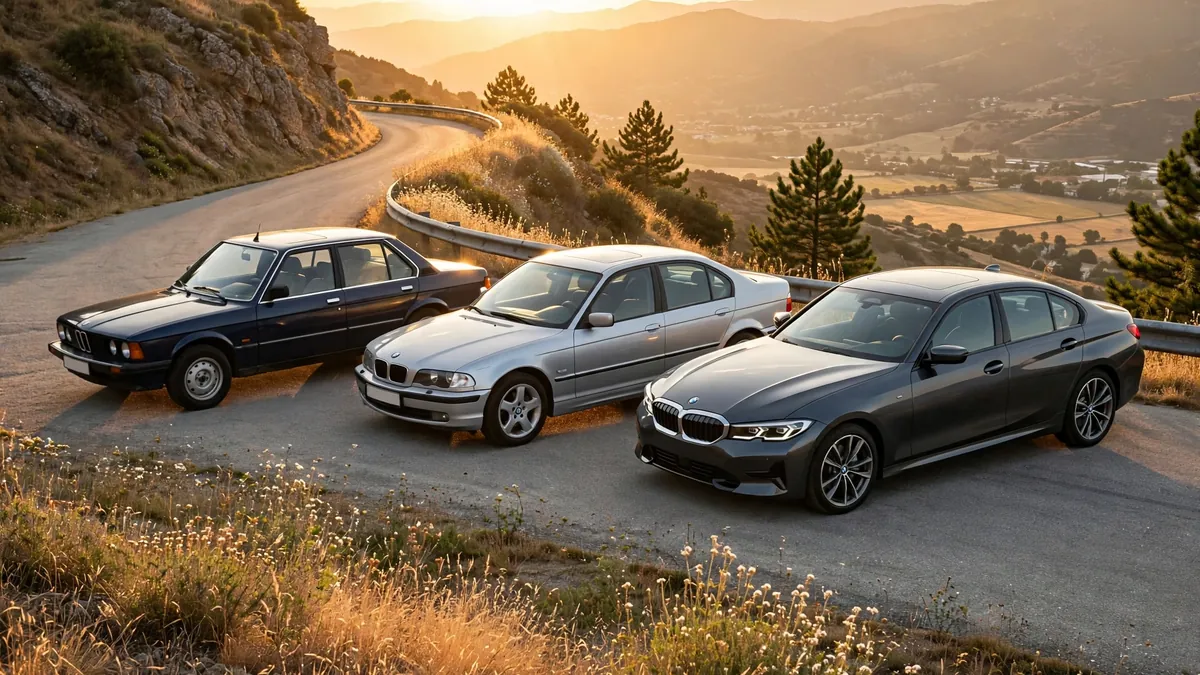
This guide breaks the 3 Series down by generation and engine — E90 (2006–2011), F30 (2012–2018), and G20 (2019–present) — explaining what each powertrain is known for, based on specialist reports, owner-forum consensus, and NHTSA recall records. Honest note: no single authority publishes per-year 3 Series reliability scores, so the tiers here are synthesized from those sources and labeled as such. Pair this guide with our used BMW 3 Series buying guide and the complete BMW 3 Series guide.
The short answer
For BMW 3 Series reliability by year, the strongest picks are 2016–2018 (B48/B58 engines, with N20 timing issues resolved) and 2019+ (G20, B48/B58). Be most careful with 2007–2010 335i models (N54 fuel-pump and turbo issues) and 2012–2015 four-cylinders (N20 timing-chain guide failures). Engine choice matters more than the badge or the year.
- Best and worst years at a glance
- Reliability year by year: E90, F30, G20
- Which 3 Series engine is most reliable?
- Pick your generation: buy it if, avoid it if, budget for
- What the data actually says
- How to buy the reliable 3 Series
- The verdict
- Frequently asked questions
Best and worst 3 Series years at a glance
Start here. The table below gives each year range a qualitative tier — Strong, Average, or Weak — synthesized from specialist reports, owner-forum consensus, and NHTSA recall records. These are not published scores; the ‘one-line reason’ column states the engine-level cause behind each verdict.
| Year range | Tier* | One-line reason |
|---|---|---|
| 2019–present (G20) | Strong | B48/B58 engines, solid early record; long-term data still limited |
| 2016–2018 (F30 facelift) | Strong | B48/B58 engines; N20 timing issues resolved |
| 2012–2015 335i (F30, N55) | Average | N55 improved over the N54; watch water pump and leaks |
| 2011 335i (E90, N55) | Average | First N55 year — better than the N54, but the car is aging |
| 2006–2011 325i/328i/330i (E90, N52) | Average | Solid naturally aspirated six; budget for pump and gaskets |
| 2012–2015 320i/328i (F30, N20/N26) | Weak | Early timing-chain guide failures can destroy the engine; buy only with proof of updated parts |
| 2007–2010 335i (E90, N54) | Weak | HPFP failures (multiple recalls) and turbo/wastegate issues; the riskiest 3 Series engine |
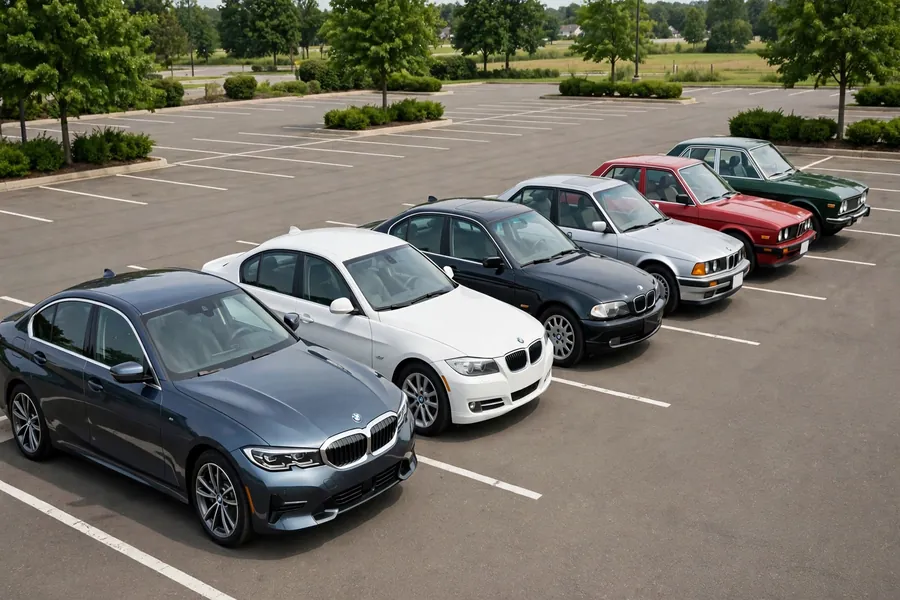
The pattern to memorize: the 335i badge warns of the N54 on 2007–2010 cars, and the 2012–2015 328i badge hides the N20 timing-chain risk. The 2016 model year is the F30’s dividing line — B48/B58 engines changed the story.
BMW 3 Series reliability year by year: E90, F30, G20
Reliability follows the generation and engine, not the calendar alone. A 2010 328i (N52) and a 2010 335i (N54) left the same factory in the same year, yet specialists and owner forums describe them as night-and-day ownership experiences. Each generation in detail, tier basis stated.
| Generation & years | Engines | Common issues | Tier (basis) |
|---|---|---|---|
| E90 2006–2011 | N52 3.0L I6 (325i/328i/330i); N54 twin-turbo I6 (335i, 2007–2010); N55 single-turbo I6 (335i, 2011) | N54: HPFP failures (FCP Euro: ‘one of the most common failures’; multiple BMW recalls); wastegate rattle widely reported. N52: water pump and gasket leaks. Recalls: 17V-676, 17V-683, 23V707000, Takata airbag. | Average — engine decides. N52 cars are the dependable choice; N54 335i models are the weak point. |
| F30 2012–2018 | N20/N26 2.0L turbo I4 (2012–2015); N55 3.0L turbo I6 (335i, 2012–2015); B48 2.0L turbo I4 and B58 3.0L turbo I6 (2016–2018) | N20: timing-chain guide failures on 2012–early-2015 builds (updated parts from Jan 2015). N55: water pump. Watch for coolant/oil leaks and neglected 8-speed service. | Average to Strong — avoid early N20s without proof of updated parts; 2016–2018 facelift cars are the sweet spot. |
| G20 2019–present | B48 2.0L turbo I4 (330i); B58 3.0L turbo I6 (M340i) | Mounts wearing by ~90k miles, active grill shutter failures, oil leaks and water pump at higher mileage (specialist reports). No widespread catastrophic failure pattern. | Strong (early) — best modern engines, but long-term high-mileage data is still limited. |
Comparing generations head to head? See our E90 vs F30 comparison and F30 vs G20 comparison for driving feel, tech, and running costs alongside reliability.
Which 3 Series engine is most reliable?
If you remember one thing from this guide, make it this: the engine decides the outcome more than the year does. Each engine below, with the source of each claim attached.
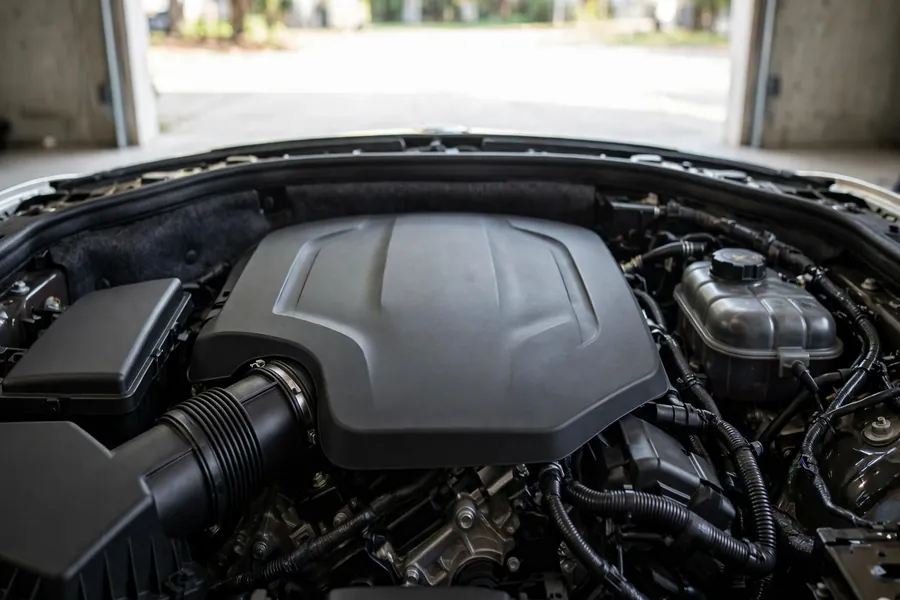
N52 3.0L naturally aspirated inline-6 (E90, 2006–2011)
The N52 is the naturally aspirated six in the 325i, 328i, and 330i — no turbocharger, no timing-chain guide epidemic. Owner forums and specialists consistently describe it as the dependable engine of the E90 generation, which is why 2006–2011 328i models are frequently recommended as the safe used E90 buy. Budget for the electric water pump and gasket leaks (valve cover, oil filter housing) — ordinary wear items rather than catastrophic failure modes.
N54 3.0L twin-turbo inline-6 (E90 335i, 2007–2010)
The N54 is the engine behind the 3 Series’ worst reliability years. FCP Euro calls the high-pressure fuel pump (HPFP) ‘one of the most common failures’ on N54-powered BMWs — it can throw the car into limp mode or leave it needing a tow — and notes BMW issued multiple recalls before a redesigned revision resolved the issue. Turbo wastegate rattle is the other widely documented complaint across owner forums, and the HPFP failures even drew a US class-action lawsuit. Fast and tunable, but the highest-risk 3 Series engine out of warranty.
N55 3.0L single-turbo inline-6 (E90 335i 2011; F30 335i 2012–2015)
The N55 replaced the N54 in the 2011 335i and is widely regarded as the more reliable of the two. Its most commonly reported problem is electric water pump failure, a contained repair when caught early. A 2011 or 2012–2015 335i is a defensible buy with service history.
N20 / N26 2.0L turbo inline-4 (F30 320i/328i, 2012–2015)
The N20 (and SULEV-market N26 variant) is the four-cylinder behind the F30’s problem years. BMW repair specialists document that 2012 to early-2015 builds suffer premature failure of the plastic timing-chain guides — the guides become brittle, crack, and can skip the chain with catastrophic engine damage. BMW acknowledged the defect through a technical service bulletin and a limited extended warranty, with updated parts appearing around January 2015 builds. See our N20 vs N26 differences guide. Rule of thumb: only consider a 2012–2015 328i with documented proof of the updated timing-chain hardware.
B48 2.0L and B58 3.0L turbo engines (F30 2016–2018; G20 2019–present)
The B48 four-cylinder and B58 six-cylinder are BMW’s modular-engine generation and carry the strongest reputations in the lineup — the B58 is widely described as one of the best modern inline-sixes BMW has built. They are not maintenance-free: FCP Euro documents hydraulic engine mounts wearing out (inspect before ~90k miles) and active grill shutter failures, while specialists report oil leaks and water-pump replacements at higher mileages. Wear items on an otherwise robust engine family — a different universe from the N54’s HPFP era or the early N20’s timing-chain failures.
Pick your generation: buy it if, avoid it if, budget for
Choose the generation that matches your budget, then run the three-line test. Select a tab:
- Buy it if: it’s a 325i, 328i, or 330i (N52) with records and a clean inspection — the most affordable dependable 3 Series.
- Avoid it if: it’s a 2007–2010 335i (N54) without proof of HPFP and turbo work, or any car with neglected cooling-system maintenance.
- Budget for: water pump, valve cover and oil filter housing gaskets — and check the VIN for open recalls (17V-676, 17V-683, 23V707000, Takata).
- Buy it if: it’s a 2016–2018 facelift car (B48/B58) with full history — the consensus best-value reliable used 3 Series.
- Avoid it if: it’s a 2012–2015 320i/328i (N20/N26) built before January 2015 without documented timing-chain guide replacement.
- Budget for: 8-speed automatic fluid service if never done, coolant and oil leak repairs, and engine mounts as B48/B58 cars approach 90k.
- Buy it if: your budget reaches — the B48 (330i) and B58 (M340i) are the strongest-reputation 3 Series engines.
- Avoid it if: it’s an early 2019 car with unresolved first-year issues, or anything priced far below market with gaps in its records.
- Budget for: active grill shutter actuators, engine mounts with mileage, and higher current-generation parts and labor costs.
What the data sources actually say
An honest methodology section matters: reliability content is full of invented scores. Here is what each source type can — and cannot — tell you.
- NHTSA (nhtsa.gov): the US database of recalls, investigations, and owner complaints. It is the authoritative place to check open recalls by VIN — including the E90-era campaigns (17V-676, 17V-683, 23V707000, Takata airbags) — but it publishes no per-model-year reliability ranking.
- BMW specialists (FCP Euro, repair shops): see failures daily and publish the best failure-mode data — N54 HPFP failures, N20 timing-chain guide defects, B48/B58 wear items. Deep on what breaks, silent on how often per 1,000 cars.
- Owner forums (Bimmerpost, E90Post, Bimmerforums): the largest real-world sample of long-term ownership — invaluable for consensus on N54 wastegate rattle or the January 2015 N20 guide revision — but skewed toward problems, since satisfied owners post less.
- Ratings bodies: Consumer Reports and J.D. Power publish owner-survey reliability data, but detailed per-year 3 Series scores sit behind paywalls or measure initial quality, not long-term reliability. Articles quoting precise per-year numbers without showing sources are asking for trust without evidence.
How we built the tiers: where specialists, forums, and recall records all point the same direction (N54 = weak, B48/B58 = strong), the tier is high-confidence. Where evidence is thinner (G20 long-term durability), the tier carries an explicit caveat.
How to buy the reliable 3 Series
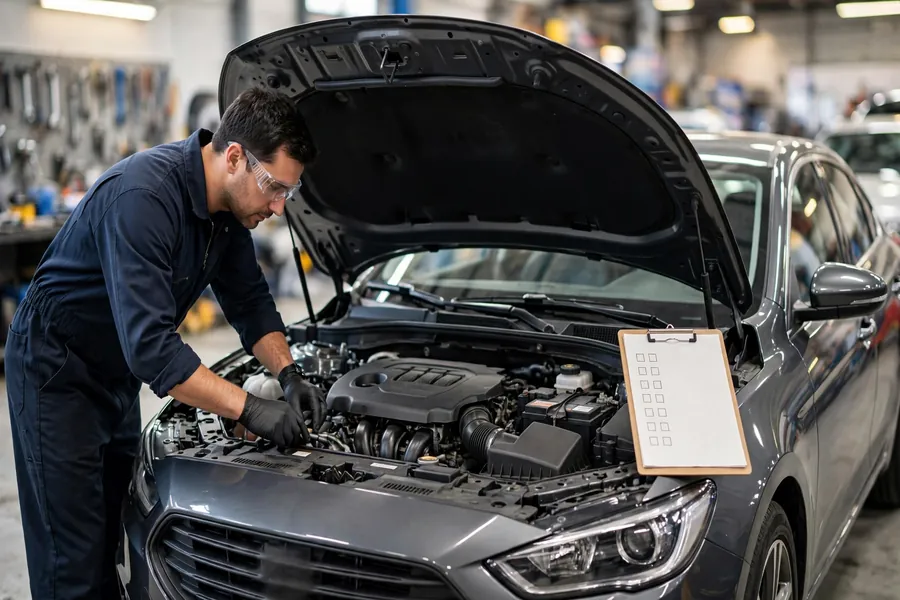
The right year and engine get you 80% of the way. These five steps cover the rest.
- Choose the engine first, the year second. N52, B48, or B58 powertrains are the high-confidence picks; N54 cars and pre-2015 N20 cars need documented proof their known failures were addressed.
- Demand the service history. Full records beat low mileage — gaps in maintenance are the top predictor of expensive surprises.
- Check open recalls by VIN. Use NHTSA’s recall lookup for the specific car, not just the model year.
- Get a BMW specialist inspection. A cold-start listen for N20 timing-chain whine, a fault-code scan, and a leak check catch most of this guide’s issues before you pay.
- Budget for the known wear items. Even the best years need water pumps, gaskets, and mounts eventually — price the car accordingly.
For the complete process — test-drive checks, documents to demand, and how to read service records — see our used BMW 3 Series buying guide. Compare running costs across engines at fueleconomy.gov.
The verdict
Shortest possible answer: buy a 2016–2018 3 Series (B48/B58) for the best reliability per dollar, or a 2019+ G20 if your budget stretches. A well-kept N52-powered E90 (2006–2011 328i) remains the budget classic. Avoid the 2007–2010 335i (N54) and undocumented 2012–2015 328i (early N20) unless the seller proves the known failures were fixed.
Reliability is a three-legged stool: the right engine, a complete service history, and a specialist inspection. Get all three and even a fifteen-year-old 328i can be a dependable daily driver. Browse the rest of our Buying Guides hub before you start shopping.
Frequently asked questions
Methodology: no single authority publishes per-year reliability scores for the BMW 3 Series, so this article presents none. The Strong / Average / Weak tiers are qualitative judgments synthesized from BMW specialist reports (FCP Euro, independent BMW shops), owner-forum consensus (Bimmerpost, E90Post, Bimmerforums), documented NHTSA recall campaigns, and automotive press buying guides — each claim sourced above. Where evidence is thin (notably G20 long-term durability), the article says so. Last verified: September 2026.