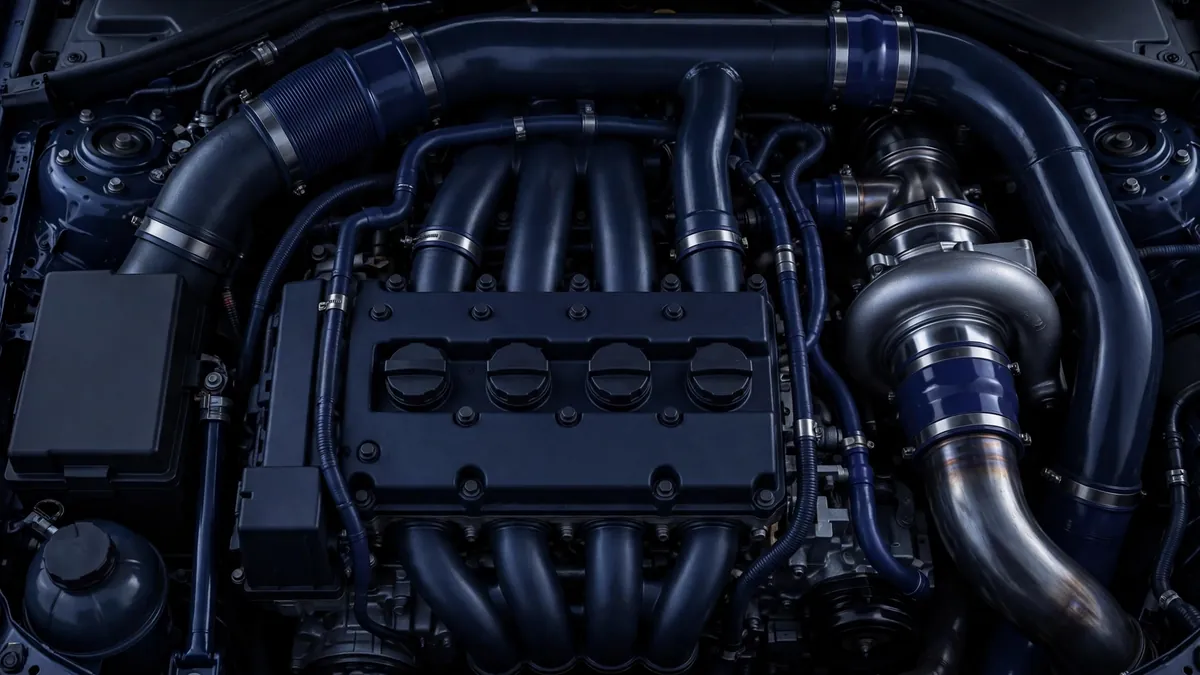
BMW N20 vs N26: Same Engine, Different Emissions — Does It Matter?
Park two 2013 BMW 328i sedans side by side and you will not spot a difference under the hood — same 2.0-liter turbo four, same 241 horsepower. But read the emissions label and one says ULEV while the other says SULEV. That one-word difference is the whole story behind the bmw n20 vs n26 debate: BMW built two nearly identical engines for two different emissions rulebooks, and which one you got was decided by the state the car was first sold in — not by anything you chose.
This guide covers the full n20 vs n26 picture: the real mechanical differences, how to tell which engine your car has, the timing-chain issue both share, the parts that differ when something breaks, and the one ownership consequence that actually matters — the SULEV emissions warranty. For broader context, see our comparisons hub, E90 vs F30, and the BMW 3 Series complete guide.
The short answer
The bmw n20 vs n26 question has a simple answer: they are the same 2.0-liter turbo four, with the N26 being the SULEV-certified version sold in California and other CARB states. Both make 241 hp and 258 lb-ft, share over 95% of parts, and both suffer the pre-2015 timing-chain issue. The differences are emissions hardware, not performance.
In this guide
- What the N20 and N26 are
- Every difference, side by side
- Power and torque: no performance gap
- How to tell which engine you have
- The timing-chain issue (affects both)
- What the fix involves and what it costs
- Parts & maintenance differences
- The SULEV warranty advantage
- Does it matter when buying?
- Verdict: which one to choose
- Frequently asked questions
The N20 and N26, in one line each
The N20 is BMW’s 2.0-liter TwinPower turbo four, built from 2011 to 2017 and certified to ULEV II standards. In ’28i models like the F30 328i it makes 241 hp, and it powered a huge slice of the lineup: F10 528i, E84 X1, F25 X3, F32 428i, F22 228i and more.
The N26 is the same engine with emissions hardware added to meet SULEV (Super Ultra Low Emissions Vehicle) standards. Built from 2012 to 2016 for states with SULEV legislation, it exists only in the top 241-hp tune and appeared in US-market F30 328i, F22 228i and F32/F33/F36 428i models.
Every difference between the N20 and N26
Strip away the emissions hardware and there is almost nothing left to argue about. Every difference below exists for one reason: certifying the same engine to the stricter SULEV standard.
| Item | N20 (ULEV II) | N26 (SULEV) |
|---|---|---|
| Emissions certification | ULEV II | SULEV (Super Ultra Low Emissions Vehicle) |
| Where it was sold | All other US states, plus global markets | Roughly 14 SULEV states (CA, AZ, CT, ME, MD, MA, NJ, NM, NY, OR, PA, RI, VT, WA, DC) — from March 2012 onward* |
| Fuel lines | Rubber | Stainless steel from the engine compartment to the high-pressure fuel pump |
| Turbo wastegate | Vacuum-driven before 07/2012; electric actuator after* | Electronic actuator (heats the catalytic converter faster) |
| Catalytic converter | 600/400 cpsi monoliths | Denser 900/600 cpsi monoliths plus a second mid-pipe cat* |
| Air box | Standard intake | Extra HC fleece filter; upper air box replaced as a unit if damaged |
| High-pressure fuel pump | Standard | Groove in the outlet valve drops pressure quickly at shutoff (lower leak risk) |
| Fuel injectors | Standard direct injectors | “Sorted” injectors: same part family, hand-selected for lowest leakage |
| Fuel tank venting | Standard | Added valve that tests the fuel system for leaks |
| Crankcase pressure valve | Replaceable separately | Plastic-welded to the valve cover — not replaceable on its own* |
| Power & torque | 241 hp / 258 lb-ft | 241 hp / 258 lb-ft — identical |
| Shared parts | — | Over 95% of part numbers shared with the N20 |
Confidence notes: the state list comes from aftermarket fitment guides — always verify your own car. Cat cell densities and the plastic-welded crankcase valve come from enthusiast teardowns. And the electric wastegate does not prove an N26: N20s built after July 2012 got it too.
Net it out: the N26 is an N20 wearing a SULEV compliance kit — same block, head, turbo and 8-speed automatic.
Power and torque: no performance gap
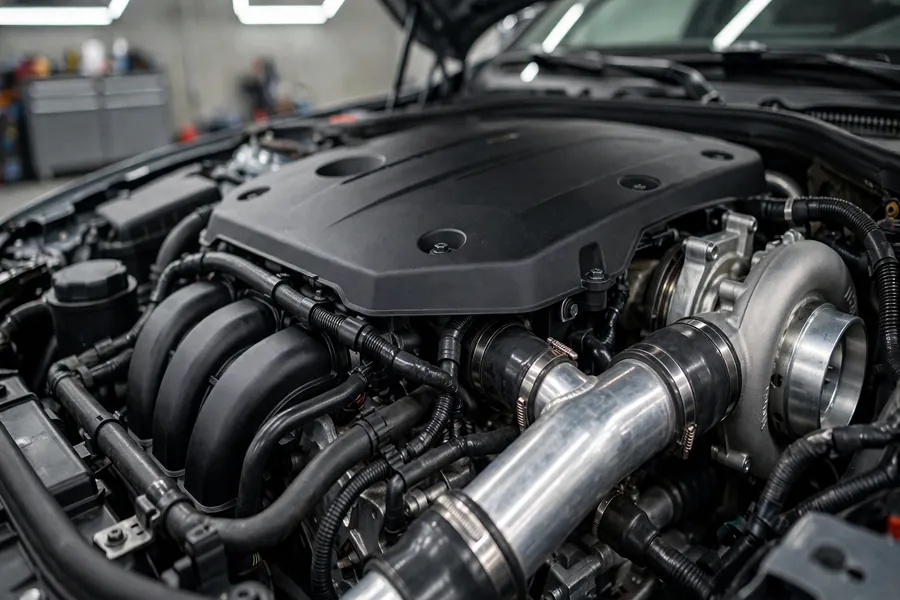
This is the myth to kill first: the N26 gives up nothing on paper. Both engines are rated at 241 hp (180 kW) and 258 lb-ft (350 Nm), with peak torque from just 1,250 rpm. BMW’s own engineering data lists identical displacement, compression ratio (10.0:1), redline (7,000 rpm) and output for both — and the N26 was only ever built in this top tune. There is no detuned N26.
One enthusiast source suggests the N26’s denser catalytic converters may cost a tiny bit of top-end breathing — treat that as low-confidence opinion, since peak figures are identical. For tuning, the two are treated as one: popular tuning platforms do not differentiate between N20 and N26 maps.
Bottom line: an N20 328i and an N26 328i of the same year feel like the same car, because they effectively are.
How to tell which engine you have
BMW never badged the difference — both cars just say 328i. Use these four checks, in order:
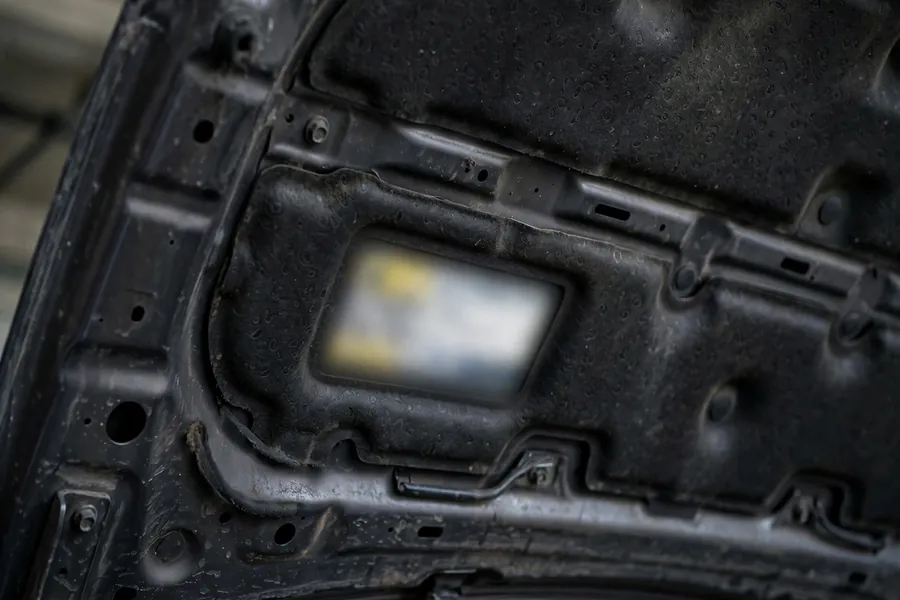
- Read the under-hood emissions sticker. On the underside of the hood, near the center, find the Vehicle Emission Control label. ULEV/ULEV II means N20; SULEV means N26. This is the fastest, most reliable check.
- Read the engine-code sticker. On the front of the cylinder head, beneath the intake cam sensor, a white sticker carries the engine code (reported as N26B20A on US 8-speed cars).
- Run your VIN through a free decoder. It lists the factory-fitted engine variant — handy if the stickers are missing or unreadable.
- Sanity-check build date and origin. The N26 only appears in cars built from March 2012 and first sold in a SULEV state. A 2011 car is virtually certain to be an N20.
Watch out: the electric wastegate is not a reliable identifier. N20s built after July 2012 got the electric wastegate actuator too, so only the emissions sticker or engine code settles the question.
Reliability: the timing-chain issue hits both
Here is the reliability fact that matters most in this comparison: the N20 and N26 share the same timing-chain weakness. Both used plastic timing-chain guides that can wear, crack and break apart on early builds, with debris able to reach the oil-pump drive — a failure that can destroy the engine.
The dividing line is the build date. BMW redesigned the timing-chain components effective January 2015 — the chain part number changed at that point, per parts-catalog records. Cars built before January 2015 carry the old guides; cars built from that date have the updated parts.
Symptoms of a failing timing-chain module include:
- A rattling or loud whining noise from the front of the engine, often on cold start, rising and falling with RPM
- A check-engine light with timing-correlation fault codes
- In advanced cases, sudden power loss or a no-start — by then the damage is usually severe
BMW addressed the issue through technical service bulletins and a limited extended warranty (reported as 7 years / 70,000 miles), plus a US class-action settlement covering certain models and VINs. Nearly all of that has now expired — check your VIN with a dealer, but budget as if you are on your own. One exception: N26 owners in SULEV states may still have the emissions warranty described below.
Do not buy a pre-2015 N20 or N26 on faith. If the seller cannot show an invoice for timing-chain and guide replacement, cold-start the car yourself, listen for rattle or whine, and price the preventive job into your offer. Our used 3 Series buying guide covers the pre-purchase checklist.
What the fix involves — and what it costs
The proper repair is a timing-chain module job: the main chain, guides and tensioner plus the oil-pump drive chain, which uses the same weak guide material. Insist the invoice lists both.
| Shop type | Typical cost band | Notes |
|---|---|---|
| Independent BMW specialist | $1,500 – $3,000 | Lower end of published US estimates; full module jobs trend higher |
| Independent, full module job | $2,500 – $4,000 | Both chains, updated OEM parts, 12+ hours of labor |
| BMW dealership | $4,000 – $5,500+ | Highest labor rates; strongest parts warranty |
Confidence note: these are bands from cost-aggregator sites and owner reports — actual prices vary by region and shop. Get a written quote, not a number from the internet.
For the full year-by-year picture — which model years carry the most risk and which are the safest bets — see our BMW 3 Series reliability by year breakdown.
Parts and maintenance differences that actually matter
Day to day, both engines want the same care: quality synthetic oil on short intervals (many specialists suggest 5,000–8,000 miles), cooling-system attention around 80,000–100,000 miles, and the usual gasket watch as they age. The differences only bite when you order parts:
- Exhaust and downpipes are not interchangeable. The N26’s second mid-pipe cat and denser downpipe cat mean aftermarket downpipes and some cat-back systems are N26-specific. Order the wrong one and it will not bolt up.
- The air box is N26-specific. The extra HC fleece filter lives in the upper air box, which is replaced as a complete unit if damaged.
- The crankcase pressure valve is part of the valve cover. On the N26 it is plastic-welded to the cover, so a failed valve means a full valve-cover replacement.
- Fuel system parts carry SULEV-only variants. The redesigned high-pressure fuel pump and stainless fuel lines are N26-specific part numbers, though failures are uncommon.
- The radiator can be N26-specific too. N26 cars use a radiator with an environmental air-catalyst coating and a sensor BMW does not sell separately — a known parts-counter headache.
- Injectors cross over. The “sorted” N26 injectors are the same part family as N20/N55 injectors, selected for minimum leakage.
None of this changes the ownership experience until a repair is due — but it is exactly why the identification checks above matter. The parts catalog does not forgive a wrong guess.
The SULEV warranty advantage
This is where the engine code genuinely changes the ownership math. SULEV-classified BMWs — including N26 cars — were sold with BMW’s California Emission Control Warranty covering emissions-relevant components for 15 years or 150,000 miles. BMW’s warranty documentation lists the N26 alongside the M56, N51 and B46 as covered SULEV/PZEV engine types.
That means an N26 in a participating state can carry emissions-component coverage long after the standard warranty expired — owners have reported getting expensive repairs, including timing-chain work classified as emissions-related, covered under it. Conditions apply: the car generally must have been first sold and registered in a participating CARB state, and the dealer must honor or deny the claim within 30 days. As of September 2026, 2014–2016 N26 cars are still inside the 15-year window — this is live value, not history.
Before you pay for any emissions-related repair on an N26 — catalytic converters, fuel-system leaks, sensors, even a timing-chain job a dealer classifies as emissions-related — ask the service advisor to check SULEV warranty coverage first. It costs nothing to ask and has saved owners thousands.
Does it matter when buying?
The practical question is simple — pick your situation:
Cars built from March 2012 in these states are very likely N26 — but verify with the under-hood sticker, since cars move between states.
- Upside: you may inherit the 15-year/150,000-mile SULEV emissions warranty — coverage no N20 can offer.
- Downside: N26-specific exhaust parts cost more, with fewer aftermarket choices.
- Non-negotiable: the same pre-2015 timing-chain diligence as an N20.
You will almost certainly find an N20 — simpler parts sourcing and a deeper used-parts market.
- Upside: broader aftermarket support; no SULEV-specific parts premiums.
- Downside: no 15/150k emissions warranty safety net.
- Non-negotiable: identical timing-chain risk — built before January 2015 means proof of the fix or a price that includes it.
Confirm your engine with the emissions sticker, then act on the build date — not the engine code.
- Built before January 2015 with no chain-service invoice? Have a BMW specialist inspect the chain module at the next service.
- Own an N26 in a CARB state? Check SULEV warranty eligibility before authorizing any emissions-related repair.
- Ordering parts? State N20 or N26 explicitly — exhaust, air box, fuel pump and radiator parts differ.
- Oil changes every 5,000–8,000 miles remain the cheapest reliability insurance for either engine.
Verdict: which one should you choose?
Choose the car, not the engine code. For daily driving, an N20 and an N26 of the same year are the same ownership experience — same power, same economy, and the same timing-chain risk on pre-2015 builds. Neither is meaningfully more reliable.
The tiebreakers are still real. In a CARB state, the N26’s possible 15-year/150,000-mile emissions coverage is a genuine edge between two otherwise identical 328i sedans. If you plan exhaust modifications, the N20’s simpler single-cat layout and deeper aftermarket make life easier. And above everything: prefer a 2015-or-later build of either engine, or a pre-2015 car with a documented timing-chain module replacement — that one decision outweighs the N20-vs-N26 question entirely.
For the wider buying picture, our used 3 Series buying guide and reliability by year breakdown will help you weigh the engine against everything else on a used F30.
Frequently asked questions
Every mechanical claim is sourced from BMW’s N26 technical training documentation, independent teardowns, or owner-community records — never from memory. Single-source claims carry confidence notes, costs are bands not quotes, and the state list is approximate: verify your own car with the under-hood emissions sticker. Last verified: September 2026.