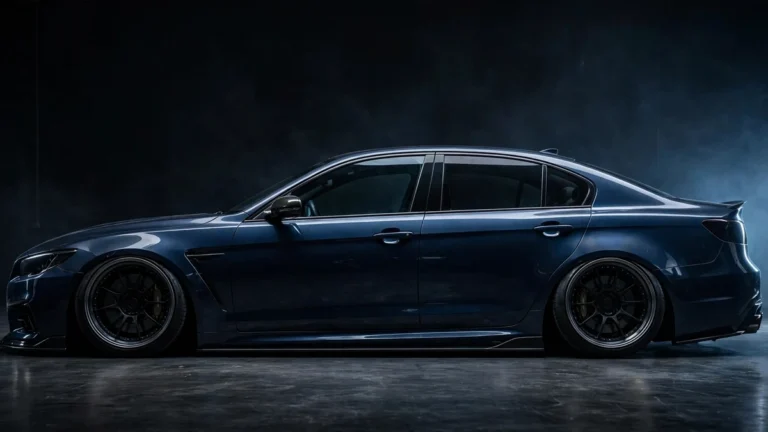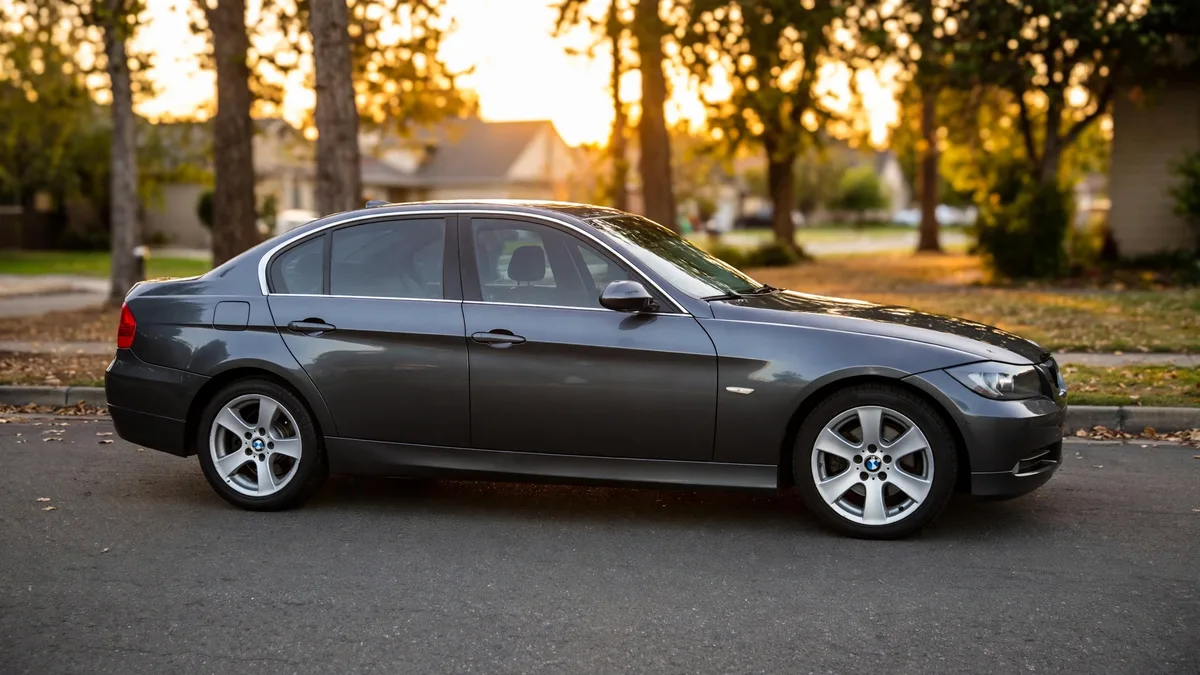
BMW 328i vs 335i: Which One Should You Buy?
The bmw 328i vs 335i question is the most searched 3 Series buying decision on the used market, and it is misunderstood more often than it is answered. This is not a comparison between two cars. It is a comparison between four engines across two generations: the E90 328i (N52 inline-six), the E90 335i (N54 twin-turbo six), the F30 328i (N20/N26 turbo four), and the F30 335i (N55 single-turbo six).
This guide is the engine-trim decision. If you are choosing between generations instead, read our E90 vs F30 comparison; if you are shopping the newer G20, see 330i vs M340i. Before buying any of them, start with the used 3 Series buying guide and the reliability record by model year.
The short answer
Buy the 328i if you want a dependable daily driver with low drama: the E90’s N52 inline-six is widely regarded as BMW’s most reliable modern engine, and the F30’s N20 is the cheaper-running turbo four — just budget a timing-chain inspection on 2012–2014 cars. Buy the 335i if you will genuinely use the extra 60–70 horsepower and want tuning potential: the E90’s N54 is a legend that also comes with legendary repair bills, while the F30’s N55 keeps the 300-hp punch with noticeably better reliability. The 335i’s purchase premium is the smallest cost in the equation — the maintenance gap is the real decision.
In this guide
- The real question: this is an engine decision, not a car decision
- Head-to-head specs by generation
- Reliability: the four engines and their trouble spots
- Priority picker: which 328i or 335i fits your budget and goals?
- Used-market price bands in 2026
- Cost of ownership: fuel, insurance, maintenance
- What to check before buying a 335i
- What to check before buying a 328i
- The honest cost-of-ownership verdict
- Frequently asked questions
The real question: this is an engine decision, not a car decision
Shoppers treat the bmw 328i vs 335i choice like two trims of the same car. On the used lot, it behaves like four different cars wearing two badges. The chassis, interiors, and option packages overlap heavily — an E90 328i and an E90 335i from the same year are the same car from the firewall back. Everything that separates them lives under the hood, and that separation reaches deep into reliability, fuel bills, insurance quotes, and what the car is worth with 150,000 miles on it.
Here is the engine map, because nothing else in this guide makes sense without it:
- E90 328i (2006–2011): N52 3.0-liter naturally aspirated inline-six — the last of BMW’s non-turbo sixes, port fuel injection. No turbos, no direct injection, no high-pressure fuel pump. This is the simplicity play.
- E90 335i (2007–2010): N54 3.0-liter twin-turbo inline-six — BMW’s first twin-turbo gasoline engine, direct injection, two small turbos. Genuinely thrilling, famously demanding. From 2011 the E90 335i switched to the N55.
- F30 328i (2012–2015): N20 (or N26 in SULEV states) 2.0-liter single twin-scroll turbo inline-four — the engine that replaced the N52. Faster and more efficient, but the early ones carry the well-documented timing-chain guide issue.
- F30 335i (2012–2015): N55 3.0-liter single twin-scroll turbo inline-six — 300 hp like the N54, but with one turbo, Valvetronic, and more reliable injectors. The six-cylinder sweet spot of the modern era.
Two more distinctions matter before the numbers. First, model year and engine don’t always line up: the 2011 E90 335i is an N55 car, not an N54 — check the eighth digit of the VIN or the build date rather than trusting the badge alone. Second, xDrive adds all-weather traction to any of these but costs roughly 1–2 mpg and adds transfer-case maintenance; see our xDrive vs RWD comparison before deciding. Everything below compares RWD figures unless noted.
Head-to-head specs by generation
Power figures are BMW factory ratings. 0–60 times are manufacturer or published test figures (not our own testing), and fuel economy figures are EPA ratings from fueleconomy.gov for the automatic-transmission sedan unless noted. The headline takeaway: each 335i makes roughly 60–70 more horsepower than the 328i of its generation, and the 300 lb-ft of torque arrives thousands of rpm earlier.
| Specification | E90 328i (N52) | E90 335i (N54) | F30 328i (N20) | F30 335i (N55) |
|---|---|---|---|---|
| Model years (US) | 2006–2011 | 2007–2010 (N55 from 2011) | 2012–2015 | 2012–2015 |
| Engine | 3.0L NA inline-six | 3.0L twin-turbo inline-six | 2.0L turbo inline-four | 3.0L turbo inline-six |
| Horsepower | 230 hp @ 6,500 rpm | 300 hp @ 5,800 rpm | 240 hp @ 5,000 rpm | 300 hp @ 5,800 rpm |
| Torque | 200 lb-ft @ 2,750 rpm | 300 lb-ft @ 1,400 rpm | 255 lb-ft @ 1,250 rpm | 300 lb-ft @ 1,200 rpm |
| 0–60 mph (manufacturer/test) | ~6.3–6.7 s | 5.3–5.6 s | 5.7–5.9 s | 4.7–5.0 s |
| EPA combined (automatic) | 22 mpg | 21 mpg | 27 mpg | 27 mpg |
| EPA city / highway (automatic) | 18 / 28 mpg | 18 / 26 mpg | 23 / 33 mpg | 23 / 33 mpg |
| Transmission | 6-spd manual or 6-spd auto | 6-spd manual or 6-spd auto | 6-spd manual or 8-spd auto (ZF) | 6-spd manual or 8-spd auto (ZF) |
| Fuel requirement | Premium recommended | Premium required | Premium recommended | Premium required |
Read the torque row, not the horsepower row. The E90 328i’s 200 lb-ft doesn’t arrive until 2,750 rpm, while every 335i — and the F30 328i — delivers its peak from barely above idle. That is why the E90 335i feels dramatically faster than its 70-hp advantage suggests: 300 lb-ft at 1,400 rpm is a shove in the back, not a gradual build. And it is why the F30 328i nearly matches the old N54 to 60 mph — turbo torque plus the ZF 8-speed closes most of the gap.
The surprise in the table is fuel economy. The F30’s direct injection, twin-scroll turbos, and 8-speed automatic compress the efficiency gap to almost nothing: a 2013 328i and 335i with the automatic both carry EPA ratings of 23 city / 33 highway. If you were hoping the 328i would save you at the pump, temper that hope — the real ownership cost gap is maintenance, not fuel.
Reliability: the four engines and their trouble spots
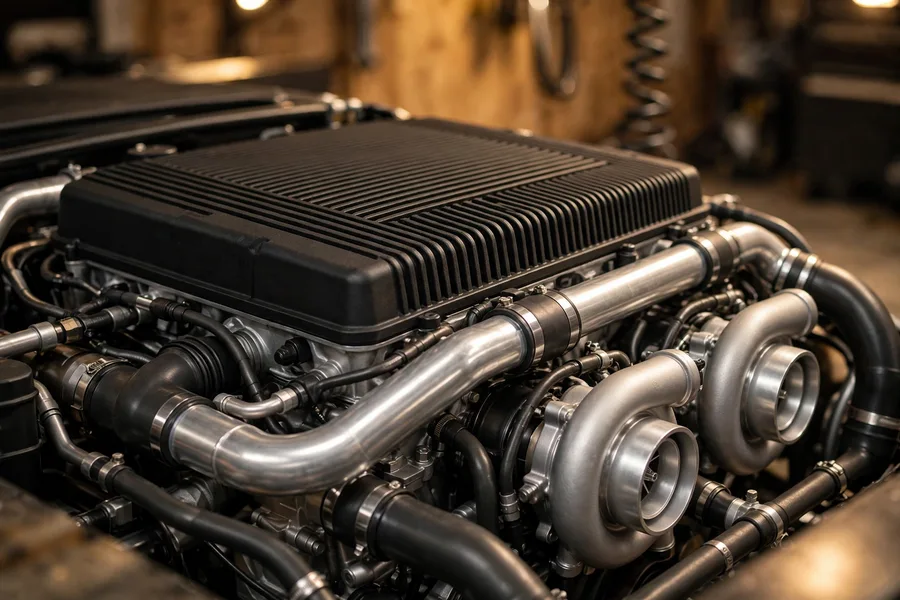
This is the section that should decide your purchase. The 335i’s extra performance is real, but every one of these four engines has a documented failure profile, and the N54’s is legendary — both kinds. Severity ratings reflect typical repair cost and stranding risk from the documented owner record.
| Engine | Known trouble spots | Severity |
|---|---|---|
| N52 (E90 328i) | Electric water pump (~80–100k miles); valve cover and oil filter housing gasket leaks; DISA valve wear on early cars; occasional Valvetronic eccentric-shaft issues | Moderate — the water pump is the one big-ticket item; widely regarded as BMW’s most reliable modern six |
| N54 (E90 335i) | High-pressure fuel pump failures; piezo fuel injectors; wastegate rattle / turbo failure; electric water pump; carbon buildup on intake valves (direct injection); valve cover and oil filter housing gasket leaks; charge-pipe cracks | High — the HPFP alone drew a class action and a 10-year/120k-mile warranty extension; budget for turbos eventually |
| N20/N26 (F30 328i) | Timing-chain guide wear on 2012–2014 cars (can destroy the engine if it fails); oil consumption on higher-mileage examples; turbocharger/wastegate issues; electric water pump; plastic charge pipe | High for early cars (timing chain), moderate for 2015 cars — verify chain/guide service before buying any 2012–2014 |
| N55 (F30 335i) | Electric water pump; valve cover and oil filter housing gasket leaks; plastic charge pipe; VANOS/valvetronic actuator wear; slower carbon buildup than N54; rod-bearing concern only on tracked/abused cars | Moderate — the six-cylinder BMW should have built first: far fewer systemic failures than the N54 |
Engine by engine: what the table means in practice
The N52 is the reliability benchmark — by community consensus, not just reputation. It has no turbos to fail, no direct injection (port injection means no carbon buildup on intake valves), and no high-pressure fuel pump. The caveats are ordinary BMW six-cylinder caveats: the electric water pump fails without warning around 80–100k miles (a $900–$1,400 shop job — see our water pump failure guide), the valve cover and oil filter housing gaskets weep with age, and early cars can suffer DISA intake-flap wear. Compared to every other engine here, this list is a love letter.
The N54 is the best and worst engine on this list simultaneously. Best, because its tuning ceiling is absurd — basic bolt-ons and a tune take it well past 400 hp, and the aftermarket is enormous. Worst, because the documented failure list reads like a greatest-hits of expensive repairs: the high-pressure fuel pump was so failure-prone that BMW extended its warranty to 10 years/120,000 miles after a class action; the piezo injectors fail and cost multiples of ordinary injectors; the twin turbos develop wastegate rattle that eventually means turbo replacement; and direct injection means periodic walnut blasting of carbon from the intake valves. A sorted N54 with receipts for the HPFP, injectors, turbos, and water pump is a genuinely great used buy. An unsorted one is a project car wearing a daily-driver costume.
The N20/N26’s timing chain is the single scariest item in this entire comparison. On 2012–2014 cars, the timing-chain guides wear prematurely; if the chain jumps or snaps, it is an engine-killer, not a repair. A 2015 car or one with documented guide replacement is a different proposition entirely — the N20 is otherwise a strong, efficient engine, and its 255 lb-ft from 1,250 rpm makes the F30 328i genuinely quick. Our N20 vs N26 deep-dive covers which cars got the revised parts. Also watch oil consumption on higher-mileage examples (see our oil consumption guide).
The N55 is the 335i to buy if you buy a 335i. One twin-scroll turbo instead of two, solenoid injectors instead of failure-prone piezo units, Valvetronic, and a far less dramatic carbon-buildup problem. It still has the electric water pump, the weeping gaskets, and the fragile plastic charge pipe (see our charge pipe failure guide), plus VANOS and Valvetronic actuator wear as miles accumulate (see VANOS and Valvetronic problems). But none of these are systemic the way the N54’s fueling issues were. Among turbo sixes, this is the calm one.
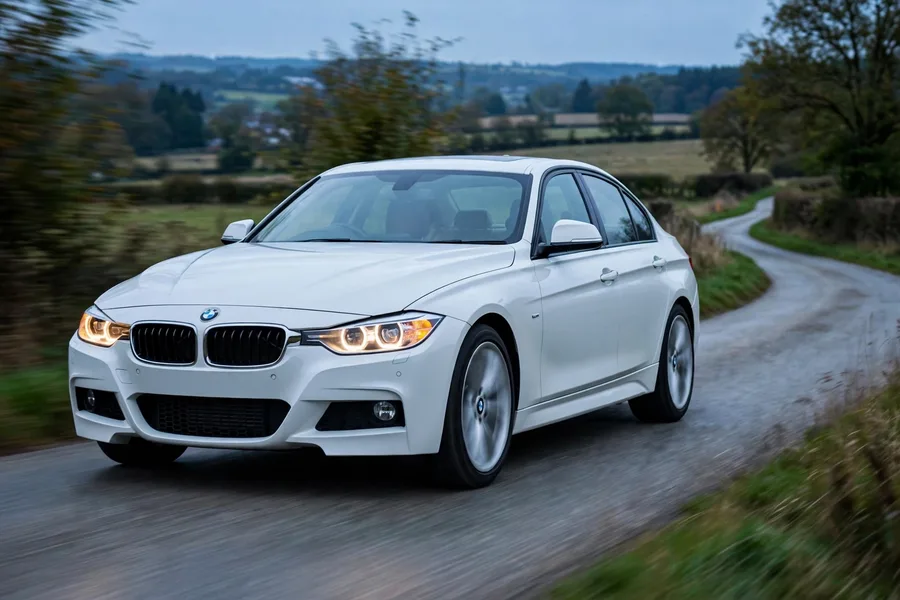
Priority picker: which 328i or 335i fits your budget and goals?
Answer two questions — your budget and your priority — and the picker matches you to the right engine.
328i vs 335i priority picker
Pick your budget and your priority, then hit “Get my recommendation”.
Used-market price bands in 2026
These are approximate market ranges for private-party and dealer listings in 2026, not precise data — condition, mileage, options, and the manual-transmission premium swing individual cars well outside these bands. The pattern is consistent: the 335i costs roughly $2,000–$4,000 more than the equivalent 328i, and the newest, best-documented cars command the top of each range.
| Model | Typical mileage | Approximate price band | What moves it up or down |
|---|---|---|---|
| E90 328i (N52) | 90k–150k | $6,000–$12,000 | Sport package, 6-speed manual, and full records push to the top; neglected examples sink below $6k |
| E90 335i (N54) | 90k–140k | $8,000–$15,000 | Receipts for HPFP, injectors, turbos, and water pump justify the top; tuned or unmaintained cars are discounted for a reason |
| F30 328i (N20/N26) | 70k–120k | $11,000–$18,000 | 2015 model year and documented timing-chain service command premiums; 2012–2014 cars without records sit at the bottom |
| F30 335i (N55) | 70k–120k | $14,000–$22,000 | M Sport package, 6-speed manual (rare, holds value), and dealer service history; modified cars trade at a discount to stock |
Two pricing truths the table hides. First, the cheapest 335i is the most expensive 335i: an $8,000 N54 that needs injectors, turbos, and a water pump is a $14,000 car that lies about it. Second, the E90 328i is quietly the market’s inefficiency — N52 cars with six-figure mileages routinely sell for family-sedan money while offering rear-drive balance and an engine that regularly sees 200,000 miles with basic care.
Cost of ownership: fuel, insurance, maintenance
Purchase price is the down payment; ownership is the mortgage. Here’s how the four cars compare across a typical year of 12,000 miles, using EPA figures and labeled estimates for the rest. Our maintenance schedule and cost guide has the full service-item breakdown these numbers rest on.
| Annual cost item | E90 328i | E90 335i | F30 328i | F30 335i |
|---|---|---|---|---|
| Fuel (12k mi, EPA combined, premium) | ~$2,450 (22 mpg) | ~$2,570 (21 mpg) | ~$2,000 (27 mpg) | ~$2,000 (27 mpg) |
| Insurance (qualitative) | Lowest of the four | Higher — performance trim surcharge | Low-moderate | Higher — performance trim surcharge |
| Routine maintenance | $800–$1,200/yr | $1,000–$1,500/yr | $900–$1,300/yr | $1,100–$1,600/yr |
| Big-ticket risk items | Water pump $900–$1,400 | Turbos $2,500–$4,000; injectors $1,500+; HPFP $800+ | Timing chain $2,500–$4,000 (early cars) | Water pump $1,000–$1,500; charge pipe $400–$800 |
| Tires & brakes (per set/axle cycle) | Standard 17″ sizes, cheapest | Staggered 18″ sport sizes, ~20% more | 17–18″ sizes, moderate | Staggered 18–19″ M Sport sizes, priciest |
Fuel barely separates the E90 pair — one combined mpg — and doesn’t separate the F30 pair at all. Where the 335i really taxes you is everything around the engine: wider, staggered performance tires that cost more and wear faster; bigger brakes; higher insurance groupings (insurers see “35” and price the risk, so expect roughly $150–$400 more per year depending on your profile — a labeled estimate, not a quote); and the simple fact that turbocharged, direct-injected engines have more expensive parts when they break.
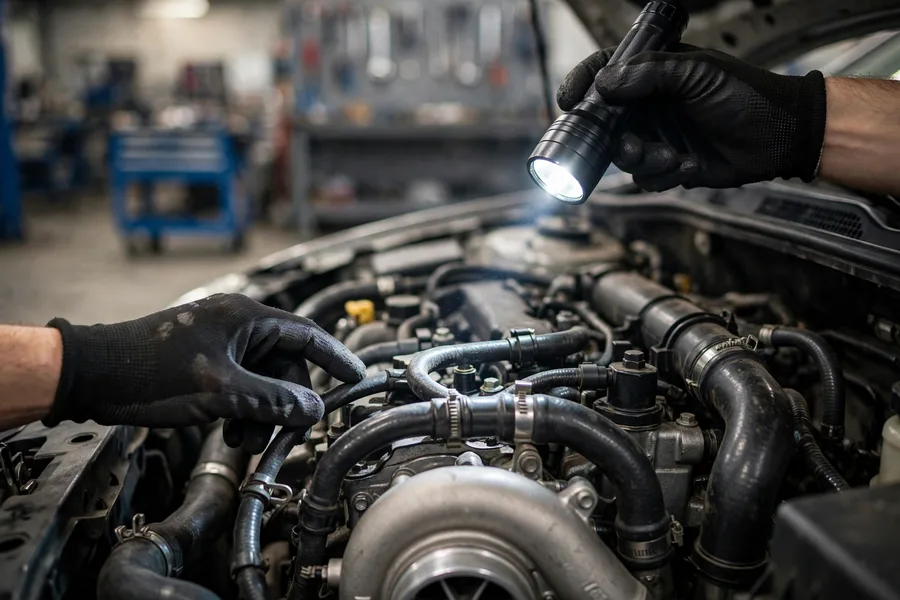
What to check before buying a 335i
The 335i rewards diligence and punishes impulse. Every item below has a direct line to a four-figure repair — which is why “no service records” on a 335i is a walk-away signal, not a negotiation point.
- Boost leaks and the charge pipe. On a test drive, the car should pull hard and smoothly to redline with no stuttering, no whooshing from the engine bay, and no drivetrain-malfunction warnings. A cracked plastic charge pipe is the classic culprit — see our charge pipe failure guide and our drivetrain malfunction diagnosis.
- Service history for the big-ticket items. On an N54, demand receipts for the HPFP, injectors, turbos (or wastegate work), and water pump. On an N55, the water pump, valve cover gasket, and oil filter housing gasket. “Just done” without paperwork means not done.
- Modifications — and their quality. A huge share of used 335i cars are tuned. A tasteful tune with supporting mods (upgraded charge pipe, intercooler) and receipts is a different car from a mystery tune on stock hardware. Our buying guide treats undocumented mods as a walk-away; for the 335i, double that caution.
- Cold-start behavior. Start the car dead cold. Long cranking, rough idle, or misfire codes point at injectors or the HPFP (N54) or coil/plug issues (see spark plug replacement intervals). Watch for smoke on throttle tip-in, which suggests turbo seal wear.
- Oil leaks from above and below. The oil filter housing gasket and valve cover gasket are the repeat offenders on both 335i engines. Our oil leak guide maps every common source. Fresh undertray with no stains can mean “just detailed to hide it” — look at the housing and valve cover directly.
- Cooling system health. The electric water pump fails without warning. Ask when it was last replaced; if the answer is “never” at 100k+ miles, budget $1,000–$1,500 immediately and read the water pump symptoms guide.
What to check before buying a 328i
The 328i inspection is shorter, which is the point. You’re verifying condition, not hunting for systemic engine failures.
- On F30 328i cars: the timing chain. This is the one make-or-break check. Listen for chain rattle on cold start, ask for documentation of guide/chain replacement on 2012–2014 cars, and read our N20 vs N26 guide before you shop. A 2015 car sidesteps most of this risk.
- On E90 328i cars: cooling and gaskets. Same water pump question as the 335i (it fails on every N52 eventually), plus valve cover and oil filter housing seepage. These are maintenance, not deal-breakers — but they are negotiation leverage.
- Oil change history. The N52 is tolerant but not immortal; the N20 is less tolerant. Look for 7,500–10,000-mile intervals with proper LL-01 oil (see our oil change interval guide). Sludge under the oil cap is a walk-away.
- Suspension and bushings. At 100k+ miles, control-arm bushings, shocks, and rear subframe bushings are wear items on every 3 Series (see our control arm bushing guide). A floaty or clunky test drive means a $1,000+ refresh, 328i or 335i alike.
- Electronics and battery. Battery registration matters on these cars — a fresh battery without registration causes the battery discharge warnings owners complain about. Verify with our battery registration guide.
The honest cost-of-ownership verdict
Strip away the romance and the math is blunt. Over five years, a 335i will typically cost $5,000–$10,000 more to own than the equivalent 328i — not because of fuel (the gap is trivial) but because of the purchase premium, higher insurance, pricier consumables, and at least one big-ticket turbo-engine repair that the 328i simply never has.
That does not make the 335i a bad buy for the right person: someone who will use the power, budgets for a specialist, insists on full records, and keeps a repair reserve. The F30 335i is one of the great used performance sedans on those terms. And if your budget stretches into G20 territory, our 330i vs M340i comparison covers the newer version of this exact decision.
But if you want a 3 Series that asks little and gives much — the car you recommend to a friend without caveats — the 328i, especially the N52 E90, remains the answer. Buy the engine that matches your tolerance for drama, not the badge that matches your aspirations.
Frequently asked questions
Is the BMW 335i reliable?
It depends entirely on which engine. The F30 335i’s N55 is reasonably reliable for a turbocharged six — its main issues (water pump, gaskets, charge pipe) are manageable. The E90 335i’s N54 is not reliable by any normal standard: the high-pressure fuel pump, piezo injectors, and twin turbos are all documented weak points. Either way, buy on service records, not mileage.
How much faster is the 335i than the 328i?
On the E90, the 335i is about a second quicker to 60 mph (5.3–5.6 s vs ~6.3–6.7 s) and feels far faster thanks to 300 lb-ft arriving at 1,400 rpm. On the F30, the gap narrows dramatically: the 328i’s turbo four and 8-speed automatic run 5.7–5.9 s, while the 335i runs 4.7–5.0 s. The F30 328i is nearly as quick as the old E90 335i — the 335i’s advantage is mid-range thrust and tuning headroom, not just the stopwatch.
Should I get an N54 or N55 335i?
For most buyers, the N55 (2011+ E90, all F30 335i). It makes the same 300 hp with one twin-scroll turbo, more reliable injectors, and far fewer systemic failures, and it still responds well to tuning. Choose the N54 only if maximum tuning potential is the entire point and you have the budget and tolerance for its fueling-system repairs — and only with receipts proving the HPFP, injectors, and turbos are sorted.
Is insurance more expensive on a 335i than a 328i?
Yes, consistently. Insurers rate the 335i as a performance trim, so expect to pay roughly $150–$400 more per year than the equivalent 328i depending on your age, location, and driving record — a labeled estimate, not a quote. The gap is widest for younger drivers. Get quotes for both VINs before you buy; the insurance difference alone can exceed the fuel-cost difference.
Which used 328i or 335i is the best value right now?
The value sweet spots are the late E90 328i (2009–2011, N52 — maximum reliability per dollar) and the 2015 F30 328i (revised timing-chain parts, modern efficiency). For 335i shoppers, the F30 335i (N55) is the value pick over the N54 E90 unless you specifically want the N54’s tuning ceiling. In every case, a documented, stock, well-maintained example beats a cheaper neglected one — the inspection matters more than the badge.