BMW 330e Guide to Range, Charging and Reliability
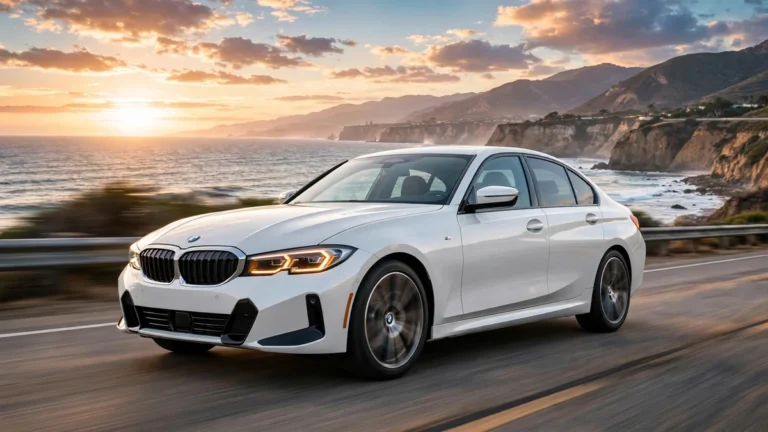
Short answer: the BMW 330e is the plug-in hybrid 3 Series — a 2.0-liter turbo petrol paired with a transmission-integrated electric motor you charge from the wall. The F30 330e (2016–2018) makes 248 hp combined with a 7.6 kWh battery and 14 miles of EPA electric range; the G20 330e (2021+) makes 288 hp with XtraBoost, a 12 kWh battery, and 22 miles of EPA range (20 for xDrive). Real-world electric range is shorter — treat the 330e as an electric commuter and petrol tourer in one car.
330e generations at a glance
| F30 330e (2016–2018) | G20 330e (2021+) | |
|---|---|---|
| System output | 248 hp / 310 lb-ft | 288 hp / 310 lb-ft (XtraBoost) |
| Petrol engine | 2.0L turbo | 2.0L turbo, 181 hp |
| Motor | Transmission-integrated | Transmission-integrated, 107 hp |
| Battery (gross / usable) | 7.6 kWh / 5.7 kWh | 12 kWh / 9.09 kWh |
| EPA electric range | 14 miles | 22 miles (RWD) / 20 miles (xDrive) |
| 0–60 mph | 5.9 s | ~5.6 s |
The 330e exists for one buyer: the driver whose daily commute fits inside the electric range but who refuses to plan life around chargers. Nail that use case — home charging, short commute, occasional long trips — and the 330e is the most economical 3 Series ever made. Miss it — no home charging, long motorway commute — and you are hauling a heavy battery for nothing. This guide covers the hybrid architecture, real-world range, charging, ownership, and reliability, so you can tell which buyer you are before you buy.
For the non-hybrid four-cylinder, see our G20 330i ownership guide — this article focuses on what the electric half adds (and complicates). For the broader used 3 Series picture, our used buying guide applies to the 330e’s petrol half.
F30 330e (2016–2018): the first-generation plug-in
The F30 330e paired a 2.0-liter turbo petrol with an electric motor integrated into the eight-speed automatic’s housing — the same ZF 8HP architecture as the conventional car, with the torque converter replaced by the motor. Combined US-reported output was 248 hp and 310 lb-ft, good for 0–60 mph in 5.9 seconds — properly quick, with the motor’s instant torque filling the turbo’s low-rev gap.
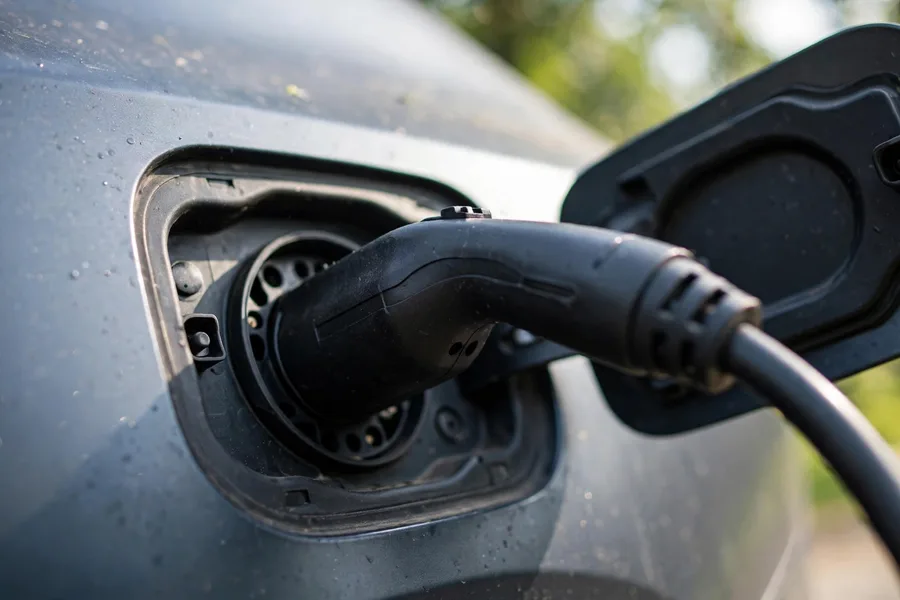
The battery was the compromise: 7.6 kWh gross, 5.7 kWh usable, mounted under the rear seat / boot area. EPA electric range was 14 miles — and real-world range in mixed conditions is typically 10–14 miles, less in winter. That sounds thin, and it is — but for the buyer with a 6-mile commute and a home charger, the F30 330e can still do the working week without burning petrol.
F30 330e ownership notes: the battery eats boot space (the floor is raised), the car weighs roughly 300+ lbs more than a 330i (noticeable on turn-in), and the hybrid system adds cooling circuits and power electronics that a specialist — not every indie — should service. Battery degradation on early cars is the key pre-purchase check: ask for a battery health report, and be wary of cars that lived their lives never plugged in (the battery still ages, and you paid the hybrid premium for nothing).
G20 330e (2021+): the grown-up plug-in
The G20 330e fixed the F30’s biggest weakness — battery size. The numbers step up across the board: 181 hp from the petrol engine plus a 107 hp motor, 288 hp / 310 lb-ft combined with the XtraBoost function (a 10-second power boost on kickdown), a 12 kWh gross / 9.09 kWh usable battery, and EPA electric range of 22 miles RWD / 20 miles xDrive.
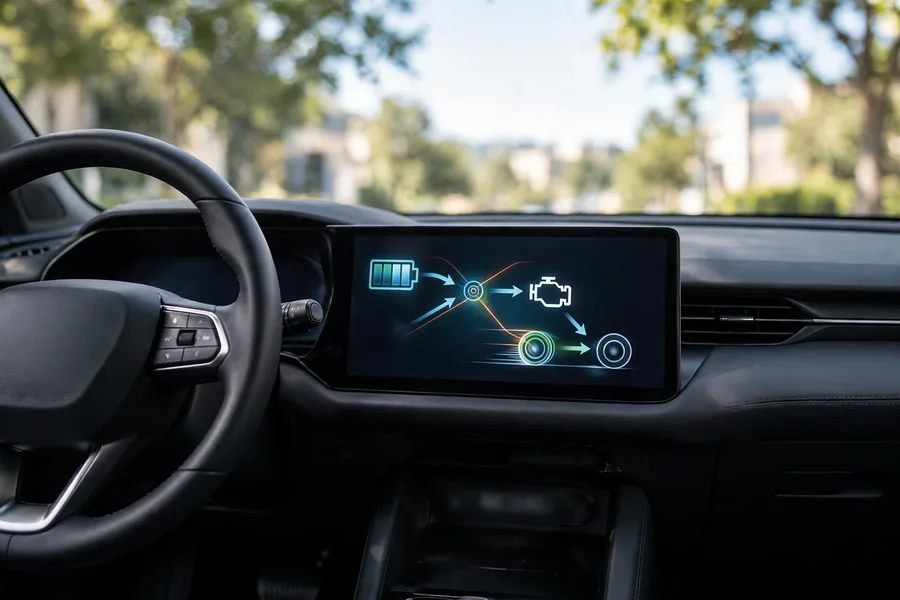
Real-world electric range is typically 16–22 miles depending on temperature, speed, and heater use — enough for genuine electric commuting for a much larger share of buyers than the F30 managed. The G20 also integrates the hybrid system more transparently: drive-mode logic (Electric, Hybrid, Sport) is better calibrated, the transition between motor and engine is smoother, and the battery packaging intrudes less on boot space than the F30’s.
Later market-specific updates have continued to evolve the G20 330e (battery and output figures vary by model year and region), so — as with every BMW — verify the exact spec of the car in front of you by VIN rather than assuming one universal figure. Do not present any single battery or range number as covering all 330es.
How the 330e hybrid system actually works
Understanding the architecture explains both the 330e’s strengths and its service needs:
- Transmission-integrated motor. The electric motor lives where the torque converter would be in a conventional ZF 8HP. It drives through the same eight ratios as the engine, which is why the 330e keeps the 8HP’s crisp shift character — and why gearbox service follows the same logic as the conventional car (see our ZF 8HP fluid guide).
- Three driving personalities. Electric mode (motor only, up to the range limit), Hybrid mode (the car blends both for efficiency), and Sport/XtraBoost (both for maximum attack). Most owners live in Hybrid and let the car decide.
- Regenerative braking. Lifting off or braking recovers energy into the battery — most effective in stop-start traffic, least effective on steady motorway runs. This is why the 330e’s economy advantage concentrates in urban and suburban driving.
- The battery’s second job. Beyond propulsion, the high-voltage battery powers the electric air-conditioning compressor and heating — which is why winter electric range drops: heating the cabin from the battery costs miles.
- 12V system remains. Like all hybrids, the 330e still has a conventional 12V battery for accessories and starting the electronics — and it can still leave you stranded if neglected. Our battery-drain guide applies.
Real-world electric range: the honest numbers
EPA figures are laboratory numbers. Here is how they translate:
| Model | EPA range | Real-world summer | Real-world winter |
|---|---|---|---|
| F30 330e | 14 miles | 11–14 miles | 8–11 miles |
| G20 330e RWD | 22 miles | 18–22 miles | 13–17 miles |
| G20 330e xDrive | 20 miles | 16–20 miles | 12–15 miles |
What eats range: motorway speeds (aerodynamic drag squares with speed — 75 mph costs far more than 55), cabin heating in winter (the single biggest seasonal factor), short trips in the cold (the battery starts cold every time), and aggressive acceleration. What preserves it: pre-conditioning the cabin while still plugged in (heating from wall power, not battery), steady suburban speeds, and gentle throttle.
The key ownership insight: size your expectations to your commute, not the brochure. If your round-trip commute is 30 miles and you can charge at home overnight, a G20 330e does most of it electrically — the petrol engine becomes a range-extender for weekends. If your commute is 60 motorway miles with no workplace charging, you will burn petrol daily while carrying 400+ lbs of battery — buy the 330i instead.
Charging the 330e: equipment, times, and costs
The 330e charges on AC only — no DC fast charging. That is fine, because the battery is small:
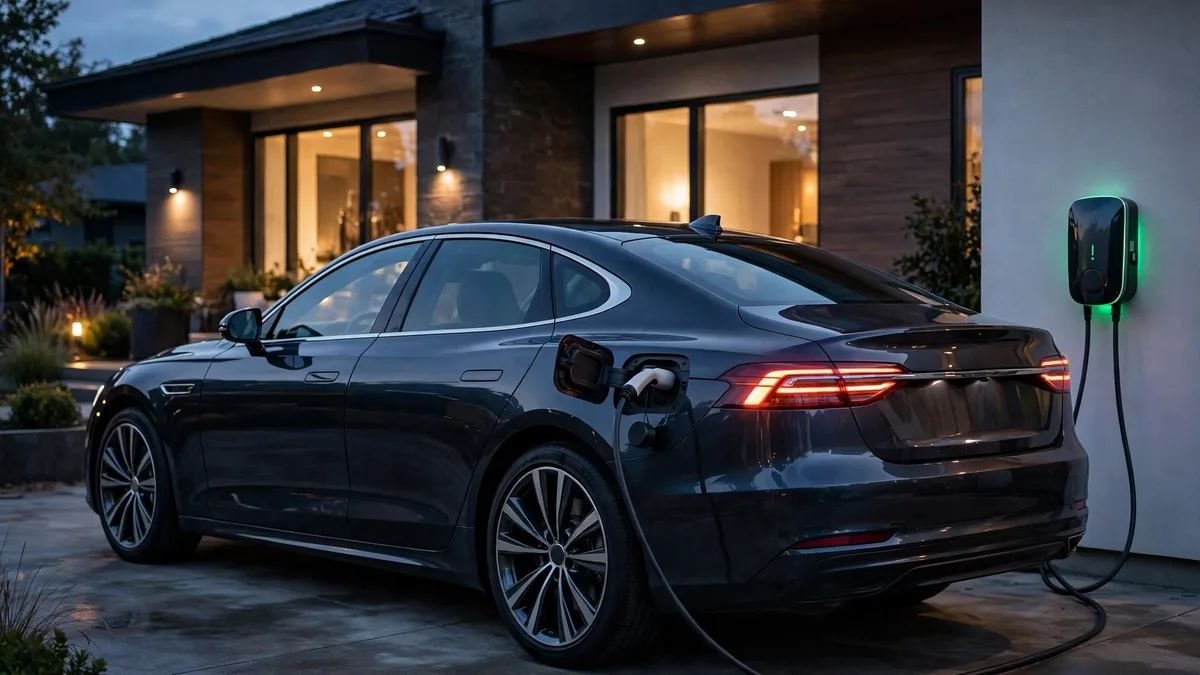
- Home wallbox (240V / 16A+). The ideal setup: a full charge of the G20’s usable ~9 kWh takes roughly 2.5–3.5 hours depending on the onboard charger and supply. The F30’s smaller battery fills in under 2 hours.
- Standard domestic socket. Works, but slowly — expect 5–6 hours for the G20 from empty. Fine overnight, marginal for opportunity charging.
- Public AC chargers. Useful for topping up while shopping, but the per-kWh price at public posts often erases the saving versus petrol — run the numbers before making it a habit.
- Charge scheduling. Use the car’s departure-time scheduling to finish charging just before you leave — a warm battery (from charging) plus pre-conditioned cabin (from wall power) maximizes winter range.
The home-charging rule: the 330e only makes financial sense with home (or cheap workplace) charging. Without it, you own a heavier, more complex 330i that you can never fully exploit. Confirm your charging situation before shopping — it is the single biggest predictor of 330e satisfaction.
Used-market pricing and the incentives question
The 330e’s used pricing follows a logic of its own. New, PHEVs carried premiums softened by tax incentives — but incentives vary wildly by country and year, and most have expired or shrunk for used purchases. Do not assume any incentive applies to your purchase; check your local rules for the current tax year, because PHEV incentive schedules change frequently and this article cannot track every jurisdiction.
On the used market, 330es typically price below equivalent-mileage 330is of the same age — the market discounts hybrid complexity and battery-age anxiety. That discount is the buyer’s opportunity: a well-checked 330e (clean battery report, full history) at a discount to the 330i, driven on cheap home electricity, is the value play of the 3 Series range. The discount is also a warning — cars priced far below market usually have the battery report the seller does not want to show you. Price the car, then price the battery check; never skip the second because the first looked good.
Interactive: 330e charging-cost calculator
Enter your battery, losses, electricity rate, and driving pattern — the calculator shows what electric miles really cost you, versus petrol. Every input path is validated and tested.
Interactive: are you a 330e person? Six-question check
Six true/false claims. Score 5+ and the 330e fits your life; 3 or fewer and the 330i is probably the smarter buy.
Driving modes deep dive: getting the most from the system
The 330e’s drive modes are not marketing fluff — they meaningfully change how the car uses its two power sources. Learning them is the difference between 330e ownership that delights and ownership that disappoints:
- Electric. Motor only, up to the battery’s limit (and a speed cap). Use it for the commute, school run, and anywhere silence matters. The car will start the engine anyway if you demand full throttle or the battery is cold — this is normal, not a fault.
- Hybrid (the default you should live in). The car blends engine and motor for maximum efficiency, often running electric at low speeds and bringing the engine in seamlessly for higher loads. For mixed driving, Hybrid beats manual mode-juggling every time — the calibration engineers know more than your thumb.
- Sport / XtraBoost. Both power sources, sharpest throttle, and — on the G20 — the XtraBoost kickdown function unlocking the full 288 hp for about 10 seconds. Use it for overtaking, not commuting; Sport holds lower gears and drinks fuel accordingly.
- Battery Control / eSave-style functions. Holds or rebuilds battery charge using the engine — useful when you know you will want electric miles later (a city center with restrictions at the end of a motorway run). Do not use it routinely: burning petrol to make electricity to save petrol is thermodynamic nonsense unless the destination requires it.
The beginner mistake is treating the 330e like an EV with a backup engine — micromanaging modes, obsessing over the battery gauge. The car is smarter than that. Charge nightly, drive in Hybrid, save Electric for where it matters, and let the system work.
Battery degradation: what actually happens over time
The question every used 330e buyer asks: how much battery will be left? The honest answer has three parts:
- All lithium batteries degrade. Calendar aging (time) and cycle aging (charge/discharge cycles) both reduce usable capacity. A 5-year-old 330e will not deliver its factory electric range — expect single-digit percentage losses per year under normal use, more with abuse.
- Heat and habits matter. Batteries degrade faster when kept at 100% charge in heat, or regularly run to empty. The 330e’s thermal management helps, but a car that spent years in a hot climate always plugged in will show more degradation than a garaged temperate-climate car charged nightly and driven daily.
- Degradation is gradual, not catastrophic. The battery does not “die” at some mileage — range shrinks mile by mile. A G20 showing 17 electric miles instead of 22 is normal aging, not a fault. A car showing 8 miles has a problem worth investigating.
What to do about it as a buyer: get the battery health report (usable capacity vs the 5.7/9.09 kWh factory figures), discount for degradation beyond age norms, and remember that a degraded battery still leaves you a perfectly good hybrid — the petrol half does not care. As an owner: charge to 100% only when you need the range (daily 80–90% is kinder if your routine allows), park in shade or a garage in summer, and do not stress — normal use produces normal aging.
Long-trip behavior: the 330e as a tourer
Forget the hybrid for a moment: how is the 330e on a 500-mile day? Better than its spec sheet suggests:
- Once the battery is depleted, it is a 330i with extra weight. The engine drives, the motor assists and recovers — motorway economy lands within a few mpg of the equivalent petrol car, slightly worse because of the ~400 lbs of battery and hardware.
- The motor still earns its keep. Even with a “depleted” battery, the system maintains a buffer for torque-fill and regenerative braking — overtaking response stays sharper than a pure petrol car’s, and stop-start traffic at the destination runs electrically.
- Refueling is normal-car normal. No charger hunting, no range anxiety — petrol stations work exactly as they always have. This is the 330e’s trump card over full EVs for the one-car household.
- Pack light-ish. The battery already ate some boot space (more on the F30 than the G20); roof boxes and loaded boots hurt economy disproportionately on a car already carrying hybrid weight.
Common 330e faults and warning signs
Beyond the standard 3 Series issues, the hybrid system has its own watch list:
- Charging faults. “Charging interrupted” messages, charge ports that will not lock or release, and cables that charge intermittently. Sometimes the car, sometimes the wallbox — diagnose before replacing.
- Drivetrain warnings with hybrid codes. Generic drivetrain-malfunction warnings can mask hybrid-specific faults (inverter, DC-DC converter, battery contactors). A generic OBD reader shows the warning; a BMW-capable scanner shows the cause. Our drivetrain malfunction guide covers the diagnostic approach.
- 12V battery weirdness. The classic hybrid red herring: a weak 12V throws cascading, contradictory fault codes across systems. If a 330e presents a Christmas tree of warnings, check the 12V first — it is the cheapest fix and the most common cause.
- Coolant leaks (high-voltage circuit). The power electronics cooling loop is separate from the engine’s — low coolant warnings deserve immediate attention on both.
- US starter-relay recall (PHEV-specific). A separate US campaign covers 29,119 plug-in hybrid 330e, 530e, and 740Le vehicles for engine starter relays that may corrode and short — owners were urged to park outside until the fix, with notifications mailed no later than August 28, 2026. Any US 330e purchase must include a check that this recall is completed.
- Reduced electric range. Sudden drops (not gradual seasonal change) suggest a weak cell group or a battery management issue — specialist diagnosis, not guesswork.
330e ownership: maintenance and reliability
The 330e needs everything a 330i needs, plus hybrid-specific care. Budget accordingly:
Shared with the 330i (petrol half)
- B48 engine servicing. Oil changes on schedule with the correct low-ash oil — the hybrid’s frequent engine restarts make oil quality matter more, not less. See our oil change interval guide.
- ZF 8HP gearbox service. Same box, same logic: fluid and filter around 60,000–80,000 miles despite “lifetime” claims.
- Cooling system. The hybrid adds high-voltage cooling circuits alongside the engine’s — coolant condition matters for both. Watch for the low-coolant warning and never ignore it.
- Brakes. Regenerative braking reduces pad wear — 330e pads often last longer than 330i pads — but discs can corrode from under-use. An Italian tune-up for brakes (a few firm stops) is legitimate maintenance.
Hybrid-specific (electric half)
- High-voltage battery health. The key used-buyer check. Ask for a battery health/capacity report from a BMW dealer or hybrid specialist; compare usable capacity against the factory figure (5.7 kWh F30, 9.09 kWh G20). Significant degradation shortens electric range and cannot be fixed cheaply.
- Charging hardware. Test the charge port, cable, and onboard charger on the test drive — plug it in and confirm it charges. Replacement charge ports and cables are expensive.
- Power electronics cooling. The inverter and DC-DC converter have their own cooling needs; fault codes here are specialist territory.
- Software updates. Hybrid drive-logic improves with updates — check for outstanding software campaigns by VIN.
- 12V battery. Hybrids are notorious for 12V neglect (owners assume the big battery does everything). A weak 12V causes bizarre, intermittent faults — replace on schedule.
Reliability verdict: the G20 330e’s hybrid system is a mature design with no systemic battery horror stories at typical mileages — but it is still two powertrains in one car, and repair costs reflect that when things fail. The F30 330e is older, rarer, and harder to find specialists for; buy only with a clean battery report. For both, a specialist pre-purchase inspection that includes the hybrid system is non-negotiable — a standard mechanical PPI misses the expensive half of the car.
330e pre-purchase checklist
- Battery health report: usable capacity vs factory (5.7 kWh F30 / 9.09 kWh G20)
- Plug it in on the test drive — confirm charging starts and completes
- Drive in Electric mode until depletion — note the real range achieved
- Check all three drive modes and the engine/motor transition smoothness
- Full service history for the petrol half (oil, gearbox, cooling)
- 12V battery age and condition
- Boot floor / rear seat area for battery-pack intrusion and trim damage
- Outstanding software and safety recalls by VIN
- Charging cable included and undamaged
330e vs 330i: the final call
- Buy the 330e if: you have home or cheap workplace charging, your daily driving fits mostly inside the electric range, and you will actually plug it in every night. Then it is the cheapest 3 Series to run by a wide margin — and still a 5.6-second sports sedan when you want it.
- Buy the 330i if: you cannot charge at home, your miles are mostly long motorway runs, or you want maximum simplicity. The 330i is lighter, cheaper to buy, and every indie can service it. Our 330i ownership guide covers it in depth.
- The honesty test: if you buy the 330e and never plug it in, you bought the worst of both worlds — hybrid purchase premium, hybrid complexity, hybrid weight, with none of the savings. The plug is the point.
The 330e rewards one specific owner above all: the disciplined charger. Plug in every night, drive the commute electrically, and the car returns the lowest running costs of any 3 Series — with 288 hp on tap for the moments that matter. Everything else is commentary.
BMW 330e: five frequently asked questions
EPA figures are 14 miles (F30), 22 miles (G20 RWD), and 20 miles (G20 xDrive). Real-world range is typically 10–14 miles for the F30 and 16–22 miles for the G20 in summer, dropping roughly a quarter in winter — mostly due to cabin heating. Pre-condition while plugged in to preserve range.
No — AC charging only. A home wallbox fills the G20’s usable ~9 kWh in roughly 2.5–3.5 hours; the F30’s smaller battery takes under 2 hours. A standard domestic socket works overnight but takes 5–6 hours for the G20.
The G20 330e’s hybrid system is mature with no systemic battery failures at typical mileages — but it is two powertrains in one car, and repairs reflect that. The F30 is older and rarer; buy only with a clean battery health report. A hybrid-aware pre-purchase inspection is essential for both.
Buy the 330e if you have home/workplace charging and your daily miles fit inside the electric range — and you will plug in nightly. Buy the 330i if you cannot charge at home, drive mostly long motorway trips, or want maximum simplicity. A 330e never plugged in is the worst of both worlds.
It depends on your electricity rate and charging losses — use the calculator above with your numbers. The honest tension: at $0.30/kWh with 15% losses, a full G20 charge costs around $3.20 for ~20 electric miles — roughly $0.16/mile, which can actually exceed petrol cost per mile at moderate fuel prices. The 330e’s savings concentrate where electricity is cheap: off-peak home rates around $0.15–$0.18/kWh cut the per-mile cost roughly in half. Public-charger rates can erase the advantage entirely.