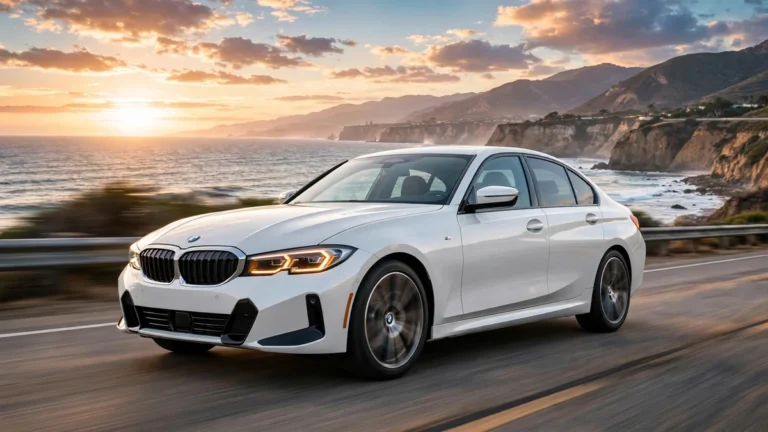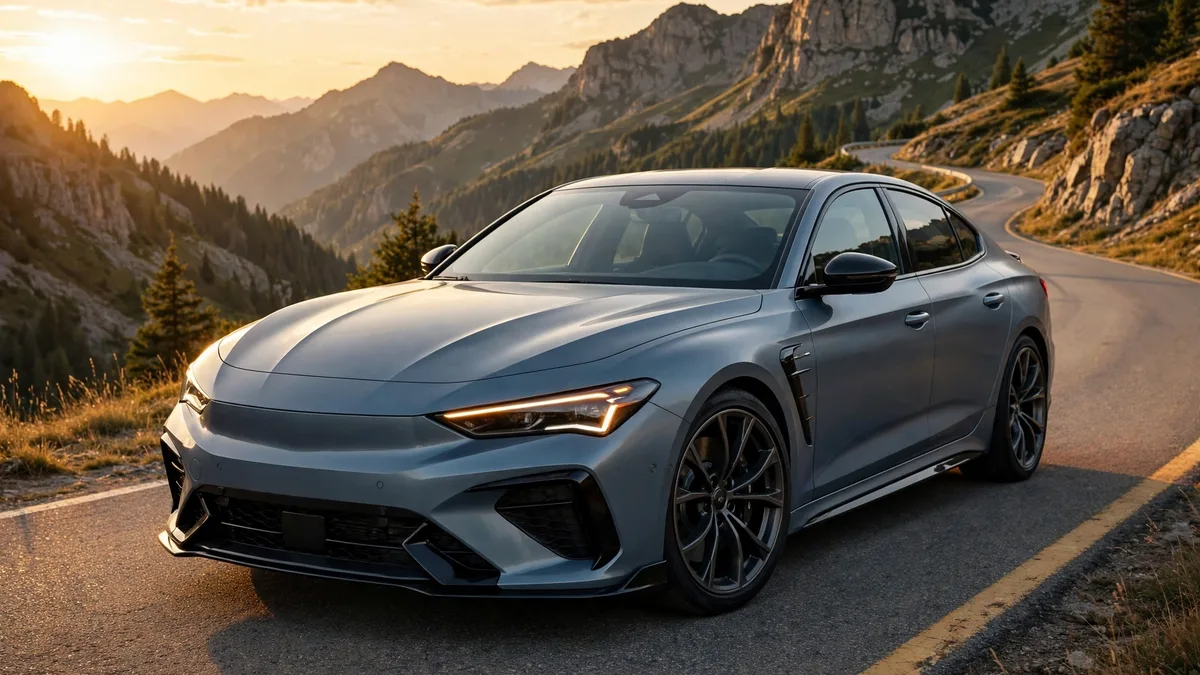
BMW M340i G20 — Is It the B58 Sweet Spot?
The G20-generation BMW M340i is the car that made “M Performance” a household phrase among sport-sedan shoppers. It sits one rung below the full M3, but with 382 horsepower from BMW’s celebrated B58 inline-six, an 8-speed ZF automatic, and a starting price that undercuts the M3 by a wide margin, it delivers roughly 90 percent of the experience for most drivers. This guide covers every model year from 2020 through 2025, real ownership costs, the problems owners actually report, and which year you should buy.
On this page
- What the M340i is — and what it is not
- Engine, performance, and economy specs
- Model-year changes: 2020 vs 2021 vs 2022 vs LCI
- Real running costs: fuel, maintenance, insurance
- Common problems and reliability picture
- Where it sits in the 3 Series range
- Interactive: find your best M340i model year
- Interactive: 5-year ownership cost estimator
- Buying advice and checklist
- M340i FAQs
What the M340i is — and what it is not
The M340i is an M Performance model, not a full M car. That distinction matters. It is engineered by BMW’s regular development teams with input from M GmbH — M Sport brakes, an M Sport differential, M-tuned suspension and steering — but it does not get the S58 engine, the M3’s reinforced chassis, or the M3’s track-grade cooling. What you get instead is a car that is faster than anything else in its price class while remaining as easy to live with as a 330i.
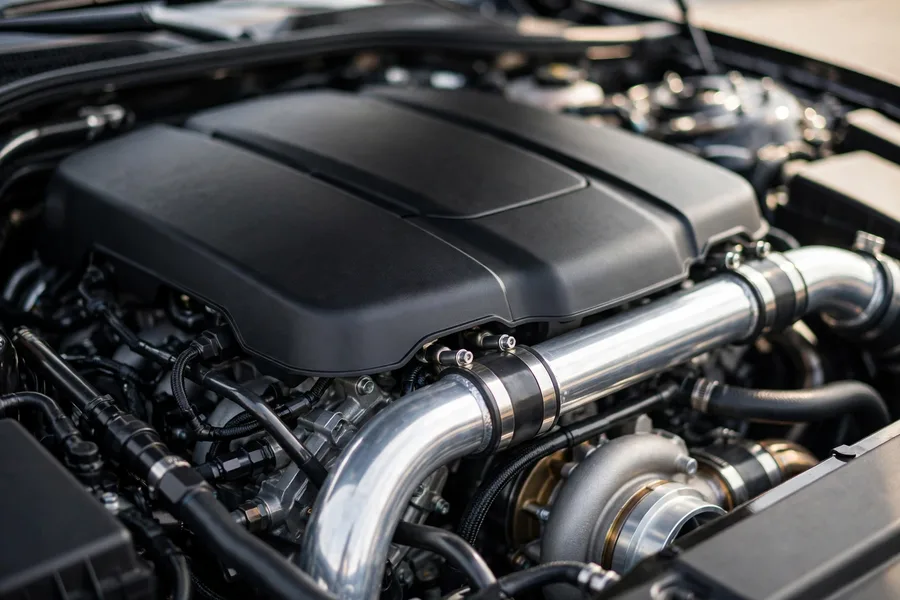
The heart of the car is the B58B30O1, the upper-output “TU1” version of BMW’s modular 3.0-liter turbocharged inline-six. It displaces 2,998 cc (500 cc per cylinder, the modular B-family formula), uses a single twin-scroll turbocharger, and is rated at 382 hp at 5,800–6,500 rpm with 369 lb-ft (500 Nm) of torque from 1,800–5,000 rpm. Every US-market G20 M340i pairs it with the ZF 8HP eight-speed automatic; no manual was offered. Rear-wheel drive is standard, with xDrive all-wheel drive optional.
One clarification for shoppers cross-reading reviews: the M340i’s 382-hp rating is the US figure for the upper-output B58. European versions of the same engine were rated lower (387 PS is the same ballpark expressed in metric horsepower, and some markets saw a 374 PS tune). When comparing 0–60 times and fuel economy across publications, make sure you are comparing US-spec cars — the numbers below are all US-spec.
Engine, performance, and economy specs
Here is the complete verified specification picture for the US-market G20 M340i. Acceleration figures vary by source because BMW’s claims, magazine instrumented tests, and test protocols (notably the one-foot rollout) differ — the table labels each figure so you can compare honestly.
| Specification | M340i (RWD) | M340i xDrive |
|---|---|---|
| Engine | B58B30O1 3.0L turbo inline-six (B58 TU1) | |
| Power / torque | 382 hp @ 5,800–6,500 rpm / 369 lb-ft @ 1,800–5,000 rpm | |
| Transmission | ZF 8HP 8-speed automatic | |
| 0–60 mph (BMW claim) | 4.4 sec | 4.1 sec |
| 0–60 mph (Car and Driver, instrumented, RWD) | 3.8 sec (one-foot rollout) | |
| EPA fuel economy (2024, xDrive) | — | 23 city / 31 hwy / 26 combined |
| Fuel requirement | Premium unleaded | |
| Fuel tank | 15.6 gallons | |
| Trunk volume (EPA) | 13.0 cu ft | |
A few notes on reading this table. BMW’s own 0–60 claims are conservative — Car and Driver‘s instrumented 3.8-second run in a rear-drive M340i (using the industry-standard one-foot rollout) beat BMW’s claim by more than half a second. Autoblog matched BMW’s 4.1-second xDrive claim in its own testing, but that was a confirmation of the claim rather than an instrumented magazine test. On fuel economy, the EPA rates the 2024 M340i xDrive at 23 city / 31 highway / 26 combined mpg on premium fuel; the 2025-and-later models are EPA-rated at 26 combined mpg per the agency’s dataset, reflecting the mild-hybrid hardware becoming standard across the board.
For broader context on the powertrain, the EPA’s official fuel-economy listing for the M340i xDrive is published at fueleconomy.gov. If you are deciding between the M340i and its Audi rival instead, our M340i vs Audi S4 comparison covers that matchup in detail — this guide stays focused on the BMW itself.
Model-year changes: 2020 vs 2021 vs 2022 vs the LCI
The G20 M340i has been on sale since the 2020 model year, with a mid-cycle refresh (LCI, or “Life Cycle Impulse” in BMW speak) arriving for 2023. The changes are fewer than they look at first glance — the B58 engine and ZF 8-speed carried through the whole run — but they matter for shoppers, because exhaust sound, technology, and even which options a car left the factory with all changed along the way.
| Model year | Key changes | What to know as a buyer |
|---|---|---|
| 2020 | Launch year. B58 TU1, no 48-volt mild hybrid. iDrive 7 with separate 10.25-inch screens. | Enthusiast favorite: the pre-48V cars have the loudest, most characterful exhaust note. Check service history carefully on early cars. |
| 2021 | 48-volt mild-hybrid hardware added (belt-integrated starter-generator). Some options deleted mid-year due to the semiconductor shortage. | Verify which options the specific car actually has — touchscreen deletion, passenger lumbar delete, and Harman Kardon substitutions affected some cars. |
| 2022 | More chip-shortage deletions; otherwise mechanically identical to 2021. | The riskiest year for missing equipment. A thorough options check against the window sticker matters more than the model year. |
| 2023 (LCI) | Facelift: BMW Curved Display (12.3-inch cluster + 14.9-inch screen) with iDrive 8, revised headlights and bumpers, 48V standard, slightly tamer exhaust tuning. | The tech pick. Best infotainment and newest hardware; you pay a premium over pre-LCI cars. |
| 2024–2025 | Minor equipment and pricing updates; powertrain carries over. 2025+ EPA-rated at 26 mpg combined. | Nearly-new cars at a discount to new. CPO examples are common and worth the premium for the warranty. |
The single most important used-market lesson: do not judge a 2021 or 2022 car by its model year alone — judge it by its build sheet. During the chip shortage, BMW deleted or substituted equipment on cars already in production, including the touchscreen on some early-2022 builds, passenger-seat lumbar support, and wireless charging. Two visually identical 2022 M340is can have meaningfully different equipment. Ask the seller for the original window sticker or run the VIN through a BMW VIN decoder before you negotiate.
Real running costs: fuel, maintenance, insurance
The M340i is a performance car with 330i-adjacent running costs — that is the core of its appeal. Fuel is the biggest line item: at the EPA’s 26 mpg combined and 15.6-gallon tank, expect roughly 400 miles of range per fill-up, all on premium unleaded. At 12,000 miles a year and $4.50/gallon premium, fuel alone runs about $2,075 annually. Drive it the way the B58 invites you to and real-world economy will land in the low 20s.
Maintenance follows the standard G20 3 Series pattern, which our 3 Series maintenance schedule and cost guide covers in full. The honest planning ranges, based on independent-shop pricing:
- Routine annual maintenance (oil, filters, brake fluid, inspections): roughly $800–$2,000 per year at an independent BMW specialist, rising toward $1,500–$2,500 annually past 60,000 miles as wear items arrive.
- Tires: staggered 19-inch performance rubber, typically $1,200–$1,800 a set fitted. Rear tires on RWD cars wear faster; budget a set every 20,000–30,000 miles if you drive enthusiastically.
- Brakes: M Sport brakes stop superbly but the larger rotors and pads cost more than a 330i’s — plan $600–$1,000 per axle at an indie shop.
- The big one — cooling system: the electric water pump and thermostat are a known wear item across modern BMWs; when it fails, the bill is typically $1,000+ at a specialist. Cars approaching 80,000–100,000 miles on the original pump should carry a reserve for it.
- Insurance: expect roughly 15–25% more than a 330i for equivalent coverage, varying hugely by age, location, and record.
Dealer servicing runs roughly 40–60% more than a good independent BMW specialist for the same work. For a car like the M340i — out of warranty, complex, but built from well-understood components — a specialist is the value play for most owners. The interactive estimator below lets you model your own numbers.
Common problems and reliability picture
The B58 is widely regarded as one of BMW’s most reliable modern engines — a significant step up from the N54/N55 era in terms of systemic issues. There is no B58 equivalent of the N54’s high-pressure fuel pump saga or the N20’s timing-chain problems. That said, “reliable for a BMW performance engine” still means you should know the watch items:
- Coolant weep from the expansion tank and hoses — the most commonly reported B58-area issue. Inspect for crust around the tank and hose connections; a pressure test at the pre-purchase inspection catches it.
- Charge pipe (tuned cars) — the factory plastic charge pipe can crack under the extra boost of an aftermarket tune. Stock cars rarely have trouble; if the car you are buying is tuned, ask whether an aluminum charge pipe was fitted.
- Oil filter housing gasket seep — a slow weep rather than a sudden failure on most cars, but it drips toward the serpentine belt area and should be addressed when spotted.
- 48-volt system (2021+) — the belt-integrated starter-generator and its battery add a component that 2020 cars do not have. Failures are uncommon, but replacement is a dealer/specialist job, not a DIY battery swap.
- Shared G20 checks — verify that all driver-assistance systems calibrate correctly and that the sunroof drains are clear (see our G20 330i ownership guide for the shared-platform details).
The honest summary: buy on service history, not mileage. A 70,000-mile M340i with full BMW/specialist records, on-time oil changes, and a clean pre-purchase inspection is a better bet than a 40,000-mile car with gaps in its history. Our 3 Series pre-purchase inspection guide lists exactly what a specialist should check before you commit.
Where it sits in the 3 Series range
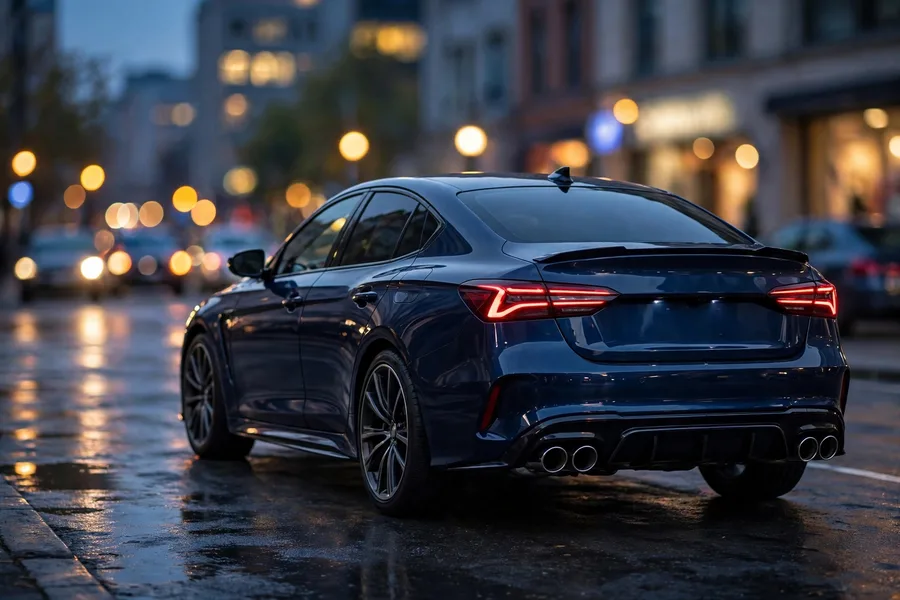
Shoppers usually cross-shop three cars: the 330i below, the M3 above, and the Audi S4 across the aisle. Briefly: the 330i (255 hp) is the rational pick — cheaper to buy, run, and insure, and still an excellent sports sedan. The M340i costs roughly $8,000–$12,000 more on the used market but adds 127 hp, the inline-six soundtrack, and standard M Sport hardware; for most enthusiasts it is worth every dollar. The M3 (473+ hp) is a different animal — track-capable, stiffer, thirstier, and far more expensive to buy and maintain.
Against the Audi S4, the contest is closer and comes down to character: the BMW is rear-drive-biased and sharper, the Audi is all-weather composed. We deliberately do not re-litigate that fight here — our dedicated M340i vs Audi S4 comparison covers it head to head. If you are torn between the two BMWs instead, the 330i vs M340i guide breaks down exactly what the extra money buys.
M340i vs M340i xDrive: which drivetrain?
Every M340i buyer faces the same fork in the road: rear-wheel drive or xDrive. BMW’s own claims put the xDrive three-tenths quicker to 60 mph (4.1 vs 4.4 seconds), and in the real world the gap is real — all-wheel drive puts the B58’s 369 lb-ft down cleanly where the RWD car needs a careful right foot and warm tires. But straight-line traction is only part of the story.
The rear-drive M340i is the lighter, simpler, and more engaging car. It weighs less, has fewer components to maintain (no transfer case, no front differential, no front driveshafts), and delivers the classic BMW balance that made the 3 Series famous — a car that rotates willingly and communicates through the seat. For a weekend car or a daily driver in a mild climate, it is the enthusiast’s choice, and it is also the cheaper car to keep: xDrive adds transfer-case and front-differential fluid services to the long-term maintenance list, covered in our xDrive maintenance guide.
xDrive earns its keep in two scenarios: year-round daily driving in snow-belt states, and buyers who want maximum launch performance. The system is rear-biased — it behaves like a rear-drive car until slip is detected, then shuffles torque forward — so it does not ruin the handling the way old full-time AWD systems could. Resale also favors xDrive in northern markets and RWD in southern ones, so buy the drivetrain that matches where you live. If you go RWD in a cold climate, budget for a dedicated set of winter wheels and tires; it transforms the car more than any drivetrain choice.
Options and packages worth paying for
On the used market, two M340is with similar mileage can differ by thousands of dollars in equipment. These are the options that actually matter for enjoyment and resale:
- Executive Package — head-up display, gesture control, and heated steering wheel on most years. The head-up display alone is worth seeking out.
- Driving Assistance Professional — adaptive cruise with stop-and-go and lane-keeping. A must for heavy commuters; verify the cameras and radar calibrate correctly on the test drive.
- Harman Kardon audio — a meaningful upgrade over the base system. Note that some 2021–2022 cars had it substituted or deleted during the chip shortage, so verify rather than assume.
- Adaptive M suspension — the electronically controlled dampers broaden the car’s range from comfortable cruiser to sharp back-road tool. Cars so equipped ride better and handle better; it is the single most desirable dynamic option.
- M Sport differential — standard on most M340is and a key part of the car’s cornering behavior. Confirm it is present on any car you are serious about.
- Heated and ventilated seats — comfort options that cost little on the used market but matter every day.
Conversely, do not overpay for 20-inch wheels (they look great and ride worse, and replacement tires cost more), carbon-fiber trim (purely cosmetic), or the M Performance parts catalog add-ons unless you specifically want them — they add little at resale. And remember the chip-shortage caveat from the model-year table: on 2021–2022 cars, physically verify every option on this list rather than trusting the original order sheet.
A note on tuning potential
The B58 responds to tuning better than almost any engine in its class, which is both a temptation and a caution for used buyers. A simple Stage 1 ECU tune on an otherwise stock M340i typically unlocks roughly 420–450 horsepower at the crank — M3-adjacent pace for the price of software. The ZF 8-speed handles the extra torque comfortably, and the B58’s closed-deck block is stout. This is why tuned M340is are everywhere, and why you should always ask a seller directly whether the car has been modified.
Our position is straightforward: a tuned car is not automatically a bad car, but it changes what you must verify. Ask for the tuner and map name, ask whether the plastic factory charge pipe was upgraded to aluminum (a well-known weak point under extra boost), check that spark plugs were changed on a shorter interval, and look for supporting maintenance rather than just peak-power claims. A well-documented Stage 1 car with an upgraded charge pipe and diligent servicing can be a fine buy; a car with an unknown tune, no records, and the original charge pipe is a gamble. If you plan to tune it yourself after purchase, budget the charge pipe, colder spark plugs, and shorter oil-change intervals into your first-year costs — and understand that any remaining factory or CPO warranty will not cover powertrain failures on a tuned car.
Interactive: find your best M340i model year
Answer four questions and the picker will match you to the right M340i model year — it weighs budget, exhaust character, technology, and drivetrain across all 24 possible combinations.
Interactive: 5-year ownership cost estimator
Drag the sliders to match your driving and fuel prices, pick where you will service the car, and see an estimated annual running cost. Maintenance figures use the independent-shop planning bands from this guide; dealer servicing typically adds 40–60%.
Buying advice and checklist

If you take one thing from this guide, let it be this: the right M340i is the one with the best history, not the lowest price. The B58 rewards proper maintenance and punishes neglect like any turbocharged performance engine. Use this checklist on every candidate:
- Service records: full BMW or specialist history with on-time oil changes. Gaps are a walk-away signal, not a bargaining chip.
- Pre-purchase inspection: $200–$300 at an independent BMW specialist — non-negotiable. Must include a cooling-system pressure test and a check for oil-filter-housing seep.
- Build sheet vs. window sticker (2021–2022): confirm touchscreen, lumbar, and audio equipment match what the car was supposed to have.
- Tires and brakes: staggered 19s and M Sport brakes are expensive — measure tread depth and pad life, and price replacements into your offer.
- Tune history: ask directly. A tuned car is not automatically bad, but it should have an upgraded charge pipe and impeccable maintenance.
- Accident history and paint: a paint-depth gauge reading during the PPI reveals prior bodywork the eye misses.
- Price check: compare against the used-market bands in our used 3 Series buying guide — M340is carry a consistent premium over 330is, and anything priced far below market is hiding something.
Buy the 2020 if you want the purest exhaust note and the simplest hardware. Buy the 2023+ LCI if you want the modern cabin and the latest tech. Avoid paying LCI money for a 2022 with deleted options. And whatever you buy, budget the cooling-system reserve from day one — the M340i is a sweet spot, not a free lunch.
M340i FAQs
Is the BMW M340i reliable?
Yes, by performance-car standards. The B58 engine has no systemic defect on the scale of the N54’s fuel-pump issues or the N20’s timing-chain problems. The main watch items are cooling-system components (expansion tank weep, electric water pump around 80k–100k miles) and oil-filter-housing seep — all well-understood, fixable issues. Service history matters more than mileage.
Which M340i model year is best to buy used?
Enthusiasts favor the 2020 for its pre-48V exhaust note and simpler hardware; tech-focused buyers should target the 2023+ LCI with the Curved Display and iDrive 8. The 2021–2022 cars are fine mechanically but require a careful options check because of chip-shortage deletions. Try the year picker above for a personalized match.
How fast is the BMW M340i really?
BMW claims 4.1 seconds 0–60 mph for the xDrive and 4.4 for the RWD car. Car and Driver instrument-tested a rear-drive M340i at 3.8 seconds (with the standard one-foot rollout), and Autoblog matched BMW’s 4.1-second xDrive claim. Either way, it is comfortably quicker than a 330i and within striking distance of the previous-generation M3.
Does the M340i require premium fuel?
Yes. The EPA rates the M340i on premium unleaded, and BMW specifies it. The 2024 xDrive is rated 23 city / 31 highway / 26 combined mpg, giving roughly 400 miles of range from the 15.6-gallon tank. Running regular fuel in a turbocharged B58 to save money is a false economy.
M340i or M3 — which should I buy?
Buy the M340i if you want a fast daily driver with manageable running costs; buy the M3 if you want a track-capable car and accept much higher purchase, tire, brake, and insurance costs. For public-road driving, the M340i delivers most of the M3’s real-world pace at a fraction of the ownership burden.