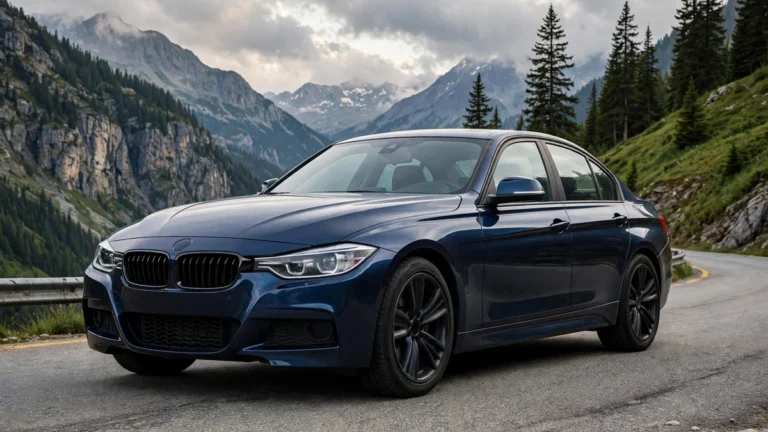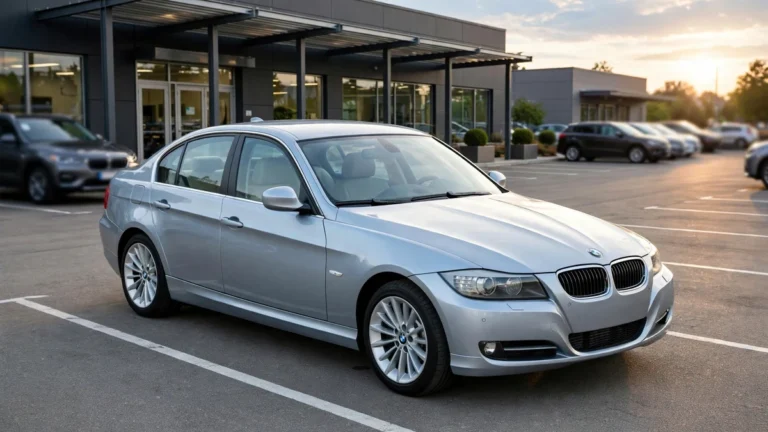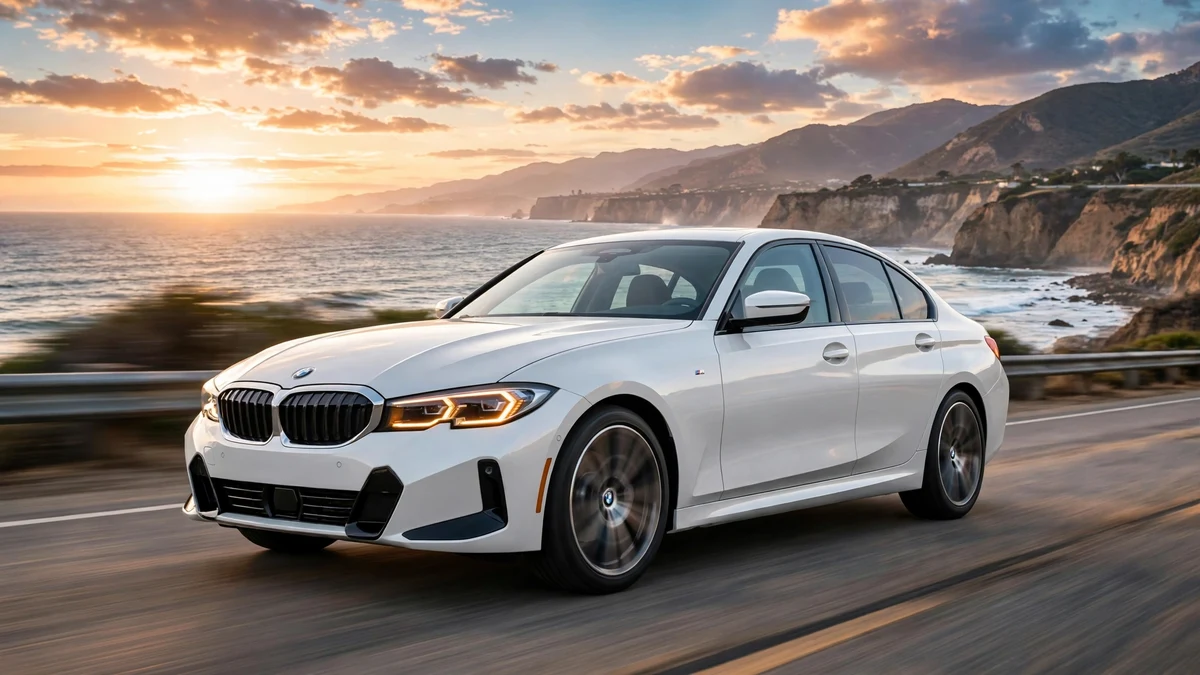
G20 330i Ownership Costs, Tech and Known Issues
The G20 330i is the sweet spot of the modern 3 Series lineup: the B46TU turbo four delivers 255 horsepower with four-cylinder running costs, wrapped in a chassis that fixed the F30’s steering complaints and a cabin full of genuinely useful tech. As these cars slide into the used market — 2019 and 2020 examples now sit firmly in the mid-$20,000s — they’re becoming the default recommendation for anyone who wants a modern BMW without M340i money — and the ownership math in this guide explains exactly why that recommendation holds up. This G20 330i ownership guide covers what it actually costs to run one, how the technology holds up, the known issues to check, and what the B46TU engine changed versus the F30’s B46. If you’re cross-shopping generations rather than budgeting for ownership, our F30 vs. G20 comparison covers that decision; everything here is about living with the G20.
Short answer
G20 330i ownership is the lowest-stress way into a modern BMW: the B46TU engine (255 hp, 295 lb-ft) is an evolution of the already-solid B46 with redesigned cooling and emissions hardware, paired with the excellent ZF 8-speed. Budget roughly $1,500–$2,500 per year in maintenance and repairs at an independent shop for a well-kept example (owner-reported), plus premium fuel at ~26 mpg combined (EPA, fueleconomy.gov). Known issues are age-and-heat items rather than design flaws: brittle coolant vent lines, oil filter housing seepage, and valve cover gaskets past 80,000 miles, plus the usual German-car electronics (window regulators, sensors, iDrive glitches). Buy 2020+ cars when the budget allows — they carry the newest iDrive 7 hardware and the early-production gremlins are behind them — and get a specialist PPI on anything over 60,000 miles.
In this guide
- The G20 330i lineup: years and changes
- G20 330i specs at a glance
- The B46TU engine: what changed
- B46TU vs. the F30’s B46
- Technology: iDrive 7, driver aids, and aging tech
- Known issues and what they cost
- G20 330i vs. the competition
- Real running costs: fuel, insurance, consumables
- The maintenance schedule that keeps it healthy
- Long-term outlook: the 100,000-mile G20
- Interactive: true cost of G20 330i ownership
- Interactive: used G20 330i red-flag checker
- Buying tips for the used market
- Frequently asked questions
The G20 330i lineup: years and changes
The G20 3 Series launched in the US for the 2019 model year, replacing the F30. The 330i (and 330i xDrive) carried the B46TU — the “technical update” of the F30 330i’s B46 — with output bumped to 255 hp and 295 lb-ft. For 2019–2020, cars ran iDrive 7 on a 10.25-inch display with BMW’s dual-screen cockpit layout; 2021 brought minor packaging and option changes; 2022 added the standard 48V mild-hybrid system to the 330i (a belt-driven starter-generator that smooths stop-start and adds a small torque fill — it changes nothing about the driving experience but does add a 48V battery to the maintenance picture). The 2023 facelift (LCI) brought the controversial curved display (one wide panel merging instruments and infotainment), revised front and rear styling, and iDrive 8. Mechanically, the powertrain stayed consistent throughout: B46TU plus the ZF 8HP automatic. For used buyers, that consistency is good news — there’s no bad engine year to avoid, and the choice is mostly about tech preference (iDrive 7’s separate screens vs. iDrive 8’s curved panel) and budget.
G20 330i specs at a glance
| Spec | 2019–2022 330i | 2023+ 330i (LCI) |
|---|---|---|
| Engine | B46TU 2.0L turbocharged inline-4 (48V mild hybrid from 2022) | |
| Power / torque | 255 hp / 295 lb-ft | |
| Transmission | ZF 8-speed automatic (8HP) | |
| Drivetrain | RWD standard, xDrive optional | |
| 0–60 mph | ~5.6 seconds (BMW claim) | |
| EPA economy | ~26 mpg combined (fueleconomy.gov; xDrive slightly lower) | |
| Infotainment | iDrive 7, 10.25-in display | iDrive 8, curved display |
| Fuel requirement | Premium (91+ octane) recommended | |
The B46TU engine: what changed
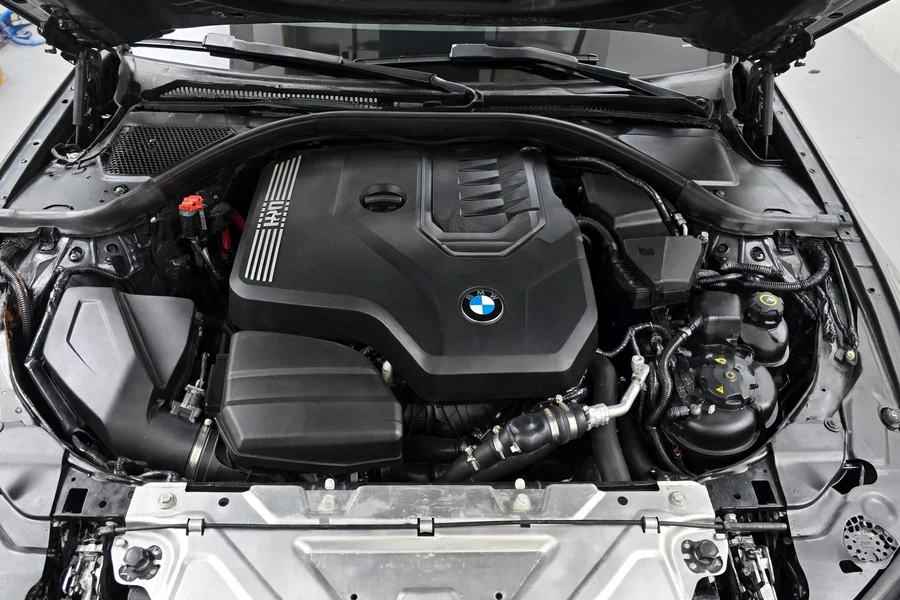
The “TU” matters more than the 7-horsepower bump suggests. Versus the F30’s B46, the B46TU got a redesigned cylinder head with an integrated exhaust manifold feeding a twin-scroll turbo, a new particulate filter for stricter emissions rules, revised Valvetronic and injection hardware (higher-pressure direct injection at up to 350 bar), and detail changes to the cooling and oiling systems. Torque jumped meaningfully — 295 lb-ft versus the B46’s 258 — and it arrives at just 1,550 rpm, which is why the G20 330i feels punchier than the numbers imply. Reliability-wise, the B46TU inherits the B family’s strong reputation: the timing-chain drive is the redesigned unit, there’s no HPFP plague, and the closed-deck block is overbuilt for this output. Owner-reported issues cluster around heat-aged plastics and seals (see the known-issues table below) rather than fundamental design. Treat it like every modern turbo BMW: 5,000–7,500-mile oil changes with BMW LL-01/LL-14-approved oil, premium fuel, and cooling-system attention on schedule — and it returns the favor with 200,000-mile potential.
B46TU vs. the F30’s B46: what’s actually new
| System | B46 (F30 330i) | B46TU (G20 330i) |
|---|---|---|
| Power / torque | 248 hp / 258 lb-ft | 255 hp / 295 lb-ft |
| Injection pressure | 200 bar | 350 bar |
| Exhaust manifold | Integrated in head | Redesigned head, twin-scroll turbo |
| Emissions hardware | Standard catalyst | Added gasoline particulate filter |
| Valvetronic | 3rd generation | 4th generation, faster response |
| Mild hybrid | No | 48V system from 2022 |
| Character | Smooth, adequate | Noticeably torquier from 1,550 rpm |
The headline is the torque: 295 lb-ft (up 37) arriving at just 1,550 rpm transforms the car’s responsiveness around town. The higher injection pressure improves combustion efficiency and cold-start behavior, while the particulate filter keeps the car compliant with tightening emissions rules — it needs occasional sustained highway driving to regenerate, so a B46TU that only ever does 5-minute trips can develop filter warnings (one more reason to drive the car properly). The 48V mild-hybrid addition from 2022 is nearly invisible: a belt-driven starter-generator that restarts the engine almost imperceptibly, enables longer coasting with the engine off, and adds a small electric torque fill off the line. It doesn’t change service intervals, but it does add a 48V battery and belt-driven motor to the long-term parts list. None of these changes alter the fundamental ownership advice: it’s still a stout closed-deck turbo four that rewards fresh oil and punishes neglect.
Technology: iDrive 7, driver aids, and aging tech
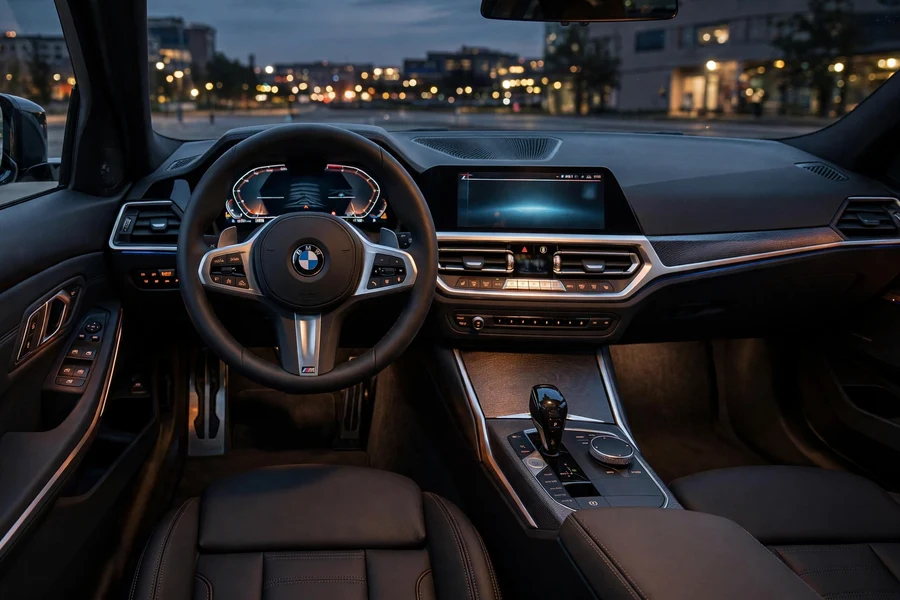
The G20’s tech was a leap over the F30 and it has aged well. iDrive 7 (2019–2022) runs on a 10.25-inch center display with a separate digital instrument cluster, rotary controller plus touchscreen, natural voice control, and wireless Apple CarPlay and Android Auto. It’s fast, logical, and — critically — still supported with software updates. The LCI’s iDrive 8 (2023+) moves to the curved display and drops the rotary controller’s dominance in favor of touch and voice; some owners love the modern look, others miss the knob. Functionally both do the job. Driver assistance: blind-spot monitoring, lane departure warning, and frontal collision warning were widely optioned; the full Driving Assistance Professional package adds adaptive cruise with stop-and-go and lane-keeping that genuinely works on highways. What to check on a used car: run every screen through its menus (delamination and dead pixels are rare but expensive), test wireless CarPlay pairing, verify all parking sensors and cameras, and confirm the head-up display (if equipped) is bright and complete. Software glitches — frozen screens, dropped Bluetooth — are usually fixed by a dealer software update, so a car with “the screen sometimes freezes” is a negotiating point, not a deal-breaker. Key fob batteries, 12V battery health (which triggers a cascade of spurious warnings when weak), and the 48V battery on 2022+ cars are the consumable side of the tech story.
Two more tech notes for owners. Over-the-air updates: the G20 supports remote software upgrades, and keeping the car updated fixes real bugs — if the previous owner ignored updates for years, the first dealer visit should include bringing the software current. Digital Key: later G20s support using a compatible smartphone as the vehicle key. It’s convenient until it isn’t: phone-as-key depends on software on both ends, and a dead phone battery means no entry. Always keep a physical key fob as backup and store its emergency blade where you can reach it. Neither feature changes the buying decision, but both are worth setting up properly in your first week of ownership.
Known issues and what they cost
No car is perfect; the G20 330i’s issues are well-documented and mostly affordable. The table below uses owner-reported independent-shop costs — dealer prices run 40–80% higher.
| Issue | Typical mileage | Owner-reported cost (indy shop) | Notes |
|---|---|---|---|
| Coolant vent hose / plastic line failure | 60,000+ | $200–$500 | Brittle with heat age; can strand you — inspect proactively |
| Oil filter housing gasket seepage | 70,000+ | $400–$700 | Fix promptly; oil near the belt is the real risk |
| Valve cover gasket leak | 80,000+ | $500–$900 | Often the cover itself warps — budget the assembly |
| EVAP/vent valve faults | 50,000+ | $250–$500 | Triggers check-engine light; straightforward fix |
| 12V battery degradation | 4–6 years | $300–$500 fitted + registered | Weak batteries cause phantom warnings — see our battery registration guide |
| Run-flat tire wear/ride | Ongoing | $800–$1,400 per set | Many owners switch to conventional tires — see run-flat vs. regular |
| Brake pads + rotors (per axle) | 40,000–60,000 | $500–$900 | M Sport brakes cost more in parts |
Notice what’s missing: no timing-chain epidemic, no turbo replacement wave, no transmission failures. The ZF 8HP is effectively bulletproof with fluid services every 60,000–80,000 miles, and the B46TU’s bottom end is stout. The pattern is a car that costs you a steady drip of age-related maintenance rather than catastrophic surprises — which is exactly what you want from a used luxury sedan. Check NHTSA by VIN for recalls before purchase, and read our 3 Series reliability by year for how the G20 compares across generations.
G20 330i vs. the competition
Ownership costs only make sense in context. Against the Audi A4 45 TFSI, the 330i is typically cheaper to maintain (the Audi’s dual-clutch history and more complex AWD add cost) and more engaging to drive, while the Audi counters with a nicer interior and standard Quattro. Against the Mercedes C300, the BMW wins on driving dynamics and steering feel; the Mercedes wins on ride comfort and cabin quietness, with similar maintenance costs. Against the Genesis G70 2.0T, the BMW holds value better and has a stronger specialist network, while the Genesis undercuts it on purchase price and warranty. Against its own sibling, the M340i: the six-cylinder is faster and sounds better, but costs meaningfully more to buy, fuel, insure, and maintain — our 330i vs. M340i comparison breaks down exactly where the money goes. The 330i’s case is simple: 90% of the 3 Series experience for the lowest running costs in the range.
Real running costs: fuel, insurance, consumables
Fuel is the biggest line item. The G20 330i wants premium and delivers roughly 26 mpg combined (EPA, fueleconomy.gov) — at 12,000 miles a year that’s about 460 gallons of premium, or roughly $2,000–$2,400 annually at typical US premium prices. Real-world owner reports cluster around 24–28 mpg mixed, better on highway cruises. Insurance typically lands in the moderate-luxury-sedan band — less than an M340i or any M car, more than a Camry; drivers under 30 and dense urban ZIP codes pay the premium. Get a quote before buying. Tires: the factory run-flats wear faster and cost more; a set of quality conventional tires plus a mobility kit usually runs less per set and rides better. Brakes, wipers, filters, and the 12V battery are the recurring consumables — none exotic, all pricier than a mainstream sedan’s. The 48V system (2022+) adds a mild-hybrid battery that will eventually need replacement; pricing is still settling as these cars age, so treat it as a future cost rather than a current one. All in, most owners report the G20 330i costs roughly 1.5–2× a mainstream family sedan to run — the BMW tax is real, but on the four-cylinder it’s the mildest version of it.
Depreciation is the hidden running cost nobody budgets. A 2019 330i that stickered near $45,000 now trades in the mid-$20,000s — the first owner absorbed roughly $20,000 in depreciation, which dwarfs every maintenance bill in this guide combined. As a used buyer you’re on the right side of that curve: the steepest drop is behind the car, and 330is hold value better than most luxury sedans from here thanks to the powertrain’s reputation. The depreciation lesson cuts both ways, though — buy the car to keep it. Flipping a G20 after a year still costs you several thousand in transaction losses, which no maintenance saving offsets.
The maintenance schedule that keeps it healthy
BMW’s condition-based service sets long intervals; experience with turbo BMWs argues for shorter ones. Engine oil: every 5,000–7,500 miles with BMW LL-01/LL-14-approved oil (not the 10,000-mile maximum the dash suggests). Coolant: every 4 years with BMW blue coolant — the B46TU’s plastics age on heat cycles, not miles. Spark plugs: every 40,000–60,000 miles on a turbo engine. Transmission fluid and filter: every 60,000–80,000 miles (ZF’s own guidance; BMW calls it “lifetime,” which means the lifetime of the warranty). Differential and transfer case (xDrive): every 50,000–60,000 miles. Brake fluid: every 2 years regardless of miles. Intake valve cleaning: direct injection means carbon buildup — budget a walnut-blast every 60,000–80,000 miles ($400–$700; see our walnut blasting guide). Cabin and engine air filters: every 20,000–30,000 miles. Follow this instead of the dash, and the car in the known-issues table above stays a list of things that happened to other people. Our full 3 Series maintenance schedule covers the complete timeline.
Buying tips for the used market
The 2019–2020 cars are the value play right now: early enough to have depreciated, new enough to have modern tech and the sorted B46TU. Prefer cars with full service records at BMW dealers or recognized independents — the records matter more than the mileage. A 70,000-mile car with oil changes every 6,000 miles beats a 45,000-mile car with two services on record. Get a specialist pre-purchase inspection on anything over 60,000 miles; the $200 or so buys a lift inspection, code scan, and an expert eye on the coolant plastics and gaskets. Avoid cars with warning lights “just needing a sensor” — on a G20, a weak 12V battery causes phantom warnings, but so do real faults, and you can’t tell which without a scan. Check that all keys are present (replacements are expensive), verify the spare/mobility kit situation if the car was converted off run-flats, and run the VIN through NHTSA for open recalls. M Sport cars command a premium and hold it — worth paying if you value the seats and steering wheel, since retrofitting them costs far more.
CPO vs. private party: BMW’s Certified Pre-Owned program adds a meaningful warranty extension (1 year/unlimited miles after the original 4-year/50,000-mile warranty, on eligible cars), and for a tech-heavy car like the G20 that warranty has real value — one iDrive head-unit or driver-aid sensor failure can cost more than the CPO premium. But CPO cars price $2,000–$4,000 over equivalent private-party examples, and the certification inspection is only as good as the dealer performing it. The smart play: buy private party at the discount, then immediately spend the savings on the specialist PPI plus the first round of deferred maintenance (fluids, filters, battery if aged). Either way, verify the warranty status yourself with a BMW dealer by VIN — don’t take the seller’s word for remaining coverage. And check our used 3 Series buying guide for the general negotiation and paperwork process that applies to every G20 purchase.
Long-term outlook: the 100,000-mile G20
What happens as these cars cross 100,000 miles? The early high-mile examples are now reporting in, and the pattern is encouraging. The B46TU’s bottom end, timing drive, and turbo show no systemic wear issues at six-figure miles — the cars that get there are the ones with 5,000–7,500-mile oil changes and on-schedule coolant services. The bills at that age are the table above, repeated: another round of gaskets, another set of coolant hoses, suspension bushings and control arms (the G20’s chassis bushings last well but not forever — budget $800–$1,500 per axle at an independent shop when they go), and the second 12V battery. The ZF 8-speed needs its second fluid service. The particulate filter on cars that do regular highway miles is a non-issue; on garage-queen short-trip cars it can clog and need a forced regeneration or replacement — drive the car properly and skip this problem. Electronics-wise, expect the occasional sensor, a window regulator, and iDrive software updates. Nothing here is unusual for a premium sedan at this age; the G20’s distinction is the absence of any single catastrophic failure mode. Buy at 60,000 miles with records, follow the schedule in this guide, and 150,000+ miles is a reasonable expectation, not a hope.
Interactive: true cost of G20 330i ownership
Sticker price is the cover charge. This calculator estimates your real annual cost — fuel, maintenance reserves, repair reserves, and consumables — based on the car’s age, mileage, and how you maintain it. Assumptions are shown with every result so you can sanity-check them.
G20 330i annual cost estimator
Mileage bands below are built from this guide’s service intervals.
Interactive: used G20 330i red-flag checker
Answer six yes-or-no questions about the specific car you’re considering. Each “yes” is a red flag — the checker scores the car and tells you whether to proceed, negotiate, or walk.
Red-flag checker
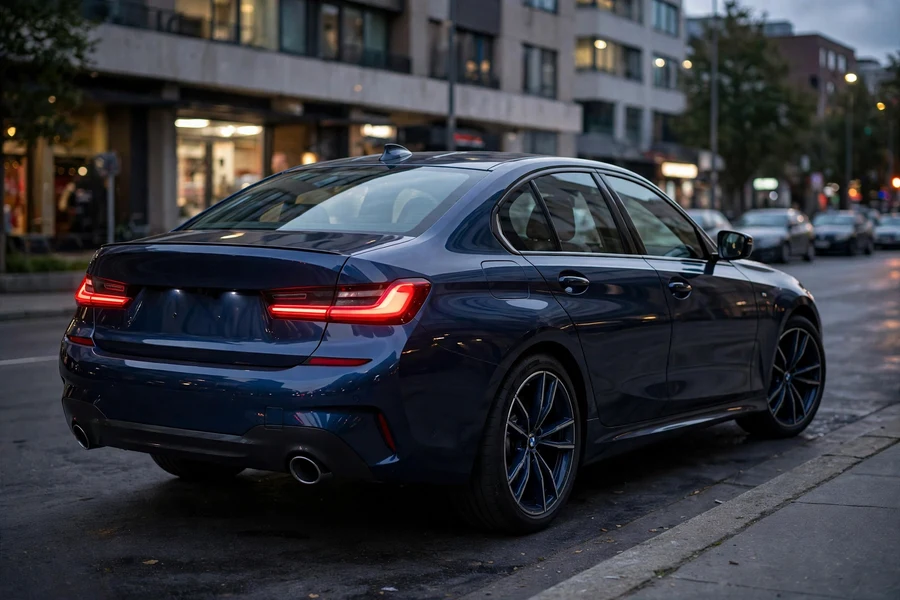
The G20 330i earns its reputation the honest way: nothing about it is dramatic, and everything about it works. It’s quick enough to be fun, efficient enough to daily-drive without guilt, and reliable enough that your maintenance budget goes to predictable wear items instead of rescue missions. Buy the cleanest 2020-or-newer example your budget reaches, keep the oil fresh and the coolant blue, and the car will do the rest. For the full inspection walkthrough before you hand over money, our 3 Series PPI guide pairs with this article — run the red-flag checker above first, then book the specialist.
Frequently asked questions
Is the G20 330i reliable?
Yes — it’s one of the most reliable modern BMWs. The B46TU engine has no systemic design flaws; reported issues are age-related (coolant plastics, gaskets, seals) rather than catastrophic. The ZF 8-speed is effectively bulletproof with fluid services every 60,000–80,000 miles. Keep up with maintenance and expect steady, predictable costs rather than surprises — the ownership experience owners describe most often is “uneventful,” which is the highest praise a used BMW can earn.
How much does it cost to maintain a G20 330i per year?
Roughly $1,500–$2,500 per year at an independent BMW shop for a well-kept example (owner-reported), covering scheduled maintenance plus a repair reserve. DIY owners spend roughly half; dealer servicing runs 40–80% more. Add premium fuel at ~26 mpg combined on top — fuel is typically the single biggest ownership line item, which is why the cost estimator above leads with it.
What is the B46TU engine’s biggest weakness?
Heat-aged plastics and seals: coolant vent hoses that turn brittle past 60,000 miles, oil filter housing gasket seepage past 70,000, and valve cover gaskets past 80,000. None are engine-threatening if caught early — the vent hose is the one that can strand you, so inspect it proactively.
Should I buy a 2019 or a newer G20 330i?
Buy the newest your budget allows, but the 2019–2020 cars are the value sweet spot — same powertrain, modern iDrive 7, and meaningful depreciation already taken. Prefer 2020+ for the newest iDrive 7 hardware and fewer early-production quirks. The 2022+ mild-hybrid system changes little day-to-day; the 2023 LCI’s curved display is a taste call — try both interfaces before deciding.
Does the G20 330i require premium fuel?
Premium (91+ octane) is recommended. The engine will run on regular thanks to knock sensors, but you’ll lose performance and economy — enough that the per-mile cost rarely favors cheap fuel. Budget premium from day one; it’s part of the BMW tax, and the engine’s knock sensors will quietly pull timing — and power — if you cheap out.