BMW 3 Series Headlight Bulb Replacement (E90, F30, G20)
Short answer
BMW 3 Series headlight bulb replacement depends on your generation: the E90 (2006–2011) and pre-facelift F30 (2012–2015) use easy-to-find H7 halogen bulbs on base cars or D1S xenon bulbs on cars with the xenon option; the facelift F30 (2016–2018) is either H7 halogen or sealed LED; and the G20 (2019+) is full LED with no user-replaceable bulb at all. Halogen swaps take about 15 minutes from under the hood, xenon D1S swaps take 1–2 hours through the front wheel well and demand high-voltage precautions, and G20 LED work means a module or assembly replacement. This guide covers the exact bulb for every generation and trim, real US cost ranges, the replace-xenons-in-pairs rule, and why drop-in LED “upgrades” are not street legal.
In this guide
- Which bulb does your 3 Series need?
- Find your exact bulb in 10 seconds
- Xenon high-voltage safety: read this first
- What it costs: dealer vs independent shop vs DIY
- The replace-xenons-in-pairs rule
- LED retrofit bulbs: legality and CANBUS errors
- Don’t forget the rear: taillights and turn signals
- DIY: replacing halogen H7 bulbs (E90 / F30)
- DIY: replacing xenon D1S bulbs (E90 / F30)
- G20 owners: what to do with sealed LED units
- Headlight bulb FAQ
Which bulb does your 3 Series need?
Three generations of the 3 Series span three completely different lighting technologies, and the wrong bulb is the most common reason a “simple” bulb job goes sideways. Before buying anything, identify your car: the E90 ran from 2006 to 2011, the F30 from 2012 to 2018 (with a facelift in 2016), and the G20 from 2019 onward. Then check your build — xenon was an option (code 522) on the E90 and pre-facelift F30, and the facelift F30 never offered xenon at all, only halogen or full LED, as detailed in this F30 headlight identification guide.
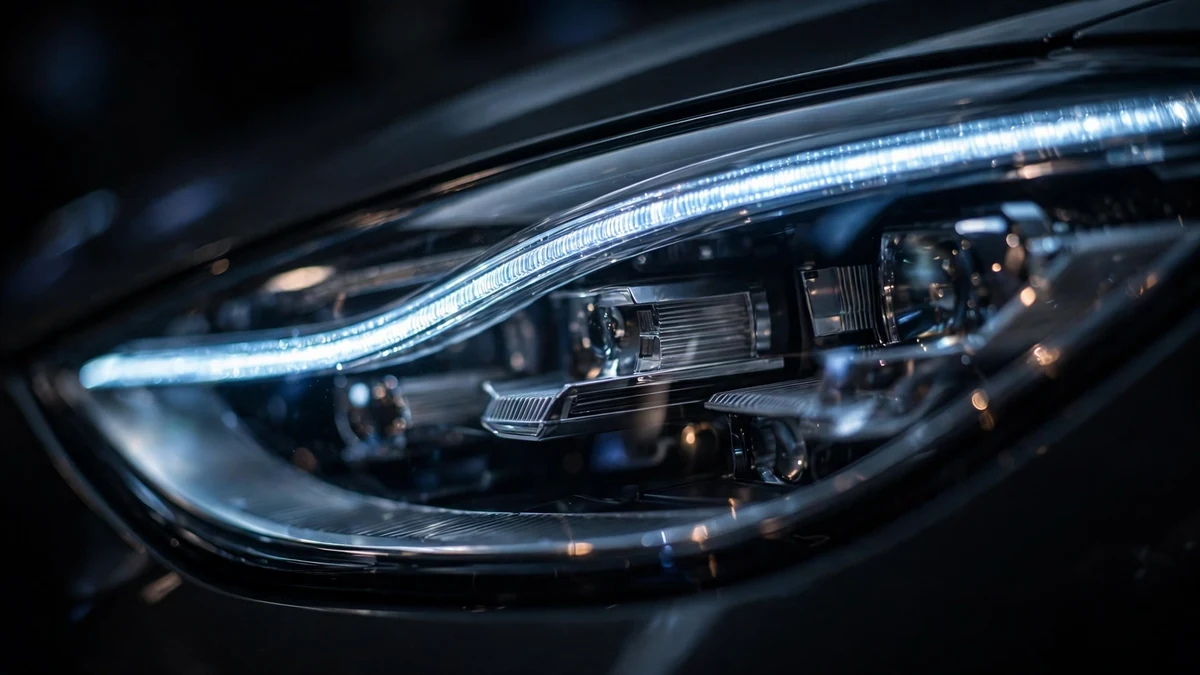
A quick visual check usually settles it: warm, yellowish light means halogen; crisp bright-white with a blue edge at the cutoff means xenon; a slim, angular daytime-running-light signature means LED. When in doubt, pull the old bulb and match it.
| Generation / years | Factory lighting | Low beam | High beam / DRL | DIY difficulty |
|---|---|---|---|---|
| E90 (2006–2011) | Halogen (base) | H7 55W | H7 55W | Easy — under-hood access |
| E90 (2006–2011) | Xenon (option 522) | D1S 35W (bi-xenon) | H7 (DRL / flash-to-pass) | Moderate — wheel-well access |
| F30 pre-facelift (2012–2015) | Halogen (base) | H7 55W | H7 55W | Easy — under-hood access |
| F30 pre-facelift (2012–2015) | Xenon (option 522) | D1S 35W (bi-xenon) | LED corona rings | Moderate — wheel-well access |
| F30 facelift / LCI (2016–2018) | Halogen (base) | H7 55W | H7 55W | Easy — under-hood access |
| F30 facelift / LCI (2016–2018) | LED (option 5A2 / 552) | Sealed LED | Sealed LED | Module / assembly only |
| G20 (2019–present) | Full LED (all trims) | Sealed LED | Sealed LED | Module / assembly only |
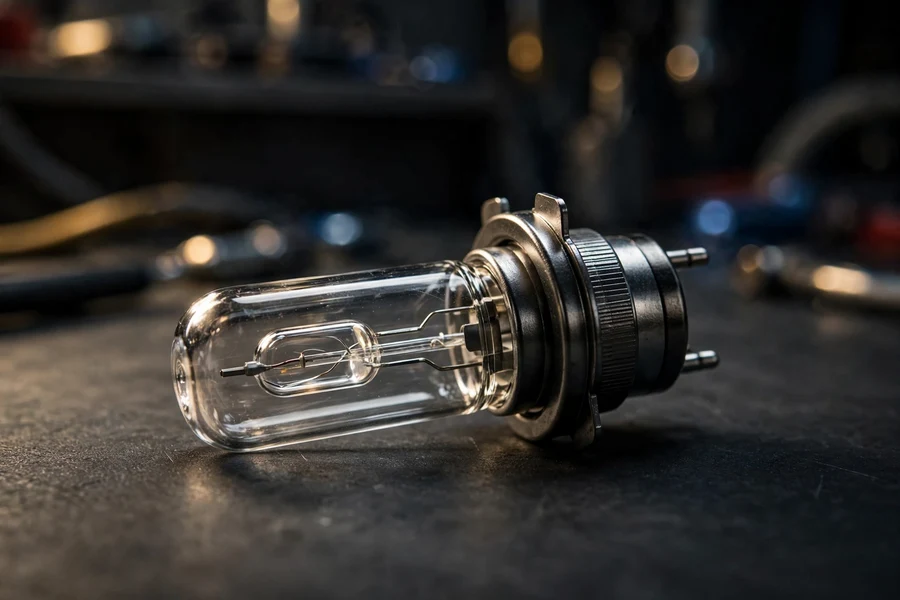
A few notes on the table. On the E90, the xenon cars use a single D1S burner for both low and high beam — a mechanical shutter inside the projector switches the beam pattern, which is what “bi-xenon” means — with a separate H7 bulb serving as the daytime running light. The E90 bulb layout (D1S low beam, H7 high beam/DRL, H11 fogs) is documented in the long-running E90 lighting guide on E90Post. On the F30, xenon cars also use D1S burners; BMW’s own part numbers for these bulbs are 63 21 7 160 807 and 63 21 7 217 509, cross-referencing Osram 66140 and Philips 85415, per this OEM D1S listing for the F30, with the same D1S fitment listed across E90 and F30 chassis per this D1S listing covering E90 through F30 chassis.
Find your exact bulb in 10 seconds
Bulb finder
Pick your generation and factory lighting. The table above is the full reference if you prefer it.
Choose both options to see your bulb type, difficulty, and typical cost.
Xenon high-voltage safety: read this first
Halogen bulbs run on the car’s normal 12-volt system and are about as dangerous as a flashlight. Xenon (HID) bulbs are a different animal entirely. To strike the arc inside a D1S bulb, the ballast fires an ignition pulse of up to 30,000 volts — thirty kilovolts — then settles the bulb at 35 watts of 300-Hz AC, according to HELLA’s technical documentation on xenon systems. That pulse will not politely warn you before it bites.
Modern ballasts do have safety circuits: HELLA notes the system shuts off within 0.2 seconds on a missing or faulty bulb and that the connections drop below 34 volts within half a second of unplugging. But “designed to shut off” is not the same as “safe to grab.” Treat every xenon job with the same respect:
- Disconnect the negative battery terminal before touching anything, and keep the headlight switch off. No lights on, no ignition on, no “just checking.”
- Let the bulbs cool completely. A xenon burner runs extremely hot; give it at least 15–20 minutes after the lights were last on.
- Wear clean nitrile or latex gloves. Skin oil on the quartz glass creates hot spots that shorten bulb life — and on a xenon bulb it can compromise the envelope.
- Never look directly at a lit xenon bulb outside the housing and never power the system up with the bulb removed from the headlight.
- If a bulb is physically broken (cracked glass, rattling inside), stop and let a shop handle it — xenon bulbs contain a small amount of mercury, and broken glass plus high-voltage electronics is not a DIY combination.
One more practical warning from the community: the ballast has an ignition counter — after roughly seven failed ignition attempts it stops trying to protect its electronics. So if you reassemble and the new bulb doesn’t fire immediately, don’t keep cycling the headlight switch. Check your seating and connections first, then try again.
What it costs: dealer vs independent shop vs DIY
Headlight bulb pricing splits into two worlds. Halogen H7 bulbs are commodity parts — a quality pair from Osram or Philips runs $20–50 at any auto parts store, and the job is 15 minutes of your time. Genuine D1S xenon bulbs are precision parts: a single Osram 66140 or Philips 85415 runs roughly $50–130 depending on the line, with pairs commonly listed around $168–186, per Headlight Revolution’s D1S pricing, while single-bulb prices like $57.48 for the Osram 66140 and $101.88 for the Philips 85415 X-tremeVision are listed at LedPerf. Budget generic D1S pairs exist for $30–50, but their lifespan and color consistency are the usual complaints — and one owner’s report of a $99-per-bulb Sylvania purchase at O’Reilly shows what walk-in retail pricing looks like in this Bimmerforums E92 xenon thread.
| Job | DIY (parts only) | Independent shop | Dealer |
|---|---|---|---|
| H7 halogen, both headlights | $20–50 | $60–120 | $120–180 |
| D1S xenon, both headlights (OEM bulbs) | $100–220 | $250–400 | $400–650 |
| G20 / F30-LCI LED module repair | n/a | $300–600 | $600–1,200+ |
| Full LED headlight assembly (per side) | n/a | $800–1,500 | $1,200–2,000+ |
Why does the dealer xenon job climb past $400? Three things: OEM bulb markup (dealers charge list price, often well above online pricing), 1–1.5 hours of book labor at $150–200/hr, and the access procedure — the wheel has to come off and the fender liner pulled back, so it bills as real work, not a bulb swap. One E90 owner reported a dealer quoting over $200 just for the labor side of a xenon bulb job in this E90Post thread, which is why so many owners learn the wheel-well method below. Independent BMW specialists typically charge about half the dealer total for the same OEM-bulb job.
A note on the ranges above: bulb prices move with brand and supplier, and dealer labor rates vary widely by metro area. The structure of the comparison — halogen cheap and easy, xenon expensive and labor-intensive, LED a module game — holds everywhere.
The replace-xenons-in-pairs rule
When one xenon bulb dies, replace both. This is the single most repeated piece of advice across BMW lighting threads, parts specialists, and bulb manufacturers — and it’s about physics, not upselling. As a xenon burner ages, its color temperature drifts warmer (more yellow/pink) and its output drops. A brand-new 4300K–5000K D1S next to a 5-year-old one looks like two different headlights, and the mismatch is obvious to everyone behind you at night.
Osram and Philips retailers state the recommendation explicitly — LedPerf’s Osram Night Breaker D1S listing and OEMBimmerParts’ BMW D1S page both recommend changing D1S bulbs as a pair for consistent brightness and color. The real-world pattern backs it up: xenon bulbs age in lockstep, so when one fails, the other is usually weeks away. One owner’s report is typical — the second bulb died about two weeks after the first, as described in this E92 xenon discussion.
The same logic does not apply to halogen H7 bulbs. Halogens don’t color-shift the way xenons do, so replacing just the failed one is fine — though many owners do both anyway since a quality pair costs $20–50 and you’re already under the hood.
LED retrofit bulbs: legality and CANBUS errors
The E90 and pre-facelift F30 halogen cars are prime targets for drop-in LED bulb kits — H7 LED replacements are cheap, bright, and everywhere on Amazon. Before you buy one, understand two separate issues: the law, and the car’s electronics.
The law is unambiguous. Under Federal Motor Vehicle Safety Standard 108 (FMVSS 108), enforced by NHTSA, no aftermarket LED bulb has ever been submitted, tested, and added to the official replaceable light source docket — so installing an LED bulb into a housing designed for halogen makes the whole headlamp assembly non-compliant. As lighting retailer Headlight Revolution puts it in their 2026 legality breakdown: drop-in LED replacements in halogen housings are still not street legal under federal law, and “DOT Approved” claims on most LED bulb packaging are misleading. Better Automotive Lighting’s analysis notes NHTSA reaffirmed this position in a February 2024 interpretation letter, and CarBuzz’s legal explainer details why the engineering mismatch matters: halogen reflectors are calculated around a 360-degree cylindrical filament, while an LED bulb is a flat, dual-sided point source — the beam pattern scatters above the cutoff line and blinds oncoming traffic.
Enforcement in practice is left to states and local police, and many owners run LED retrofits without ever being stopped — but the modification is federally non-compliant, can fail state inspections, and can become a liability issue after a crash. The legal upgrades are: quality halogen bulbs in the stock housings, or a complete DOT-approved LED headlight assembly designed for LEDs from the start.
Then there’s the car itself. BMWs monitor bulb circuits for current draw, and an LED retrofit draws far less power than the H7 it replaces. The result is the classic CANBUS error: a dashboard bulb-out warning, flickering, or hyper-flashing turn signals — even though the LED “works.” Aftermarket retailers acknowledge this directly; one G20 lighting vendor’s fitment notes warn that modern vehicles may display a dashboard bulb warning due to low power draw and that a resistor or decoder may be required, as noted in their compatibility section. Fixes range from “CANBUS-ready” bulbs with built-in resistors (extra heat, mixed reliability) to coding the car’s lighting checks off. None of it makes the swap legal — it just silences the warning.
Don’t forget the rear: taillights and turn signals
Headlight jobs have a way of revealing neglected rear lighting — and on the E90, the rear bulbs are actually the easier half of the job. While you’re in bulb-replacement mode, it pays to check the back of the car too.
On the E90, the rear bulbs are owner-serviceable through the trunk: tail and brake lights use 7528 bulbs, and the rear turn signals are 7506/7507-type wedge bulbs, per the E90 lighting guide and the E90 bulb code list. Access is through the trim panels inside the trunk — no wheel removal, no high voltage, no drama. The front turn signals are 7507A. A related tip from the E90 community: if you’re swapping turn-signal bulbs, check the pin offset on the base — 1156-style bulbs come in 150- and 180-degree pin variants, and the wrong one won’t seat, as this E90Post thread documents.
From the F30 onward, BMW moved tail and brake lighting to LEDs — the G20’s full-LED rear being the extreme case, with no user-replaceable bulbs at all. If a rear LED segment fails on one of these cars, the fix mirrors the front: a module or assembly replacement, not a bulb swap. (Taillight LED retrofits don’t carry the same FMVSS 108 problem as headlight retrofits, but any rear lighting change still needs to preserve correct brightness and color — red for tail/brake, amber or red for turn signals depending on the unit.)
DIY: replacing halogen H7 bulbs (E90 / F30)
This is the easiest bulb job on any 3 Series and a good confidence-builder before tackling anything else under the hood. Budget 15 minutes per side, and do both sides while you’re in there — if one H7 is at end of life, its partner isn’t far behind.
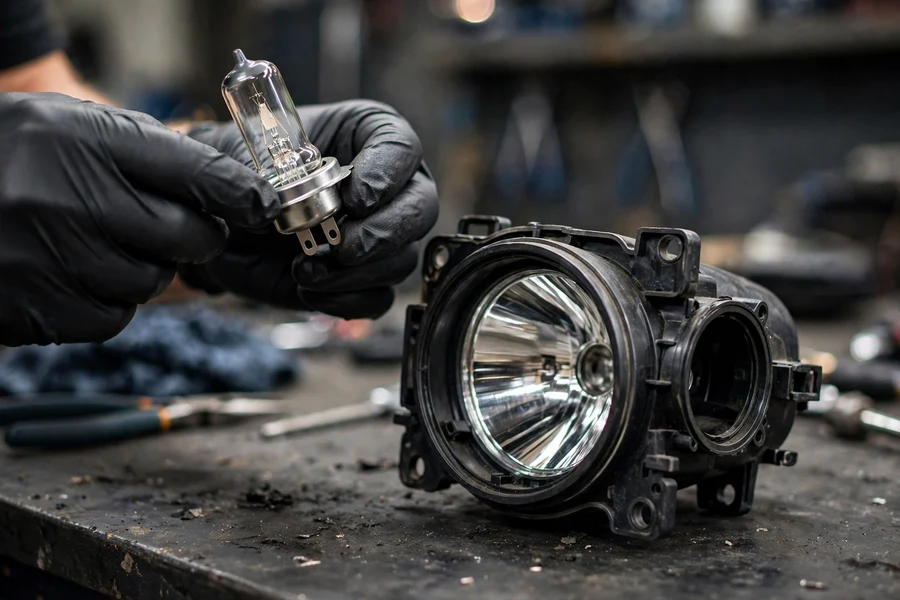
- Park, cool down, and open the hood. Make sure the headlights are off and the bulbs are cool to the touch.
- Find the round dust cover on the back of the headlight housing. Twist it counterclockwise and pull it off. (On some cars a plastic engine-bay trim piece or the airbox snorkel slightly blocks access — these usually unclip or lift out without tools.)
- Unplug the electrical connector from the back of the H7 bulb. It pulls straight off; if it’s stubborn, wiggle gently side to side rather than yanking.
- Release the wire retaining clip. Squeeze or unhook the spring clip holding the bulb in the housing and swing it aside. Note its orientation — you’ll re-hook it the same way.
- Remove the old bulb and insert the new H7 by its base only. Do not touch the glass envelope with bare fingers — skin oil bakes into the quartz and shortens bulb life. If you slip, wipe the glass with isopropyl alcohol and a lint-free cloth.
- Re-hook the clip, reconnect the plug, and refit the dust cover. The cover must seat fully — a loose cover lets moisture in, and moisture kills bulbs and fogs lenses.
- Test before closing the hood. Low beam, high beam, and (if you did the DRL H7 on a xenon car) the running lights.
Driver’s side access can be tight on some engine configurations — removing the airbox or washer-fluid filler neck (usually one or two clips) buys a lot of room and costs two minutes. If a bulb won’t light after replacement, check the fuse and the connector seating before assuming a bad bulb.
DIY: replacing xenon D1S bulbs (E90 / F30)
Replacing a D1S xenon bulb is a moderate job, not a hard one — the difficulty is access, not technique. BMW puts the back of the headlight behind the front wheel-well liner, so the path in is through the wheel arch. Read the high-voltage safety section above before starting, and buy both bulbs (see the pairs rule). Budget 1–2 hours the first time, about half that the second.
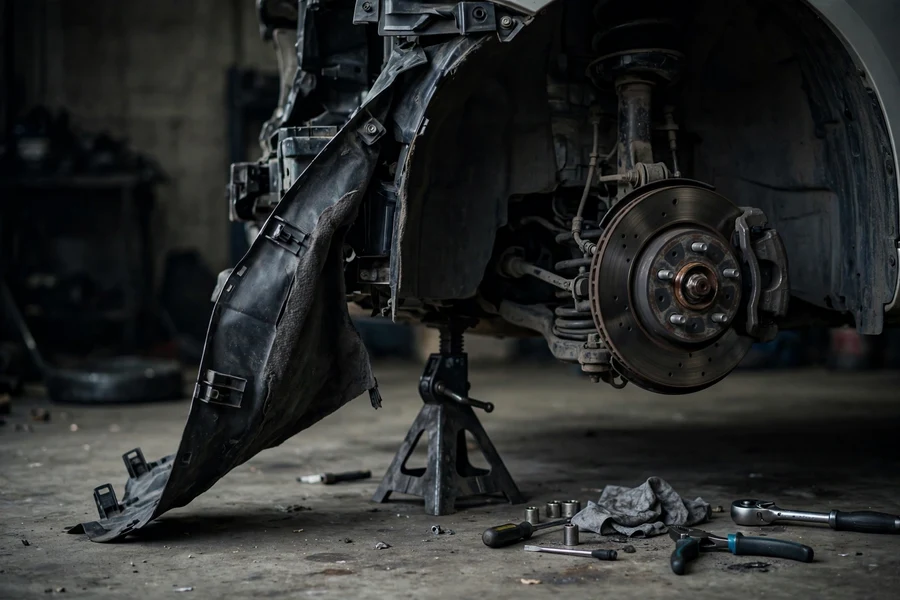
Tools: floor jack and jack stands, lug wrench, 8mm and 10mm sockets, flathead screwdriver, T27/Torx driver (E90 LCI uses Torx screws on the bulb cover), clean nitrile gloves, zip ties or a bungee cord.
- Disconnect the negative battery terminal. Non-negotiable on xenon cars.
- Jack up the front corner and secure it on a jack stand. Some owners manage with the wheel turned full-lock and the car on the ground, as discussed in this E90Post thread — but removing the wheel gives you real working room around $100+ bulbs, and it’s the safer procedure.
- Remove the wheel, then unbolt the front section of the fender-well liner (mostly 8mm screws, a couple of 10mm, plus plastic rivets). You only need the front section pulled back — the full liner doesn’t have to come out, per Pelican Parts’ E90 liner guide. Fold the liner forward and hold it with a zip tie or bungee so it doesn’t flop back mid-job.
- Remove the bulb cover on the back of the headlight. On the E90 LCI it’s held by four Torx screws; on the F30 it’s a round twist-off cover with small locking teeth that may snap if forced — twist firmly but patiently, as shown in this F30 D1S DIY.
- Unlock the retaining bracket. On the F30, push the top of the bracket down and to the left; on the E90, push the top of the clip inward and slide it aside, per this E90 LCI D1S walkthrough.
- Disconnect the electrical plug from the bulb — a flathead screwdriver helps loosen it — then withdraw the old D1S bulb.
- Install the new bulb wearing gloves, seating it fully in the projector before re-locking the bracket. Reconnect the plug until it clicks, refit the cover, and reattach the liner and wheel.
- Reconnect the battery and test. Low beam first — the xenon should strike and ramp to full brightness within a few seconds. Check for dashboard warnings, then repeat on the other side.
If the new bulb doesn’t fire, don’t keep cycling the headlights — the ballast’s ignition counter stops trying after repeated failed attempts. Reseat the bulb and connector first; if it still won’t strike, swap in the old working bulb from the other side to determine whether the problem is the bulb or the ballast, a diagnostic swap HELLA’s troubleshooting section also recommends.
G20 owners: what to do with sealed LED units
If you drive a G20 — or a facelift F30 with the LED option — there is no bulb to replace. The LEDs are integral to the headlight assembly: the diodes, drivers, and cooling are sealed into the unit, which is exactly why factory LEDs are legal under FMVSS 108 while drop-in LED bulbs are not. When an LED headlight fails, the failure is almost always in a replaceable control module or LED driver board, not the diodes themselves.
The practical path: have the car diagnosed first — a scan will usually identify whether it’s a module, a wiring issue, or the assembly. A used or refurbished LED module can bring the repair down to a few hundred dollars at an independent shop, while a brand-new complete headlight assembly from the dealer can run well past $1,000 per side. Either way, this is not a driveway bulb swap; budget for professional diagnosis and coding, since lighting modules on modern BMWs typically need to be coded to the car.
Headlight bulb FAQ
What headlight bulb does a BMW 3 Series use?
It depends on the generation and factory lighting: the E90 (2006–2011) and pre-facelift F30 (2012–2015) use H7 halogen bulbs on base cars or D1S xenon bulbs with the xenon option; the facelift F30 (2016–2018) is either H7 halogen or sealed LED; the G20 (2019+) is full LED with no user-replaceable bulb.
Can I replace a xenon D1S bulb myself?
Yes, with precautions. Disconnect the battery, let the bulb cool, wear gloves, and access the back of the headlight through the front wheel well by pulling back the fender liner. Budget 1–2 hours. The ballast fires up to 30,000 volts at ignition, so never work on the system with power connected.
Should I replace both xenon bulbs at the same time?
Yes. Xenon burners shift color and lose output as they age, so a new bulb next to an old one looks mismatched. Bulb makers and BMW specialists recommend replacing D1S bulbs in pairs, and the second bulb typically fails soon after the first.
Are LED retrofit bulbs legal in a halogen 3 Series?
No. Under FMVSS 108, no aftermarket LED bulb has been approved as a replaceable light source for halogen housings, so a drop-in LED conversion is federally non-compliant. It can also fail state inspections and cause CANBUS bulb-out warnings because LEDs draw less current than the H7 they replace.
Why does my new bulb trigger a headlight warning?
BMW monitors bulb current draw, and LED retrofits draw far less power than the original bulb, triggering a CANBUS bulb-out warning or flicker. Fixes include CANBUS-ready bulbs with built-in resistors or coding the lighting checks off — but neither makes a halogen-to-LED swap street legal.
How much does a dealer charge to replace a 3 Series headlight bulb?
A halogen H7 job typically runs $120–180 at the dealer; a xenon D1S job with OEM bulbs and 1–1.5 hours of labor routinely passes $400 and can reach $650 for both sides. Independent BMW shops usually charge roughly half the dealer total for the same work.
Headlight bulbs sit at the intersection of two bigger 3 Series ownership topics: what your car was built with, and what it costs to keep it that way. If you haven’t already, work through the BMW 3 Series complete guide to put your generation’s quirks in context — and since lighting is one of those small jobs that’s easy to fold into routine service, the BMW 3 Series maintenance schedule shows where bulb checks fit alongside the bigger-ticket items. Do the easy jobs yourself, respect the high-voltage ones, and your 3 Series will keep lighting the road the way it was designed to.