How to Buy an E46 330i Without Getting Burned
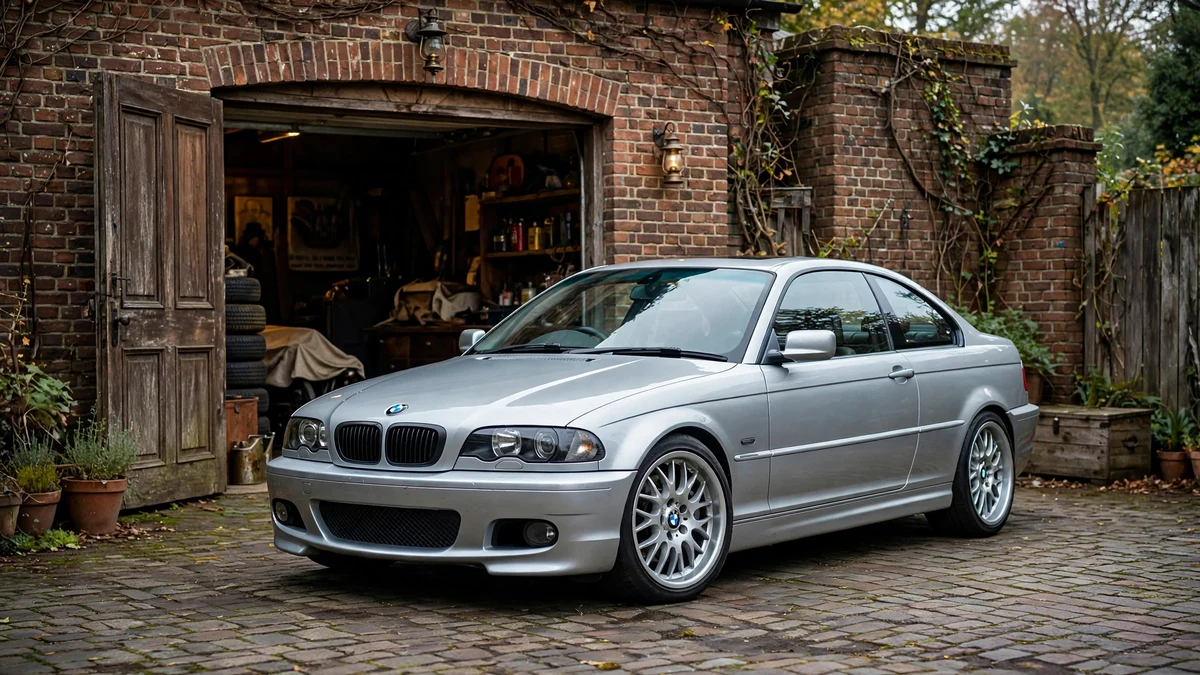
The E46 330i has crossed the invisible line from “old BMW” to modern classic. The last naturally aspirated, hydraulic-steering 3 Series with the beloved M54 inline-six is now 20+ years old, clean examples are getting harder to find, and prices for the best cars — especially manuals and ZHPs — have been climbing for years. But the E46 rewards knowledge and punishes impulse — this guide is the knowledge: rear axle carrier panel cracking, cooling-system plastics, and two decades of deferred maintenance separate the $18,000 garage queen from the $4,000 project. This E46 330i buying guide shows you how to buy the right car — what the M54 needs, exactly where to look for the expensive problems, what clean cars actually sell for in 2026, and the step-by-step process that keeps you out of trouble. For the general used-BMW process that underpins everything here, our used 3 Series buying guide is the companion read.
Short answer
How to buy an E46 330i: target 2003–2006 cars (facelift, updated details), insist on a manual or verified-clean automatic, and pay for records over low miles. Budget roughly $8,000–$14,000 for a clean driver, $15,000–$25,000+ for ZHP and exceptional manuals (owner-reported 2026 values). Inspect the rear axle carrier panel mounting area for cracking (the famous “subframe” issue), the entire cooling system, and every bushing — then get a specialist PPI. The M54B30 (225 hp; 235 hp in the ZHP) is a 250,000-mile engine if the cooling system and oil leaks are maintained; neglected ones overheat and die. Buy the best-documented car you can afford, not the cheapest car you can find.
In this guide
- Why the E46 330i is a modern classic now
- E46 330i specs at a glance
- The M54B30: what makes it special (and needy)
- Known issues: the expensive ones first
- Current values: what clean cars actually sell for
- ZHP spotting guide: how to verify the real thing
- How to buy: the step-by-step process
- Interactive: modern-classic score calculator
- Interactive: E46 330i inspection checklist
- Alternatives to the E46 330i
- Owning it: maintenance reality
- Frequently asked questions
Why the E46 330i is a modern classic now
Three things converged. First, the driving experience: hydraulic steering, a naturally aspirated inline-six with a real throttle cable feel (well, electronic throttle, but linear), a chassis that communicates — the E46 is the last 3 Series that drives like the old BMWs enthusiasts mythologize, and every generation since has added weight, turbo lag management, and electric steering. Second, scarcity: the E46 330i sold in decent numbers from 2001–2006, but two decades of daily-driver duty, winters, and neglect have thinned the herd — clean, unmodified, rust-free manuals are genuinely rare now. Third, the market noticed: ZHP values doubled and tripled over the last decade, and the halo effect is pulling clean non-ZHP cars up behind them. The E46 is also mechanically approachable in a way later cars aren’t — no direct injection, no turbo plumbing, no complex electronics — which makes it the last 3 Series a home mechanic can fully maintain. That combination (great to drive, possible to maintain, increasingly hard to find) is the textbook definition of a modern classic.
E46 330i specs at a glance
| Spec | 330i (2001–2006) | 330i ZHP (2003–2006) |
|---|---|---|
| Engine | M54B30 3.0L inline-6 | M54B30 with hotter cams, revised DME |
| Power / torque | 225 hp / 214 lb-ft | 235 hp / 222 lb-ft |
| Transmission | 6-speed manual or 5-speed automatic (ZF/ GM) | 6-speed manual (auto optional on sedans) |
| Drivetrain | RWD (xi AWD models used the M54B30 as the 330xi) | |
| 0–60 mph | ~6.1 sec (manual) | ~5.9 sec (manual) |
| ZHP extras | — | Sport suspension, M aero, 18-in wheels, Alcantara wheel, 6,800-rpm redline |
| Body styles | Sedan, coupe (Ci), convertible (CiC), wagon (Touring — rare in the US) | |
| Facelift | 2004 model year for sedans/wagons (coupe/convertible 2004 too); revised lights, bumpers, interiors | |
The M54B30: what makes it special (and needy)
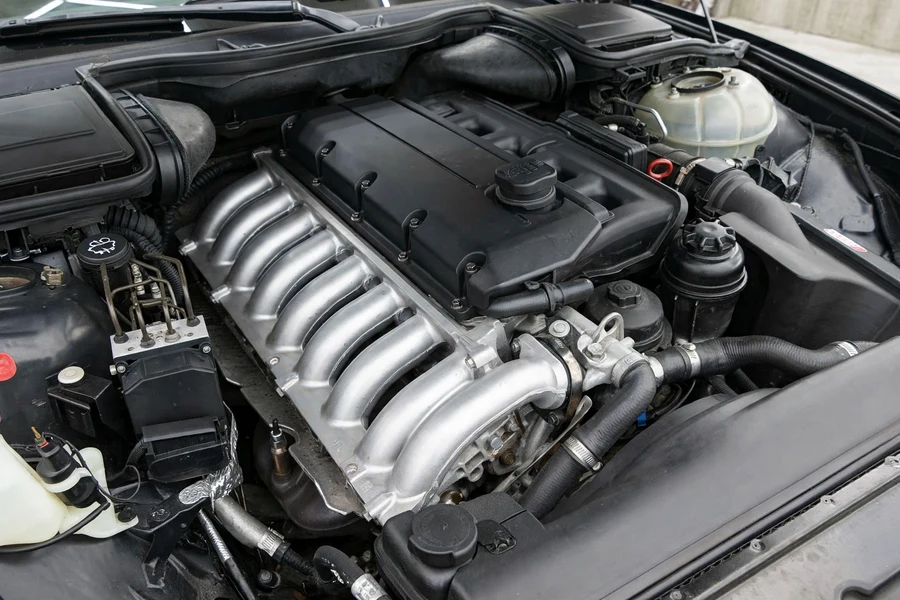
The M54 is the last of BMW’s great naturally aspirated inline-sixes: aluminum block and head, Double VANOS variable valve timing, and a soundtrack that no turbo four will ever match. The B30’s 225 hp (235 in the ZHP with its hotter cams and revised tuning) moves the E46 with effortless, linear urgency — no boost threshold, no lag, just throttle response. These engines routinely see 250,000+ miles with basic care, and the aftermarket and specialist knowledge base is enormous. But the M54 has non-negotiable needs. Cooling: the entire cooling system is plastic and rubber with a ~80,000–100,000-mile lifespan — expansion tank, thermostat housing, water pump, hoses, radiator. When (not if) it fails and the engine overheats, the aluminum head warps; an overheated M54 is often a parts car. Treat a full cooling-system refresh as a scheduled service, not a repair. Oil leaks: valve cover gasket, oil filter housing gasket, and oil pan gasket all seep with age — the OFHG in particular, since oil dripping onto the belts and hoses accelerates their failure. CCV (crankcase ventilation): the cold-climate CCV system clogs with sludge on short-trip cars, causing oil consumption and idle problems; the cold-weather insulated retrofit is the permanent fix. VANOS seals: the factory seals harden with age, dulling low-end torque — a $100 seal kit and an afternoon restores it (the famous Beisan fix, documented across the enthusiast community). DISA valve: the intake manifold’s DISA flap wears and can rattle or break apart — inspect it; the pin falling into the intake is the nightmare scenario. Oil consumption: some oil use (a quart every 1,000–2,000 miles) is common on high-mile M54s and not fatal — but verify it’s consumption, not leaks, and that the seller isn’t hiding it with thick oil. None of this is exotic; it’s all well-documented with DIY procedures. But a seller who deferred the cooling system deferred everything.
Known issues: the expensive ones first
Ranked by financial pain, not frequency. Every one of these is inspectable before you buy — that’s the point of this section.
1. Rear axle carrier panel cracking. The famous one. The rear subframe mounts to sheet metal in the trunk floor, and hard-driven cars (plus some that weren’t) develop cracks in the mounting area — owners call it “subframe cracking,” but the failure is in the body panel the subframe bolts to. Inspect with the trunk carpet and spare tire removed, looking for cracked paint, torn metal, or ripples around the four mounting points; also check from below. Repairs range from a few hundred dollars for reinforcement plates installed preventively to several thousand for full floor-panel replacement on cracked cars. This is not confined to early years — check every E46. A seller who won’t let you pull the trunk carpet is telling you something.
2. Cooling system. Covered above — but as a buying issue, the question is binary: has the system been refreshed in the last 80,000 miles? Receipts for the tank, pump, thermostat, hoses, and radiator (or at least most of them) are worth real money. No records means you budget $600–$1,200 in parts (DIY) or $1,500–$2,500 (shop) immediately.
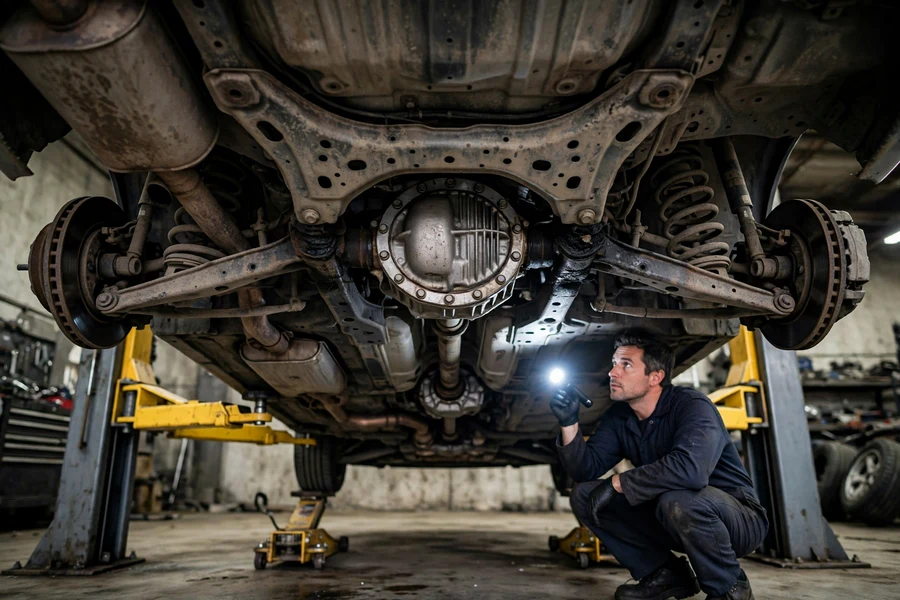
3. Rust. The E46’s bodies are galvanized but not immortal. Check the rear wheel arches, rocker panels, jack points, trunk floor, and the front subframe mounting areas. Northern and coastal cars need the most scrutiny — surface rust on suspension components is normal, but perforation in the body is a walk-away on a car you’re paying classic money for. Get it on a lift; phone-flashlight inspections miss the important areas.
4. Suspension and bushings. At 20+ years old, every rubber component is suspect: control arm bushings, rear trailing arm bushings (RTABs), sway-bar links, strut mounts, and shocks. A car that “drives fine” usually just means the seller is used to it — clunks over bumps, vague steering, and tramlining are all bushing talk. Budget $1,000–$2,500 for a full refresh at an independent shop; it’s the single best money you can spend on an E46’s driving feel.
5. Automatic transmission. The manuals are robust; the automatics (ZF 5HP19 on early cars, GM 5L40E on later) are the weak link if neglected. Demand fluid and filter service records — “lifetime fluid” cars at 150,000 miles are living on borrowed time. Harsh shifts, flares, or delayed engagement on the test drive are walk-away signs; a rebuild costs more than many E46s are worth.
6. Electrics and trim. Window regulators (you’ll replace at least one), the final-stage resistor (blower motor with a mind of its own), door lock actuators, pixel loss in the instrument cluster and climate display, and sunroof cassette issues. None are expensive individually; collectively they’re the “death by a thousand cuts” that makes a cheap E46 expensive. Test every single electrical function on your inspection — windows, locks, mirrors, sunroof, all HVAC modes, every cluster pixel — and budget a few hundred dollars for the regulators and sensors that fail in the first year regardless.
Current values: what clean cars actually sell for
E46 330i pricing is a ladder, and condition plus transmission determine the rung far more than mileage. The bands below are approximate owner-reported 2026 US market figures for rust-free, running cars — projects and rust-belt cars trade below, exceptional cars above.
| Tier | 2026 band* | What it looks like |
|---|---|---|
| Project / high-mile auto | ~$3,000–$6,000 | 150k+ miles, needs everything, maybe rusty — buy only as a project |
| Decent driver | ~$6,000–$10,000 | Honest car with records, some needs, automatic or higher miles |
| Clean driver | ~$10,000–$16,000 | Records, refreshed cooling, good paint, manual preferred |
| Exceptional / low-mile | ~$16,000–$24,000 | Sub-80k miles, documented history, collector-grade cosmetics |
| ZHP | ~$15,000–$30,000+ | The halo car — manuals bring the top; provenance matters enormously |
*Approximate owner-reported bands; auction results for the best ZHPs periodically exceed these. Transmission is the biggest value lever: manuals command 30–50% more than equivalent automatics and sell far faster. ZHP verification matters: real ZHPs have specific option codes and equipment (M suspension, aero package, 18-inch Style 135 wheels, Alcantara wheel, 6,800-rpm redline) — clones exist, so verify by VIN and equipment rather than badges. Color and body style move money: coupes and wagons (the US Touring is rare) carry premiums over sedans; desirable colors (Imola Red, Mystic Blue, Silver Gray) outprice black and silver. And the golden rule of the E46 market: the cheapest car is usually the most expensive car. A $5,000 example needing $8,000 in deferred maintenance is worse than a $12,000 example needing nothing.
ZHP spotting guide: how to verify the real thing
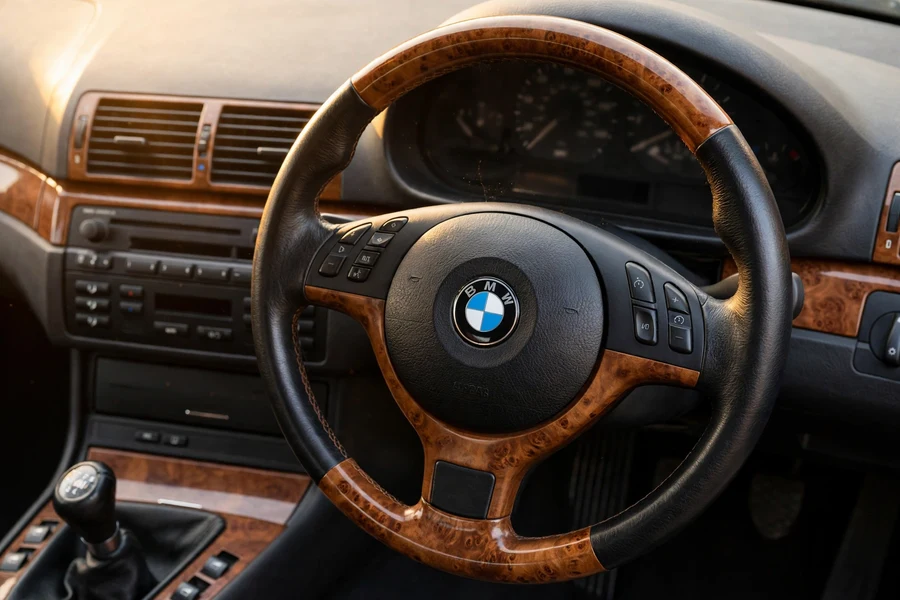
With ZHPs commanding double the price of base 330is, clones are inevitable — and some are convincing. A real ZHP (option code ZHP, the Performance Package, 2003–2006) carries a specific equipment set: the M54B30 with hotter camshafts and revised engine management (235 hp, 6,800-rpm redline), sport suspension with firmer springs and dampers, the M aerodynamic package (front bumper, side skirts, rear diffuser), 18-inch Style 135M wheels, an Alcantara-wrapped M steering wheel and shift knob, anthracite headliner, and unique interior trim. Verification starts with the VIN: decode it through a BMW VIN decoder and confirm the ZHP option code on the build sheet — no code, no ZHP, regardless of what’s bolted on. Then check the details clones get wrong: the redline (6,800, not 6,500), the steering wheel (Alcantara, often worn and re-wrapped on fakes), and the suspension (real ZHP springs have specific part markings). Service history matters even more on ZHPs because the premium only holds for documented cars — a ZHP with no records prices like a base 330i with a body kit. If the seller can’t produce the build sheet or gets vague about the VIN, move on; genuine ZHP sellers know exactly what they have.
How to buy: the step-by-step process
Step 1 — Define the car. Decide body style, transmission (manual if you can find/afford it), and facelift preference (2004+ sedans/wagons got the updated look) before you start looking. The ZHP is a separate search with separate pricing — don’t conflate it with base 330i shopping.
Step 2 — Hunt where the good cars are. The best E46s trade within the enthusiast community — marque club classifieds, enthusiast auction sites, and specialist dealers — before they ever reach the open market. Set alerts everywhere, but prioritize sellers with history: long-term owners with folders of receipts beat flippers with detail jobs. Be prepared to travel; the right car 500 miles away beats the wrong car across town.
Step 3 — Interrogate the listing. Before visiting, ask: cooling-system refresh history (what, when, miles)? Oil leak repairs? Subframe/rear-panel inspection results? Rust — where has the car lived? Transmission service (automatics)? Why are they selling? Vague or defensive answers to any of these save you a trip.
Step 4 — Inspect in person. Cold start (listen for VANOS rattle, watch for smoke), trunk-carpet removal for the rear panel check, underneath on a lift or at least ramps, every electrical function, full-lock steering, and a 30-minute test drive covering highway, bumps, and braking. Bring the checklist tool below — it exists so you don’t forget things in the excitement.
Step 5 — Get the specialist PPI. Non-negotiable on any car over ~$8,000 or any ZHP at any price. An independent BMW specialist’s lift inspection and code scan finds the things your driveway inspection can’t. The $200 or so is the cheapest insurance in this entire process.
Step 6 — Price the needs, then negotiate. Every used E46 needs something. Price the deferred maintenance honestly (cooling refresh, bushings, gaskets), subtract from the asking price, and negotiate from the real number — not the fantasy number where the car needs nothing. Sellers with records know what their car is worth; lowballing them wastes everyone’s time.
Step 7 — Paperwork before payment. Run a title and history check (accidents, salvage, odometer discrepancies, liens), confirm the VIN on the car matches the title in all locations, and verify the seller actually owns it — curbstoners flipping E46s without titles are a real phenomenon. For ZHPs, get the BMW build sheet. Pay by cashier’s check or bank transfer at the bank, never cash in a parking lot, and get a signed bill of sale with the VIN, mileage, and “as-is” terms spelled out. The unglamorous paperwork is what separates a clean purchase from a story you’ll tell for years.
Interactive: modern-classic score calculator
Score the specific car you’re considering across the six factors that determine E46 330i value. The calculator weights what the market actually pays for — transmission, records, and rust-free body — and tells you whether you’re looking at a collectible, a driver, or a project.
E46 330i modern-classic scorer
Mileage bands below are built from this guide’s value tiers.
Interactive: E46 330i inspection checklist
Take this to the viewing. Tap each item as you check it — the progress bar tracks your inspection, and anything unchecked at the end is your negotiation list (or your reason to walk).
Inspection checklist
0 of 12 checked
Alternatives to the E46 330i
Cross-shop honestly before committing. The E46 330Ci coupe is the same car in a prettier wrapper — usually a small premium, same mechanicals. The E46 M3 is the obvious step up: the S54 engine is a masterpiece, but purchase prices start where exceptional 330is end, and rod bearings, VANOS, and subframe issues make it a far more expensive car to own — buy the M3 for the M3, not as a "better 330i." The E90 330i (2006, N52) is the newer alternative: more refined, more modern, similar money to a clean E46 — but electric steering arrived later and the N52's maintenance profile is different; see our E90 buyer's guide for that decision. Outside BMW, the Honda S2000 and Porsche Boxster 986 offer similar analog thrills at similar money, with their own well-documented needs. The E46 330i's case against all of them: four usable seats, a trunk, year-round usability, and the deepest parts and knowledge support of any modern classic.
Owning it: maintenance reality
Budget reality for a clean driver: roughly $1,500–$2,500 per year at an independent BMW specialist (owner-reported), front-loaded in the first year when you baseline the car. The baselining — cooling refresh if undocumented, all fluids, filters, belts, bushings inspection — is the big bill; years two and on are consumables and the occasional gasket. DIY owners spend roughly half, and the E46 is the friendliest modern BMW to wrench on: huge DIY community, cheap parts, no special computers needed for most jobs. Oil every 5,000–7,500 miles with BMW LL-01-approved oil, coolant every 4 years, transmission and differential fluids every 50,000–60,000 miles, brake fluid every 2 years. The M54 rewards this with 250,000-mile longevity; skip it and you'll learn why overheated E46s fill the salvage auctions. If you live where roads are salted, seriously consider winter storage: the E46's body is galvanized but 20-year-old underseal and stone chips are salt's entry points, and a rust-free example is worth real money — don't dissolve it in brine. A $200 set of winter wheels with proper tires on a beater, or simply garaging the E46 from December to March with a battery tender and fuel stabilizer, preserves both the car and its value. Join the community — marque club chapters, enthusiast forums (for research, not linked here per our policy), and local specialist shops are the E46 owner's support network, and the knowledge base for these cars is the deepest of any BMW generation.
The E46 330i is the last of a species: naturally aspirated six, hydraulic steering, manageable electronics, and a chassis that talks to you. Buy carefully — records over miles, rust-free over cheap, manual over automatic — and you're not just buying a used car, you're buying into the generation that made BMW's reputation. The inspection checklist above and the scorer exist so the excitement of finding "the one" doesn't override the discipline of checking it. Use them, get the PPI, and welcome to the best-value modern classic in the BMW world.
Frequently asked questions
Is the E46 330i a good first classic car?
Yes — it's one of the best entry points. Parts are cheap and plentiful, the DIY knowledge base is enormous, specialists are everywhere, and the car is mechanically simple by modern standards. Just buy on records and condition, not price: a $12,000 sorted car is cheaper than a $5,000 project.
What is the E46 subframe issue?
The rear subframe mounts to sheet metal in the trunk floor, and the mounting area can crack — technically the rear axle carrier panel, though owners call it "subframe cracking." Inspect with the trunk carpet removed, looking for cracked paint or torn metal around the mounting points. Preventive reinforcement plates are cheap; full floor repair on a cracked car costs thousands.
How much is a BMW E46 330i worth in 2026?
Approximate owner-reported bands: $3,000–$6,000 for projects, $6,000–$10,000 for decent drivers, $10,000–$16,000 for clean drivers, $16,000–$24,000 for exceptional low-mile cars, and $15,000–$30,000+ for ZHPs. Manuals command 30–50% over automatics. Condition and records move cars between bands more than mileage does.
Is the M54 engine reliable?
Very — with one condition: the cooling system must be maintained. The M54B30 routinely exceeds 250,000 miles with fresh oil every 5,000–7,500 miles, a refreshed cooling system, and attention to oil leaks, the CCV system, VANOS seals, and the DISA valve. It's also one of the most DIY-friendly BMW engines ever made, with every common job documented. An overheated M54 is often fatal (warped aluminum head), which is why cooling receipts are the first thing to check.
Should I buy a ZHP or a regular 330i?
Buy the ZHP if you want the collectible: 235 hp, sport suspension, M aero, Alcantara details, and the strongest value appreciation — it's the E46 most likely to keep climbing. Buy the regular 330i if you want the driving experience for less — it's 90% of the car for roughly half the money at the clean-driver level, and cheaper to insure and run. Verify ZHP authenticity by VIN and equipment; clones exist, and only documented real ZHPs hold the premium.