Next BMW 3 Series — Everything BMW Has Confirmed
Short answer: Here is what BMW has actually confirmed about the next BMW 3 Series — no rumors, no renders, no “sources say.” Confirmed: the electric BMW i3 sedan (Neue Klasse) was unveiled in March 2026, entered production at BMW’s Munich plant in August 2026, and launches as the i3 50 xDrive with 4.7-second 0–100 km/h acceleration, 469 hp, 758–906 km of WLTP range, and 400 kW charging; European deliveries begin in autumn 2026 and the U.S. follows in 2027. Confirmed: a next-generation combustion 3 Series is coming too — BMW calls it the eighth 3 Series generation, “available for the first time as both a fully-electric and combustion-engine model,” teased its debut for September 30, 2026, and has confirmed the M350 xDrive (326 kW / 437 hp) as its performance flagship. Not confirmed as of September 28, 2026: pricing, dimensions, or market launch timing for the combustion car. This article is frozen as of September 28, 2026 — two days before BMW’s scheduled reveal — and every claim below is labeled confirmed or not.
In this guide
- Why this article is frozen on September 28, 2026
- Confirmed: the electric BMW i3 sedan (specs, production, deliveries)
- Confirmed: Neue Klasse technology, explained
- Confirmed: Munich production and the plant’s electric future
- Confirmed: the next combustion 3 Series (teaser + M350 xDrive)
- The audit table: confirmed vs. reported vs. unannounced
- What BMW has not said (and why that matters)
- Shopping now? Wait or buy a G20
- Interactive: confirmed or rumor? fact-checker
- Interactive: the next-3-Series timeline
- Five frequently asked questions
Why this article is frozen on September 28, 2026
Most “next 3 Series” coverage blends BMW statements, press reports, spy photos, and pure speculation into a smoothie where everything sounds equally true. This article does the opposite. Every fact below carries a label — confirmed by BMW, reported by press (not confirmed), or unannounced — and the article itself is frozen as of September 28, 2026.
The date matters because of what happens two days later: BMW’s official channels have teased the debut of the next combustion-engine 3 Series for September 30, 2026. That reveal will answer most of the open questions in this guide — power, pricing, timing, names — but it had not happened when this was written. Treat anything you read elsewhere dated after September 28 accordingly: the facts changed that week, and this page is the “before” picture, deliberately.
If you are reading this after the reveal, start with the audit table — it shows exactly which rows BMW has since filled in, and which pre-reveal reports turned out to be right.
Confirmed: the electric BMW i3 sedan
The single biggest confirmed fact about the 3 Series’ future is that its electric sibling already exists. BMW unveiled the first-ever BMW i3 Sedan — the first Neue Klasse sedan — in March 2026, with production starting at the Munich plant in August 2026.
The unveiling itself was a milestone worth noting: March 18, 2026 marked the public debut of not just a model but the sedan branch of the entire Neue Klasse program — BMW’s biggest product bet in a generation, following the iX3. The launch release led with the technology (800 volts, sixth-generation eDrive, Panoramic iDrive) rather than the badge, signaling that BMW sees the architecture as the story. For 3 Series loyalists, the subtext was reassuring: the company unveiled its electric future as a 3 Series-sized sedan, not as a crossover — a deliberate signal about where the heart of the brand still sits.
This is not a concept or a promise: BMW’s launch release gives full specifications for the launch model, the i3 50 xDrive, and confirms the production timeline. Here are BMW’s own numbers:
| Specification | BMW i3 50 xDrive (launch model) |
|---|---|
| System output | 345 kW / 469 hp, 645 Nm |
| 0–100 km/h | 4.7 seconds |
| Top speed | 200 km/h (124 mph) |
| WLTP range | 758–906 km (471–563 miles) |
| Battery (net) | 108.7 kWh |
| DC fast charging | Up to 400 kW; up to 423 km (263 miles) of range in 10 minutes |
| AC charging | Up to 22 kW (AC Charging Professional) |
| Voltage architecture | 800 volts |
Those numbers deserve context. Up to 906 kilometers of WLTP range puts the i3 at the very top of the electric sedan class as of 2026 — and 400 kW charging with up to 423 km recovered in ten minutes addresses the two objections (range, charging time) that have held back EV adoption in this segment. The 800-volt architecture is what makes the charging figure possible; it is also the clearest marker of the Neue Klasse’s clean-sheet engineering, since no previous BMW EV ran 800 volts.
Confirmed: Neue Klasse technology, explained
“Neue Klasse” is BMW’s name for its dedicated electric-vehicle architecture — new motors, new batteries, new electronics, and a new digital cockpit, developed together rather than adapted from combustion platforms. BMW has confirmed the program’s key technical pillars:
- Sixth-generation eDrive. Newly developed electric motors and battery cells. BMW says the round battery cells offer around 20 percent higher energy density than the previous generation’s prismatic cells — the chemistry change behind the i3’s range figures.
- 800-volt electrical system. Enables the 400 kW charging peak and reduces weight and losses versus 400-volt systems.
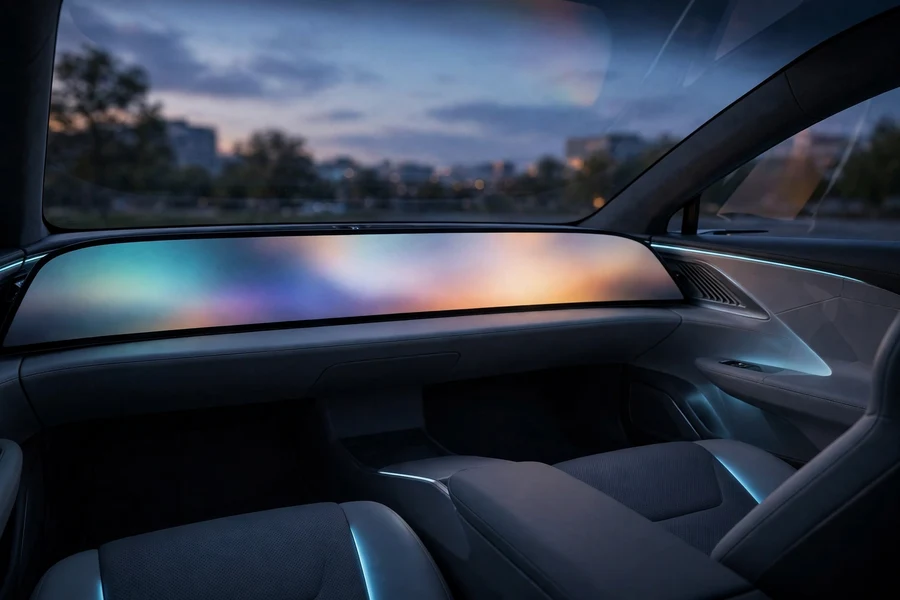
- Panoramic iDrive. A full-width projection display at the base of the windshield, replacing the traditional instrument cluster concept — BMW’s most radical interior rethink since iDrive itself.
- BMW Operating System X. The new software generation, with an AI-assisted BMW Intelligent Personal Assistant using large-language-model technology.
- Bidirectional charging capability. The i3’s hardware supports vehicle-to-load and vehicle-to-home use cases where markets and regulations allow.
Why does this matter for the combustion 3 Series? Because BMW has confirmed the two cars as one eighth-generation family: its trailer describes the new 3 Series as “available for the first time as both a fully-electric and combustion-engine model,” and BMW says both cars share the Neue Klasse design language and the Panoramic iDrive cockpit with Operating System X — while keeping distinct engineering underneath. That tells you the two cars were developed as a pair, not as strangers.
Confirmed: Munich production and the plant’s electric future
BMW has confirmed the industrial side in unusual detail, and it tells you how seriously the company is betting on this generation:
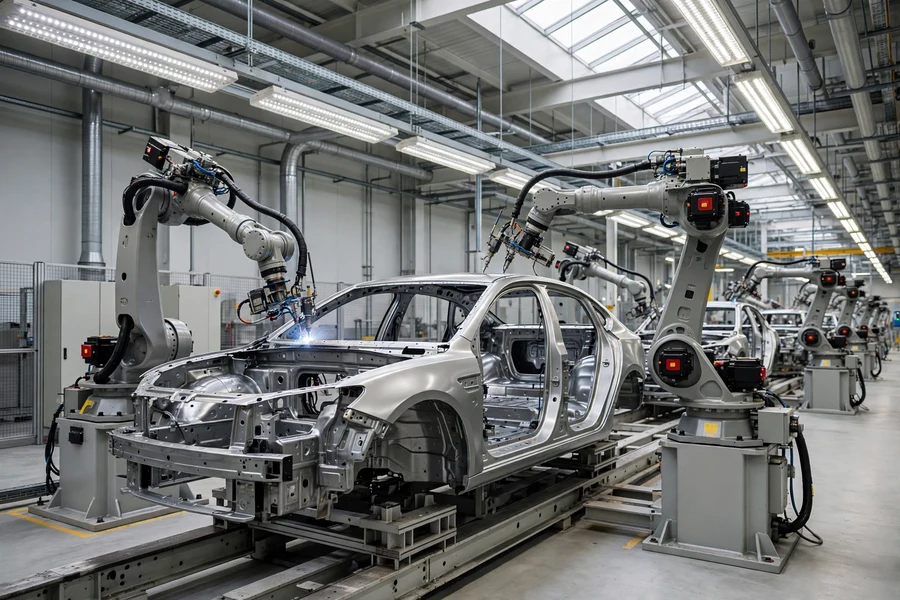
- i3 production started at Munich in August 2026. The company’s home plant — building cars for over a century — is the i3’s birthplace.
- European market launch in autumn 2026, with the first customer deliveries from autumn per BMW’s release.
- U.S. debut in 2027. American buyers wait roughly a year behind Europe.
- Munich goes all-electric at the end of 2027. BMW confirmed the plant will manufacture exclusively all-electric vehicles from that point — “the era of vehicles with combustion engines in Munich will draw to a close.”
The industrial bet is the context: BMW is spending its Munich home plant’s future on the Neue Klasse — €650 million of conversion investment, with the plant going all-electric at the end of 2027.
Confirmed: the next combustion 3 Series
Now the part everyone is actually waiting for. BMW has confirmed remarkably little about the combustion car’s specifications — but it has confirmed the two facts that matter most: it exists, and it is about to be shown.
In September 2026, BMW’s official channels began teasing the new 3 Series with a debut date of September 30, 2026 — two days after this article’s freeze date. The trailer calls it the eighth 3 Series generation, “available for the first time as both a fully-electric and combustion-engine model,” and points to the full reveal at 12:01 a.m. CEST on September 30.
BMW’s pre-reveal teaser also confirmed the combustion range’s performance flagship: the M350 xDrive, replacing the M340i. BMW’s figures: 326 kW (437 hp) and 580 Nm from a 3.0-liter turbocharged inline-six with 48-volt mild-hybrid assistance, 0–100 km/h in 4.1 seconds, and a 250 km/h top speed. BMW says the wider combustion range will use four- and six-cylinder engines with 48-volt mild-hybrid assistance — and that all new 3 Series models, combustion included, get the Panoramic iDrive cockpit running BMW Operating System X.
Read that brief carefully, because it is the entire confirmed technical picture for the combustion car. BMW has confirmed shared design language and shared digital technology (Neue Klasse styling, Panoramic iDrive, Operating System X) across both powertrains — but distinct engineering underneath: the i3 rides on the dedicated Neue Klasse EV architecture, while the combustion car is reported to use an updated CLAR platform. Everything else — pricing, dimensions, market launch timing, the rest of the model lineup — is unconfirmed as of September 28, 2026.
The naming: why “i3” and “3 Series” are both correct
BMW’s naming for the pair is confirmed by usage, and it is worth spelling out because it confuses people. The electric car is the BMW i3 — a sedan, on Neue Klasse architecture, with the “i” prefix BMW reserves for electric models. The combustion car is the BMW 3 Series — the eighth generation of the nameplate that has existed since 1975. They are siblings with distinct engineering, developed together and designed to look like family.
This matters for shoppers because the two will coexist in showrooms and in search results. “Next 3 Series” in headlines sometimes means the i3, sometimes means the combustion car, and sometimes means both — which is how speculation about one gets misattributed to the other. When you read coverage, check which car the claim is about before deciding whether it affects your decision. The confirmed facts in this guide are labeled per car for exactly that reason.
What the i3’s confirmed specs tell us about BMW’s direction
Specifications are facts; what they mean is analysis — and the i3’s numbers are worth reading closely, because they set the bar the combustion car will be judged against.
906 km of WLTP range is a statement. It puts the i3 beyond every direct electric rival in the compact executive class as of 2026, and it reframes the EV conversation for 3 Series buyers: range anxiety, for this car, is a solved problem on paper. The enabler is the round-cell battery chemistry with its claimed ~20 percent energy-density gain — a reminder that BMW’s Neue Klasse bet is as much about cells as it is about cars.
400 kW charging is infrastructure leadership. Most public DC fast chargers in 2026 cannot deliver 400 kW — the car is ahead of the network. That is deliberate: BMW is building for the chargers of 2028–2030, not just today’s. The 10-minute, 400-km claim is the number that matters for real trips — roughly a coffee stop per four hours of driving, which is parity with a combustion car’s rhythm.
4.7 seconds is restraint. BMW could have made the launch i3 violently quick — dual motors and 800 volts allow it — but 4.7 seconds to 100 km/h is sports-sedan pace, not supercar theater. That choice tells you who the car is for: the existing 3 Series buyer, not the drag-strip crowd. Expect the combustion car’s positioning to rhyme with this restraint.
The two-track strategy: why BMW is building both
BMW’s approach — a dedicated EV and a next-generation combustion car, developed as a pair — looks indecisive only if you miss the strategy behind it. The company’s own trailer frames the eighth generation as “available for the first time as both a fully-electric and combustion-engine model”: one design language, one digital cockpit (Panoramic iDrive with Operating System X), two distinct engineering paths underneath. That is not hedging — it is platform economics applied to an uncertain transition.
For buyers, the practical meaning is choice without compromise theater: pick the powertrain that fits your life — home charging and long range, or fuel-station freedom — and get a car engineered in the same program, not a converted afterthought in either direction. The M350 xDrive’s confirmed 437 hp shows BMW is not treating the combustion car as a legacy obligation, either: it gets a genuine performance flagship on day one.
The audit table: confirmed vs. reported vs. unannounced
Every significant claim circulating about the next 3 Series, labeled as of September 28, 2026:
| Claim | Status | Basis |
|---|---|---|
| Electric i3 sedan unveiled March 2026 | Confirmed | BMW press release |
| i3 50 xDrive: 4.7 s, 758–906 km WLTP, 400 kW charging | Confirmed | BMW technical data sheet |
| Munich i3 production started August 2026 | Confirmed | BMW production announcement |
| Europe deliveries autumn 2026; U.S. 2027 | Confirmed | BMW USA website |
| Munich plant all-electric from end of 2027 | Confirmed | BMW Group statement |
| Eighth generation: electric i3 + combustion 3 Series as one family | Confirmed | BMW official trailer |
| M350 xDrive (326 kW / 437 hp) replaces the M340i | Confirmed | BMW pre-reveal teaser |
| Combustion range: four- and six-cylinder engines, 48V mild hybrid | Confirmed | BMW pre-reveal teaser |
| Panoramic iDrive + Operating System X in both cars | Confirmed | BMW statements |
| Combustion 3 Series debuts September 30, 2026 | Confirmed | BMW official teaser |
| Next 3 Series shares i3 battery/motor hardware | Reported, not confirmed | No BMW statement found; BMW confirms shared design + digital tech only |
| Codename “G50” | Reported, not confirmed | Enthusiast press; BMW does not use codenames publicly |
| Other combustion power outputs (beyond M350) | Reported, not confirmed | Press speculation; no BMW figure exists |
| Updated CLAR platform for the combustion car | Reported, not confirmed | Third-party reports only |
| Pricing, dimensions, market launch timing (combustion) | Unannounced | BMW has said nothing as of Sept 28, 2026 |
What BMW has not said (and why the silence matters)
As of September 28, 2026, BMW has confirmed the M350 xDrive’s key figures but not a single price, a single dimension, or a market launch date for the combustion 3 Series — two days before showing the car. That is normal: manufacturers hold specifications for the reveal. But it means every “expected specs” table you see online right now is assembled from reports and inference, not from BMW.
The honest way to read pre-reveal coverage: treat reported details (outputs beyond the M350, platforms, model names) as scenarios, not facts. Some will prove right on September 30; some will not. The confirmed facts above — the i3’s existence and specs, the eighth-generation two-track strategy, the M350 xDrive, shared design and digital tech — are the load-bearing walls. Everything else is decoration until BMW speaks.
What to watch for on September 30
When BMW reveals the combustion car, here are the questions whose answers actually matter — framed as questions, because answering them now would be speculation:
- How far does the hybridization go? BMW confirmed 48-volt mild-hybrid assistance for the four- and six-cylinder range — but is there also a plug-in hybrid? The answer determines everything from fuel economy to tax treatment.
- Which engines survive? The M350’s 3.0-liter turbo inline-six is confirmed; which four-cylinders join it, and are there new units?
- What are the other badges? The M350 xDrive replaces the M340i — what do the four-cylinder models get called?
- How much does it cost — and when? Pricing and order timing decide whether waiting makes sense for real buyers.
- How much i3 does it wear? Shared design language and interior tech are confirmed; the reveal shows how visually close the two tracks really are.
- What happens to the G20? Overlap production, runout deals, or a clean switch — the transition plan matters for today’s shoppers.
Bring this checklist to the reveal coverage. Any outlet that answers these six questions from BMW’s materials is reporting; any outlet that answered them before September 30 was guessing. You now know the difference.
How this article ages
This page is a time capsule by design. After September 30, 2026, the “unannounced” rows in the audit table will start flipping to confirmed — and this article, frozen on September 28, will become the record of what was known before BMW spoke. That is its value: when someone claims “everyone knew the specs months in advance,” this page shows exactly what was confirmed and what was not. Future updates to this guide will add the reveal’s confirmed facts as a new dated section, not by rewriting the history above.
Shopping right now? Wait or buy a G20
The reveal timing creates a genuine dilemma for anyone shopping in late September 2026. Here is the clear-eyed version:
- If you need a car now, the G20 is the rational buy. It is a known quantity with six years of reliability data, full parts availability, and — right now — dealers motivated to clear inventory before the new car lands. Our used 3 Series buying guide and reliability-by-year ranking tell you exactly which G20s to target.
- If you can wait weeks, wait for September 30. The reveal will answer every open question in the audit table above, and launch timing and pricing will tell you whether waiting months for delivery makes sense.
- Do not pay a premium for rumors. No dealer knows the new car’s pricing or allocation yet either — anyone selling certainty about the unannounced car is selling something else.
- The i3 is real today. If your driving fits an EV (home charging, sub-900-km days), the confirmed electric option does not require waiting for the reveal — European deliveries start this autumn.
For the full picture of the car you would be buying today, our complete 3 Series guide covers the G20 generation end to end — the benchmark the next car has to beat.
Interactive: confirmed or rumor? fact-checker
Ten claims about the next 3 Series. For each one, decide: confirmed by BMW, reported but not confirmed, or not announced. Then check yourself.
Interactive: the next-3-Series timeline
Every confirmed milestone, in order. Select one to see what BMW actually said.
Next 3 Series: five frequently asked questions
The electric BMW i3 sedan was already unveiled in March 2026. The next combustion-engine 3 Series was teased by BMW’s official channels for a debut on September 30, 2026 — two days after this article’s September 28 cutoff. Check BMW’s channels after that date for the full reveal.
Both. BMW confirmed the electric i3 sedan on the dedicated Neue Klasse EV architecture (in production since August 2026), and a next-generation combustion 3 Series — BMW calls it the eighth 3 Series generation, “available for the first time as both a fully-electric and combustion-engine model.” BMW has confirmed the M350 xDrive (326 kW / 437 hp) as the combustion range’s performance flagship. It is a two-track strategy, not a replacement.
BMW’s dedicated electric-vehicle architecture: sixth-generation eDrive motors and battery cells, an 800-volt electrical system enabling 400 kW charging, Panoramic iDrive (a full-width windshield-base display), and BMW Operating System X with an AI-assisted personal assistant. It debuts under the i3 sedan and iX3.
For the launch i3 50 xDrive, BMW confirms: 4.7 seconds 0–100 km/h, 469 hp, 758–906 km (471–563 miles) of WLTP range, a 108.7 kWh net battery, and up to 400 kW DC charging — up to 423 km (263 miles) of range in 10 minutes. WLTP values were provisional at launch. European deliveries begin autumn 2026; the U.S. follows in 2027.
If you need a car now, buy the G20 — it is a known quantity with six years of data, and dealers are motivated ahead of the new arrival. If you can wait, the September 30, 2026 reveal will answer every open question about the combustion car’s power, pricing, and timing. Do not pay premiums based on rumors; beyond the M350’s confirmed figures, no pricing, dimensions, or launch timing exist yet.