BMW 3 Series Recalls — Every Open Campaign Verified
Short answer: BMW 3 Series recalls are free safety repairs tracked by NHTSA campaign number, and several still apply to cars on the road today — from the 2013 battery-cable recall (13V-044) and the 2017 blower-motor wiring recall (17V-676) on E90 models, to the 2023 VANOS-bolt recall (23V-707) on late F30-era cars, to the 2026 starter-motor recall (26V-056) on 2021–2024 G20 models. A recall never expires, the repair is always free at any BMW dealer, and the only check that matters is your VIN — model-year lists are screening tools, not verdicts. This guide lists every verified 3 Series campaign as of September 2026, explains what each one fixes, and gives you a 60-second VIN check plus a model-by-model checker tool.
In this guide
- Check your 3 Series for open recalls in 60 seconds
- How BMW recalls actually work (and why they never expire)
- The master table: every verified 3 Series recall campaign
- E90 generation (2006–2011): battery cable, blower motor, PCV heater, Takata
- F30 generation (2012–2018): VANOS bolts, EGR cooler, Takata expansion
- G20 generation (2019–2026): the starter-motor recall and what is current
- Interactive recall checker: pick your car, see what may apply
- Quiz: do you know your recall rights?
- Five frequently asked questions
Check your 3 Series for open recalls in 60 seconds
Everything in this article is background. The verdict on your car comes from exactly one place: its 17-character VIN. BMW recalls are issued against production ranges and option combinations, not whole model years — two 2011 328i sedans built months apart can have different recall status. So before reading the tables below, run the check. It takes about a minute and it is the only step that actually protects you.
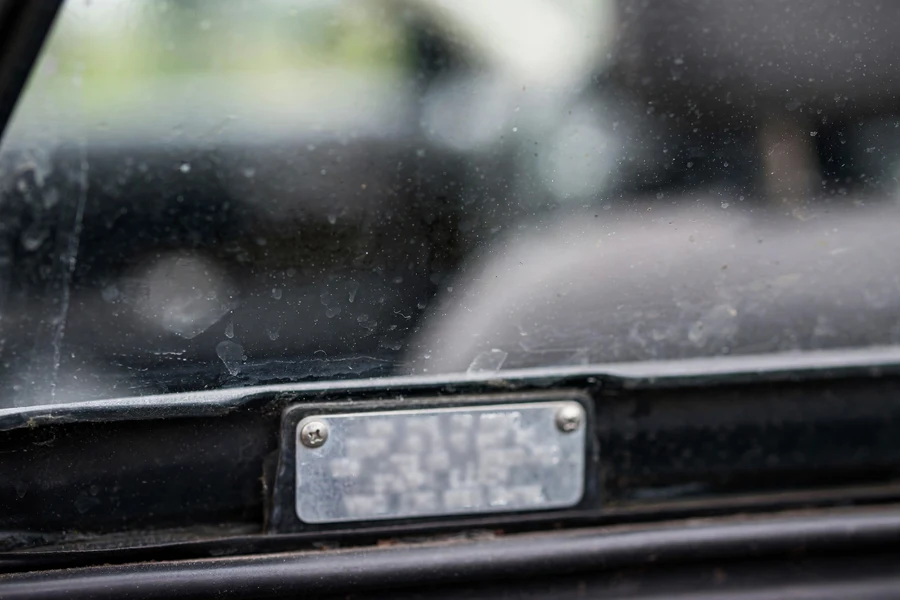
- Step 1 — find your VIN. Look through the windshield at the base of the driver’s side dashboard, where a small plate carries the VIN, or check the driver’s door jamb sticker and your registration documents.
- Step 2 — run it through NHTSA. The federal database lists every open campaign for that exact VIN, and it is free with no account.
- Step 3 — cross-check with BMW. BMW’s own recall lookup reads the same VIN and shows dealer-service history, including recalls already completed — useful because a campaign marked “open” at NHTSA may have been fixed years ago under a previous owner.
- Step 4 — call any BMW dealer. Give them the VIN over the phone and ask for “open campaigns.” Service advisors do this all day; it takes two minutes and costs nothing.
One more habit worth building: run the check when you buy, not after. Our used 3 Series buying guide and pre-purchase inspection checklist both put the VIN recall check near the top, because an open Takata airbag or fire-risk recall is negotiating leverage — and because some sellers genuinely do not know a campaign is open on their car.
How BMW recalls actually work
A recall starts when BMW or the National Highway Traffic Safety Administration (NHTSA) identifies a safety defect — something that can cause injury, a crash, or a fire, not just an annoyance. BMW then files a campaign with a number in the format YYV-NNN (for example, 17V-676), mails notices to registered owners, and authorizes every BMW dealer to perform the fix. Three facts surprise most owners:
- Recall repairs are always free. Parts and labor, at any BMW dealer, regardless of warranty status, mileage, or how many owners the car has had. If a dealer ever quotes you for recall work, that is a mistake — escalate to the service manager.
- Recalls never expire. A 2013 campaign is still honored in 2026. The 2006–2011 E90 cars in the tables below can still get their blower-motor wiring replaced free today, fifteen-plus years later.
- Completion follows the VIN, not the owner. When a recall is performed, BMW records it against the VIN. That is why a car can show “no open recalls” even though its model year appears in a campaign table — the fix was already done, possibly before you bought it.
Recalls are different from technical service bulletins (TSBs) and warranty extensions. A TSB is an internal repair procedure dealers use when a customer complains — it is not a safety finding and the repair is only free inside warranty (or a specific extension). BMW has issued warranty extensions for things like N20 timing chains, but those are goodwill programs with mileage and age limits, not recalls. If someone tells you “there’s a recall for” something, ask for the campaign number — real recalls have one, and you can verify it in seconds.
The master table: every verified 3 Series recall
Every campaign below was verified against NHTSA documentation or NHTSA-indexed reporting as of September 2026. Model years are the published campaign ranges — treat them as a screening tool and let the VIN check give the verdict. Repairs are free at any BMW dealer.
| Campaign | Model years | Generation | Issue | Free remedy |
|---|---|---|---|---|
| 13V-044 | 2007–2011 | E90 | Positive battery-cable connection to the fuse box can degrade; loss of electrical power, engine stalling | Dealer installs an improved cable connection |
| 16V-071 | Various (VIN-specific) | E90 / F30 | Takata driver-front airbag inflator can rupture on deployment, projecting metal fragments | Driver airbag module replaced |
| 17V-676 | 2006–2011 | E90 | Blower-motor wiring and connectors can overheat, melting risk | Wiring and connectors replaced |
| 22V-119 (supersedes 17V-683, 19V-273) | 2006–2013 (N51/N52) | E90 | PCV (blow-by) heater can short-circuit; fire risk — even cars repaired under earlier recalls may need the new fix | Heater replaced |
| 23V-707 | 2010–2012 | E90 / F30 | VANOS housing bolts can loosen or break; reduced power, no-start, rare stalling | Four VANOS housing bolts replaced |
| 18V-755 | 2013–2018 (328d) | F30 | EGR-cooler coolant leak; fire risk (44,368 vehicles) | EGR cooler inspected/replaced; intake manifold if leaked |
| 25V-700 | 2018 (328d; 112 cars) | F30 | EGR-cooler coolant leak; fire risk | EGR cooler inspected/replaced; intake manifold if leaked |
| 24V-513 | 2006–2012 (sedan/wagon; steering-wheel retrofits) | E90 | Sport/M-sport steering wheel may contain Takata PSDI-5 inflator (394,029 vehicles) | Airbag module inspected; replaced if Takata |
| 26V-056 | 2021–2024 (330i; 46,384 3 Series) | G20 | Starter motor can overheat; fire risk. Announced Jan 30, 2026; owner letters mailed July 2026 | Starter motor replaced (about 1 hour) |
| 26V-441 | 2016, 2018 (330e) | F30 | Starter relay corrosion; fire risk; park-outside advisory | Starter replaced |
Notice what is not in the table: BMW’s 2024 integrated-braking-system recall (24V-104) is sometimes mentioned near 3 Series discussions, but the verified vehicle list for that campaign does not include the 3 Series — so it does not belong here. That is exactly the kind of detail the VIN check resolves: if a campaign does not apply to your car, it will not appear, no matter what a forum thread claims.
E90 generation (2006–2011): four campaigns to know
The E90/E91/E92/E93 generation carries the longest recall list of any 3 Series, which is unsurprising — it is also the oldest generation still common on the road, and two of its campaigns involve genuine fire risk. If you own or are shopping for one of these cars, the four campaigns below are non-negotiable checks.
13V-044 — battery cable connection (2007–2011)
Filed in 2013, this campaign covers 2007–2011 3 Series cars whose positive battery-cable connection to the fuse box can degrade over time. The symptom progression is distinctive: flickering electronics, intermittent power loss, and in the worst case the engine stalling or failing to restart. NHTSA’s campaign summary documents the defect and the remedy — the dealer installs an improved connection, free. Because the failure looks exactly like a dying battery or a bad alternator, E90 owners have spent money on both before discovering the recall: if your 2007–2011 car has unexplained electrical gremlins, check the VIN before buying parts. Our battery-keeps-dying guide covers the non-recall causes, so you can tell the two apart.
17V-676 — blower-motor wiring (2006–2011)
The 2017 blower-motor recall is the one E90 specialists ask about first. The wiring and electrical connectors for the HVAC blower motor can overheat — in rare cases melting surrounding components. The tell is a blower that works only on certain speeds, smells hot, or quits entirely. The remedy replaces the wiring and connectors free. With the youngest affected cars now fifteen years old, many have had the fix — but E90s change hands constantly, and a car that sat with an independent shop its whole life may never have been checked.
22V-119 — PCV blow-by heater (2006–2013 N51/N52 cars)
The original 2017 campaign (17V-683) addressed the positive-crankcase-ventilation heater — the “blow-by heater” — on certain N51 and N52-powered cars, which can short-circuit and start a fire. BMW expanded it in 2019 (19V-273), then filed 22V-119 in March 2022 — superseding both earlier campaigns and covering 917,106 vehicles, including 2006–2013 3 Series sedans, wagons, coupes, and convertibles. The critical detail: BMW documented thermal events in cars that had already received the earlier remedies, so a car “fixed” years ago may need the new repair. Warning signs: check-engine light, smoke from the engine compartment, or a plastic burning odor. Do not rely on a recall check you ran years ago — rerun the VIN.
16V-071 — Takata driver airbag (VIN-specific)
The Takata airbag recalls are the largest automotive recalls in history, and BMW’s 2016 filing (16V-071) includes certain 3 Series cars. The defect is severe: the inflator housing can rupture during deployment and spray metal fragments into the cabin. But Takata coverage is unusually VIN-specific — it depends on the exact airbag module installed at the factory, which varies by production date and steering-wheel equipment. If you own any E90- or F30-era 3 Series and have never verified the airbag specifically, check the VIN today. An open Takata recall jumps to the front of every priority list: call the dealer and schedule the free module replacement immediately.
24V-513 — Takata steering-wheel retrofit check (2006–2012)
In July 2024 BMW recalled 394,029 2006–2012 3 Series sedans and wagons: the original steering wheel may have been swapped — by a previous owner — for a sport or M-sport wheel containing a Takata PSDI-5 inflator, never an approved BMW part. The dealer inspects the driver’s airbag module and replaces it if a Takata inflator is found, free. If your E90 wears a sport steering wheel you did not buy the car with, get the module checked.
F30 generation (2012–2018): VANOS bolts, diesel EGR, 330e starter relay
The F30’s recall record is shorter, but it contains one of the most mechanically interesting campaigns BMW has ever issued — plus diesel-only and plug-in-hybrid campaigns that 328d and 330e owners should know by name.
23V-707 — VANOS housing bolts (2010–2012)
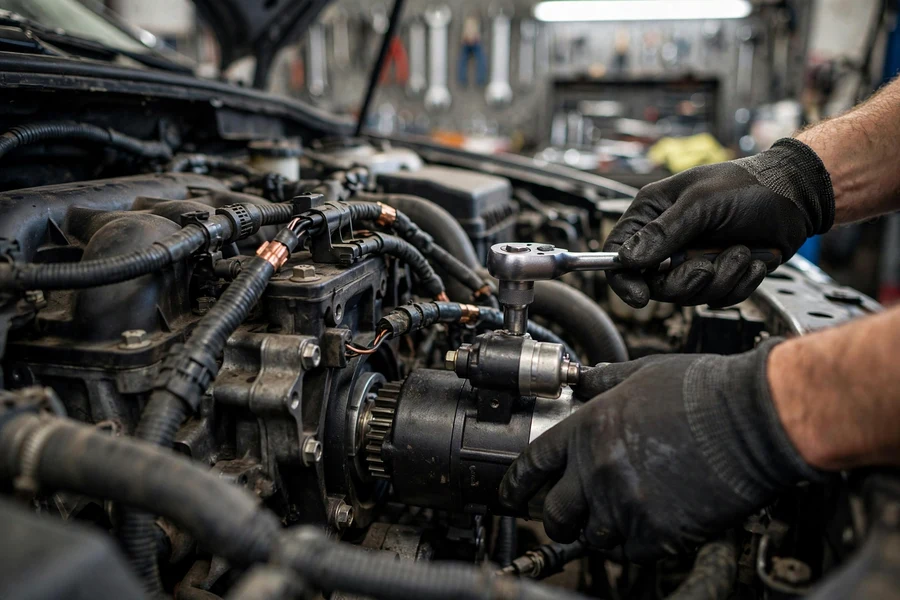
Filed in late 2023, this campaign covers certain 2010–2012 3 Series cars with the naturally aspirated inline-six. Four bolts securing the VANOS variable-valve-timing housing can loosen or break over time. The symptoms escalate: first reduced engine power and a check-engine light, then difficulty starting, and in rare cases stalling while driving. The remedy is refreshingly simple — the dealer replaces all four bolts, free. What makes this campaign notable is its age: it was filed more than a decade after the youngest affected car was built, a reminder that recalls have no statute of limitations.
25V-700 — EGR cooler, 2018 328d
Filed in October 2025, 25V-700 covers 112 late-production 2018 328d sedans and Sports Wagons (built September–December 2018) whose EGR cooler can leak glycol coolant internally, creating smoldering particles that can melt the intake manifold — a fire risk. The dealer inspects the cooler and replaces it if needed, plus the manifold if a leak already occurred — all free. Ask about 25V-700 by name when you run the VIN.
18V-755 — EGR cooler, 2013–2018 328d
The big diesel EGR campaign: filed in November 2018, 18V-755 covers about 44,368 diesel vehicles including 2013–2018 328d sedans and wagons. The EGR cooler can leak coolant internally, mixing with soot and risking a melted intake manifold and fire — dealers inspect the cooler and replace it (plus the manifold if it already leaked), free. If you drive a 328d that has never had EGR work, check this campaign first.
26V-441 — starter relay, 2016/2018 330e (park outside)
Filed in July 2026, 26V-441 covers 29,119 plug-in-hybrid sedans — including the 2016 and 2018 BMW 330e — whose starter relay can corrode, short-circuit, and overheat. It carries NHTSA’s park-outside advisory: until the dealer replaces the starter free, do not park in enclosed spaces — the fault can cause a thermal event even with the ignition off. Owner letters were mailed in August 2026. If you own a 330e, check the VIN and heed the parking guidance.
G20 generation (2019–2026): the starter-motor recall
The current G20 generation has the shortest recall list — which is what you want to see on a car still in production. But its one major campaign is recent and active, so G20 owners should read this section carefully.
26V-056 — starter motor overheating (2021–2024)
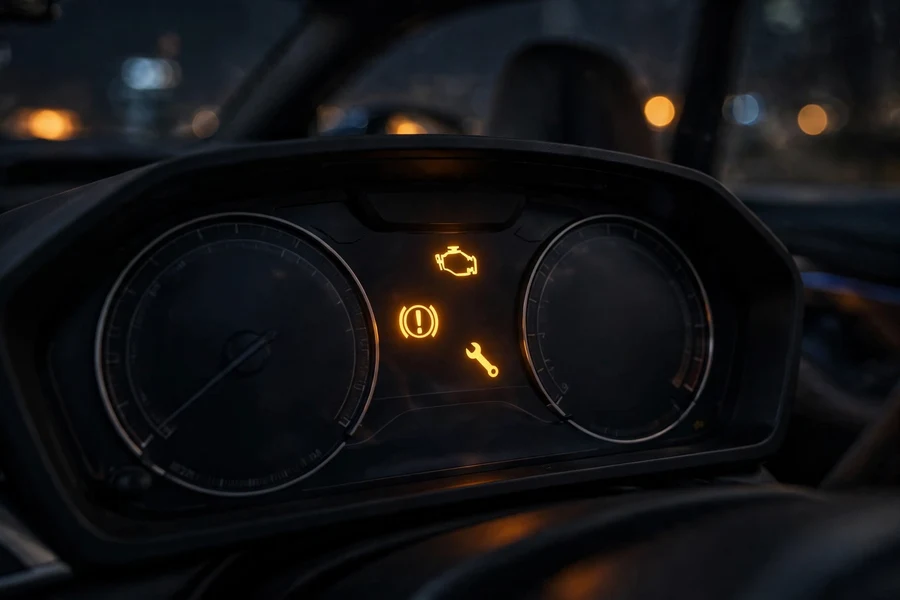
Filed January 30, 2026, 26V-056 covers certain 2021–2024 3 Series (330i) cars whose starter motor can overheat from wear on an internal component — a fire risk. It is the third wave of a multi-year starter campaign, totaling 87,394 vehicles, with the 3 Series population the largest at 46,384. The remedy is a free starter-motor replacement, about an hour’s work; owner letters were mailed July 21, 2026. BMW warns not to leave the car running unattended and to watch for smoke from the engine compartment. If you own a 2021–2024 G20 and have not checked since summer 2026, run the VIN now.
A note on scope: no other G20-specific safety campaigns were verified as of September 2026. That can change — BMW files new campaigns every year — which is why this article is dated and why the VIN check, not this page, is the living document. Bookmark the NHTSA lookup alongside this guide.
You got a recall letter: what to do this week
Recall notices arrive by mail from BMW, addressed to the registered owner — which means used-car buyers often never see the letter for campaigns filed before their purchase. The letter names the campaign number, describes the defect, and tells you to contact a dealer. Here is the efficient version of what happens next:
- Do not wait for the letter. If the VIN check shows an open campaign, you can book the repair today — the letter is a notification, not a permission slip.
- Any BMW dealer will do it. You are not tied to the selling dealer or the dealer that serviced the car. Call the service department, give the VIN, mention the campaign number, and book.
- It is free — all of it. Parts, labor, and the diagnostic time to confirm the campaign applies. There is no deductible, no mileage limit, and no “while we’re in there” obligation: you can decline any additional recommended work.
- Ask about timing honestly. Airbag and fire-risk campaigns get priority scheduling at most dealers; a blower-motor wiring job on a fifteen-year-old E90 may wait for parts. Ask the advisor for a realistic timeframe when you book.
- Keep the paperwork. The repair order showing the campaign number and “completed” status is your proof if you ever sell the car — buyers checking the VIN will see the campaign closed, and your receipt explains when and where.
Buying a used 3 Series? Make recalls part of the deal
On the used market, recall status is asymmetric information — the seller may not know, and the buyer usually does not check. That is an opportunity. An open recall is not a reason to walk away; it is free repair work the dealer will perform after you buy, and it is legitimate negotiating context: a car with an open Takata airbag campaign needs a dealer visit before it is truly road-ready. Our used 3 Series buying guide ranks model years by reliability, and the recall tables above add the safety layer: a 2011 328i with all four E90 campaigns completed is a meaningfully better buy than the same car with three still open. Run the VIN before the test drive, bring the printout to the negotiation, and schedule the free repairs for your first week of ownership.
Keep BMW able to reach you
Recall notices are mailed to the registered owner on file — which is why second and third owners so often miss them. If you bought your 3 Series used, register your ownership with BMW (any dealer can do it in minutes, or do it through the My BMW App) so future campaign letters actually reach you. It costs nothing, it takes one visit, and it closes the most common gap in the whole recall system: the manufacturer knowing about the defect, and the owner never hearing about it. Our My BMW App guide walks through the setup if you have not done it yet.
Interactive: 3 Series recall checker
Pick your 3 Series and what you want to know. The checker summarizes which verified campaigns may apply, what the free repair involves, how urgent each one is, and how to confirm by VIN — model-year ranges screen, the VIN decides.
Quiz: do you know your recall rights?
Five quick questions. Most owners get at least two wrong — which is exactly why dealers love informed customers.
1. A recall repair at a BMW dealer costs…
2. A recall filed in 2013 on your 2011 3 Series is…
3. The decisive check for whether a recall applies to your car is…
4. Takata airbag coverage on 3 Series cars is best described as…
5. The difference between a recall and a TSB is…
3 Series recalls: five frequently asked questions
Yes — completely. Parts and labor at any BMW dealer, with no deductible, no mileage limit, and no warranty required. It does not matter how many owners the car has had or how old it is. If a dealer ever tries to charge for campaign work, ask for the service manager and reference the campaign number.
No. There is no statute of limitations on a safety recall. The campaigns in this guide from 2013, 2016, and 2017 are still being honored in 2026 — the 23V-707 VANOS-bolt recall was itself filed in 2023 for cars built in 2010–2012, more than a decade after the fact. If your VIN shows an old campaign open, the dealer still has to fix it free.
Find the 17-character VIN (windshield plate, door jamb sticker, or registration), enter it in NHTSA’s recall lookup, and cross-check with BMW’s own recall lookup or a quick call to any dealer’s service department. The whole process takes about a minute, it is free, and it is the only check that definitively answers whether a campaign applies to your specific car.
Yes. Recalls follow the VIN, not the owner — the second, third, or fifth owner gets exactly the same free repair as the first. This is also why used buyers should run the VIN before purchase: an open campaign is free work the dealer will do after you buy, and a car with all campaigns completed is a better buy than the same car with open ones.
A recall is a formal safety finding filed with NHTSA under a campaign number (like 17V-676), with free repairs that never expire. A technical service bulletin (TSB) is an internal BMW repair procedure dealers use when a customer reports a symptom — it carries no safety finding and the repair is only free inside warranty or a specific extension. Real recalls have campaign numbers you can verify; if nobody can give you one, it is not a recall.