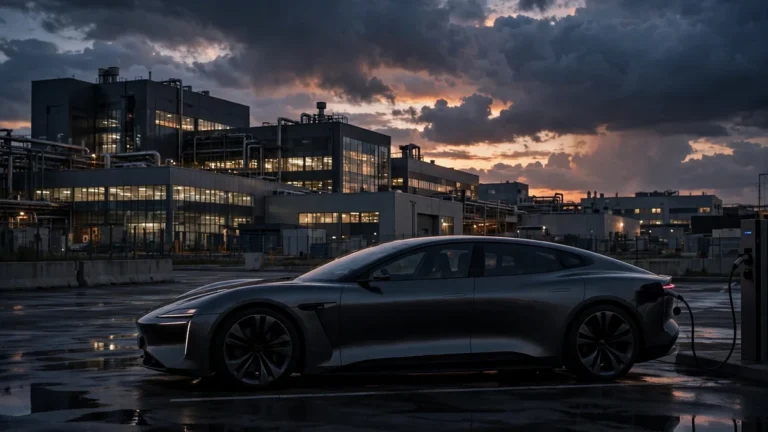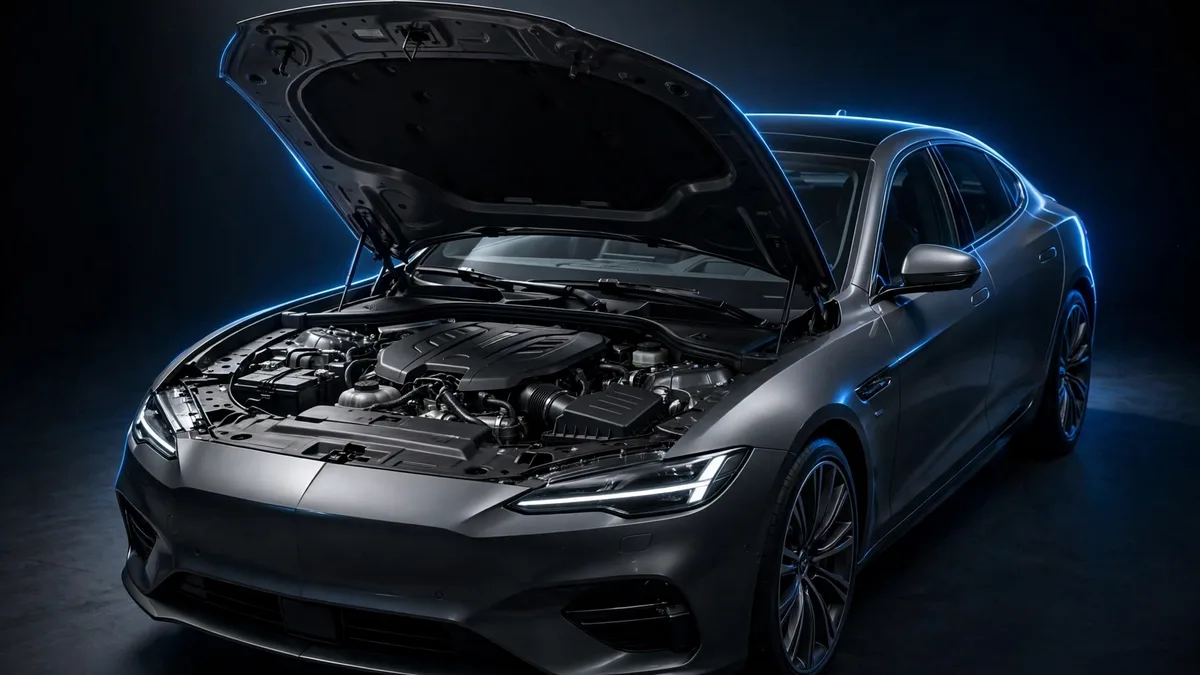
2027 BMW 3 Series Reveal Brings a 437-HP M350
Short answer: The 2027 BMW 3 Series reveal is officially set for September 30, 2026 — and BMW has confirmed the headline act in advance. The new M350 xDrive tops the launch range with a 3.0-liter turbocharged inline-six making 437 hp and 580 Nm, a 4.1-second 0–100 km/h sprint, and a 250 km/h top speed. The eighth-generation 3 Series (G50) keeps combustion alive alongside the electric i3 sedan on the Neue Klasse platform, with production starting in November 2026. Facts verified as of September 28, 2026; everything below separates BMW-confirmed figures from reported detail.
In this guide
- What BMW confirmed: reveal date and the M350 xDrive
- The M350 by the numbers
- What the preview images show
- The strategy: why the M350 leads the range
- M350 xDrive vs. the outgoing M340i
- What we don’t know yet
- Interactive: M350 buyer readiness scorer
- Interactive: 3 Series reveal trivia quiz
- Five frequently asked questions
What BMW confirmed: reveal date and the M350 xDrive
After months of camouflaged prototypes and controlled leaks, BMW has put a date on it: the eighth-generation 3 Series will be revealed on September 30, 2026, two days after this article’s publication. Ahead of the unveiling, BMW released the technical headline figures for the car that will sit at the top of the launch lineup — the M350 xDrive.
The M350 replaces the M340i as the range-topping non-M 3 Series. Here is what BMW has officially confirmed about it:
- 437 hp (326 kW) from a 3.0-liter turbocharged inline-six with 48-volt mild-hybrid assistance
- 580 Nm of torque
- 4.1 seconds from 0 to 100 km/h
- 250 km/h top speed
- xDrive all-wheel drive as standard, paired with an M sport differential
- M sport brakes, 20-inch M light-alloy wheels, M exterior mirrors, and a quad-exhaust system
The engine is the familiar B58-family 3.0-liter turbo six — now with 48-volt assistance — tuned well beyond the outgoing car. At 437 hp, the new M350 makes 55 hp more than the M340i it replaces (382 hp), putting it within striking distance of the previous-generation M3’s output while remaining the “M Performance” tier below the full M car.
The M350 by the numbers
BMW’s pre-reveal release gives us the headline performance figures. Here is the M350 against its predecessor and its key rivals:
| Specification | 2027 BMW M350 xDrive | 2025 BMW M340i xDrive | Change |
|---|---|---|---|
| Engine | 3.0L turbo inline-six + 48V | 3.0L turbo inline-six + 48V | New tune |
| Power | 437 hp (326 kW) | 382 hp | +55 hp |
| Torque | 580 Nm | 500 Nm | +80 Nm |
| 0–100 km/h | 4.1 seconds | 4.4 seconds | −0.3 s |
| Top speed | 250 km/h | 250 km/h | Unchanged |
| Drivetrain | xDrive AWD standard | xDrive (RWD also offered) | AWD-only confirmed |
| Differential | M sport differential | M sport differential | Carried over |
| Wheels | 20-inch M light-alloy | 19-inch standard | Upsized |
The 80 Nm torque jump is the number that will matter most on the road — more than the headline horsepower. The B58’s midrange shove, amplified by the 48-volt system’s torque fill, is what makes the M Performance cars feel effortless in daily driving. BMW’s 4.1-second 0–100 km/h claim puts the M350 in genuine sports-car territory while keeping it a comfortable daily driver.
Reading the engineering between the lines
BMW confirmed figures, not technical deep-dives — but the figures themselves tell an engineering story for readers who know the B58:
- 437 hp from the B58 is a serious tune — but not an exotic one. The B58 has produced over 400 hp in other applications (the Toyota GR Supra’s later versions, the X3 M40i’s higher states of tune), so 437 hp is within the engine family’s proven envelope. This is not BMW stressing the hardware; it is BMW using headroom the engine always had.
- 580 Nm is the real story. Torque is what you feel leaving a toll booth or merging onto a highway, and 580 Nm is a 16% jump over the M340i’s 500 Nm. The 48-volt mild-hybrid system contributes here: its integrated starter-generator fills torque gaps during gear changes and turbo spool-up, which is why modern BMWs feel faster than their power figures suggest.
- xDrive-only at launch is a traction decision. 580 Nm through the rear wheels alone demands restraint from the stability control or the driver; standard xDrive with the M sport differential puts the power down cleanly and lets BMW quote the 4.1-second figure with confidence. Rear-drive may return on lesser variants where torque is lower.
- 20-inch wheels and M sport brakes are standard — hardware the M340i charged extra for or bundled in packages. BMW is positioning the M350 closer to the full M cars in standard equipment, which also hints at where pricing will land.
- The 250 km/h top speed is electronically limited, as on every modern M Performance car. The meaningful numbers are the acceleration and torque figures, not the limiter.
One caution: none of this replaces the full technical briefing BMW will give at the reveal. Cooling capacity, gearbox calibration (the 8-speed automatic carries over in principle, but software defines the character), and weight are all unconfirmed — and weight in particular will determine whether the M350 feels like a sharper M340i or a different animal entirely.
What the preview images show
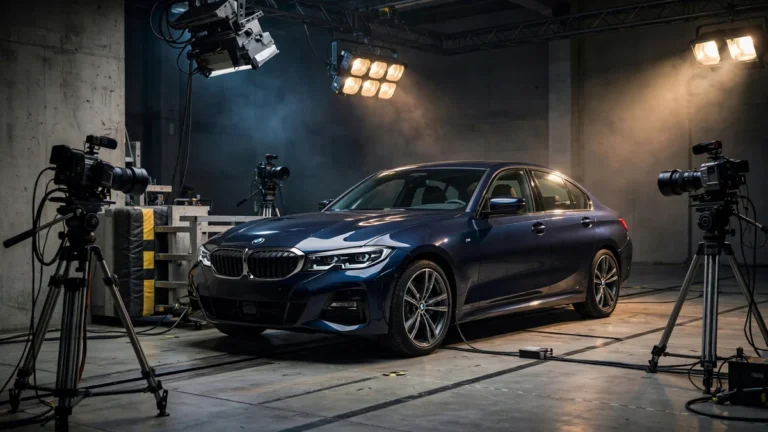
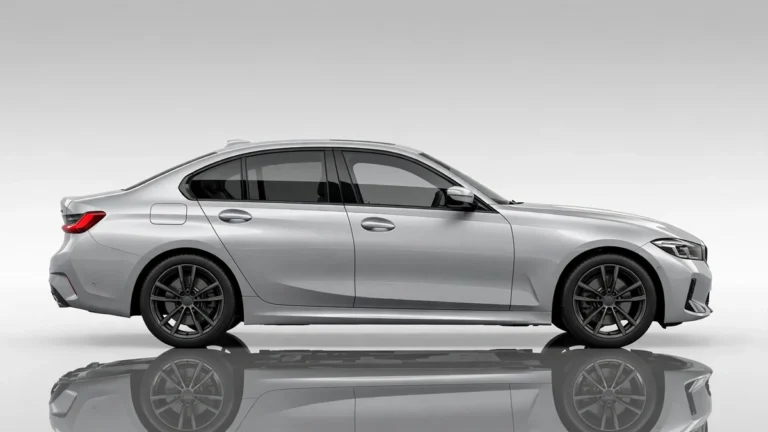
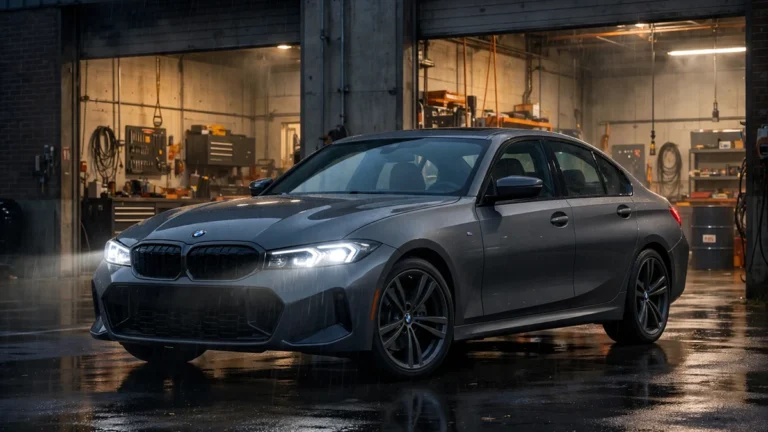
BMW’s preview images of the new 3 Series — released ahead of the September 30 unveiling and described in detail by the motoring press — confirm a sharper, more angular design language than the G20 it replaces:
- Narrow kidney grilles with angled headlights, a front-end treatment reports compare to the Neue Klasse iX3’s — the combustion 3 Series and the electric models are converging visually
- Panoramic iDrive inside: a full-width 43-inch display across the base of the windshield paired with a 17.9-inch central touchscreen, matching the iX3’s cockpit concept
- Physical controls retained — including a new iDrive controller knob — after the industry’s touchscreen-only experiments drew consistent criticism
The design convergence is the story. For the first time, BMW’s combustion and electric flagships in the same segment will share a visual identity and a cockpit architecture. The G50 runs on an updated version of the CLAR platform — the rear-drive-based architecture that has underpinned the 3 Series since the G20 — while the electric i3 sedan rides the dedicated Neue Klasse platform. Two platforms, one face.
The return of physical controls deserves emphasis, because it is an industry-wide reversal. The G20 generation progressively buried climate and drive-mode functions in touchscreen menus — a trend the whole premium segment followed and customers consistently criticized in satisfaction surveys. BMW keeping a proper iDrive controller knob and physical controls in the G50 is an admission that the touchscreen-only experiment failed for cars meant to be driven. It is also a quiet competitive advantage: while rivals are re-learning the same lesson mid-cycle, the 3 Series launches with the corrected interface from day one. Combined with the Panoramic Vision display — information projected across the windshield base, in the driver’s line of sight rather than off to the side — the G50’s cockpit is BMW’s attempt to resolve the tension between digital ambition and driving focus that has defined car interiors for a decade.
The eighth generation in context
The 3 Series is BMW’s center of gravity — the car the brand is measured by. The G50 is the eighth generation, and each one has redefined the segment it created:
| Generation | Years | Defining trait |
|---|---|---|
| E21 | 1975–1983 | Created the compact sports sedan |
| E30 | 1982–1994 | The icon; first M3 |
| E36 | 1990–2000 | Modernized the formula; first compact (318ti) |
| E46 | 1998–2006 | The enthusiast benchmark; build quality peak |
| E90 | 2005–2013 | Last naturally aspirated sixes; hydraulic steering’s end |
| F30 | 2011–2019 | Turbocharging across the range; efficiency era |
| G20 | 2018–2026 | Digital cockpit; B58/B48 maturity; mild hybrids |
| G50 | 2026– | Combustion flagship + Neue Klasse electric twin |
The G50’s historical significance is the split. Every previous generation was one car with one powertrain philosophy (plus the usual engine options). The eighth generation is two cars wearing one badge: a combustion 3 Series on evolved CLAR architecture for the markets and buyers that still want it, and an electric i3 on the Neue Klasse platform for the electric future. BMW is not hedging — it is running both strategies at full effort simultaneously. No rival is attempting the same thing at the same scale: Mercedes is splitting its lineup too, but BMW is doing it while keeping the combustion car’s performance flagship at 437 hp, a figure that would have been M3 territory two generations ago.
Our confirmed-facts guide to the next 3 Series covers the full platform strategy — the i3 sedan (in production since August 2026), the next M3, and how the two 3 Series lines will coexist. This article sticks to the news: what changed this week.
The strategy: why the M350 leads the range
BMW revealing the 3 Series with the M350 first — rather than a base 330i — is a deliberate statement about where the segment is going:
- Performance sells the story. 437 hp, 4.1 seconds, quad exhausts — the M350 gives the press and the public a headline. The volume 330i and 320i variants will follow; the M350 sets the emotional tone.
- It defends the segment BMW invented. The sports sedan is under pressure from electric rivals and SUVs. Leading with the most powerful non-M 3 Series ever says the combustion sports sedan is not in managed decline.
- It brackets the range with the i3. With the electric i3 sedan already in production and the 437-hp M350 topping the combustion line, BMW can claim leadership at both ends of the 3 Series spectrum on reveal day.
Production of the new 3 Series starts in November 2026 at BMW’s Munich plant, on the updated CLAR platform. Production of the Neue Klasse 3 Series is also confirmed for San Luis Potosí, Mexico from 2027 — the same plant slated for iX3 production. The outgoing G20’s 330i ownership picture and the 330i vs. M340i comparison remain the references for the cars in showrooms today.
The M350’s rivals: who should be worried
The M350 does not launch into a vacuum. The compact sports sedan segment — the one the 3 Series defined — is still contested, and 437 hp resets the bar for the M Performance tier:
- Audi S5. The M340i’s traditional sparring partner. Audi’s answer will need to match not just the power figure but the torque — 580 Nm is the number rivals’ product planners are studying this week.
- Mercedes-AMG C43. Affalterbach’s four-cylinder hybrid approach to the segment took a different philosophical path; the M350’s big-six-plus-48V formula is BMW betting that six cylinders still sell sedans.
- The full M3. BMW’s own M division is the M350’s most interesting rival. At 437 hp, the M350 sits close enough to the outgoing M3’s territory that the next M3 — confirmed, but with no figures yet — will need meaningful daylight above the M350 to justify its premium. Expect the M3 to move upmarket in both price and performance.
- Electric rivals. The Tesla Model 3 Performance and its competitors win on running costs and straight-line pace per dollar. The M350’s counterargument is the one BMW has always made: the engine note, the chassis balance, and the sense that the car was built for drivers first.
The honest assessment: on paper, 437 hp and 4.1 seconds make the M350 the segment’s power leader at launch. Whether it is the segment’s best driver’s car — the title the 3 Series has held or lost with each generation — will be decided by steering feel, chassis balance, and weight, none of which BMW has quantified yet. The figures earn the M350 a place in the conversation; the road test earns it the crown.
A note on the name: why M350, not M340i
BMW’s M Performance naming has always been more marketing than mathematics — the M340i never had a 4.0-liter engine — but the step from 40i to 50 signals something real. Within BMW’s current nomenclature, the “50” tier sits above “40” across the lineup (X3 M50, iX3 50 xDrive), denoting the top non-M powertrain. The rename tells you BMW considers the 55-hp jump a tier change, not a facelift bump — and it creates pricing headroom above the 330i for the new flagship. Expect the M350 to be priced accordingly when figures land.
M350 xDrive vs. the outgoing M340i: what’s actually new
Beyond the headline figures, here is how the two cars compare as ownership propositions — and what carries over:
| Area | M340i (G20, outgoing) | M350 xDrive (G50, new) | Verdict |
|---|---|---|---|
| Engine family | B58 3.0L turbo I6 + 48V | 3.0L turbo I6 + 48V (new tune) | Evolution, not revolution |
| Output | 382 hp / 500 Nm | 437 hp / 580 Nm | Meaningful jump |
| Acceleration | 0–100 km/h in 4.4 s | 0–100 km/h in 4.1 s | Three tenths quicker |
| Drivetrain choice | RWD or xDrive | xDrive standard (confirmed) | Less choice at launch |
| Cockpit | Curved display, iDrive 8/8.5 | Panoramic iDrive, 43″ + 17.9″ | Generational leap |
| Platform | CLAR (G20) | Updated CLAR (G50) | Refined, not replaced |
| Exhaust | Dual-exit styling | Quad-exhaust system | More M-car theater |
| Depreciation | Known curve, strong used demand | Unknown; new model premium | Outgoing car is the value play |
The continuity matters as much as the change. The B58 inline-six is one of BMW’s most proven engines — our 3 Series reliability ranking shows the B58-powered G20s among the strongest modern 3 Series — so the M350 is a known-quantity engine in a higher state of tune, not a clean-sheet risk. The generational leap is the cockpit: Panoramic iDrive is a fundamentally different interface from the G20’s curved display, and first-year software is the one area where caution is warranted.
For buyers, the table creates a clear fork. The outgoing M340i — 382 hp, rear-drive available, known depreciation — is the rational enthusiast buy, especially if end-of-generation discounts appear as the G50 arrives. The M350 is the emotional one: 55 more horsepower, the new cockpit, and the first-year premium. Neither choice is wrong; they are different cars for different priorities.
How the reveal changes the used 3 Series market
A new 3 Series does not just create a new car to buy — it reprices the old ones. Here is the mechanism, and how to use it:
- New G20 discounts are coming. Dealers holding M340i and 330i inventory as the G50 launches will discount to clear lots — this is the historical pattern at every 3 Series changeover. If you want a new G20, the months after the reveal are the buyer’s window.
- Certified pre-owned M340is get cheaper. Off-lease G20s compete directly with the new car’s marketing; CPO prices soften as the new model takes the spotlight. A two-year-old M340i with the B58 at a steep discount to the M350’s eventual price is the enthusiast value play of 2027.
- The B58’s reputation protects values long-term. Our reliability ranking shows B58-powered cars holding up well; a well-maintained M340i is not about to become undesirable because its successor exists. The E90 and F30 markets prove that beloved 3 Series generations hold enthusiast value for decades.
- Don’t overpay for the last of the line. “Final edition” premiums on outgoing models rarely survive contact with the new car’s arrival. Buy the G20 for its discount, not its collectibility — unless it is a genuinely rare spec.
Launch timeline: what happens next
| Date | Event | Status |
|---|---|---|
| September 30, 2026 | Official reveal of the eighth-generation 3 Series | Confirmed |
| October–November 2026 | Full pricing, fuel economy, and range lineup expected | Expected |
| November 2026 | Production begins in Munich | Confirmed |
| Late 2026 / early 2027 | First European customer deliveries | Expected |
| Mid-2027 | Production begins at San Luis Potosí, Mexico | Planned |
| 2027 | US market launch timing; next M3 details expected | Unconfirmed |
The US timing question is the one American readers will ask most, and it is the one BMW has answered least. The Munich plant builds European cars first; San Luis Potosí — BMW’s North American 3 Series source — comes online mid-2027. American buyers should expect the G50 to reach US showrooms sometime in 2027, but BMW has not confirmed a date. Anyone shopping a 3 Series in the next twelve months is shopping the G20 — which is exactly why the used-market dynamics above matter now.
What we don’t know yet: the honest gaps
BMW confirmed the M350’s performance figures ahead of the reveal. Everything else — including the things that determine what the car costs to own — waits for September 30 and beyond:
- Pricing. No US or European pricing has been confirmed for the M350 or any G50 variant. The M340i’s pricing is the only reference point, and BMW has not said where the M350 lands relative to it.
- Fuel economy. No EPA or WLTP figures yet. The 48-volt system should help, but 437 hp is 437 hp — expect the economy story to trail the performance story.
- The rest of the range. The 330i, 320i, diesel variants for Europe, and the Touring wagon are all unconfirmed in detail. The M350 is the headline; the volume cars come later.
- The next M3. BMW has confirmed an M3 is coming on the new platform, but no figures, no date, and no word on whether it keeps the S58 or moves to a new powertrain.
- Manual transmission. The G20 dropped the manual years ago in most markets; nothing suggests the G50 brings it back, but BMW has not confirmed the transmission lineup beyond the automatic.
- Real-world software behavior. Panoramic iDrive is new hardware running new software. The iX3 — which shares the cockpit concept — is the live test bed; its first owner reports are the data to watch.
We will update this article after the September 30 reveal with pricing, economy figures, and the full range lineup.

Interactive: M350 buyer readiness scorer
Thinking about ordering the M350 when books open? Five questions score whether you are a launch-window buyer, a wait-for-the-330i buyer, or a discounted-M340i buyer — every path tested.
Interactive: 3 Series reveal trivia quiz
Six claims about the reveal and the M350. Mark each true or false — every answer cites the confirmed record.
2027 BMW 3 Series reveal: five frequently asked questions
BMW set the reveal of the eighth-generation 3 Series (G50) for September 30, 2026. Ahead of the unveiling, BMW confirmed the M350 xDrive as the launch flagship: 437 hp, 580 Nm, 0–100 km/h in 4.1 seconds. Production starts in Munich in November 2026.
437 hp (326 kW) and 580 Nm from a 3.0-liter turbocharged inline-six with 48-volt mild-hybrid assistance — 55 hp and 80 Nm more than the outgoing M340i. BMW claims 0–100 km/h in 4.1 seconds and a 250 km/h top speed, with xDrive all-wheel drive, an M sport differential, and M sport brakes standard.
Both. The G50 revealed September 30 is the combustion 3 Series on an updated CLAR platform — the M350’s turbo six proves gas is not done. Alongside it, the electric i3 sedan rides BMW’s dedicated Neue Klasse platform (in production since August 2026). Two platforms, one shared design language and Panoramic iDrive cockpit.
The M340i is the rational buy: 382 hp from the proven B58, rear-drive available, known depreciation — and the possibility of end-of-generation discounts as the G50 arrives. The M350 is the emotional buy: 55 more hp, the new Panoramic iDrive cockpit, and first-year pricing. Performance-first buyers with new-car budgets should wait; value seekers should shop the outgoing car.
No. As of September 28, 2026, BMW has confirmed performance figures, drivetrain, and chassis hardware for the M350 xDrive — but no pricing, fuel economy figures, or full range lineup. Expect those at or after the September 30 reveal. The M340i’s pricing is the only current reference point.