How to Negotiate a Used BMW 3 Series Price Down
The sticker price on a used BMW is a starting bid, not a price — but most buyers negotiate with opinions while the seller negotiates with data. This guide flips that: which data points actually move a used BMW price (comparable listings, inspection findings, reconditioning costs, days on market), how dealer and private-party negotiations differ, and word-for-word scripts plus walk-away points you can use today. Pair it with the used BMW 3 Series buying guide for the buying process and the pre-purchase inspection guide for the leverage that matters most.
Short answer
To negotiate a used BMW price down, bring three numbers: the comparable-market average (from KBB, Edmunds, and live listings — cited by name, never as links), the pre-purchase inspection’s repair total, and the reconditioning cost (tires, brakes, fluids the car needs now). Offer = comps average − inspection findings − 50% of reconditioning, walk away if the seller will not meet comps minus inspection findings. Dealers negotiate on price, trade value, and financing — use all three; private sellers negotiate on price and timing — be ready to buy now. Never negotiate the monthly payment, never skip the inspection, and always be willing to leave.
In this guide
- Dealer vs. private party: different games
- The data points that move the price
- Turning inspection findings into dollars
- Reconditioning costs: the hidden discount
- The timeline: when to negotiate what
- Your trade-in: the second negotiation
- Financing as a negotiation lever
- Two worked examples
- Remote negotiation: email and phone
- After the handshake: protecting the deal
- Interactive: offer calculator
- Interactive: negotiation readiness scorer
- Word-for-word scripts that work
- Walk-away points: when to leave
- Negotiation traps to avoid
- Frequently asked questions
Dealer vs. private party: different games
Dealers and private sellers negotiate differently because their costs and motivations differ. A franchise dealer’s used-car department has real money in every car — acquisition cost, reconditioning, certification, floorplan interest — and a monthly volume target that matters more than any single deal’s gross. An independent lot has lower overhead but thinner reconditioning. A private seller has an emotional attachment, no overhead, and usually a deadline (new car arriving, move, lease end).
| Franchise / BMW dealer | Independent lot | Private party | |
|---|---|---|---|
| What they will move on | Price, trade-in value, APR, add-ons, CPO premium | Price, sometimes warranty add-ons | Price and timing |
| What they will not move on | Doc fees (often fixed by policy) | Price floor set by their acquisition cost | Below their payoff or emotional floor |
| Best leverage | End of month/quarter; aged inventory (60+ days) | Cash/quick close; documented comps | PPI findings; your ability to buy today |
| Watch for | Add-ons, marked-up money factor/APR, low trade offers | Minimal reconditioning, title washing | Curbstoning, hidden accidents, “lost” records |
The key insight: dealers have more levers, which means more places to win — but also more places to lose. A dealer who “cannot move on price” can often move $1,000 on your trade, a point on the APR, or delete $800 of add-ons. Negotiate the whole deal (price, trade, financing, fees) as one number: your out-the-door total. Private sellers have one lever — price — so the negotiation is simpler and more emotional: be respectful, be factual, and be ready to transact immediately, because certainty of close is the private seller’s favorite discount.
The data points that move the price
Opinions do not move prices; documented numbers do. Assemble these five before you make an offer:
- Comparable listings (the anchor). Pull 5–8 current listings for the same year, model, trim, and similar mileage within 200 miles — from KBB, Edmunds, CarGurus, Autotrader, and Cars.com (cite them by name in conversation: “KBB and three comparable listings average $X”). Throw out the highest and lowest, average the rest. This number — not the asking price — is the market.
- Days on market. A car listed 60+ days is costing the dealer floorplan interest every day; a private seller 60 days in is doubting their price. CarGurus and Autotrader show listing age — a 90-day listing is worth a materially lower offer than a 9-day one.
- Price history. Multiple price drops signal a motivated seller. One $500 drop after 100 days signals stubbornness — adjust your opening accordingly.
- Vehicle history. Accidents, even repaired, discount a car 10–20% versus clean-history equivalents. Gaps in service history are a smaller but real discount — you are buying risk.
- Option content. A stripper-spec car is not worth premium-package money. Run the VIN through our option-code value guide and adjust comps for equipment — sellers love pricing a base car against loaded comps.
Present comps as a printed or phone-screen summary, not a debate. “I’ve looked at six comparable 2018 330is with 45–55k miles; they average $24,800. You’re asking $27,500. Help me understand the $2,700 gap” puts the burden of justification on the seller — and most of the time, there is no justification.

Turning inspection findings into dollars
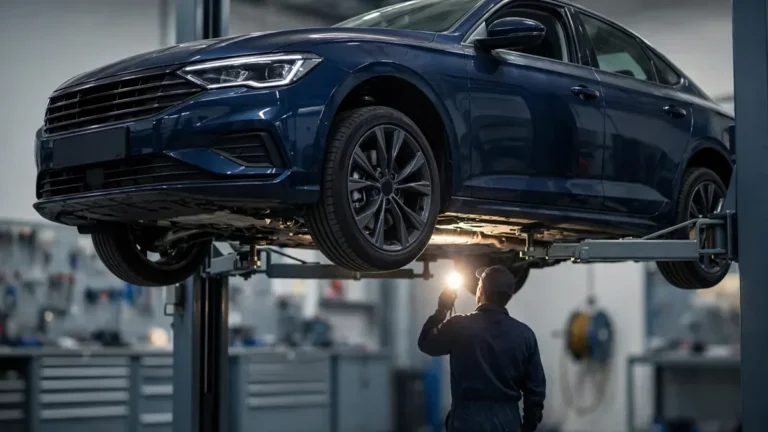
The pre-purchase inspection is your highest-ROI negotiation tool. A $150–$250 inspection at an independent BMW specialist routinely uncovers $800–$2,500 of findings on a used 3 Series — and every documented finding is a dollar-for-dollar price reduction, because it converts the seller’s “it’s in great shape” into a repair estimate. The full procedure is in our PPI guide; the negotiation translation works like this:
| PPI finding (typical) | Indie-shop cost (approximate) | Negotiation treatment |
|---|---|---|
| Valve cover or oil filter housing gasket seep | $700–$1,400 | Dollar-for-dollar reduction |
| Electric water pump original at 90k+ miles | $1,200–$1,800 | Dollar-for-dollar; it is a when-not-if failure |
| Control arm bushings worn | $600–$1,000 | Dollar-for-dollar reduction |
| Brakes at 30% remaining | $400–$800/axle | 50% credit (wear item, partially your future cost) |
| Tires mismatched or aged out | $600–$1,000/set | Dollar-for-dollar; safety item |
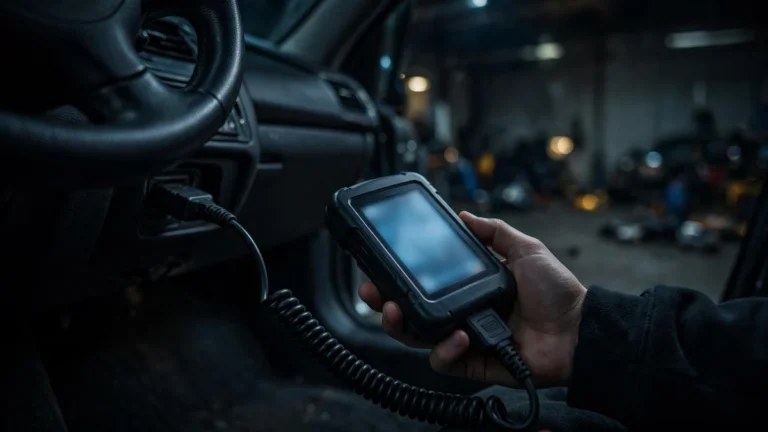
| Fault codes (VANOS, lean codes, etc.) | $300–$1,500+ to diagnose | Repair-or-walk-away; unknown cost = your risk |
The framing matters: you are not “nickel-and-diming,” you are reconciling the price with the car’s actual condition. “Your asking price assumes a sorted car; the inspection shows $1,800 of needs, so the sorted-car price is $1,800 lower” is arithmetic, not insult. Sellers who reject arithmetic are telling you something about the transaction — listen.
Reconditioning costs: the hidden discount
Beyond inspection failures, every used car needs reconditioning to your standard: the tires it will need in 10,000 miles, the brake fluid that is two years old, the alignment after the bushing job, the detail that makes it yours. Price these honestly — tires $600–$1,000 a set, brakes $400–$800 per axle, full fluid service $300–$600 at an indie shop (all approximate bands) — and claim half of it in negotiation. The logic: these are costs the seller deferred and you will pay, so splitting them is fair; claiming all of them double-counts normal ownership. The offer calculator below encodes exactly this formula.
The timeline: when to negotiate what
Negotiation is sequenced, not simultaneous. Getting the order wrong costs money:
- Before you visit: gather comps, check listing age and price history, get pre-approved financing, and know your walk-away number. Never negotiate against yourself by showing up unprepared.
- At the car, before the PPI: test-drive, verify options against the VIN, and agree in principle that the price is “subject to inspection.” Do not make a firm offer yet — you have no findings to price.
- After the PPI: this is the negotiation. Present comps, findings, and reconditioning as one arithmetic package and make your opening offer. One round of counter-offers is normal; three rounds means someone is being unreasonable.
- At the finance desk: the second negotiation. Decline every add-on (extended warranties, paint protection, VIN etching — all high-margin), verify the APR matches your pre-approval or beats it, and check the out-the-door number against what you agreed. This is where deals get worse after they were good.
The most expensive mistake is negotiating price before the inspection. A seller who agrees to $22,000 before the PPI has no incentive to discount the $1,800 of findings after — you already told them the price works. “Subject to inspection” keeps every dollar of leverage on your side of the table.
Your trade-in: the second negotiation
If you have a car to sell, the dealer negotiates two deals at once — and they will show you a great price on the BMW while stealing your trade, or vice versa. Separate them mentally even if they happen in one conversation. Before you visit: get a written offer from CarMax, Carvana, or a similar buyer (cite by name), plus the KBB instant-cash-offer range. That number is your trade floor — the dealer must beat it, or you sell the old car separately.
Do not mention the trade until the BMW’s price is settled. “Let’s agree on the car’s price first, then talk about my trade” prevents the oldest shell game in the business: inflating the trade allowance while holding the car price high, so the “great trade value” is funded by your own overpayment. When you do discuss it, the only number that matters is the difference — your out-the-door check — not either number alone. And remember the tax advantage in most states: trading in reduces the taxable amount of the new purchase, which can be worth hundreds — factor it into the sell-separately math.
Financing as a negotiation lever
Walk in with a pre-approval and financing becomes your weapon instead of theirs. The pre-approval (from your bank or credit union, obtained before shopping) sets a rate ceiling — the dealer’s finance office must beat it to earn your business, and they often can through lender competition. Never answer “what monthly payment are you looking for?” — the answer is always “let’s settle the out-the-door price first; I have my own financing.”
Watch for the rate markup: dealers can add up to 2 percentage points to the lender’s buy rate as their profit (more in some states), which costs thousands over the loan. If the finance manager quotes 8.9% while your pre-approval is 7.2%, they are not “working with their lenders” — they are marking up. Ask “is this the buy rate?” and make them beat your letter or lose the financing. The one legitimate dealer-financing advantage: manufacturer-subvented rates on CPO cars, which occasionally beat anything a bank offers — verify the subvention is real by comparing against your pre-approval, not against the salesperson’s enthusiasm.
Two worked examples
Example 1 — dealer, fairly priced. A 2019 330i xDrive listed at $26,500, on the lot 34 days. Comps average $25,200. PPI finds a valve-cover seep ($900) and rear brakes at 25% ($500/axle → claim half: $250). Reconditioning: tires in 10,000 miles ($800 → claim half: $400). Target = $25,200 − $900 − $250 − $400 = $23,650. Opening at 92% of target ≈ $21,750 (capped sensibly — you’d open near $23,000 in practice and settle around $23,800). Walk-away: $25,200 − $1,150 = $24,050. The dealer counters at $24,400; you settle at $24,000 with all-weather mats thrown in. Discount from ask: $2,500, every dollar documented.
Example 2 — private party, aspirational price. A 2017 340i listed at $24,000, listed 78 days, two price drops. Comps average $21,500. PPI finds oil filter housing gasket ($800) and worn control-arm bushings ($700). Reconditioning: brake fluid and alignment ($350 → claim half: $175). Target = $21,500 − $1,500 − $175 = $19,825. Opening ≈ $19,500 with same-day cash. The seller counters $21,000; you show the 78 days on market and settle at $20,250. Walk-away was $20,000 — you stayed disciplined and the seller’s deadline did the rest. The 78-day listing age was worth $1,000 by itself.
Remote negotiation: email and phone scripts
The best first offer is often the one you never deliver in person. Email the seller before visiting: “I’m interested in your [year/model] (VIN […]). I’ve reviewed comparable listings averaging $[X] and I’d like to schedule a PPI at [independent shop] this week. Assuming the inspection is clean, I’d be a buyer at $[opening] — does that work as a starting point?” This does three things: it signals you are serious and informed, it makes the PPI non-negotiable before emotions engage, and it anchors the negotiation in writing. Sellers who reply “price is firm” have saved you a trip; sellers who engage have already started negotiating.
On the phone, keep it short and factual: “I’ve got comps at $[X], and I’m ready to move quickly for the right car. What’s your flexibility if the inspection comes back clean?” Then listen. The seller’s answer tells you everything — a specific number means a deal is near; “make me an offer” means they are flexible but proud; “the price is the price” on a 60-day listing means call back in two weeks. Never negotiate against a deadline you invented; the seller’s urgency is your discount, not yours.
Interactive: offer calculator
Enter the asking price, your comps average, the PPI’s repair total, and reconditioning costs. The calculator builds your opening offer, target price, and walk-away line from the formula in this guide. All branches are tested.
Offer calculator
Interactive: negotiation readiness scorer
Five yes/no questions. Score under 60 and you are negotiating with opinions — go gather the missing data first.
Am I ready to negotiate?

Word-for-word scripts that work
Scripts work because they keep you factual when the room gets emotional. Adapt the bracketed parts:
The opener (dealer or private): “I like the car. I’ve done my homework — six comparable [year/model]s with similar miles average $[X]. My inspection found $[Y] in needed work, which I’ve got itemized here. I’d be a buyer today at $[opening offer]. What can you do?” Then stop talking. Silence is the script’s second half.
The counter (when they meet you halfway): “I appreciate the move. I’m at $[target] based on the comps minus the inspection findings — that’s my number, and I can [wire the deposit / sign today]. Can we get there?” The certainty-of-close clause is doing half the work in that sentence.
The trade-in split (dealer): “Let’s talk out-the-door. I need $[total] all-in including my trade at $[trade value] and no add-ons I didn’t ask for. If the car price can’t move, move the trade.” This reframes every “we can’t” into a different lever.
The private-party close: “I know you were hoping for $[ask]. The market says $[comps] and the inspection says $[findings] of work. I can do $[offer] and pick it up [Saturday] with [cash/a cashier’s check] — no financing delays, no tire-kickers. Does that work?” Private sellers trade price for certainty constantly.
Walk-away points: when to leave
Your walk-away line is comps average minus PPI findings — computed before you arrive, written on your phone, non-negotiable with yourself. Walk away when: the seller will not meet that line; the seller refuses an independent PPI (they are hiding something — always); new findings appear that change the math beyond your reserve; the dealer’s out-the-door number keeps growing with fees and add-ons; or you feel rushed, tired, or emotionally attached. Attachment is the most expensive option on the lot. There are always more 3 Series — BMW built millions of them. The deal you walk away from costs nothing; the bad deal you sign costs thousands.
Negotiation traps to avoid
- Negotiating the monthly payment. The payment is an output of price, trade, APR, and term — negotiating it lets the dealer stretch the term or bump the rate. Negotiate out-the-door price, then discuss payment structure.
- The “we’re losing money” theater. Every dealer says this. It is irrelevant to what the car is worth — respond with comps, not sympathy.
- Spot delivery / yo-yo financing. If the dealer lets you take the car “while financing finalizes” and calls days later demanding a higher rate, that is the trap — never take delivery without signed, final financing terms. Our lease vs. buy guide covers how financing math actually works.
- Deposit pressure without paperwork. A refundable deposit to hold a car is normal; a non-refundable deposit on a car you have not inspected is a donation. Get refund terms in writing.
- Falling in love before the PPI. Test-drive, enjoy it, then inspect before you offer. The order is non-negotiable.

After the handshake: protecting the deal
The negotiation ends when the price is agreed; the deal ends when the paperwork is right. At a dealer, verify the buyer’s order matches every number you negotiated — price, trade allowance, APR, term, and out-the-door total — before you sign, and get any promises (“we’ll replace the windshield,” “new floor mats”) on a signed “we owe” slip, because verbal promises evaporate. Confirm the title is clean and in the dealer’s possession; never accept “we’ll mail the title later” without a written date.
Private-party deals need more care, not less. Meet at the seller’s bank or your bank: the bank verifies the cashier’s check, witnesses the title transfer, and can confirm lien payoffs on the spot. Never wire money to a stranger or pay cash without a signed bill of sale listing the VIN, sale price, date, and both parties’ details — your state DMV’s website has the exact title-transfer procedure, and many states require smog or safety certification from the seller. Insure the car before you drive it home (a 10-minute phone call with the VIN), and photograph the odometer, the signed title, and the car’s condition at handover. A clean paper trail is the cheapest insurance in the transaction.
One more scenario deserves its own note: negotiating a BMW CPO car. The CPO premium (typically $1,500–$4,000 over non-certified equivalents — see our CPO worth-it analysis) is negotiable like everything else, but dealers defend it harder because the certification cost is real and documented. Your leverage on a CPO car is the same toolkit — comps of other CPO cars specifically (not non-certified cars, which is an apples-to-oranges comparison the dealer will rightly reject), days on market, and any reconditioning the CPO inspection somehow missed. And verify what “CPO” means on the buyer’s order: genuine BMW CPO carries the factory-backed warranty, while some dealers sell third-party “certified” programs with similar names and weaker coverage. The name on the warranty paperwork is the product — read it.
Frequently asked questions
How much can you negotiate off a used BMW?
There is no universal percentage — it depends on how the asking price relates to comps, the PPI findings, and days on market. A disciplined buyer with comps and an inspection report typically lands 5–12% under an aspirational asking price; fairly priced cars move less. The calculator above builds your number from data, not rules of thumb.
Do BMW dealers negotiate on used cars?
Yes — on price, trade-in value, APR, and add-ons. They rarely move on doc fees. Negotiate the out-the-door total rather than any single line, and shop month- or quarter-end when volume targets make managers flexible.
Should I get a pre-purchase inspection before negotiating?
Yes — negotiate after the PPI, not before. The inspection’s documented repair costs are your strongest leverage, typically worth $800–$2,500 in price reductions on a used 3 Series. Never let the seller’s shop do it.
Is it better to buy a used BMW from a dealer or private party?
Private party is usually 10–20% cheaper for equivalent cars and the negotiation is simpler, but you get no recourse and no financing help. Dealers cost more but offer CPO options, financing, and (sometimes) short warranties. Either way, the PPI and comps discipline is identical.
When should I walk away from a used car deal?
Walk away when the seller will not meet your pre-set walk-away line (comps minus PPI findings), refuses an independent inspection, or the out-the-door number keeps growing with fees. Attachment is the most expensive option — there are always more 3 Series.
Negotiating a used BMW is not about being aggressive — it is about being the best-informed person in the room. Comps set the market, the inspection sets the condition discount, reconditioning sets the fairness split, and your walk-away line protects you from yourself. Run the offer calculator, score your readiness, and make the offer with the numbers printed out. The worst outcome is a polite “no” and a second car to look at tomorrow. For the inspection itself, start with our pre-purchase inspection guide.