Is a BMW Extended Warranty Worth It on a 3 Series?
Your 3 Series’ factory warranty is expiring, and the finance office is offering an extended warranty for a number that made you flinch. Is it protection or profit? This guide breaks down BMW’s own Extended Service Contracts (Powertrain Plus, Gold, Platinum), how third-party warranties compare, what the fine print actually excludes, what owners report paying, and the break-even math that decides whether the contract earns its price. For the maintenance costs a warranty does not cover, see our 3 Series maintenance schedule; for deciding on a used purchase overall, the used buying guide has the full picture.
Short answer
A BMW extended warranty is worth it on a 3 Series only if the contract price is less than your expected covered repairs over its term — which usually means a turbocharged car (N20/N54/N55/B58) you plan to keep 3+ years past factory coverage, bought at a negotiated price with a low deductible. BMW’s own contracts (Powertrain Plus, Gold, Platinum) cost more than third-party plans but pay claims with far less friction. Owner-reported prices run roughly $3,300–$6,450 depending on tier and term — never pay sticker; these contracts are negotiable by 20–40%. On a reliable N52-powered car you maintain yourself, the math rarely works: bank the premium instead.
In this guide
- BMW’s Extended Service Contracts: the three tiers
- BMW contract vs. third-party warranties
- The fine print: what is actually excluded
- What owners report paying
- The break-even math
- Who should buy, who should skip
- How a claim actually works
- The self-insure alternative
- CPO vs. extended warranty
- What voids a warranty
- Maintenance plans vs. extended warranties
- Questions to ask before you sign
- Interactive: warranty break-even calculator
- Interactive: is it covered? checker
- Buying tips: how to pay less
- Frequently asked questions
BMW’s Extended Service Contracts: the three tiers
BMW’s official extended coverage is the Extended Service Contract (ESC), sold through BMW centers and backed by BMW — meaning claims are paid to BMW dealers with factory parts and no third-party adjuster arguing over the bill. BMW’s published plan materials describe three tiers with escalating coverage; exact terms and eligibility vary by plan version and model year, so confirm the current contract language for your car rather than relying on older brochures:
| Tier | What it covers (per BMW plan materials) | Best for |
|---|---|---|
| Powertrain Plus | Engine, transmission, final drive, and transfer case — the expensive mechanical core | Budget protection against catastrophic failure on any 3 Series |
| Gold | Powertrain Plus plus steering, brakes/ABS, electrical, cooling, and fuel systems | The sweet spot: covers the systems that actually fail on aging 3 Series |
| Platinum | Gold plus suspension, HVAC, infotainment/navigation, and interior/exterior components — near-exclusionary coverage | Maximum peace of mind on complex, high-mile cars; highest price |
Older BMW dealer plan documents describe coverage extending up to 7 years or 100,000 miles from the original in-service date, with a $0 or low deductible per visit — but eligibility windows, term/mileage caps, and covered-component lists are plan-version dependent, so treat any specific figure as “verify in the contract you are actually offered.” The contract’s component list is the entire product: if it is not listed (or not excluded from an exclusionary contract), it is not covered.
BMW contract vs. third-party warranties
Third-party administrators (Endurance, CarShield, and similar — cited by name only, no endorsements) sell cheaper contracts with broader marketing and narrower payouts. The structural differences matter more than the price:
| BMW Extended Service Contract | Third-party warranty | |
|---|---|---|
| Claims paid to | BMW dealers, factory parts, no adjuster fight | Any licensed shop, but an adjuster approves every claim |
| Typical owner-reported cost | Roughly $3,300–$6,450 by tier/term | Often $2,000–$4,500 for comparable terms |
| Denial risk | Low — BMW backs it | Higher — exclusions, “wear and tear” disputes, labor-rate caps |
| Where you can buy | BMW centers, usually before factory warranty expires | Anytime, including high-mile cars BMW won’t cover |
| Transfer/cancel | Transferable; pro-rata refunds typical | Varies widely — read the contract |
The honest tradeoff: BMW’s contract costs more and pays claims; third-party contracts cost less and sometimes don’t. Owner forums are full of both outcomes — the deciding factor is almost always the contract’s exclusion list and the administrator’s reputation, not the brochure’s coverage promises. If you go third-party, choose an exclusionary contract (it lists what is not covered, so everything else is covered) from an administrator with a long claims-paying history, and get the sample contract before you pay.

The fine print: what is actually excluded
Every warranty dispute is a fine-print dispute. Across BMW and third-party contracts, these categories are nearly always excluded — a warranty is not a maintenance plan:
- Wear items: brake pads and rotors, tires, wiper blades, clutches (manual), belts and hoses in many contracts.
- Maintenance: oil changes, filters, fluids, spark plugs, alignments — the maintenance schedule is on you regardless.
- Cosmetic and trim: upholstery, paint, glass, weatherstripping, squeaks and rattles.
- Pre-existing conditions: anything the inspection finds before the contract starts — which is why administrators require or imply a clean inspection.
- Modifications and abuse: tuned ECUs, aftermarket turbos, track use, and missed maintenance intervals void claims fast. Keep every service receipt.
- Consequential damage: if a covered water pump fails and overheats the engine, many contracts cover the pump but not the warped head — read the consequential-damage clause twice.
The exclusion-risk checker below tests the repairs 3 Series owners actually face against typical contract language. Use it before you sign — the $4,000 contract that excludes your car’s most likely failure is a donation.
What owners report paying
BMW does not publish ESC pricing — it is set by the selling dealer, which is exactly why it is negotiable. Owner-reported figures from BMW forums (cited by name in plain text per our linking policy; treat as anecdotes, not data) cluster around $3,300–$4,500 for Powertrain Plus, $4,000–$5,500 for Gold, and $5,000–$6,450 for Platinum, varying with term, mileage, deductible, and model. Third-party exclusionary contracts for comparable terms are owner-reported around $2,000–$4,500. Two rules: never pay the first number quoted (20–40% discounts are routinely reported by shoppers who get competing quotes from multiple BMW centers), and always divide the final price by the contract’s years to get the true annual cost — a $4,800 six-year contract is $800/year, which reframes the decision completely.
The break-even math
A warranty is a bet: you pay a known premium to avoid unknown repair bills. The bet wins when contract price + (deductible × expected claims) < expected covered repairs over the term. Expected covered repairs are not a guess — build them from your car: engine family failure rates (turbo cars fail more expensively than N52 cars), current mileage (100k+ cars claim more), and your shop (dealer labor at $180–$250/hr makes every claim bigger). Our reliability-by-year data helps calibrate which repairs your car is actually likely to need.
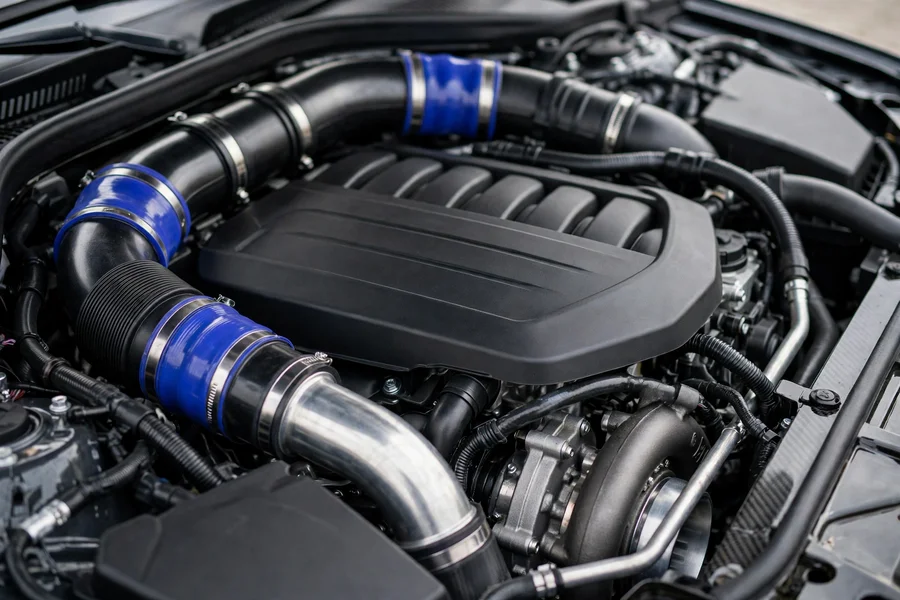
Worked example: a 2016 340i (B58 turbo) at 65,000 miles, Gold-tier contract at a negotiated $4,200 with a $100 deductible, 4-year term. Plausible covered repairs over four years at an independent shop: water pump and thermostat ($1,400), oil filter housing gasket ($900), a VANOS solenoid or two ($700), and odds and ends ($800) — roughly $3,800 in covered repairs against $4,200 + $400 in deductibles = $4,600. Slight loss on paper — but one turbocharger or transmission issue ($3,000–$6,000) flips it to a large win. That asymmetry is the whole product: you are buying protection against the right tail of the repair distribution, not the average. The calculator below runs your numbers.
Interactive: warranty break-even calculator
Enter the contract price, deductible, term, your expected covered repairs, and where you get work done. The calculator compares total contract cost against expected repairs and renders a verdict. All branches tested.
Warranty break-even calculator
Interactive: is it covered? checker
Pick the repair you are worried about — the checker tells you whether a typical contract covers it, and what to verify in writing.
Coverage checker

Who should buy, who should skip: five profiles
The warranty decision depends on the car, the owner, and the plan. Five common profiles:
- The long-haul turbo owner — BUY. You own a 2015 328i or 2016 340i at 60,000 miles and plan to keep it to 120,000. Turbo-era repair tails (timing components, turbochargers, HPFP, injectors) are exactly what warranties insure against. Negotiate a Gold contract and the math usually works.
- The N52 DIY owner — SKIP. Your 2010 328i has the reliable N52, you do your own gaskets and brakes, and you have an indie shop for the rest. Your expected covered repairs are a fraction of any contract price. Bank the premium.
- The high-mile commuter — MAYBE. At 110,000+ miles, BMW ESC eligibility narrows and third-party contracts get expensive with exclusions. Price an exclusionary third-party contract carefully against the car’s remaining value — a $3,500 warranty on a $9,000 car needs scrutiny.
- The CPO buyer — usually SKIP. A BMW CPO car already carries the CPO warranty (one year/unlimited miles after the factory warranty). Buying an ESC on top before the CPO coverage runs out means paying for overlapping protection — wait until the CPO term nears its end, then decide with real reliability data on your specific car.
- The anxious first-time BMW owner — BUY, but cheap. If the warranty is what lets you sleep at night and actually enjoy the car, that peace of mind has value — but buy it at a negotiated price (20–40% off the first quote) with a deductible that matches your claim expectations, not at the finance office’s first number under pressure.
How a claim actually works
Understanding the claims process before you buy predicts your satisfaction better than the brochure. With a BMW ESC: you take the car to a BMW center, they diagnose it, the service advisor checks coverage against the contract’s component list, and BMW pays the dealer directly — you pay only the deductible. The friction is minimal because the payer and the repairer are on the same team. With a third-party contract: the shop diagnoses the failure, calls the administrator for authorization, an adjuster reviews the claim against the exclusion list (this is where “wear and tear” disputes happen), and the administrator pays the shop up to the contract’s labor-rate cap — you pay the deductible plus any amount above the cap. The process works fine for clear-cut covered failures and gets adversarial for gray-area ones, which is why the exclusion list matters more than the coverage list.
Three rules for claim success under any contract: maintain the car by the book and keep every receipt (missed oil changes are the #1 claim-denial reason), report failures promptly (continuing to drive on a known problem invites “neglect” denials and turns a covered pump into an excluded engine), and get authorization before the repair on third-party contracts — unauthorized repairs are routinely denied regardless of coverage.
The self-insure alternative: your own warranty fund
The alternative to any warranty is a dedicated repair fund: instead of paying $4,200 for a contract, put $4,200 in a high-yield savings account labeled “BMW” and add $100–$150 monthly. The math favors self-insurance when your expected repairs are below the contract price — which, for N52 cars and well-maintained examples of any engine, they usually are. The fund has advantages no contract offers: it covers everything (including the wear items and maintenance warranties exclude), it never denies a claim, it earns interest, and whatever you don’t spend is still yours.
Self-insurance fails in exactly one scenario: the catastrophic early failure — a $6,000 transmission at month eight of ownership, before the fund has grown. That is the risk you are really insuring against, so be honest about your exposure: if a $5,000 surprise repair would be a crisis rather than an annoyance, the warranty’s value is not just the expected-value math but the ruin protection. Buy the warranty for ruin protection, self-insure for everything else — and never let the fund drop below $2,000 once the car passes 80,000 miles.
CPO vs. extended warranty: don’t double-pay
A common and expensive mistake: buying an extended service contract on a car that already has BMW CPO coverage. The CPO warranty (one year/unlimited miles after the 4-year/50,000-mile factory warranty, on cars that pass the 360° inspection) already covers the powertrain and more — layering an ESC on top from day one means paying for years of overlapping protection you cannot use twice. The smart sequence: buy the CPO car, enjoy the included coverage, and shop for an ESC in the final months of the CPO term — when you know the car’s actual reliability, its mileage trajectory, and whether you are keeping it. If you are cross-shopping CPO against warranty math, our CPO worth-it guide runs the premium calculation.
What voids a warranty
Contracts are voided — entirely, not just the related claim — by a short list of owner actions. Know them before you sign: ECU tunes and piggyback modules (the first thing checked on any powertrain claim; a tuned N54 with a blown turbo is a denied claim and a voided contract), missed maintenance intervals without receipts (the administrator’s favorite denial — keep every oil-change invoice), track use or competitive driving (excluded in virtually every contract; HPDE insurance is a separate product), commercial use on a personal contract (rideshare and delivery), and odometer or title issues (rollback, salvage brands). Modifications that don’t affect the failed component are legally protected in the US under the Magnuson-Moss Warranty Act for factory warranties — but extended service contracts are not factory warranties, and their “modification” clauses are broader. When in doubt, ask the administrator in writing before you modify.
Maintenance plans vs. extended warranties: BMW’s other products
Buyers confuse three different BMW products, and the finance office rarely clarifies. The Extended Service Contract (this guide’s subject) covers unexpected mechanical failures — the water pump that dies at 70,000 miles. BMW Ultimate Care (and its paid upgrades) covers scheduled maintenance — oil changes, filters, spark plugs, brake fluid — the predictable services from the maintenance schedule. And BMW CPO coverage is a warranty included with certified used cars, not a product you buy separately.
They are not substitutes. An ESC does not pay for your oil changes; Ultimate Care does not pay for your failed turbo. Buying a maintenance plan while skipping the ESC (or vice versa) leaves half your exposure uncovered — which is fine if it is deliberate, expensive if it is confusion. Evaluate each product on its own break-even: maintenance plans are easy math (add up the scheduled services at your dealer and compare), while ESCs are the probabilistic bet this guide covers. If a finance manager bundles them into one monthly number, unbundle it and price each separately before you decide.
Questions to ask before you sign
Take these ten questions to the finance office. A good contract answers all of them in writing; evasive answers are your walk-away signal:
- Is this BMW-backed or third-party administered — and who exactly pays the claim?
- Is the contract stated-coverage or exclusionary? (Exclusionary is better.)
- What is the per-claim limit, the aggregate limit, and the labor-rate cap?
- Which of my engine’s known failures are explicitly covered — timing chain, turbo, HPFP?
- What is the deductible: per visit or per repair? (Per-visit is cheaper for multi-item trips.)
- Can I use my independent BMW specialist, or only BMW centers?
- What are the exact maintenance documentation requirements to keep claims valid?
- Is the contract transferable if I sell, and what is the cancellation refund formula?
- What is the waiting period before coverage begins? (30–90 days is typical — and claims in the waiting period are denied.)
- Will you put the final price in writing so I can get a competing quote tomorrow?
That last question is the most important one. Any warranty worth buying is worth buying tomorrow at a competed price; any warranty that must be bought today, right now, in this chair, is priced for your panic rather than your car. Take the quote, email three other BMW centers, and buy from the winner — the contract is identical regardless of which dealer sells it.
One final calibration: warranties are priced for the average car, but you don’t own the average car — you own a specific one with a specific history. A one-owner, dealer-maintained 340i with perfect records is a better warranty bet for the administrator than a four-owner 328i with gaps, yet both buyers are quoted from the same rate card. Your private information about your car’s condition is an edge: if your car is better than average, the warranty is a worse bet than the price implies (self-insure); if it’s worse than average, the warranty is a better bet — but the pre-existing-condition exclusion may eat the difference. Honest self-assessment is the last input the calculator can’t provide.
Buying tips: how to pay less
- Get competing quotes. Any BMW center can sell you an ESC — email five centers’ finance departments with your VIN, mileage, and desired tier, and play the quotes against each other. Reported discounts of 20–40% off the first quote are common.
- Buy before the factory warranty expires. Eligibility and pricing are best while the 4-year/50,000-mile warranty is active; waiting until after expiry narrows options and raises prices.
- Choose the deductible deliberately. A $0 deductible sounds nice but inflates the price; a $100–$250 deductible usually pays for itself if you expect more than one claim — model it in the calculator above.
- Match the tier to the car. Gold is the value tier for most 3 Series; Platinum’s premium only earns out on high-mile, highly complex cars where electronics failures are likely.
- Read the cancellation terms. Pro-rata refunds mean a warranty you sell the car out of is not wasted money — confirm the refund formula before signing.
- Watch for plan-year changes. BMW periodically revises ESC tiers, eligibility, and pricing. If your factory warranty expires in three months and a plan revision is rumored, buying now locks current terms; if you just bought the car, there is no rush — shop the contract with the same patience you shopped the car.
Frequently asked questions
Is a BMW extended warranty worth it on a 3 Series?
Only when the contract price plus deductibles is less than your expected covered repairs — typically on turbocharged cars you will keep 3+ years past factory coverage, bought at a negotiated price. On reliable N52 cars, banking the premium usually wins.
How much does a BMW extended warranty cost for a 3 Series?
Owner-reported figures cluster around $3,300–$4,500 (Powertrain Plus), $4,000–$5,500 (Gold), and $5,000–$6,450 (Platinum). BMW does not publish pricing and dealers set it — always get competing quotes; 20–40% off the first quote is commonly reported.
What does the BMW extended warranty not cover?
Wear items (brakes, tires, wipers), all maintenance (oil, filters, fluids, spark plugs), cosmetic trim, pre-existing conditions, modifications, and usually consequential damage. It is not a maintenance plan — budget the maintenance schedule separately.
Can I buy a BMW extended warranty after the factory warranty expires?
Options narrow and prices rise after expiry — eligibility, terms, and pricing are best while the 4-year/50,000-mile factory warranty is active. Confirm current eligibility rules with a BMW center, as plan versions change.
Are third-party BMW warranties worth it?
They cost less (owner-reported ~$2,000–$4,500) but carry higher denial risk from adjusters, exclusions, and labor-rate caps. Choose an exclusionary contract from a long-established administrator and read the sample contract before paying.
The extended warranty decision is arithmetic wearing an anxiety costume. Price the contract, estimate your repairs honestly using the reliability data, run the calculator, and check your car’s most likely failures against the exclusion list. If the numbers work and the contract is BMW-backed or genuinely exclusionary, buy it and sleep well. If they don’t, bank the $4,000 — a maintained 3 Series and a funded repair account is its own warranty. Either way, keep every service receipt: no warranty pays claims on a car with missing maintenance history. And revisit the decision annually — as the car ages and the repair fund grows, the math shifts, and the right answer at 60,000 miles is rarely the right answer at 110,000.