How to Build the Perfect BMW Winter Wheel Package
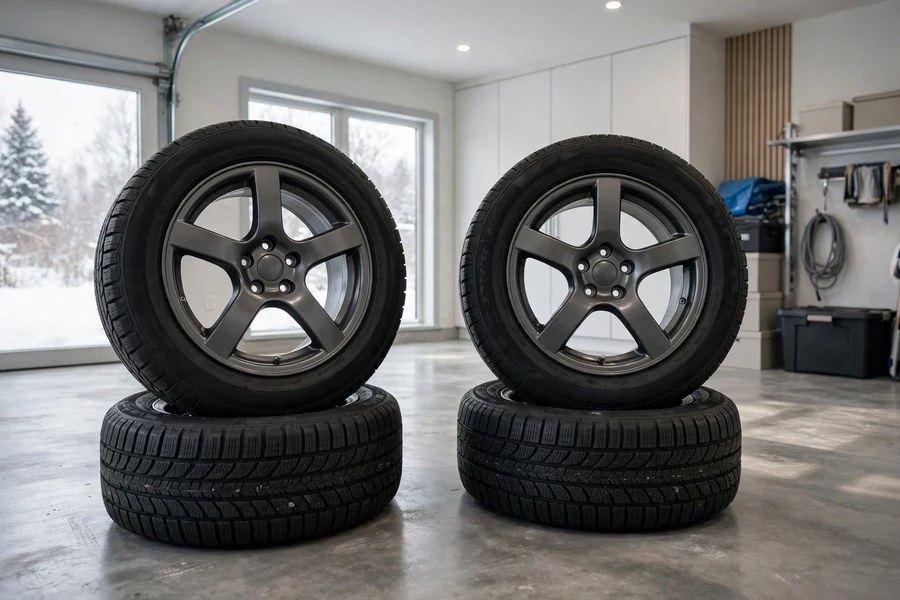
Short answer: The best BMW winter wheel package is a second, smaller-diameter set of wheels — correct bolt pattern and bore for your generation (5×120 / 72.56 mm E90/F30; 5×112 / 66.6 mm G20) — wearing dedicated winter tires, sized so overall diameter stays within 3% of stock. Drop one wheel size where brakes allow — M Sport brakes need at least 18″ — run a square setup so you can rotate, and fit generation-correct TPMS sensors (direct 433 MHz for F30/G20; on E90/E91, rubber valve stems = sensor-free FTM, metal = direct sensors). Expect roughly $900–$1,300 used, $1,600–$2,400 new aftermarket, $2,400+ BMW-approved. Swap when temperatures sit consistently below 45°F (7°C).
A rear-wheel-drive BMW 3 Series on summer tires in freezing weather is a physics lesson waiting to happen. The problem is not the drivetrain — it is the rubber. Summer and all-season compounds harden as temperatures drop, and once they do, the contact patch that steers, stops, and holds your car to the road shrinks dramatically. The fix is not more horsepower or even xDrive: it is a dedicated set of winter wheels and tires, bought once and swapped twice a year, that turns the worst four months of driving into the most confident.
This guide covers: why winters beat all-seasons in the cold (with honestly labeled test data), when all-seasons are enough, minus-sizing for your generation and brakes, TPMS by generation, package costs at three budgets, and off-season storage. It links — not duplicates — our run-flat vs regular tires guide and TPMS reset guide.
In this guide
- Why winter tires transform a 3 Series
- Winter vs all-season: the braking-distance gap
- Do you actually need a winter set?
- Interactive: the winter-tire need scorer
- Minus-sizing: smaller wheels, same diameter
- Fitment: the five numbers that matter
- TPMS by generation: sensors, resets, relearns
- Interactive: winter package builder
- What a winter package really costs
- Run-flat or regular for winter?
- Storing the off-season set
- The seasonal swap: when and how
- Frequently asked questions
Why winter tires transform a 3 Series
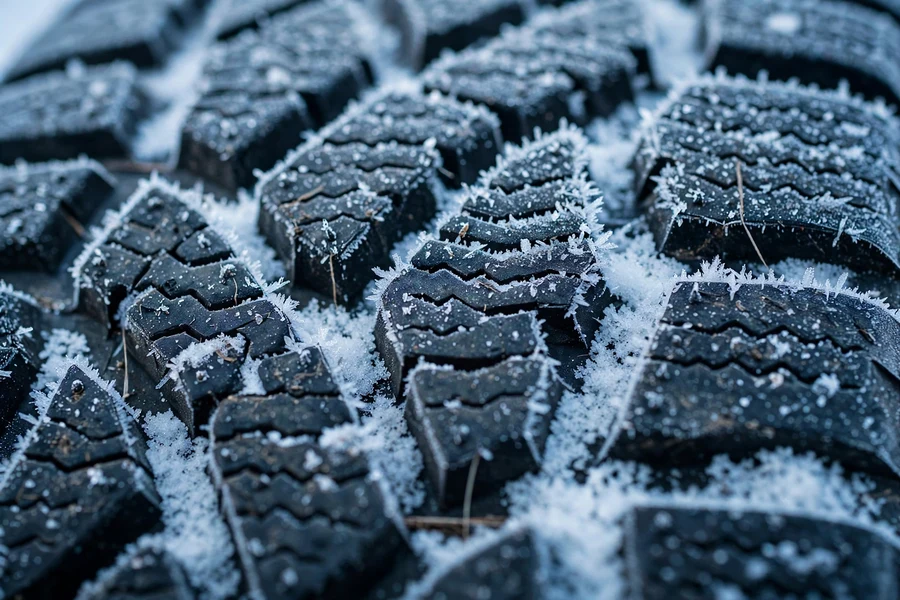
Winter tires win in the cold for two reasons, and snow is only the second one. The first is compound: winter rubber stays pliable at low temperatures, while summer and all-season compounds stiffen. Tire-maker guidance puts the crossover at about 45°F (7°C) — below that, an all-season tire is running on a compound that was never designed for the job, on dry pavement as well as snow. The second is tread: thousands of tiny slits called sipes bite into snow and ice, and deeper grooves evacuate slush. A winter tire is therefore better on cold dry asphalt too, not just in a blizzard.
Two markings matter. M+S (mud and snow) is a tread-geometry designation — no cold-weather test required, and most all-seasons carry it. The Three-Peak Mountain Snowflake (3PMSF) means the tire passed a standardized packed-snow acceleration test. Every true winter tire carries 3PMSF — as do “all-weather” tires, a distinct and more capable category than all-season.
On a 3 Series specifically, tires matter more than drivetrain. xDrive helps you go — it cannot help you stop or turn. A rear-drive 3 Series on winter tires will out-brake and out-corner an xDrive car on all-seasons in real winter conditions; see our xDrive vs RWD comparison. That is also why the correct answer is always four winter tires, never two: mixing winter tires on the drive axle with all-seasons elsewhere creates a grip imbalance that makes the car unpredictable in a slide — exactly when you need predictability most.
Winter vs all-season: the braking-distance gap
Marketing claims are cheap; stopping distances are not. The table below uses figures from published independent testing, each row labeled by its test. Every figure is for the specific tires tested — not a category law — but the pattern is consistent: on snow and ice, dedicated winters stop dramatically shorter; on warm wet pavement, the advantage flips.
| Test (vehicle, size, speed) | Winter tire result | All-season / all-weather result | The gap |
|---|---|---|---|
| Ice braking, 12–0 mph (Tire Rack, Mar 2026: X-Ice Snow vs CrossClimate2; 215/55R17) | 39.4 ft (X-Ice Snow) | 53.0 ft (CrossClimate2) | 13.6 ft shorter on winters |
| Snow braking, 25–0 mph (Tire Rack, Mar 2026: X-Ice Snow vs CrossClimate2; 215/55R17) | 56.1 ft (X-Ice Snow) | 72.4 ft (CrossClimate2) | 16.3 ft shorter on winters |
| Ice braking, 10–0 mph (Tire Rack test; 2008 BMW 328i, 205/55R16, as reported) | ~21 ft (winter) | ~40 ft (all-season) | Nearly double the distance on all-seasons |
| Ice braking, 10–0 mph (Consumer Reports rink test, averages) | 32 ft average (winter) | 39 ft average (all-season) | 7 ft average gap; 21 ft best-to-worst spread |
| Cold dry pavement (Tire and Rubber Association of Canada research) | Up to 30% shorter stops just below freezing | ~6–7 ft at city speeds | |
| Wet braking, 50–0 mph (Tire Rack, Mar 2026: X-Ice Snow vs CrossClimate2; 215/55R17) | 129.0 ft (X-Ice Snow) | 99.6 ft (CrossClimate2) | ~29 ft LONGER on winters — swap back in spring |
Three conclusions. First, the snow and ice advantage is enormous — 16 feet from 25 mph is the difference between the crosswalk and the intersection. Second, the specific tire matters as much as the category: a top all-weather stopped within 2.5 feet of the best winter on snow, while plain all-seasons needed 25–28 feet more. Third, winter rubber is a cold-weather specialist — on warm wet roads it gives up nearly 30 feet, which is why the spring swap-back is not optional.
Do you actually need a winter set?
Not everyone needs a winter set — and an honest guide says so. A dedicated set earns its money when you face real cold and precipitation for months. If your winters are a handful of frosty mornings with the odd light snow, good all-seasons — or better, all-weathers — run year-round are the rational answer, and the scorer below will tell you so.
| Your situation | Verdict | Why |
|---|---|---|
| Mild winters: daytime highs mostly above 45°F, snow a few days a year | All-seasons are fine | Compound rarely leaves its working range |
| Moderate winters: regular frosts, monthly snow, cold snaps below freezing | Dedicated winters strongly recommended | The compound advantage applies for months; the snow-braking gap is large |
| Severe winters: snow belt, mountains, regular ice | Dedicated winters, non-negotiable | All-seasons cannot match winter braking on ice at any price |
| Summer tires currently on the car, any freezing climate | Winters required (all-seasons minimum) | Summer compounds turn brittle near freezing — do not “tough out” winter on them |
| High winter mileage (commuting daily through winter) | Dedicated winters | Exposure multiplies risk; the per-mile cost is tiny next to one incident |
| Occasional ski trips but mild home climate | 3PMSF all-weathers year-round | Certified snow traction without a second set |
Interactive: the winter-tire need scorer
Do you need winter tires?
Minus-sizing: smaller wheels, same diameter
Minus-sizing means dropping the wheel diameter — say from 19″ to 18″ — while fitting a taller-sidewall tire that keeps overall rolling diameter within 3% of stock. Done right, the speedometer and DSC never notice; done wrong, you get rubbing. Three steps:
Step 1: read the door-jamb placard. The label on the driver’s door frame lists the factory sizes and pressures for your exact car — the baseline every winter size is measured against. Never size from a forum signature; size from the placard.
Step 2: match load index and speed rating. Winter tires must meet or exceed the OE load index (e.g. 91, 94, 98) and speed rating (H, V, W). H- or V-rated winters where summers were W-rated are acceptable down to the placard minimum — never below it.
Step 3: clear your brakes. The wheel must clear the caliper, and bigger brakes set a hard floor on wheel size. Minimum diameters per generation and brake setup, from published BMW fitment data and owner-verified reports — test-fit before you buy, since spoke shape and offset matter as much as diameter.
| Generation | Brake setup | Minimum wheel diameter | Notes |
|---|---|---|---|
| E90 (2006–2011) | Standard (325i/328i/330i) | 16″ | Cheapest winter setup |
| E90 (2006–2011) | 335i / M Sport | 17″ | Bigger brakes rule out 16″ |
| F30 (2012–2018) | Standard | 17″ | The F30 winter sweet spot |
| F30 (2012–2018) | M Sport brakes | 18″ | Factory pairs M Sport brakes with 18″+ wheels |
| F30 (2012–2018) | M Performance brakes | 19″ | Big calipers need the full 19″ |
| G20 (2019+) | 330i standard | 17″ | Test-fit; spoke clearance varies |
| G20 (2019+) | M Sport brakes / M340i | 18″ | 374 mm front brakes on the M340i clear 18″ but not 17″ |
| G20 (2019+) | M Performance / track handling package | 19″ | Least documented combination — test-fit |
Examples of common minus-size winter combinations — widely used sizes preserving factory rolling diameter, not a fitment chart; the placard has the final word. Note the pattern: narrower is better, and every example is a square setup (same width all around) so you can rotate.
| Generation | Typical summer OE size | Example winter minus-size | Why it works |
|---|---|---|---|
| E90 | 225/45R17 | 205/55R16 | Narrower; cheapest wheels and tires in the catalog |
| E90 (335i) | 225/40R18 front / 255/35R18 rear | 225/45R17 square | Drops the staggered rear; 17″ clears the bigger brakes |
| F30 | 225/45R18 | 225/50R17 square | More sidewall for potholes; cheaper tires |
| F30 (M Sport) | 225/40R19 front / 255/35R19 rear | 225/45R18 square | Escapes the pricey 19″ staggered winter market |
| G20 | 225/45R18 | 225/50R17 square | Where brake clearance allows; otherwise stay at 18″ |
| G20 (M340i) | 225/40R19 front / 255/35R19 rear | 225/45R18 square | 18″ is the floor — do not attempt 17″ on the 374 mm brakes |
Two money-saving warnings. Drop the staggered setup for winter: wide rears float on snow and cannot be rotated. And narrower is a feature — a 205 or 225 puts more pressure per square inch on the contact patch than a 255.
Fitment: the five numbers that matter
E90 and F30 share one wheel interface; the G20 changed it. Get these five numbers right for your generation:
- Bolt pattern: 5×120 on E90/F30; 5×112 on G20. Five lug bolts on the stated circle — non-negotiable, and E90/F30 wheels do not bolt onto a G20.
- Center bore: 72.56 mm on E90/F30; 66.6 mm on G20. The wheel’s center hole must match the hub lip exactly; that lip centers the wheel and carries load. Aftermarket wheels with a larger bore need hub-centric rings.
- Offset (ET): roughly ET25–ET47 by generation and width — stay within a few millimeters of factory.
- Width: 7–8.5 inches for winter use. A 7.5J or 8J wheel with a 205–225 tire is the winter sweet spot — plenty of bead retention without the snow-float of wide rubber.
- Rolling diameter: within 3% of stock. Use the door-placard size as the reference and do the arithmetic (wheel diameter plus twice the sidewall height) before ordering.
One more fitment note for xDrive cars: keep all four tires the same rolling diameter. The transfer case is sensitive to sustained front-to-rear diameter differences — another reason the square winter setup is the right call. And if you buy used BMW wheels, check that they are actually round and crack-free: bent takeoffs vibrate all winter and eat the savings in balancing visits.
TPMS by generation: sensors, resets, relearns
BMW has fitted two fundamentally different tire-monitoring systems to the 3 Series, and your winter wheels must match whichever one your car has — with one E90 exception most guides miss:
| Your car | System | What your winter wheels need | Relearn after the swap |
|---|---|---|---|
| E90/E91 sedan & wagon (2006–2011) | Varies: FTM indirect on most early cars; direct RDC on US cars built after ~3/2007 | Check valve stems — rubber: nothing needed; metal: 433 MHz sensors | BC stalk or iDrive reset, then drive |
| E92/E93 coupe & convertible (2007–2013) | RDC/TPM — direct sensors | Generation-correct 433 MHz sensors in each wheel (metal valve stems) | iDrive reset, then drive; car auto-learns correct sensors |
| F30 (2012–2018) | RDC/TPM — direct sensors | Generation-correct 433 MHz sensors (note: sensor part changed for 2014+ cars) | iDrive: Vehicle Info → Vehicle status → Perform reset; drive above ~19 mph until wheels show green |
| G20 (2019+) | RDC — direct sensors | Generation-correct 433 MHz sensors | iDrive: My Vehicle → Vehicle Status → Tire Pressure Monitor → Perform reset; auto-completes while driving |
Before buying sensors, check your valve stems: black rubber = indirect FTM (no sensors in your wheels); aluminum/metal = direct sensors fitted. Rough rule: US-market E90/E91 built after ~March 2007 have direct sensors; European cars of the era mostly kept FTM. Your VIN’s option list (code 2VB) or owner’s manual settles it.
On direct-sensor cars, budget four sensors (~$40–$60 each; batteries last 5–10 years). The car auto-learns correct sensors on the relearn drive — no dealer tool — but wrong-generation sensors never pair, so buy by generation, not price. Skipping sensors leaves the warning lit all winter. Full steps: our TPMS reset guide.
Interactive: winter package builder
Answer six questions and the builder specs your package — wheel diameter, example tire size, TPMS approach, wheel source, cost band — within the brake floors and TPMS rules above.
Winter package builder
What a winter package really costs
A winter package has four cost centers: wheels, tires, TPMS sensors (on direct-TPMS cars), and the recurring seasonal swap. The table below shows approximate US bands for a complete 3 Series package — planning numbers, not quotes. The single biggest lever on price is wheel diameter: 17″ winter tires are dramatically cheaper than 19″, which is the quiet financial argument for minus-sizing.
| Package tier | Wheels (set of 4) | Winter tires (set of 4) | TPMS sensors | All-in estimate |
|---|---|---|---|---|
| Budget — used OEM takeoffs + mid-range winters | $400–$800 | $600–$900 | $0 (FTM) or ~$160–$240 | $900–$1,300 |
| Mid — new aftermarket wheels + premium winters | $800–$1,200 | $700–$1,000 | ~$160–$240 | $1,600–$2,400 |
| Full — BMW-approved star-marked winter set | $1,400–$2,000 | $900–$1,200 | Included or ~$200 | $2,400–$3,200+ |
Then the recurring costs, which are smaller than most owners fear. A seasonal swap runs roughly $60–$100 per visit for a mounted set, so budget $120–$200 a year if you do not DIY. Mounting and balancing is a one-time $80–$160. Tire-hotel storage runs roughly $100–$200 per season; a set of totes and a dry garage corner costs $40 once.
The math most buyers miss: a winter set does not double tire spending, because summers sit out half the year. The real premium is the second set of wheels plus swaps — a few hundred dollars a year for the largest safety upgrade a 3 Series can get. Spend in this order: tires, sensors, wheels.
Run-flat or regular for winter?
Winter tires come in run-flat (RFT/SSR) and conventional construction. Run-flat winters preserve the puncture mobility your 3 Series was designed around — roughly 50 miles at up to 50 mph, no spare needed — but ride firmer, cost more, and are rarely repairable. Conventional winters are cheaper and more comfortable, at the price of a mobility plan (compressor and sealant, or a space-saver in the trunk).
Two winter-specific wrinkles. First, winter run-flats are a smaller, pricier corner of the market — in odd sizes you may find far fewer RFT options, which alone pushes many buyers to conventional winters. Second, tire sealant can damage direct TPMS sensors, so if you go the mobility-kit route on an F30 or G20, know that using the sealant may cost you a sensor too. The full tradeoff — costs, comfort, repairability, spare options — lives in our run-flat vs regular tires guide, and its conclusion applies to winter rubber exactly as it does to summer.
Storing the off-season set
A winter package is a multi-year investment, and storage determines how many years you get. The tire-manufacturer guidance is consistent and simple:
- Clean and dry before storing. Wash and fully dry wheels and tires to limit corrosion; pick stones from the tread.
- Cool, dry, dark, indoors. Away from sunlight, heat, and ozone. Never leave tires bearing a parked car’s weight for months.
- Wheels-on: stack flat or hang. Tires on wheels: stack flat or hang — never upright on the tread.
- Wheels-off: stand upright. Unmounted tires: stand on the tread, never stacked or hung.
- Note the positions. Mark each wheel’s corner (chalk inside the barrel) for proper rotation next swap.
- Bag them. Opaque tire bags keep light and ozone off the rubber and brake dust off your garage.
See Michelin’s tire storage guidance for full detail. One more note: check the DOT date code on any used package — rubber past six years deserves a hard look, and NHTSA reminds owners to check tire age and cold pressure in seasonal prep. A “barely used” set from 2016 is not the bargain it appears to be. For that seasonal pressure routine, NHTSA’s winter driving tips are the authoritative baseline: pressures to the door-placard figure, checked cold, since pressure falls as temperature drops.
The seasonal swap: when and how
When: swap to winters when average daily temperatures sit consistently below 45°F (7°C) — typically late October through November in the northern US — and back when spring holds above it. Calendar dates are a proxy; the thermometer is the rule. Running winters deep into warm spring wears their soft compound fast (remember the wet-braking table), and running summers into the first freeze is how ditches happen.
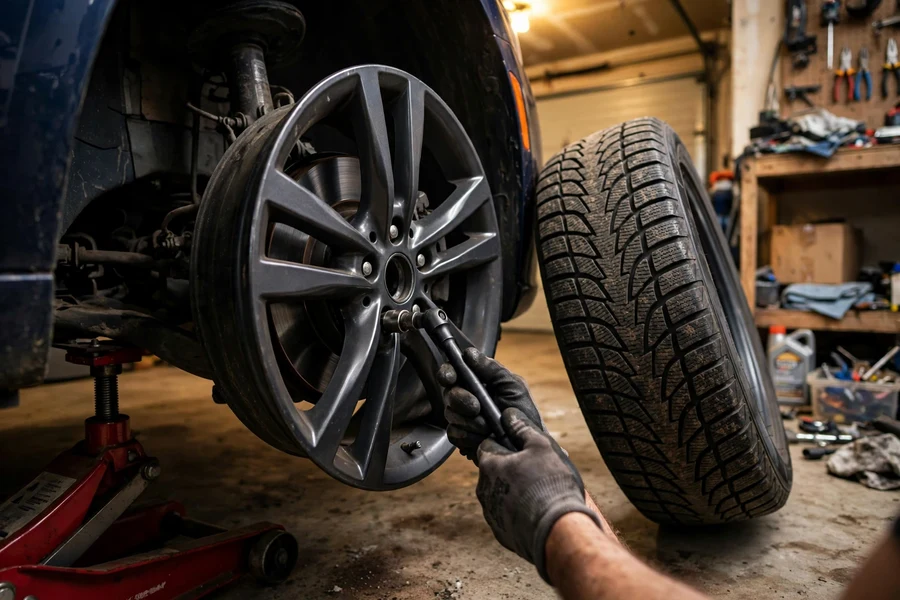
How — honest difficulty: easy to moderate, 45–60 minutes. Loosen lug bolts on the ground, jack one corner at a time on the factory points, set a stand, swap, hand-thread the bolts, lower, and torque star-pattern — 120 Nm E90/F30, 140 Nm G20 (confirm in your manual). Our safe jacking guide covers the lift points; get those wrong and the job stops being easy. Set all four tires to the door-placard pressure cold, run the TPMS reset for your generation, and recheck lug torque after 50–100 miles — the step DIYers skip and shops do not.
After the swap, give the car one careful drive before you need it: confirm TPMS shows active (green wheels on direct systems), listen for new vibration at highway speed, and note winters feel squirmier for the first hundred miles. Then drive the winter like it deserves: the car finally has the right shoes on.
Frequently asked questions
A winter wheel package is the rare purchase that is simultaneously the cheapest meaningful performance upgrade and the largest safety upgrade you can make to a 3 Series. Buy the tires first, the sensors second, the wheels third; size from the door placard, clear your brakes, and store the set like the multi-year investment it is. For the two handoff topics, see our run-flat vs regular tires guide and TPMS reset guide — and for the full ownership picture, the complete 3 Series guide.