BMW Recalls 189,000 Sedans Over Fire Risk
Short answer: The BMW starter relay recall now being reported in Europe covers 189,130 BMW 3, 5, and 7 Series vehicles built between July 29, 2014 and November 12, 2020. Germany’s KBA motor-vehicle authority is monitoring the campaign (reported reference 16791R): the starter relay can admit water, corrode, short-circuit, and — in the worst case — start a fire. The remedy is a complete starter replacement. If your car falls in the build window, check your VIN with BMW or your national authority and book the free repair. Facts verified as of September 28, 2026; figures below are labeled with their sources.
In this guide
- What the recall covers: models, build dates, and the KBA campaign
- The defect: how water in a starter relay becomes a fire risk
- What owners should do right now
- How this differs from earlier BMW starter recalls
- The remedy: what the free fix involves
- Recall timeline and what to watch next
- Interactive: is your BMW in the risk window?
- Interactive: recall fact-check quiz
- Five frequently asked questions
What the recall covers
The newly reported campaign is a European — KBA-monitored — action affecting a large population of BMW sedans. Here are the reported facts, with sources:
| Detail | Reported figure | Source |
|---|---|---|
| Vehicles affected | 189,130 | car-recalls.eu / Hemmings |
| Models | BMW 3 Series, 5 Series, 7 Series | car-recalls.eu / Hemmings |
| Build window | July 29, 2014 – November 12, 2020 | car-recalls.eu |
| Authority | KBA (Germany’s Federal Motor Transport Authority) | car-recalls.eu |
| KBA reference | 16791R (as reported) | car-recalls.eu |
| Defect | Starter relay susceptible to water ingress, corrosion, short circuit | car-recalls.eu / Hemmings |
| Worst-case consequence | Engine-compartment fire | Hemmings |
| Remedy | Complete starter replacement | car-recalls.eu |
Two things to note about scope. First, this is a European-monitored campaign — the KBA is Germany’s authority, and the reporting describes a European/global action. US owners should check the NHTSA database separately, as American campaigns carry different numbers and sometimes different scope. In fact, a separate US recall covers 29,119 plug-in hybrid 330e, 530e, and 740Le vehicles for starter relays that may corrode — with owners urged to park outside until the fix and notifications mailed no later than August 28, 2026. Second, the build window spans two 3 Series generations — late F30 and early G20 cars fall inside it — which is why 3 Series owners make up a large share of the affected population.
The defect: how water in a starter relay becomes a fire risk
The failure chain, as described in the reporting, is a slow-burn electrical fault — literally:
- Water ingress. The starter relay — the high-current switch that connects the battery to the starter motor — can admit water in affected vehicles.
- Corrosion. Moisture inside the relay housing corrodes contacts and terminals over time. This is not a sudden failure; it develops across months and years of exposure.
- Short circuit. Corroded relay internals can create unintended current paths — a short circuit across terminals that were never meant to connect.
- Heat and fire risk. A short across a high-current circuit generates heat. In the worst case, heat in the engine compartment can ignite surrounding materials — the fire risk that elevates this from an inconvenience recall to a safety recall.
The insidious part is the timeline. Corrosion-driven faults do not announce themselves on a schedule — a car can start perfectly for years while the relay quietly degrades, then fail suddenly. That is why the remedy is a complete starter replacement rather than an inspection: BMW is not asking dealers to judge whether your relay looks corroded, but to replace the assembly outright.
Why starter relays corrode: the engineering background
To understand why a small electrical switch can threaten a whole car, it helps to know what the starter relay does — and why it lives a hard life:
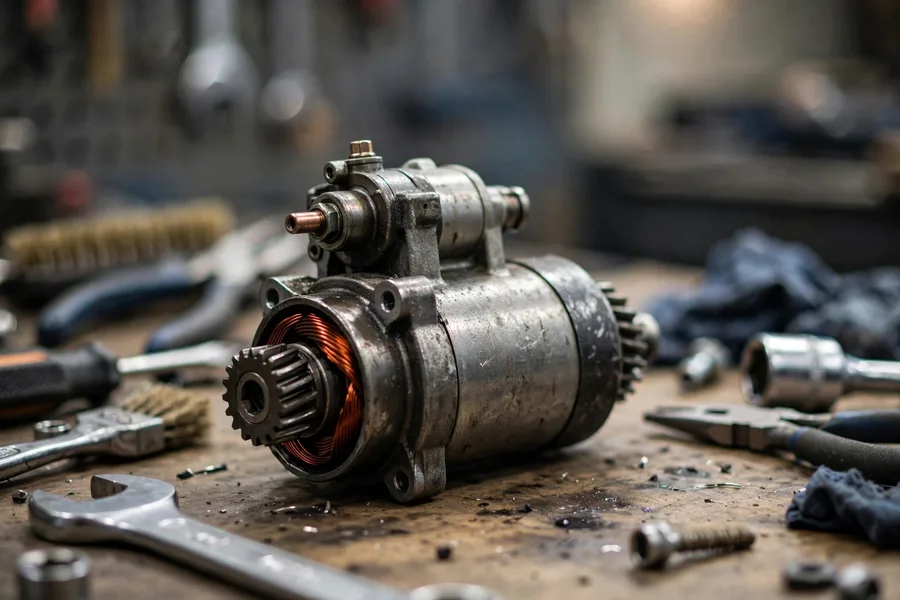
- What it is. The starter relay (often integrated into the starter solenoid assembly) is a high-current switch. When you press the start button, a small control current energizes the relay, which closes heavy contacts that connect the battery directly to the starter motor — a circuit carrying hundreds of amps for a few seconds.
- Where it lives. Low on the engine, near the transmission bell housing — exactly where road spray, splash water, and condensation collect. Engine-bay components are “weather-resistant” by design, but resistance degrades: seals harden, housings develop micro-cracks, and splash shields go missing after years of servicing.
- Why corrosion is the enemy. Copper and steel contacts plus moisture plus road salt equals galvanic corrosion — the same chemistry that eats brake lines. Corrosion raises electrical resistance, which generates heat under load; worse, it can bridge terminals that should stay isolated, creating the short circuit at the heart of this recall.
- Why it takes years. A relay does not corrode in a car wash. It corrodes across hundreds of heat cycles — the engine bay swinging from freezing to over 100°C — each cycle breathing a little moisture past aging seals. That is why the build window stretches six years and the failures surface long after the warranty expires.
- Why replacement beats inspection. Internal relay corrosion is invisible without destructive teardown. A relay that tests fine today can short next month. The only reliable remedy is removing every relay from the suspect population — hence the complete starter replacement.
This background is general automotive engineering, not a claim about BMW’s specific relay design — the reported defect is that the relay can admit water, and everything above explains why that matters once it does.
Which exact cars: decoding the build window
“July 29, 2014 to November 12, 2020” is a build-date window, not a model-year window — and the distinction matters. A car registered as a 2021 model might have been built in October 2020 (inside the window); a 2014 model might have been built in June 2014 (outside it). Here is how to pin down your car:
- Door-jamb sticker. The driver’s door jamb carries a manufacturer label with the month and year of manufacture (e.g., “10/19”). If it falls between 07/14 and 11/20 and your car is a 3, 5, or 7 Series, you are in the population the campaign describes.
- Model-year overlap. For the 3 Series, the window covers late F30 (including LCI facelift cars) and early G20 — the first two model years of the current generation. For the 5 Series it spans late F10 and the G30; for the 7 Series, late F01 and the G11/G12.
- VIN position 10. The tenth VIN character encodes the model year — useful, but remember the campaign is defined by build date, so the door-jamb sticker is the better check.
- The definitive answer is the VIN lookup. Build windows describe populations; only BMW’s system knows whether your specific VIN got the suspect relay. Two identically aged cars can differ if a part change happened mid-production.
If you are shopping for a used 3 Series from this era — which covers some of the best-value F30s and early G20s on the market — add the recall check to your pre-purchase routine alongside the checks in our used 3 Series buying guide. An open safety recall is a negotiating point at worst and a free repair at best — but only if you know about it before you buy.
What owners should do right now
If your BMW was built between July 2014 and November 2020, treat this as actionable this week:
- Check your VIN. Use BMW’s official recall lookup, your national vehicle authority’s database (KBA in Germany), or — for US owners — the NHTSA recall site. A VIN check is the only way to know whether your car is included; build-date windows describe populations, not individual cars.
- Book the free repair. Safety recalls are performed free of charge by dealers. If your VIN shows the campaign open, schedule the starter replacement — do not wait for a failure.
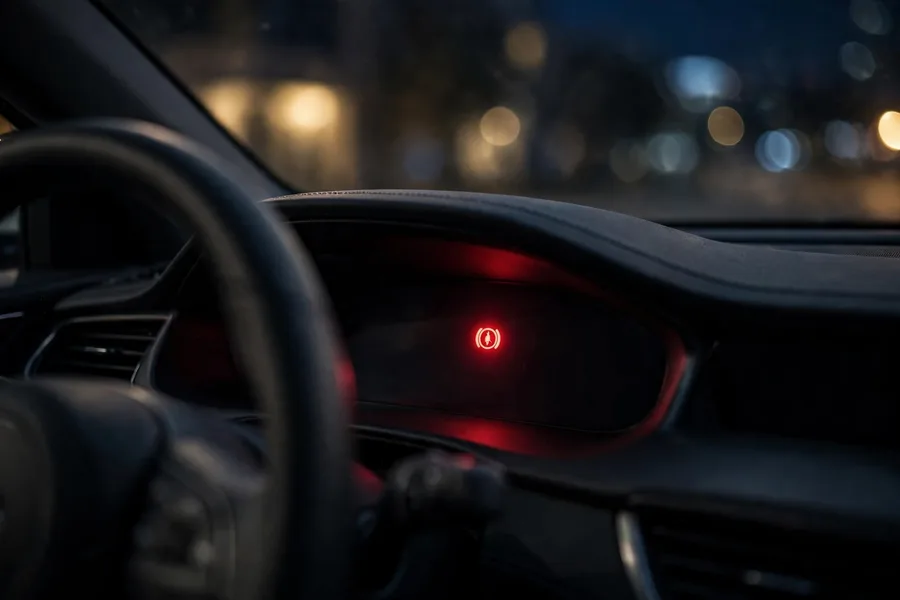
- Know the warning signs. Slow or labored cranking, a starter that keeps running after the engine fires, intermittent no-start episodes, or any burning smell from the engine bay all warrant immediate dealer attention — recall or not.
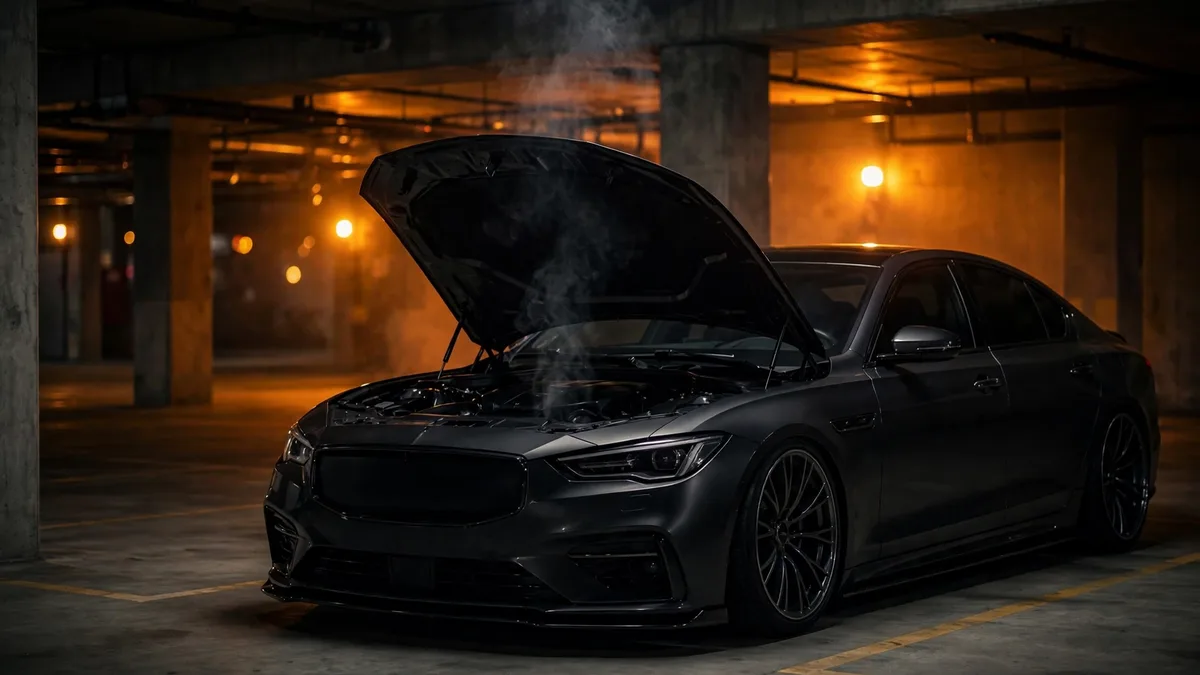
- If you see smoke or smell burning: stop the car in a safe place as soon as you can, switch it off, get out, move away from the vehicle, and call emergency services. Do not open the hood if there are flames — the rush of oxygen can intensify a fire.
- Buying used? Any 3, 5, or 7 Series from the 2014–2020 build window should have its recall status verified before purchase. Our used 3 Series buying guide covers the full pre-purchase check beyond recalls.
How this differs from earlier BMW starter recalls
BMW 3 Series owners may feel a sense of déjà vu — starter-related campaigns are not new for the brand. Our broader BMW 3 Series recall guide (published on this site) covers the full history, including earlier starter campaigns. What distinguishes this action:
- Scale. 189,130 vehicles across three model lines is one of the larger BMW electrical campaigns of recent years.
- The failure mode. Earlier campaigns centered on starting failures — the inconvenience of a car that would not crank. This campaign’s distinguishing feature is the fire risk from a corroded relay shorting, which is why it carries safety-recall urgency.
- The remedy. Complete starter replacement, rather than relay-only service or software measures.
- The authority. KBA monitoring means this is being tracked at the federal level in Germany, with the formal structure — reference numbers, owner notification, completion tracking — that implies.
For the complete picture of every recall affecting your generation — F30, G20, or otherwise — see our full 3 Series recall guide alongside this article. This page covers the new September 2026 development; the guide covers everything else.
The remedy: what the free fix involves
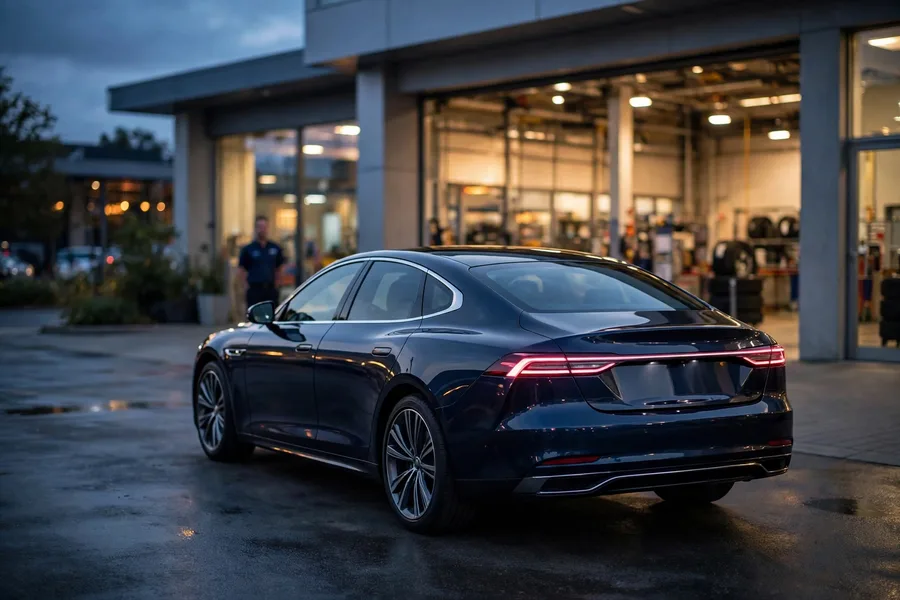
BMW’s prescribed remedy is the complete replacement of the starter — motor and relay assembly together. Here is what that means in practice:
- What gets replaced: the entire starter assembly, eliminating both the corroded relay and any heat-damaged companion components in one operation.
- Why the whole starter: the relay is integrated with the starter in a way that makes relay-only replacement unreliable — and a visual inspection cannot rule out internal corrosion. Replacement is the only remedy BMW trusts.
- Cost to you: nothing. Safety-recall work is free at authorized dealers, including parts and labor.
- Time: a starter replacement is typically a same-day job — a few hours of shop time — though scheduling depends on parts availability and dealer backlog once owner notifications go out.
- What to ask the dealer: confirm the campaign is open on your VIN, ask whether the replacement starter is an updated part (it should be — the point of the campaign), and get the completed recall documented on your service record, which protects resale value.
One practical note: mailed recall notifications typically arrive in waves, and service departments report heavier booking loads after each wave lands. Checking your VIN now and booking before the notification wave puts you ahead of the queue.
What happens if you ignore a safety recall
It is tempting to file a recall letter with the other paperwork. For a safety recall with a fire risk, that is a mistake on three levels:
- Safety. The obvious one. A corroded relay does not improve with age, and the failure mode — an engine-compartment fire — can total the car and endanger occupants and bystanders. The repair is free; the risk of skipping it is not.
- Resale value. Open recalls show up on vehicle-history reports and dealer appraisals. A completed recall, documented on the service record, is a selling point — proof the car was maintained by someone who paid attention. Our 3 Series reliability guide notes that documented maintenance history is one of the strongest predictors of used values.
- Insurance and liability. If a known, unrepaired safety defect contributes to an incident, insurers and other parties’ lawyers will ask why the free fix was never done. Completing the recall closes that question permanently.
There is no downside to the repair itself: it is free, it replaces a wear-prone assembly with a new one, and it typically takes a few hours. The only cost is the appointment — which is why booking before the notification wave matters.
The global picture: KBA, NHTSA, and how recalls cross borders
One defect, many authorities. Understanding the patchwork explains why American and European owners see different recall notices for what may be the same underlying problem:
- KBA (Germany). The Federal Motor Transport Authority monitors the reported campaign under reference 16791R. KBA-monitored recalls carry formal owner notification and completion tracking in Germany, and the campaign data typically propagates to other European national authorities.
- NHTSA (United States). The US system is separate: manufacturers file with NHTSA, which assigns its own campaign numbers. A KBA action does not automatically create a US action — though manufacturers often mirror safety campaigns across markets, the timing and numbering differ. US owners must check the NHTSA database, not the KBA reference.
- Why the lag exists. Different authorities have different investigation triggers, reporting thresholds, and legal frameworks. A defect pattern clear enough for action in one market may still be under review in another — or the affected part population may genuinely differ by market (different suppliers, different model mixes).
- What this means for you. Check the authority for the market where your car is registered. If you imported a car or moved countries, check both — a recall completed under one system should still be documented, but coverage follows the car, not the paperwork.
What the failure feels like: the symptom progression
No owner anecdotes are cited here — this is the expected symptom progression derived from the reported failure mechanism, so you know what to watch for:
- Stage 1: nothing. Corrosion builds silently. The car starts normally. This stage can last years — it is why the recall exists regardless of symptoms.
- Stage 2: intermittent slow cranking. Corroded contacts raise resistance; the starter turns sluggishly, especially on cold mornings. The car still starts, so owners dismiss it — often as a weak battery. (A battery test that passes while cranking stays slow points at the starter circuit, not the battery.)
- Stage 3: no-start episodes. The relay fails to close properly — click, no crank — then works on the next attempt. Intermittent faults are the classic signature of relay problems.
- Stage 4: electrical smell or heat. A shorting relay generates heat and the distinctive sharp smell of overheating electrical components. This is the “stop driving” stage.
- Stage 5: smoke or fire. The worst case the recall is designed to prevent.
The critical insight: stages 2 and 3 look exactly like a dying battery or a worn starter — the two most common misdiagnoses. If your 2014–2020 3, 5, or 7 Series develops cranking issues, mention the starter-relay campaign to the dealer explicitly rather than accepting a battery replacement as the whole answer. And stage 4 or 5 means emergency action first, dealer second.
Recall timeline and what to watch next
| Date | Event | Status |
|---|---|---|
| July 29, 2014 | Start of the affected build window | Reported |
| November 12, 2020 | End of the affected build window | Reported |
| September 2026 | KBA-monitored campaign reported (ref. 16791R); 189,130 vehicles | Reported |
| Coming weeks | Owner notifications expected via national authorities and BMW | Expected |
| Ongoing | Free complete-starter replacements at dealers | Underway |
What to watch: whether the campaign expands to additional markets with their own reference numbers (US NHTSA action, if any, would carry a separate number), how quickly parts pipeline fills once notifications go out, and whether BMW issues any interim guidance — such as parking advice — for owners waiting on the repair. We will update this article as official notices publish.
How owner notification works — and why you should not wait for the letter
Safety recalls follow a formal notification process, but the letter is the last step, not the first. Here is the sequence:
- Authority filing. The manufacturer files the campaign with the monitoring authority (KBA in this case), including the affected VIN list.
- Owner identification. Authorities and manufacturers match VINs to registered keepers — a process that takes weeks and misses second and third owners with outdated registration data.
- Letters go out in waves. Notifications are typically mailed in batches, not all at once. The first wave may reach owners weeks before the last.
- The dealer backlog builds. Each wave of letters typically generates a wave of booking calls — owners who check their VINs and book early tend to get prompter appointments than those who wait for the letter.
The implication is straightforward: the VIN lookup available today contains the same information the letter will eventually tell you. Checking now and booking now skips the queue. This matters doubly if you bought your car used — the notification letter goes to the registered keeper on file, which may not be you.
VIN check walkthrough: five minutes, step by step
- Step 1: find your VIN. Seventeen characters, visible through the windshield on the driver’s side dashboard, on the driver’s door-jamb sticker, and on your registration documents.
- Step 2: check the build date. Same door-jamb sticker — month and year of manufacture. Between 07/2014 and 11/2020 on a 3, 5, or 7 Series means you are in the campaign’s population.
- Step 3: run the official lookup. BMW’s recall lookup tool, your national authority’s database, or the NHTSA site for US cars. Enter the full VIN and look for open campaigns mentioning the starter or starter relay.
- Step 4: screenshot the result. Keep a dated record of what the lookup showed — useful if a dealer’s system disagrees or if you sell the car.
- Step 5: call the dealer with the campaign reference. Mention the starter-relay campaign (and the reported KBA reference 16791R for European cars) so the service advisor pulls the right bulletin immediately.
The bottom line
A starter relay is a $50 part that can threaten a $50,000 car — that is the entire story of this recall in one sentence. BMW’s answer, a complete starter replacement on 189,130 vehicles, is the right one: when corrosion is invisible and the failure mode is fire, you replace the population, not the part. The repair is free, the VIN check takes five minutes, and the queue only gets longer from here. Check yours this week.
Interactive: is your BMW in the risk window?
Five questions profile whether your car falls inside the reported campaign — and what to do next. Guidance only: a VIN check with BMW or your national authority is the definitive answer. Every path below was tested.
Interactive: recall fact-check quiz
Six claims about the starter-relay campaign. Mark each true or false — every answer cites the reported record.
BMW starter-relay recall: five frequently asked questions
189,130 BMW 3 Series, 5 Series, and 7 Series vehicles built between July 29, 2014 and November 12, 2020, according to the reported KBA-monitored campaign (reference 16791R as reported). A VIN check with BMW or your national authority is the only way to confirm whether your individual car is included.
The starter relay can admit water, which corrodes its internals over time. Corrosion can cause a short circuit across the high-current starter circuit, generating heat that — in the worst case — can start an engine-compartment fire. The fault develops slowly, which is why BMW replaces the whole starter rather than inspecting it.
A complete starter replacement — motor and relay assembly — performed free of charge at authorized dealers. It is typically a same-day job. Book early: appointment waits stretch once owner notifications go out. Get the completed recall documented on your service record.
The reported campaign is KBA-monitored — a European action. US owners should check the NHTSA recall database separately, because American campaigns carry different reference numbers and sometimes different scope. Do not assume coverage from the KBA reference alone.
Stop in a safe place as soon as you can, switch the car off, get out, move away from the vehicle, and call emergency services. Do not open the hood if there are flames — the inrush of oxygen can intensify a fire. Then contact your BMW dealer about the recall.