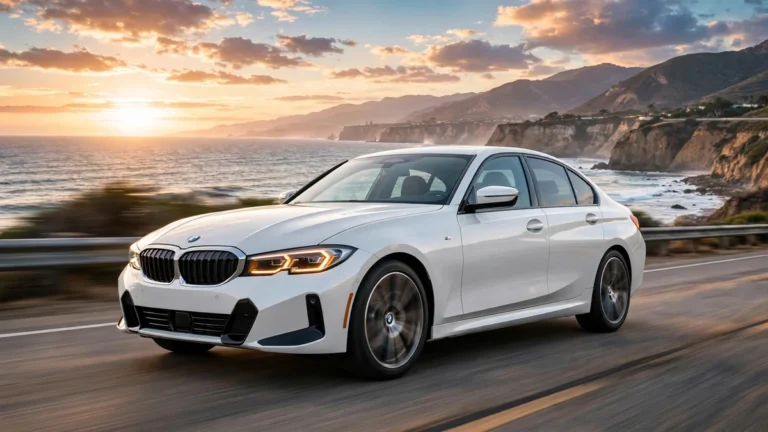
BMW 320i Guide for E90, F30 and G20 Buyers
Short answer: the BMW 320i is the 3 Series’ sweet-spot four-cylinder across three generations — the E90 (2005–2011), F30 (2012–2018), and G20 (2019–present). The E90 320i runs naturally aspirated N43/N46 petrol fours; the F30 switches to turbocharging with the N13 (and N20 in some markets, later B48); the G20 standardizes on the B48 2.0-liter turbo with 184 PS and 300 Nm. Engines vary by market and build year, so always verify by VIN before buying.
320i generations at a glance
| Generation | Years | 320i engines | Power | Gearbox |
|---|---|---|---|---|
| E90 | 2005–2011 | N43 / N46 2.0L NA | ~150–170 PS | 6MT / 6AT |
| F30 | 2012–2018 | N13 1.6T (ED) / N20 2.0T / B48 2.0T | 170–184 PS | 6MT / 8AT |
| G20 | 2019–present | B48 2.0L turbo | 184 PS / 300 Nm | 8AT |
The table above is a simplification — and this article exists because simplifications get 320i buyers into trouble. The 320i badge has covered 1.6-liter turbos, 2.0-liter turbos, and 2.0-liter naturally aspirated engines depending on where and when the car was sold. A 2013 320i EfficientDynamics and a 2013 320i in another market can have different engines, different timing-chain designs, and different weak points. This guide breaks the 320i down generation by generation, tells you what to check on each, and finishes with a buyer-fit tool so you can match the right 320i to your budget and tolerance for spanners.
If you are still deciding between 3 Series generations in general, our used BMW 3 Series buying guide covers the whole range; this article goes deep on the 320i specifically. For the six-cylinder step up, see our 330i vs M340i comparison.
E90 320i (2005–2011): the naturally aspirated classic
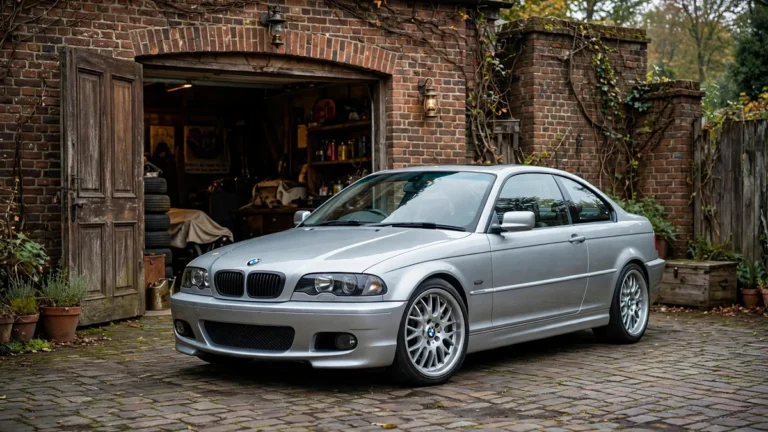
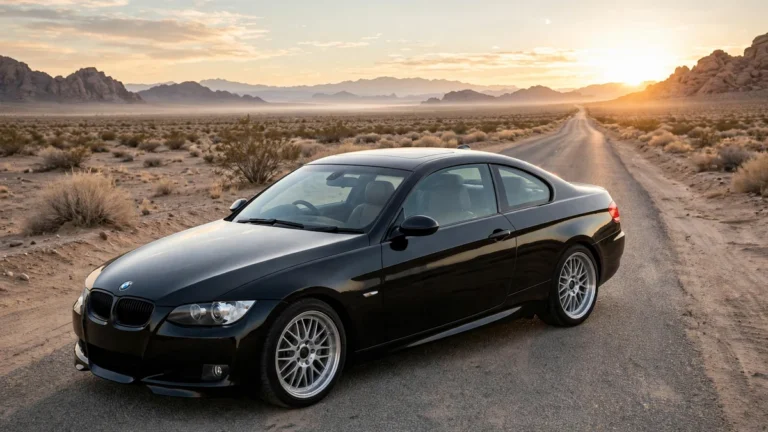
The E90-generation 320i is the last of the naturally aspirated breed — and the cheapest entry point into 3 Series ownership. Two four-cylinder petrol engines did duty depending on market and year: the N46 (earlier cars) and the N43 (later cars, with direct injection and lean-burn tech in European spec). Both are 2.0-liter fours making roughly 150–170 PS, paired with either a six-speed manual or a six-speed automatic.
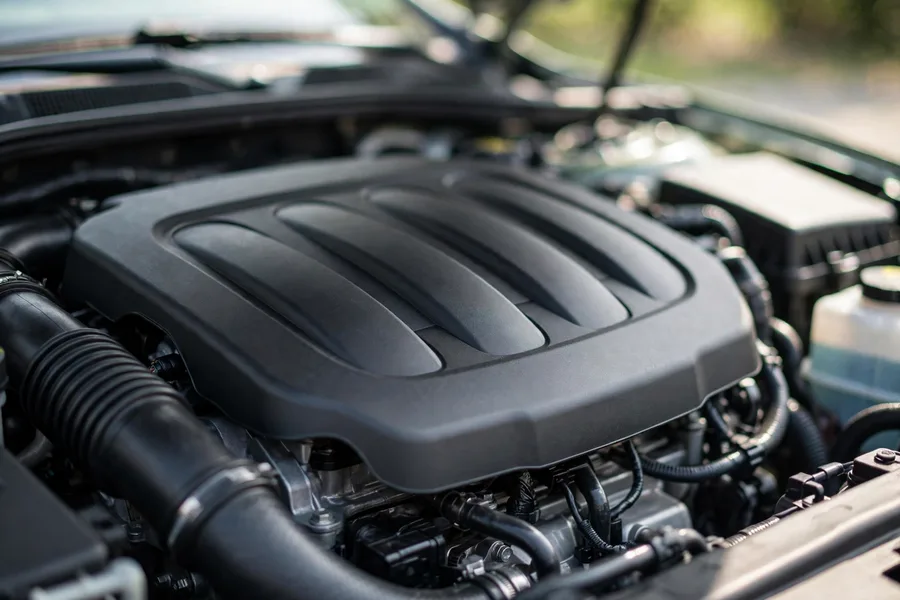
What the E90 320i gets right: hydraulic steering feel that later electric racks never quite matched, a chassis balance that still embarrasses newer cars, and purchase prices that can dip into runabout territory. What it demands in return is maintenance discipline — these are 15-plus-year-old cars now, and deferred maintenance is the norm, not the exception.
E90 320i: pre-purchase checks
- Timing chain (N43). The N43’s timing chain and tensioner are a known wear area — listen for chain rattle on cold start. A rattling chain is a walk-away signal unless the price covers an engine-out-level repair.
- Oil leaks. Valve cover gasket, oil filter housing gasket, and oil pan gasket all weep with age. Check for oil smell in the cabin (valve cover leak dripping onto the exhaust) and oil spots under the engine.
- Cooling system. Expansion tanks crack, water pumps fail, and thermostats stick. Any E90 without cooling-system service history in the last 6–8 years is living on borrowed time.
- VANOS solenoids. Rough idle and fault codes for camshaft timing often trace to dirty or failed VANOS solenoids — cheap parts, but a bargaining chip.
- Rear subframe and bushings. At this age, expect worn control-arm bushings and tired shocks. Budget for a suspension refresh on any unmaintained example.
- Electronics. Window regulators, door lock actuators, and the blower-motor resistor are all common E90 failures — test every window, lock, and fan speed.
Buyer fit: the E90 320i suits the hands-on buyer who wants the purest 3 Series driving experience for the least money and can handle (or budget for) ongoing maintenance. It does not suit anyone wanting a turn-key, low-maintenance commuter — buy the newest, best-documented example you can find, or budget accordingly.
F30 320i (2012–2018): the turbocharged middle child
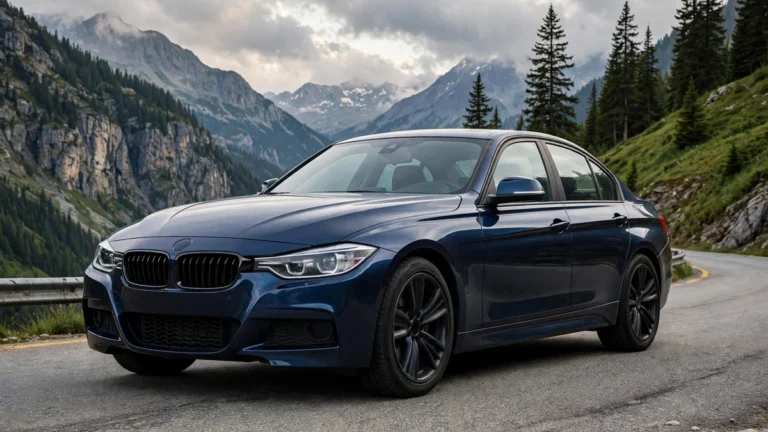
The F30 320i is where the badge gets complicated — and where most buyers get confused. BMW fitted three different engines to the F30 320i depending on market and year:
- N13 1.6-liter turbo (EfficientDynamics models). The efficiency special: 170 PS and 250 Nm, 0–100 km/h in a claimed 7.6 seconds, and a 230 km/h top speed. A Prince-engine-family derivative co-developed in the BMW/PSA era. Quick enough, but the 1.6 turbo works hard and its timing-chain drive demands clean oil.
- N20 2.0-liter turbo. The mainstream F30 320i engine in many markets (including the US): 184 PS and 270 Nm. Strong mid-range, but the N20’s timing-chain guide wear is well documented — chain noise on these engines is a serious warning.
- B48 2.0-liter turbo (later cars). The modular-engine replacement for the N20, also 184 PS but with 300 Nm in most 320i tunes. A fundamentally more robust design that carried into the G20.
This is why the VIN rule matters so much for the F30: a “2015 320i” can be an N20 or a B48 depending on build date and market, and the two engines have different reliability profiles and different things to check. Decode the VIN (or check the engine code on the build sheet) before you believe any listing’s engine claim.

F30 320i: pre-purchase checks
- Timing chain noise (N13/N20). Cold-start rattle or whining from the front of the engine — walk away or price in a chain replacement. The B48 is far less troubled here, which is one reason late F30s command a premium.
- Charge pipe. The stock plastic charge pipe cracks with age and heat cycles, causing boost leaks, drivetrain-malfunction warnings, and limp mode. Check for fault codes and listen for boost leaks under load.
- Valve cover and oil filter housing gaskets. Same story as the E90 — they leak, and oil on a hot turbo is worse than oil on a hot exhaust manifold.
- Electric water pump. F30 pumps fail electrically with little warning; overheating episodes warp heads. Verify recent replacement or budget for it.
- Coil packs and injectors. Misfires under boost often mean tired coils; direct-injection engines also suffer intake-valve carbon buildup over high mileages.
- ZF 8HP service history. The eight-speed automatic is superb but not “sealed for life” — look for fluid and filter service around 60,000–80,000 miles. See our ZF 8HP fluid guide.
Buyer fit: the F30 320i is the value sweet spot for most buyers — modern enough for daily use, depreciated enough to be affordable, with the B48-powered late cars (2016–2018) the pick of the litter. N13 EfficientDynamics models suit economy-minded drivers who maintain oil changes religiously; N20 cars are fine if the chain is quiet and documented.
G20 320i (2019–present): the refined modern choice
The G20 simplifies the 320i story: one engine family, the B48 2.0-liter turbo, in a 184 PS / 300 Nm tune, driving the rear wheels (or all four in xDrive markets) through the ZF eight-speed automatic. BMW’s published technical data lists 1,998 cc, 184 PS, and 300 Nm — enough for relaxed real-world pace with strong mid-range torque that makes the car feel quicker than the headline power suggests.

The G20 320i is the least surprising 320i — and that is a compliment. The B48 is a proven modular unit shared across BMW’s range, the chassis is stiffer and quieter than the F30’s, and the tech (digital dash, modern iDrive, driver assists) feels current. Depreciation has started to bite, making 2019–2021 cars increasingly attainable — but they remain the most expensive 320i to buy by a wide margin.
G20 320i: pre-purchase checks
- Service history completeness. At G20 prices, there is no excuse for patchy history — demand full BMW or specialist records. Gaps suggest deferred maintenance on a car too new to need excuses.
- Recall completion. Check for open campaigns by VIN — early G20s fall inside several campaign windows, including the starter-relay population described in our starter-relay recall report.
- Tires and alignment. Uneven wear patterns reveal alignment issues or worn bushings; run-flats in poor condition are a four-figure surprise.
- Electronics and iDrive. Exercise every assist system, the infotainment, and the digital cluster — out-of-warranty module faults are expensive.
- Previous accident repair. Panel-gap inconsistencies, overspray, and mismatched paint are walk-away signals at this price level; a paint-depth gauge is a wise investment.
Buyer fit: the G20 320i suits buyers who want a modern, refined daily driver with warranty-era engineering and are willing to pay the premium over F30s. It is the lowest-risk 320i to own — but also the one where purchase price dwarfs maintenance costs in the total equation.
How to decode exactly which 320i you are looking at
Because engines vary by market and build year, here is the verification routine that prevents expensive mistakes:
- Step 1: get the full VIN from the listing or the windscreen plate — never buy on the seller’s engine description alone.
- Step 2: run a VIN decoder (BMW’s own VIN lookup, a reputable decoder, or a dealer parts department) and confirm the engine code: N43, N46, N13, N20, or B48.
- Step 3: check the build date on the driver’s door-jamb sticker — month and year. For F30s, mid-2015 onward increasingly means B48; earlier means N13/N20 depending on market.
- Step 4: match the engine to this article’s checks — each engine has its own weak points, and the wrong checklist wastes a pre-purchase inspection.
- Step 5: confirm the gearbox — manuals are rare and desirable on E90s; the ZF 8HP on F30/G20 should have service history.
A concrete example of why this matters: two “2015 320i” cars can be an N20 (timing-chain watch item) and a B48 (far less chain concern) — same badge, same year, different risk profiles. The VIN tells you which one you are actually buying. When in doubt, a BMW dealer’s parts department can confirm the engine code from the VIN in under a minute — a free check that has saved countless buyers from five-figure mistakes.
320i ownership costs: what to budget per generation
Purchase price is only the entry ticket. Realistic annual maintenance reserves (excluding fuel, insurance, and tires) for a well-bought example:
| Generation | Annual maintenance reserve | Big-ticket risks |
|---|---|---|
| E90 320i | $1,200–$2,000 | Timing chain (N43), cooling overhaul, suspension refresh |
| F30 320i | $1,000–$1,800 | Timing chain (N13/N20), water pump, charge pipe |
| G20 320i | $800–$1,400 | Electronics/modules, run-flat tires, brakes |
These are reserves for maintained cars — a neglected example of any generation can demand double in its first year as deferred work comes due. That first-year catch-up bill is the most common 320i buyer regret, and the pre-purchase inspection is how you price it into the deal instead of discovering it afterward. Our maintenance schedule and cost guide breaks service intervals down further.
Which 320i should you buy? The honest summary
- Buy the E90 320i if: you value steering feel and chassis purity above all, you DIY or have a trusted indie specialist, and your budget prioritizes purchase price over convenience. Get a late N43/N46 car with chain and cooling history.
- Buy the F30 320i if: you want the best balance of modernity, value, and running costs. Target 2016–2018 B48 cars; accept N13/N20 cars only with quiet chains and full history. The F30 is the rational answer for most buyers.
- Buy the G20 320i if: you want the newest, most refined 320i and your budget stretches past the F30. You are paying for lower risk and modern tech, not more speed — the G20 320i is no faster than a late F30, just newer.
- Skip the 320i entirely if: you need six-cylinder smoothness (see the 330i), you tow, or you want maximum performance per dollar (a well-bought 330i or 328i often costs little more).
Whichever generation you choose, the 320i rewards the same buyer virtues: verify the engine by VIN, insist on service history, get a pre-purchase inspection, and budget the maintenance reserve from day one. Do that, and the 320i remains what it has always been — the smart-money 3 Series.
Fuel economy and real-world running costs
The 320i’s running-cost case rests on fuel economy — here is what to realistically expect, remembering that official figures are optimistic and your right foot writes the final number:
- E90 320i (N43/N46). The naturally aspirated fours are the thirstiest of the three generations in real driving — expect mid-20s mpg (US) / low-30s mpg (UK) in mixed use. They need revs to move, and revs drink fuel.
- F30 320i (N13/N20/B48). Turbocharging transformed the equation: mid-30s mpg (US) / mid-40s mpg (UK) is realistic in mixed driving, with the N13 EfficientDynamics the frugal champion on paper. Motorway cruising is where the F30 shines — tall gearing and low-rpm torque.
- G20 320i (B48). Similar to the late F30 in practice — the efficiency gains went into refinement and emissions compliance rather than headline economy. Expect F30-like figures with less effort.
Beyond fuel: insurance groups favor the 320i over six-cylinder 3 Series (a meaningful saving for younger drivers), road tax in most markets tracks CO2 (favoring the F30/G20 turbos), and consumables — brakes, tires — cost the same as any 3 Series. The 320i saves money at purchase, at the pump, and at the insurer; it does not save money at the parts counter.
Trim levels and options actually worth finding
Across all three generations, certain options transform the ownership experience while others just add failure points:
- Worth seeking: M Sport package. Better seats, sport suspension, and styling that protects resale. The ride is firmer — test it on your roads — but M Sport cars sell faster and hold value better.
- Worth seeking: heated seats and folding rear seats. Cheap options new, daily conveniences forever, and their absence annoys every single winter.
- Worth seeking: professional navigation / larger iDrive (F30/G20). The bigger screen and better system age far more gracefully; base infotainment feels ancient quickly.
- Take or leave: panoramic sunroof. Lovely when working; the drains clog and the mechanisms fail with age — check our sunroof maintenance reality before paying extra for one. (See our sunroof drain guide.)
- Take or leave: adaptive dampers. Excellent when new, expensive when the electronics fail — on older cars, factor replacement cost into the price.
- Check carefully: aftermarket modifications. Remaps, lowered suspension, and aftermarket wheels are common on 320is. Some are well done; many are not. A stock car with history beats a modified car with stories.
Common 320i problems by engine: the master checklist
Every 320i engine has a documented weak-point list. Use this as your pre-purchase inspection crib sheet — matched to the engine code you verified by VIN:
| Engine | Watch for | Severity |
|---|---|---|
| N46 (E90) | Valve stem seals (oil consumption), VANOS solenoids, gasket leaks | Moderate — budget items |
| N43 (E90) | Timing chain rattle, injector issues, NOx sensor faults | High — chain rattle is walk-away |
| N13 (F30) | Timing chain, high-pressure fuel pump, carbon buildup | High — chain noise is walk-away |
| N20 (F30) | Timing chain guide wear, charge pipe, water pump | High — chain noise is walk-away |
| B48 (F30/G20) | Coolant leaks (early cars), charge pipe, carbon buildup at high miles | Moderate — strongest of the five |
Notice the pattern: timing-chain health dominates the risk profile of every 320i except the B48. That single check — a cold start, hood up, listening for rattle or whine from the front of the engine — eliminates more bad purchases than any other five-minute test. If the seller will not allow a cold start, treat that refusal as the answer.
320i vs 320d: should you buy the diesel instead?
The question every European 320i shopper asks — and the answer depends entirely on your mileage and your city:
- Buy the 320d if: you drive high annual mileage (15,000+ miles), mostly on motorways, and your city has no diesel restrictions affecting your commute. The 320d’s torque and fuel economy are objectively superior for long-distance work, and used values reflect that demand.
- Buy the 320i if: you drive mixed or urban miles, face current or looming diesel restrictions (low-emission zones are expanding across Europe), or want lower purchase prices — 320i cars typically cost less than equivalent 320ds. Petrols also warm up faster and suit short trips that punish diesels’ DPFs.
- DPF reality check. A diesel doing short urban trips will clog its diesel particulate filter — an expensive lesson. If your driving is mostly short hops, the 320i is not just cheaper to buy, it is cheaper to own.
In the US market the question is moot — the 320i was the rational four-cylinder choice against the 328i/330i, with no diesel equivalent in the lineup.
The manual gearbox question
Manual 320is exist — mostly E90s and early F30s — and they are increasingly sought after. The six-speed manual is robust; clutches are wear items priced accordingly. Two things to know: manuals command a growing premium among enthusiasts (but no premium among ordinary buyers, so shop patiently), and the G20 320i is automatic-only — if you want three pedals in a modern 3 Series, the F30 is your last stop. Test for clutch slip in a high gear at low revs, and check for a vague or notchy shift action that suggests worn linkages rather than gearbox failure.
Negotiation tips: turning findings into discounts
- Every finding has a price. Weeping valve cover gasket, tired shocks, overdue brake fluid — get a written estimate from a specialist and present it as the discount basis, not as criticism of the car.
- Chain noise is not a discount item. It is a walk-away item on N43/N13/N20 cars. Do not negotiate around a rattling chain; find another car.
- History gaps discount harder than age. A 2014 with full history beats a 2016 without it — and sellers of history-poor cars know it. Price the risk.
- Time your purchase. Convertibles aside, 3 Series prices soften in winter in most markets — patience is a negotiating tactic.
- Always get the PPI. A pre-purchase inspection at a BMW specialist costs a fraction of one surprise repair and gives you the written findings that power every point above.
The 320i has been the 3 Series’ quiet achiever for two decades: never the fastest, never the flashiest, always the one that makes sense when the spreadsheet meets the soul. Three generations, five engines, one rule — verify by VIN, buy on history, and budget the maintenance from day one. Do that, and whichever 320i you choose will repay you with the thing no spec sheet captures: a BMW that simply works.
Interactive: which 320i generation fits you?
Five questions match your budget, spanner tolerance, and priorities to the right 320i generation. Guidance only: always verify the individual car by VIN. All 243 answer paths were tested.
Interactive: name that 320i engine
Six clues, five engine codes. Match each 320i to its engine — the skill that saves F30 buyers from expensive mistakes.
BMW 320i: five frequently asked questions
It depends on generation, market, and build year. The E90 320i uses the naturally aspirated N43/N46 2.0-liter; the F30 uses the N13 1.6 turbo (EfficientDynamics), N20 2.0 turbo, or later B48 2.0 turbo; the G20 uses the B48 2.0 turbo (184 PS / 300 Nm). Always verify the engine code by VIN — never trust the badge alone.
The B48-powered cars (late F30, all G20) have the strongest reliability record of the three generations. N13/N20 F30s are fine with documented oil history and quiet timing chains; E90s are durable but need age-related maintenance (cooling, gaskets, suspension). Across all generations, service history quality predicts reliability better than the badge does.
The B48 is the better buy: more robust timing-drive design, 300 Nm (vs the N20’s 270 Nm in 320i tune), and fewer documented weak points. N20 cars can still be good purchases with a quiet cold start and full history — but all else equal, the 2016–2018 B48 cars are worth their premium.
Budget roughly $1,200–$2,000/year for an E90, $1,000–$1,800 for an F30, and $800–$1,400 for a G20, excluding fuel, insurance, and tires. Neglected examples can demand double in the first year as deferred work comes due — the pre-purchase inspection exists to price that into the deal.
Buy the 320i if purchase price, fuel economy, and insurance costs matter most — it delivers 90% of the 3 Series experience for less money. Buy the 330i if you want meaningfully stronger performance and smoother power delivery; well-bought 330is often cost little more than comparable 320is. Our 330i vs M340i guide covers the six-cylinder step up.