
BMW xDrive vs RWD: The True Cost of All-Wheel Drive on a 3 Series
The BMW xDrive vs RWD decision looks like a personality test — all-wheel drive for the snowbelt, rear-wheel drive for the purist — but it is really a money question. xDrive adds roughly $2,000 to the sticker on a new 3 Series (verified against EPA window-sticker data for matched 2018 and 2020 model pairs), drinks 1–2 mpg more, carries around 100–200 extra pounds depending on generation, forbids single-tire replacements, and adds a transfer case that can produce a five-figure repair bill. This guide prices every line item so you can decide with a calculator instead of a gut feeling.
Below you will find: how xDrive actually works on the 3 Series, a true-cost-of-ownership table built from EPA figures and reported repair costs, a buyer picker for your climate and budget, the tire rules every xDrive owner must follow, reliability notes by generation, resale differences, and verdicts for each buyer type. It pairs with our used BMW 3 Series buying guide and the complete 3 Series guide.
The short answer
Buy xDrive if winter weather is a regular obstacle. Buy RWD if you live in a mild climate, want the lowest running costs, and value the purest steering feel. The true cost of BMW xDrive vs RWD on a 3 Series runs roughly $3,500–$4,500 extra over five years before any major repair — $2,000 at purchase, about $1,000 in extra fuel on EPA figures, and several hundred in added drivetrain servicing. The wild card is the transfer case: a class-action lawsuit covering 2019–2025 xDrive models alleges failures costing $7,000–$13,000, and those allegations are unproven.
In this guide
- How xDrive works on the 3 Series
- The true cost: RWD vs xDrive ownership table
- Which should you buy? The buyer picker
- Driving dynamics: what changes behind the wheel
- The tire rules every xDrive owner must follow
- Reliability by generation: E90, F30, G20
- Resale value: who gets their money back
- The verdict
- Frequently asked questions
How xDrive works on the 3 Series
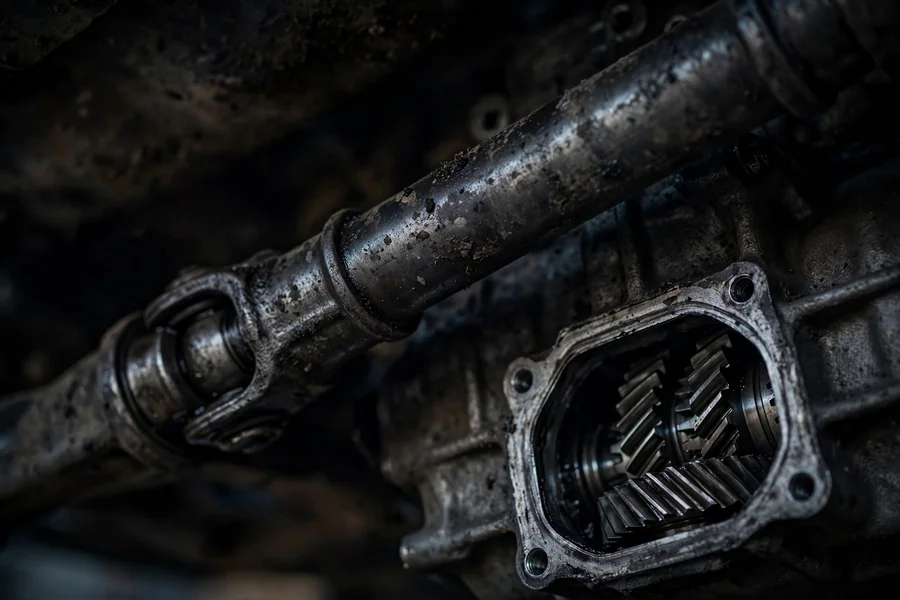
xDrive is a full-time, rear-biased all-wheel-drive system. At its heart is an electronically actuated clutch pack inside the transfer case — the Magna Actimax unit on nearly all BMW xDrive systems — that engages to send torque to the front axle as needed. The default calibration is a rear-biased 40:60 front/rear torque split, and the system can vary that from effectively zero up to 100% at either axle; full torque can reach the front only when the rear wheels have no traction at all, because the rear driveshaft is hard-coupled to the transmission output. The front and rear differentials are open designs: the car’s DSC stability control brakes individual slipping wheels to mimic limited-slip behavior. (BMW xDrive system overview)
Two things surprise first-time buyers. First, xDrive is proactive, not reactive: it reads steering angle, throttle position and wheel speeds to shuffle torque before slip happens, which is why it feels invisible in normal driving. Second, it actively shapes handling — biasing torque rearward to sharpen turn-in when it senses understeer and forward to settle the car when it senses oversteer. That rear bias is why an xDrive 3 Series still feels like a BMW on dry pavement, just a slightly heavier one.
The hardware has evolved across generations. The E90’s xDrive is the oldest and heaviest implementation with the largest weight penalty; the F30’s unit is lighter and faster-acting; the G20’s is the newest calibration of the same clutch-pack concept. For generational breakdowns, see our E90 vs F30 comparison and F30 vs G20 comparison.
The true cost: RWD vs xDrive ownership table
| Cost item | Rear-wheel drive | xDrive | Basis & confidence |
|---|---|---|---|
| Purchase premium (new) | — | ~$2,000 on the sticker | High confidence: EPA lists the 2020 330i at $40,750 vs the 330i xDrive at $42,750, and the 2018 330i at $40,250 vs $42,750; the 2018 320i pair is $34,900 vs $36,900. |
| Fuel economy (EPA) | 2020 330i: 30 mpg combined (26/36) | 2020 330i xDrive: 28 mpg combined (25/34) | High confidence: EPA 2020 3 Series ratings. EPA annual fuel cost: $2,650 vs $2,850. |
| Fuel economy (EPA, F30) | 2018 330i: 27 mpg combined (24/34) | 2018 330i xDrive: 27 mpg combined (23/33) | High confidence: EPA 2018 3 Series ratings — combined rounds the same, but the xDrive gives up 1 mpg in both city and highway. The 2018 320i pair is 28 vs 27 combined. |
| Weight penalty | — | ~150 lbs on the F30; ~220 lbs on the E90 | Medium confidence: owner-compiled from BMW catalog specs (335i 6MT: E90 3,593 vs 3,814 lbs; F30 3,545 vs 3,695 lbs). |
| Extra scheduled servicing | Standard BMW maintenance | Transfer-case + front/rear differential fluid services BMW does not schedule as routine | High confidence on the gap, medium on price: the class-action complaint cites $250–$1,300 for dealer transfer-case fluid replacement; independents typically charge less. Specialists suggest ~50,000-mile intervals (owner-reported consensus). |
| Tires | Pairs can be replaced | Matched sets of four only — a single new tire with worn mates can damage the transfer case | Medium-high confidence: the BMW-referenced ~1% front/rear diameter rule (see tire rules). |
| Transfer-case failure risk | Not applicable — no transfer case | Actuator $1,000+; rebuild $800–$1,500+; full replacement $7,000–$13,000 | Medium confidence: costs from BMW xDrive repair-cost reporting and the transfer-case class-action complaint (dealer figures; independents less). |
On EPA’s own annual-fuel-cost math, the 2020 xDrive costs about $200 more per year to run than the equivalent RWD car — roughly $1,000 over five years at 15,000 miles annually. The F30-era penalty is smaller: the 2018 330i xDrive rounds to the same 27-mpg combined figure as its RWD sibling, losing only about 1 mpg in city and highway driving, so expect closer to $50–$100 a year.
Back-of-the-envelope 5-year total: $2,000 (sticker) + ~$1,000 (fuel, G20) + a few hundred in transfer-case/differential fluid servicing ≈ $3,500–$4,500 in expected extra ownership cost — before any transfer-case failure and before the tire-matching penalty (one ruined tire forcing a full set of four). That is a rough estimate, not a quote, but it is built from real line items rather than vibes. A transfer-case replacement at $7,000–$13,000 would roughly double it.
Which should you buy? The buyer picker
Climate and driving pattern decide this more than brand loyalty does:
Buy xDrive — with a set of winter tires.
- The one scenario where xDrive earns its premium: daily winter commuting, steep driveways, and getting moving before the plow arrives.
- Do not let xDrive talk you out of winter tires. AWD helps you go; only tires help you stop and turn.
- Budget the extras from day one: the ~$2,000 sticker premium, matched tire sets, and transfer-case fluid service around 50,000 miles.
- On the used market, prioritize xDrive cars with transfer-case fluid service in their records — see our used 3 Series buying guide for the full inspection playbook.
Buy RWD and pocket the difference.
- In a mild climate, xDrive is roughly $3,500–$4,500 of cost over five years buying you traction you will rarely need.
- The RWD car is lighter (~150 lbs on the F30), slightly more efficient (up to 2 mpg combined on the G20), simpler to maintain, and offers the purest steering feel.
- If three pedals are non-negotiable, RWD is your route: by the F30 era xDrive was automatic-only per EPA data, and the US G20 launched with no manual at all.
- A RWD 3 Series with proper all-season or summer tires is the classic BMW formula for a reason.
Buy xDrive, and make winter tires non-negotiable.
- Unplowed roads, steep grades, and gravel are where all-wheel drive stops being a luxury and starts being the difference between getting home and calling a tow.
- Run a dedicated square winter-tire setup (same size on all four corners) — cheaper than staggered, rotatable, and easy to keep within the 1% diameter rule.
- Check your expectations: xDrive does not make a 3 Series an SUV; deep snow still high-centers it.
- Budget a transfer-case fluid change early in ownership if the service history is silent on it.
Buy whichever layout has the better records — but know RWD is cheaper to own.
- On a tight used budget, a well-documented RWD car beats a neglected xDrive car every time — the transfer case is a $7,000–$13,000 failure you cannot afford at this price point.
- If you buy xDrive used, the pre-purchase inspection must include slow, tight turns listening for transfer-case shudder.
- Favor 2014+ F30 xDrive cars or 2020+ G20s; the oldest E90 xDrive cars are now cheap enough that a single drivetrain failure totals them.
- Run the numbers through our used buying guide’s price bands before you negotiate.
Driving dynamics: what changes behind the wheel
In normal daily driving, the difference is genuinely small. The rear-biased calibration means an xDrive 3 Series accelerates, cruises and turns much like its RWD sibling — most drivers commuting in dry conditions would not identify which car they are in from the driver’s seat. The differences emerge at the edges, and they all trace back to weight and the front drivetrain.
- Steering feel: the RWD car’s steering is purer, with no front driveshafts or torque flowing through the wheels you are steering with. Enthusiasts consistently rank this as the biggest subjective difference.
- Balance and agility: the xDrive hardware adds roughly 150 lbs on the F30 (over 220 lbs on the E90), concentrated ahead of the driver. The result is a car that feels slightly less eager to rotate — a touch more understeer at the limit, a touch less of the classic 3 Series playfulness.
- Traction: this is xDrive’s home turf. It launches harder from a standstill, pulls cleanly out of wet junctions, and climbs slippery grades a RWD car cannot. In rain and snow the confidence gap is real.
- Braking and cornering grip: no advantage either way — stopping and turning are tire jobs, and AWD adds nothing to either. A RWD 3 Series on winter tires will out-brake and out-corner an xDrive car on all-seasons.
- Transmission choice: manuals and xDrive rarely coexisted in the US. EPA’s 2018 data lists the F30 320i manual as RWD-only, with every xDrive variant on the 8-speed automatic, and the US-market G20 launched with no manual at all, as BMW confirmed at the 2019 launch (Jalopnik). If three pedals are non-negotiable, you are shopping RWD.
For the M340i, xDrive’s launch traction lets the turbo six deploy full power off the line in a way the RWD car cannot match in the real world — which is why performance buyers increasingly choose xDrive even in dry states. For the four-cylinder cars, though, RWD is the lighter, sharper, cheaper-to-run choice.
The tire rules every xDrive owner must follow
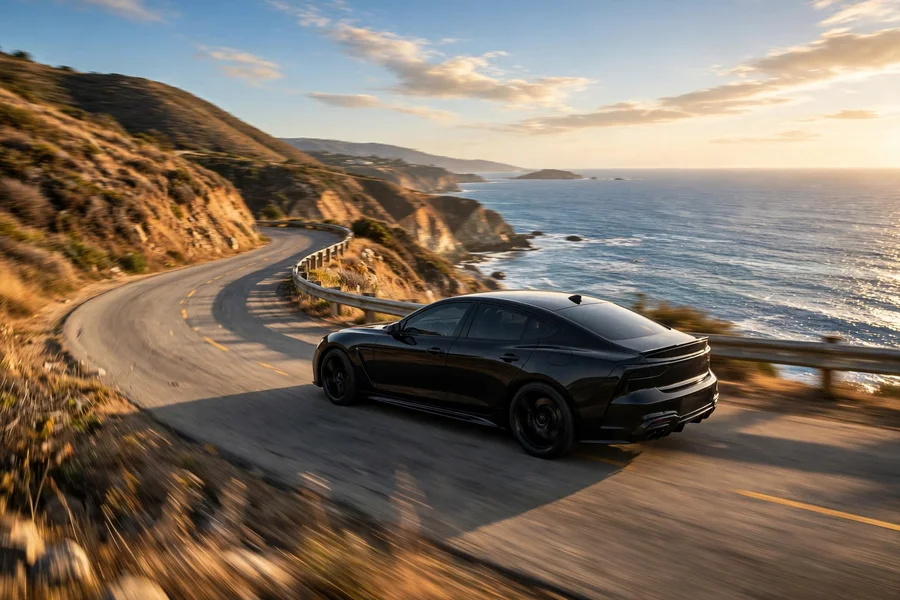
This is the xDrive ownership rule that costs real money, so read it twice. Because the transfer case’s clutch pack constantly manages speed differences between the axles, tires of different rolling diameters force it to work overtime — overheating the clutch and wearing it prematurely. The widely referenced BMW guidance is that front and rear tire diameters should differ by no more than about 1% to avoid transfer-case damage. (F30 owner discussion of the xDrive tire rule)
- Replace all four together. One destroyed tire on an xDrive car with three half-worn mates usually means buying a set of four. Budget for it.
- Same brand, same model, same tread depth. Even identically sized tires from different manufacturers can differ in actual rolling diameter — do not mix brands across axles.
- Measure, don’t assume. Sidewall sizes are nominal; check the manufacturer’s actual overall-diameter specs for aftermarket fitments and keep the front/rear difference under that 1% ceiling.
- Staggered setups are fine if matched. BMW sells factory staggered xDrive fitments (e.g., 225/45-18 front with 255/40-18 rear on F30 M Sport cars) precisely because the rolling diameters are engineered to match.
- Square is the practical choice. Same size on all four corners means rotatable tires and a cheaper dedicated winter set.
Shopping used? Check the tires first. Mismatched brands, sizes, or tread depths on a used xDrive 3 Series are a walk-away signal — they suggest the transfer case has been absorbing diameter differences. A test drive with slow, full-lock turns that produces binding or shuddering confirms it.
Reliability by generation: E90, F30, G20
More hardware means more failure points — that is the unavoidable reliability math of xDrive vs RWD. A RWD 3 Series has one driveshaft and one differential; an xDrive car adds a transfer case, a front differential, a front driveshaft, and control electronics. The breakdown by generation:
- E90 xDrive (2006–2011): the oldest and heaviest implementation, with a ~220-lb penalty on the 335i. Transfer-case actuator wear is the most commonly owner-reported failure, and at 100,000+ miles the whole unit is a wear item. At current E90 prices, one major drivetrain repair can exceed the car’s value — buy on records or buy RWD.
- F30 xDrive (2012–2018): lighter (~150 lbs) and faster-acting, and the most common xDrive 3 Series on the used market. The dominant theme is fluid neglect: BMW treats transfer-case oil as “long-term rated” and does not schedule its replacement, while BMW specialists widely recommend changes around every 50,000 miles. The classic symptom of a tired transfer case is shuddering or binding on slow, tight turns.
- G20 xDrive (2019–present): the newest hardware, but not exempt from scrutiny — the 2019–2025 xDrive range, including the 3 Series, is covered by the federal transfer-case class action described below. As these cars age out of warranty, transfer-case service history becomes a key used-buying data point.
Class action: transfer-case defect alleged. In November 2025, a class action was filed in the U.S. District Court for New Jersey alleging that 2019–2025 xDrive BMWs — including the 3 Series — suffer transfer cases that jerk or shudder in low-speed turns, with replacements costing $7,000–$13,000. The complaint centers on BMW service bulletin SIB 27-02-20 (May 2020, expanded March 2025), which identified transfer-case oil “not meeting BMW specifications” as a possible cause. These are allegations, not findings — no class has been certified and BMW has not publicly responded, per Autoblog’s reporting. A separate September 2026 suit challenges “lifetime” front-differential fluid on X5/X6/X7 crossovers only — not the 3 Series — but argues the same fluid point. (The Auto Wire’s breakdown)
The practical takeaway is unglamorous: service the fluids. Whatever the courts decide about “lifetime,” fresh transfer-case and differential fluid every ~50,000 miles is the cheapest insurance an xDrive owner can buy — and documented fluid services are exactly what a used buyer should look for in the records.
Resale value: who gets their money back
xDrive costs more to buy, and it generally costs more to sell — but geography decides how much of the premium comes back. In snowbelt markets, xDrive 3 Series listings are the ones buyers search for and typically command a premium over equivalent RWD cars; in warm states, RWD cars — especially manuals and six-cylinder models — draw the enthusiast demand. Nationally, the used price gap roughly tracks the original $2,000 option premium when cars are young, then narrows as condition, mileage and engine matter more than the drivetrain badge.
Two caveats, stated honestly. First, we have not found a published dataset isolating the xDrive resale premium, so treat this as market observation with medium-low confidence, not measured data. Second, resale math should never rescue a bad buy: a neglected xDrive car with a shuddering transfer case is worth less than a clean RWD car in any zip code.
The verdict
BMW xDrive vs RWD is not a better-or-worse question — it is a pay-for-what-you-use question. If winter regularly stands between you and your destination, xDrive’s ~$2,000 premium and ~$3,500–$4,500 five-year ownership cost are money well spent, provided you service the transfer case and respect the tire rules. If your roads are dry ten months a year, the RWD 3 Series is lighter, sharper, and cheaper to run — and the only path to a manual. For the buying process itself, our used 3 Series buying guide walks the full inspection, and the complete 3 Series guide covers every generation these drivetrains appear in.
Frequently asked questions
Still deciding? Start with the complete 3 Series guide for the full generation-by-generation picture, run your shortlist through our used BMW 3 Series buying guide, and compare the eras head-to-head in our E90 vs F30 and F30 vs G20 comparisons.
Sticker and fuel figures are EPA window-sticker data for matched 2018 and 2020 pairs, fetched September 2026. Repair costs are reported dealer-level figures from specialist reporting and the November 2025 transfer-case class-action complaint (allegations, not findings). Weight figures are owner-compiled from BMW catalog specs (medium confidence); the 1% tire rule is widely referenced BMW guidance rather than a published factory spec; resale observations are market consensus with medium-low confidence. Last verified: September 2026.