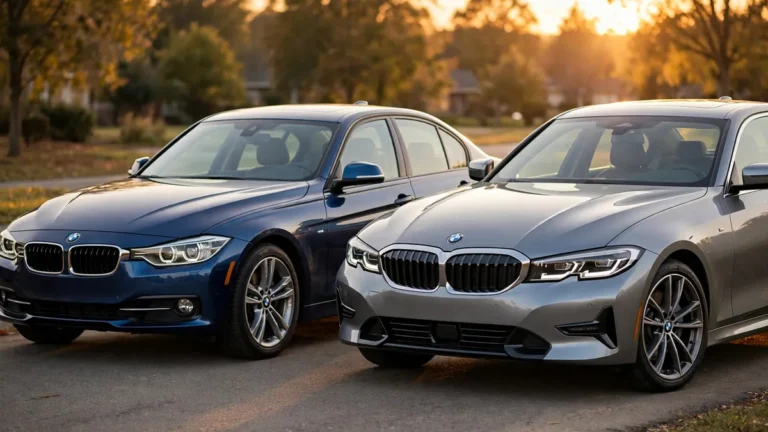
BMW M340i vs Audi S4 Is the Sleeper Showdown
Short answer: The BMW M340i and Audi S4 are the two best sleeper sport sedans of their generation, and the BMW is the faster, sharper, more efficient one. The M340i xDrive carries BMW’s 4.1-second 0–60 claim — matched in Autoblog’s 2020 test drive — against MotorTrend’s instrumented 4.2 for the S4, the B58 inline-six makes 382 hp to the Audi’s 349–354, and the BMW returns better EPA economy (23/31 mpg vs 21/29). The S4 fights back with standard quattro, a calmer cabin and often lower transaction prices — pick it if you value all-weather composure over outright pace.
- Power and published performance numbers
- Engine deep dive: B58 vs the 2.9T V6
- Transmissions, drivetrains and chassis tech
- Driving feel: the back-road verdict
- Interior, tech and practicality
- Interactive: M340i vs S4 buyer match
- Fuel economy and ownership costs
- Reliability and maintenance
- Interactive: published 0–60 leaderboard
- Used market: prices, must-have options, red flags
- The verdict
- FAQs
Power and published performance numbers
On paper this is not close, and on the road it is not close either — but “not close” in this segment still means the slower car runs 0–60 in 4.2 seconds. The M340i’s B58 3.0-liter turbo inline-six produces 382 hp at 6,500 rpm and 369 lb-ft from just 1,800 rpm. The S4’s 2.9-liter twin-turbo V6 (Audi’s EA839) made 354 hp and 369 lb-ft in the 2018 car MotorTrend tested, with later models rated at 349 hp and the same 369 lb-ft of torque. Torque is effectively tied; horsepower is a 28–33 hp BMW advantage, and the M340i carries it with a broader, more eager top end.
| Spec | BMW M340i xDrive | Audi S4 |
|---|---|---|
| Engine | 3.0L turbo inline-6 (B58) | 2.9L twin-turbo V6 (EA839) |
| Power | 382 hp @ 6,500 rpm | 354 hp (2018) / 349 hp (2020+) |
| Torque | 369 lb-ft @ 1,800 rpm | 369 lb-ft |
| Transmission | 8-speed ZF automatic | 8-speed ZF automatic |
| Drivetrain | xDrive AWD (rear-biased) | quattro AWD (40:60 rear-biased) |
| Published 0–60 mph | 4.1 s (BMW claim; Autoblog 2020) | 4.2 s (MotorTrend, 2018) |
| EPA combined | 26 mpg (23 city / 31 hwy) | 24 mpg (21 city / 29 hwy) |
| Limited-slip differential | M Sport diff, standard | Sport differential, optional |
BMW’s own claim for the M340i xDrive is 4.1 seconds, and Autoblog’s 2020 test drive matched it — that is as honest as manufacturer numbers get. MotorTrend’s 4.2-second S4 run dates to the 354-hp 2018 car, so the slightly softer 349-hp later models are unlikely to be any quicker. In the real world the gap feels bigger than a tenth: the B58’s single twin-scroll turbo delivers its 369 lb-ft from 1,800 rpm with almost no perceptible lag, while the Audi’s hot-V twin-turbo setup needs a beat longer to wake up from low revs. Both use versions of ZF’s excellent 8-speed automatic — shifts are rifle-bolt quick in either car — so the powertrain character difference comes down to the engines themselves.
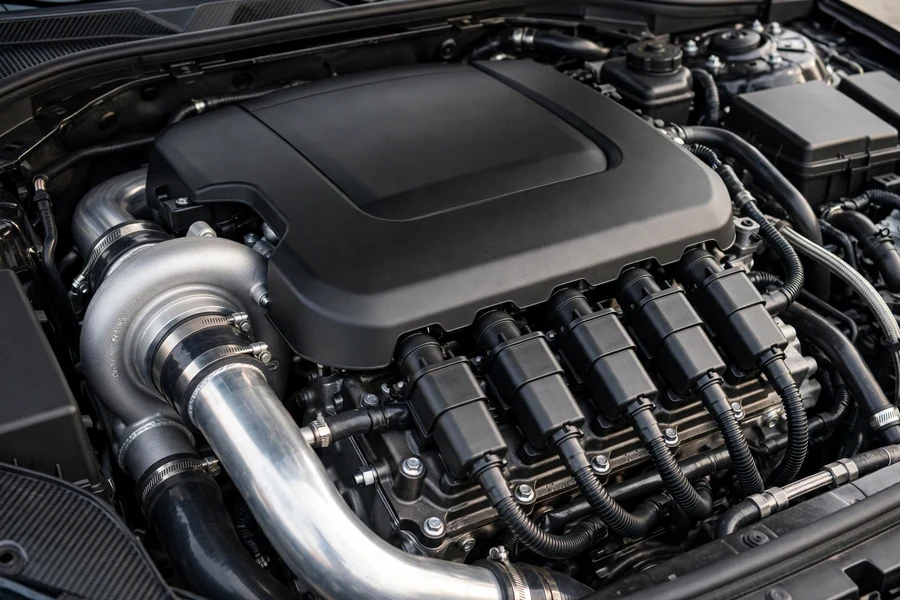
Engine deep dive: B58 vs the 2.9T V6
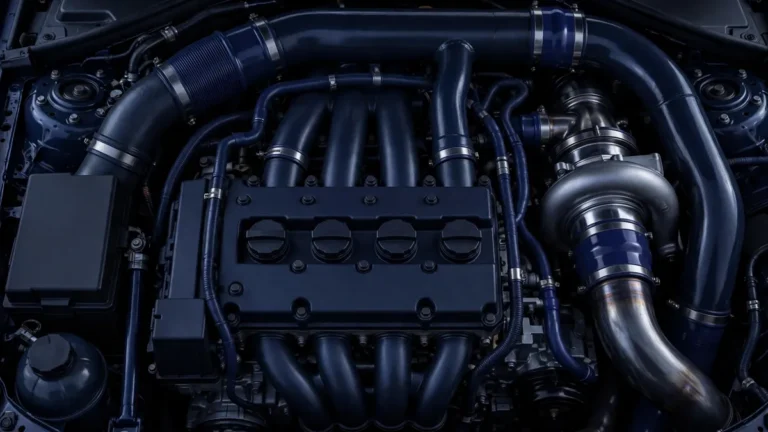
The B58 is the engine that made “M Performance” mean something. Its closed-deck block, forged internals and water-to-air intercooler integrated into the intake manifold give it a reputation — earned across the Supra, the 40i SUVs and the M340i — as one of the stoutest turbo sixes ever put in a production sedan. It revs cleanly to its 6,500-rpm power peak, sounds genuinely good for a turbo engine (helped by the standard M Sport exhaust), and sips fuel with improbable restraint: owners routinely see 30+ mpg on highway cruises despite 382 hp on tap. For a buyer cross-shopping the S4, the B58 alone is arguably the decision.
Audi’s EA839 2.9T is no slouch — it also powers the RS4 and RS5 in higher states of tune — but in S4 duty it feels deliberately restrained. The hot-V layout (turbos nestled between the cylinder banks) gives sharp throttle response once spooled and a fat midrange, yet the calibration prioritizes smoothness over excitement: power delivery is linear to the point of anonymity, and the exhaust note is muted even in Dynamic mode. Where the Audi engine wins is refinement at a cruise — it is fractionally quieter and less vibey than the B58 at 80 mph — and low-end tractability in traffic. But nobody buys either of these cars for traffic.
Tuning headroom is the enthusiast’s tiebreaker, and it favors Munich decisively. The B58’s closed-deck architecture and robust fueling have made it the darling of the aftermarket, with a deep bench of off-the-shelf calibrations and supporting mods. The EA839 responds to tuning as well, but the S4’s locked-down ECU and smaller enthusiast base mean fewer proven paths and higher costs to extract the same gains. If there is any chance you will modify the car, the M340i is the only rational choice — buy the BMW and never look back.
Transmissions, drivetrains and chassis tech
Here the two cars are philosophical twins wearing different badges: both pair their engines with ZF’s 8HP eight-speed automatic, widely regarded as the best conventional automatic in the business. In the M340i it is calibrated for aggression — lightning downshifts in Sport Plus, rev-matched and eager — while the S4’s version prioritizes seamlessness, slurring ratios with barely a perceptible interruption. Both offer paddle shifters; the BMW’s respond a beat quicker. Neither car offers a manual, and neither car’s buyers seem to mind: take rates for the stick on the old 340i were tiny, and the market has spoken.
All-wheel drive is standard on both, and both systems are rear-biased — a deliberate choice that tells you everything about each car’s priorities. BMW’s xDrive in the M340i sends power rearward in normal driving and can shuffle it forward in milliseconds when slip is detected; paired with the standard M Sport differential, it gives the car its playful, throttle-adjustable character. Audi’s quattro uses a 40:60 rear-biased center differential as its default split, which sounds sporty on paper but is tuned for stability in practice. The optional sport differential — which actively overdrives the outside rear wheel in corners — transforms the S4’s handling, and it is the single most important option to look for on a used car. An S4 without it is a fast cruiser; with it, the Audi finally starts talking back to the driver.
Chassis hardware tells a similar story of BMW generosity vs Audi option-gating. The M340i comes standard with the M Sport differential, M Sport brakes with larger rotors, and a standard sport suspension; the Adaptive M suspension with electronically controlled dampers is the one box worth ticking. The S4’s standard suspension is softer and more comfort-oriented, with the adaptive S sport suspension optional — and many used examples lack it. On paper the Audi’s available hardware matches the BMW’s; in the classifieds, the BMW’s standard hardware means every M340i you test-drive has the good stuff, while S4s vary wildly by original spec. That asymmetry is worth real money and real driving pleasure, and it is a quiet but persistent M340i advantage.
Driving feel: the back-road verdict
Point both cars at a winding road and the M340i pulls away — not in raw grip, where the S4’s standard quattro and optional sport differential make it formidably effective, but in communication. The BMW’s steering weights up naturally, the rear-biased xDrive lets the tail rotate just enough to feel alive, and the standard M Sport differential puts power down cleanly out of corners. The S4 is the more neutral, more planted device: it goes exactly where you point it with minimal drama, which is deeply reassuring at eight-tenths and slightly boring at ten-tenths. Push past the limit and the Audi understeers benignly; the BMW gives you options.
Ride quality is the S4’s best dynamic argument. Its standard suspension is more compliant over broken pavement than the M340i’s, and even with the adaptive dampers fitted the BMW never quite matches the Audi’s long-distance polish. The M340i counters with the better seats for spirited driving — the M Sport buckets hold you in place without punishing — and a driving position that feels a touch lower and more connected. As daily drivers both are superb; as driver’s cars, the BMW wins by a margin that grows the harder you push.
Interior, tech and practicality
Step inside and the rivalry resets to a dead heat — these are both genuinely lovely places to spend time, just with different design languages. The S4’s cabin is the minimalist one: clean horizontal lines, superb materials even at the base trim, and Audi’s Virtual Cockpit turning the instrument cluster into a full-width map that remains the segment’s single best tech feature. The M340i’s interior is busier and more driver-focused, with the M Sport steering wheel, heavily bolstered seats and iDrive’s rotary controller keeping your eyes on the road. Fit and finish is excellent in both; the Audi feels a half-step more premium at lower trims, the BMW claws it back with M Sport trim and Vernasca leather.
Technology is effectively at parity with different strengths. Audi’s MMI touchscreen is intuitive and the Virtual Cockpit is unmatched for navigation; BMW’s iDrive counters with the rotary controller (still the best input method while moving), a superb head-up display, and wireless Apple CarPlay that simply works. Both earned five-star NHTSA ratings and IIHS Top Safety Pick recognition, and both pack the expected suite of driver assists — adaptive cruise, lane keeping, blind-spot monitoring — though BMW bundles more of it as standard on recent model years while Audi historically gated assists behind option packages. Check used window stickers carefully.
Practicality is essentially even between the two. Trunk volume is a wash — 13 cubic feet for the M340i against 12 for the S4 by EPA measurement — and rear legroom is close enough to call a draw: adults fit for real journeys in both, though neither will thrill anyone over six feet behind a tall driver. If the sedan must do family duty, neither car has a meaningful cargo advantage, so buy on the driving and ownership math instead; if it is a second car or a commuter, the difference fades to background noise.
Interactive: M340i vs S4 buyer match
Four questions, 36 possible verdicts. Answer honestly — the tool weights performance, luxury, daily use and tuning plans the way an owner would, not the way a brochure does.
Fuel economy and ownership costs
The M340i wins the efficiency contest outright, which is remarkable given it also wins the power contest. EPA rates the 2024 M340i xDrive at 23 city / 31 highway / 26 combined; the S4 manages 21 / 29 / 24. Two mpg combined may sound trivial, but over 15,000 miles a year at $4.00/gallon of premium it is roughly $230 a year — and the BMW achieves it while making 30+ more horsepower. Both demand premium fuel; neither offers a way around that.
Maintenance costs run close, with a slight BMW edge on new cars thanks to BMW Ultimate Care covering scheduled maintenance for 3 years / 36,000 miles — Audi charges for Audi Care prepaid plans instead. Out of warranty, budget roughly $1,200–$1,800 a year for either car at an independent specialist: both need spark plugs and filters on similar intervals, both eat rear tires if driven hard, and both have turbocharged engines that reward strict oil-change discipline. Brake jobs are the big-ticket routine item — figure $800–$1,200 per axle at a specialist for pads and rotors on either car, more at the dealer. The S4’s 2.9T has a known appetite for thermostat and water-pump-housing work in owner communities; the B58’s most-reported gremlin is the coolant vent hose. Neither is a dealbreaker; both are reasons to buy on service history.
Depreciation favors the buyer, not the first owner. M340is hold value slightly better than S4s — the BMW’s enthusiast following keeps demand firm — so expect used S4s to trade a few thousand dollars below equivalent M340is. That makes the Audi the value play on the used market: a three-year-old S4 is an enormous amount of car for the money precisely because the M340i gets the headlines. Insurance runs comparable for both; get quotes before you fall in love, because your age, record and ZIP code move the number more than the badge does.
Reliability and maintenance
Neither car will ever be a Lexus, but both are solidly mid-pack for German performance sedans — which is to say, reliable if maintained, expensive if neglected. The B58 has built a genuinely strong reputation since its 2016 debut: timing chain at the back of the engine (a packaging choice, not a failure pattern), no systemic Vanos or valvetronic issues, and cooling-system components that generally last. The EA839 2.9T is newer and less proven at high mileage, with owner communities flagging the plastic thermostat housing and water pump as the items to watch, plus the usual direct-injection carbon buildup that afflicts both engines equally.
The buying advice is identical for both: full service history or walk away, a pre-purchase inspection at a marque specialist, and budget for tires and brakes immediately if the seller cannot prove recent replacement. CPO examples of either car are worth real money here — the extended warranty coverage transforms the ownership proposition on cars this complex. Our used 3 Series buying guide walks through the inspection checklist, and the reliability-by-year breakdown shows which model years to target.

Interactive: published 0–60 leaderboard
Every figure below is a published test result or factory claim, labeled by source — no forum folklore. Sort them, filter by brand, and see exactly where the M340i and S4 sit against their four-cylinder siblings.
Used market: prices, must-have options, red flags
The used market is where this comparison gets genuinely interesting, because depreciation treats the two cars differently. Three-to-four-year-old M340is hold value stubbornly well — enthusiast demand is real and supply is finite — while equivalent S4s typically trade several thousand dollars cheaper. That spread makes the Audi the rational value buy and the BMW the emotional one, which is exactly backwards from how most people expect German-car depreciation to work. Do not overpay for either: both depreciate hardest in years one through three, so the sweet spot is a two-to-four-year-old car with 20,000–45,000 miles and a full dealer service history.
Options matter more on the Audi. The must-have list for an S4 starts with the sport differential — it transforms the car and cannot be retrofitted cheaply — followed by the S sport adaptive suspension and the Premium Plus trim’s Virtual Cockpit and upgraded lighting. On the M340i, life is simpler: the M Sport differential and M Sport brakes are standard, so your option hunt narrows to the Adaptive M suspension, the Premium package (head-up display, heated steering wheel) and the Driving Assistance Professional package if you want the best highway assists. A loaded S4 and a mid-spec M340i often land at the same used price; the BMW is the better car at that money unless you specifically want the Audi’s discretion.
Red flags are shared. Walk away from any car without complete service records — these are not the engines to gamble on. Check for uneven tire wear (alignment or accident history), mismatched tires front-to-rear on xDrive/quattro cars (a sign of cheap ownership that stresses the drivetrain), and any modifications without supporting paperwork; a tuned car is not automatically bad, but an untuned-looking car with a piggyback module in the glovebox is a lie you will pay for later. Get a pre-purchase inspection at a marque specialist, not a general shop: they know that the B58 wants its coolant vent hose checked and the EA839 wants its thermostat housing scrutinized. Budget $200–$300 for the inspection; it is the best money in this entire process.
CPO programs deserve a serious look for both cars. BMW’s certified coverage extends the warranty in a way that genuinely de-risks B58 ownership, and Audi’s CPO program does the same for the EA839’s known weak points. The premium over a private-party car — typically $2,000–$4,000 — buys warranty coverage, a real inspection and often better financing. On cars this complex, with repair bills that start at four figures for anything involving turbos or electronics, that premium is cheap insurance. Our used 3 Series buying guide covers the negotiation and inspection playbook in full.
The verdict
The M340i is the better sport sedan, and it is not a close call for anyone who cares about driving. It is faster (4.1 vs 4.2 seconds, with a much bigger real-world gap), more powerful (382 vs ~350 hp), more efficient (26 vs 24 mpg combined), sharper to drive, and friendlier to modify. The standard M Sport differential alone is worth the price of admission on a winding road. If your budget stretches to either car new, buy the BMW without hesitation — see how it compares to its little brother in our 330i vs M340i guide if you are tempted to save money, or check our 3 Series maintenance schedule to see what ownership really costs.
The S4’s case is narrower but real. It is the calmer, quieter, more discreet choice — the car for the buyer who wants 90% of the pace with zero attention and standard all-wheel drive that never needs a second thought. On the used market, where S4s trade a few thousand below equivalent M340is, the value argument becomes genuinely compelling: a CPO S4 at a discount is one of the smartest buys in the segment. And if you live where winter is a six-month reality and you will never modify the car, the Audi’s set-and-forget nature has an honest appeal the BMW cannot quite match.
But “honest appeal” is not the same as “better car.” The M340i does everything the S4 does — daily comfort, all-weather traction via xDrive, cutting-edge tech — while adding the things the S4 cannot: the B58’s character, the sharper chassis, the tuning scene, the better economy. Enthusiasts figured this out years ago, which is exactly why used M340is hold their value better. Buy the Audi with your head if the deal is right; buy the BMW with your heart, and your head will agree.
FAQs
Is the BMW M340i faster than the Audi S4?
Yes. BMW’s 4.1-second 0–60 claim for the M340i xDrive (matched in Autoblog’s 2020 test drive) beats MotorTrend’s instrumented 4.2 for the 354-hp 2018 S4, and the BMW’s 382 hp (vs 349–354) gives it a bigger advantage in rolling acceleration, where the extra horsepower shows most. BMW’s own claim matches the independent test exactly, so there is no gamesmanship in the number — and the later, slightly softer 349-hp S4s are unlikely to match the 2018 car’s tested time.
Which is more reliable: M340i or S4?
The M340i’s B58 engine has the stronger reputation, with no systemic issues reported across its large installed base since 2016 — it powers everything from the M340i to the Toyota Supra, and high-mileage examples are common. The S4’s EA839 2.9T is generally solid but has owner-reported thermostat and water-pump-housing issues to watch, and it has less high-mileage history to judge from. Both need strict maintenance — buy on service history either way, and favor CPO cars while they are still eligible.
Does the S4 have a limited-slip differential?
Only as an option. The S4’s sport differential is a worthwhile but extra-cost option, while the M340i includes its M Sport limited-slip differential as standard equipment. On the used market, check the S4’s option list carefully.
Can you tune an M340i or S4?
Both respond to tuning, but the M340i is the far better platform: the B58’s closed-deck block has enormous aftermarket support with many proven off-the-shelf calibrations, upgraded turbo options and a decade of community knowledge. The S4’s locked ECU and smaller tuning community make extracting power costlier and less straightforward, with fewer proven upgrade paths. If modification is even a maybe, buy the BMW.
Which holds its value better?
The M340i, by a modest margin. Strong enthusiast demand keeps used M340i prices firm, while S4s typically trade a few thousand dollars below equivalent BMWs — which makes the Audi the better value buy on the used market.
Have you cross-shopped these two? Share your experience in the comments — real owner comparisons help the next buyer more than any spec sheet.