How to Fix a BMW Mechatronic Sleeve Leak (ZF 6HP & 8HP)
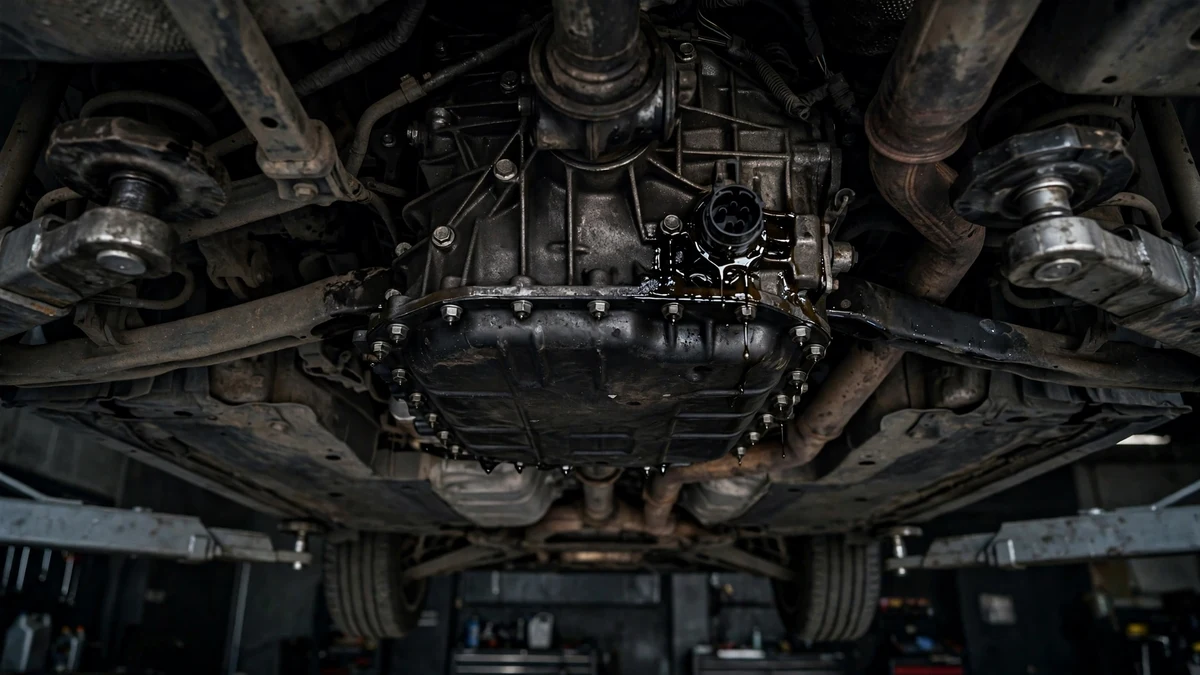
Short answer: A BMW mechatronic sleeve leak is transmission fluid weeping past the rubber sealing sleeve where the wiring harness enters the gearbox — a classic fault on the E90’s ZF 6HP and a less common but real one on the F30/G20’s 8HP. It matters for two reasons beyond the drip: ATF runs down the pan rail and fakes a pan-gasket leak, and fluid wicking into the electrical connector can trigger transmission fault codes and limp mode. The fix is a new sleeve (plus the adapter seal on a 6HP) with the pan off — which makes it a natural add-on to a fluid service, not a standalone job.
Find a damp patch at the back of your BMW’s transmission and the internet will tell you three different things: pan gasket, mechatronic sleeve, or “they all do that.” Only the first two are real diagnoses, and the difference matters — because the mechatronic sleeve leak is the one that masquerades as the other. The fluid that escapes past this small rubber sleeve runs down along the pan rail, so from below it looks exactly like a pan-gasket failure. Replace the pan gasket while the sleeve is the real culprit and the leak comes back within weeks.
This guide covers the full picture for 3 Series cars: what the sleeve does, how the job differs between the ZF 6HP in the E90 and the 8HP in the F30 and G20, the symptoms that point at the sleeve rather than the pan, how to confirm it in your driveway, what the repair involves, and what it should cost. The fluid-service side — intervals, fluid types, and the full drain-and-fill procedure — lives in the companion ZF 8HP transmission fluid change guide.
What the mechatronic sleeve actually does
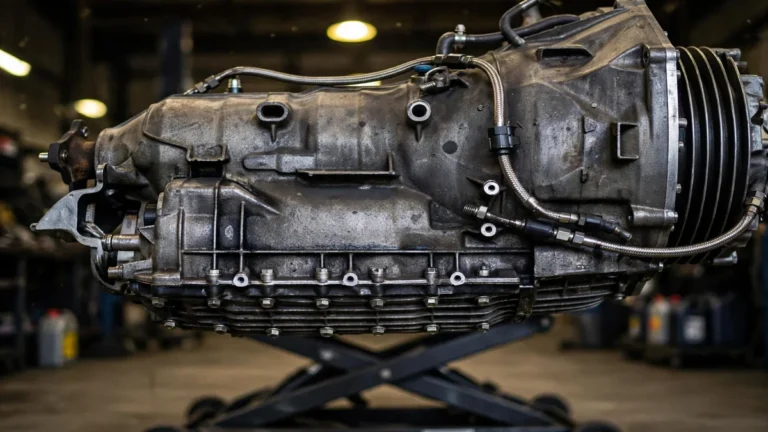
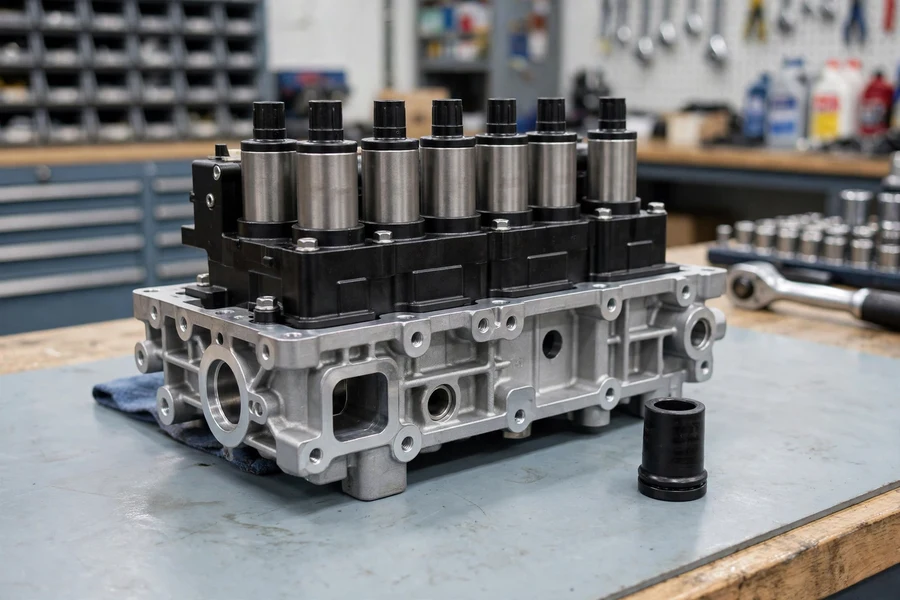
The mechatronic unit is the transmission’s brain and muscle in one housing: the valve body, the shift solenoids, and on these gearboxes the transmission control unit itself. It lives inside the transmission, bathed in fluid — but it still needs to talk to the rest of the car. The wiring harness enters the case through a round opening at the rear of the housing, and the mechatronic sealing sleeve is the rubber grommet that makes that opening fluid-tight: a pair of O-rings seals it against the case, and a locking tab holds it seated. On the ZF 6HP there is a companion seal in the same area — the rectangular adapter seal between the mechatronic and the case — which hardens on the same schedule and gets replaced in the same pan-off job.
Heat and age do to these O-rings what they do to every rubber seal on the car: they harden, shrink slightly, and stop sealing. The result is a slow seep rather than a gush — fluid creeps past the O-rings, wets the area around the connector, and gravity does the rest. Two problems follow from that one weep. The first is simple fluid loss: these gearboxes have no dipstick, so a slow leak quietly lowers the level until shift quality suffers. The second is nastier: fluid can wick along the wiring and into the electrical connector itself, where it corrodes the pins and disturbs the serial communication between the mechatronic and the car — BMW’s own service literature documents communication faults, a “gearbox emergency program” message, and failsafe mode when the sleeve area is disturbed.
6HP vs 8HP: two gearboxes, two seal jobs
The E90 generation (2006–2013) runs the ZF 6-speed — 6HP19/21 in most cars, 6HP26/28 in higher-torque applications. The F30 (2012–2019) and G20 (2019–present) run the ZF 8-speed family (8HP45/50 and 8HP50/51 respectively; the 8HP fluid service guide has the full variant breakdown). The sleeve exists on both families, but its reputation — and its part numbers — do not transfer.
| Detail | ZF 6HP (E90) | ZF 8HP (F30 / G20) |
|---|---|---|
| Reputation | The classic leak — BMW issued a dedicated service bulletin (SI B 24 08 06) for sleeve seepage on cars built up to 04/08 | Same failure mode, far less notorious; still worth checking on high-mileage cars |
| Sealing sleeve | Round sleeve, BMW 24 34 7 588 725 (ZF 0501212190) | Case connector sealing sleeve, ZF 0501 220 929 — different part, not interchangeable |
| Companion seal | Rectangular adapter seal: 24 34 7 588 724 (6HP19) or 24 34 7 588 727 (6HP26) — replace with the sleeve | 8HP-specific internal seals; order by gearbox variant, not by 6HP part numbers |
| Pan style | Steel pan with separate gasket (gaskets 24 11 7 520 712 / 24 11 7 571 235) | Plastic pan with integrated filter — the whole pan is replaced, no separate gasket |
| Fluid | Shell M-1375.4 (ZF Lifeguard 6) | ZF Lifeguard 8 — never mix the two |
| Typical mileage | Seepage commonly shows from 80,000 miles upward | Shows later and less often; check from 100,000 miles or with the pan off for service |
One warning from BMW’s bulletin is worth keeping in mind: on the 6HP, a mere oil “wetness” around the sleeve is not considered a leak worth repairing — the bulletin authorizes the replacement only when there is a visible trace of substantial fluid loss, such as fluid accumulating on the underbody panel. That distinction runs through this whole guide: a damp connector at 90,000 miles is a watch item; a wet connector with drips is a repair.
Symptoms: how a sleeve leak shows itself
A sleeve leak announces itself in stages, and catching it at stage one is the whole game. The earliest sign is cosmetic: a damp sheen around the round wiring plug at the rear of the transmission, visible only from underneath with the undertray off — unmistakably transmission fluid (red to amber fresh, darker with age) rather than engine oil. At this stage the car drives perfectly, and this is the “wetness” BMW’s bulletin says to watch rather than fix.
Stage two is the drip. Fluid that escapes the sleeve runs down the back of the case and along the pan rail, and eventually it reaches the ground: small reddish spots under the rear of the transmission, often first noticed on a clean garage floor. By this point the fluid level has started to drop. With no dipstick on either gearbox, the first drivability clue is usually shift behavior — delayed engagement selecting Drive on a cold morning, a flare or harshness on the 2–3 upshift, or shifts that feel less invisible than they used to. These are low-fluid symptoms, not necessarily a dying gearbox, which is why the leak check comes before any talk of mechatronics or rebuilds.
Stage three is electrical. If fluid wicks into the connector, the symptoms stop being subtle: a drivetrain or transmission malfunction warning, the gearbox dropping into failsafe (often stuck in a single gear), and stored communication faults. BMW documents serial-wire faults such as 5079 (“serial wire message missing”) and 507A (“serial line signal plausibility”) when the mechatronic connection is compromised. If your 3 Series throws a drivetrain malfunction warning together with a wet transmission connector, the sleeve jumps to the top of the suspect list — ahead of the mechatronic unit itself.
| What you notice | Stage | What it means |
|---|---|---|
| Damp sheen around the wiring plug, no drips | Early | O-rings beginning to weep. Monitor — BMW’s bulletin does not authorize repair for wetness alone. |
| Reddish spots under the rear of the transmission | Developing | Fluid is escaping faster than it evaporates. Level is dropping; plan the repair with the next service. |
| Delayed engagement or harsh shifts, especially cold | Low fluid | The leak has lowered the level enough to affect pressure. Fix the leak before condemning parts. |
| Drivetrain malfunction warning, limp/failsafe mode | Electrical | Fluid may have wicked into the connector, or the level is critically low. Scan codes; limit driving. |
| Wetness returns weeks after a pan-gasket job | Misdiagnosed | The classic tell: the sleeve was the source all along and the gasket was never the problem. |
Sleeve vs pan gasket vs cooler lines: telling them apart
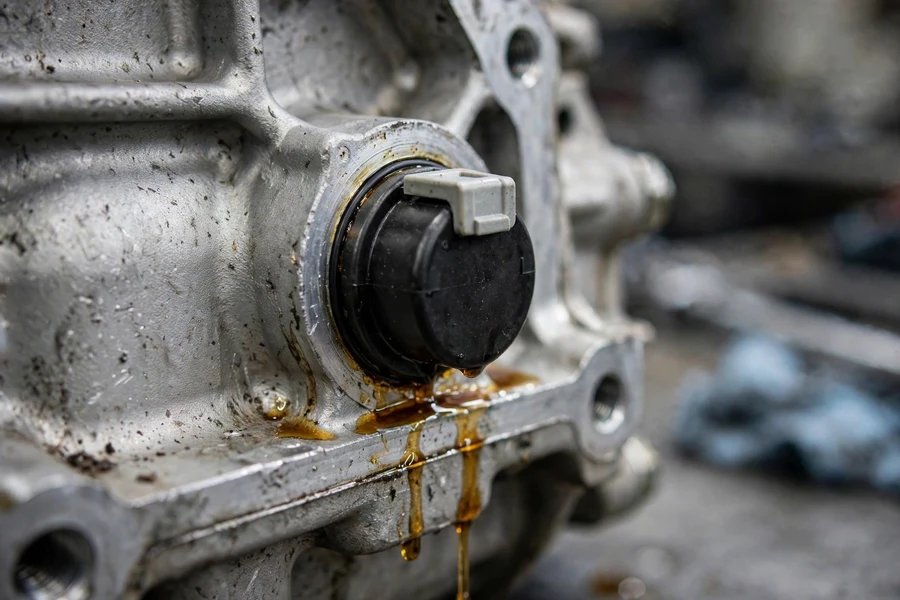
Three different leaks live within a hand’s width of each other under the gearbox, and they demand three different repairs. The most expensive mistake here is also the most common: paying for a pan-gasket reseal when the sleeve is leaking. A transmission service bulletin from the Automatic Transmission Service Group calls out exactly this misdiagnosis — the sleeve’s O-rings leak, fluid runs down along the pan rail, and from below it looks for all the world like the pan gasket has failed.
Separate them by tracing the wetness upward to its highest point, undertray removed and area cleaned. A sleeve leak starts at the round connector and trails downward; a genuine pan-gasket leak starts at the pan flange with the connector dry above it. Cooler-line leaks start higher on the side of the case where the lines connect and tend to mist rather than trail. A leak at the bell housing — between engine and gearbox — is none of these: that is the front pump or input shaft seal (or the engine’s rear main seal if the fluid is engine oil), and the transmission has to come out.
| Highest point of wetness | Likely source | Repair scope |
|---|---|---|
| Round wiring plug at the rear of the case | Mechatronic sealing sleeve | Pan off; sleeve (+ adapter seal on 6HP); fluid service |
| Pan flange, plug area dry above | Pan gasket (6HP) or cracked pan (8HP) | Pan off; new gasket (6HP) or pan/filter assembly (8HP); fluid service |
| Cooler line fittings on the side of the case | Cooler line O-rings/seals | Line seals replaced; pan stays on; top up fluid |
| Bell housing, between engine and gearbox | Front pump/input shaft seal — or engine rear main seal | Transmission removal; identify the fluid first |
| Wetness everywhere, no clear origin | Multiple seeps or fling from another leak | Degrease fully, drive 200–300 miles, re-inspect |
One more distinction that saves money: confirm the fluid is actually ATF. Fresh ATF is red; aged ATF is amber to brown and smells distinctly sweet-chemical next to engine oil. If the fluid on the undertray is black and smells like an oil change, chase the engine’s leaks first — the 3 Series oil leak guide maps those — before blaming the gearbox.
Interactive: mechatronic sleeve leak locator
Answer three questions from what you see under the car — engine off, undertray removed, area wiped clean. The locator separates a sleeve leak from its lookalikes and rates the urgency.
Mechatronic sleeve leak locator
Three questions, answered from under the car — separating a sleeve leak from the pan gasket, cooler lines, and bell-housing leaks.
Confirming the diagnosis in your driveway
The locator narrows the field; four checks confirm it — undertray off, area wiped so you are reading fresh wetness rather than old grime, plus a scan tool that talks to the transmission (the BMW OBD2 scanner guide covers which ones read the EGS and transmission temperature).
1. Degrease and re-inspect. Spray the rear of the transmission and the pan rail with brake cleaner, wipe dry, then drive 200–300 miles. Fresh wetness at the round plug is a confirmed sleeve weep; wetness starting at the pan flange with a dry plug above is the gasket. Skipping the cleaning step is how old grime gets misread as an active leak.
2. Check inside the connector. Engine off: release the locking tab and separate the external harness connector — carefully, without bending pins. ATF inside the housing confirms wicking and escalates the job from “watch item” to “repair now”: oil corrodes the pins, and corrosion turns a $30 seal into connector or harness work. Clean with electrical contact cleaner and let it dry fully before reconnecting.
3. Scan the transmission control unit. Generic readers miss EGS faults. Look for communication faults (BMW’s 5079/507A serial-wire codes are the documented ones for a disturbed mechatronic connection) and ratio-monitoring or pressure faults that suggest the level has dropped. Stored faults plus a wet connector is about as conclusive as driveway diagnosis gets.
4. Weigh what drains out. With no dipstick and no owner-readable level sensor, the level is set through the fill plug inside a temperature window — so “check the level” really means measuring the drain against the known fill quantity when the pan comes off. Noticeably less than expected confirms the leak has been costing fluid for a while.
The repair: what actually gets replaced
There is no shortcut version of this job: the sealing sleeve sits inside the case, so the pan comes off and the fluid comes out. That single fact shapes the economics — once the pan is off and the fluid is drained, you are most of the way through a fluid service, so the sleeve becomes an incremental part rather than a standalone project.
On the 6HP (E90): drain and save the fluid if it is fresh (BMW’s bulletin specifically says to drain and save the long-term fill), drop the steel pan, and replace the round sealing sleeve (24 34 7 588 725) along with the rectangular adapter seal (24 34 7 588 724 for the 6HP19, 24 34 7 588 727 for the 6HP26) — the two harden on the same schedule and the labor to reach the second one is zero with the pan off. The pan gasket gets replaced as a matter of course, and the filter too if due. The critical step BMW’s bulletin emphasizes: push the new sleeve firmly into the housing before closing the white locking tab, with a little transmission fluid lubricating both O-rings. A sleeve that is not fully seated causes the very faults the repair is meant to prevent — an intermittent mechatronic connection, 5079/507A faults, and failsafe mode.
On the 8HP (F30/G20): the same pan-off logic, a shorter parts list: the case connector sealing sleeve (ZF 0501 220 929) plus the 8HP’s own seal set — and, because the filter is built into the plastic pan, a complete new pan rather than a separate gasket. 6HP part numbers fit nothing on an 8HP car.
The refill is the skilled part. Both gearboxes fill through the fill plug with the engine running and the fluid inside a strict temperature window — 30 °C to 50 °C on the 8HP — adding fluid until it runs out, then closing the plug when it slows to single drops. The gears get cycled through P, R, and D first so every circuit fills. Get the temperature wrong and the level is wrong: too cold reads over-full, too hot reads low, and both recreate the shift complaints the job was supposed to fix. The full procedure is documented step by step in the 8HP fluid change guide.
Finish with the electronics. BMW’s procedure calls for clearing the EGS adaptation values with a capable scan tool after the repair (via the EGS control unit functions), followed by a normal drive so the gearbox relearns. Skipping the reset can leave old learned compensations fighting the new seals and fresh fluid.
What the job costs: sleeve-only vs sleeve-with-service
The part is almost comically cheap — the sleeve itself is a $12–$30 item — and the labor is everything around it. All figures below are owner- and specialist-reported for the US market; treat them as bands, not quotes.
| Scenario | Typical cost | Notes |
|---|---|---|
| DIY: sleeve + service parts | $250–$400 | Sleeve and seals, pan/filter, 6–7 liters of the correct Lifeguard fluid — plus a transfer pump if you lack one |
| Specialist: sleeve added to a scheduled fluid service | $550–$900 all-in | The smart money — the pan is already off, so the sleeve adds parts plus a fraction of an hour |
| Specialist: sleeve job on its own | $500–$700 | Owner-reported band; the standalone job still needs the full drain, pan, and refill |
| Dealer | $1,000+ | Same parts, dealer labor rate; ask specifically for the sleeve — some dealers quote the mechatronic unit instead |
| Bell-housing / front seal leak | $1,200–$2,500+ | A different repair: the transmission must come out |
The takeaway: if a fluid service is due anywhere near the leak’s appearance, combining the two is the only rational way to pay for it. A sleeve-only job and a fluid service six months apart means paying for the drain, pan, and refill twice.
DIY difficulty: the honest version
This is a solid intermediate-to-advanced driveway job — very doable, but with two steps that punish improvisation. Draining the pan, swapping the sleeve and seals, and fitting the new pan are straightforward wrenching; owners routinely do the 6HP sleeve on jack stands. The tight access around the sleeve is the first honest difficulty — little room for large hands, a fiddly white locking tab, and electrical pins that bend easily and forgive nothing.
The second is the refill. The car must be perfectly level — not “close enough” on a sloped driveway — and the level must be set inside the temperature window with a scan tool reading live transmission temperature. Underfill it and the shift complaints return; overfill it and fluid finds the next weakest seal. If you do not own a scan tool that reads transmission temperature and EGS codes, the tool purchase (or a specialist visit) belongs in the project budget, not as an afterthought. xDrive cars add a third complication: the transfer case and front driveshaft crowd the transmission, making pan access meaningfully worse — xDrive owners should budget extra time or extra labor, and consider pairing the job with a transfer case fluid change while the car is in the air.
The fair summary: if you have done a level-fill transmission service before and own the scan tool, this is a satisfying Saturday. If the temperature-window fill is new to you, a ZF-experienced independent specialist is worth every dollar — an incorrectly filled gearbox costs more than the labor you saved.
While you’re in there
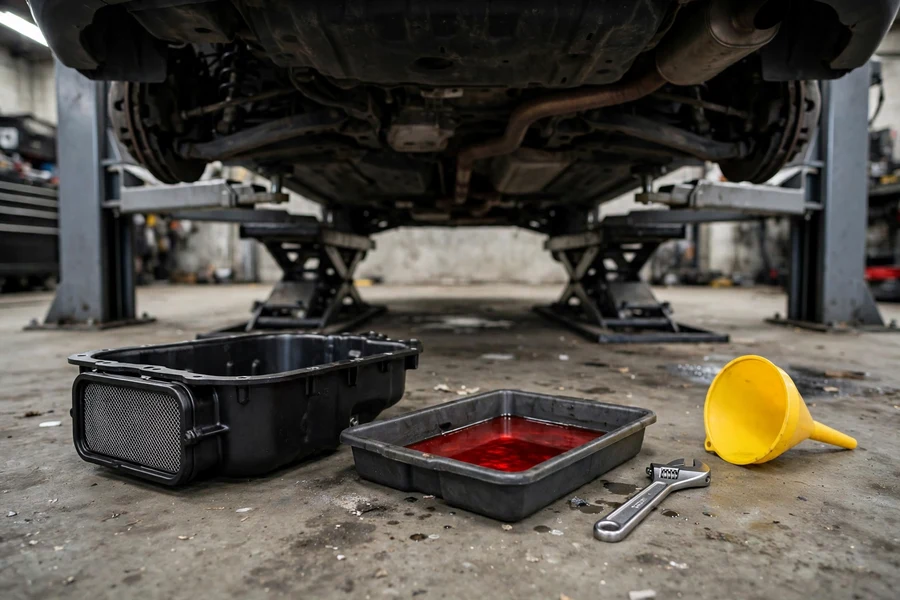
The pan-off overlap makes this repair the natural companion to scheduled transmission maintenance. If the sleeve is leaking anywhere near a service interval, do them together: the 8HP fluid change guide covers the service the sleeve job piggybacks on, the 3 Series maintenance schedule shows where that service falls overall, and xDrive owners can fold in the transfer case fluid change while the car is level and in the air.
Frequently asked questions
Can I drive with a mechatronic sleeve leak?
A light seep with no drips and no symptoms is a monitor-and-plan repair — BMW’s bulletin does not authorize the fix for mere wetness. But these gearboxes have no dipstick, so check where you park weekly and act sooner if spots grow, shifts change, or a warning appears. Do not keep driving with a transmission warning, limp mode, or fluid inside the connector — that is how a seal job becomes wiring work.
How do I know it is the sleeve and not the pan gasket?
Trace the wetness to its highest point with the undertray off and the area cleaned. A trail starting at the round wiring plug and running down the pan rail is the sleeve — a service bulletin specifically warns this pattern gets misdiagnosed as a pan-gasket leak. Wetness starting at the pan flange with a dry plug above is the gasket (or a cracked pan on the 8HP). When in doubt, degrease, drive 200–300 miles, and re-inspect before spending money.
How much does it cost to replace the mechatronic sleeve?
The sleeve itself is a $12–$30 part; you are paying for the pan-off labor and the fluid. Owner- and specialist-reported bands: $250–$400 in parts for a DIYer doing the full service alongside, $550–$900 at an independent specialist when the sleeve is folded into a scheduled fluid service, $500–$700 as a standalone specialist job, and $1,000+ at a dealer. Combining the sleeve with a due fluid service is the only way to avoid paying for the drain, pan, and refill twice.
Does the 8HP have the same sleeve problem as the 6HP?
The same failure mode, but far less notorious on the 8HP. The 6HP sleeve leak earned a dedicated BMW service bulletin; the 8HP’s case connector sealing sleeve fails the same way — fluid weeping past, wicking into the connector, error lights — just less often. The parts are completely different, so order by your gearbox variant: 6HP part numbers fit nothing on an 8HP car.
Do I need to reset anything after replacing the sleeve?
Yes. BMW’s procedure calls for clearing the EGS adaptation values with a capable scan tool after the repair, then driving normally so the gearbox relearns shift pressures with the new seals and fresh fluid. Skipping the reset can leave old learned compensations fighting the repair — and the job needs a scanner that talks to the transmission, not just a generic engine-code reader.