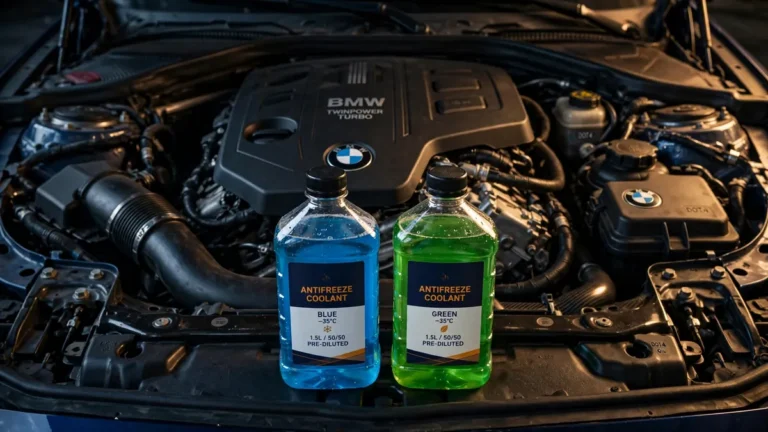
What Does BMW xDrive Maintenance Really Involve?
Choosing all-wheel drive on a 3 Series is not just a handling decision — it is a maintenance decision. xDrive adds a transfer case, a front differential, a front driveshaft, and a pair of front CV axles to the car’s permanent-care list, and none of those items appear in BMW’s “lifetime fill” service schedule. This bmw xdrive maintenance guide lays out exactly what the AWD hardware needs, when it needs it, what goes wrong when it doesn’t get it, and what it costs — so the AWD traction you paid for is still there at 150,000 miles. If you are still deciding between the two layouts, read the xDrive vs. RWD breakdown first; this guide is maintenance only.
Short answer
A bmw xdrive maintenance plan has three pillars. One: service the transfer case and both differentials every 30,000–60,000 miles (specialist guidance — BMW publishes no interval, calling the fluid “long-term rated”). Two: keep all four tires within ~1% rolling diameter and 2 mm tread depth of each other, in matched sets — tire mismatch kills transfer cases through the clutch pack. Three: watch the xDrive-specific failure points: the transfer-case actuator, input/output seals, and front CV boots. The three-fluid service runs roughly $150–$220 in parts DIY or $400–$800 at an independent shop; a failed transfer case runs $5,000–$13,000.
In this guide
- What xDrive maintenance adds over RWD
- xDrive maintenance schedule by mileage
- Transfer case and differential fluid specs by generation
- Service intervals: BMW’s position vs. specialist guidance
- The xDrive-specific failure points to maintain against
- Tires are a maintenance item on xDrive
- What xDrive maintenance costs
- Winter and seasonal xDrive maintenance
- Interactive: xDrive service planner
- Interactive: tire-mismatch risk checker
- Frequently asked questions
What xDrive maintenance adds over RWD
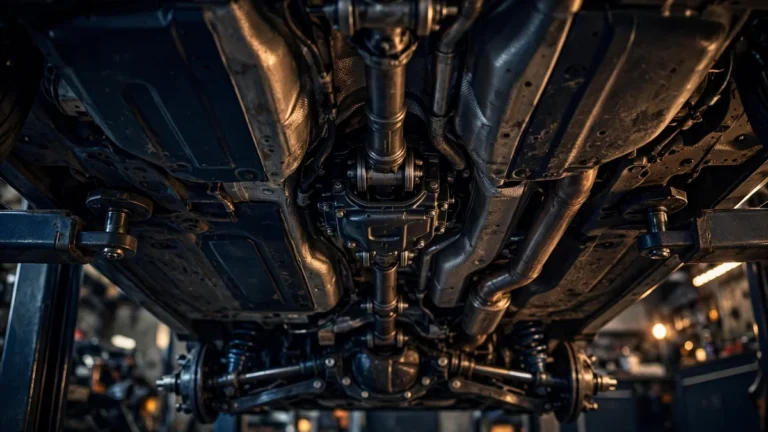
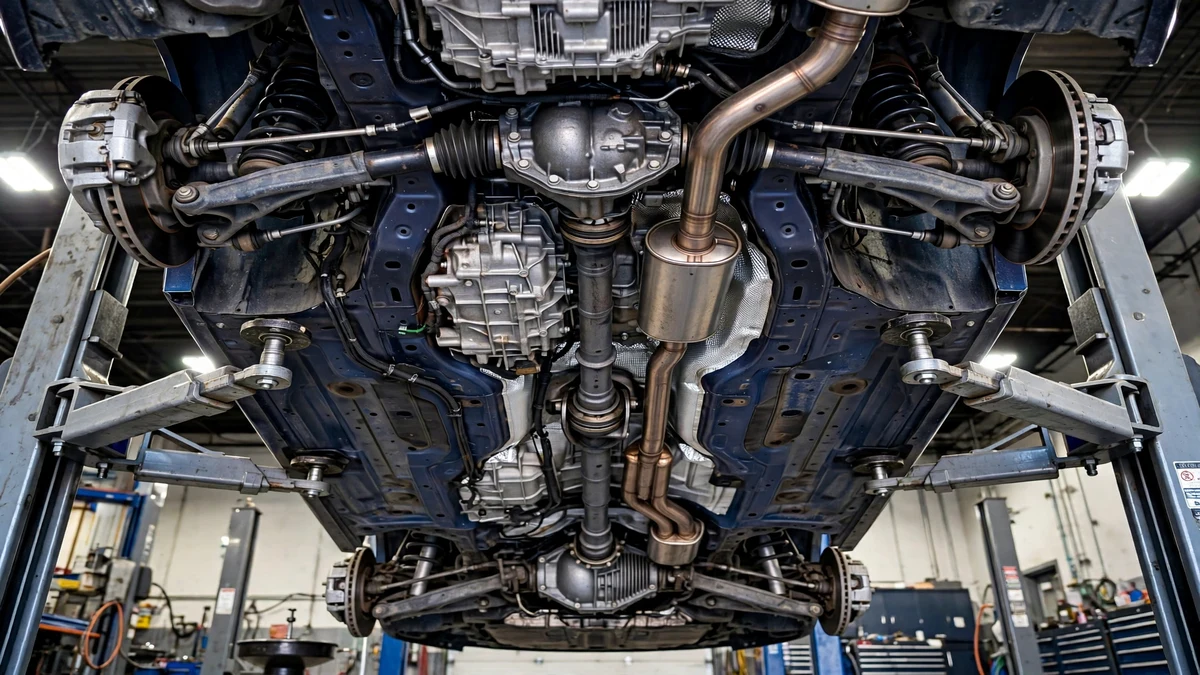
A rear-drive 3 Series sends power from the transmission straight back down a driveshaft to the rear differential. An xDrive car interposes an entire second drivetrain between the transmission and the front wheels — and every piece of it has a fluid, a seal, or a wear item attached. Understanding the parts list is the whole battle, because none of these parts complain loudly until the bill arrives.
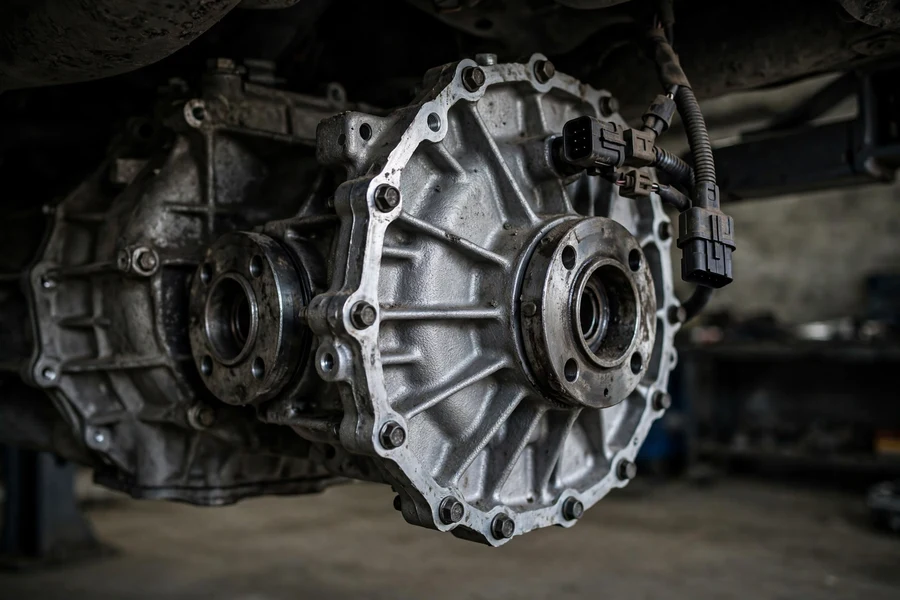
The transfer case. Bolted to the back of the transmission, this is the heart of xDrive. An electronically controlled wet clutch pack varies the front-rear torque split — roughly 40:60 in normal driving, redirecting within a fraction of a second when the DSC system senses slip. It is the most complex, most failure-prone, and most expensive unit in the system. The transfer case model varies by generation: E90 cars use the ATC300/ATC350 family, F30 cars use the ATC35L, and G20 cars use the ATC13-1 — per parts-catalog fitment data and owner documentation. All three take the same transfer case oil, BMW DTF-1.
The front differential. A compact hypoid unit that splits the transfer case’s output between the front wheels. It lives low and forward, tucked behind underbody panels, which is why it gets ignored — but it works just as hard as the rear diff and has its own small oil fill (under a liter on every generation). It is also the unit with the thinnest official maintenance support: BMW omitted front-diff fluid from published schedules around the mid-2010s.
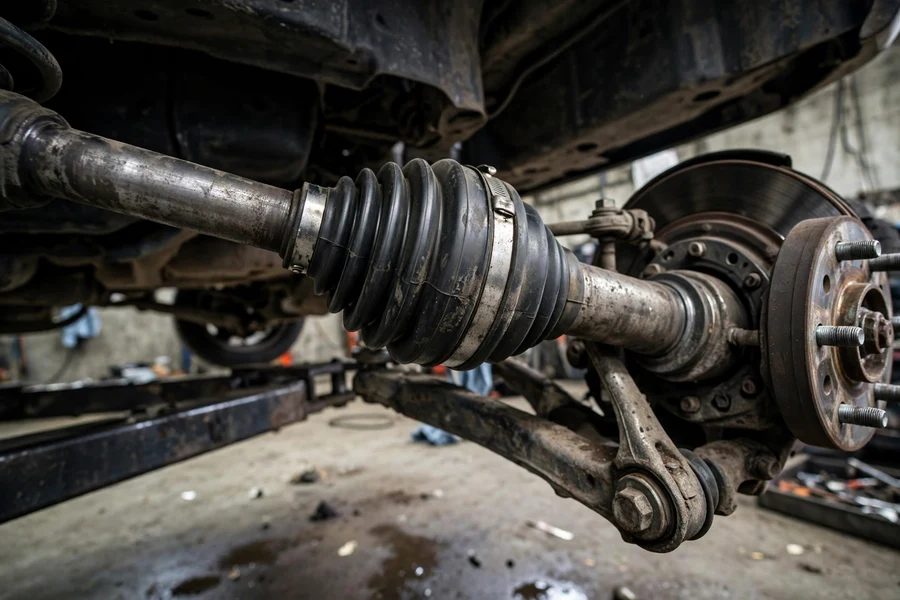
The front driveshaft and CV axles. The transfer case feeds the front diff through a short front driveshaft, and the diff feeds each front wheel through a CV axle with a rubber boot at each end. Rubber boots age, tear, and fling grease — a maintenance item RWD cars simply do not have at the front. A torn boot caught early is a cheap boot kit; a torn boot ignored until the joint runs dry is a whole axle.
The transfer-case actuator (VTG servo motor). An electric motor mounted on the transfer case drives the clutch engagement. On the earlier ATC300/ATC350-era units it contains a nylon drive gear turned by a metal worm gear, and that gear wears — one of the best-documented xDrive failure points in the aftermarket. The ATC35L and ATC13-1 use redesigned actuation, but the actuator remains an xDrive-only wear item on every generation.
Seals and software. Every housing has input and output shaft seals that weep with age, and the xDrive controller relies on wheel-speed sensors, steering-angle data, and DSC calibration to do its job — so the electrical side (sensors, battery voltage, adaptations) is part of xDrive maintenance too. None of this is frightening. It is simply a second set of drivetrain items on top of everything a RWD car needs, which is why the standard 3 Series maintenance schedule is necessary but not sufficient for an xDrive car.
xDrive maintenance schedule by mileage
Here is the maintenance the xDrive hardware adds on top of the normal 3 Series schedule, organized by mileage. The fluid rows reflect specialist guidance (BMW publishes no interval); everything else is inspection and wear-item logic any independent BMW shop would follow. Combine this with the transfer case fluid change guide for the full procedure detail.
| Mileage | xDrive-specific maintenance | Why now |
|---|---|---|
| 30,000 | First transfer case + front/rear differential fluid service; inspect front CV boots; measure tread depths all four corners | Establishes a known-good fluid baseline early; catches torn boots and tire mismatch before damage |
| 60,000 | Repeat all three fluid services; check transfer case and diff seals for weeping; inspect actuator area for leaks; verify tire tread-depth spread ≤ 2 mm | Core recurring service point — many owners settle here as the permanent interval |
| 90,000 | Fluid service again; closer seal inspection; listen for actuator clicking at ignition; check front driveshaft joints for play | Seal weeps and actuator wear typically begin surfacing in this window on neglected cars |
| 120,000+ | Continue 30k–60k fluid cadence; budget for seal replacement if weeping progressed; CV axles are wear items at this age — plan on boots or axles | At this age the maintenance record matters more than the mileage; serviced units routinely outlast the car |
Two habits multiply the value of the whole schedule. First, do all three fluids in one lift session — the car is already in the air, and the parts total stays under about $220 even with premium OE fluids. Second, measure tread depth every time you check the fluids: a tread-depth gauge costs a few dollars and takes two minutes, and it is the single cheapest transfer-case insurance available. If you buy a used xDrive with unknown history, treat the first 30,000-mile-style service as due immediately regardless of the odometer — that baseline is worth more than the receipts the seller didn’t have.
Transfer case and differential fluid specs by generation
This is the reference table for what goes in each unit. The full procedure — drain access, fill-plug positions, the fill-until-it-weeps rule, and the double-drain trick for the transfer case — lives in our transfer case fluid change guide; this table exists so you never order the wrong oil. As in that guide: never put ATF or standard gear oil in the transfer case (DTF-1 only), and M Sport limited-slip rear diffs take their own fluid, not the open-diff oil listed here.
| Unit | E90 xDrive (2006–2011) | F30 xDrive (2012–2019) | G20 xDrive (2019+) |
|---|---|---|---|
| Transfer case | BMW DTF-1 (was TF0870); ~1 L | BMW DTF-1 (was TF0870); ~1 L | BMW DTF-1; ~1 L |
| Front differential | 75W-90 GL-5 gear oil; ~0.6–0.7 L (verify by VIN) | BMW Hypoid Axle Oil G2, 75W-85; ~0.7–0.8 L | 75W-85 GL-5 hypoid; ~0.6–0.7 L (verify by VIN) |
| Rear differential | BMW SAF-XO 75W-90 GL-5; ~1 L | BMW Hypoid Axle Oil G1, 75W-85; ~1 L | BMW SAF-XO 75W-90 GL-5; ~0.9–1.0 L (verify by VIN) |
Service intervals: BMW’s position vs. specialist guidance
BMW describes these fluids as “long-term rated” and publishes no replacement interval for normal use — the service schedule instructs replacement during repairs, not on a clock. Independent specialists, fluid vendors, and experienced owners converged years ago on 30,000–60,000 miles, most settling on 50,000 for normal driving and 30,000 for hard-driven cars. The two columns are presented separately so there is no ambiguity about whose guidance is whose.
| Unit | BMW’s stated position | Specialist / owner guidance |
|---|---|---|
| Transfer case | No interval; “long-term rated,” replaced during repairs | Every 30,000–60,000 miles (most settle on 50,000) |
| Front differential | No interval (omitted from schedules since ~mid-2010s) | Every 30,000–60,000 miles, serviced with the transfer case |
| Rear differential | Appears with an interval in older BMW literature | Every 30,000–60,000 miles, serviced with the other two |
One practical note: a single drain-and-fill on the transfer case typically replaces only about half the fluid — on the F30’s ATC35L, owners routinely recover only ~400 ml because fluid stays trapped inside. That is why shops and experienced owners service it twice in one session (brief drive between fills) or simply keep the interval on the shorter side. The same “lifetime fill” fiction covers the ZF 8HP transmission bolted to the other end of your transfer case, which is why we run the same honest interval there — see the ZF 8HP fluid change guide.
The xDrive-specific failure points to maintain against
Fluid neglect is the slow killer, but the xDrive system has its own set of named failure points. Maintaining an xDrive car well means knowing these the way you know the N20’s timing chain or the E90’s water pump — not as doom, but as the inspection list.
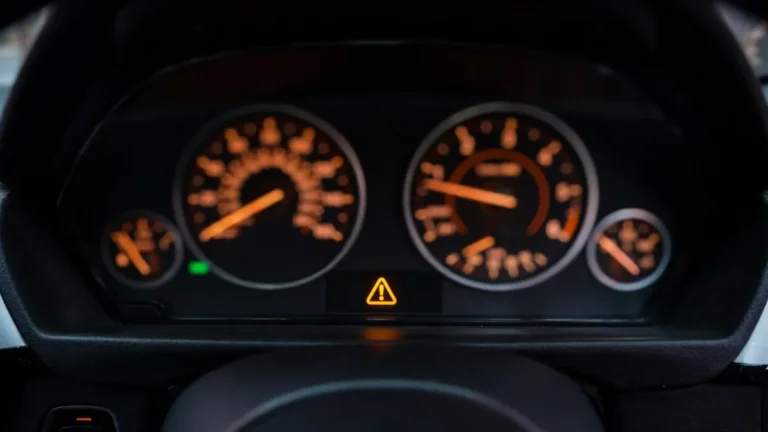
Transfer-case actuator (VTG servo motor). The electric motor that engages the clutch pack is one of the best-documented xDrive failure points in the aftermarket. On the earlier ATC300/ATC350-era units the actuator contains a nylon drive gear turned by a metal worm gear; the gear wears and strips over time. The symptom set is distinctive: the 4×4, ABS, and brake warning lights illuminating together, a clicking or juddering from under the car at ignition or shutdown, and sometimes a drivetrain malfunction message. Aftermarket repair-gear kits exist precisely because the failure is so common, and BMW’s own ISTA diagnostic software includes a transfer-box (VTG) calibration routine that shops run after actuator or fluid work. If a used xDrive shows the warning-light trio on a test drive, insist on a scan of the transfer-case and DSC modules with BMW-capable diagnostics before money changes hands — engine-code readers alone won’t see these faults.
Clutch-pack wear from tire mismatch. The transfer case’s multi-disc clutch is designed to manage brief front-to-rear speed differences — cornering, momentary slip. A permanent speed difference from mismatched tires makes it slip constantly, overheating the clutch and cooking the fluid. The result looks exactly like worn fluid: binding and shuddering in slow, tight turns, low-speed jerking — except no fluid change will fix it. This is the failure mode that turns a $200 service into a $7,000 replacement, which is why tire discipline gets its own section below.
Input and output shaft seals. Every xDrive housing has shaft seals that weep with age — the transfer case input and output seals, and the differential pinion and axle seals. A weep is not an emergency, but it is the leading cause of slow fluid loss on otherwise healthy units, and low fluid is what converts a seal job into a unit replacement. Ask the shop to check for weeps at every fluid service; resealing a weeping transfer case is a maintenance cost, while running it low on oil is a replacement cost.
Front CV axles and boots. The front CV boots flex with every steering input and live next to the exhaust heat, so they crack and tear with age. The maintenance play is simple: look at them at every fluid service. A torn boot spotted early is a boot-kit repair; grease flung across the inner wheel well and a clicking axle on full-lock turns is an axle replacement. The boots, not the joints, are the maintenance item — the joint only becomes the story if the boot is ignored.
Front driveshaft and center support. The short front driveshaft runs from the transfer case to the front diff with flexible couplings and a center bearing. Worn couplings show up as vibration under load or a clunk on takeup — the same family of symptoms as the rear driveshaft, just on the xDrive-only half of the car. Inspect for play and cracked rubber when the car is on the lift for fluids.
Wheel-speed sensors and DSC inputs. xDrive’s brain is the DSC controller, which arbitrates torque using wheel-speed, steering-angle, and yaw data. A failing wheel-speed sensor can therefore masquerade as an xDrive problem — traction and 4×4 warnings together — while being a far cheaper fix. When warnings appear, the diagnostic sequence should be: scan everything, check sensors and battery voltage, check tires, then suspect the hardware. Battery voltage deserves its own mention: the actuator servo is voltage-sensitive, and owners have documented transfer-case fault codes appearing on weak batteries that cleared with a healthy, correctly registered battery. Our drivetrain malfunction guide covers the broader warning landscape these faults live in.
Tires are a maintenance item on xDrive
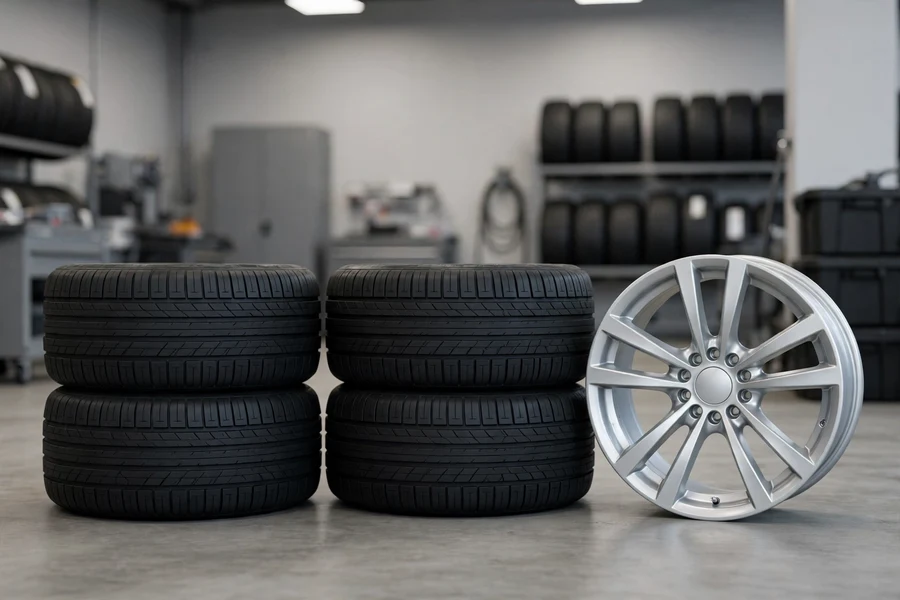
On a RWD car, mismatched tires are a handling quirk. On an xDrive car, they are a maintenance fault with a direct line to the most expensive component in the driveline. The community rule of thumb is within ~1% rolling diameter, front to rear — BMW’s factory staggered fitments meet it — and BMW’s own technical guidance (TIS) states the tread depth difference across all wheel positions must not exceed 2 mm. Treat 1% as the enthusiast rule and 2 mm as BMW’s own tolerance. The full explanation, including why mixing brands or star-marked versus non-star-marked tires of the same nominal size is risky, is in the tire-rule section of our fluid guide; here is the maintenance practice.
Replace tires in matched sets of four — or at minimum as matched axle pairs within the 2 mm window. Rotate on schedule so wear stays even across all four corners. Measure tread depth at every fluid service; if the rears are more than 2 mm off the fronts, budget for tires before blaming the fluid for any shudder. When winter tires go on, the same matching rule applies to the winter set — and this is one more reason many xDrive owners run a dedicated square winter setup on a second set of wheels. For the run-flat question and TPMS resets that come with seasonal swaps, see our run-flat vs. regular tire guide and the TPMS reset procedure. Try the checker below before your next tire purchase.
What xDrive maintenance costs
The economics of xDrive maintenance are the entire argument for it: every line item is measured in hundreds, and every skipped line item eventually measures in thousands. The fluid-service figures below come from the verified cost breakdown in our fluid change cost table; the rest are approximate US budgeting bands from independent-specialist pricing and owner-reported bills.
| Maintenance item | DIY (parts) | Independent BMW shop | Dealer |
|---|---|---|---|
| All three fluids (transfer case + both diffs) | ~$150–$220 | ~$400–$800 | ~$800–$1,500+ |
| Transfer case fluid only | ~$50–$70 | ~$250–$400 | ~$400–$700+ |
| CV boot kit (per boot, parts) | ~$30–$60 | ~$150–$300 | ~$300–$500 |
| Front CV axle (replacement) | ~$150–$350 | ~$400–$700 | ~$700–$1,200 |
| Transfer case reseal (weeps, shop labor) | — | ~$400–$900 | ~$800–$1,500 |
| Transfer case actuator diagnosis + replacement | — | ~$400–$900 | ~$900–$1,800 |
| Transfer case replacement (failed unit) | — | ~$5,000–$7,000 | ~$7,000–$13,000 |
Read the table bottom-up to understand the economics: the failed-unit row is what happens when the top rows get skipped. The two failure points where DIY is genuinely limited — actuator replacement and resealing — are still an order of magnitude cheaper than the replacement they prevent. If you are pricing a used xDrive purchase, the used 3 Series buying guide pairs with this article: a documented fluid history on the test-drive paperwork is worth more than any cosmetic detail.
Winter and seasonal xDrive maintenance
xDrive earns its keep in winter, but winter is also when the AWD hardware takes the most punishment — salt, freeze-thaw, and traction events that work the clutch pack hardest. Three seasonal habits close the loop. First, run proper winter tires in a matched set; all-wheel drive improves traction, not stopping or turning, and mismatched winter tires stress the transfer case exactly like mismatched summers. Second, wash the underbody — including the drivetrain tunnel area — after salt exposure; corroded actuator connectors and seized fill plugs are both winter-accelerated problems. Third, don’t treat xDrive as a license to skip the shoulder-season checks: spring is when to measure tread depths after winter wear and when to do the fluid service if the mileage says so. A car that spends its winters working hard deserves the shorter end of the 30,000–60,000 interval.
Interactive: xDrive service planner
Answer four questions and the planner builds your xDrive service list in priority order, with budget bands. It applies the specialist guidance from this article (service every ~50,000 miles) and escalates symptoms — binding on turns or warning lights change what comes first.
xDrive service planner
Four inputs, one prioritized plan. BMW publishes no interval, so this applies the 50,000-mile specialist guidance from this guide — not a factory schedule.
Interactive: tire-mismatch risk checker
Two minutes with a tread-depth gauge tells you whether your tires are stressing the transfer case. Enter your front and rear tread depths, then answer two matching questions — the checker returns a verdict.
Tire-mismatch risk checker
Verdict rules: BMW’s TIS tolerance is ≤ 2 mm tread-depth spread across all four positions; the enthusiast rolling-diameter rule is ~1% front to rear.
Frequently asked questions
How much extra maintenance does xDrive need over RWD?
Three fluid services (transfer case, front and rear differentials) every 30,000–60,000 miles, periodic front CV-boot inspections, and strict tire matching across all four corners. The rest of the car — engine, transmission, brakes, cooling — follows the same schedule as a RWD car. Budget roughly an extra $400–$800 at an independent shop per fluid-service cycle, and far less if you DIY.
Does BMW recommend changing xDrive transfer case fluid?
No — BMW describes the fluid as “long-term rated” and publishes no replacement interval under normal use, with replacement specified during repairs. Independent specialists and experienced owners service it every 30,000–60,000 miles (most settle on 50,000), with both differentials at the same time. Our transfer case fluid change guide has the full interval breakdown and procedure.
What are the symptoms of a failing transfer-case actuator?
The signature set: the 4×4, ABS, and brake warning lights illuminating together, a clicking or juddering sound from under the car at ignition or shutdown, and sometimes a drivetrain malfunction message. On earlier ATC300/ATC350-era units this traces to wear of the nylon drive gear inside the actuator motor — one of the best-documented xDrive failure points in the aftermarket. Scan the transfer-case (VTG) and DSC modules with BMW-capable diagnostics; engine-only readers miss these faults.
Can mismatched tires really destroy an xDrive transfer case?
Yes. A permanent front-to-rear rolling-diameter difference makes the clutch pack slip constantly, overheating it and cooking the fluid. Keep rolling diameters within about 1% front to rear and tread-depth spread under 2 mm across all four tires (BMW’s TIS tolerance). Replace tires in matched sets of four — a dealer diagnosing a failed unit will check your tires first.
Is xDrive reliable long-term?
With its fluid serviced on a real schedule, matched tires, and intact CV boots, the xDrive hardware is a long-life system — neglected fluid and mismatched tires are what kill it, not the design. When shopping used, a documented fluid history is the single most valuable paperwork on an xDrive car; unknown history should be treated as due for an immediate baseline service.
Own the AWD hardware and it will own you back. The maintenance burden is real but bounded — fluids on a schedule, matched tires, boots and seals inspected — and every item on it is cheap next to the alternative. For the full step-by-step on the fluid side, our transfer case fluid change guide picks up where this one leaves off; for the buying decision itself, the xDrive vs. RWD breakdown; and for the whole car around it, the complete BMW 3 Series guide.