Does BMW EfficientDynamics Actually Save You Fuel?
There is no “EfficientDynamics button” in your BMW — and that is the point. EfficientDynamics is BMW’s umbrella name for the dozen small technologies that sip fuel behind your back: the engine that switches itself off at red lights, the alternator that only charges when you brake, the grille shutters that close at highway speed. This guide explains what bmw efficientdynamics actually includes, how much fuel each piece really saves, when to switch parts of it off, and whether any of it hurts the car.
Short answer
BMW EfficientDynamics is a package of fuel-saving technologies standard on every modern 3 Series: auto start-stop, brake energy regeneration (a smart alternator), electric power steering, on-demand engine ancillaries, Eco Pro driving mode, active grille shutters, and lightweight aerodynamic design. No single figure describes the total saving — it depends on your driving — but auto start-stop alone eliminates nearly all idle fuel burn in city traffic, which is where a 3 Series wastes the most fuel. Use the estimator below with your own commute to get a personalized number.
In this guide
- What EfficientDynamics actually is
- Auto start-stop: the engine that naps at red lights
- Brake energy regeneration: the smart alternator
- Electric power steering: the end of the hydraulic pump
- On-demand ancillaries: pumps that work part-time
- Eco Pro mode: the discipline coach
- Aerodynamics and shutters: cheating the wind
- How much fuel does it actually save?
- The honest criticisms: wear, feel, and annoyance
- How to use it well (and when to switch it off)
- EfficientDynamics vs. hybrids: why BMW took the long road
- The used buyer’s efficiency checklist
- Myths about EfficientDynamics, debunked
- What it means for M cars and the 330e
- Interactive: fuel-savings estimator
- Interactive: eco-driver score
- Frequently asked questions
What EfficientDynamics actually is
Since about 2007, BMW has developed new models under the EfficientDynamics strategy: the idea that performance and efficiency are not a trade-off but an engineering problem. Instead of one big hybrid battery, BMW attacked fuel waste everywhere it occurs — idling, braking, steering, cooling, drag — with small systems that each reclaim a few percent. A modern 3 Series is roughly twice as powerful as its 1990s ancestor and uses roughly a third less fuel doing it; EfficientDynamics is the name BMW gives that engineering program, and its technologies have been standard equipment — not options — for over a decade.
Understanding the umbrella matters because owners argue about “EfficientDynamics” as if it were one thing they can delete. It isn’t. You can switch off start-stop for a drive; you cannot switch off the smart alternator or the electric steering. The sections below take each pillar on its own terms: what it does, how much it matters, and what — if anything — you should do about it.
Auto start-stop: the engine that naps at red lights
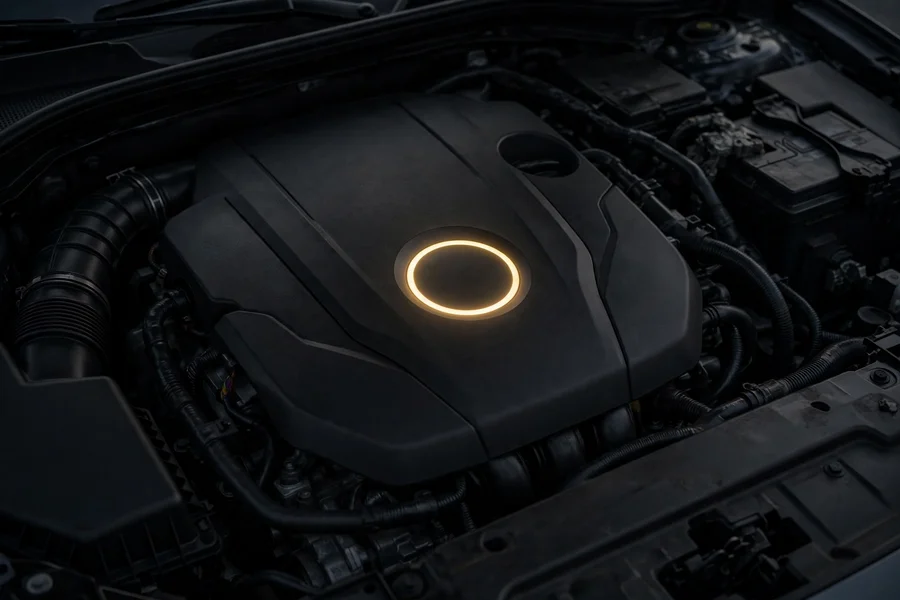
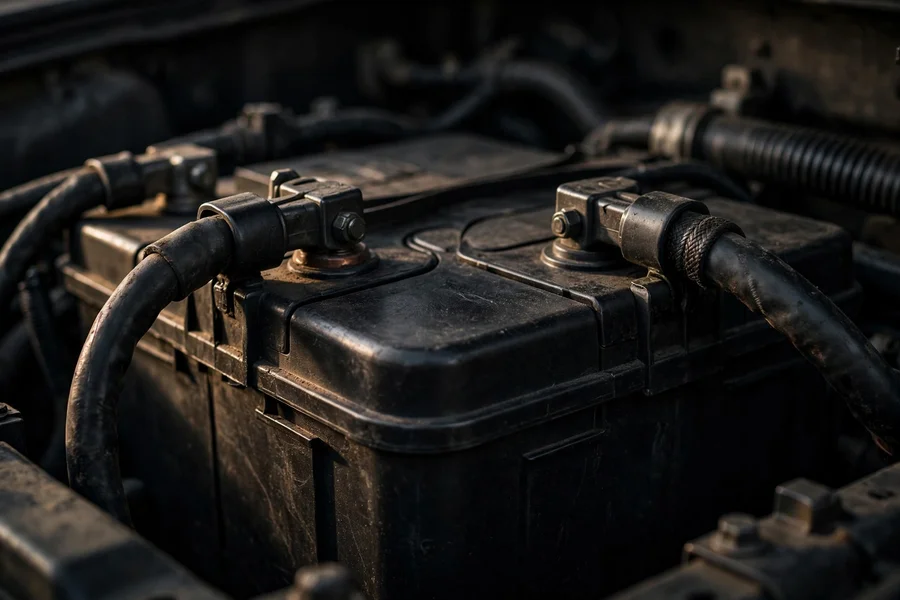
The most visible pillar: when the car stops and you hold the brake, the engine shuts off; lift off and it restarts before your foot reaches the accelerator. On current BMWs the system defaults to on at every startup — you can disable it for the current drive with the console button (the “A off” symbol), and selecting Sport mode disables it on relevant systems. The restart uses a heavy-duty starter and an absorbent-glass-mat (AGM) battery built for tens of thousands of extra start cycles, which is why start-stop cars need the correct battery type at replacement — a conventional battery will die young in this duty cycle.
The system is smarter than it looks. It won’t shut down when the engine is cold, when the battery charge is low, when cabin climate demand is high, or when you are in the middle of a parking maneuver — the car monitors about a dozen conditions and simply stays running when stopping would be a bad idea. If your start-stop “never works,” one of those conditions is usually the reason, with a tired battery the most common culprit on older cars.
Brake energy regeneration: the smart alternator
Every car with a conventional alternator wastes fuel charging the battery while cruising. BMW’s brake energy regeneration flips the logic: the alternator mostly freewheels while you drive, and charges hard when you lift off or brake — converting kinetic energy that would otherwise heat the brake discs into electricity. The battery is the buffer: it runs the car’s electrics from its reserve while cruising, then refills during deceleration. A dashboard or cluster display on some models shows the energy flow in real time.
You will never feel this system working, which is exactly why it is brilliant engineering: it harvests energy from a process (slowing down) that was pure waste, with no driver involvement and no downside. It is also why start-stop BMWs are so sensitive to battery condition — the AGM battery is a working part of the efficiency system, not just a starter accessory. When replacing it, the new battery must be registered to the car so the power management learns its capacity; skip the registration and the regeneration logic misbehaves.
Electric power steering: the end of the hydraulic pump
A hydraulic power-steering pump runs off the engine belt continuously — even when you are driving straight and need no assistance — sapping a few percent of fuel all the time. Electric power steering (EPS) draws power only when you actually turn the wheel. BMW switched the 3 Series to EPS with the F30 in 2012, and the fuel saving is real and constant: the pump’s parasitic drag is simply gone.
The controversy was never about fuel — it was about feel. Enthusiasts still debate whether the E90’s hydraulic rack (the last of its kind) steers more sweetly than the F30/G20 electric racks. BMW has spent three generations tuning EPS feedback, and the G20’s rack is widely considered the best electric steering BMW has made — but the debate is a reminder that every efficiency gain has a constituency that preferred the old wasteful way. There is no going back: EPS also enables lane-keeping assistance and parking aids that hydraulic systems can’t support.
On-demand ancillaries: pumps that work part-time
The water pump, oil pump, and air-conditioning compressor on older cars ran at engine speed, all the time, whether needed or not. EfficientDynamics made them on-demand: the electric water pump runs only as hard as cooling demand requires (and keeps circulating after shutdown to prevent heat soak), the oil pump varies its output with engine load, and the A/C compressor disengages when cooling isn’t called for. Each change saves a fraction of a percent; together they meaningfully reduce the engine’s parasitic losses — the power the engine spends just running its own accessories.
The electric water pump deserves a special mention for 3 Series owners: it is a known wear item on N52/N54/N55-era cars, and its failure mode (sudden overheating with an electric pump that stops without warning) is why the cooling system gets its own chapter in every E90/F30 buyer’s guide. Efficiency technology, meet maintenance reality.
Eco Pro mode: the discipline coach
Eco Pro — the driving mode next to Comfort and Sport — is EfficientDynamics made visible. It softens throttle response, shifts earlier, reduces climate output, and on some models adds a “coasting” function that declutches the transmission on downhill or lift-off stretches so the car freewheels. The cluster display changes to show efficiency feedback, including a bonus-range counter that gamifies gentle driving by showing how many extra miles your restraint earned.
Does it work? As a technology, Eco Pro’s individual measures are modest. As a behavioral tool, it is surprisingly effective — the softened throttle makes smooth driving the path of least resistance, and the bonus-mile counter exploits the same psychology as fitness trackers. Owners who actually use it report their biggest gains come from the driving style it encourages, not the mode itself. The honest review: Eco Pro won’t transform a lead foot, but it will make a conscientious driver measurably thriftier.

Aerodynamics and shutters: cheating the wind
At highway speed, most of the engine’s effort goes into pushing air aside — so BMW treats aerodynamics as a fuel system. The 3 Series’ underbody is extensively paneled, the mirrors and door handles are shaped in the wind tunnel, and active grille shutters close the kidney grilles at speed when cooling demand is low, smoothing the nose. Around town the shutters open for cooling; on the freeway they close for slipperiness. Combined with low-rolling-resistance tires (standard fitment on most models) and careful weight management — aluminum suspension components, weight-optimized body structures — the aero work is why a G20 330i can cruise at 75 mph returning fuel economy that embarrasses dedicated economy cars from a decade ago.
How much fuel does it actually save?
The honest answer first: BMW does not publish a single “EfficientDynamics saves X%” figure, because there isn’t one — the saving depends entirely on how you drive. A car that idles in Manhattan traffic saves enormously from start-stop; the same car cruising empty interstates saves almost nothing from it, and gets its gains from aerodynamics and the 8-speed gearbox instead. Anyone quoting you a universal percentage is selling something.
What can be said with confidence: idling is pure waste, and start-stop eliminates nearly all of it. A 2.0-liter turbo four burns roughly 0.15–0.2 gallons per hour at idle; a 3.0-liter six roughly 0.2–0.3. Thirty minutes of idling a day — normal for a city commute — is around 25–40 gallons a year burned while going nowhere. Start-stop wipes out the large majority of that (the engine still runs when cold or when climate demand is high). The other systems stack smaller gains on top: brake regeneration, EPS, and on-demand ancillaries each contribute single-digit percentages that compound across every mile.
The practical way to think about it: EfficientDynamics moved the 3 Series’ best economy from “careful highway cruising” to “everyday mixed driving.” The EPA combined ratings tell the story — a G20 330i’s combined figure would have been sports-car-adjacent fantasy for a 230-hp sedan twenty years ago, back when efficiency meant a tiny engine and no air conditioning. For your personal number, use the estimator below with your real commute.
The honest criticisms: wear, feel, and annoyance
No technology essay is complete without the complaints, and EfficientDynamics has earned a few. Start-stop wear is the big one: yes, the starter and battery are uprated for the duty cycle, and yes, the engine restarts with oil films still in place (bearings don’t run dry in a 30-second stop). The genuine wear concern is the battery — AGM batteries are expensive, and a start-stop car with a tired battery disables the system and throws warnings. Budget for the correct AGM replacement and its registration, and the wear argument mostly evaporates.
Steering feel (covered above) remains the enthusiast grievance, though each generation narrows it. Eco Pro draws complaints that it neuters the car — true, and also the point; nobody is forced to use it. Grille shutters can stick with age or ice, usually throwing a check-engine light for a shutter actuator — a small, known repair. And low-rolling-resistance tires trade a little grip and road feel for economy, which is why many owners switch to sportier rubber at replacement time and accept the 1–2 mpg cost knowingly. None of these are reasons to fear the technology; all of them are worth knowing before you judge it.
How to use it well (and when to switch it off)
EfficientDynamics works best as a set of defaults you occasionally override. Leave start-stop on for city driving — that is where it earns its keep — and switch it off for stop-and-go parking maneuvers, when the restarts get jerky in creeping traffic, or when you want instant throttle response pulling into fast traffic. Sport mode disables it anyway on relevant systems, so enthusiastic drives are unaffected.
Use Eco Pro on boring highway stretches, not in the city — its coasting and soft throttle help most at steady speed, and in town you’ll just fight the dulled responses. Many owners find their best tank averages come from Eco Pro on the interstate and Comfort everywhere else, which is exactly the split the system was designed for. Keep the battery healthy: short-trip cars that never fully charge are the ones whose start-stop “stops working” — a periodic longer drive or a smart charger keeps the AGM happy. And don’t chase the bonus-mile counter into bad driving: coasting to red lights is efficient; coasting through them is not a fuel strategy anyone recommends.
One more comparison shoppers ask about: how the generations differ. The E90 had the earliest, crudest versions (start-stop arrived late in its run and not in all markets); the F30 standardized the full suite; the G20 refined it with better integration and the coasting function. Our E90 vs. F30 and F30 vs. G20 guides cover the generational evolution, and the 330i vs. M340i comparison is where efficiency differences actually affect a buying decision.
EfficientDynamics vs. hybrids: why BMW took the long road
While Toyota bet the company on hybrid drivetrains, BMW spent the 2000s and 2010s perfecting the conventional car — squeezing waste out of every subsystem instead of adding a big battery. It was a philosophical choice as much as an engineering one: BMW’s identity was the sport sedan, and early hybrids were neither sporty nor light. EfficientDynamics let BMW meet tightening emissions rules while keeping the 3 Series a 3 Series — rear-drive balance, inline-six soundtrack, no battery hump in the trunk.
The strategy worked until it didn’t. By the late 2010s, regulations outran incremental gains, and BMW pivoted: the 330e plug-in hybrid joined the range, 48-volt mild-hybrid assistance arrived on newer engines, and the i4/iX electrics took the flagship efficiency role. Think of EfficientDynamics as phase one of BMW’s efficiency story — the foundation that made the combustion 3 Series clean enough to survive until electrification matured. The 330e in the estimator above is the bridge between the two eras: a B48 engine with all the EfficientDynamics tricks, plus a motor and a charge port.
The used buyer’s efficiency checklist
EfficientDynamics systems are standard, but their condition varies wildly on used cars. Check these five before you buy:
- Battery age and type. Pop the trunk (the battery lives back there on most 3 Series) and check for an AGM battery with a recent date code. A conventional lead-acid battery in a start-stop car is a red flag — the system has been struggling.
- Start-stop behavior on the test drive. After the engine warms up, it should shut off at lights. If it never does, suspect the battery — or that a previous owner coded it off, which is fine, but ask.
- Grille shutters. Look through the kidney grilles for the shutter vanes; a check-engine light for shutter actuator faults is a common, inexpensive fix, but it shouldn’t be a surprise.
- Tires. Check whether the car wears low-rolling-resistance tires or sportier replacements — it explains 1–2 mpg of any economy shortfall versus the EPA figure, and tells you about the previous owner’s priorities.
- Eco Pro presence. Cycle the driving-mode switch and confirm Eco Pro engages and the cluster display changes. Its absence suggests coding experiments or module issues worth asking about.
Myths about EfficientDynamics, debunked
Myth: “Start-stop is just for the emissions test.” Real-world idle elimination is measurable at the fuel pump — the estimator above exists because the math is straightforward. Lab cycles didn’t invent idling.
Myth: “Electric steering ruined the 3 Series.” The F30’s early EPS tune deserved some criticism, but the G20’s rack is genuinely good, and EPS enables driver aids hydraulic systems can’t offer. The debate is about tuning, not the technology.
Myth: “Eco Pro damages the engine by lugging it.” Eco Pro’s earlier shifts keep revs low but never outside the engine’s designed operating range — the transmission logic won’t lug the engine any more than a lazy driver would.
Myth: “Brake regeneration means the brakes last forever.” The alternator harvests some deceleration energy, but the friction brakes still do most of the work. Pad life is unchanged — regeneration is an efficiency system, not a brake system.
Myth: “Disabling start-stop improves reliability.” The uprated starter and AGM battery are designed for the cycling; disabling the system doesn’t extend their life meaningfully, and a coded-off start-stop can mask a dying battery that will strand you anyway.
What it means for M cars and the 330e
EfficientDynamics was never just for the base models. The M3 has start-stop, brake regeneration, and on-demand ancillaries too — M division couldn’t afford to exempt its halo car from emissions math, and the systems are transparent enough at full throttle that most M drivers never notice them. The M340i’s B48/B58 engines carry the full suite plus 48-volt mild-hybrid assistance on later versions: a belt-driven starter-generator that smooths restarts, adds a small torque fill off the line, and recovers more braking energy than the 12-volt system could.
The 330e plug-in hybrid is where EfficientDynamics hands the baton to electrification. Its B48 engine keeps every trick in this article — start-stop, smart alternator, electric steering — and adds an electric motor with enough battery for real commuting range. The interesting detail: the hybrid’s engine idles less to begin with (the motor handles creeping traffic), which is why the estimator shows smaller start-stop savings for the 330e. Efficiency systems stack, but they also overlap — each new layer has less waste left to eliminate. That diminishing return is the whole story of automotive efficiency in one sentence, and the reason the industry’s next gains come from batteries rather than better alternators.
Interactive: fuel-savings estimator
Estimates are built from your driving profile, your car, and today’s fuel price — using typical idle fuel burn per engine and an 85% start-stop effectiveness factor (the engine still runs when cold or when climate demand is high). These are planning estimates, not EPA figures.
Start-stop savings estimator
How much idle fuel does auto start-stop save you per year?
Interactive: eco-driver score
Six questions about your habits. The car does its part — do you do yours?
Eco-driver score
Question 1 of 6
Frequently asked questions
No. Start-stop BMWs use a heavy-duty starter and an AGM battery designed for tens of thousands of extra start cycles, and restarts happen with oil films still in place — bearings don’t run dry during a 30-second stop. The real wear item is the battery itself: it needs the correct AGM replacement, registered to the car.
From the factory, no — current BMWs default start-stop to on at every startup, and the console button only disables it for the current drive (Sport mode also disables it on relevant systems). Coding apps can change the default behavior on many models, which is the route owners who want it permanently off usually take.
It’s a smart alternator strategy: instead of charging continuously, the alternator mostly freewheels while cruising and charges hard during deceleration and braking — turning kinetic energy that would otherwise heat the brake discs into electricity. It works invisibly and is one reason start-stop BMWs need a healthy AGM battery.
No. Eco Pro only changes throttle mapping, shift points, climate output, and (on some models) adds transmission coasting — it doesn’t alter anything mechanically stressful. It’s most effective on steady highway stretches; in the city its dulled responses just annoy.
The car monitors about a dozen conditions — cold engine, low battery charge, high climate demand, parking maneuvers — and stays running when stopping would be unwise. On older cars the most common cause is a tired AGM battery: when its charge drops, the system disables itself to protect starting ability.