What Do BMW 328i, 330i and M340i Badges Really Mean?
A 2011 328i has a 3.0-liter six-cylinder. A 2015 328i has a 2.0-liter four-cylinder. A 2018 330i also has a 2.0-liter four-cylinder — but with more power than either of them. If BMW’s trunk badges feel like they are gaslighting you, this guide decodes them: what bmw badge numbers originally meant, when and why the numbers stopped matching the engines, and exactly which engine hides behind 328i, 330i, 335i, 340i, and M340i on the E90, F30, and G20 generations.
Short answer
bmw badge numbers used to mean displacement: a 328i was a 3 Series with a 2.8-liter injected engine. Turbocharging broke that link — a 2015 328i is a 2.0-liter turbo four (N20, 240 hp), not a 2.8 anything. Since the 2016 facelift, the numbers signal performance tier instead: 30i means the high-output 2.0-liter turbo four (B48), 40i means the 3.0-liter turbo six (B58), and M340i means the M Performance version of that six with 382 hp. The only way to know the real engine is to decode by generation, not by badge.
In this guide
- The original logic: numbers meant liters
- The great rename: how the 328i became a 2.0-liter
- The 2016 shuffle: 328i becomes 330i, 335i becomes 340i
- G20 badges: 330i, 330e, M340i
- The full badge decoder table: E90, F30, G20
- Suffix guide: i, d, e, xDrive, and M
- M340i vs. M3: M Performance is not M
- The 4 Series split: where the coupes went
- Diesel badges: America’s brief experiment
- M Sport vs. M Performance vs. M: the three tiers
- Badge timeline: every change, 2006–2026
- Quick reference: which badge for which buyer
- How to verify what’s actually under the badge
- Interactive: badge decoder
- Interactive: what’s under the badge? quiz
- Frequently asked questions
The original logic: numbers meant liters
The system was beautifully simple for decades. The first digit was the series, the next two digits were the engine displacement in liters (times ten), and the letter was the fuel or body: i for fuel injection (gasoline), d for diesel, C for coupe back when coupes shared the 3 Series badge. A 325i was a 3 Series with a 2.5-liter injected gasoline engine. A 330d was a 3 Series with a 3.0-liter diesel. A 328Ci was a 3 Series coupe with a 2.8-liter six. You could read the engine from the trunk.
The early E90 (2006–2011) was the last generation to play it straight, mostly. The 2006 325i carried the 3.0-liter N52 inline-six detuned to 215 hp (yes, a “25” with a 3.0-liter — the first crack in the system), the 2006 330i had the same N52 at 255 hp, and from 2007 the 328i settled in with the N52 3.0-liter at 230 hp. The 335i, arriving for 2007, was the honest one in a different way: the N54 3.0-liter twin-turbo made 300 hp, and the badge told you it outgunned the 330i. Displacement still roughly matched the badge, and enthusiasts could still decode a trunk at a glance.
The great rename: how the 328i became a 2.0-liter
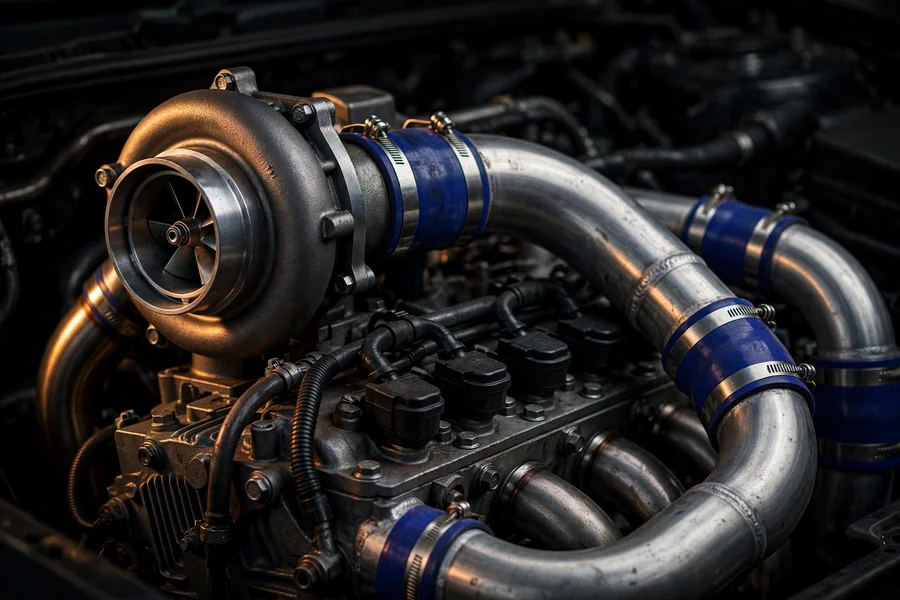
For 2012, the F30 arrived and BMW did something it had been threatening for years: it replaced the volume-selling six-cylinder with a turbocharged four and kept the badge. The F30 328i carried the N20 2.0-liter turbo four making 240 hp — more power than the six-cylinder 328i it replaced, with better fuel economy, and a badge that now lied about displacement. The 335i kept its 3.0-liter (now the single-turbo N55, still 300 hp), and the new entry-level 320i got a detuned N20 at 180 hp. Overnight, “28” stopped meaning 2.8 liters and started meaning “the fast four-cylinder.”
Why keep the old numbers for new engines? Marketing continuity. The 328i was BMW’s best-selling badge in America — tens of thousands of buyers a year knew what a 328i was, what it cost, and where it sat in the hierarchy. Renaming it the “320ti” or similar would have thrown away decades of brand equity and confused every returning lessee. So BMW froze the badges and changed the engines underneath, and the numbers quietly shifted from describing displacement to describing position in the lineup. The automotive press at the time — Autoblog and Jalopnik both ran “the numbers no longer mean anything” pieces — treated it as the end of an era, and they were right.
The 2016 shuffle: 328i becomes 330i, 335i becomes 340i
With the 2016 facelift (LCI), BMW rolled out its new modular engine family — the B48 four-cylinder and B58 six-cylinder — and took the opportunity to reshuffle the badges upward. The 328i (N20) became the 330i (B48, 248 hp); the 335i (N55) became the 340i (B58, 320 hp). Same 2.0-liter displacement in the 330i as in the 328i it replaced. Same 3.0-liter displacement in the 340i as in the 335i. The numbers went up because the power went up — 240 to 248 hp, 300 to 320 hp — and BMW wanted the badges to signal the improvement. The 320i kept its honest little badge and its N20 engine, becoming the only trunk in the lineup where the numbers still made sense.
This is the moment the modern system locked in: the last two digits now denote a performance tier within the model range, roughly indexed to what that power level would have required in displacement in the naturally aspirated era. A “30i” performs like the old 3.0-liter sixes did; a “40i” performs like the old 4.0-liter V8s did. It is not a formula BMW publishes — it is the pattern the lineup follows, and it explains why a 2.0-liter car wears a “30” badge without anyone at BMW losing sleep.
G20 badges: 330i, 330e, M340i
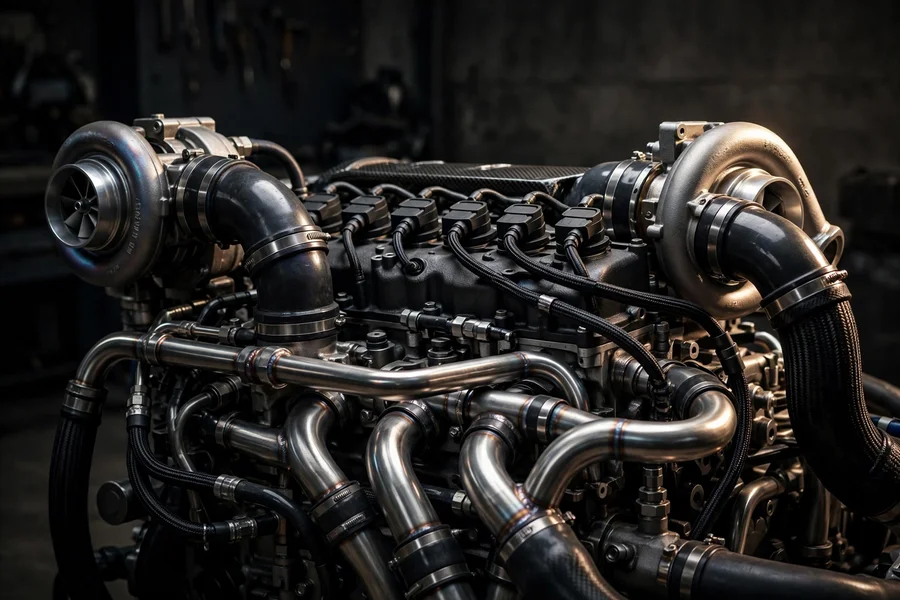
The current G20 (2019+) simplified the US lineup to three core badges. The 330i carries the B48 2.0-liter turbo four, now at 255 hp — the direct descendant of the F30 330i with a meaningful power bump. The 330e is the plug-in hybrid: a B48 paired with an electric motor for 288 hp of system output (2021 and later), wearing the “e” suffix BMW reserves for plug-ins. And the M340i is the range-topper short of the M3: the B58 3.0-liter turbo six at 382 hp, sold in the US exclusively with xDrive.
Notice what is gone: no more 320i in America, no more diesel 3 Series, no more 340i — the “40i” slot now belongs to the M340i, because BMW decided the six-cylinder 3 Series should wear M Performance branding to justify its price step over the 330i. Compare generations before you shop: our E90 vs. F30 and F30 vs. G20 guides put the whole evolution side by side, and the 330i vs. M340i comparison is the buying decision most shoppers actually face.
The full badge decoder table: E90, F30, G20
Every US-market 3 Series sedan badge from the last three generations, decoded to the actual engine. Power figures are factory ratings; “not offered” means BMW never sold that badge on that generation in the US.
| Badge | E90 (2006–2011) | F30 (2012–2019) | G20 (2019+) |
|---|---|---|---|
| 320i | Not offered (US) | N20 2.0L turbo I4 — 180 hp | Not offered (US) |
| 325i | N52 3.0L I6 — 215 hp (2006) | Not offered | Not offered |
| 328i | N52 3.0L I6 — 230 hp | N20 2.0L turbo I4 — 240 hp | Not offered |
| 330i | N52 3.0L I6 — 255 hp (2006) | B48 2.0L turbo I4 — 248 hp | B48 2.0L turbo I4 — 255 hp |
| 335i | N54 twin-turbo 3.0L I6 — 300 hp (N55 single-turbo for 2011) | N55 3.0L turbo I6 — 300 hp | Not offered |
| 340i | Not offered | B58 3.0L turbo I6 — 320 hp | Not offered |
| M340i | Not offered | Not offered | B58 3.0L turbo I6 — 382 hp (xDrive only, US) |
| 328d | Not offered | N47 2.0L turbodiesel I4 — 180 hp | Not offered |
| 335d | M57 3.0L twin-turbodiesel I6 — 265 hp | Not offered | Not offered |
| 330e | Not offered | B48 + motor PHEV — 248 hp system | B48 + motor PHEV — 288 hp system (2021+) |
| M3 | S65 4.0L V8 — 414 hp | S55 3.0L twin-turbo I6 — 425 hp | S58 3.0L twin-turbo I6 — 473 hp (503 Comp) |
Read the 328i row across and you see the whole story in one line: 3.0-liter six, then 2.0-liter turbo four, then gone — replaced by the 330i wearing the same 2.0-liter formula. The 330i row is even more instructive: the same badge has meant a 255-hp six (E90), a 248-hp turbo four (F30), and a 255-hp turbo four (G20). The badge is a trim level now. The generation is the engine.
Badge number vs. actual displacement (liters) — the growing gap
Same badge family, shrinking engines: the “28” badge lost a full liter in 2012, and the “30” badge has been a 2.0-liter since 2016.
Suffix guide: i, d, e, xDrive, and M
The letters after the numbers are still honest — mostly. i means gasoline fuel injection (a legacy of the days when injection was worth advertising; today nearly everything gasoline wears it). d means diesel: the 328d and 335d were the oil-burners, both gone from the US lineup now. e means plug-in hybrid: the 330e pairs a B48 with an electric motor and a charge port. xDrive means all-wheel drive, and it is always a suffix after the badge (330i xDrive), never part of the number.
The M prefix is where buyers get burned. M340i is not an M car — it is an M Performance car: a standard 3 Series with the hottest regular-production engine, M Sport trim, and upgraded brakes and cooling, built on the normal production line. A true M car — the M3 — gets a bespoke S-designation engine (S55, S58), a different chassis, and M division assembly. The M340i is a superb car, but it is a trim-and-powertrain package, not a motorsport product. Price, insurance, and maintenance expectations should be set accordingly.
M340i vs. M3: M Performance is not M
Since this is the confusion that costs people the most money, it deserves its own table. Both wear M badges. Only one is an M car.
| M340i (G20) | M3 (G20) | |
|---|---|---|
| Engine | B58 3.0L single-turbo I6 | S58 3.0L twin-turbo I6 |
| Power | 382 hp | 473 hp (503 hp Competition) |
| Drivetrain (US) | xDrive only | RWD or xDrive |
| Built by | Standard production line | M division specification |
| Character | Fast, refined daily driver | Track-capable chassis, bespoke suspension |
The 4 Series split: where the coupes went
One more badge event reshaped the lineup: for the 2014 model year, BMW split the 3 Series coupe and convertible off into the new 4 Series. The E92 335i coupe became the F32 435i, and the E93 convertible followed. The old “Ci/Cic” suffixes died, and the even number now means “the coupe version of the odd-numbered sedan.” Mechanically the early 4 Series was a 3 Series in a tailored suit — same N20/N55 engines, same chassis fundamentals — but the badge split means used-car shoppers must search two model lines for what used to be one car. A 2013 335i coupe and a 2014 435i are essentially the same car wearing different marketing.
The split also produced a footnote collectors love: the E92 335is (2011–2013), a send-off special with the N54 twin-turbo massaged to 320 hp, an M Sport exhaust, and unique styling. It wore its “s” proudly and never got a sedan sibling. If you see one, it is real — BMW built it, and the badge means something specific for once.
Diesel badges: America’s brief experiment
Twice BMW tried to sell Americans a diesel 3 Series, and twice the market shrugged. The E90 335d (2009–2011) was the serious attempt: a 3.0-liter twin-turbodiesel six with 265 hp and a locomotive 425 lb-ft of torque, badged to match the 335i it out-twisted. Reviewers loved it; buyers mostly didn’t, deterred by diesel’s price premium and the urea-refill ritual. Then came the F30 328d (2014–2018) with a 2.0-liter four-cylinder diesel making 180 hp — 40+ mpg highway in a sports sedan, and still a slow seller. Both are gone from the US lineup, and both are now interesting used buys: rare, efficient, and cheap precisely because nobody wanted them new. Just budget for aging diesel emissions hardware — DPFs and EGR systems do not improve with neglect.
M Sport vs. M Performance vs. M: the three tiers
BMW currently sells three different things with the letter M on them, and the price gaps between tiers are enormous. Understanding which one you are looking at is worth real money.
M Sport is a trim package, available on nearly every 3 Series. It adds sportier bumpers, M steering wheel, sport seats, and usually stiffer suspension tuning — but the engine is whatever the badge says (a 330i with M Sport is still a 248/255-hp four-cylinder). It changes how the car looks and feels, not how fast it is. On the used market, M Sport cars command a small premium for appearance.
M Performance — the M340i, and on bigger BMWs the M550i and X3 M40i — is a powertrain tier: the hottest regular-production engine in the lineup, plus M Sport trim, bigger brakes, and cooling upgrades, built on the standard assembly line. The M340i’s 382-hp B58 is genuinely quick, and for most drivers it is all the car they will ever need. But it is not developed by the M division, it does not get an S-code engine, and it will never be collectible the way M cars are.
M — the M3 — is the motorsport product: bespoke S58 twin-turbo engine, comprehensively reworked chassis, wider bodywork, M division development and assembly oversight. It costs tens of thousands more than the M340i, drinks more, rides harder, and holds its value better. The quick tell: if the badge starts with M and ends with a number (M340i), it is M Performance. If it is just M plus a single digit (M3), it is the real thing.
Badge timeline: every change, 2006–2026
For shoppers cross-referencing model years, here is the short version of twenty years of trunk badges on the US 3 Series sedan:
- 2006: E90 launches with 325i (N52, 215 hp) and 330i (N52, 255 hp). Numbers still mostly honest.
- 2007: 325i becomes 328i (N52, 230 hp); 330i replaced by 335i (N54 twin-turbo, 300 hp). The “35” badge is born.
- 2009–2011: 335d diesel joins; 2011 335i switches from N54 to N55 single-turbo mid-stream.
- 2012: F30 arrives. 328i becomes an N20 2.0-liter turbo four (240 hp) — the great rename. 320i and 335i (N55) round out the range.
- 2014: Coupes split off into the 4 Series; 328d diesel joins the sedan lineup.
- 2016: Facelift shuffle — 328i becomes 330i (B48, 248 hp), 335i becomes 340i (B58, 320 hp). 330e plug-in hybrid debuts.
- 2019–2020: G20 arrives as the 330i (B48, 255 hp); M340i (B58, 382 hp) replaces the 340i as the six-cylinder flagship. No more 320i, no more diesel.
- 2021+: G20 M3 (S58, 473 hp) and updated 330e (288 hp system) complete the modern lineup.
Quick reference: which badge for which buyer
Shopping used and drowning in numbers? Match the badge to the mission. Best value commuter: the F30 330i (2017–2019) — the B48 is the most evolved four-cylinder of the bunch, and facelift cars have the nicest interiors. Cheapest way in: the F30 320i — same N20 family as the 328i, detuned, and priced like the lease special it was. Enthusiast on a budget: the E90 328i with a manual — the last naturally aspirated six-cylinder 3 Series, hydraulic steering, and values that have already bottomed out. Maximum speed per dollar: the F30 340i — the B58 is famously robust and tune-friendly, and the “40i” badge still flies under the radar next to the M340i. The do-everything car: the G20 M340i — 382 hp, xDrive traction, modern tech, and running costs far below the M3. The keeper: any M3, but buy on service history, not mileage — an S65 or S58 with records beats a garage queen with secrets.
And the golden rule across all of them: price the car by its generation and engine, not its badge. A 2011 328i (N52 six) and a 2015 328i (N20 turbo four) are different cars with different strengths, weaknesses, and maintenance budgets — the trunk letters are just the beginning of the conversation. Run the decoder above, check the VIN, and buy the actual hardware.
How to verify what’s actually under the badge
Badges can be changed — debadged trunks, rebadged 320is wearing M340i letters, honest cars with replaced trunk lids. Three checks beat the badge every time. First, the VIN: the 8th digit and the model code in positions 4–7 identify the exact model, and a free VIN decoder (or a BMW dealer’s parts department with the last seven digits) will tell you the engine. Second, the engine cover and the emissions label under the hood, which carry the engine family. Third, the option-code sticker and build sheet — our option codes guide shows how to read them, and they never lie about what the car was born as.
For shoppers, the practical rule: never buy the badge, buy the generation-plus-badge combination. A 2011 328i and a 2015 328i share nothing under the hood — different engines, different transmissions pairings, different known issues, different maintenance costs. Our used 3 Series buying guide walks through which combinations are the smart money.
Interactive: badge decoder
Select a generation and a badge. The decoder returns the real engine — or tells you that badge never existed on that generation, and what to look at instead.
Badge decoder
US-market 3 Series sedans. Power figures are factory ratings.
Interactive: what’s under the badge? quiz
Six badges, three engine choices each. Pick the real engine — generation matters.
What’s under the badge?
Question 1 of 6
Frequently asked questions
It depends on the generation. The E90 328i (2007–2011) has the N52 3.0-liter naturally aspirated inline-six (230 hp); the F30 328i (2012–2016) has the N20 2.0-liter turbo four (240 hp). There is no G20 328i — the equivalent car is the 330i with the B48 2.0-liter turbo four. Always decode by generation, never by badge alone.
No. The M340i is an M Performance model: a standard 3 Series with the 382-hp B58 six, M Sport trim, and upgraded brakes and cooling. A true M car — the M3 — gets a bespoke S-designation engine (S58, 473 hp), a different chassis, and M division development. The M340i is an excellent fast daily driver, but it is a trim and powertrain package, not a motorsport product.
Engine and tier. The 330i is the high-output 2.0-liter turbo four (B48: 248 hp on the F30, 255 hp on the G20); the 340i — sold only as the F30 from 2016–2019 — is the 3.0-liter turbo six (B58, 320 hp). On the G20, the 340i’s slot was taken by the M340i at 382 hp. Expect higher fuel, insurance, and maintenance costs with the six.
Turbocharging and downsizing. When BMW replaced the 3.0-liter six with a more powerful 2.0-liter turbo four in 2012, it kept the 328i badge to preserve decades of brand equity and avoid confusing returning buyers. The numbers shifted from describing displacement to describing performance tier — a change the automotive press widely covered at the time as the end of the old naming era.
Check the VIN — positions 4–7 identify the exact model, and a BMW dealer’s parts department can decode it from the last seven digits. Cross-check the engine cover and the under-hood emissions label, plus the option-code build sheet. If the trunk says M340i but the VIN says 330i, someone bought letters online.