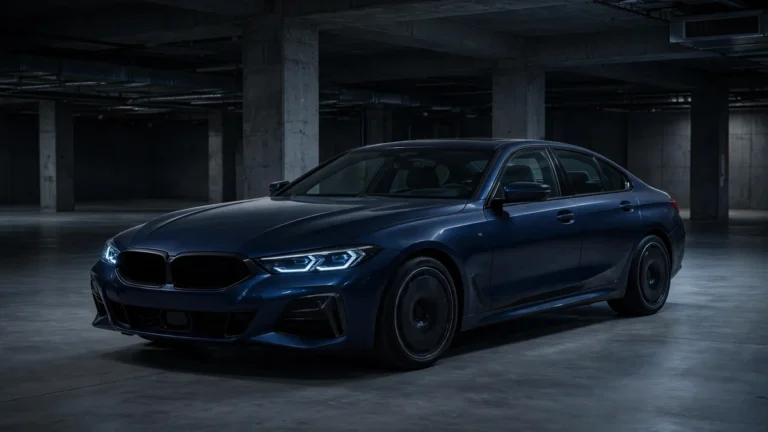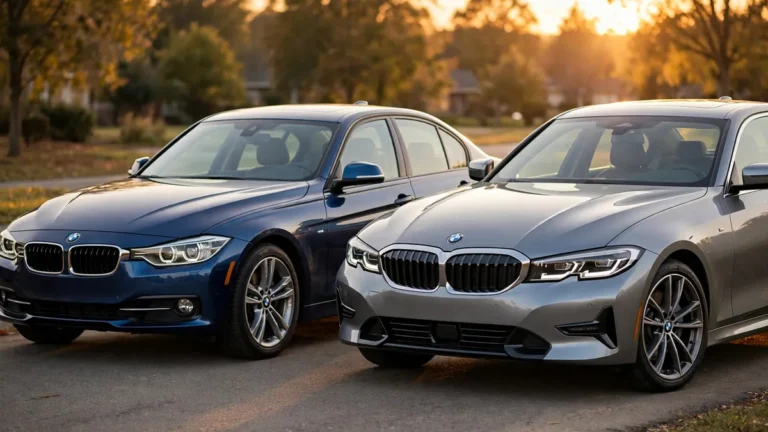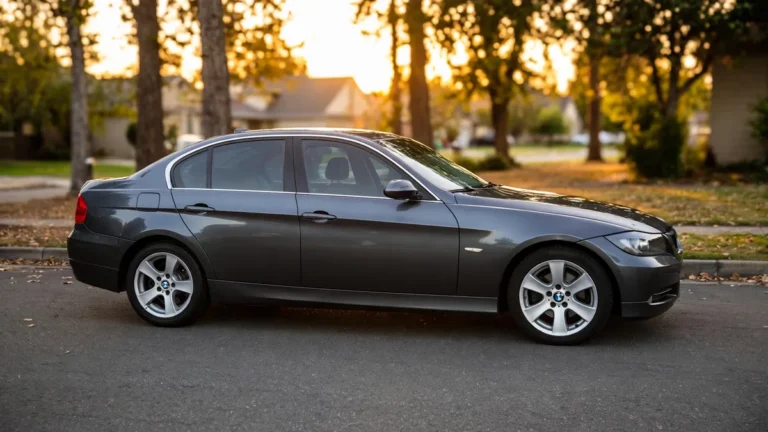
F30 328i vs 330i — Which Used BMW Should You Buy?
Short answer: Buy the 330i if your budget stretches — the B46 engine uses a revised timing-chain drive with far fewer reported failures than the N20, the LCI brought better tech and LED lighting, and the used-price premium of roughly $3,000–$5,000 pays for itself in peace of mind. Buy the 328i only at a steep discount with full service history, and budget for a timing-chain inspection before you commit. For the full engine-code breakdown, see our N20 vs N26 guide.
- What actually changed from 328i to 330i
- The LCI: every change, ranked by importance
- N20 vs N26: the SULEV wrinkle
- Performance and driving: can you feel the difference?
- Reliability: the timing-chain question
- Interactive: 328i vs 330i buyer advisor
- Running costs: fuel, maintenance, insurance
- Ownership diary: five years with each
- Interactive: N20 timing-chain risk checker
- Used prices: what to pay
- The F30 inspection checklist
- The verdict
- FAQs
What actually changed from 328i to 330i
The 328i (2012–2015) and 330i (2016–2018) are both F30-chassis 3 Series with turbocharged 2.0-liter four-cylinders — but the badge change marks BMW’s 2016 LCI facelift and an engine swap that matters more than the 8-horsepower bump suggests. The 328i runs BMW’s N20 engine: 240 hp, 255 lb-ft. The 330i runs the B46: 248 hp, 258 lb-ft. Same displacement, same ZF 8-speed automatic, nearly identical performance — yet the B46 is a substantially reworked engine with a revised timing-chain drive, updated cooling architecture and fixes for the N20’s most-documented weaknesses.
The LCI brought more than the engine. The 2016+ cars got revised front and rear styling with standard LED daytime running lights (full LEDs optional), an updated iDrive system with faster hardware, improved interior materials, and retuned steering and suspension that sharpened the F30’s responses. None of these individually transforms the car, but together they make the 330i feel a half-generation newer — which, chronologically, it is. The 328i is a 2012 design; the 330i is a 2016 design. Four years of development shows.
One naming trap to avoid: the 2016 model year straddles the changeover, and BMW sold both badges briefly. A “2016 328i” is a pre-LCI car with the N20; a “2016 330i” is the LCI car with the B46. Always verify by engine code or VIN — never by model year alone. And note the SULEV wrinkle: some states got the N26 (in 328i guise) instead of the N20 — our N20 vs N26 guide explains which one you are looking at and why it matters for emissions testing.
| Spec | 328i (2012–2015) | 330i (2016–2018) |
|---|---|---|
| Engine code | N20 (N26 in CARB states) | B46 |
| Power / torque | 240 hp / 255 lb-ft | 248 hp / 258 lb-ft |
| Transmission | 8-speed ZF automatic | 8-speed ZF automatic |
| Owner-reported economy | 25.85 mpg (Fuelly, 69 cars) | 26.09 mpg (Fuelly, 16 cars) |
| Headlights | Halogen / xenon | LED DRL standard, full LED optional |
| iDrive | CIC / early NBT | Updated NBT, faster hardware |
| Timing-chain risk | Documented guide-wear issue | Revised drive, far fewer reports |
| Typical used price | Low-to-mid teens | High teens to low twenties |
The LCI: every change, ranked by importance
BMW’s 2016 Life Cycle Impulse touched nearly every system. Ranked by how much each change matters to a used buyer:
1. The B46 engine. Covered above — the timing-chain fix alone justifies the 330i. Everything else is a bonus.
2. Steering and suspension retune. BMW revised the electric power steering calibration and damper tuning in response to the most common pre-LCI complaint: numb on-center feel. The difference is immediately noticeable in back-to-back drives — the 330i tracks straighter with less correction and turns in with more confidence. If you test-drive a 328i and find the steering vague, know that the 330i specifically addressed it.
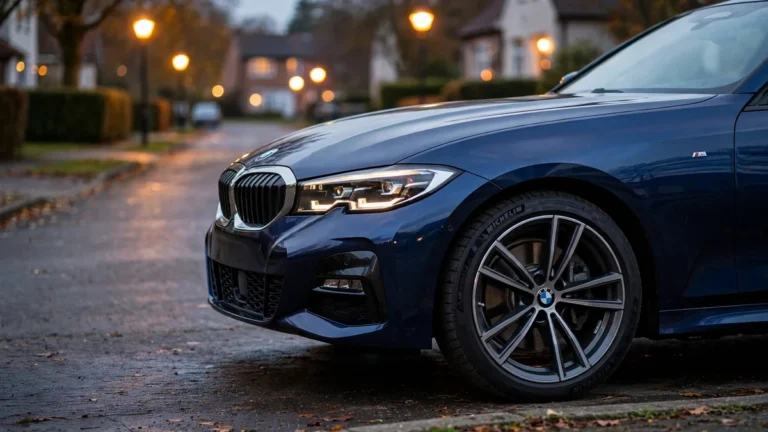
3. Lighting. The LCI made LED daytime running lights standard and offered full-LED headlights as an option; pre-LCI cars make do with xenons or halogens depending on trim. Beyond the modern look, the LED units are brighter, longer-lived and cheaper to run — and a 328i with tired xenon bulbs is a $300+ refresh the 330i will never need. Check which headlights a used 330i actually has; the full-LED option is worth seeking out.
4. iDrive and tech. The LCI brought updated iDrive hardware with a faster processor, improved navigation rendering and better smartphone integration. It is not a generational leap — CarPlay arrived late and wirelessly only on the newest cars — but the system crashes less and responds faster than the 2012-vintage unit. The instrument cluster and head-up display (where fitted) also gained sharper graphics.
5. Interior materials. BMW quietly upgraded touch points: softer dash coverings, revised trim options, better seat leather on higher trims. A 2018 330i cabin feels a class above a 2012 328i cabin in ways that are hard to itemize but easy to feel. Less squeak, less rattle, less shiny plastic.
6. Styling. Revised bumpers, new light signatures, tweaked kidney grilles. The LCI car looks fresher, which matters for resale and for the simple pleasure of walking up to it — but it changes nothing about how the car drives. Rank it last, because too many buyers rank it first.
N20 vs N26: the SULEV wrinkle
Here is the trap that catches 328i shoppers: not every “328i” has an N20. Cars sold new in California-emissions states (California, New York, and the other CARB states) got the N26 instead — a SULEV-rated variant of the same 2.0L turbo four with identical 240 hp output. The N26 differs in its emissions hardware: an electronic wastegate actuator, different catalytic converters and fuel-system components designed to meet stricter evaporative-emissions standards. Performance and economy are the same; parts and smog compliance are not.
Why it matters to you: first, parts prices — some N26-specific emissions components cost more than their N20 equivalents. Second, the timing-chain story is shared — the N26 has the same chain-drive architecture and the same weakness, so nothing in the reliability section above changes. Third, registration: an N26 car is the easier one to register in a CARB state, while an N20 car brought into California needs its federal-emissions paperwork in order. Check the emissions label under the hood or decode the VIN before you buy; our N20 vs N26 guide shows exactly where to look and what each code means.
The 330i sidesteps all of this: the B46 was engineered as a single SULEV-compliant engine from the start, so there is no N26 equivalent and no state-by-state guessing. One more quiet point in the 330i’s column — and one more reason the used market prices it higher.
Performance and driving: can you feel the difference?
Honestly? Barely. The 330i’s 8 extra horsepower and 3 extra lb-ft are imperceptible in normal driving — both cars deliver strong midrange punch from their twin-scroll turbos, both hit highway speed with ease, and both return effectively identical real-world fuel economy. Owner-reported data from Fuelly shows the 2014 328i averaging 25.85 mpg across 69 vehicles and 1.89 million miles, against 26.09 mpg for the 2017 330i across 16 vehicles and 322,000 miles — a quarter-mpg difference that vanishes into statistical noise. Buy on condition and history, not on the spec sheet.
Where you can feel a difference is the chassis. The LCI’s retuned electric steering is more precise on-center, the suspension revisions reduce the pre-LCI car’s float over crests, and the optional adaptive dampers (more common on 330is) give the later car a broader comfort-to-sport range. It is not a night-and-day transformation — an M Sport 328i still drives beautifully — but back-to-back, the 330i feels like the more finished product. The ZF 8-speed is superb in both; shift logic got slightly smarter with the LCI’s software updates, but no owner has ever chosen between these cars on transmission calibration.
Reliability: the timing-chain question
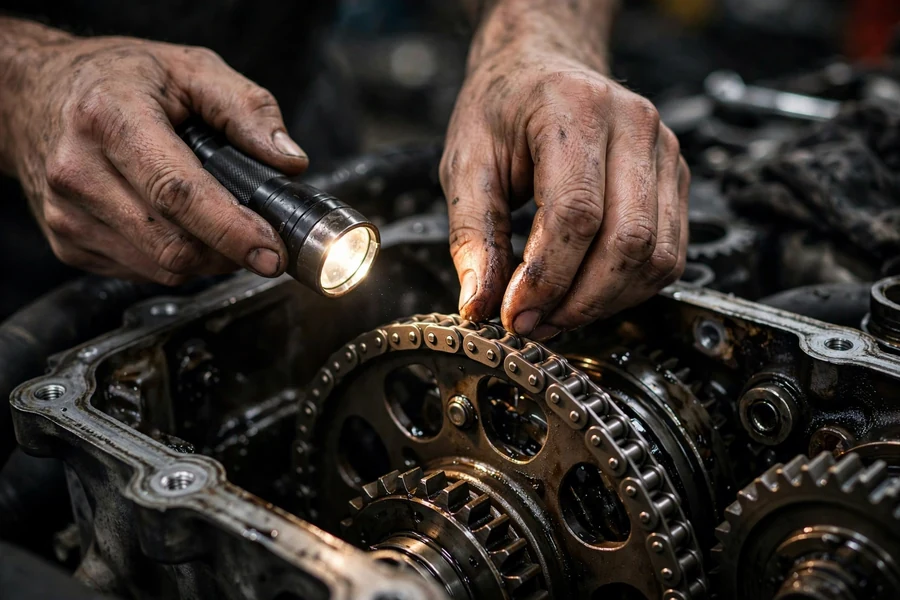
This is the section that decides the purchase for most buyers, so let us be precise. The N20’s timing-chain guide wear is its most-documented weakness: the plastic guides can wear prematurely, the chain stretches, and in the worst cases the engine jumps timing — a failure that turns a $1,500 preventive job into a $5,000+ engine rebuild. The problem concentrates in early cars (2012–2014 especially); BMW revised the parts and extended coverage on affected vehicles, but no N20 is immune and high-mileage examples without chain service deserve real scrutiny.
The B46 was designed with this failure in mind. Its timing-chain drive is revised, the oiling and cooling architecture updated, and owner-community reporting shows far fewer chain-related complaints at equivalent mileages. The B46 is not perfect — its most-reported gremlin is the coolant vent hose, a far cheaper and less catastrophic fix — but it represents a genuine generational improvement in the specific area that kills N20s. This single difference justifies most of the 330i’s price premium.
Beyond the chain, both engines share the usual turbo-four maintenance profile: strict oil-change discipline (every 7,500–10,000 miles with LL-01 oil, not the 15,000-mile “lifetime” fantasy), cooling-system vigilance past 80,000 miles, and the F30 chassis’s known wear items — control-arm bushings, valve-cover gaskets, the occasional water pump. Our reliability-by-year breakdown scores every F30 model year, and the maintenance schedule lists what each service actually costs. Either car can be reliable; the 330i just asks you to trust fewer things.
Interactive: 328i vs 330i buyer advisor
Four questions, 36 tailored verdicts. The advisor weighs your budget, your priorities, your wrenching habits and your mileage against everything above.
Running costs: fuel, maintenance, insurance
Day to day, the two cars cost nearly the same to run — the difference is the repair bill you might never get. Fuel is a wash: owner-reported Fuelly data shows 25.85 mpg for the 2014 328i and 26.09 for the 2017 330i, both on premium. Insurance is effectively identical; insurers price them as the same risk class, and any quote difference under $100/year is noise. Routine maintenance — oil, filters, plugs, brake fluid — costs the same because the parts and intervals are the same.
The divergence is catastrophic-repair risk. A 328i without timing-chain service carries a latent $1,500–$5,000 liability (preventive job vs failure), which a 330i buyer largely avoids pricing in. Amortized over ownership that risk is worth an estimated $500–$1,000 a year in expected value on a high-mileage N20 — our math, not a warranty — eerily close to the actual used-price premium of the 330i. The market, in other words, has already priced the timing chain into the badges. Paying the 330i premium is not paying extra; it is paying the risk up front instead of rolling the dice.
Ownership diary: five years with each
Numbers are abstract; calendars are not. Here is what five years of ownership typically looks like for each car, bought at 70,000 miles with good history, driven 12,000 miles a year at an independent specialist:
Years 1–2 are nearly identical. Oil services, a brake-fluid flush, cabin and engine air filters, maybe front brake pads. The 328i owner with no chain record spends these years listening to cold starts with one ear — the 330i owner does not think about the engine at all. Both owners replace tires once (~$800–$1,000 for a decent set). Costs: roughly $1,500–$2,000 per car, excluding the 328i’s optional $1,500 preventive chain job that the wise buyer does immediately.
Years 3–4 is where the cars diverge. The 330i asks for spark plugs, possibly a coolant vent hose, and control-arm bushings as the mileage crosses 100,000 — predictable wear, $1,500–$2,500 total. The 328i asks for the same plus the cooling system’s greatest hits: water pump and thermostat (a $900–$1,200 job at a specialist), and the valve-cover gasket that weeps oil onto the exhaust. If the chain was never done, year 3–4 is when the rattle usually starts announcing itself — and the $1,500 preventive job becomes a negotiation with fate.
Year 5 rewards the diligent and punishes the hopeful. A maintained 330i at 130,000 miles is a known quantity with years of life left — the B46 has proven itself at these mileages in owner communities. A maintained 328i with a serviced chain is equally viable; an unserviced one is living on borrowed time, and every cold start is a small gamble. Total five-year maintenance spend: roughly $7,000–$9,000 for the 330i, $8,500–$12,000 for the 328i including the chain job — a gap that, once again, mirrors the purchase-price premium. The market is efficient; the only question is whether you pay the mechanic or pay the seller.
Interactive: N20 timing-chain risk checker
Shopping a 328i? Just three quick inputs produce a precise risk rating for that specific car’s timing-chain situation — and tell you exactly what to do about it.
Risk ratings reflect owner-community failure patterns for the N20 timing-chain drive — a planning guide, not a diagnosis. A specialist inspection is the only way to assess an individual engine.
Used prices: what to pay
The market prices these cars exactly the way this article suggests it should. Comparable-condition 330is command roughly $3,000–$5,000 over equivalent 328is — the timing-chain fix, the LCI updates and the newer-car feel, all capitalized into the badge. A clean 2014–2015 328i with 70,000–90,000 miles typically trades in the low-to-mid teens; an equivalent 2017–2018 330i sits in the high teens to low twenties. (Treat these as observed bands, not appraisals — condition and history move individual cars thousands either way.)
The 328i only makes sense at a real discount. If the asking price is within $2,000 of an equivalent 330i, the 330i wins automatically — the risk reduction alone is worth the gap. The 328i’s hunting ground is the distressed or high-mileage listing: a well-kept example at a $4,000+ discount, where you bank the savings against a potential chain job and still come out ahead. Private sellers are where these deals live; dealers know exactly what the 330i premium is and price their 328is just under it. Never pay 330i money for N20 risk. And whatever you buy, our used 3 Series buying guide has the full negotiation and inspection playbook.
The F30 inspection checklist
Whichever badge you chase, the inspection is where F30 purchases are won or lost. These cars are now 8–14 years old; condition variance between individual examples dwarfs the 328i/330i differences. Do this in order:
Cold start, hood open. This is the timing-chain test. On a stone-cold engine, listen for a rattling or marbles-in-a-can sound from deep in the engine bay on the firewall side — the N20’s chain sits at the rear of the engine, so the noise comes from behind the valve cover, not the front. Any chain noise on a 328i for the first 2–3 seconds is a walk-away-or-discount-hard signal; on a 330i it is rarer but still worth noting. Let the car idle and watch for smoke, rough running or warning lights.
Service records, not stories. Demand receipts, not assurances. You want to see oil changes every 7,500–10,000 miles with LL-01-spec oil, coolant service, and (on 328is) any timing-chain work documented. A thick folder from a BMW specialist beats a thin one from a quick-lube chain. No records at all? Price the car as if every fluid is original and every wear item is due.
Cooling system. Squeeze hoses (they should be firm, not crunchy), check the expansion tank for cracks or discoloration, and look for any coolant smell or residue around the turbo and thermostat housing. The B46’s vent hose and the N20’s plastic cooling components are the known weak points — a $20 hose is nothing, but neglected cooling kills engines.
Suspension and steering. Drive over broken pavement and listen for clunks (control-arm bushings, a classic F30 wear item past 80k miles). The steering should track straight with no vibration; vibration under braking means warped rotors or worn thrust arms. Check tire wear patterns — inner-edge wear on the rears suggests alignment neglect.
Electronics and options verification. Cycle every window, the sunroof, all lights, the HVAC in every mode, and the iDrive through its menus. On 330is, confirm which options are actually fitted — LED headlights, heated seats, driver assists — against the asking price. An option code printout from a BMW dealer (often free with the VIN) settles every debate.
The specialist PPI. After your own checks, pay $200–$300 for a pre-purchase inspection at a BMW independent specialist — not a general shop, not the selling dealer. Ask them to put it on a lift, scan every module for stored codes (not just the check-engine light), and give you a written list of needs with prices. That list is your negotiation ammunition and your first-year maintenance budget in one document.
The verdict
Buy the 330i. For most shoppers this is not a difficult call: the B46’s revised timing-chain drive took the N20’s defining worry off the table for the vast majority of owners, the LCI made the car feel meaningfully newer inside and out, and the $3,000–$5,000 premium is the market’s fair price for sleeping well. The 330i is simply the better car and the safer bet, and on a purchase this size the premium amortizes to a few hundred dollars a year. Stretch if you can; you will not regret it.
The 328i is not a bad car — it is a good car with one well-understood risk selling at a discount. If your budget is hard-capped under $15,000, a documented, inspected 328i at the right price is an enormous amount of sport sedan for the money. Go in with eyes open: budget the chain job, keep the oil fresh, and enjoy one of the best-handling sedans of its era for used-Civic money. Just never pay 330i money for it, never skip the inspection, and walk away from any seller who gets vague about service history.
Either way, the F30 remains one of the smartest used sport-sedan buys on the market — balanced, practical, and cheap to run once sorted. Buy the newest, best-documented example your budget allows, get the specialist inspection, and drive it for years. The badge on the trunk matters less than the stack of service receipts in the glovebox.
One last piece of advice that applies to both badges: buy the seller as much as the car. An F30 from an enthusiast with a spreadsheet of every service is worth thousands more than the same car from a curbstoner with a story — and the price difference is usually smaller than the repair bills the story is hiding. Patience is the cheapest option on any used BMW. Wait for the right car, verify everything, and the F30 will reward you with the best dollar-per-smile ratio in the sport-sedan world.
FAQs
What is the difference between the F30 328i and 330i?
The 328i (2012–2015) uses BMW’s N20 2.0L turbo four (240 hp); the 330i (2016–2018) uses the revised B46 (248 hp) and brings the LCI facelift’s styling, LED lighting, updated iDrive, retuned steering and suspension, and upgraded interior materials. The engine’s timing-chain fix is the most important difference — everything else is refinement.
Is the 330i more reliable than the 328i?
Yes. The B46’s revised timing-chain drive addresses the N20’s most-documented weakness — premature timing-chain guide wear, concentrated in 2012–2014 cars, which can turn into a $5,000+ engine failure. Both engines need strict oil-change discipline and cooling-system vigilance past 80k miles, but the 330i has one fewer catastrophic failure mode.
How much more does a used 330i cost than a 328i?
Roughly $3,000–$5,000 for equivalent condition and mileage — an observed market band, not an appraisal. The premium closely tracks the expected cost of the 328i’s timing-chain risk, so it is fair value rather than a surcharge. If a 328i is priced within $2,000 of an equivalent 330i, buy the 330i.
Should I worry about the N20 timing chain?
Take it seriously but not hysterically. Early N20s (2012–2014) with patchy history at high mileage are the risk band; later cars with full records are far less concerning. A $1,500 preventive chain job exists — use the risk checker above, listen for rattle on cold starts, and get a specialist inspection before buying.
Which F30 model years are best to buy?
The 2016–2018 330i (B46, LCI) is the safest bet — revised engine, updated tech, retuned chassis. Among 328is, prefer 2014–2015 cars with full service history and proof of timing-chain service. See our reliability-by-year breakdown for full model-year scores.
Own one of these? Drop your mileage, model year and chain status in the comments — real N20/B46 data points help every F30 shopper.