MHD or Bootmod3? The Honest BMW 3 Series Tuning Guide
Short answer: This BMW 3 Series tuning guide covers the two flash platforms that matter — MHD (the established choice for the N54 and N55) and bootmod3 (the cloud-based platform covering N55, B58, and the 4-cylinder N20/N26 and B48). A tune rewrites boost, timing, and fueling targets in the factory DME. Stage 1 needs only a healthy car; Stage 2+ demands a downpipe, an upgraded intercooler, and a reinforced charge pipe. You can flash back to stock anytime — but assume a dealer can tell you were tuned.
Tuning a 3 Series is one of the cheapest ways to add serious pace — and one of the easiest ways to turn a reliable car into a project car if you do it carelessly. This guide is the unvarnished version for first-time flashers: what a tune changes, which platform fits which engine, what hardware each stage genuinely requires, what breaks, what it costs, and what happens to your warranty and emissions compliance.
Two flash platforms dominate the 3 Series: MHD and bootmod3 (BM3). Everything else — piggyback boxes, auction-site “Stage 3” chips, throttle controllers marketed as tunes — either tricks the DME’s sensors or is marketing fiction. This guide covers flash tuning, the only method that rewrites the engine’s actual operating targets.
What an ECU tune actually changes
Your BMW’s DME (Digital Motor Electronics — the engine control unit) runs a calibration: target tables that dictate, for any RPM, load, temperature, and gear, how much boost to request, how much ignition advance and fuel to deliver, and how much torque the drivetrain may transmit. A flash tune rewrites those tables. Concretely, a quality off-the-shelf (OTS) tune changes:
- Boost targets. The turbo is asked to build more pressure across the midrange — the source of most torque gains. Safety limits stay active: the DME still pulls back on excessive intake temperatures or knock.
- Ignition timing. Advance is pushed closer to the knock limit for the map’s rated octane. Run a 93-octane map on 91 fuel and the DME will pull timing — costing power at best, courting knock at worst.
- Fueling targets. Air-fuel ratio targets under load are adjusted, and fuel delivery is raised where the hardware allows, to match the extra air.
- Torque limits and throttle mapping. Factory torque caps (especially in lower gears) are raised and throttle response sharpened — part of the transformed feeling is pedal calibration, not just power.
- Limiters and emissions functions. Top-speed limiters can be raised or removed, with optional toggles for cold-start noise, exhaust burble, and — the legally consequential one — the catalytic converter efficiency check.
What a tune does not change is the physics of your hardware. The turbo has a finite airflow ceiling, the intercooler must shed the extra heat, and the fuel system has a maximum delivery rate. Stages exist because each step up the ladder hits one of those physical limits. A flash rewrites the calibration itself; a piggyback box merely intercepts sensor signals to trick the stock calibration. Flashes give smoother, more complete control — and flashing is what MHD and bootmod3 both do.
MHD vs bootmod3: the two platforms, honestly compared
MHD is the veteran: the first phone-based flashing tool for the twin-turbo N54, now covering the N54, N55, S55, B58, S58, S63, and N13. Per-engine license via in-app purchases, plus the map pack for your car; flash from a phone or tablet with MHD’s wireless OBD adapter. 3 Series off-the-shelf maps are developed under the PureBoost label, with optional logging, monitoring, and code-reading modules. Reverting to stock is built in.
bootmod3, from ProTuningFreaks, launched in late 2016 as the first cloud-based flash platform for BMW’s F and G chassis. One VIN-locked license includes one OTS map (a bundle unlocking all maps is sold separately); flash over OBD from a laptop or the mobile app, with an optional WiFi agent. Standouts: cloud-stored maps and datalogs, steering-wheel map switching, flex-fuel tuning, and a deep datalogging suite. Flashes back to stock.
The difference that decides it for most owners is not features — it is engine coverage, shown below. MHD does not cover the 4-cylinder N20/N26 (F30 328i) or B48 (G20 330i) at all; bootmod3 covers those, plus the N55 and B58. For a 328i or 330i, the decision is made for you.
| Your 3 Series | Engine | MHD | bootmod3 | Notes |
|---|---|---|---|---|
| E90 335i (2007–2010) | N54 twin-turbo | Yes — the native platform | Listed as supported | MHD is the established N54 standard |
| E90 335i (2011–2013), F30 335i | N55 single-turbo | Yes | Yes | Genuine toss-up; pick on features |
| F30 328i | N20 / N26 | No | Yes | bootmod3 only |
| F30 340i | B58 (Gen 1) | Yes | Yes | Both strong |
| G20 330i | B48 | No | Yes | bootmod3 only |
| G20 M340i | B58 (TU) | Yes | Yes | Check DME version — newer software may need a bench unlock |
One check before spending anything: BMW locked down DME flashing on cars with software updated past a point (broadly, late-2019/2020+ on the B58). Those cars need a bench unlock before any OBD flash works. Both apps verify your DME version — do that first, because a license for a locked DME sits idle.
MHD vs bootmod3 head-to-head
| MHD | bootmod3 | |
|---|---|---|
| Device | Phone/tablet app (Android and iOS via wireless adapter) | Cloud + web interface; laptop, phone, or tablet |
| Pricing model | Per-engine license + map pack + optional modules, in-app | One VIN-locked license incl. one OTS map; map bundle extra |
| Typical all-in cost | A few hundred dollars incl. adapter | Mid-hundreds for the license; WiFi agent optional |
| OTS maps | Stage maps by PureBoost, octane-specific | Stage maps with octane and ethanol-blend variants |
| Datalogging | In-app logging module | 80+ high-rate channels, cloud charting and sharing |
| Standout features | N54/N55 depth, code reading, monitor gauges | Map switching, flex-fuel, CustomROM |
| Transmission tuning | Pairs with xHP (separate app) | ZF 8-speed flash included on supported cars |
| Revert to stock | Yes | Yes |
What the stages actually mean (and what each one demands)
“Stage” is not an industry standard — it is each platform’s shorthand for how far the calibration pushes the hardware. The rule underneath: each stage assumes the hardware the map was validated on. A Stage 2 map on stock hardware does not give Stage 2 power; it gives a car fighting its own heat and backpressure.
| Stage | Typical hardware required | What it is for |
|---|---|---|
| Stage 0 / stock-like | None | Cleaned-up stock calibration or diagnostic baseline — not a power adder |
| Stage 1 | Stock hardware; healthy maintenance baseline | The safe first step: meaningful gains on a stock car |
| Stage 1+ (MHD) | Upgraded front-mount intercooler (FMIC) recommended | More aggressive timing/boost where intake temps stay controlled |
| Stage 2 | High-flow or catless downpipe (MHD accepts FMIC as the qualifying mod on some maps; bootmod3 generally wants both) | The classic “full bolt-on” street setup |
| Stage 2+ (MHD) | Downpipe and FMIC | Top of the OTS ladder before custom tuning |
| Custom / E-blends | Upgraded HPFP, often turbo upgrade, full bolt-ons | Ethanol blends and big turbos — tuner territory |
On power figures, an honesty note: dyno numbers across different dynos, days, and correction factors cannot be compared. Figures quoted here are vendor-published claims, not independent measurements. For example, ProTuningFreaks publishes its bootmod3 B58 OTS maps as percentage gains over stock: Stage 1 91-octane up to roughly 22% horsepower / 25% torque, Stage 1 93-octane up to roughly 25% / 25%, Stage 2 93-octane up to roughly 28% / 28%, ethanol blends into the low-to-mid 30s. Treat every such claim as a best-case on a healthy car with the right fuel.
For the N54 and N55, expect the same pattern in kind if not in number: Stage 1 transforms the midrange on stock hardware; each step up trades more hardware for more top-end. The N54’s twin turbos respond dramatically — the reason for the cult following — but they are older now, which matters below.
Before you flash: the maintenance baseline (non-negotiable)
This is the section that separates owners who enjoy their tune for years from “tune blew up my engine” threads. A tune does not fix a tired car; it interrogates it. More boost finds every weak seal, tired coil, and marginal plug. Do this first:
- Spark plugs: fresh, correctly gapped. Worn plugs misfire under tuned boost sooner and harder. The community standard for tuned N54/N55 cars is a one-step-colder plug gapped tighter than stock, even across all cylinders. See our spark plug replacement guide.
- Ignition coils: healthy. A coil that is “fine” stock can break down at 18+ psi — any misfire history means new coils with the plugs (see coil failure symptoms).
- No oil leaks. A tune raises crankcase pressure and heat; a seeping gasket becomes a real leak, and oil on a hot downpipe is a fire risk (see our oil leak guide).
- Cooling system: verified healthy. A 90,000-mile water pump, tired coolant, or weeping expansion tank is a breakdown waiting for a summer pull — check water pump symptoms and the overheating hub first.
- Fresh oil, correct spec. Start with the correct LL-spec oil (see our oil change interval guide) and shorten intervals once tuned.
- Fuel system health. N54 owners: the HPFP is a known weak point (see HPFP symptoms). Log fuel pressure before and after flashing; long cranks or pressure drops under load mean fix it first.
- Carbon buildup. All these engines are direct-injected and accumulate intake valve deposits. Heavy buildup costs power and causes misfires a tune will expose — consider walnut blasting past 60,000–80,000 miles if never done.
Budget reality: a few hundred dollars in parts if you DIY the plugs, coils, and oil — the cheapest insurance in the entire tuning process. Skipping it is how a $500 tune becomes a $3,000 repair.
Supporting mods for Stage 2 and beyond
Stage 1 works on a stock car because the factory hardware has headroom. Stage 2 spends that headroom, so the hardware has to grow. The canonical “full bolt-on” (FBO) set is three parts:
- Downpipe. The factory catalyst is the biggest exhaust restriction. A high-flow catted downpipe keeps a (less restrictive) catalyst; catless removes it entirely. Power difference on OTS maps is small; the legal difference is enormous (see the emissions section). Either way, the tune must handle the catalyst monitor or you get a permanent check-engine light.
- Upgraded intercooler. More boost means hotter charge air — hot air costs power and invites knock. The stock unit heat-soaks in one or two hard pulls; a larger front-mount keeps temperatures stable pull after pull. The single most underrated supporting mod.
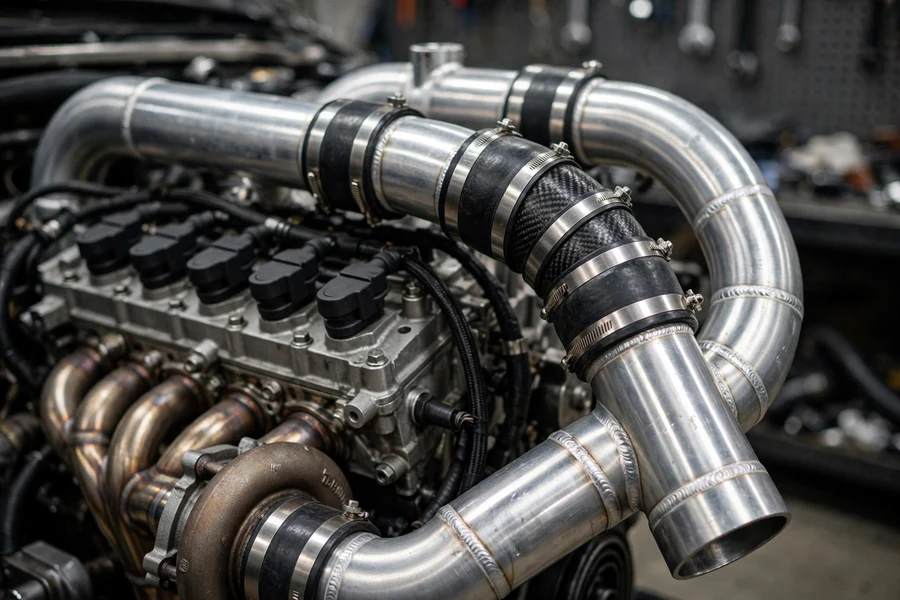
- Reinforced charge pipe. The factory pipe is plastic; higher boost cracks it — one of the most common tuned-car failures, announced by a loud pop and sudden power loss. An aluminum replacement is cheap insurance, effectively mandatory at Stage 2 (see our charge pipe failure guide).
Optional: a higher-flowing intake (mostly sound and sharper turbo response), and for ethanol ambitions, an upgraded HPFP plus flex-fuel sensor kit. Ethanol blends are the cheapest big power here, but they demand fuel-system headroom and diligent logging.
What breaks when you tune (the honest failure list)
Nothing on this list is guaranteed to fail. These are the components the tuning community replaces most often, in rough order of frequency:
- Charge pipes. Plastic + extra boost = cracks. The N55 is notorious; the B58’s pipe is sturdier but not immune.
- Cooling system. More heat kills aging water pumps, thermostats, and expansion tanks sooner. On track-driven cars, stock cooling capacity itself can become the limit.
- Clutch (manuals). Designed for stock torque: Stage 1 can make it slip, Stage 2 will finish it. Budget a performance clutch — a four-figure installed job — past Stage 1.
- Transmission calibration. The ZF 8-speed is strong, but big torque deserves matching software — bootmod3 includes a trans flash on supported cars; xHP is the companion for MHD users. Without it: lazy shifts, faster clutch-pack wear.
- Turbos. Higher boost shortens turbo life — thermodynamics, not pessimism. N54 wastegate rattle is a known age issue tuning exacerbates. Well-maintained stock turbos live long tuned lives; abused ones do not.
- Fuel system. The HPFP is the ceiling on direct-injected BMWs. When tuners say the N55 “runs out of fuel before it runs out of turbo,” this is what they mean — ethanol maps find the limit, and the fix is an upgraded pump.
The pattern: tuning rarely causes sudden catastrophic failure on a healthy car. It accelerates wear and exposes weakness — which is why the maintenance baseline and data logging matter more than the map you pick.
Interactive: which stage fits your car and goals?
Stage picker: pick engine + goal for a stage recommendation, required supporting mods, and the honesty note owners skip.
Interactive: are you actually ready to tune? (readiness scorer)
Readiness checklist: tick everything that is true — the scorer is only as honest as you are.
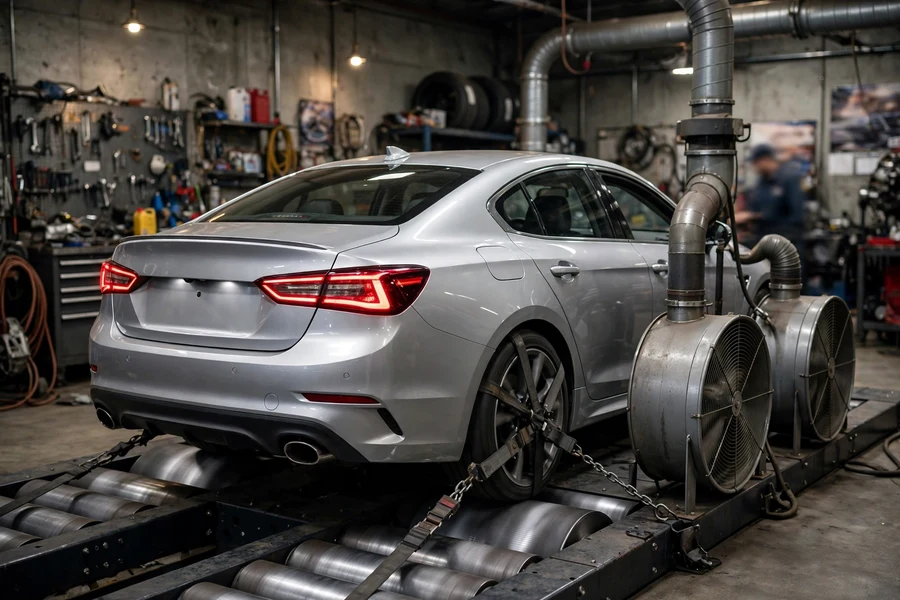
How a flash is actually done (DIY difficulty: easy — with caveats)
Flashing is one of the easiest “mods” you will ever do. Honest difficulty: 2 out of 10 for the process, 7 out of 10 for the judgment around it.
- Buy the right license and map for your exact engine and DME version. MHD: in-app purchases for your engine family plus the map pack. bootmod3: one VIN-locked license with one OTS map (map bundle optional). Verify DME unlock status first.
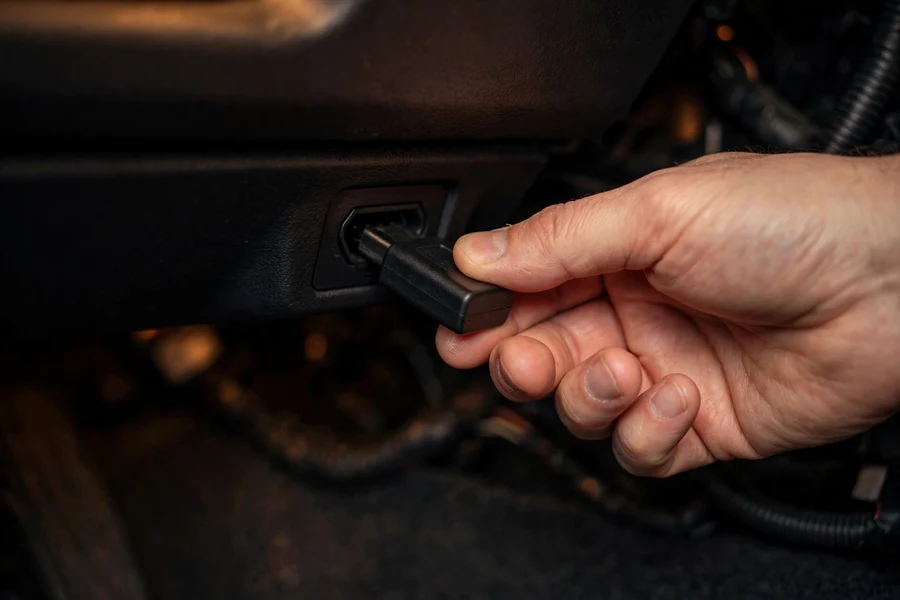
- Get the connection hardware. MHD: the wireless OBD adapter. bootmod3: a laptop works; the WiFi agent just removes the laptop from the car.
- Put a battery charger on the car. The skipped-and-regretted step: a flash writes to the DME for minutes, and a voltage sag mid-write can brick the module. A proper maintainer — not “the battery seems fine” — is mandatory (see why in our battery drain guide).
- Flash with ignition on, engine off, doors closed, accessories off — and touch nothing until the app confirms completion.
- Drive gently first, then log. Let the DME adapt, then do datalogged pulls (next section) to verify the car is happy before driving it hard.
Reverting to stock is built into both platforms and takes minutes. But “flash back to stock” is not “undetectable” — flash counters, tamper codes, and operating history can leave breadcrumbs. Treat the stock reflash as convenience, not a cloaking device.
Data logging basics: the skill that keeps tuned cars alive
Data logging records what the DME sees during a pull — boost, timing, fueling, temperatures — against the tune’s targets. Both platforms log (bootmod3’s cloud charting is more polished; MHD’s in-app logging covers the essentials). The big four:
- Boost: actual vs. target. Small deviations are normal; large sustained shortfalls mean a boost leak or a tired turbo.
- Timing corrections. Occasional small corrections are normal. Repeated large corrections (several degrees, same cylinders, every pull) mean inadequate octane, tired plugs, or carbon buildup.
- Air-fuel ratio (lambda). Under full load the car should hit the map’s targets. Lean readings under boost are a red flag — stop doing pulls and investigate fuel delivery.
- Intake air temperature (IAT). Soaring IATs that stay high mean the intercooler is overwhelmed — the classic sign you need the FMIC upgrade.
The standard log is a single-gear pull — typically third, low RPM to near redline, safe road, engine fully warm. Log the stock map before flashing if you can; the baseline makes post-flash logs far more informative. Re-log after every change: new map, new octane, new hardware, new season. Tuners live by logs because the DME will happily run a bad combination right up until it cannot — and a remote custom tuner will ask for logs before anything else.
One more logging-adjacent tool: a BMW-capable OBD2 scanner for pre-flash health checks and for diagnosing issues the tune did not cause.
What tuning really costs (honest cost bands)
Costs vary by engine and region; these bands reflect the current market:
The takeaway: Stage 1 on a healthy car is genuinely a few-hundred-dollar mod. A proper Stage 2 setup with supporting hardware is a $1,500–$3,000 project. Anyone quoting “Stage 2 power” for the price of the license alone is quoting the map, not the car it needs.
Warranty reality: what dealers can see and what it costs you
Let us be blunt: tuning can cost you powertrain warranty coverage. The “TD1” flag enthusiasts mention is Volkswagen/Audi’s internal code for a detected tune — BMW has no such public label, but dealers can see non-factory DME software via flash counters, tamper codes, and operating data no factory calibration would produce. Assume detection is possible even after flashing back to stock.
The legal picture is more nuanced than forums suggest. In the US, Magnuson-Moss means a manufacturer generally must show your modification caused the failure before denying a claim — they cannot void the whole warranty because a tune exists. In practice, if your tuned engine or transmission fails, expect the dealer to connect it to the extra power, and expect the burden of arguing otherwise to fall on you. A window regulator stays covered; for the powertrain, you are effectively self-insuring the moment you flash.
Practical rules: do not tune a car under factory powertrain warranty unless you accept this trade. A “mod-friendly” service advisor does not approve claims — the manufacturer does. If warranty preservation matters more than power, look at Dinan: the established BMW tuner offers its own matching warranty, which is what the premium buys. Cross-shopping 328i vs 335i on tuning potential? Our 328i vs 335i buying guide covers the broader trade-offs.
Emissions and legality: the part nobody markets
Both platforms offer a toggle to disable the catalytic converter efficiency check — the monitor that throws a check-engine light when the catalyst is gone. It exists for one reason: catless downpipes. The honesty: a catless downpipe with the CEL coded out is an emissions defeat device for street use. Federal tampering law prohibits removing or disabling an emissions control device on a road car, and inspection states (California’s smog check most strictly) will fail you. Vendors sell these parts “for off-road/competition use only” — that label is doing real legal work.
The practical middle ground is a high-flow catted downpipe: working catalyst, happy monitors, most inspections passed, and only a small power sacrifice versus catless on OTS maps. With emissions testing in your state, it is the only defensible choice. Research local rules before buying hardware, not after.
For the full ownership picture — maintenance schedules, common failures by system, and what to check when buying — start with the BMW 3 Series complete guide, our pillar page for the platform.
Frequently asked questions
Is MHD or bootmod3 better for a BMW 335i?
For the N55 335i, both are excellent — MHD has the deeper N55 heritage and a phone-first app; bootmod3 offers cloud maps, map switching, and stronger datalogging. For the older N54, MHD is the default. For a 328i (N20/N26) or 330i (B48), MHD is not an option, so bootmod3 wins by default.
Can I run Stage 1 with zero modifications?
Yes — Stage 1 is built for a stock car. The requirement is health, not hardware: fresh plugs, good coils, no leaks, sound cooling, correct octane. A Stage 1 map on a neglected car finds every weakness the stock calibration politely ignored.
Will the dealer know my BMW was tuned if I flash back to stock?
Assume yes. Both platforms revert to stock in minutes, but flash counters, tamper codes, and logged operating data can reveal the DME was modified. Flashing back is a convenience, not a reliable way to hide a tune from a warranty investigation.
Do I need a catless downpipe for Stage 2?
No. A high-flow catted downpipe satisfies Stage 2 OTS map requirements while keeping a working catalyst, happy emissions monitors, and inspection compliance. Catless costs less and gains a little, but it is legally an off-road-only part — and coding out the catalyst check to run one is an emissions defeat for street use.
What should I log after flashing a tune?
Log a single-gear pull (usually third, engine fully warm): check boost actual vs. target, timing corrections, air-fuel ratio under load, and intake air temperatures. Lean under boost is a stop-driving issue; soaring IATs mean the intercooler is overwhelmed. Log the stock map first if you can — the before/after comparison is far more informative.