BMW E46 vs E90 Reveals the Analog-Modern Divide
Short answer: The E46 (1999–2006) is the purer driver’s car — lighter, hydraulic steering, naturally aspirated inline-sixes — while the E90 generation (2006–2013; sedans through 2011, coupes and convertibles through 2013) is the faster, safer, more practical one, especially as the 300-hp twin-turbo 335i. Buy the E46 for the driving experience and the appreciating-classic story; buy the E90 for a usable daily with modern pace. Either way, condition and maintenance history decide everything at this age.
- The generations at a glance
- Driving: hydraulic soul vs modern pace
- Engines: M54 vs N52 vs N54
- Interactive: E46 vs E90 buyer match
- Reliability and the big gotchas
- E46 buyer’s guide: the models that matter
- E90 buyer’s guide: N52 vs N54 vs N55
- The M question: E46 M3 vs E90 M3
- Values and the market
- Interactive: which classic 3 Series for you?
- Ownership costs
- The classic 3 Series inspection checklist
- Ownership culture: parts, DIY and community
- The verdict
- FAQs
The generations at a glance
| E46 (1999–2006) | E90 gen (2006–2013) | |
|---|---|---|
| Character | The last “classic” 3 Series | The first modern 3 Series |
| Hero engine | M54 3.0L inline-6, 225 hp / 214 lb-ft | N54 3.0L twin-turbo inline-6, 300 hp / 300 lb-ft |
| 0–60 (330i / 335i) | 6.1 s (Car and Driver, Dec 2000) | 4.8 s (335i, Car and Driver) |
| Weight (manual) | ~3,285 lb (330i) | ~3,550 lb (335i) |
| Steering | Hydraulic assist | Hydraulic assist |
| Transmissions | Manuals common, incl. wagons | Manuals rarer, auto dominant |
| Safety | Of its era | Modern crash structure, more airbags |
| Used price band | $8k–$20k+ for good 330is | $10k–$25k for good 335is |
The E46 is the 3 Series that cemented BMW’s reputation — the car every subsequent generation gets measured against, and the one enthusiasts still argue was the peak. The E90 is the one that dragged the 3 Series into the modern era: turbocharging, iDrive, run-flat tires, and a chassis tuned as much for the Nürburgring as for the school run. Fourteen to twenty-five years on, both are now firmly “modern classics,” but they appeal to different buyers for different reasons, and the right choice depends entirely on what you want the car to be.
Driving: hydraulic soul vs modern pace
Drive them back-to-back and the E46 feels like a time machine in the best way. The hydraulic steering talks to your palms — weight building naturally, the front tires narrating grip through the rim — in a way no electric system has fully replicated. At roughly 3,285 lb in manual 330i form, the E46 changes direction with an eagerness the heavier E90 cannot match, and the naturally aspirated M54’s linear throttle response makes it a joy to balance on the edge of grip. It is slower in every measurable way and more satisfying in nearly every subjective one.
The E90 counters with pace and polish. A 335i’s twin-turbo N54 demolishes the E46 330i in a straight line — about 1.3 seconds quicker to 60 in instrumented testing (4.8 vs 6.1 s, Car and Driver) — and the E90 chassis is stiffer, quieter and more composed at speed. But the E90’s steering, though still hydraulic, is lighter and less communicative than the E46’s and filters out the conversation, the extra 250+ lb dulls the responses, and the turbo engine, for all its thrust, lacks the M54’s linearity. The E90 is the better car by every objective measure and the E46 is the better drive by feel — which tells you this decision was never going to be rational.
Engines: M54 vs N52 vs N54
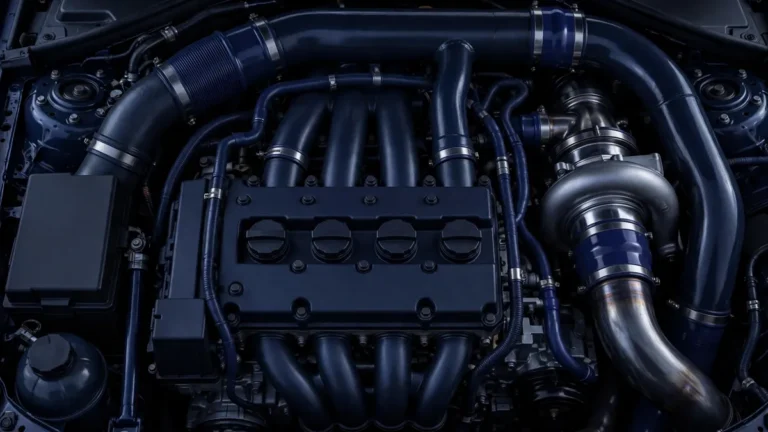
The M54 (E46 330i: 225 hp / 214 lb-ft) is one of BMW’s all-time great sixes — smooth, eager to rev, and mechanically straightforward. No turbos, no direct injection, no nonsense. Its weaknesses are well mapped after two decades: the cooling system needs a full refresh every 80,000–100,000 miles, VANOS seals harden with age (a cheap fix that transforms low-end response), and oil consumption past 150,000 miles is normal rather than alarming. A maintained M54 is a 250,000-mile engine.
The N52 (E90 325i/328i/330i) is the M54’s evolutionary heir — still naturally aspirated, now with an aluminum-magnesium block, Valvetronic and an electric water pump. It is lighter, slightly more powerful and more efficient than the M54, and generally reliable. Its pattern failures are the electric water pump (a $800–$1,200 job that strands you when it quits), the valve-cover and oil-filter-housing gaskets, and the eccentric-shaft sensor on high-mileage cars. Less charming than the M54, less troublesome than the N54 — the rational middle ground.
The N54 (E90 335i: 300 hp / 300 lb-ft) is the legend and the liability. Twin turbos gave the 3 Series supercar-baiting pace and made the 335i an instant tuner icon — but the early N54s are infamous for high-pressure fuel pump failures, piezo injector issues and wastegate rattle, all extensively documented in owner communities (we cover the N54’s fuel system in depth in our N54 injector guide). Later N54s and the single-turbo N55 successor are substantially better sorted. Buy a 335i only with proof that the expensive fuel-system work is done — or budget to do it yourself.
Interactive: E46 vs E90 buyer match
Four questions, 36 tailored verdicts. The matcher weighs budget, driving priorities, wrenching reality and intended use.
Reliability and the big gotchas
Both generations are old enough that every common failure is documented — which is actually good news, because there are no surprises left. The E46’s headline gotcha is rear subframe cracking: the rear axle carrier panel can tear around its mounting points, particularly on hard-driven cars. It is inspectable (look for cracks around the subframe mounts with the car on a lift) and repairable (reinforcement plates welded in, roughly $1,500–$2,500), but an uninspected E46 is a gamble. Every serious E46 buyer checks this first, the way 328i buyers check the timing chain.
Beyond the subframe, the E46’s needs are predictable: full cooling-system refresh (radiator, expansion tank, hoses, water pump, thermostat — do it all at once, roughly $800–$1,200 in parts), VANOS seals, rear trailing-arm bushings, and window regulators that fail with metronomic regularity. None of it is exotic; all of it is DIY-friendly. The E46 is arguably the last 3 Series a home mechanic can fully maintain, and parts availability remains excellent.
The E90’s gotchas are more electronic and more expensive. The N54’s fuel-system trilogy — high-pressure fuel pump, piezo injectors, wastegate rattle — is the stuff of legend; BMW extended warranties on some components, but at this age you are buying the seller’s maintenance, not the factory’s. The N52’s electric water pump fails without the gradual warning a belt-driven pump gives you. Both E90 engines eat valve-cover and oil-filter-housing gaskets, and the E90’s more complex electronics mean more modules to fail and more diagnostic time to find them. Our reliability-by-year breakdown scores the trouble spots year by year.
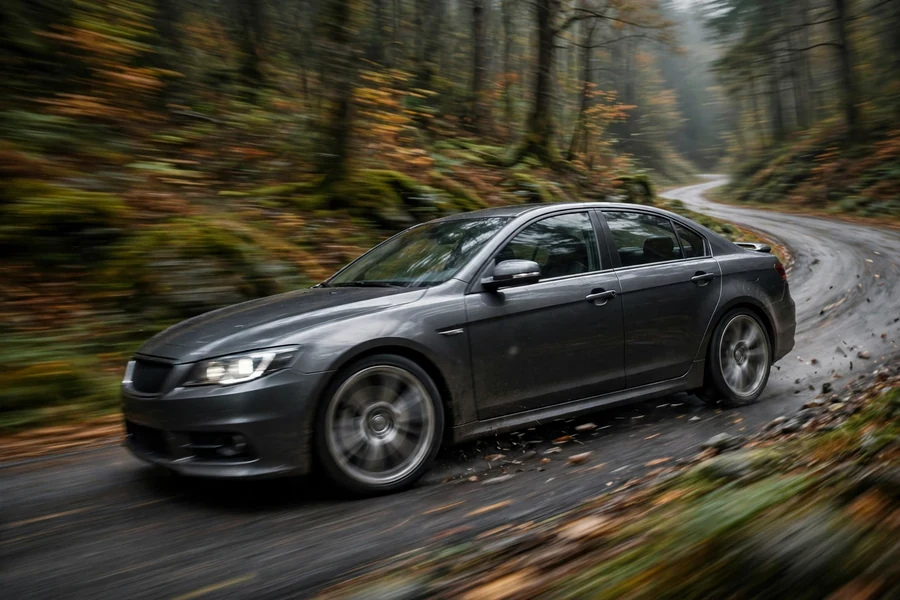
E46 buyer’s guide: the models that matter
Not all E46s are equal, and the price spread proves it. Here is the hierarchy that actually matters:
330i / 330Ci (2001–2006): The sweet spot. The 225-hp M54B30 is the engine the E46 deserves, and the 330i came generously equipped. Sedans are the value play; coupes (330Ci) carry a small premium for the looks. Manuals are findable with patience — roughly one in four, far better odds than any later generation. This is the default answer for 90% of E46 shoppers.
330i ZHP Performance Package (2003–2006): The one to have. Sharper cams, revised gearing, M suspension, cosmetic upgrades — and only about 11,500 cars built in total across sedans, coupes and convertibles. ZHPs command a real premium (roughly $15,000–$25,000+ for good ones — observed asking bands, not appraisals) and are the E46 variant with the clearest appreciation trajectory. If the budget stretches, buy the ZHP over a standard 330i every time.
325i / 325Ci (2001–2006): The M54B25’s 184 hp is adequate rather than exciting, but these are the cheapest way into the E46 experience and every word about steering feel applies equally. A clean manual 325i at $6,000–$8,000 is arguably more fun per dollar than anything else in this article. Do not dismiss them.
323i / 328i (1999–2000): The early cars with the M52 engine. Cheapest of all, but also oldest — expect the most deferred maintenance. Buy only as a project or at a price that assumes everything rubber is original.
Touring (wagon): The E46 wagon with a manual gearbox is the unicorn — BMW sold a tiny number in the US, all 325i models (there was no US-market 330i wagon), and enthusiasts hunt them relentlessly. If you find a clean manual 325iT, buy first and rationalize later. Values are strong and climbing.
E90 buyer’s guide: N52 vs N54 vs N55
The E90’s engine choice matters more than the E46’s, because the spread between the best and worst ownership experiences is wider:
N52 cars — 325i/328i/330i (2006–2013): The safe harbor. Naturally aspirated, generally reliable, and cheap to buy — good 328is start under $10,000. The 2006 330i (255-hp N52B30) is the connoisseur’s pick: one year only in the US, the most powerful NA E90 sedan, and still underappreciated. Watch the electric water pump and gaskets; otherwise, these are the “just drive it” E90s.
N54 cars — 335i (2007–2010): The legend. Twin turbos, 300 hp, enormous tuning potential — and the fuel-system issues documented above. The buying rule is absolute: documented HPFP/injector/turbo service, or a price that funds it. A sorted N54 335i is one of the great performance bargains; an unsorted one is a money pit wearing a bargain costume. Manuals are rare and coveted.
N55 cars — 335i (2011–2013): The safer evolution. Single twin-scroll turbo, Valvetronic, and most of the N54’s demons exorcised. Slightly less tuneable at the extreme end, substantially less stressful to own. The N55 335i is the E90 for people who want the pace without the project — and it commands a $2,000–$4,000 premium over equivalent N54 cars, which it earns.
xDrive models: Both generations offered all-wheel drive (xi/xDrive), and both systems are robust. The E46 xi sits slightly higher and loses a touch of the RWD car’s purity; the E90 xDrive is more transparent. For year-round daily duty in snow states, either is a sensible choice — just verify transfer-case and front-axle service history.
The M question: E46 M3 vs E90 M3
No E46 vs E90 discussion is complete without the M cars hovering over it — and they reframe the whole debate. The E46 M3’s S54 inline-six (333 hp) is widely considered one of the greatest engines ever fitted to a BMW: an 8,000-rpm screamer with individual throttle bodies and motorsport DNA. The E90 M3’s S65 V8 (414 hp) is its own legend — the only V8 M3 ever, revving to 8,400 rpm with a soundtrack no turbo engine will ever match. Both are now serious collector cars, with clean E46 M3s at $30,000–$60,000+ and E90 M3s climbing behind them.
The M cars matter to this comparison because they set the ceiling that makes the non-M cars look like bargains. A $15,000 manual 330i ZHP delivers a remarkable fraction of the E46 M3’s experience for a fraction of the money; a $20,000 N55 335i gives you E90 M3-adjacent pace for a fraction of the price. And both M cars carry their own well-documented needs — rod bearings on the S65, VANOS and subframe attention on the E46 M3 — that make the non-M cars’ simpler ownership genuinely appealing. Unless your budget is $35,000+, the M cars are inspiration, not options — glorious inspiration.
Values and the market
The E46 has crossed into appreciating-classic territory for the right cars. To calibrate: Hagerty’s past-sale records show a 2004 330i with 123,700 miles going unsold at an $8,700 bid in August 2024, while a 2003 manual 330i sold for $19,346 in February 2023. Those are isolated data points, not a market index — but the spread tells the story: condition, transmission and mileage create enormous variance. A scruffy automatic 325i is a $5,000 car; a pristine manual 330i ZHP is a $25,000+ car and climbing — observed bands, not appraisals. The E46 market rewards the best examples disproportionately, which is exactly what emerging classics do.
The E90 has not appreciated yet — it is still in the depreciation trough, which makes it the value play. Good 335is trade in the mid-teens to mid-twenties depending on history and specification; N52-powered 328is are genuinely cheap, often under $10,000 for decent examples. The 335i is the one enthusiasts watch for future appreciation: manual-transmission cars with documented fuel-system work could firm up as buyers recognize the last of the “analog enough” turbo BMWs — but that appreciation has not happened yet, and predictions are just predictions. The N55-powered later cars (2011+) are the safer buy mechanically and carry a small premium for it.
Interactive: which classic 3 Series for you?
Three yes/no questions. The picker narrows two generations and six engines down to your trim.
Ownership costs
Neither car is expensive by the standards of what they offer, but neither is a Toyota. Budget $1,200–$2,000 a year in maintenance at an independent specialist for a sorted example of either generation — less if you DIY, more in the first year when you baseline fluids, bushings and wear items. The E46’s parts are cheaper and its jobs simpler; the E90’s parts cost more and its electronics diagnose slower. Insurance is inexpensive for both — agreed-value classic policies are worth investigating for top-tier E46s.
Fuel economy is a wash in practice: high teens to low twenties in mixed driving for the six-cylinder cars, mid-twenties on a gentle highway run. The 335i drinks more when you use the turbos (and you will). Both want premium fuel. The real cost variable is the deferred maintenance hiding in a cheap example — a $7,000 E46 needing $4,000 of catch-up work is a worse deal than a $12,000 sorted one, a truth the market understands imperfectly, which is where patient buyers profit. Budget your first year as the “baselining” year: fluids, bushings, wear items, and whatever the inspection found.
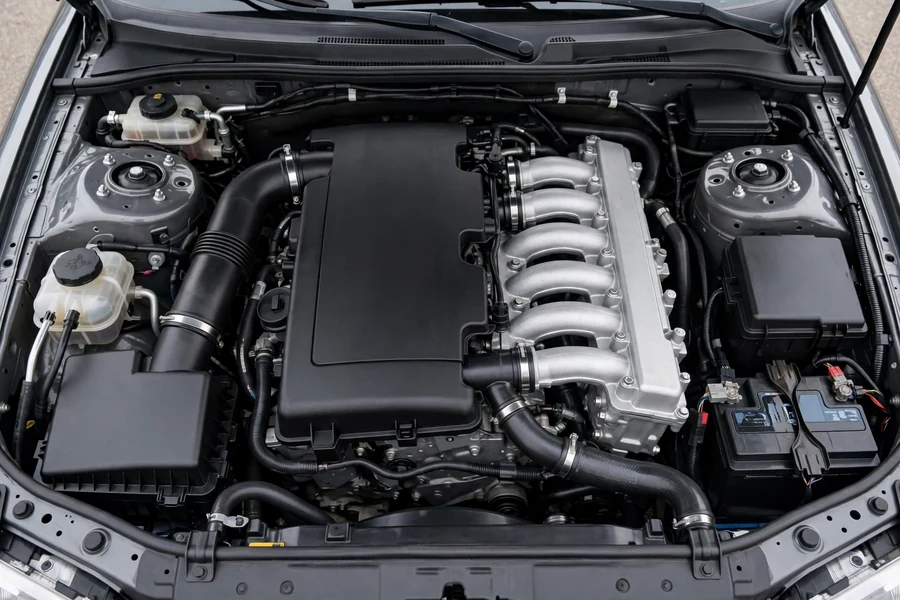
The classic 3 Series inspection checklist
At 13–27 years old, these cars are bought on inspection, not reputation. The checklist differs by generation:
E46 essentials: Rear subframe mounts — on a lift, inspect the sheet metal around all four subframe mounting points for cracks or tearing; this is the dealbreaker check. Cooling system — ask when the full refresh was done; “never” at 120,000+ miles means budget $1,000 immediately. Rust — check jack points, rear wheel arches and the trunk floor; E46s are better than E36s but not immune. VANOS — a rattling or gutless low end suggests hardened seals, a $300 DIY fix. And the usual: every electrical accessory, the sunroof, the air conditioning.
E90 essentials: N54 fuel system — demand receipts for HPFP, injectors and turbos/wastegates; a cold-start misfire or long crank is the warning sign. N52 water pump — ask when it was replaced; original at 100,000+ miles is living on borrowed time. Oil leaks — valve-cover and oil-filter-housing gaskets weep on nearly all of them; minor seepage is normal, active dripping needs attention. Electronics — scan all modules for stored codes, test iDrive through every menu, and verify every warning light illuminates at startup (a dead bulb can hide a deleted warning).
Both: Service records are the currency — a folder of receipts from a BMW specialist is worth $2,000–$3,000 over an equivalent car without. Tires should match all around (mismatched rubber on these chassis signals cheap ownership). And the pre-purchase inspection at a marque specialist ($200–$300) is non-negotiable; these mechanics have seen hundreds of E46s and E90s and can spot a tired example in twenty minutes. Our used buying guide covers the negotiation tactics that turn an inspection report into a discount.
Ownership culture: parts, DIY and community
Here is the E46’s secret weapon, and it has nothing to do with steering feel: it is one of the best-supported old cars in existence. Two decades of enthusiast ownership mean every failure is documented, every fix is on video, and parts are available from BMW Classic, a dozen OEM suppliers and a thriving aftermarket. The E46 is the last 3 Series a reasonably competent home mechanic can maintain end-to-end — no coding required for most jobs, no proprietary tools beyond the usual BMW torx-and-patience kit. Forums have answered every question you will ever ask, usually fifteen years ago.
The E90’s support network is nearly as deep but tilted differently: bigger tuning community (the N54 made sure of that), more specialist knowledge concentrated on the turbo cars, and excellent parts availability that will continue for decades given production volumes. The E90 asks more of a DIYer — coding for battery registration and injector calibration, more electronics to diagnose — but a good independent BMW specialist handles all of it routinely. If you are shop-dependent rather than DIY, the E90’s complexity penalty shrinks to just the higher parts and labor bills.
Both cars enjoy the intangible that makes old-BMW ownership work: community. Local BMW club chapters, track days full of E46s and E90s, and a culture of owners who help each other in parking lots. You are not just buying a car; you are joining the largest enthusiast support network in the sport-sedan world. That network is worth real money — it is the difference between a $2,000 dealer repair and a $200 Saturday with friends.
The verdict
Buy the E46 if you truly love driving. It is lighter, more communicative, mechanically simpler and already appreciating in the right specs — the last 3 Series that feels fully analog, and the one future generations will romanticize. A manual 330i with a clean subframe and fresh cooling system is one of the great sub-$20,000 enthusiast buys on the entire planet, full stop.
Buy the E90 if you love driving every day. The 335i’s pace embarrasses sports cars, the N52 cars are honest and durable, and modern safety and refinement matter when the car is your only car. It is still cheap, still handsome, and the manual 335i is quietly becoming the collector car nobody saw coming.
The tiebreaker is use case, not quality. Weekend toy, second car, investment with benefits: E46. Daily driver, year-round, one-car garage: E90. And the universal rule of old BMWs applies double here: buy the best-maintained example, not the cheapest listing — the premium for a sorted car is always less than the cost of sorting a cheap one. Our used 3 Series buying guide and the E90 vs F30 comparison will keep you honest through the search.
FAQs
Which is better: E46 or E90?
For driving feel, the E46 — lighter with hydraulic steering and a linear naturally aspirated six, widely considered the sweet spot of 3 Series history. For pace, safety and daily usability, the E90 — especially the 300-hp 335i, which outruns the E46 330i by over a second to 60 in Car and Driver instrumented testing (4.8 vs 6.1 s). Weekend toy or cherished second car: E46. Daily driver or only car: E90.
Is the E46 330i a future classic?
The best ones already are. Manual 330is — especially ZHP Performance Package cars — are appreciating, with Hagerty past sales showing strong money for clean manuals (a 2003 manual sold for $19,346 in 2023, while a high-mile 2004 went unsold at $8,700). Scruffy automatics are not collectible; condition, transmission and spec decide everything.
What goes wrong on the E46?
Rear subframe mount cracking (inspect on a lift before buying — the dealbreaker check), full cooling-system refresh needs every 80k–100k miles, VANOS seals, rear trailing-arm bushings and window regulators. All well-documented, all DIY-friendly, and parts remain cheap and plentiful.
Should I buy an E90 335i with the N54 engine?
Only with documented fuel-system service — HPFP failures, piezo injector issues and wastegate rattle are the N54’s known weaknesses, and the repair bills are four figures each. Later N54s and the single-turbo N55 successor (2011+) are substantially safer bets. See our N54 injector guide for the full story.
Are E46 parts still available?
Yes — excellent availability from BMW Classic, OEM suppliers and the aftermarket, with no sign of drying up for decades to come. The E46’s mechanical simplicity and huge production numbers keep parts cheap and easy to find — a genuine ownership advantage over more complex or rarer classics.
E46 or E90 in your garage? Tell us what you bought and what it needed — the next buyer’s shortlist starts in the comments.