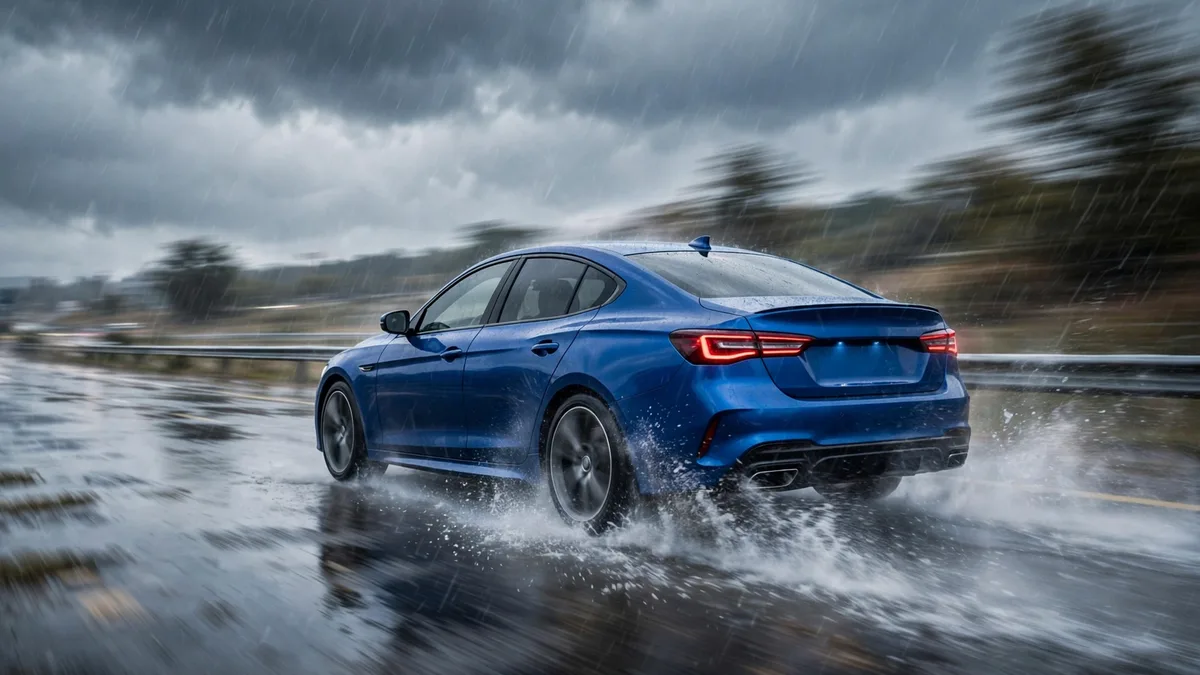
How BMW xDrive Works — The Full Breakdown
Ask ten BMW owners what xDrive does and you will get ten vague answers — “it’s all-wheel drive,” “it’s for snow,” “it makes it safer.” All true, none complete. xDrive is not a single gadget but a control strategy: a set of clutches, sensors, and software that decides, dozens of times per second, how much of the engine’s torque each axle should get. This guide explains the hardware, the famous 40:60 torque split, how the system thinks, how M xDrive differs, and where the common myths go wrong. Maintenance is covered separately in our xDrive maintenance guide — here we focus purely on how the system works.
On this page
- What xDrive is — and what it is not
- The hardware: transfer case, clutch pack, chain drive
- The 40:60 split and how it changes
- The brain: sensors, software, and DSC teamwork
- Not all xDrive is the same: RWD-based vs FWD-based vs M xDrive
- Five xDrive myths, corrected
- Interactive: xDrive torque-split scenario simulator
- Interactive: the xDrive true-or-false quiz
- Living with xDrive: what the system needs from you
- xDrive FAQs
What xDrive is — and what it is not
xDrive is BMW’s brand name for its all-wheel-drive system, introduced on the 2004 X3 (E83) and now fitted to most of the lineup. The crucial thing to understand: xDrive is a torque-distribution system, not a traction-creation system. It cannot create grip — only tires do that. What it does is decide which axle gets the engine’s torque, moment by moment, so the available grip is used as effectively as possible.
On the classic BMW layout — engine in front, driving the rear wheels — xDrive starts with a rear-drive car and adds a controlled path for torque to reach the front axle. That is why BMW people call it “rear-biased”: the car’s natural state is rear-driven, and the front axle is brought into play as needed. This is the opposite philosophy to most front-wheel-drive-based AWD systems (including BMW’s own UKL-platform cars like the X1), which start as front-drivers and send torque rearward when the front wheels slip. The driving feel is completely different, and it is the main reason enthusiasts prefer the classic layout.
xDrive is also not a substitute for winter tires, a locking differential, or careful driving. It improves how torque is shared; it does nothing for braking distances or cornering grip beyond what the tires provide. A rear-drive BMW on winter tires will out-brake and out-corner an xDrive BMW on summer tires in snow, every time.
The hardware: transfer case, clutch pack, chain drive
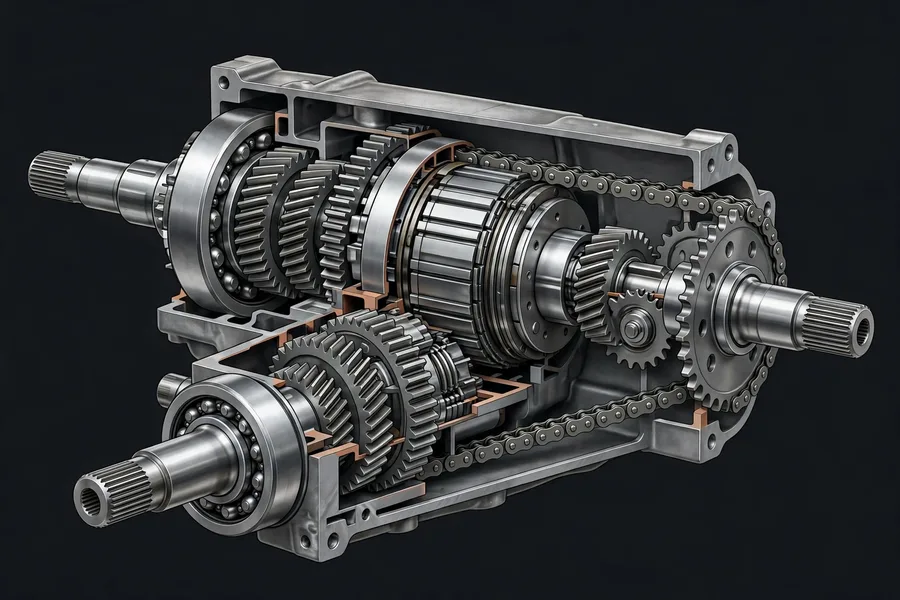
All the magic happens in the transfer case, a gearbox bolted to the back of the transmission. Engine torque enters the transfer case from the transmission; one output shaft runs rearward to the rear differential (a direct, permanent connection on classic xDrive), and a second output runs forward to the front differential. The front output is where the intelligence lives: an electronically controlled multi-plate clutch sits in the front drive path, and a control unit varies the clutch’s clamping force to decide how much torque reaches the front axle.
- Clutch open: no clamping force, no torque to the front axle — the car is effectively rear-wheel drive.
- Clutch partially engaged: some torque flows forward. More clamping force means more front-axle torque.
- Clutch fully closed: maximum torque transfer to the front axle for the conditions.
On X models the front output is typically chain-driven inside the transfer case (a sturdy chain running to the front driveshaft), while on sedans and coupes the drive is usually gear-driven — but the principle is identical. The clutch itself is actuated by an electric servo motor, which is why the system can react so quickly: BMW’s technical documentation for the longitudinal system describes full clutch opening or closing in roughly 100 milliseconds — about a tenth of a second from rear-drive to maximum front-axle engagement.
The 40:60 split and how it changes
The most quoted xDrive figure is the 40:60 nominal torque split — 40% to the front axle, 60% to the rear — under normal driving on the classic longitudinal system. BMW’s own technical material describes the system splitting drive power 60:40 rear-to-front in standard operation. That rearward bias is deliberate: it preserves BMW’s signature handling balance, with the car feeling like a rear-driver until conditions demand otherwise.
But 40:60 is a starting point, not a fixed ratio. The clutch can continuously vary the distribution, and the control unit is always asking: what do the sensors say right now? Here is how the split typically behaves across driving situations on a standard xDrive car:
| Situation | Typical front:rear behavior | What the system is doing |
|---|---|---|
| Cruising on a dry highway | Near 0:100 to 40:60 | Minimal front engagement needed; clutch mostly open for efficiency |
| Hard acceleration from rest (dry) | Up to ~50:50 | Weight transfers rearward; front axle engaged to use all available traction |
| Steady cornering | Varies, rear-biased | Split adjusted with steering angle to keep the car neutral |
| Rear wheels slipping (wet/ice) | Up to maximum front bias | Clutch clamps down, sending torque where grip exists |
| Front wheels slipping | Shifts rearward | Clutch opens to return torque to the gripping rear axle |
| Parking / tight maneuvers | Minimal front drive | Clutch opened to avoid driveline binding in tight turns |
Two honest caveats. First, the exact maximum front-axle percentage varies by generation and model — BMW does not publish a single “up to X%” figure that applies to every xDrive ever built, so treat internet claims of “up to 100% to either axle” with skepticism unless they cite a specific model. Second, xDrive apportions torque between the axles; it does not replace the differentials within each axle. If one front wheel spins on ice while the other has grip, that is a job for the open differential plus DSC brake intervention (see below), not the transfer-case clutch.
The brain: sensors, software, and DSC teamwork
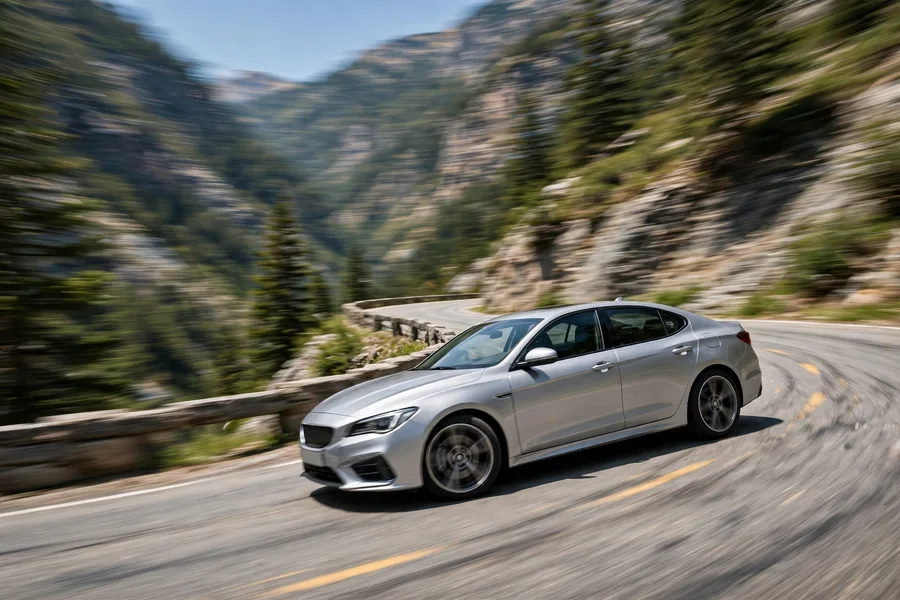
The clutch is the muscle; the control unit is the brain. It continuously reads wheel-speed sensors, steering angle, yaw rate (how fast the car is rotating), lateral acceleration, throttle position, and engine torque — then computes the ideal front:rear distribution many times per second. The key word is proactive: unlike old reactive 4WD systems that waited for wheels to spin, xDrive anticipates. Floor the throttle from a standstill and it engages the front axle before slip occurs; turn into a corner and it pre-adjusts the split based on steering angle and speed.
But xDrive does not work alone. It is deeply integrated with DSC (Dynamic Stability Control), and understanding the division of labor is the single most useful thing in this guide:
- xDrive moves torque between the front and rear axles via the transfer-case clutch.
- DSC manages grip at individual wheels by braking a spinning or sliding wheel and, if needed, reducing engine power.
Picture one rear wheel on ice and the other on asphalt. xDrive can send torque rearward all day, but the open rear differential will still feed most of it to the wheel on ice — the path of least resistance. DSC solves this by braking the spinning wheel, which forces the differential to send torque to the wheel with grip. This brake-based “electronic differential lock” is also how xDrive cars cope without mechanical limited-slip differentials on most models. (M cars add a real mechanical Active M Differential at the rear, which is one reason they feel so different.)
The hierarchy in a skid, simplified: sensors detect the problem → xDrive rebalances axle torque (fastest, ~100 ms) → DSC brakes individual wheels if the imbalance persists → engine power is cut only as a last resort. Switch DSC off and you remove the safety net, but xDrive’s torque distribution keeps working — which is exactly why an xDrive car with DSC off can still be caught out by a ham-fisted driver.
Not all xDrive is the same: RWD-based vs FWD-based vs M xDrive
BMW uses the xDrive badge on fundamentally different hardware. Knowing which one a car has explains most of the confusion in online arguments.
| Variant | Found on | Default behavior | Character |
|---|---|---|---|
| Longitudinal xDrive (classic) | 3, 5, 7 Series; X3, X5, X7 | Rear-biased, ~40:60 front:rear nominal | Feels like a rear-driver; the enthusiast benchmark |
| Transverse xDrive (UKL platform) | X1, X2, 2 Series Gran Coupé | Front-biased; clutch open = 100% front | Efficient packaging; feels like a front-driver until slip |
| M xDrive | M3, M4, M5, XM | Even more rear-biased; can fully decouple the front axle | Track-focused; offers a pure 2WD mode on M3/M4 |
The transverse system deserves a moment. In the X1/X2, the engine sits sideways and the gearbox drives the front wheels directly; xDrive is implemented as a clutch (often a hang-on unit at the rear) that brings the rear axle in when needed. With the clutch open the car is purely front-wheel drive — the mirror image of the classic system. It is excellent packaging for small cars and perfectly fine in snow, but it will never feel like a 3 Series.
M xDrive is the interesting one. BMW M’s engineers took the classic system and biased it even further rearward, integrated it with the Active M Differential, and — on the M3 and M4 — added a 2WD mode that fully decouples the front axle for pure rear-drive behavior (with DSC off). In its default 4WD mode it still sends drive rearward most of the time, bringing the front axle in only when the rear tires are overwhelmed. BMW’s own press material describes M xDrive as channeling drive to the rear wheels in normal operation and only engaging the front axle when additional traction is required — which is why M cars can feel rear-driven right up to the moment they need help. The default 4WD Sport mode allows more slip angle before intervening, for drivers who like their M car lively.
Five xDrive myths, corrected
1. “xDrive is full-time 50:50 all-wheel drive”
No. The nominal split on classic xDrive is rear-biased at roughly 40:60, and the system varies it continuously. A fixed 50:50 split is what old-fashioned center differentials did; xDrive’s entire point is that the split is never fixed.
2. “xDrive makes a BMW handle like a rear-drive car, always”
Mostly true for the classic system, false for the transverse one. A 3 Series xDrive feels rear-driven because it mostly is rear-driven. An X1 xDrive feels front-driven for the same reason. Same badge, different physics.
3. “xDrive can send 100% of power to one axle”
Partly true, and this is where precision matters. With the clutch fully open, effectively 100% goes rearward on the classic system (the front axle is decoupled). Sending 100% forward is not how the system is designed — the rear axle is permanently driven. M xDrive’s 2WD mode is the purest expression of the rearward extreme. Claims beyond that need a model-specific source.
4. “xDrive replaces winter tires”
It does not. xDrive helps you accelerate without spinning; it does nothing for braking or cornering grip, which are 100% tire-dependent. The safest winter setup is xDrive plus winter tires — and a rear-drive BMW on winter tires remains safer than an xDrive BMW on summer tires.
5. “All xDrive cars feel the same”
A base X1, a 340i xDrive, and an M5 with M xDrive share a badge and a concept — an electronically controlled clutch apportioning torque — but the calibrations, default splits, and integration with the rear differential are completely different. Judge the car, not the badge.
How xDrive feels from the driver’s seat
Specifications only tell half the story. From behind the wheel, a classic xDrive BMW feels like a rear-drive car that has quietly hired a bodyguard. In normal driving you will not notice the system at all — no tugging at the steering wheel, no sense of the front axle dragging you through corners. That transparency is deliberate: because the clutch stays mostly open when grip is plentiful, the steering keeps the clean, uncorrupted feel BMW is known for, unlike front-biased systems that can feel the front axle working under power.
Push harder and the bodyguard reveals itself in the absence of drama. Where a rear-drive car would spin its inside rear wheel and trigger a DSC intervention, the xDrive car simply finds traction and goes. The intervention is so smooth that many drivers never realize anything happened — there is no flashing light, no cut in power, just forward motion where you expected a wiggle. This is xDrive’s signature sensation: not excitement, but a quiet refusal to be flustered.
The trade-offs are subtle but real. An xDrive car carries extra weight — typically 50–70 kg of transfer case, front differential, and driveshafts — and that mass sits ahead of and below the cabin, slightly dulling turn-in response compared with the equivalent rear-drive model. Fuel consumption is marginally higher. And at the absolute limit, the system prioritizes stability over playfulness: a rear-drive 3 Series will hold a powerslide; an xDrive car will sort itself out and carry on. For most drivers, most of the time, that is a feature, not a bug — but it is worth knowing which personality you are buying. Our xDrive vs RWD comparison drives the distinction home in detail.
xDrive vs Audi Quattro and Mercedes 4MATIC
Every German premium brand has its own answer to all-wheel drive, and the philosophies differ in ways you can feel. Audi’s Quattro (on longitudinal models) historically used a Torsen mechanical center differential with a fixed 40:60 rear-biased split — a purely mechanical solution that apportions torque based on grip without any electronics deciding. Modern Audis have largely moved to electronically controlled clutches similar in concept to xDrive (“Quattro with ultra technology” can even decouple the rear axle for efficiency). The classic distinction: old Quattro was mechanical and always engaged; xDrive was electronic and predictive.
Mercedes 4MATIC varies by model but on rear-drive-based cars (like the C-Class) it uses a similar electronically controlled multi-plate clutch in the transfer case, with a nominal 45:55 front:rear split on recent models — slightly less rear-biased than BMW’s classic calibration. In practice, a C300 4MATIC and a 330i xDrive feel remarkably similar in normal driving: both are transparent, rear-biased systems that only reveal themselves when grip disappears. The differences emerge at the margins — BMW’s calibration tends to allow a touch more rear-drive character before intervening, while Mercedes tunes slightly more toward stability.
None of this makes one system objectively “best.” Mechanical systems (old Quattro) are prized for their natural feel and robustness; electronic systems (xDrive, modern Quattro, 4MATIC) react faster and integrate with stability control for better accident avoidance. What matters for a buyer is simpler: all three are excellent, all three need matched tires and fluid services, and none of them replaces winter tires.
xDrive history in brief
BMW’s all-wheel-drive story did not start with xDrive. In the 1980s and 1990s, cars like the E30 325iX and E34 525iX used viscous-coupling AWD systems — mechanical, reactive, and crude by modern standards. The xDrive name arrived in 2003 on the first-generation X3 (E83), and it represented a philosophical break: instead of a mechanical center differential, BMW used an electronically controlled clutch that could vary the torque split continuously and work proactively with stability control.
The system spread across the lineup through the 2000s — the E90 3 Series gained xDrive for the 2007 model year — and each generation brought faster processors, finer clutch control, and deeper DSC integration. The 2010s added the transverse variant for the UKL-platform cars (X1, X2, 2 Series Gran Coupé) and, in 2018, M xDrive debuted on the F90 M5 — the first time an M5 sent power to all four wheels. Today’s system is the fourth major evolution of the concept: same idea as 2003 (a smart clutch in the transfer case), executed with twenty years of software refinement.
Interactive: xDrive torque-split scenario simulator
Pick a surface, a maneuver, and a drive mode — the simulator shows how classic longitudinal xDrive would distribute torque and which system (xDrive or DSC) does the heavy lifting. All 36 combinations are modeled.
Interactive: the xDrive true-or-false quiz
Five statements, five seconds each. Tap true or false and see if you really understand xDrive.
Living with xDrive: what the system needs from you
xDrive asks little of its owner, but it is sensitive to one thing above all: mismatched tires. Because the clutch pack constantly compares wheel speeds, running tires with significantly different rolling diameters — different sizes, or the same size with very different wear — forces the clutch to work overtime and accelerates wear in the transfer case. The rules are simple: keep all four tires the same size, type, and similar tread depth (replace in axle pairs at minimum, ideally as a set of four), and use BMW star-marked tires where specified. Staggered setups (wider rears) are factory-engineered with matched rolling diameters, so those are fine.
Beyond tires, xDrive’s service needs are fluids: transfer-case oil and front/rear differential oil on a sensible interval, even though BMW officially calls some of them “lifetime fill.” Independent specialists typically suggest transfer-case fluid every 50,000–60,000 miles and differential fluid on a similar cadence — cheap insurance against a transfer case that costs thousands to replace. Warning signs of trouble include shuddering on tight low-speed turns, a whining noise that changes with road speed, and any drivetrain or AWD warning light on the dashboard. The full schedule, symptoms of a failing transfer case, and cost expectations live in our xDrive maintenance guide. If you are still deciding between drivetrains, our xDrive vs RWD comparison weighs the trade-offs, and the 3 Series maintenance schedule puts the AWD-specific services in the context of everything else the car needs.
xDrive FAQs
Is BMW xDrive full-time all-wheel drive?
Effectively yes on the classic system — the rear axle is always driven and the clutch can engage the front axle in about 100 milliseconds — but the torque split is continuously variable, not fixed. The nominal starting point is roughly 40% front / 60% rear. The transverse xDrive in the X1/X2 is front-biased instead.
Can xDrive send all the power to the rear wheels?
With the transfer-case clutch fully open, effectively 100% of torque goes to the rear axle on classic xDrive — the car behaves like a rear-driver. M xDrive’s 2WD mode on the M3/M4 does exactly this deliberately. The system is not designed to send 100% forward.
Is xDrive good in snow?
Yes — it is one of the better AWD systems for winter because it engages the front axle proactively, before slip occurs. But xDrive only manages drive torque; braking and cornering grip come entirely from the tires. xDrive plus winter tires is the proper winter setup.
What is the difference between xDrive and M xDrive?
M xDrive is a sportier calibration of the same concept: even more rear-biased, integrated with the Active M Differential, and — on the M3/M4 — offering 4WD, 4WD Sport, and pure 2WD modes. In normal operation it behaves like a rear-drive car until the rear tires need help. BMW M’s press material on M xDrive describes it as channeling drive rearward and engaging the front axle only when additional traction is required.
Does xDrive need maintenance?
Yes. The transfer-case clutch and actuator, plus the front and rear differentials, need periodic fluid services — BMW’s “lifetime fill” claim notwithstanding. The most important owner habit is keeping all four tires matched in size and wear. See our xDrive maintenance guide for the full schedule.