How to Reset BMW’s Transmission Adaptations (8HP)
Short answer: A BMW transmission adaptation reset clears the learned clutch fill pressures and shift timing your ZF 8HP’s control unit built up over thousands of miles, forcing it to relearn from zero. The only documented method is a scan tool that talks to the EGS (ISTA, xHP, BimmerLink, Carly) — the “hold the gas pedal for 30 seconds” trick resets throttle/driver behavior at most, not transmission adaptations. A reset genuinely helps after fluid service, mechatronic or solenoid work, or when bad shift habits were learned from worn fluid; it cannot fix worn clutch packs, low fluid, or failing solenoids. Expect rougher shifts for the first 100–200 miles while the relearn completes.
If your BMW 3 Series has developed harsh shifts, a clunk on the 2–1 downshift, or a vague flare between gears, someone has probably told you to “just reset the transmission adaptations.” It’s one of the most repeated pieces of advice in BMW ownership — and one of the most misunderstood. A reset is neither the magic cure-all its fans claim nor the gearbox death sentence its critics warn about. It’s a specific procedure for specific situations, with real trade-offs.
This guide lays out the honest picture — what the transmission is actually learning, what a reset erases, when it genuinely helps and when it’s a placebo, the real reset method (and why the gas-pedal myth persists), the relearn drive cycle, and the signs your problem is hardware a reset can never fix.
What your ZF 8HP is actually learning
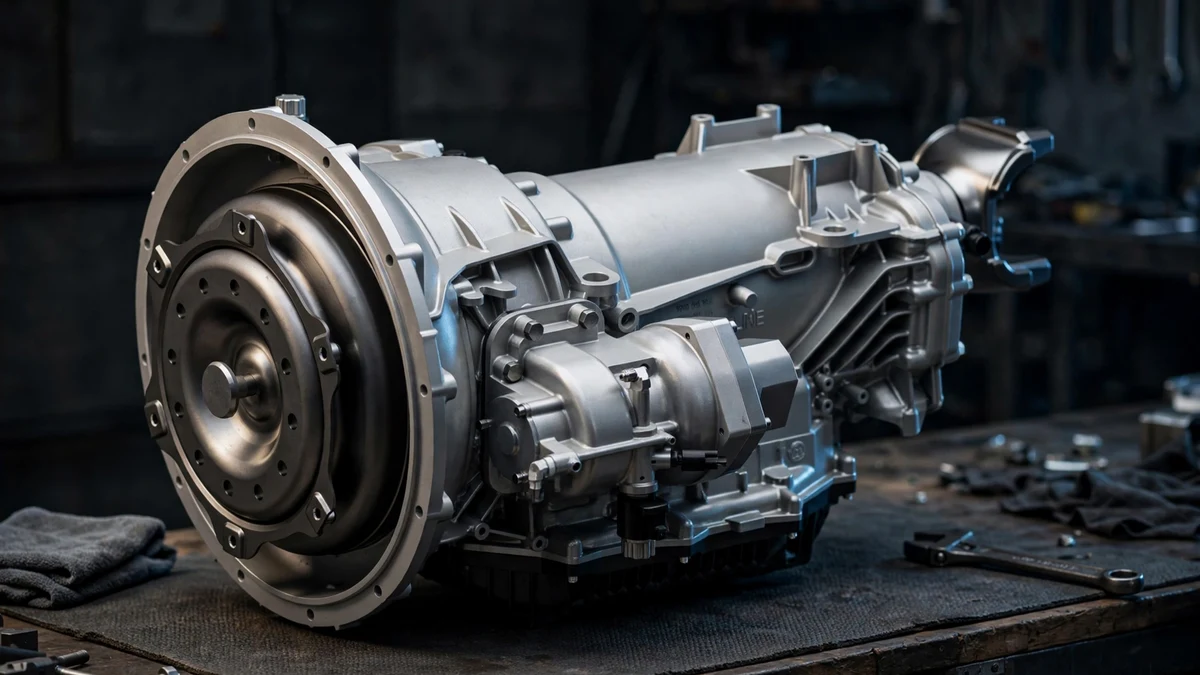
Your 3 Series’ automatic is not just a gearbox — it’s a gearbox with a computer. The mechatronic unit (valve body plus integrated electronics) contains the EGS, the transmission control unit, which watches every shift and quietly adjusts hydraulic pressure and timing to keep shifts smooth as the hardware ages.
To understand why, think about how an automatic shifts. Changing gear means releasing one clutch pack and engaging another, with hydraulic fluid filling a piston chamber in milliseconds. When everything is new, a known pressure applied for a known time produces a crisp shift. But clutch plates wear thinner, fluid degrades and changes viscosity, seals age — and the same pressure no longer produces the same result. The shift gets harsh, or flares (engine speed rises between gears), or binds.
Adaptations are the EGS’s answer. It measures the outcome of each shift via speed sensors and slip detection, then trims control values — a little more fill pressure here, a little earlier engagement there — so shifts stay smooth despite wear. This is continuous, invisible, and per-clutch: the ZF 8HP uses five shift elements (clutches A through E, in different combinations for each of the eight gears), and each gets its own learned corrections.
What the EGS stores
| Adaptation stored | What it corrects | Units you’ll see on a scan tool |
|---|---|---|
| Clutch fill pressure (per clutch A–E) | Wear and fluid aging that change how much pressure each pack needs to engage cleanly | Millibar (mbar), positive and negative offsets |
| Clutch fill timing / quick-fill | The pre-fill pulse that takes up slack before the clutch bites — compensates for plate wear | Milliseconds |
| Slip adaptation | Controlled slip of the torque converter lockup clutch for smooth engagement | Slip speed (rpm) trims |
| Shift overlap timing | How the off-going and on-coming clutches hand over torque during each shift | Timing offsets per shift event |
| Driver behavior profile | Your driving style — gentle vs. aggressive — which biases shift points and firmness | Not directly readable; observed in shift behavior |
Two layers matter for everything that follows. The wear layer — the first four rows above — is the long memory, compensating for hardware aging over tens of thousands of miles. The driver layer is the short memory: it notices aggressive or gentle driving, adjusts shift points, and re-adapts on its own within days. The gas-pedal trick, to the extent it does anything, touches only the driver layer. The wear layer — the one that matters for shift quality — can only be cleared by talking directly to the EGS.
And an important subtlety: the wear layer exists because hardware changes. If clutch packs are genuinely worn, adaptations are the only thing keeping shifts civilized. Resetting on a worn gearbox doesn’t restore youth — it removes the compensation and lets the raw wear show through, at least until the EGS relearns the same corrections.
When a reset genuinely helps — and when it’s a placebo
Adaptation resets fail most often because they’re applied to the wrong problem. A reset changes software memory; it cannot change hardware. If the hardware is healthy but the memory is wrong, a reset is the right tool. If the hardware is the problem, a reset is theater — and on a worn transmission it can temporarily make things worse by deleting the corrections masking the wear.
| Situation | Verdict | Why |
|---|---|---|
| Right after a transmission fluid and filter service | Helps | Adaptations were tuned for old, degraded fluid. Fresh fluid has different viscosity and friction behavior; the old corrections can cause harsh shifts on new fluid until relearned. |
| After mechatronic, solenoid, or seal work | Helps — often required | New or serviced hydraulic components behave differently from the old ones. Relearning against the new hardware is the documented procedure. |
| After clutch pack replacement | Helps — required | New clutches with old wear corrections is a mismatch by definition. The EGS must start from baseline. |
| Car learned bad habits (e.g. previous owner towed heavily, drove aggressively, or fluid was neglected) | Often helps | The corrections are valid for conditions that no longer apply. Clearing them lets the box adapt to how the car is actually driven now. |
| Rough shifts on a high-mileage car with no recent work | Unlikely to help | The adaptations are probably correct — they’re compensating for real wear. Clearing them removes the compensation, not the wear. |
| Slipping or flaring between gears | Won’t help | Flare means a clutch isn’t holding pressure — a hydraulic or mechanical problem. No software reset creates clamping force. |
| Low or wrong transmission fluid | Won’t help | Fluid level and specification are hydraulic facts. Fix the level first, then judge the shifts. |
| Drivetrain Malfunction warning or limp mode | Won’t help — diagnose first | Limp mode means the EGS has detected a fault. Clearing adaptations without reading and addressing the fault codes is guessing. Start with proper diagnostics. |
One more honest caveat: even in the “helps” column, a reset is not instant gratification. The first miles after a reset are almost always worse — shifts firmer, some clunks — because the EGS is back to factory defaults and must rediscover every correction. Owners who reset and judge after one trip around the block conclude it “ruined” their gearbox. It didn’t; it just hasn’t finished learning. The relearn takes roughly 100–200 miles of varied driving.
The gas-pedal “transmission reset” myth — honestly addressed
You’ve seen it in every BMW forum: turn the ignition on (engine off), floor the gas pedal past the kickdown click for 30 seconds, switch off while still holding it, wait two minutes, start the car — transmission reset. A decade of copy-pasting across brands and transmissions. It deserves an honest verdict.
The verdict: it does not reset transmission adaptations. No BMW service literature documents clearing EGS clutch adaptations via the accelerator — those corrections live in the transmission control unit and are only erasable through a diagnostic session addressing the EGS directly. Owners who have tested the pedal procedure with a scan tool report the clutch values don’t change.
So why do so many people swear it works? Two reasons, both real but misattributed. First, the procedure can reset the throttle/driver behavior layer — the short-term memory of how you’ve been driving. If the car adapted to a previous owner’s aggressive driving, clearing the driver profile genuinely changes how it feels: sharper throttle response, different shift points. That’s real, but it isn’t a transmission adaptation reset — and it would have re-adapted to your driving on its own within days.
Second, the placebo structure of the procedure itself: it demands a two-minute wait, a careful sequence, and your full attention. Anything that makes you drive the next ten minutes paying close attention to shift feel will “improve” shift feel in your perception. That’s why anecdote-heavy forum threads are a poor substitute for reading the actual adaptation values.
One more nuance: even if the pedal trick only touches the driver layer, that layer is what makes a car feel different day to day. If you just want the car to forget a week of hard driving by someone else, normal driving will do it — the pedal procedure is harmless, just don’t confuse it with an EGS reset, and don’t expect it to fix a genuine shift-quality problem in the wear layer.
Interactive: should you reset your adaptations?
Answer three questions about your car’s symptoms and history for an honest recommendation — including when a reset is the wrong move.
Reset decision tool: three questions, one honest answer — reset, don’t reset, or diagnose first.
How to actually reset the adaptations: the documented methods
Every real method has the same core: open a diagnostic session with the EGS, select the adaptation reset service function, and execute it with the ignition on and engine off. There is no button combination, no pedal dance, no secret iDrive menu. If a tool can’t address the EGS module directly, it can’t do this job — generic code readers that only talk to the engine computer are out.
Method 1: BMW ISTA (the dealer/factory tool)
ISTA is BMW’s own diagnostic software — what the dealer uses — and the EGS adaptation reset lives inside its guided service functions. This is the reference method. The catch is access: ISTA runs on a Windows laptop with a compatible ENET or ICOM cable, and setup is genuinely fiddly. For a one-time reset it rarely makes sense to set up ISTA for this alone — but if you already run it for other BMW work, the reset is a few clicks inside a guided routine.
Method 2: Enthusiast apps — xHP, BimmerLink, Carly
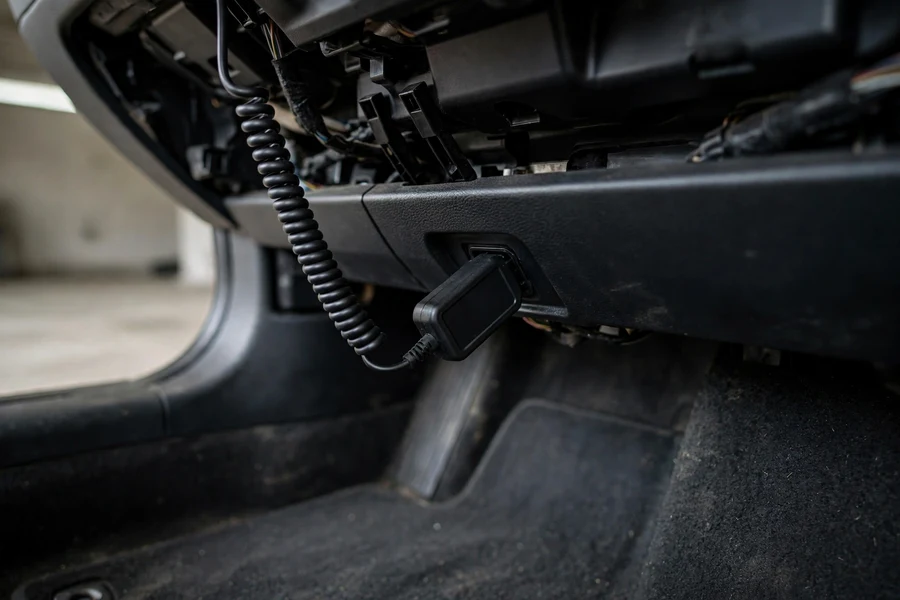
This is how most owners actually do it. Several BMW-focused apps expose the EGS adaptation reset over a Bluetooth or Wi-Fi OBD2 adapter:
- xHP Flashtool. Primarily a transmission tuning platform for the ZF 8HP, and its app includes an adaptation reset. The natural choice if you’re already in the xHP ecosystem — but don’t buy a tune just to get a reset.
- BimmerLink. A diagnostics-focused app (from the BimmerCode developer) that reads EGS data and resets adaptations on supported 8HP cars. A sensible pick for diagnostics without tuning.
- Carly. Offers a transmission adaptation reset among its service functions on supported models. Subscription-based, so weigh the ongoing cost against a one-time shop visit.
Budget for the adapter too: a quality Bluetooth/Wi-Fi OBD2 adapter plus the app’s purchase or unlock typically lands around $40–$100 all-in. That setup then serves you for future diagnostics — see our OBD2 scanner guide for BMW for adapter and app selection. One caution: stick to the adaptation reset function. These apps also offer full transmission flashes and coding — don’t experiment with those unless you understand them, and don’t interrupt the session once started. A reset takes seconds; a corrupted flash from a dropped Bluetooth connection is a tow truck.
Method 3: Have a shop do it
Any BMW-independent shop with ISTA, Autel, or similar professional tooling can reset EGS adaptations in minutes — typically a fraction of an hour of diagnostic labor. If your car is already in for the fluid service or mechatronic work that makes a reset appropriate, ask for it as part of the job; a good transmission shop does this by default.
| Method | Typical cost | Difficulty | Best for |
|---|---|---|---|
| BMW ISTA (own setup) | $0 marginal (after setup cost) | High — software/interface setup is the hard part | Owners who already run ISTA |
| xHP / BimmerLink / Carly + adapter | $40–$100 all-in | Easy — guided in-app function | DIY owners who want the tool for future diagnostics too |
| Independent BMW shop | $50–$150 (often bundled with the service) | None — they do it | Anyone having fluid or mechatronic work done |
| Dealer | $150–$300 as diagnostic labor | None — they do it | Cars under warranty or with complex faults |
Whichever method you use, the steps are the same: ignition on, engine off, connect, navigate to the transmission/EGS module, find the adaptation reset service function, execute it, and confirm the values read zeroed afterward. Then — critically — don’t judge the result yet. Drive the relearn first.
The relearn drive cycle: what happens after the reset
Resetting is the easy part; relearning is where the result is made. With adaptations cleared, the EGS is back to factory-default values — correct for a new gearbox, wrong for yours. It must re-observe every shift and rebuild its corrections. That happens passively through 100–200 miles of normal driving, or faster through a structured drive cycle that gives the EGS clean, repeatable shift events to learn from.
The documented ZF adaptation drive cycle for the 8HP family has two phases. Prerequisites: fluid at operating temperature (above roughly 40°C/104°F — a few miles of normal driving), a quiet road where you won’t need to brake hard, and no stored fault codes.
Phase 1: Upshift adaptation
- From a stop in D, accelerate gently — light throttle only, keeping engine speed low (the ZF procedure specifies staying under roughly 2,100 rpm with modest torque).
- Let the transmission shift up through the gears on its own, all the way to top gear. On most roads this means reaching highway speed — 8th gear typically engages above 55–65 mph with light throttle.
- Repeat the gentle acceleration run several times. Each clean, light-throttle upshift sequence gives the EGS data for the clutch fill and timing corrections.
Phase 2: Coast-down adaptation
- At cruising speed in top gear, lift off the throttle completely and coast — do not touch the brake.
- Let the car decelerate on its own, allowing the transmission to downshift itself to a near stop.
- The un-braked coast is the point: braking changes the deceleration profile and downshift load, giving the EGS messier data. A clean coast gives it textbook downshift events to adapt to.
In practice, most owners blend the two: find a quiet highway on-ramp or rural road, do several gentle acceleration runs to top gear, then coast back down — three to five complete cycles is a solid session. Then drive normally for the next week: varied city and highway driving fills in the rest. Avoid full-throttle launches during the first couple hundred miles; the EGS is building its baseline, and feeding it extreme events first produces extreme corrections.
What to expect, mile by mile
| When | What you’ll feel | What’s happening |
|---|---|---|
| First start after reset | Shifts noticeably firmer; possible clunks on 2–1 downshift and 1–2 upshift | Factory defaults with zero wear compensation — normal |
| First 20–50 miles | Gradual smoothing; some shifts still inconsistent | Quick adaptation rebuilding the coarse corrections |
| 50–150 miles | Mostly normal with occasional odd shift | Fine adaptation refining timing and overlap per clutch |
| 150–200+ miles | Stable shift quality — this is your result | Adaptations settled; judge the outcome now, not before |
The single most common “reset ruined my transmission” story is someone who reset, drove eight miles, felt the clunks, and panicked. The procedure didn’t fail — the evaluation happened 150 miles too early. Conversely, if you’ve done the drive cycle plus 200+ miles of normal driving and shifts are still bad — or worse than before — that’s meaningful data: the problem is hardware the EGS can’t compensate for, and it’s time for professional diagnosis rather than another reset.

When to skip the reset and see a specialist instead
A reset is a software procedure, and software procedures have a jurisdiction. Outside it, they waste your time at best and mask a worsening problem at worst. See a transmission specialist — not another reset — when any of these apply:
- Adaptation values are extreme. If a scan tool shows clutch adaptation values beyond roughly ±350 mbar (a threshold widely cited in the ZF 8HP owner community), the EGS is compensating for severe wear. Resetting won’t fix the wear; the values will just climb back. That’s a worn-clutch conversation, not a reset conversation.
- There’s slipping or flaring. Engine speed rising between gears means a clutch isn’t holding — a hydraulic or mechanical fault. No relearn creates clamping force.
- Fluid is the suspect. Low level, burnt smell, or never-serviced high-mileage fluid are hardware-side issues. Our ZF 8HP fluid change guide covers the service itself — a reset is commonly paired with it, but the service is the fix and the reset is the finishing step.
- Warning lights or limp mode. A Drivetrain Malfunction warning, stored transmission codes, or limp mode mean the EGS has already told you what’s wrong — read the codes before touching adaptations. Our drivetrain malfunction guide walks through the diagnostic sequence.
- The reset made it worse and it never recovered. After a proper relearn (200+ miles), if shifts are worse than pre-reset, the old corrections were load-bearing — that’s diagnostic information, not a failure. Take it to a specialist.
A word on cost perspective: a scan-tool reset is a tens-of-dollars procedure. A mechatronic reseal is hundreds. A full rebuild is thousands. The reset is worth trying in its proper lane precisely because it’s cheap — but only if you don’t use it to postpone the real repair while wear compounds.
Scope note: everything here applies to the ZF 8HP in the F30 and G20 3 Series (and late E90-era cars with the 8-speed). The older E90 6-speeds (GM 6L45, ZF 6HP) have their own adaptation systems — the principles transfer, but menu paths and drive cycles differ.
FAQ
Will resetting transmission adaptations damage my gearbox?
On a healthy gearbox, no — it just forces a relearn period of rougher shifts for 100–200 miles. The caution is for high-mileage, worn transmissions: the reset deletes the wear compensations keeping shifts smooth, so a worn box can shift worse afterward and may never fully recover. That’s not damage from the reset — it’s the reset revealing existing wear. If clutch adaptation values are extreme (beyond roughly ±350 mbar), skip the reset and get a professional diagnosis.
Does the gas-pedal trick reset BMW transmission adaptations?
No. Holding the accelerator with the ignition on (engine off) does not clear EGS clutch adaptations — those are only erasable through a diagnostic session with the transmission control unit. At most, the pedal procedure affects the short-term throttle/driver behavior layer, which is why the car can feel more responsive afterward. Owners who have checked adaptation values with a scan tool before and after confirm the clutch values don’t change — and the driver layer re-adapts on its own within days anyway.
Should I reset adaptations after a transmission fluid change?
Usually yes — it’s the single most common legitimate reason for a reset. Old adaptations were tuned for degraded fluid, and fresh fluid has different friction and viscosity characteristics, so stale corrections can cause harsh shifts on new fluid. Pair it with the relearn drive cycle (gentle acceleration to top gear, un-braked coast-downs, then 100–200 miles of varied driving). If shifts were fine before the service and fine after, though, there’s nothing to fix — some specialists consider the reset unnecessary after a fluid-only service on a healthy box.
How long does it take for the transmission to relearn?
Plan on 100–200 miles of varied driving. The first miles are the roughest — firmer shifts and occasional clunks are normal while the EGS works from factory defaults. A structured drive cycle (light-throttle runs to top gear plus un-braked coast-downs, fluid at operating temperature) speeds it up. Don’t judge the result until the relearn is done — evaluating after one short drive is the most common reason owners wrongly conclude a reset “ruined” their gearbox.
Can I reset transmission adaptations without a scan tool?
No — not the real EGS adaptations. There is no button combination, pedal sequence, or iDrive menu that clears them; every documented method (ISTA, xHP, BimmerLink, Carly, or a shop’s professional tool) opens a diagnostic session with the transmission control unit directly. The gas-pedal procedure only touches the driver behavior layer at most. An app plus a Bluetooth OBD2 adapter costs roughly $40–$100 and does the job in minutes, and any BMW-independent shop can do it as a fraction of an hour of labor.