What Changed on the 2023 BMW 3 Series Facelift?
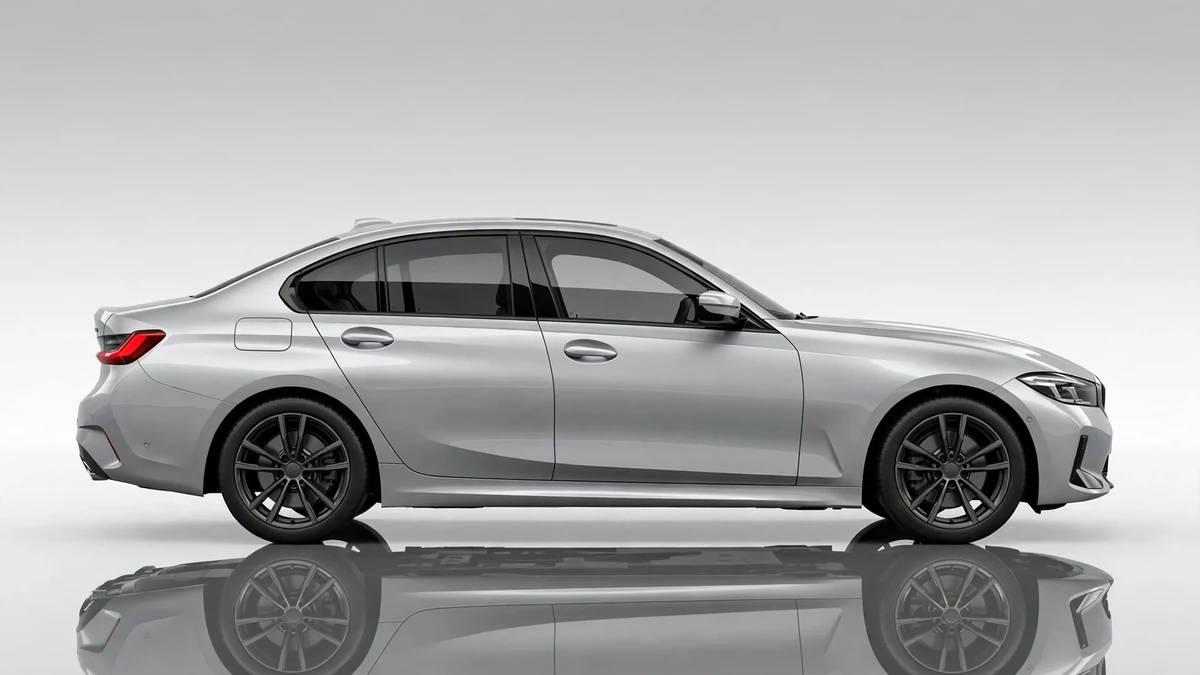
Short answer: The 2023 BMW 3 Series facelift (the G20 LCI, launched July 2022) changed the face, the cabin, and the tech — but not the engines. Outside: slimmer full-LED headlights with inverted-L daytime running lights, a reworked kidney grille, and new front and rear aprons. Inside: the BMW Curved Display (a 12.3-inch driver display merged with a 14.9-inch central screen), BMW Operating System 8, a toggle-style gear selector replacing the old lever, and most physical climate buttons moved into the touchscreen. Powertrains carried over — the 330i still makes 255 hp, the M340i still makes 382 hp — with one exception: the M340i gained 48-volt mild-hybrid assistance for 2023. A second, smaller update followed for 2025 (mild hybrid for the 330i, 386 hp for the M340i, iDrive 8.5). This guide breaks down every change, shows you how to spot an LCI car in seconds, and includes an interactive change explorer.
In this guide
- When the facelift launched and what “LCI” means
- Exterior changes: headlights, grille, bumpers, colors, wheels
- Interior changes: Curved Display, iDrive 8, shifter, buttons
- Powertrains: what carried over and the one thing that changed
- The 2025 second update (so you do not confuse the two)
- Technology: 5G eSIM, BMW ID, wireless CarPlay and Android Auto
- How to spot an LCI car in 10 seconds
- Interactive LCI change explorer
- Quiz: pre-LCI or LCI?
- Five frequently asked questions
When the facelift launched and what “LCI” means
BMW unveiled the facelifted 3 Series in May 2022 and put it on sale that July as a 2023 model — a mid-cycle refresh BMW calls an LCI (Life Cycle Impulse). The LCI is BMW’s standard halfway-house update: new face, new cabin tech, revised equipment, but the same fundamental car underneath. The G20 had launched for 2019, so the 2023 refresh landed right on schedule at the midpoint of its run.
Why does this matter to you in 2026? Because the used market now holds both versions side by side, often at overlapping prices. A 2022 (pre-LCI) and a 2023 (LCI) 330i can look like the same car in a listing thumbnail — but one has iDrive 7 with physical climate buttons and a conventional shifter, and the other has iDrive 8, a curved display, and touchscreen climate. Knowing which is which changes what you are actually buying, and this guide makes the differences impossible to miss.
What “LCI” means at BMW
LCI — Life Cycle Impulse — is BMW’s term for the mid-cycle refresh every model gets roughly three to four years into its run. It is deliberately not a new generation: the platform, the body shell, the engines, and the transmissions carry over, while the styling details, the cabin technology, and the equipment list get modernized. Think of it as BMW’s way of keeping a car competitive without re-engineering it. The E90 got an LCI for 2009 (new taillights, revised iDrive), the F30 got one for 2016 (new lights, new engines in some markets), and the G20 got this one for 2023.
The pattern matters because it tells you what to expect — and what not to. An LCI never changes the car’s fundamental character: a G20 LCI drives like a G20, not like the next-generation car. What it does change is the ownership experience around the edges: newer screens, newer software, newer lights, and usually a shuffle of standard equipment. When you are comparing a 2022 against a 2023, you are comparing the same car wearing a newer interface — which is exactly why the cabin-tech differences below deserve more of your attention than the styling ones.
What the facelift did not change
Facelift coverage tends to hype what is new and skip what is not — but the unchanged parts matter just as much when you are buying. Here is what the LCI left alone:
- The platform and body shell. Same CLAR architecture, same wheelbase, same doors, roof, and glass. Crash structure and interior space are identical to the 2019–2022 car.
- The engines’ outputs. 255 hp for the 330i, 288 hp combined for the 330e, 382 hp for the M340i — the numbers on the trunk lid mean the same thing before and after the facelift.
- The 8-speed automatic. Same ZF-based sport automatic across the range; only the selector switch on top of it changed.
- xDrive availability. Rear-wheel drive standard, xDrive optional on the same models as before.
- Practicality. Trunk volume, rear legroom, and towing ratings carried over untouched.
This is genuinely good news for used buyers. It means a pre-LCI G20 is not an “old” car mechanically — it is the same car with an older interface. It also means parts commonality is excellent: mechanical components, suspension parts, and most service procedures are identical across the 2019–2026 run, which keeps independent-shop servicing straightforward whichever version you buy.
Exterior: the new face of the 3 Series
The LCI’s exterior changes are concentrated exactly where facelifts always put them: lights, grille, and bumpers. Nothing about the car’s proportions changed — same roofline, same doors, same glasshouse. Here is the complete list, drawn from BMW’s May 2022 launch release:
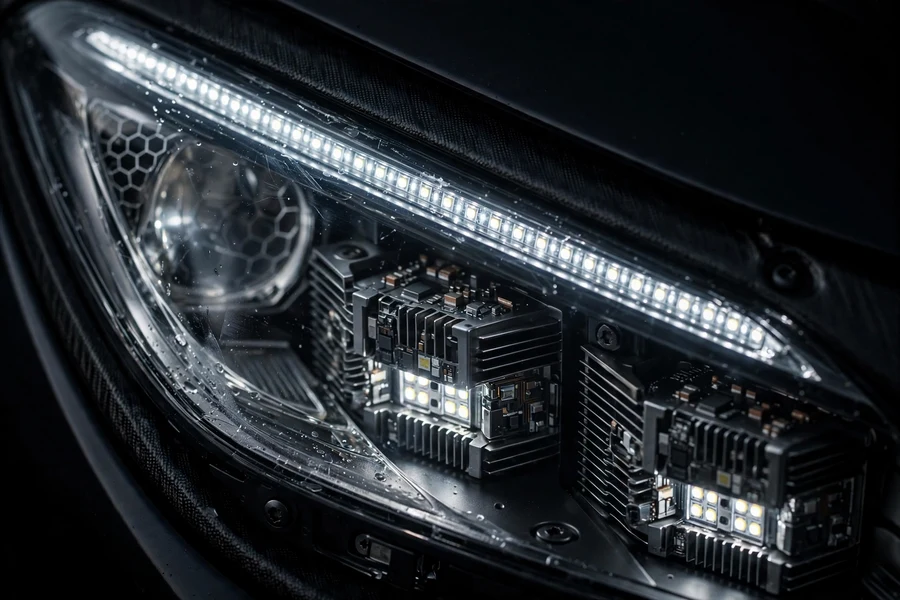
- Slimmer full-LED headlights with a new inverted-L daytime-running-light signature. This is the single fastest LCI identifier: pre-LCI cars have the older “angel eye” corona rings, LCI cars have the crisp upside-down-L DRL.
- Reworked kidney grille with new double-bar detailing. The grille did not grow (this was the era of the giant-grille controversy on other BMWs, and the 3 Series was spared).
- Redesigned front and rear aprons with new air-intake geometry up front and a revised diffuser-style treatment at the rear.
- Larger exhaust finishers on the M340i — the tailpipe trims grew to 100 mm in diameter.
- New paint colors, including Skyscraper Grey metallic and Frozen Pure Grey metallic.
- New wheel designs, including fresh 19-inch M light-alloy options for the M340i.
| Detail | Pre-LCI (2019–2022) | LCI (2023+) |
|---|---|---|
| Daytime running lights | Corona “angel eye” rings | Slim inverted-L signature |
| Headlights | LED with older internal graphics | Slimmer full-LED units, new internal design |
| Kidney grille | Pre-facelift bar pattern | New double-bar design |
| Front / rear aprons | Original G20 bumpers | Reworked intakes and rear diffuser styling |
| M340i exhaust finishers | Smaller round trims | 100 mm diameter trims |
| New colors (examples) | — | Skyscraper Grey metallic, Frozen Pure Grey metallic |
Interior: the Curved Display takes over
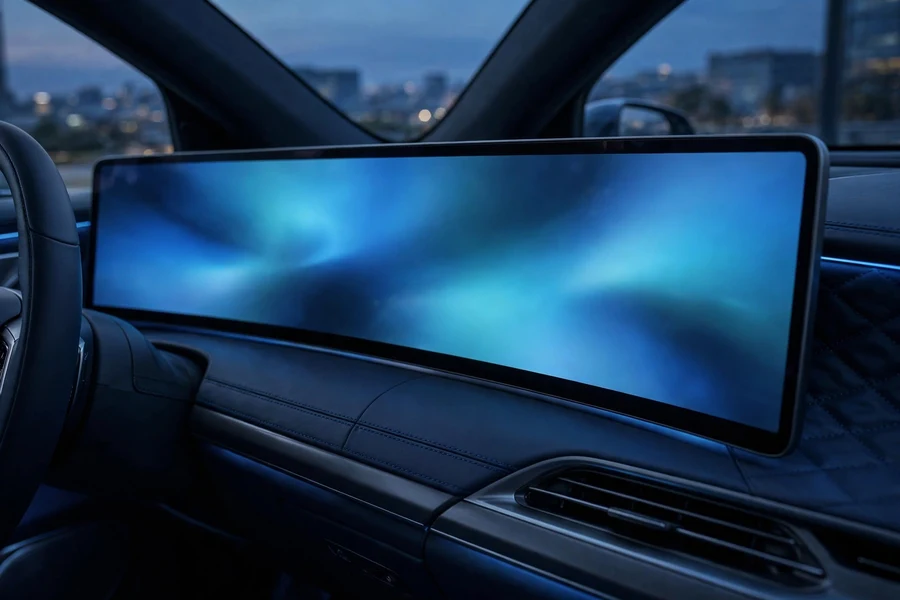
If the exterior got a refresh, the interior got a revolution. The LCI replaced the pre-LCI’s separate instrument cluster and freestanding central screen with the BMW Curved Display: a single sweeping panel that merges a 12.3-inch driver information display with a 14.9-inch central control display, angled slightly toward the driver. It dominates the cabin the way the old twin-screen setup never did, and it is the reason the LCI feels a generation newer inside than a 2022.
The display brought BMW Operating System 8 with it — a full interface change, not a reskin. Our iDrive generations guide covers the OS 7-to-8 transition in detail, but the headline differences for a 3 Series buyer are: a new tile-based home screen, deeper voice control through the BMW Intelligent Personal Assistant, over-the-air upgrade capability via Remote Software Upgrade, and — the controversial one — climate control moved into the screen. The LCI deleted most of the physical climate buttons the pre-LCI car had. Temperature, fan, and seat heating now live in the touchscreen or respond to voice commands. BMW made three-zone automatic climate control standard at the same time, so every LCI car has the hardware — it is the interface that changed.
The other interior deletion: the conventional gear selector lever. The LCI replaced it with a compact toggle-style selector in the center console — the same switch BMW was rolling out across the range. Functionally identical (it still commands the 8-speed automatic), visually a fraction of the size. Combined with the button cull, the center stack and console of an LCI car look strikingly minimalist next to a 2022.
| Interior detail | Pre-LCI (2019–2022) | LCI (2023+) |
|---|---|---|
| Instrument cluster | Separate digital cluster | 12.3-inch display merged into Curved Display |
| Central screen | Freestanding 10.25-inch display | 14.9-inch display merged into Curved Display |
| Operating system | BMW OS 7 / iDrive 7 | BMW OS 8 / iDrive 8 |
| Climate controls | Physical buttons and dials | Mostly touchscreen + voice; 3-zone auto standard |
| Gear selector | Conventional lever | Compact toggle-style switch |
| Software updates | Limited | Remote Software Upgrade (over-the-air) |
Powertrains: what carried over (and the one thing that changed)
Here is the surprise for anyone expecting a mechanical overhaul: the LCI changed almost nothing under the hood. BMW kept the same three U.S. powertrains with the same headline outputs, and the 8-speed sport automatic remained standard across the range. If you are cross-shopping a 2022 and a 2023 for driving character, the difference is the cabin and the face, not the engine.
| Model | Engine | Power | Torque | 2023 change |
|---|---|---|---|---|
| 330i / 330i xDrive | 2.0-liter turbo four | 255 hp | 295 lb-ft | None — carried over unchanged |
| 330e / 330e xDrive | 2.0-liter turbo four + electric motor (plug-in hybrid) | 288 hp combined | 310 lb-ft combined | None — carried over; ~23 miles EPA electric range |
| M340i / M340i xDrive | 3.0-liter turbo inline-six | 382 hp | 369 lb-ft | 48-volt mild-hybrid assistance added |
The M340i’s 48-volt mild-hybrid system was the powertrain headline of the facelift: an integrated starter-generator that smooths stop-start, adds a small electric torque fill, and trims consumption without changing the 382-hp headline figure. Note what it was not: the 330i did not get mild-hybrid assistance in 2023. That came later — which brings us to the second update.
Model by model: what each powertrain means for you
330i — the carryover champion. The 2.0-liter turbo four’s 255 hp and 295 lb-ft are identical to the 2022 car, and the driving experience is effectively unchanged: strong mid-range pull, an eager 8-speed, and the same balanced chassis. If a dealer tells you the LCI 330i is “more powerful,” it is not — what changed is everything around the engine. Buyers who care about the drive and not the dashboard can save real money on a pre-LCI 330i without giving up a single horsepower.
330e — the quiet hybrid. The plug-in hybrid’s 288 combined horsepower and roughly 23 miles of EPA electric range carried over untouched — no battery upgrade, no motor change. The LCI’s contribution is purely presentational: charge status, electric range, and eDrive modes now render in the Curved Display’s sharper graphics. Shop a used 330e on battery health and charging equipment, not on facelift status; the electrons do not know which dashboard they are displayed on.
M340i — the one that actually changed. The 48-volt system’s real-world effect is refinement, not speed: engine restarts at traffic lights are nearly imperceptible, low-speed torque fill smooths the power delivery, and fuel consumption improves at the margins. The 382-hp headline and the inline-six soundtrack are unchanged. Enthusiasts debating a 2022 versus 2023 M340i should know the difference is smoothness tech, not performance — the stopwatch barely notices, but your daily commute might.
Do not confuse it with the 2025 second update
BMW facelifted the facelift. For the 2025 model year — announced in BMW’s May 2024 release — the 3 Series received a second round of changes that are easy to conflate with the 2023 LCI:
- 330i gains 48-volt mild hybrid. The 2.0-liter turbo four got revised intake ports, combustion-chamber geometry, and injection technology plus the 48V system — the electrification the 330i skipped in 2023.
- M340i rises to 386 hp. A small bump over the 382-hp LCI figure (now 386 hp and 398 lb-ft), again via the mild-hybrid inline-six.
- iDrive 8.5 with QuickSelect. A major interface revision: a new home screen with quick-access widgets and a flatter menu structure. Functionally a big step from OS 8.0.
- New colors including Arctic Race Blue metallic and Vegas Red metallic, plus two new BMW Individual shades (Frozen Pure Grey metallic, Frozen Portimao Blue metallic) and new 19-inch wheel designs.
- New steering wheels and ambient lighting: a two-spoke wheel on the 330i, a flat-bottom M wheel on M340i and M Sport cars, and nine-color cascade lighting around the redesigned central vents.
- Chassis tuning: stiffer rear-damper mounts and lighter steering effort in Comfort mode.
The practical takeaway: “LCI” (2023+) tells you the car has the Curved Display and OS 8-family software, but a 2025+ car has the newer 8.5 interface and the mild-hybrid 330i. When a listing says “facelift model,” check the model year to know which round of changes you are getting. Our 330i vs. M340i comparison breaks down how the two engines feel back to back.
Technology: 5G, BMW ID, and wireless everything
Beyond the screens, the LCI brought the 3 Series’ connectivity up to the current BMW standard. The headline items from the launch release:
- Personal eSIM with 5G. The car connects directly to the mobile network — no phone tethering needed — for streaming, hotspot duty, and cloud services.
- BMW ID. Driver profiles that follow you between BMWs, carrying seat, climate, navigation, and infotainment preferences.
- Wireless Apple CarPlay and Android Auto as standard. Both phone projections work without a cable on every LCI car.
- BMW Maps with cloud-based navigation as standard, with real-time traffic data over the car’s own connection.
- Expanded driver assistance options, including the Driving Assistance Professional package with highway-speed hands-off-capable assistance where equipped.
For shoppers comparing generations more broadly — how the G20 differs from the F30 it replaced — our F30 vs. G20 guide covers the full generational jump, of which the LCI is the second half.
How to spot an LCI car in 10 seconds
Walk up to any 2019-or-newer 3 Series and run this checklist. Two “yes” answers and you are looking at an LCI:
- Headlights: slim units with an inverted-L daytime running light? LCI. Corona rings? Pre-LCI.
- Dashboard: one sweeping curved panel with two merged screens? LCI. Separate cluster and freestanding screen? Pre-LCI.
- Shifter: small toggle switch in the console? LCI. Full lever? Pre-LCI.
- Climate: temperature adjusted on the touchscreen? LCI. Row of physical buttons under the screen? Pre-LCI.
For 2025+ cars, add the fifth tell: iDrive 8.5’s widget home screen with QuickSelect, plus the two-spoke steering wheel on 330i cars and cascade ambient lighting around the new central vents. BMW’s May 2024 release listed no headlight changes for 2025 — the lights kept the same inverted-L DRL signature as the 2023 LCI, so the screen and interior details are what separate the second update from the original LCI.
The button debate: living with iDrive 8 every day
No LCI change generates more owner discussion than the button cull, so it deserves an honest assessment rather than a spec-sheet mention. On the pre-LCI car, climate control was muscle memory: a row of physical buttons and dials you could operate without looking. On the LCI, temperature and fan adjustments live in the touchscreen — a persistent climate bar at the bottom of the 14.9-inch display — with voice control as the alternative (“Hey BMW, set temperature to 72”).
After the novelty wears off, owners tend to land in one of two camps. The converts point out that the voice assistant genuinely works — BMW’s Intelligent Personal Assistant in OS 8 is a large step up from OS 7’s — and that the touchscreen climate bar is always visible, so adjustments are two taps, not a menu dive. The holdouts argue, fairly, that two taps while driving is two taps more than zero, and that a physical dial never needs you to look at it. Seat heating, previously a hard button, is now a screen control too — the single most-missed button in owner discussions.
Our advice is practical, not philosophical: spend ten minutes with the system before you buy. Sit in the car, adjust the temperature, change the fan speed, and turn on the seat heater — first with your eyes on the road (as much as you safely can), then with voice commands. Some buyers adapt in a day and never look back; others know within minutes that they want the pre-LCI’s buttons. Neither reaction is wrong, but discovering yours after signing is expensive. This is the one LCI change you feel on every single drive, so give it the weight it deserves in your decision.
LCI or pre-LCI: the buying decision
With the full change list in hand, here is how the decision breaks down by buyer type — because the right answer genuinely differs:
- The tech-first buyer: get the LCI. The Curved Display, OS 8 with over-the-air updates, 5G connectivity, and standard wireless phone projection make the 2023+ cabin feel a full generation newer. You will interact with this interface thousands of times; the premium is worth it if screens matter to you.
- The value buyer: get the pre-LCI. Same engines, same chassis, same practicality — for thousands less. The 2019–2022 cars are now deep into depreciation, and the physical buttons are a feature, not a compromise, for many drivers.
- The long-term keeper: lean LCI. Over-the-air updates mean the LCI’s software keeps improving after purchase, and the newer interface will feel current for longer. If you keep cars eight-plus years, buy the newest interface you can afford.
- The enthusiast: drive both, then decide. The M340i’s mild-hybrid refinement is real but subtle; some drivers prefer the pre-LCI’s conventional shifter and button-rich cabin. There is no wrong answer here — only your preference.
One final buying note: because the mechanical package is identical, condition beats facelift. A well-maintained 2021 with full service history is a better buy than a neglected 2023, every time. Use the LCI differences to choose between two good cars — not to excuse a bad one. Our pre-purchase inspection checklist applies equally to both versions.
Interactive: LCI change explorer
Choose an area of the car and a model to see exactly what the facelift changed — and what it left alone.
Quiz: pre-LCI or LCI?
You are looking at a used 3 Series listing. Five details — can you call the facelift correctly?
1. The headlights have slim inverted-L daytime running lights. This car is…
2. The center console has a full-size conventional gear lever. This car is…
3. The dashboard is one sweeping curved panel with two merged screens. This car is…
4. The car runs BMW Operating System 8 with over-the-air software upgrades. This car is…
5. The M340i in the listing makes 382 hp with NO mild-hybrid system. It could be a…
2023 3 Series facelift: five frequently asked questions
BMW unveiled the G20 LCI in May 2022 and it went on sale in July 2022 as a 2023 model. Any 3 Series with a 2023-or-newer model year has the facelift; 2019–2022 cars are pre-LCI. A second, smaller update followed for the 2025 model year with iDrive 8.5 and a mild-hybrid 330i.
Four instant tells: inverted-L daytime running lights (LCI) vs. corona rings (pre-LCI); a merged Curved Display (LCI) vs. separate screens (pre-LCI); a toggle gear selector (LCI) vs. a full lever (pre-LCI); and touchscreen climate controls (LCI) vs. physical buttons (pre-LCI). Any two confirm it.
Barely. The 330i (255 hp), 330e (288 hp combined), and M340i (382 hp) carried over with identical outputs, and the 8-speed automatic stayed standard. The single mechanical change was 48-volt mild-hybrid assistance added to the M340i. The 330i did not get mild hybrid until the 2025 update.
It depends what you value. iDrive 8 brings a larger curved display, better voice control, 5G connectivity, and over-the-air updates — a genuine tech leap. The cost is physical controls: most climate buttons moved into the touchscreen, which many owners find slower to use while driving. Try both interfaces before you buy; it is the most divisive change of the facelift.
Buy the LCI (2023+) if cabin tech matters to you — the Curved Display and iDrive 8 make the car feel a generation newer, and wireless CarPlay/Android Auto are standard. Buy pre-LCI (2019–2022) for value: identical engines, physical climate buttons, and lower prices. Either way, the mechanical package is the same car, so condition and history matter more than the facelift.