8 Smart BMW 3 Series Picks Under $15,000
Fifteen thousand dollars buys you into the BMW 3 Series — but it also buys you into the previous owner’s maintenance habits. At this price you are shopping ten-to-twenty-year-old cars, and the difference between a smart buy and a money pit is knowing exactly which years, engines, and conditions are worth your money. This guide ranks the eight used bmw 3 series under 15000 picks that make sense in today’s market, with realistic price bands, condition expectations, and a first-year budget that keeps you out of trouble. For the full purchase process, pair this with the used BMW 3 Series buying guide and check every candidate against the reliability-by-year data.
Short answer
The smartest used BMW 3 Series under $15,000 is a 2009–2011 328i (E90) with the naturally aspirated N52 engine — realistic price $6,000–$11,000, the most reliable engine of its era, and cheap parts. Stretch picks include the 2015–2016 F30 320i ($8,000–$13,000, post timing-chain-fix N20) and the E46 330i ($4,000–$8,000, the budget hero). Whatever you buy, budget a first-year maintenance reserve of 25–35% of the purchase price ($2,000–$4,000 on most picks) — the purchase price is only the entry ticket. Avoid early N20 cars (2012–2014) with unresolved timing-chain guides and any 335i at this budget unless you can fund turbo-era repairs.
In this guide
- What $15,000 actually buys in 2026
- The 8 picks, ranked
- Condition and mileage: what to expect
- The first-year budget: purchase plus reserve
- Where to shop: dealer vs. private party vs. auction
- How to read a listing: red flags in 60 seconds
- Financing and insurance
- The 90-day plan after you buy
- Interactive: first-year budget planner
- Interactive: maintenance reserve slider
- The ones to avoid at this budget
- The $15k inspection checklist
- Frequently asked questions
What $15,000 actually buys in 2026
Fifteen thousand dollars sits in a specific pocket of the 3 Series market: too much for beaters, too little for anything with a factory warranty. In current listings, that money reaches clean E90-generation cars (2006–2011), early F30 cars (2012–2015) with higher miles, and well-kept E46 cars (1999–2006) with money to spare. Real asking prices observed in 2026 listings: a 2013 328i at $8,745 with 71,000 miles, a 2015 320i from $7,495–$10,995, a 2015 328i xDrive at $10,500 with 79,000 miles, and a 2011 328i xDrive at $7,995 — all comfortably under the cap, with room left for the reserve fund that actually matters.
The price bands in this guide are observed asking-price ranges from current US listings, not valuations — treat them as approximate, since condition and region swing prices by thousands. The pattern that matters: E90 328i models cluster at $6,000–$11,000, early F30 models at $8,000–$14,000, and E46 models at $4,000–$8,000. Private-party cars run 10–20% below dealer asking prices for equivalent cars, which is often the difference between affording the reserve fund and not.
The 8 picks, ranked
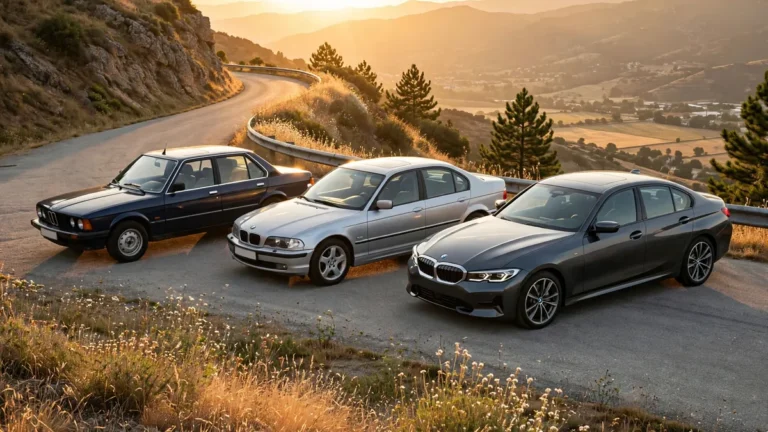
1. 2009–2011 BMW 328i sedan (E90) — the default answer
If you remember one pick, make it this one. The late E90 328i pairs the N52 naturally aspirated inline-six — widely regarded as the most reliable modern BMW engine, with no turbo, no direct-injection carbon buildup, and no timing-chain drama — with a chassis that still drives like a proper sport sedan. Realistic price: $6,000–$11,000 depending on miles and records. At 100,000–130,000 miles expect the known E90 wear items: valve cover gasket, oil filter housing gasket, electric water pump (a $1,500–$2,000 dealer job, far less at an indie shop), and control arm bushings. None are deal-breakers; all are negotiable. Buy on service records above all — a documented 120,000-mile car beats a mystery 85,000-mile car every time. See the E90 vs. F30 comparison for how this generation differs from its successor.
2. 2007–2010 BMW 328i coupe (E92) — the enthusiast’s discount
Same N52 running gear as the sedan in a better-looking body, and coupes often list slightly cheaper than equivalent sedans because family buyers ignore them. Realistic price: $6,500–$12,000. The frameless windows need their regulators and seals checked (listen for wind noise, watch for slow windows), and the coupe’s longer doors mean hinge and check-strap wear on high-mile cars. Otherwise the ownership story is identical to pick #1: gaskets, water pump, bushings. Well-kept E92s are thinning out, so clean examples with records command the top of the band — pay it.
3. 2006–2011 BMW 330i (E90) — more power, same reliability
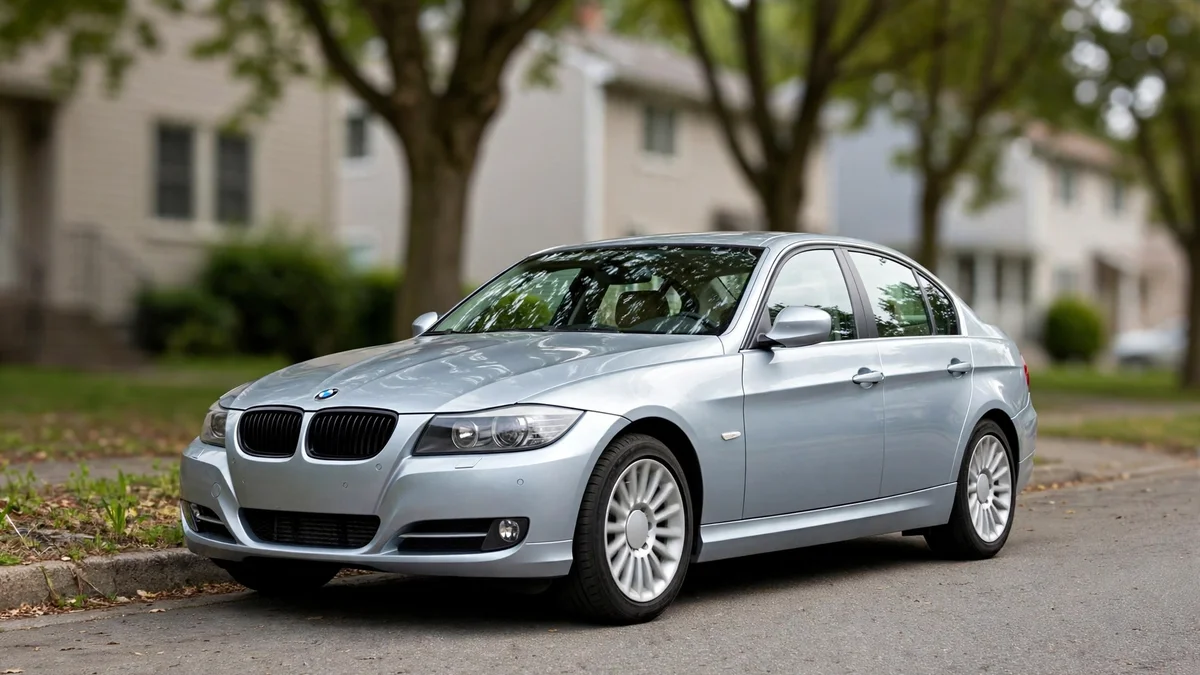
The 330i is the N52 with the three-stage intake manifold and more aggressive tune: 255 hp versus the 328i’s 230, for essentially the same money and the same reliability profile. Realistic price: $5,500–$10,000 — often cheaper than a 328i because the badge confuses buyers into expecting 335i running costs. It does not have them: no turbos, same gaskets and water pump as the 328i. The 2006 model year is the one to verify carefully (first-year E90 niggles), but 2007+ cars are as solid as the 328i. If you find a documented 330i for 328i money, take the 330i.
4. 2001–2006 BMW 330i (E46) — the budget hero
The cheapest way into a genuinely great 3 Series. The E46 330i’s M54 engine is a legend for a reason: simple, smooth, and tolerant of miles when cooled properly. Realistic price: $4,000–$8,000, leaving half your budget for the reserve fund. The catch is age: every rubber component is now twenty years old. Budget for a full cooling-system refresh (expansion tank, hoses, water pump, thermostat — the E46’s known weak point), control arm bushings, and window regulators. Buy only with cooling-system receipts in hand; an E46 with a fresh cooling system and records is a $6,000 car that will run for years, while one without is a $4,000 car hiding a $2,000 overhaul.
5. 2015–2016 BMW 320i (F30) — the newest car your money reaches
This is the newest 3 Series under $15,000, and the year cutoff is everything: BMW revised the N20 timing-chain guides around early 2015, so 2015–2016 cars largely escape the timing-chain failures that plague 2012–2014 cars. Realistic price: $8,000–$13,000, with observed 2015 listings from $7,495 to $10,995. You get the modern F30 chassis, the ZF 8-speed automatic, and better fuel economy than any E90 — but also turbo-era maintenance: charge pipes, valve cover gaskets, and cooling components that the N52 never had. Verify the build date (mid-2015+) and demand service records showing regular oil changes; a turbo engine with neglected oil is the fastest way to burn this budget.
6. 2013–2015 BMW 328i (F30) — the stretch pick
More power than the 320i (240 hp N20) for a small premium — observed from $8,745 (2013, 71k miles) to $12,952 (2015, 60k miles). The 2013–2014 cars carry the early-N20 timing-chain risk, so this pick comes with homework: either buy a 2015+ car, or buy a 2013–2014 only with documented timing-chain-guide replacement (a $2,500–$4,000 job you do not want to fund). With the chain addressed, the F30 328i is a lot of modern car for the money — but at the top of this band you are spending nearly the whole $15,000 before the reserve fund, which violates the budget structure below. Only stretch here if the records are perfect. Compare generations in our E90 vs. F30 guide before deciding.
7. 2009–2011 BMW 328i xDrive (E90) — the snow-belt pick
For buyers north of the snow line, the xDrive E90 is the rational choice — same N52 reliability with all-wheel drive. Realistic price: $6,500–$11,500, with an observed 2011 xDrive sedan at $7,995. The xDrive hardware adds maintenance the RWD cars skip: transfer-case and differential fluids every 30,000–60,000 miles (BMW calls the fluid “long-term rated” and publishes no interval; specialists disagree), front CV boots, and the transfer-case actuator on higher-mile cars. None of it is scary if serviced — our xDrive vs. RWD guide covers the full maintenance picture — but an xDrive car with no fluid history needs a $400–$800 fluid service on day one, so price that in. Check for mismatched tires, which kill transfer cases.
8. 2006–2011 BMW 328i wagon (E91) — the unicorn
The E91 wagon is the connoisseur’s E90: all the 328i virtues with wagon practicality, and genuine rarity that protects resale. Realistic price: $7,000–$12,000. Wagons were bought by enthusiasts who maintained them, so the survivor pool skews well-kept — but the tailgate wiring harness (wires flex and crack where they pass into the hatch) and the rear air suspension on some cars need checking. Parts availability for wagon-specific trim is thinner than sedan parts, so verify the tailgate, glass, and interior bits are intact before committing. If you find a clean one with records, the small premium over a sedan is money well spent.
Condition and mileage: what to expect
At this price, condition matters more than the odometer. Here is what each tier realistically looks like:
| Condition tier | Typical miles | What you get | Reserve needed |
|---|---|---|---|
| Excellent | Under 90,000 | Full service records, recent tires/brakes, no warning lights, clean PPI | ~20–25% of price |
| Average | 90,000–130,000 | Some records, consumables mid-life, minor cosmetic flaws, small PPI findings | ~25–35% of price |
| Rough but running | 130,000+ | Spotty records, needs tires/brakes/fluids now, multiple PPI findings | ~35–50% of price |
The counterintuitive truth: the cheapest purchase price is rarely the cheapest total. A rough $6,000 E90 needing $3,500 of catch-up maintenance costs more in year one than an excellent $10,000 example needing $1,500 — and the excellent car is nicer to drive while you sort it. The budget planner below makes this concrete: it prices the reserve from the condition tier, not just the sticker.
The first-year budget: purchase plus reserve
The purchase price is the entry ticket; the reserve fund is what keeps you from hating the car by month six. For a sub-$15,000 3 Series, the honest first-year budget has four lines:
| Budget line | Typical range | Notes |
|---|---|---|
| Purchase price | $4,000–$14,000 | Per the pick bands above; private party runs 10–20% under dealer |
| Maintenance reserve | $2,000–$4,000 | 25–35% of purchase price; the non-negotiable line |
| Pre-purchase inspection | $150–$250 | At an independent BMW specialist, before you buy — see our PPI guide |
| Taxes, title, registration | $500–$1,500 | Varies by state; dealer doc fees land here too |
| Total first-year budget | $6,650–$19,750 | The real number — plan it before you shop |
Worked example: you buy an average-condition 2010 328i sedan for $8,500 from a private seller. Reserve at 30%: $2,550. PPI: $200 (spent before purchase, on the car you actually buy). Taxes and registration: $800. Total first-year budget: $12,050 — comfortably under $15,000 all-in, with the reserve covering the water pump, gaskets, and bushings the PPI will likely flag. That is the shape of a successful sub-$15k BMW purchase: the car costs $8,500, the ownership costs $12,050, and there are no surprises because the surprises were pre-funded.
Where the reserve goes on these cars is predictable. Our 3 Series maintenance schedule lays out the intervals, but at 100,000+ miles the greatest hits are: cooling system components ($800–$2,000), gaskets ($700–$1,400 each at indie rates), suspension bushings and control arms ($600–$1,200), and tires ($600–$1,000 for a decent set). You will not need all of it in year one — but you need the money available for whichever of it the PPI finds.
Interactive: first-year budget planner
Pick your car, its condition, and who does the work — the planner prices the purchase band and sizes the reserve fund, then totals your real first-year budget. All 72 combinations have been tested.
First-year budget planner
Interactive: maintenance reserve slider
Already have a car in mind? Enter the price — the slider sizes the reserve fund and tells you whether the all-in number stays under $15,000.
Reserve slider
Where to shop: dealer vs. private party vs. auction
The same car costs different money in different marketplaces. Franchise BMW dealers sell the cleanest sub-$15k cars — often trade-ins they wholesaled past their CPO age limits — but charge 15–25% over private party for the privilege, and their “certified” language at this price usually means a basic inspection, not a real CPO warranty. Independent lots are the middle ground: negotiable, but reconditioning quality varies wildly, so the PPI matters even more. Private-party sellers (Facebook Marketplace, Craigslist, enthusiast forums like Bimmerfest’s classifieds — cited by name only) offer the best prices and the most honest histories, because you meet the person who actually drove and maintained the car.
Auctions (Copart, IAAI) are the deep end: the cheapest cars and the highest risk, with no test drives, no PPIs, and title brands that can make insurance painful. Unless you are a mechanic buying a project, skip auctions for your first BMW. The sweet spot for most buyers is a private-party car from an enthusiast owner — full records, adult-driven, priced 10–20% under dealers — found through patience and saved searches with alerts. Budget two to four weeks of hunting; the right car at the right price rewards the patient.
How to read a listing: red flags in 60 seconds
Learn to filter listings before you drive anywhere. Walk away from ads with: no under-hood or interior photos (hiding something); “runs great, just needs…” (the sentence always ends with something expensive); a price far below market with a story about a quick sale (curbstoners and title problems); recently detailed engine bays on high-mile cars (steam-cleaned to hide leaks — ask when it was detailed and why); and sellers who refuse a PPI or insist on “their mechanic.” Green flags: long ownership history, thick service records photographed in the ad, honest disclosure of flaws (“small dent on rear bumper, quoted $300”), and a seller who suggests you get an inspection. Enthusiast-owned cars often come with spreadsheets — those sellers are gold.
Financing and insurance for a sub-$15k BMW
Most banks will finance a 10–15-year-old car, but terms are worse than for newer vehicles: expect higher APRs, shorter maximum terms (often 48–60 months), and loan-to-value caps that require a down payment. Get pre-approved from your bank or a credit union before shopping — a pre-approval letter turns you into a cash buyer in the seller’s eyes and removes the finance office from the negotiation entirely. For private-party purchases, many buyers use a personal line or simply pay cash, since sub-$10k amounts rarely justify loan origination fees.
Insurance is the pleasant surprise: liability and comprehensive on a $9,000 E90 costs far less than on a new 3 Series, because the insurer’s exposure is the car’s value. Get quotes with the VIN before you buy — sport-package cars and 335i models (which you are avoiding anyway) can carry higher premiums, and some insurers surcharge older BMWs modestly. Full coverage on a sub-$10k car is a judgment call: if you can absorb the loss, liability plus uninsured-motorist coverage and a healthy reserve fund often beats paying comprehensive on a depreciating asset.
The 90-day plan: what to do after you buy
The purchase is the beginning, not the end. In the first 90 days: change every fluid (oil, coolant, brake fluid, transmission and differential fluid if no records — fresh fluids are the cheapest longevity you can buy), replace the battery if it is more than four years old (a weak battery causes a cascade of BMW electrical gremlins — see our battery discharge guide), address every PPI safety item immediately, and then work through the maintenance items in order of consequence: cooling system first, then gaskets, then suspension. Join an owner’s forum and find your local independent BMW specialist before you need one at midnight — the relationship pays for itself the first time something breaks.
The ones to avoid at this budget
Not every cheap 3 Series is a deal. At under $15,000, walk away from:
- 2012–2014 320i/328i without timing-chain proof. The early N20’s timing-chain-guide failure is a $2,500–$4,000 engine-out repair. Either buy 2015+ or demand receipts for the guide replacement — no receipts, no deal. This is the single most expensive trap in the sub-$15k market.
- Any 335i at this budget. The N54/N55 cars are wonderful and ruinous in equal measure: turbos, high-pressure fuel pumps, injectors, and wastegates, all priced accordingly. A $9,000 335i is a $15,000 car wearing a disguise. Our 328i vs. 335i guide explains the true cost delta.
- Salvage or rebuilt titles. The discount (typically 20–40% under clean title) never compensates for the insurance hassle, the resale penalty, and the unknown repair quality. At this budget you can afford a clean title — insist on it.
- An M3 in this price range. A sub-$15,000 E90/E92 M3 has six figures of deferred maintenance and S65 rod-bearing anxiety. It is not a bargain; it is someone else’s expensive problem.
- Cars with warning lights the seller “hasn’t gotten around to” checking. A check-engine light on a BMW is never a $50 sensor until proven otherwise — it is a negotiating weapon or a walk-away signal. Scan it with a BMW-capable tool (see our check-engine-light guide) before any money moves.
The $15k inspection checklist
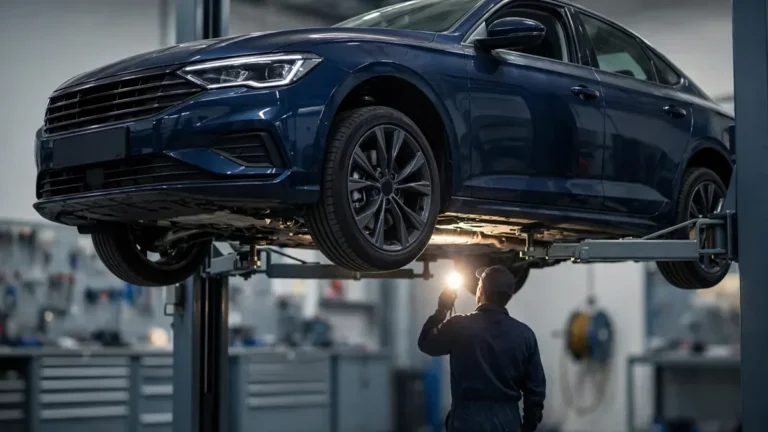
At this price the pre-purchase inspection is not optional — it is the purchase. Budget $150–$250 at an independent BMW specialist (never the seller’s shop) and make sure they check: fault codes in all modules (not just the engine), cooling system condition and leaks, gasket seepage (valve cover, oil filter housing, oil pan), suspension bushings and ball joints, tire age and matching (four matching tires, especially on xDrive), brake pad and rotor measurements, evidence of accident repair (paint depth, panel gaps), and service-history gaps. The full procedure is in our pre-purchase inspection guide — print it and bring it.
Then use the findings as money. Every item the PPI flags is a line item in your negotiation: a $900 gasket job is $900 off the asking price or a repair completed before sale. Sellers of $8,000 cars expect negotiation — the PPI report turns your offer from a lowball into arithmetic.
Frequently asked questions
What is the best BMW 3 Series under $15,000?
The 2009–2011 328i sedan (E90) with the N52 engine: realistic prices of $6,000–$11,000, the most reliable engine of its era, and affordable parts. Buy on service records, not mileage.
How much should I budget for maintenance on a used BMW 3 Series?
Reserve 25–35% of the purchase price for the first year ($2,000–$4,000 on most sub-$15k picks), plus $150–$250 for the pre-purchase inspection. The purchase price is only the entry ticket.
Are BMW 3 Series expensive to maintain?
More than a Camry, less than the reputation suggests — if you buy the right engine and use an independent specialist. The N52-powered cars (2006–2011 328i/330i) are the cheapest to run; turbo N20/N54 cars cost more. Budget the reserve and there are no surprises.
What mileage is too high for a used BMW 3 Series?
There is no magic number — condition and records matter more. A documented 130,000-mile N52 car with fresh gaskets and cooling components is a better buy than a mystery 80,000-mile car. Above 150,000 miles, price in suspension and cooling refreshes regardless of records.
Should I avoid the 2012–2014 BMW 328i?
Avoid them unless the seller provides receipts for timing-chain-guide replacement. The early N20 engine’s guide failure is a $2,500–$4,000 repair. The 2015–2016 cars have the revised guides and are the safe F30 pick under $15,000.
A sub-$15,000 BMW 3 Series is one of the great value plays in used cars — if you buy the car with the reserve fund, not just the purchase price. The formula never changes: pick from the eight above, filter listings ruthlessly, inspect before you offer, negotiate from the PPI findings, and fund the first year upfront. Buyers who follow it end up with a $12,000 all-in sport sedan that drives like cars costing three times as much; buyers who skip the reserve end up with a $8,000 car and a $4,000 surprise. The difference is never luck — it is the budget planner, the inspection, and the discipline to walk away from the wrong car. Do that, and you get 90% of the 3 Series experience for the price of a used Corolla. Start with the used buying guide for the process, then run your numbers in the budget planner above.