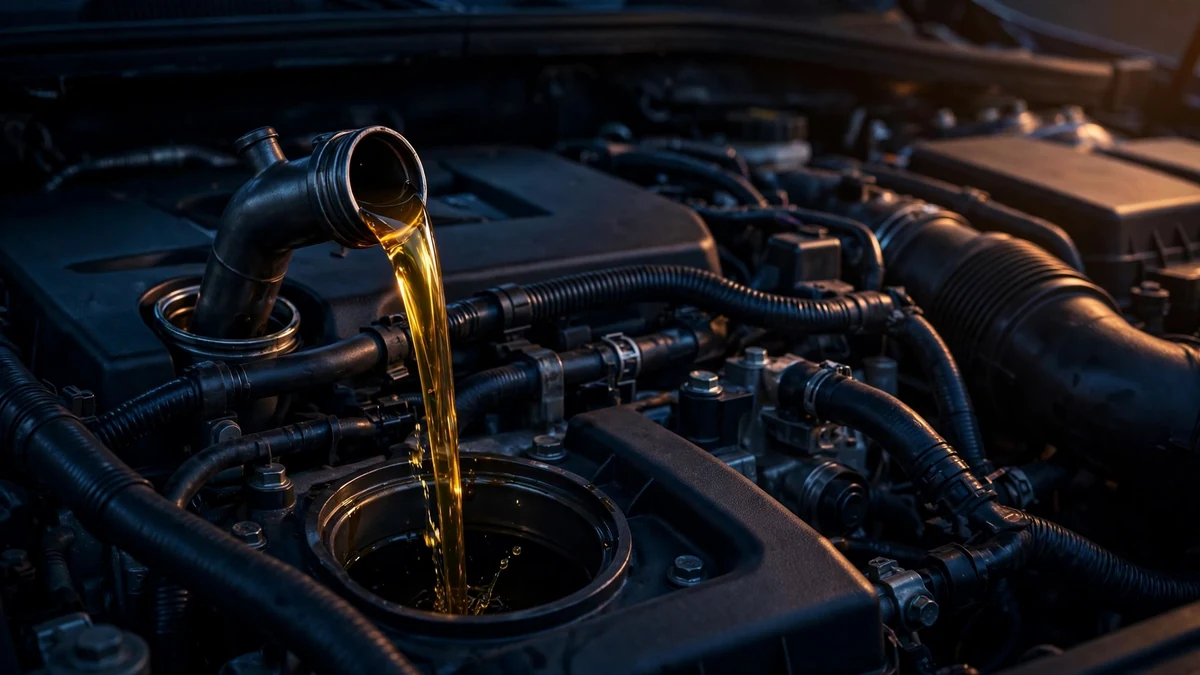
BMW N20 Oil Consumption: What’s Normal & When to Worry
Short answer: Yes — BMW n20 oil consumption is normal in small amounts: BMW’s own bulletin SI B 11 03 13 allows up to 1 quart per 750 miles. Most owners call that absurd; in practice a healthy N20 goes 3,000–5,000 miles per quart, while a high-mileage N20 at a quart every 1,000–2,000 miles is common but worth investigating. Worse than 1 quart per 750 miles — or a sudden jump in your rate — is excessive by BMW’s own standard and deserves the dealer consumption test below.
In this guide
- Why BMW’s official oil-consumption spec sounds absurd
- Oil on the ground vs. oil out the tailpipe: the bright-line rule
- What’s normal for each 3 Series engine
- Why the N20 burns more oil than its successor
- The five causes of oil consumption, ranked
- Consumption-rate checker: normal, watch, or worry
- The dealer oil-consumption test: what actually happens
- What actually reduces oil consumption
- When to worry
- Oil consumption FAQ
Why BMW’s Official Oil-Consumption Spec Sounds Absurd
Here is the sentence that launched ten thousand forum arguments: BMW’s service information bulletin SI B 11 03 13 states that “all BMW engines (excluding Motorsport) can consume up to 1 quart of engine oil per 750 miles at any time.” A brand-new car could drink a quart every 750 miles and BMW’s paperwork would call it normal. Owners find this somewhere between insulting and unbelievable — and even BMW itself has quietly walked it back.
To show the disagreement honestly: that 1-quart-per-750-miles figure is the long-standing text dealers still quote when a warranty claim comes up. But a later revision of the same bulletin tightened the allowance for modern engines: 1 liter per 1,500 miles for all “N” and “B” engines (the entire modern 3 Series family), reserving the looser 1-liter-per-750-miles figure for the N63, N63TU and N74 V8s. Depending on which version you land on, “normal” is either 750 miles per quart or 1,500 miles per liter — a factor-of-two difference that shows how much of this number is engineering judgment and how much is warranty policy.
The same bulletin reframes the whole topic: “All engines normally consume a certain amount of engine oil. This is necessary in order to properly lubricate the cylinder walls, pistons, piston rings, valves and turbocharger(s), if equipped.” Zero consumption isn’t the design target — some oil must remain on the walls every stroke, and some of it burns. And turbo engines “will consume more engine oil than normally aspirated engines,” because some oil “normally migrates past the turbocharger turbine bearing seals and will enter the intake tract” — normal, not a defect. (Full SI B 11 03 13 text, quoted by an owner; the updated revision tightens the N/B-engine allowance to 1 L per 1,500 miles.)
The useful question isn’t “does my car consume any oil?” — it’s “how much, on which engine, and has it changed?” That’s what the rest of this guide answers.
Oil on the Ground vs. Oil Out the Tailpipe: the Bright-Line Rule
Before anything else, settle this, because the fix for each problem is completely different. The bright-line rule: oil on the ground = the leak guide; dry driveway + dropping level = this guide. Spots on the driveway, oil mist under the hood, or a low level with burning smells from the engine bay means oil is escaping outward — that’s a leak, and valve cover, oil filter housing and oil pan gaskets are the usual suspects on a 3 Series.
If the driveway is dry, the engine bay is clean, and the oil gauge keeps sliding toward minimum between services — the oil is going out through combustion. That’s burning, not leaking, and you’re in the right place. BMW’s own bulletin lists external leakage as the first thing to rule out before any consumption analysis: “the engine should be leak-free before starting any engine oil consumption analysis.” Work through our BMW 3 Series oil leak diagnosis guide to confirm you’re leak-free, then come back here.
What’s Normal for Each 3 Series Engine
“Normal” isn’t one number for all 3 Series. The table below blends BMW’s official ceiling with what’s realistically observed — the two columns matter because BMW’s number is a warranty threshold, while the realistic column is what owners and specialists actually see.
| Engine | 3 Series models | Realistic healthy range | Common at high mileage | Excessive (by BMW’s own bar) |
|---|---|---|---|---|
| N20 / N26 turbo 4-cyl | 320i, 328i (2012–2016) | 1 qt per 3,000–5,000 mi | 1 qt per 1,000–2,000 mi | < 1 qt per 750 mi, or a sudden tripling of the rate |
| B46 / B48 turbo 4-cyl | 330i (2016–2019); late 320i/328i outside North America | 1 qt per 4,000–7,500 mi | 1 qt per 2,000–3,000 mi | < 1 qt per 750 mi, or a sudden tripling of the rate |
| N52 NA 6-cyl | 328i (2006–2013, E90) | 1 qt per 4,000–7,500 mi | 1 qt per 2,000–3,000 mi | < 1 qt per 750 mi |
| N55 turbo 6-cyl | 335i (2011–2015) | 1 qt per 3,000–5,000 mi | 1 qt per 1,500–2,500 mi | < 1 qt per 750 mi |
A few notes to read the table correctly. First, the N20 dominates this conversation: the 2012–2016 328i (and the 320i, plus the near-identical SULEV N26) is the 3 Series most likely to develop an appetite for oil. Second, “common” is not “fine” — a high-mileage N20 at a quart every 1,200 miles is widely reported, but it’s still wear or a fixable fault, hence the causes section. Third, BMW’s bulletin refuses consumption complaints before 6,000 miles on a new or rebuilt engine (the break-in allowance), and flags any drastic change — the example given is the rate tripling under similar driving — as the real trigger for diagnosis.
One more reading note: the F30 has no dipstick — you’re reading the iDrive level sensor. When it says “add 1 liter,” the level has dropped roughly one quart/liter from maximum, but it says nothing about how fast it dropped. Always track miles between top-ups; a single “oil at minimum” warning is meaningless without mileage context.
Why the N20 Burns More Oil Than Its Successor
The N20 wasn’t designed carelessly — it was designed for a regulatory target. Every piston ring is a compromise: scrape the walls clean (low consumption) or glide over them easily (low friction, better fuel economy). The N20 leaned hard toward low friction. A specialist teardown comparison measured pistons from three eras: the oldest ran oil rings nearly 4 mm thick, the N20’s just under 2 mm — “super thin,” carbon-caked, and built to minimize internal friction for mandated fuel-economy targets. The thinner the ring, the more oil slips past and burns. (Techmax’s N20 piston comparison.)
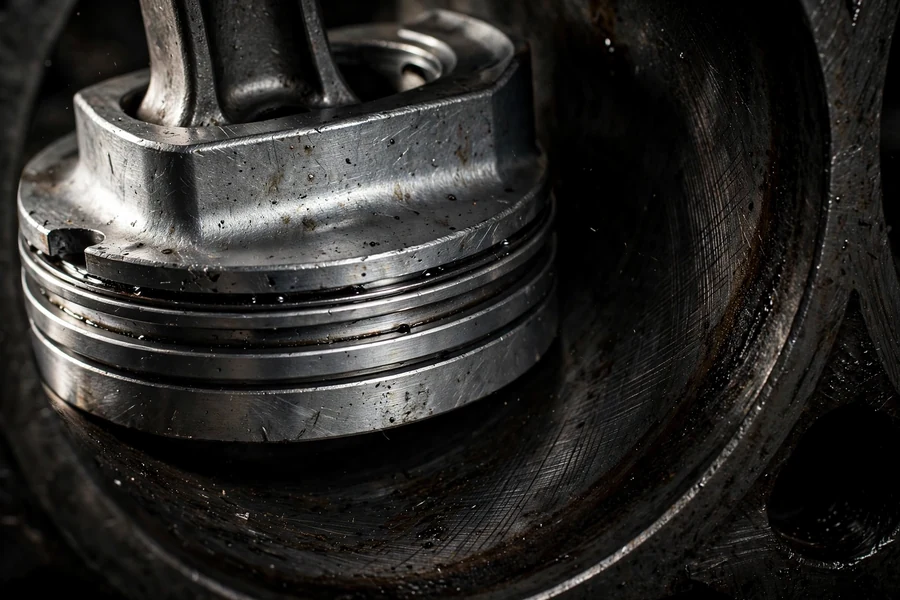
The low-tension-ring story is the headline, but the N20 has a second oil path: the turbocharger. BMW’s own bulletin is blunt — oil “normally migrates past the turbocharger turbine bearing seals and will enter the intake tract of the engine,” and turbo engines consume more oil than naturally aspirated ones as a matter of design. Add the N20’s tendency toward valve cover and crankcase-ventilation trouble with age, and an oil thirst past 60,000–80,000 miles becomes the expectation.
The B46 (the 2016–2019 US 330i engine) and B48 family — the N20’s replacement — were aimed at these weaknesses. Alongside the better-known timing chain and cooling updates, the B48 brought a redesigned piston ring package and improved oil control, with buying guides listing “better oil consumption control” among its pros over the N20. Independent analysis finds the B48 shows better reliability and fewer repeat faults than the N20, with most owners reporting uneventful ownership well past 100,000 miles when maintained. (F30 engine buying guide, N20 vs. B48; BMW Insights’ B48 reliability analysis.)
The takeaway: on a 2012–2016 328i or 320i, some consumption is baked into the design — keep a quart of the correct oil in the trunk and track the rate. On a 330i, consumption is typically much lower, so a sudden increase deserves faster attention. Either way, the next section covers where the oil is going.
The Five Causes of Oil Consumption, Ranked
Oil leaves a running engine through only a handful of doors. In roughly the order they show up on a 3 Series, here they are — and how to tell them apart.
1. Worn or stuck piston rings
The most common cause of real consumption on a high-mileage N20. The low-tension rings that were already marginal when new wear further, and carbon can stick them in their grooves so they can’t scrape. The signature: steadily increasing consumption over tens of thousands of miles, no smoke at startup, no single dramatic event. The same teardown that measured the N20’s thin rings found them heavily carbon-caked — the carbon that locks rings in place. A compression or leak-down test confirms it, but there’s no cheap fix: rings mean an engine teardown.
2. Crankcase ventilation (CCV/PCV) failure
The system BMW’s bulletin calls out by name. The crankcase ventilation valve maintains a slight vacuum in the crankcase; when it fails and the crankcase pressurizes instead, that pressure forces oil past the rings and valve seals and into the intake — while also pushing oil out through gaskets, which is why a CCV failure can look like a leak and burning at once. BMW’s bulletin is explicit: “Pressurizing the engine crankcase can lead to external engine oil leaks and increased engine oil consumption via the piston rings and valve seals.” On the N20, the valve is integrated into the valve cover — one reason valve-cover replacement fixes consumption complaints more often than the name suggests. Warning signs: whistling or howling, rough idle, oil mist in the intake tract, and consumption that worsened quickly rather than over years.
3. Valve stem seals
Small seals around each valve stem keep oil from being sucked down the valve guides. When they harden with age and heat, oil seeps in while the engine sits, then burns off on startup — the textbook symptom is a puff of blue-gray smoke on cold start, or smoke after the car has idled a while, that clears as you drive. It’s more famous on BMW’s V8s but shows up here past 100,000 miles. One clue: pull the spark plugs — stem seals tend to oil-foul one or two plugs heavily while the others look normal, whereas rings foul them evenly.
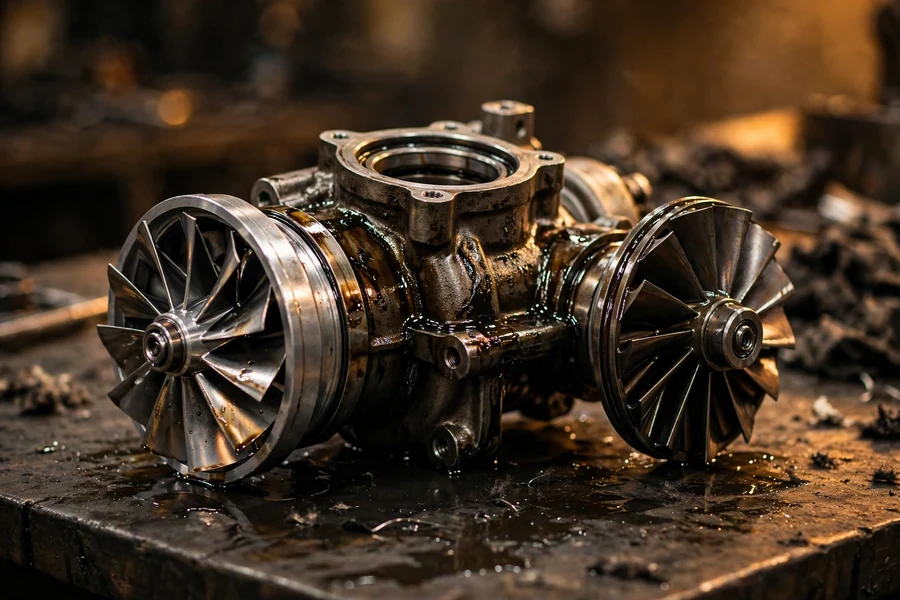
4. Turbocharger seal wear
Some oil passing the turbo’s bearing seals is normal by design — BMW says so outright. It becomes a cause when wear widens the path: the turbo spins at well over 100,000 rpm, fed by pressurized oil, in one of the harshest spots in the engine. Excess consumption from the turbo often shows as oil in the intercooler/intake piping or blue smoke under hard acceleration rather than at idle. Before condemning the turbo, check the crankcase ventilation — excess crankcase pressure can overwhelm the turbo’s oil drain and mimic seal failure.
5. Wrong oil viscosity or degraded oil
The most underrated cause, and the one BMW lists as a diagnostic hint: “The use of oil with the wrong viscosity rating for operating conditions can cause high oil consumption.” Thinner-than-appropriate oil slips past rings and seals more easily, and degraded oil loses the film strength that keeps consumption in check. City driving, high loads, poor fuel and extreme heat all age oil faster — BMW’s bulletin says so — which is why the same car can burn noticeably more oil in harsh use than on highway runs. This cause is the good news of the list: it’s the cheapest to fix.
| Cause | Signature symptom | How it’s confirmed | Relative cost to fix |
|---|---|---|---|
| Piston rings | Steady, gradual increase; even spark-plug fouling | Compression / leak-down test | High (engine teardown) |
| Crankcase ventilation | Quick worsening; whistling, rough idle, oil in intake | Vacuum measurement at oil cap, inspection | Moderate (often valve cover assembly) |
| Valve stem seals | Blue puff on cold start / after idling; one or two fouled plugs | Visual inspection, plug readings | Moderate–high (head work) |
| Turbo seals | Smoke under boost; oil in intercooler piping | Inspection of intake piping, shaft play check | High (turbo rebuild/replacement) |
| Oil viscosity / degradation | Consumption tracks with oil changes or hard use | Review service history, oil grade | Low (fresh oil change, correct grade) |
Consumption-Rate Checker: Normal, Watch, or Worry
Enter the miles driven since the oil was last at full and how much oil you added. The checker computes miles per quart and judges the rate against your engine, with BMW’s 1-quart-per-750-mile ceiling as the hard floor. No JavaScript? Miles driven ÷ quarts added = miles per quart — then compare with the table above.
BMW 3 Series oil consumption checker
The Dealer Oil-Consumption Test: What Actually Happens
If your rate looks excessive — or you want documented proof for a warranty or purchase decision — dealers have a formal procedure. Knowing it removes the intimidation factor:
- Verify no leaks first. The engine must be leak-free before analysis begins — the dealer inspects for external leaks, since a weeping gasket corrupts the measurement.
- Establish the baseline. The dealer drains the oil, measures it precisely, and refills to the exact specified quantity — no “close enough.” On modern cars this may be done electronically via the dealer’s ISTA diagnostic system.
- You drive. You drive normally — typically around 1,000 miles, or until the next low-oil warning, whichever comes first. Drive as you normally would: the bulletin notes that extreme load or continuous high speed raises consumption, so neither babying nor flogging it gives an honest result.
- Measure again. You return, the oil is drained and measured again, and true consumption per distance is calculated from exact numbers — not your gauge readings.
- Verdict. If consumption exceeds spec for your engine, the dealer pursues diagnosis and repair under warranty; if it’s within spec, they top it up and return the car — why “normal” verdicts frustrate owners, and why tracking your own numbers beforehand matters.
Two practical tips: get the baseline and final measurements in writing (you may need them if a result is disputed), and expect the test to be chargeable outside warranty — it’s an oil change’s worth of labor twice. A documented result is the only currency that moves a complaint from “they all do that” to a repair authorization.
What Actually Reduces Oil Consumption
Let’s be clear-eyed: nothing you pour in the filler neck fixes worn piston rings. But several things genuinely slow consumption — and one of them is the fix most people skip.
Choose the oil grade deliberately
BMW’s oil specifications have crept thinner: the classic Longlife-01 (LL-01) approval covers 0W-30 through 5W-40, while the later Longlife-14 FE+ and Longlife-17 FE+ specs are 0W-20 fuel-economy oils approved only for selected gasoline engines from model year 2014. The factory recommendation moved from 5W-30/0W-30 toward 0W-20 — a change understood to serve fuel-economy targets, since the engines themselves didn’t change. (BMW oil specification reference.)
| Oil choice | Spec | When it makes sense | Trade-off |
|---|---|---|---|
| 0W-20 | LL-14 FE+ / LL-17 FE+ | Newer B46/B48 under warranty, mostly highway use | Maximum fuel economy; thinnest film — consumption can be highest |
| 5W-30 | LL-01 | High-mileage N20/N26; moderate consumption you want to slow | The traditional BMW all-rounder; slight fuel-economy cost |
| 0W-40 / 5W-40 | LL-01 | N20 with heavy consumption; hot climates; hard-driven cars | Best film strength at temperature; cold-start flow still protected |
BMW’s bulletin itself warns that “the use of oil with the wrong viscosity rating for operating conditions can cause high oil consumption” — so this isn’t folklore, it’s the manufacturer’s own diagnostic checklist. If your N20 burns noticeably less on a 5W-30 or 5W-40 LL-01 than on the 0W-20 it left the dealer with, that’s a real data point, not imagination.
Shorten the change interval
The fix most people skip — and the one specialists repeat most. The N20 is sensitive to degraded oil: BMW’s bulletin notes that city driving, high loads and extreme temperatures accelerate oil aging, and aged oil leads to mechanical deterioration. Long intervals let the oil shear down and thin out, raising consumption — which ages the remaining oil faster, a slow spiral. If your car is on BMW’s maximum interval and consuming oil, moving to a 5,000–7,500-mile interval with a quality full synthetic is one of the highest-value changes you can make. Full discussion: the BMW 3 Series oil change interval guide.

Fix the ventilation system
If the CCV system is pressurizing the crankcase, no oil grade will save you — fix the cause first. On the N20 this often means the valve cover assembly, since the pressure-control valve is integrated into it. It’s also the repair that quietly fixes the “leak plus burning” combination.
When to Worry
- The rate is worse than 1 quart per 750 miles. That’s beyond BMW’s own ceiling — the “they all do that” excuse stops applying.
- The rate suddenly changed. BMW’s bulletin singles out a drastic change — the example given is consumption tripling under similar driving — as the trigger for diagnosis. A car that went from a quart every 4,000 miles to a quart every 1,500 in a few months has a developing fault, full stop.
- Blue smoke is constant, not just at startup. A puff on cold start points to stem seals; smoke that follows you down the road points to rings or turbo and is actively fouling your catalytic converter.
- The low-oil warning keeps returning with no visible leak. Repeated warnings mean repeated top-ups, and running low between checks risks oil starvation — the fastest way to turn a consumption problem into an engine problem.
- Consumption comes with other symptoms: rough idle or whistling (ventilation), smoke under boost (turbo), or fouled plugs with misfires (rings or seals). Combined symptoms narrow the cause fast — and heavy consumption left alone fouls the catalytic converter.
Oil Consumption FAQ
Is BMW N20 oil consumption normal?
Small amounts are normal by design: BMW’s bulletin SI B 11 03 13 allows up to 1 quart per 750 miles, and turbo engines consume more because oil migrates past the turbo’s bearing seals. In practice, a healthy N20 typically goes 3,000–5,000 miles per quart; a high-mileage N20 needing a quart every 1,000–2,000 miles is common but worth investigating. Anything under 1 quart per 750 miles, or a sudden tripling of your rate, is excessive by BMW’s own standard.
How much oil consumption is normal for a BMW 328i?
A 2012–2016 328i with the N20 typically uses about 1 quart every 3,000–5,000 miles when healthy; past 80,000 miles, 1 quart per 1,000–2,000 miles is frequently reported. A 2017–2019 330i with the B46/B48 is much lower — usually 1 quart every 4,000–7,500 miles. BMW’s official ceiling is 1 quart per 750 miles, tightened to 1 liter per 1,500 miles for N and B engines in a later revision.
What causes a BMW 3 Series to burn oil?
The five main causes, in order of likelihood: worn or carbon-stuck piston rings (especially the N20’s low-tension rings), crankcase ventilation failure that pressurizes the crankcase, hardened valve stem seals (blue puff on cold start), worn turbocharger shaft seals (smoke under boost), and wrong oil viscosity or degraded oil from over-long intervals. Rule out external leaks first — oil on the ground means a leak, not burning.
Can changing oil weight reduce BMW oil consumption?
It can help, within limits. BMW’s bulletin lists wrong oil viscosity as a cause of high consumption. The factory recommendation moved from 5W-30 toward 0W-20 for fuel economy; many high-mileage N20 owners report lower consumption switching back to a BMW LL-01 approved 5W-30 or 5W-40. It won’t fix worn rings, but it can measurably slow a moderate rate.
What is BMW’s oil consumption test?
The dealer drains and precisely measures the oil, refills to the exact quantity, has you drive about 1,000 miles (or until the next low-oil warning), then drains and measures again to calculate true consumption per distance. If it exceeds spec for your engine, that result supports diagnosis and repair — under warranty only where coverage applies. Get the measurements in writing.
Is it bad to just keep topping up the oil instead of fixing the cause?
Yes, as a permanent strategy. Repeated low-oil warnings risk starvation between checks — the fastest way to turn consumption into engine failure. Heavy consumption also fouls the catalytic converter and oxygen sensors. Worse than 1 quart per 750 miles means a diagnostic appointment.
If you’ve confirmed you’re in the burning camp — dry driveway, dropping level — use the oil change interval guide to make sure your maintenance schedule isn’t quietly making things worse, and circle back to the oil leak guide any time fresh oil appears where it shouldn’t be — the bright-line rule holds in both directions, and these two problems love to travel together. For the full picture of the car around the engine, the BMW 3 Series complete guide ties maintenance, common faults, and ownership costs into one place.