BMW Trunk Won’t Open? Latch and Actuator Fixes
Short answer: BMW trunk latch failure shows up three ways: the lid won’t pop open electrically, it won’t stay latched shut, or the dash insists the trunk is open when it isn’t. The fuel door actuator is a separate small motor that slides a locking pin into the fuel filler door — when it dies, the fuel door stays stuck shut the next time you lock the car. Both have manual overrides: the trunk has a glow-in-the-dark emergency handle inside the lid, and the fuel door has a pull cord behind the right-hand trunk trim. Check fuses and battery power first — they mimic a dead actuator — then expect roughly $25–$90 for a fuel door actuator part or $90–$220 for a trunk latch assembly, $150–$450 fitted at an independent shop.
You press the trunk button on the fob and get silence — or the car greets you every morning with a “trunk open” warning while the lid sits perfectly shut. Meanwhile the fuel filler door has picked the worst possible moment to refuse to budge. These two failures share the same DNA: small electric motors and plastic gears driven by the central-locking system every time you lock the car. They fail in predictable ways, they all have manual workarounds, and neither has to become a dealer-priced emergency if you diagnose in the right order.
This guide covers the E90 (2006–2011), F30 (2012–2019), and G20 (2019+) 3 Series. The mechanisms are cousins across all three, but the emergency releases, fuse numbers, and trim access differ — and the wrong generation’s procedure is how trim clips get broken.
In this guide
- How the trunk and fuel door locks actually work
- Trunk latch failure: the symptoms
- Fuel door actuator failure: the symptoms
- Emergency access: getting the trunk open right now
- Emergency access: the fuel door manual release
- Interactive: what is your car telling you?
- Fuse check by generation — do this before buying parts
- What actually kills these actuators
- Repair costs: honest bands
- DIY: replacing the fuel door actuator
- DIY: replacing the trunk latch
- When to hand it to a pro
- Frequently asked questions
How the trunk and fuel door locks actually work
Both failures live under the same roof: the central-locking system. On the E90, a junction-box module (the JBE) drives the locks; on the F30 and G20, a body domain controller (the BDC) took over. When you press the fob or the interior lock button, these modules send power to small motors all over the car — the four door latches, the trunk latch, and the fuel filler door pin.
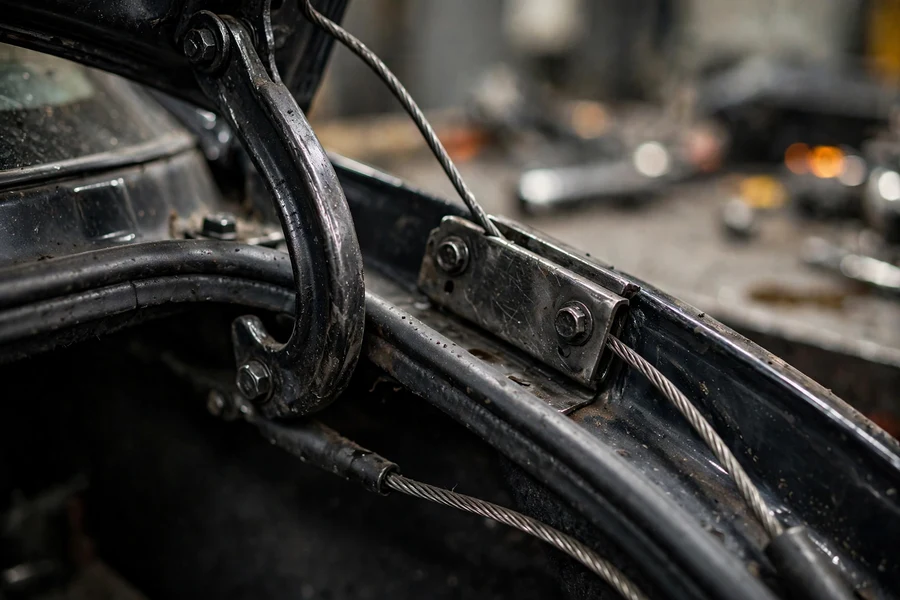
The trunk latch is a latch assembly bolted inside the trunk lid, containing an electric release motor, a set of plastic gears, and a microswitch that reports whether the lid is latched. Press the trunk button and the motor pulls the pawl off the striker so the lid pops up. The microswitch is the part that talks to the dashboard — it is also the part behind every false “trunk open” warning.
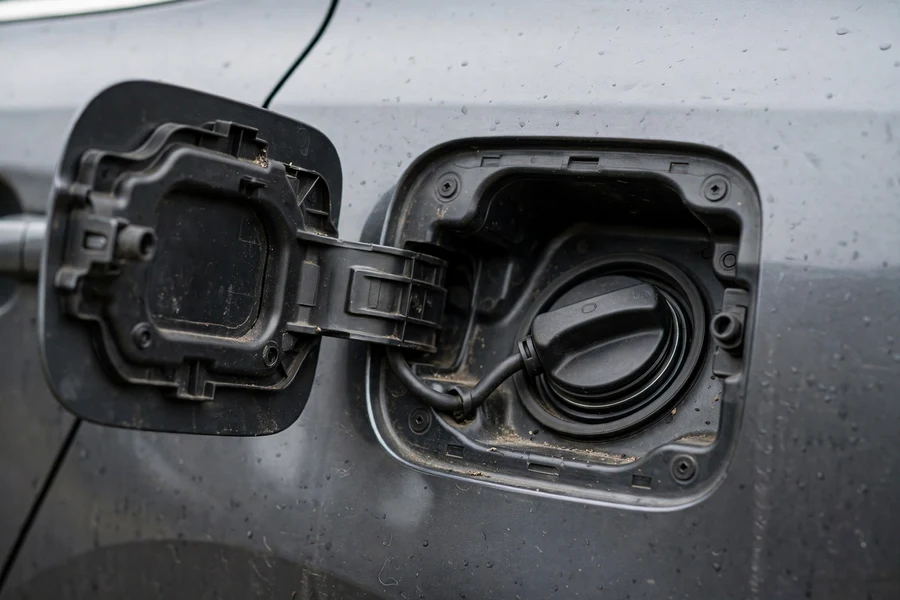
The fuel door actuator is simpler: a small motor behind the right-hand trunk trim drives a pin in and out of the filler door. Lock the car and the pin slides in; unlock and it retracts. It has no dashboard warning, which is why its failure always arrives as a surprise at the gas station. Because it shares the central-locking circuits, a dying actuator can make remote locking behave erratically — and plain dirt or ice around the pin can jam it even when the motor is healthy.
Each actuator gets its own output from the body module but shares fuses and battery health. One dead trunk latch while everything else locks normally points at the latch itself; several things misbehaving at once points upstream at power, fuses, or the key. The door lock actuator guide applies the same logic to the four doors.
Trunk latch failure: the symptoms
BMW trunk latch failure sorts into three complaints. Match yours before reaching for a screwdriver — each one leads to a different part of the car.
| Symptom | Most likely cause | Check first |
|---|---|---|
| Trunk won’t open; fob button and handle switch do nothing (or just a faint click) | Dead latch release motor, blown central-locking fuse, or dead battery | Do the doors lock/unlock normally? If yes, power is fine — suspect the latch |
| Trunk release makes a grinding or buzzing noise but the lid stays shut | Stripped plastic gears inside the latch actuator | Listen at the lid: a straining motor means the motor is alive and the gears are not |
| Lid closes but pops straight back open, or won’t latch at all | Latch pawl not engaging the striker — misaligned striker, broken return spring, or jammed mechanism | Look at the striker on the body and the latch mouth for debris or obvious misalignment |
| Dash shows “trunk open” with the lid fully closed | Failed microswitch inside the latch, or broken wires in the trunk-lid harness where it flexes at the hinge | Open the lid and watch the harness bend at the hinge while a helper watches the warning |
| Trunk opens by itself or releases while driving over bumps | Latch microswitch or release motor circuit shorting — often moisture in the latch or chafed harness wires touching | Check for water in the trunk well and inspect the lid harness |
Fuel door actuator failure: the symptoms
The fuel door actuator has essentially one job and one failure mode that matters: the pin doesn’t retract. Because the door only locks when the car is locked, the symptom always follows the same script — you locked the car earlier, and now the filler door won’t open.
| Symptom | Most likely cause | Check first |
|---|---|---|
| Fuel door stuck shut after locking the car; unlocks fine after manual release | Burned-out actuator motor or jammed pin | Unlock the car and listen at the fuel door while a helper locks/unlocks — silence means the motor is dead |
| Actuator buzzes or clicks but the door stays locked | Motor alive, pin jammed by dirt, corrosion, or a swollen rubber grommet | Pull the manual release, then clean and lightly lubricate the pin bore |
| Fuel door never locks at all (opens even with the car locked) | Pin stuck retracted, broken pin, or actuator unplugged/disconnected | Check whether the pin moves at all when locking — a pin that never extends is a failed or disconnected actuator |
| Remote central locking behaves oddly — fob range drops or locks cycle strangely | Failing actuator motor drawing excess current or sending a bad position signal on the shared locking circuit | Unplug the fuel door actuator temporarily; if remote locking returns to normal, you’ve found it |
Emergency access: getting the trunk open right now
If the trunk won’t open electrically, your next move depends on your generation. All three have a mechanical way in, and none of them need tools.
| Generation | Mechanical route into the trunk | Notes |
|---|---|---|
| E90 (2006–2011) | Ski pass-through behind the rear center armrest, or fold-down rear seats where fitted. Reach through and pull the emergency release on the inside of the lid. | Many E90s have no external trunk key cylinder, so the electrical release is the only outside handle. If the battery is dead, use the jumper posts under the hood to power the car and pop the trunk with the fob. |
| F30 (2012–2019) | Glow-in-the-dark emergency release handle mounted on the inside of the trunk lid — it works with zero power. Reach it through the folded rear seats or the ski pass-through. | No trunk keyhole on the F30. If the seats don’t fold and there’s no pass-through, power the car from the under-hood jumper posts and use the fob or interior release. |
| G20 (2019+) | Split-folding rear seats are standard — fold them and reach the interior emergency release on the lid. | Same deal as the F30: no external key cylinder for the trunk. Dead battery? Jumper posts under the hood first. |
The under-hood jumper post trick is the fastest fix when a dead battery has the battery itself locked in the trunk. Open the driver’s door with the metal key blade, pop the hood with the mechanical release, and connect a jump pack to the positive post and a ground point — the car wakes up enough to fire the trunk release from the fob. One caution: if the battery’s negative terminal is physically disconnected (not just flat), the jumper posts may not complete the circuit, and the mechanical route through the cabin is your only option. The battery replacement guide covers the full dead-battery procedure.
If the trunk releases on its own while driving, treat it as a latch fault, not a curiosity — a lid that pops open on a bump is a safety issue. Secure it and prioritize the latch or its wiring.
Emergency access: the fuel door manual release
Every E90, F30, and G20 has a manual fuel door release in the same place: inside the trunk, behind the trim panel on the right-hand side (same side as the filler door), roughly behind the wheel well. Look for a green nylon pull cord, a small plastic tab, or a fuel-pump-symbol button — pull it and it mechanically drags the locking pin out of the fuel door.
Step by step:
- Unlock the car first. If the pin is simply doing its job (car locked), unlocking retracts it. Only reach for the manual release after confirming the door stays shut with the car unlocked.
- Peel back the right-side trunk trim. Pull the carpet panel away behind the wheel well until you see the small black module with the pull cord.
- Pull the cord or tab firmly. It’s a mechanical linkage, so it works with a dead battery and a dead actuator alike. You should feel the pin withdraw; the fuel door will then open normally.
- Leave the trim accessible if you need more fuel stops before the repair. On some cars the pin stays retracted until the next lock cycle; on others it springs back. The release is a 10-second job once you know where it is.
Diagnostic shortcut: if the door opens after the manual pull but sticks again after the next lock cycle, the actuator motor or its drive is the problem. If the door moves freely and the pin looks clean, suspect power or fuses before ordering parts.
Interactive: what is your car telling you?
Pick your component, symptom, and generation — the checker narrows it to the most likely cause and tells you what to do first.
Trunk & fuel door symptom checker
A quick guide, not a scan tool — if two symptoms point different directions, chase the one that changed most recently.
Fuse check by generation — do this before buying parts
A blown central-locking fuse mimics a dead actuator exactly: silence. Fuses are a two-minute, fifty-cent check, so they come before any parts ordering. Both actuators run on the central-locking circuits — there is no separate “trunk fuse” or “fuel door fuse” to hunt for.
| Generation | Fuse box location | Central-locking fuses (commonly reported) |
|---|---|---|
| E90 (2006–2011) | Behind the glovebox | 2008–2011: fuses 72 and 73 (15A). 2007 models: fuses 56 and 57 (15A). |
| F30 (2012–2019) | Behind the glovebox, plus a rear power distribution box in the trunk | Assignments vary by year and build — use the fuse card clipped inside the box lid rather than a number from the internet. |
| G20 (2019+) | Front-right fuse box (plus others) | Commonly fuse 37 (5A, central locking) — but verify against your car’s fuse card. |
Pull the fuse and inspect it — don’t just eyeball it through the plastic; a fuse can look intact and still be cracked, so swap in a known-good one of the same rating when in doubt. If the new fuse blows immediately, stop: you have a short (often chafed wiring at the trunk-lid hinge or a seized actuator motor), and feeding it fuses will only cook the wiring.
What actually kills these actuators
Ranked by how often each one turns out to be the real culprit:
1. Motor burnout and stripped gears (most common)
Small DC motors driving plastic gears, cycled every time you lock the car for a decade or more. Brushes wear, gears strip, and one day the motor goes silent or grinds. Heat accelerates it, which is why failures cluster in summer. There’s no service interval and no warning — the part simply reaches end of life, usually well past the 10-year mark.
2. Broken wires in the trunk-lid harness
The loom from the body into the trunk lid flexes every time the lid moves. After years of bending, conductors crack inside the insulation — sometimes contacting with the lid open and breaking with it closed, producing the maddening intermittent “trunk open” warning. Prime suspect for any phantom warning; it’s a wiring repair (solder or crimp-seal joints with strain relief), not a parts replacement.
3. Water ingress at the trunk seal
The E90 in particular is known for water entering the trunk past tired seals or tail-light gaskets and pooling in the spare-wheel well where wiring and connectors live. Corroded latch connectors cause the classic weather-dependent failure: fine for weeks, dead after rain. Fix the leak as well as the electrical damage, or the new part corrodes the same way.
4. A dead or weak battery
Low voltage makes every actuator sluggish; a flat battery makes them silent. If the trunk died alongside slow cranking or dim lights, the battery is the prime suspect — not the latch. Jump or charge and retest before touching anything else. The battery replacement guide covers testing and the registration step after a swap.
5. Key, fob, and Comfort Access issues
If the trunk opens from the interior release but not the fob, the latch is innocent — suspect the key side: a weak fob battery, interference, or a Comfort Access antenna fault. Try the second key first; it’s the fastest elimination in the whole diagnostic. The key fob guide covers fob batteries by generation and “key not detected” causes.
6. The microswitch (false-warning specialist)
In a BMW trunk latch failure of this type, the switch inside the latch that reports “latched” can fail while the motor and gears are healthy — the lid works fine, but the car thinks it’s open. The switch is built into the latch assembly, so the fix is still a latch replacement; it just never strands you.
Repair costs: honest bands
Costs below are owner- and specialist-reported ranges, not dealer list prices — genuine BMW parts carry a steep premium over quality aftermarket equivalents. Both jobs are labor-light: the part dominates a trunk latch job, while labor dominates the cheap fuel door actuator.
| Job | Part alone | Independent shop, fitted | Dealer, fitted |
|---|---|---|---|
| Fuel door actuator replacement | $25–$90 | $150–$300 | $350–$600+ |
| Trunk latch assembly replacement | $90–$220 | $250–$450 | $450–$800+ |
| Trunk-lid harness wire repair | $10–$30 (connectors, loom) | $120–$250 | $300–$600+ |
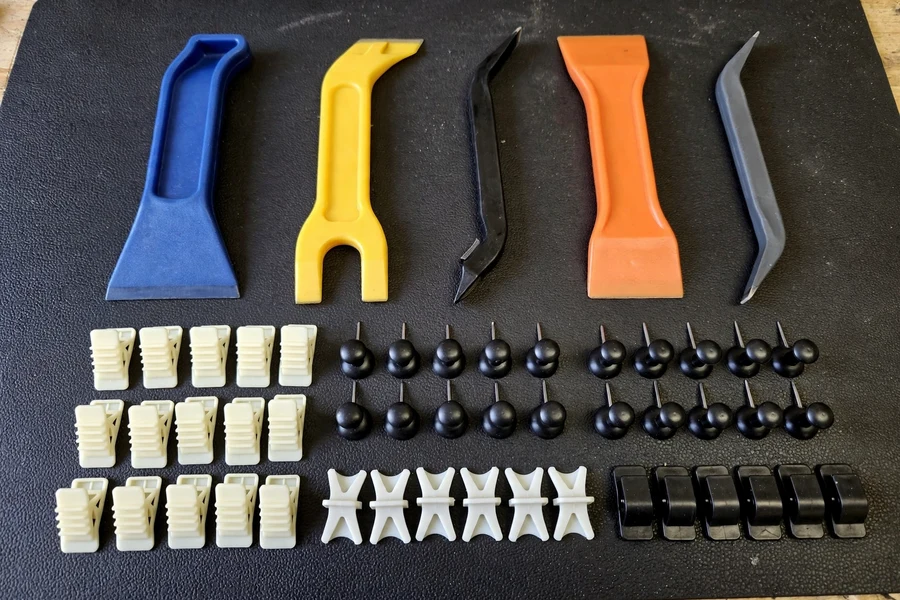
Honest DIY ratings: fuel door actuator 3/10 — peel back trim, unplug, unscrew, reverse. Trunk latch 4/10 — lid trim off, three bolts and a connector, but you’re working overhead and the clips are brittle with age. Harness repair 5/10 — fiddly, not hard: joints need proper strain relief or the repair fails at the same flex point within a year. Budget $10–$15 for spare trim clips; you will break some.
DIY: replacing the fuel door actuator
This is the friendlier of the two jobs. Everything happens inside the trunk with the trim peeled back — no lid disassembly, no overhead work.
- Disconnect the battery’s negative terminal — five minutes of precaution beats a shorted body module. The battery lives in the trunk on all three generations (right side).
- Peel back the right-side trunk trim. Remove cargo hooks in the way, then pull the carpet panel away behind the wheel well with plastic pry tools — the clips are brittle with age, so pull straight out, not at an angle.
- Locate the small black module with the green manual-release cord near the filler neck. Unplug the connector — press the release tab, don’t yank the wires.
- Unscrew the actuator. Its plastic housing at the filler neck usually turns a quarter-turn counter-clockwise, plus one or two small screws. Note how the pin rod threads into the filler compartment before pulling it out.
- Fit the new unit in reverse: thread the pin rod through first, seat the housing, snug the screws (plastic threads — don’t over-torque), and reconnect the plug until it clicks.
- Reconnect the battery and test: the pin should extend on lock and retract on unlock. Cycle it a dozen times — a pin that works twice then jams has a dirty bore, not a bad motor.
If the new actuator doesn’t respond, don’t assume it’s defective — recheck the connector seating and the fuse. Many “bad new parts” are just incompletely seated plugs.
DIY: replacing the trunk latch
Slightly more involved, mostly because you’re working on the underside of an open lid. A second person to hold the lid steady (or a prop rod) makes this much pleasanter.
- Disconnect the battery negative terminal — you’re about to unplug the latch.
- Remove the lid trim panel — clips, plus sometimes screws hidden in the grab-handle recess. Start at a corner with a pry tool; expect to sacrifice a couple of clips.
- Unplug the latch: one connector plus the harness clipped along the lid. Photograph the routing first — it must go back exactly as it was, clear of the hinge.
- Unbolt the latch assembly — usually three bolts into the lid. Support it as the last bolt comes out; it’s heavier than it looks.
- The assembly is one unit — motor, gears, and microswitch together. Bolt the new one in, reconnect the plug, route the harness as photographed.
- Test before refitting trim: reconnect the battery, close the lid, and verify the fob release, handle switch, and no “trunk open” warning on the dash.
While the trim is off, inspect the lid harness at the hinge — flex it and look for cracked insulation. Replacing the latch without fixing a broken harness wire just moves the warning to the new part.
When to hand it to a pro
Three situations argue for a shop. A fuse that blows instantly means a short in the locking circuits — proper diagnostic work. A trunk that releases while driving needs a technician’s confirmation, since a lid opening at speed is a genuine hazard. And water in the trunk well: if the leak source isn’t obvious, a shop can pressure-test seals and tail-light gaskets in one visit, which beats replacing a corroded actuator twice.
Frequently asked questions
Can I open my BMW trunk with a dead battery?
Yes. Open the driver’s door with the metal key blade, pop the hood, and connect a jump pack to the under-hood jumper posts — that wakes the car enough to fire the trunk release from the fob. If the battery is physically disconnected, use the mechanical route: fold the rear seats or use the ski pass-through and pull the interior emergency release on the lid (a glow-in-the-dark handle on the F30) — it needs no power.
Why does my BMW say the trunk is open when it’s closed?
Usually a failed microswitch inside the latch or broken wires in the lid harness where it flexes at the hinge. Flex the harness while someone watches the dash — a flickering warning means broken conductors needing a solder or crimp-seal repair; a steady warning points at the latch microswitch and a latch replacement.
Where is the manual fuel door release on a BMW 3 Series?
Inside the trunk, behind the right-side trim panel (same side as the filler door), roughly behind the wheel well. Look for a green nylon pull cord, a small plastic tab, or a fuel-pump-symbol button — pulling it mechanically retracts the locking pin. It works with a dead battery, since it’s a direct linkage.
How much does it cost to replace a BMW fuel door actuator?
The part runs $25–$90. Independent shops charge $150–$300 fitted; dealers $350–$600+. The part is small and labor is under an hour — most of the shop cost is diagnostic time and trim removal.
Can a bad fuel door actuator drain the battery or break central locking?
It can disturb central locking, since it shares those circuits — a failing motor can make remote locking erratic. Unplug the actuator temporarily: if normal locking returns, it’s confirmed. A seized motor can add a small parasitic draw, but overnight battery drain usually has another primary cause.