BMW Clutch Delay Valve Delete: Should You Do It?
Short answer: For most out-of-warranty manual 3 Series, yes — a clutch delay valve (CDV) delete is one of the cheapest meaningful feel upgrades you can do. The CDV is a small flow restrictor in the clutch hydraulic line that slows engagement to cushion the drivetrain. Removing it (or fitting a modified valve) gives a more direct, predictable bite point with no power gain and no proven effect on clutch life when driven normally. Skip it if you are under warranty or leasing: a dealer can deny a clutch-related claim over the modification. DIY takes 1–2 hours and costs little more than fresh fluid; the one real job afterward is bleeding the clutch.
Ask a room of manual-transmission BMW owners about the clutch delay valve and you will get two camps: those who swear the delete transformed their car, and those who noticed almost nothing. Both are telling the truth — and understanding why is the whole key to deciding whether this mod is for you. The CDV only interferes when you release the clutch pedal quickly. Drive gently and it is effectively invisible; shift hard at high revs and it is the thing standing between your left foot and the clutch.
This guide explains what the valve actually does inside the hydraulic line, the symptoms that genuinely point to it (and the ones that don’t), the two delete methods with honest difficulty and cost bands, what changes afterward — including the clutch-wear question answered straight — and the warranty and lease fine print. For anything beyond the pedal feel itself — a slipping clutch, a failing dual-mass flywheel, replacement costs — see the BMW 3 Series clutch replacement guide; this article covers the CDV mod only.
What the clutch delay valve actually does
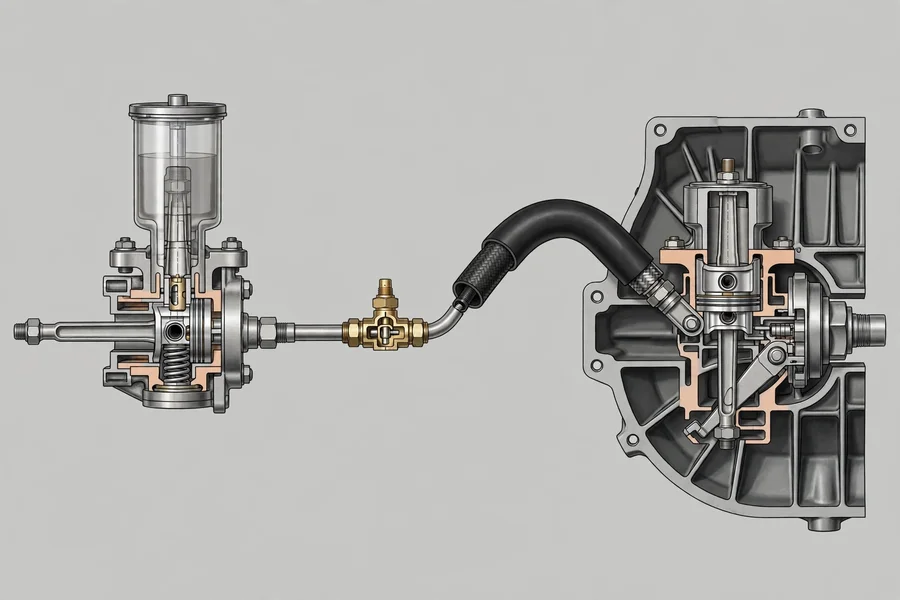
Your clutch is hydraulic. Pressing the pedal pushes fluid from the clutch master cylinder through a line to the slave cylinder, which disengages the clutch. Releasing the pedal lets fluid flow back, and the clutch re-engages. The CDV sits in that return path and acts as a one-way-style flow restrictor: when you press the pedal, fluid flows freely and the clutch disengages exactly when you ask. When you release the pedal quickly, the valve chokes the return flow, so the clutch engages more slowly than your foot did.
BMW fitted the valve to protect the drivetrain, not to annoy enthusiasts. A fast clutch engagement at high revs sends a shock wave through the clutch disc, dual-mass flywheel, transmission, driveshaft, and differential. The CDV stretches that engagement over a fraction of a second, softening the hit. It also forgives inexperienced drivers: dump the clutch and the car lurches instead of bucking. As the widely cited definition puts it, the valve “slows clutch engagement and was intended to reduce drivetrain shock in the event that an inexperienced driver quickly engaged the clutch at higher revs.” BMW has used the valve on manual-transmission models including the 3 Series since the late 1990s.
The important subtlety: at low pedal speeds the valve does almost nothing. Fluid flow is so gentle that the restrictor is not a restriction. That is why daily-driver commuters often report no difference after the delete — their driving never woke the valve up — while drivers who shift hard notice it immediately. Neither group is imagining things; they are just driving through different parts of the valve’s behavior.
Symptoms that point at the CDV — and symptoms that don’t
Because the CDV only acts on fast pedal releases, its fingerprints are specific. A vague or rubbery bite point that appears only during quick shifts, but feels normal in gentle driving, is the classic sign. Use this table to separate CDV behavior from genuine clutch or hydraulic problems.
| Symptom | CDV-related? | What it feels like | Check instead |
|---|---|---|---|
| Bite point feels vague or delayed only on fast shifts | Yes — classic | You release the pedal, but engagement arrives a beat late, like the clutch is thinking about it | — |
| Clutch slips under power in any gear | No | Revs rise without matching road speed; smell of hot friction material | Worn clutch disc |
| Pedal feels spongy or sinks | No | Soft pedal, inconsistent disengagement | Air in the line or failing master/slave cylinder — bleed or inspect |
| Judder or shudder pulling away | Possibly | A resonance-like shudder as the clutch engages; some owners report the CDV contributes | Contaminated or worn clutch, worn dual-mass flywheel |
| Hard 1–2 shift feels notchy at high revs | Sometimes | The clutch momentarily slips instead of hooking up during an aggressive 1–2 | Shift linkage, transmission mounts, worn synchros |
| Engagement point moves around between drives | Unlikely | Bite point genuinely inconsistent day to day | Hydraulic leak or failing master cylinder |
One honest note from long-term owner reports: a high-mileage owner on E90Post who deleted the CDV at around 230,000 miles — with the original clutch lasting past 293,000 — reported noticing no change at all in normal driving. If your complaint is vague engagement during relaxed commuting, the CDV is probably not your culprit, and the delete will not fix it.
Shopping for a used manual 3 Series? The CDV can actually mask a tired clutch on the test drive. Because the valve slows engagement, a worn disc that would shudder or slip with direct hydraulics can feel deceptively smooth. After the test drive basics — no slip in a high gear at full throttle, a clean bite point, no judder — ask whether the car still has its valve. A deleted CDV is not a red flag on its own, but it does mean the previous owner drove the car harder than average, which is worth knowing. The used 3 Series buying guide walks through the full manual-transmission test-drive checklist.
With the valve vs deleted: an honest comparison
No hype, no horror stories — here is what owners consistently report on each side, based on years of owner discussion on E90Post, Bimmerforums, and 1Addicts.
| Behavior | Stock CDV | CDV deleted |
|---|---|---|
| Bite point on quick shifts | Vague; engagement lags behind the pedal | Direct; the clutch follows your foot exactly |
| Gentle daily driving | Smooth and forgiving | Nearly identical — the valve was barely active anyway |
| Hard 1–2 shift at high revs | Clutch can slip momentarily instead of hooking up | Hooks up immediately when you release the pedal |
| Driveline shock on abrupt engagement | Softened by design | Fully transmitted — your foot is now the only cushion |
| Learning to drive stick | Forgiving of dumped clutches | Less forgiving, but teaches real pedal feel |
| Horsepower or acceleration | — | No change. Zero. This is a feel mod, not a power mod |
| Clutch wear, normal driving | Baseline | No proven difference — wear follows your right foot, not the valve |
Which 3 Series have a CDV
Only manual-transmission cars have one — there is no clutch pedal on an automatic, and therefore nothing for the valve to delay. If your 3 Series is an automatic (including the ZF 8-speed), you can stop reading.
| Generation | Model years | CDV arrangement | Delete approach |
|---|---|---|---|
| E46 | 1999–2006 | External inline valve in the hydraulic line near the slave cylinder | Remove the valve and join the lines, or fit a modified valve |
| E90 / E91 / E92 / E93 | 2006–2013 | External inline valve, mounted in a bracket by the slave cylinder | Remove and join the lines, or fit a modified valve |
| F30 / F31 / F34 | 2012–2019 | Restrictor integrated into the slave cylinder assembly (no separate external valve) | Modified valve or restrictor-free slave cylinder; slightly more involved |
| G20 | 2019–present | Manual cars (sold in select markets; US-market 3 Series are automatic-only) carry a CDV arrangement similar to the F30 | Same approach as F30 |
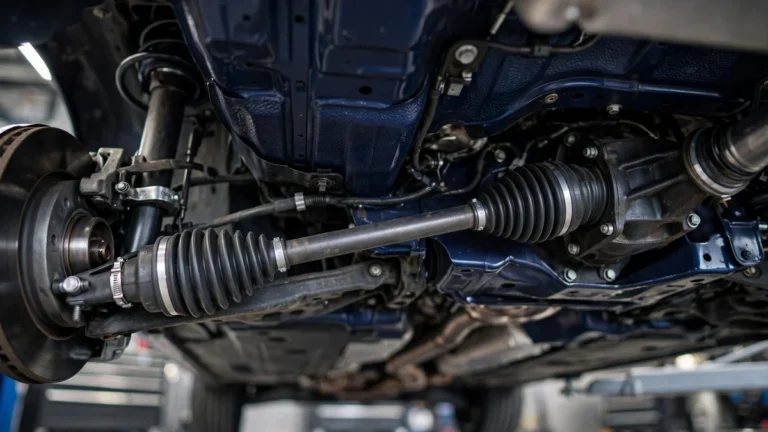
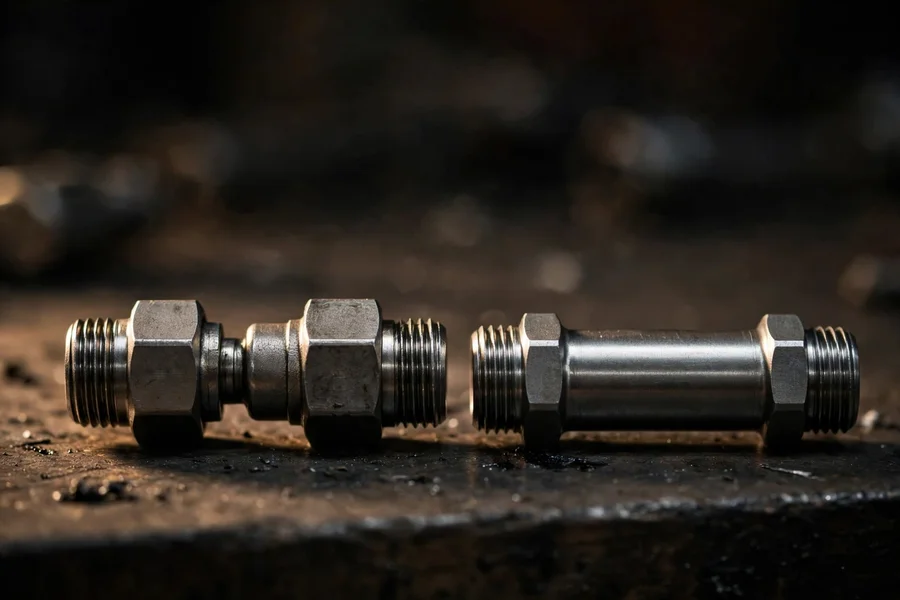
Visual check beats any table: with the car safely on stands, look at the hydraulic line running to the clutch slave cylinder on the transmission. On E46 and E90-era cars the CDV is a small inline fitting — roughly the size of a large nut — sitting in the line. If you only see a straight run of line into the slave, your car either has the integrated F30-style restrictor or no valve at all.
Should YOU delete your CDV? The decision tool
The delete is right for some owners and pointless — or risky — for others. Answer four questions and the tool weighs your car, your driving, your warranty position, and your priorities.
Should you delete your CDV?
Four questions. The tool weighs driving style, warranty status, and your car against what the delete actually changes.
CDV myths: true or false?
Five quick statements. Test what you actually know about the valve before you touch a wrench — most owners get at least one wrong.
True or false: CDV edition
1. Deleting the CDV adds horsepower or makes the car measurably faster.
2. The CDV only restricts fluid flow when you release the clutch pedal quickly.
3. You must bleed the clutch hydraulics after removing the CDV.
4. BMW fits the CDV to protect the drivetrain from shock loads.
5. Deleting the CDV will destroy your clutch within months.
The delete: two ways to do it
There are two schools, and the right one depends on your generation and your comfort with warranty questions. Both end at the same place: unrestricted fluid flow between the master and slave cylinders.
| Method A: Full removal | Method B: Modified valve | |
|---|---|---|
| What you do | Remove the CDV entirely and join the two line ends directly | Swap the stock valve for a modified unit with the restrictor removed |
| Parts cost | Free (just fresh DOT 4 fluid) | Roughly $25–$40 for the modified valve (owner-reported pricing) |
| Appearance afterward | Obviously modified — the valve is gone | Visually identical to stock from the outside |
| Best for | E46 / E90 with external valves; owners who don’t care about the stock look | Anyone who wants the mod invisible, or F30 cars where the restrictor is integrated |
| Catch | On some cars the line ends need the valve body to mate cleanly — test-fit before committing | Drilling a stock valve yourself is not recommended; the unit must be opened and resealed properly |
Difficulty: easy to intermediate — one well-documented E46 owner rates it 2 out of 10. The mechanical part is two hydraulic fittings; the skill part is the bleed afterward. Time: 1–2 hours on stands, most of it access and bleeding. Tools: jack and stands, line wrenches to fit your car (commonly 11 mm and 17 mm on E46/E90-era cars — confirm on yours), a hose clamp or plug for the line, fresh DOT 4 brake fluid, and a bleed kit. The clutch draws from the shared brake fluid reservoir, so this is a good moment to check the fluid’s age — see the brake fluid service guide.
The procedure (E46 / E90 external-valve cars)
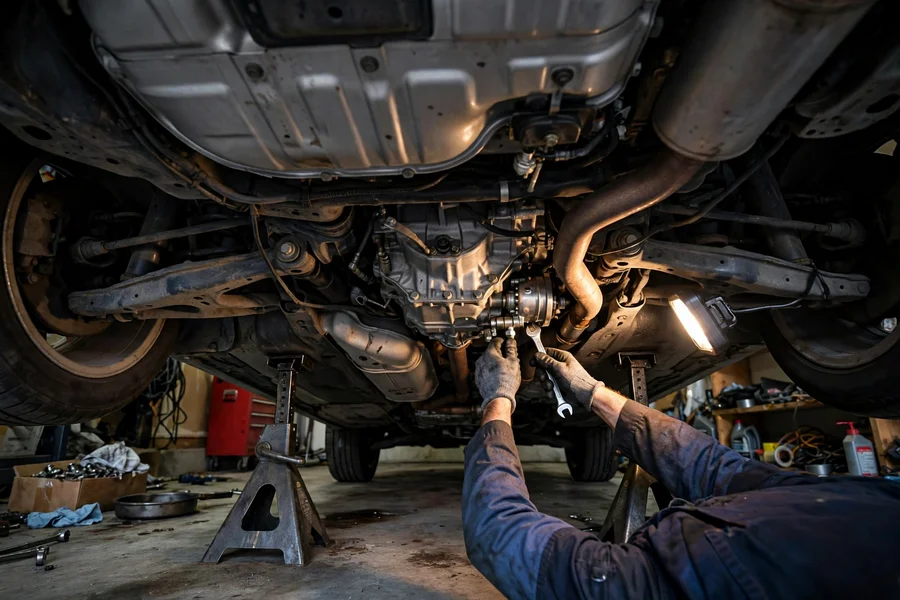
- Get the car safely on stands and locate the slave cylinder on the transmission bell housing. The CDV is the small inline fitting in the hydraulic line just before it — the only thing in that line that looks like a fat union.
- Clamp the feed line gently upstream of the valve to limit fluid loss. There is no pressure in the line with the car off; a light pinch is enough.
- Break the fittings loose with two wrenches — one to hold, one to turn — so you don’t twist the hard line. Expect some fluid to weep; brake fluid eats paint, so keep it off bodywork.
- Remove the valve. Look through it: the pinhole inside versus the wide lines either side is the whole story of this mod.
- Join the lines (Method A) or fit the modified valve (Method B). Snug the fittings — hydraulic threads seal on their seats, not on brute force.
- Bleed the clutch. Open the slave bleed nipple, run fresh DOT 4 through until no bubbles remain, and keep the reservoir topped up throughout. A spongy pedal afterward means air is still in there — bleed again.
- Test before driving: with the engine off, the pedal should feel firm and consistent through its travel, exactly as before the job — only the engagement behavior changes, not the pedal effort.
On F30 cars the job differs: the restrictor lives inside the slave cylinder assembly, so you are replacing the slave (or its valve section) with a restrictor-free unit rather than unbolting an external valve. Access is tighter and the bleed is fussier — budget extra time, and consider a shop if you have never bled hydraulics before.
What actually changes: drivability and clutch wear, honestly
After the delete, the clutch engages exactly when your foot says so. The bite point becomes consistent and readable, fast shifts hook up instead of slipping through a delay, and the vague “rubber band” feeling on aggressive 1–2 shifts is gone. That is the complete list of improvements — and it is enough for most owners who do the mod, because a predictable clutch is genuinely more pleasant to drive.
What does not change: power, rev hang (that is engine/ECU behavior, not the clutch hydraulics), shift effort, or pedal weight. If a seller or forum post promises the delete “unlocks” performance, that is hype. And if your main complaint is notchy 1–2 shifts at moderate pace rather than at the limit, several experienced owners point out the CDV has little to do with it — shift linkage, mounts, and gearbox oil are more likely suspects.
The clutch-wear question, answered straight: the valve itself neither saves nor destroys clutches — your driving does. With the CDV gone, a smooth driver engages the clutch exactly as smoothly as before; nothing about the friction surfaces changes. What changes is the ceiling on abuse: a clutch dumped at high revs now hits the driveline with full force, and repeated hard launches will wear the disc and stress the dual-mass flywheel faster. Long-term owner reports — including cars driven hundreds of thousands of miles after the delete — show normal clutch life for drivers who don’t abuse it. The honest summary: the delete doesn’t wear your clutch; it just stops protecting it from you.
One more real-world effect worth naming: the first week after the delete, most owners report stalling once or twice in traffic. The bite point you memorized over years of driving was the valve’s softened version, and your muscle memory needs a few days to recalibrate to the direct one. This is normal, temporary, and — if you’re honest — slightly embarrassing at a green light. Give it 200 miles before judging the mod; nearly everyone who pushes through the adjustment period keeps it.
Warranty and lease: the fine print
Under factory or CPO warranty, think twice. Clutch friction material is a wear item and generally excluded from coverage anyway, but the hydraulic system and driveline components around it are not. If a slave cylinder fails or a dual-mass flywheel needs replacement under warranty and the dealer finds modified clutch hydraulics, you have handed them a clean reason to deny the claim — the modification sits directly in the system that failed. This is the single biggest real-world risk of the mod, and it is entirely avoidable by waiting.
On a lease, don’t do it. Turn-in inspections look for exactly this kind of modification, and the savings from a $30 mod are not worth end-of-lease charges or a failed inspection. Reverting is possible — the job is fully reversible — but “reversible” and “worth the hassle on someone else’s car” are different things.
Out of warranty, the calculus flips: there is no coverage to jeopardize, the job is reversible, and the only cost of being wrong is an afternoon. If you do the delete and hate it (rare, but some owners prefer the stock smoothness in traffic), refitting the valve is the same job in reverse.
A final word on disclosure. If you sell the car privately, mention the mod — it takes ten seconds and it’s the kind of detail an enthusiast buyer actually wants to hear. If you trade it in, the valve’s presence or absence won’t move the number, but a modified-valve car that still looks factory avoids awkward questions entirely. And if you ever do make a warranty claim on an unrelated system, there’s no obligation to volunteer modifications — but never misrepresent the car’s condition if asked directly.
What it costs: DIY vs shop
This is one of the cheapest mods in the BMW world. Cost bands below are owner- and specialist-reported estimates, not quotes — labor rates vary widely by region.
| Route | Parts | Labor | Typical total |
|---|---|---|---|
| DIY, full removal | $0 (plus ~$10–$15 of DOT 4 fluid) | Your afternoon (1–2 hours) | Under $20 |
| DIY, modified valve | ~$25–$40 for the valve, plus fluid | Your afternoon (1–2 hours) | $35–$55 |
| Independent BMW shop | $25–$40 valve (if used) | ~1–2 hours shop time | $120–$280 |
| Dealer | Don’t ask a dealer to perform a modification that deletes an emissions/drivetrain-protection component — and don’t expect warranty sympathy afterward | Not applicable | |
The shop route makes sense if you have never bled a hydraulic system: a botched bleed leaves you with a spongy pedal and no clutch disengagement, which is a tow-truck problem. Paying an hour or two of labor for a guaranteed-correct bleed is reasonable insurance. For broader ownership costs on these cars, see the 3 Series maintenance schedule and cost guide.
Engagement feel: stock vs deleted
Feel can’t be dyno-tested, so consider this chart what it is: a visual summary of widely reported owner impressions, scored subjectively out of 10 — not measured data.
Clutch engagement feel: stock CDV vs deleted
Subjective scores out of 10, compiled from owner impressions — illustrative, not measured data.
Bite-point predictability
■ Stock 4/10 ■ Deleted 8.5/10
Engagement immediacy on fast shifts
■ Stock 3/10 ■ Deleted 9/10
Smoothness in gentle traffic
■ Stock 8.5/10 ■ Deleted 8/10
Driveline shock absorption
■ Stock 9/10 ■ Deleted 4.5/10
Forgiveness of sloppy shifts
■ Stock 8/10 ■ Deleted 4/10
The chart tells the whole story at a glance: the delete trades the valve’s cushioning and forgiveness for immediacy and predictability. In gentle traffic the two are nearly identical — which is exactly why some owners feel nothing changed.
Frequently asked questions
Will a CDV delete void my BMW warranty?
It can jeopardize clutch and driveline claims. The clutch disc itself is a wear item and usually excluded anyway, but if a slave cylinder, master cylinder, or dual-mass flywheel fails under warranty with modified hydraulics in the system, the dealer has a straightforward reason to deny the claim. Out of warranty, the question is moot.
Does deleting the CDV add power or make the car faster?
No. Engine output is unchanged. Shifts may feel quicker and more decisive because the clutch engages the instant you release the pedal, but there is no measurable performance gain — it is a drivability mod, not a power mod.
Can I just remove the valve and join the lines, or do I need a modified valve?
On E46 and E90-era cars with the external valve, many owners simply remove it and join the line ends — the fittings mate directly. A modified valve (restrictor removed, stock appearance) achieves the same result and looks factory. On F30 cars the restrictor is integrated into the slave assembly, so the delete means a modified valve or restrictor-free slave instead.
Will my clutch wear out faster without the CDV?
There is no evidence of accelerated wear under normal driving — long-term owners report normal clutch life after the delete. The valve doesn’t save clutches; smooth driving does. What the delete removes is the safety net: repeated hard launches and dumped clutches now hit the driveline unfiltered, and that abuse will wear the disc and stress the dual-mass flywheel faster.
Do automatic 3 Series have a clutch delay valve?
No. The CDV lives in the hydraulic line between the clutch master and slave cylinders, and automatics have neither a clutch pedal nor that hydraulic circuit — they use a torque converter instead. This entire article applies to manual-transmission cars only.
If your clutch itself is slipping, juddering badly, or near the end of its life, no valve mod will save it — price the real job in the clutch replacement cost guide, and if you’re shopping for a used manual, the used 3 Series buying guide covers what to check on the test drive. For the full model overview, start at the complete 3 Series guide.