BMW 330i vs M340i: Is the B58 Worth the Premium? An Ownership Comparison
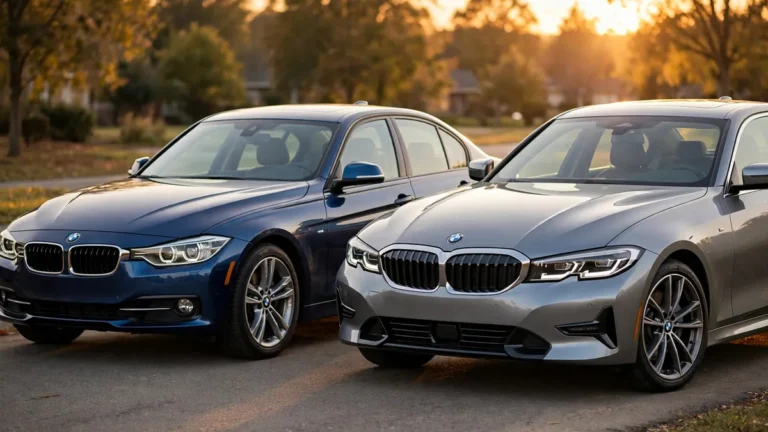
The bmw 330i vs m340i decision is not about which is the better car — both are the same G20 3 Series, built on the same line, sharing interior architecture, tech platform and the ZF eight-speed automatic (trim and option packages differ). It is about one question: is the M340i’s turbocharged inline-six worth roughly $13,500 more on the used market, plus higher fuel, insurance and consumable costs every year you own it? This is a trim-level ownership comparison — the 330i’s B46 four-cylinder versus the M340i’s B58 six — covering what the premium buys, how the two engines age, and which buyer should pick which.
This guide assumes you have settled on the G20 generation. If you are cross-shopping generations instead, our F30 vs G20 comparison and the complete 3 Series guide cover that ground. If you are choosing between any two used 3 Series, start with the used buying guide and the reliability record by model year.
The short answer
The bmw 330i vs m340i answer splits by buyer, not by spec sheet. Buy the 330i if you commute: you give up roughly 1.2 seconds to 60 mph and get a $13,500 lower used price, $488/year cheaper insurance, and 30 vs 25 mpg combined. Buy the M340i if you are an enthusiast who will use the 382-hp B58 inline-six daily — it is widely considered BMW’s best modern six, its running-cost penalty is smaller than the badge suggests, and for some buyers the six-cylinder character alone is the entire point. The 330i is the smart-money choice; the M340i is the one you will dream about.
In this guide
- The real question: what does the B58 premium actually buy?
- Powertrain: B46 four-cylinder vs B58 inline-six
- Reliability patterns: how the two engines age
- Running costs: fuel, insurance, tires, brakes, maintenance
- Used-market price gap: what to pay in 2026
- Which should you buy? The buyer picker
- Daily-driving differences that actually matter
- Verdicts by buyer type
- Frequently asked questions
The real question: what does the B58 premium actually buy?
Forget spec-sheet racing for a moment. A 2022 M340i cost about $15,250 more than a 2022 330i when new ($57,695 vs $42,445, per TrueCar’s original-MSRP data), and the used market keeps most of that gap. Here is what the money gets you — and what it does not:
- What it buys: the B58 3.0-liter turbo inline-six (382 hp / 369 lb-ft) instead of the B46 2.0-liter turbo four (255 hp / 294 lb-ft); a rear limited-slip differential; M Sport suspension roughly 0.4 inches lower with revised camber; larger M Sport brakes; a distinct grille and more aggressive styling; and the inline-six soundtrack. That is the complete functional list — Gear Patrol spent a week with each back-to-back and found the mechanical differences begin and end at the powertrain and chassis hardware.
- What it does not buy: a different interior, different tech, a different transmission (both use the ZF 8-speed), more cargo space, or a different car. 95% of the time — commuting, cruising, errands — Gear Patrol found the M340i “feels exactly the same as driving a 330i”, and even judged the 330i’s gearbox “every bit as clever” as the M340i’s.
- What you can narrow cheaply: a 330i with the M Sport package got the sport suspension, aggressive fascia and variable-ratio sport steering — much of the M340i’s chassis feel without the six-cylinder. On the used market, an M Sport 330i is the closest thing to a “discount M340i” that exists.
Powertrain: B46 four-cylinder vs B58 inline-six
| 330i (G20) — B46 | M340i (G20) — B58 | |
|---|---|---|
| Engine | 2.0L turbocharged inline-four | 3.0L turbocharged inline-six |
| Power / torque | 255 hp / 294 lb-ft | 382 hp / 369 lb-ft |
| 0–60 mph (manufacturer) | 5.6 s (RWD) / 5.3 s (xDrive) | 4.4 s (RWD) / 4.1 s (xDrive) |
| Transmission | 8-speed automatic (ZF) | 8-speed automatic (ZF) |
| Driven wheels | RWD or xDrive | RWD or xDrive |
| Limited-slip differential | No | Yes (rear axle) |
| Suspension | Standard or M Sport | M Sport (0.4 in lower, revised camber) |
| Brakes | Standard | M Sport brakes (larger) |
| EPA combined (2020, RWD) | 30 mpg | 25 mpg |
The B46 is better than the “base engine” label suggests. At 255 hp and 294 lb-ft — more power than an E36 M3, 0–60 in the mid-5s — the 330i’s four-cylinder is also the engine paired with the G20’s most communicative steering rack (see below). Owners who have driven both report it never feels underpowered in normal driving: it “was enough in most cases,” as one owner who went from a G20 330ix to an M340ix put it on the Bimmerpost G20 forum. Refined and torquey, not thrilling.
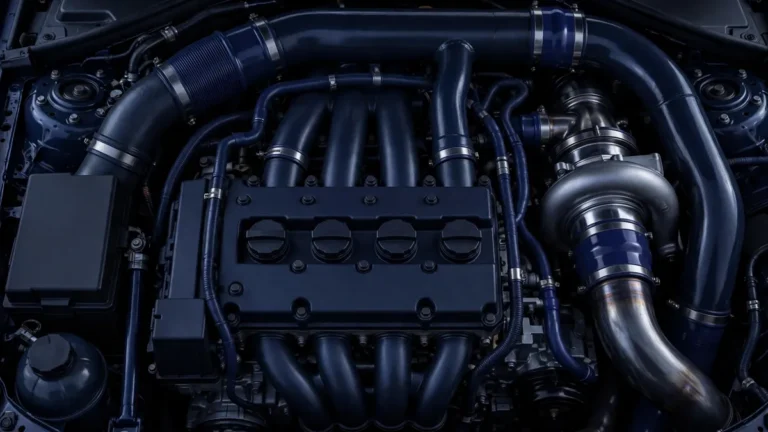
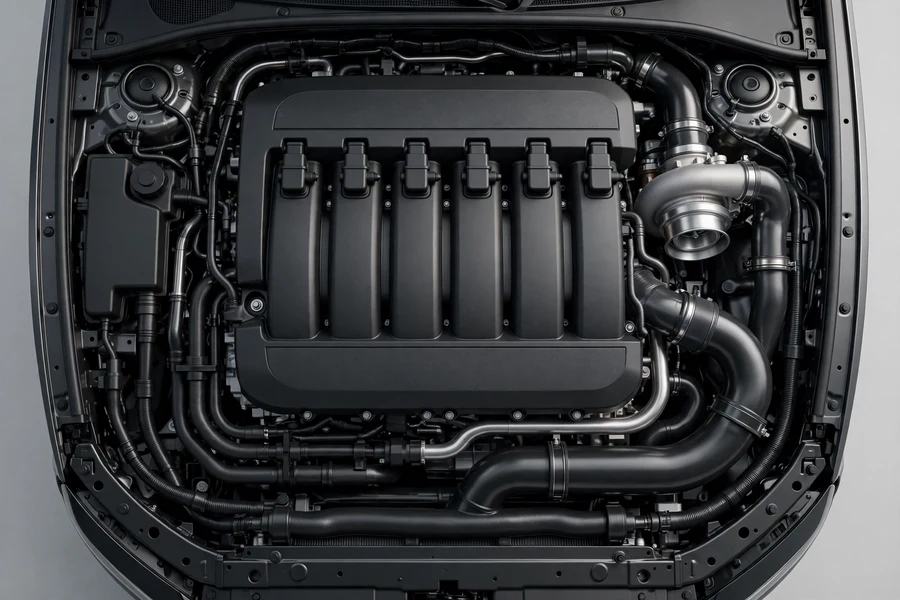
The B58 is the reason the M340i exists. The 3.0-liter inline-six is widely regarded as BMW’s best modern six — smooth, understressed at 382 hp, and the same architecture behind the Toyota Supra and X3 M40i. Torque arrives from under 2,000 rpm and never runs out, and no four-cylinder can fake the turbine-like character. LCI note: 2025+ M340i models add a 48-volt mild-hybrid system and make 386 hp / 398 lb-ft (per CarBuzz’s 2026 3 Series trim breakdown), with combined economy up to 29 mpg.
Tuning headroom, briefly: this is the one area where the comparison is not close. The B58’s closed-deck block and robust internals have made it a legend in the tuning community, with large reliable gains on stock hardware — which is exactly why a used M340i demands scrutiny for modifications. The B46 responds to tuning too, but within far narrower margins. Either way, buy a stock car: our used buying guide treats tuned cars without full supporting records as a walk-away.
Reliability patterns: how the two engines age
No numeric reliability score exists for either engine — the patterns below synthesize BMW specialist guides, certified-technician comments and long-term owner consensus, labeled accordingly. Both are strong for modern turbo BMWs; the question is what each asks you to watch for.
The B58: the six with the strong reputation. Forum consensus regularly calls the B58 “probably the most reliable engine BMW has produced,” and the reputation rests on real design substance — closed-deck block, forged crankshaft and rods, a single twin-scroll turbo running conservative boost. Reported pattern issues are wear items and plastic-component fatigue rather than design flaws: oil leaks from the valve cover, oil filter housing or oil pan gaskets; electric water pump and thermostat replacement (a B-series family trait shared with the B46); carbon buildup on the direct-injection intake valves, with walnut blasting suggested around 60,000 miles; PCV diaphragm rupture announced by a high-pitched whistle (BMW extended coverage on early units); and ordinary spark-plug and coil-pack replacement. Caveat: early-build B58s (2015–2017, pre-G20) had weaknesses revised in later years — and tuned or high-mileage examples need closer inspection. See our 3 Series reliability-by-year guide for how the G20 scores overall.
The B46: the four with fewer demons than its reputation. The specialist record is quietly positive — a BMW master-certified technician on the Bimmerforums 330i reliability thread described the B46/B48 family as “fairly solid” with few major issues seen. The known pattern items are specific and mostly cheap: a coolant vent hose from the cylinder head to the expansion tank that cracks at its fitting (covered by a US service action — a stranding risk if ignored); occasional check-engine lights from the fuel-tank vent valve; oil seepage at the vacuum pump, gaskets and the turbo oil return line; and earlier-than-expected spark-plug misfires on some cars. Neither engine has a generation-defining failure like the N20’s timing chain — for that history, see our N20 vs N26 engine comparison.
The honest reliability verdict: both are buy-with-confidence choices by modern BMW standards — the B58’s reputation is stronger, the B46’s problem list shorter and cheaper. Buy on condition, service history and mileage, not engine code.
Running costs: fuel, insurance, tires, brakes, maintenance
Fuel: the 5-mpg gap and what it costs you
| EPA 2020 rating | 330i | M340i |
|---|---|---|
| City / highway / combined (RWD) | 26 / 36 / 30 | 22 / 30 / 25 |
| City / highway / combined (xDrive) | 25 / 34 / 28 | 22 / 30 / 25 |
Worked example (12,000 miles/year, $3.60/gallon premium): the RWD 330i uses about 400 gallons a year ($1,440), the M340i about 480 ($1,728). The fuel delta is roughly $288/year — about $1,440 over five years. Owners driving both identically report 30 vs 26 mpg — about $222/year. Drive the M340i hard and the gap grows much faster.
Insurance: the biggest recurring delta
Insurance is the largest recurring cost difference. Insuraviz’s insurance-rate study (2024 model year; 40-year-old married male, clean record, full coverage, $500 deductibles; updated October 2025) puts the 330i at $2,444/year and the M340i at $2,932/year — a $488/year delta, roughly $2,440 over five years. Caveat: one study, one driver profile — get quotes on both cars for your own profile.
Tires, brakes and maintenance
| Item | 330i | M340i | The delta |
|---|---|---|---|
| Wheels/tires | Typically 18-inch, square setup | Commonly 19-inch staggered performance setup | Larger staggered tires cost more per set, cannot be rotated front-to-back, and wear faster |
| Brakes | Standard brakes | Larger M Sport brakes | Bigger pads and rotors cost more at every brake job |
| Spark plugs | 4 plugs | 6 plugs | Two extra plugs plus more labor at each interval — get a BMW specialist quote before purchase |
| Oil service | Standard interval | Same interval, slightly more oil | Negligible difference |
| Fuel type | Premium required | Premium required | No difference — both want 91+ octane |
Used-market price gap: what to pay in 2026
The used market preserves nearly the full new-car price gap (TrueCar national-listing averages, live September 2026):
| Model year | 330i average listing | M340i average listing | The gap |
|---|---|---|---|
| 2021 | $30,937 | $44,429 | ~$13,500 |
| 2022 | $31,062 | $44,578 | ~$13,500 |
Three pricing realities for shoppers. First, the gap is structural, not negotiable away. M340i listings command the premium at every model year and mileage level — you will not “find a cheap one” without accepting high miles, accidents, or modifications. Second, the 330i buys you a newer car for the same money: the price of a 2021 M340i buys a 2023–2024 330i with lower miles and more warranty left. If low mileage and remaining coverage matter more than the six-cylinder, that trade is the smartest move in this whole comparison. Third, mileage narrows the gap at the top end: high-mileage M340is dip toward clean 330i money — which is exactly where the discipline in our used BMW buying guide matters most, because the cheapest B58 carries the most deferred maintenance.
Which should you buy? The buyer picker
Buy the 330i. You will use the extra 127 hp for seconds a day but pay the fuel, insurance and tire penalties every day.
- 30 vs 25 mpg combined: roughly $288/year in fuel at the EPA ratings, more in stop-and-go.
- The $488/year insurance delta alone is a monthly payment on something else.
- Shop an M Sport 330i: sport suspension and variable steering close much of the chassis gap for far less than the M340i premium.
- Bonus: the 330i gets the newer dual-pinion steering rack — some owners consider it the better-steering car around town.
Buy the M340i. You are the buyer the B58 exists for — the running-cost penalty is the price of admission.
- The inline-six character — smoothness, sound, effortless mid-range surge — is the whole point; nothing about the 330i replicates it.
- The limited-slip differential, lower M Sport suspension and revised camber make the M340i genuinely more rewarding at the limit, not just faster in a straight line.
- Tuning headroom is enormous — but buy stock with full records and budget the consumables (tires, brakes, plugs) honestly.
- Reject modified cars with rough running or incomplete history; the B58’s strength is no excuse to inherit someone else’s project.
Buy the 330i — and spend the savings on condition. The $13,500 gap plus ~$800/year in running costs is the 3 Series’ largest free upgrade.
- Buy the newest, lowest-mile, best-documented 330i you can find — condition beats trim level every time.
- Smaller running-cost footprint also means cheaper surprises: four spark plugs, smaller brakes, rotatable tires.
- Target 2020+ cars to avoid the buggiest first G20 year — our reliability-by-year guide explains the 2019 caveat.
Either — decide on emotion. Over 8–10 years both engines are solid bets, and the M340i’s ~$800/year penalty is real but not ruinous.
- 330i case: simpler consumables, better fuel economy, cheaper insurance — the lowest-stress decade of the two.
- M340i case: the B58’s robust design (closed-deck block, forged internals) argues for longevity — plus ten years of the engine you actually wanted.
- Whichever you keep: 5,000–7,500-mile oil changes, cooling-system vigilance past 60k, transmission fluid service despite the “lifetime” claim.
Daily-driving differences that actually matter
- Steering: the surprise upset. The 330i’s four-cylinder packaging accommodates the newer dual-pinion steering rack; the B58’s long six uses the belt-driven design carried over from the F30. Owners on the G20 forum, citing Road & Track’s testing, report the 330i’s rack feels more precise on-center — some consider the base car the better-steering car in normal driving, though the thread debates how much is hardware vs. calibration. If steering feel is your thing, drive both before assuming the M340i wins everywhere.
- Ride quality: know your suspension. The M340i’s M Sport suspension is 0.4 inches lower and meaningfully firmer; one owner who switched from a 330ix to an M340ix called the difference “night and day” — the 330i “like a Toyota Camry” on harsh roads, the M340i “bumpy and stiff,” recommending the adaptive suspension as a must-have. A standard-suspension 330i is the more comfortable daily; an M Sport 330i splits the difference.
- Power you can use vs power you can feel. The 330i’s 255 hp is genuinely quick — mid-5s 0–60 is faster than most traffic you will meet. The M340i’s extra 127 hp shows up in two places: highway passing (where the six’s mid-range surge is effortless) and the emotional register (the sound, the smoothness, the sense of reserve). Around town at legal speeds, you will rarely touch the difference.
- Noise and refinement. Both are quiet highway cruisers. The inline-six adds a cultured growl under load that owners consistently cite as the thing they would miss most. The four counters with slightly less weight over the nose — a touch more agility in tight transitions.
- Fuel reality. Drive both gently and the gap is small — owners report low-30s mpg from the M340i on highway cruises and mid-40s from the 330i in ideal conditions. Your right foot, not the EPA, decides this line item.

Verdicts by buyer type
- The commuter: 330i, ideally with M Sport. You keep ~$13,500 at purchase and ~$800/year in running costs, and lose nothing you will use on a commute.
- The enthusiast: M340i, stock, with full records. The B58 is one of BMW’s great engines and the only reason to pay the premium — pay it gladly, and budget the consumables honestly.
- The value hunter: 330i, and spend the savings on the newest, lowest-mile example you can find. Condition beats trim on a used BMW.
- The long-term keeper: either, chosen with your heart. Both engines are solid decade-long bets by specialist consensus; buy stock, buy documented, maintain obsessively.
- The fence-sitter: drive an M Sport 330i and an M340i back-to-back on the same roads. If the six-cylinder does not move you in the first ten minutes, it will not move you in year three — and the 330i is the rational answer.
Whichever you choose, run the same pre-purchase discipline: a BMW-specialist inspection, full service records, and a cold-start listen. The trim badge tells you which engine you are buying; the records tell you which car you are buying. For the full inspection playbook, see our used BMW 3 Series buying guide.
Frequently asked questions
The used-price figures in this article are national-average listing values from TrueCar inventory data (live September 2026); local markets, mileage, condition and options move real prices. EPA fuel-economy figures are from fueleconomy.gov’s 2020 BMW listing, verified live. The insurance delta comes from a single study (Insuraviz, 2024 model year, updated October 2025, one driver profile) — get quotes on both cars for your own profile. Reliability assessments are qualitative, synthesized from BMW specialist guides, certified-technician comments and long-term owner consensus on enthusiast forums — not manufacturer claims — and should be read as patterns, not predictions for any individual car. Fuel-cost math is illustrative (12,000 miles/year, $3.60/gallon premium). Last verified: September 2026.