BMW Water Pump Failure: Symptoms, Codes & Replacement Cost
Short answer: The classic BMW water pump failure symptoms are a cooling fan that suddenly roars at full speed, followed by a yellow “engine overheating” warning, then a red temperature warning and limp mode — often with no coolant loss at all. On E90 and F30 cars the electric pump stores fault codes 2E81 (speed deviation), 2E82 (cutoff/over-current), 2E83 (power-reduced/dry run), or 2E84 (communication). Most electric pumps fail somewhere between 60,000 and 100,000 miles, and because the failure is sudden rather than gradual, many owners replace the pump and thermostat preventively around 80,000 miles.
In this guide
- The electric water pump: why your 3 Series has one
- The signature failure sequence
- BMW water pump fault codes (2E81–2E84) decoded
- Water pump by generation: E90, F30, and G20
- Why the thermostat gets replaced at the same time
- Replacement costs: dealer vs. independent shop vs. DIY
- Preventive replacement: the 60,000–80,000 mile debate
- What the DIY replacement involves
- Symptom-to-cause finder
- Water pump failure FAQ
Of all the parts that can end a BMW 3 Series drive without warning, the electric water pump is the most notorious. Unlike a belt-driven pump that usually weeps or whines for weeks before it quits, BMW’s electric pump tends to work perfectly one minute and fail electrically the next. That abruptness is why owner forums are full of “it was fine until it wasn’t” stories — and why understanding the failure signature matters more on this car than on most.
The electric water pump: why your 3 Series has one
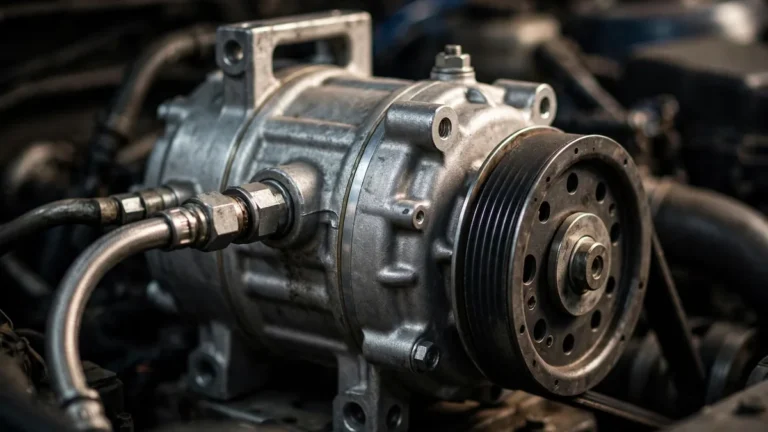
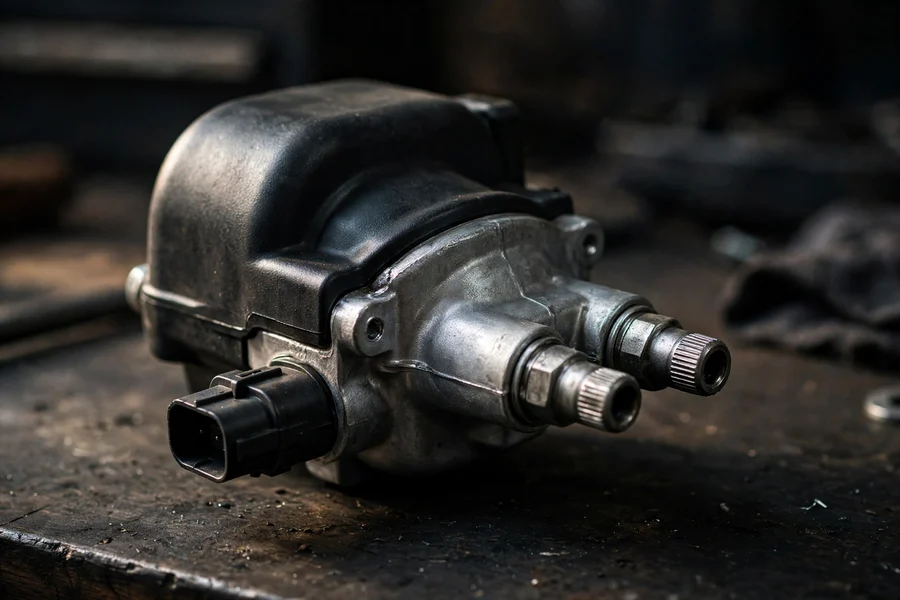
Starting with the E90 generation in the mid-2000s, BMW replaced the traditional belt-driven water pump with an electric unit on its six- and four-cylinder engines. The idea is sound engineering: an electric pump is decoupled from engine speed, so the engine control unit (DME) can run it only as hard as cooling demand requires — throttling it down on the highway, ramping it up in traffic, and even keeping it running briefly after shutdown to prevent heat soak. It also lets the car warm up faster, which cuts emissions and fuel consumption. BMW’s own technical service bulletin SI B12 04 05 lists the electric coolant pump across the E90 3 Series with N51, N52, and N52K engines, and the same architecture carried through the F30’s N20/N26 four-cylinders.
The pump is controlled by the DME over a bit-serial data (BSD) interface, which is why BMW’s own service bulletin SI B12 04 05 lists BSD-signal and power-supply checks alongside the pump itself as possible causes of pump faults. And this is the detail that shapes everything about how these pumps fail: there is no belt to slip, no bearing that necessarily gets noisy first. The failure is usually in the pump’s internal electronics — the controller, the motor driver, or the speed sensing — which means the pump can report itself healthy right up until it doesn’t. One teardown posted by an owner found the inside of a failed pump bone-dry and immaculate; the electronics had simply given out.
The signature failure sequence
Water pump failure on a 3 Series follows a recognizable script, and learning it can save an engine. It usually unfolds over minutes, not days:
- The fan goes to full blast. The first thing most owners notice is the radiator fan roaring like a windstorm under the hood — often at a stoplight or in slow traffic, when airflow is lowest and the DME is desperately trying to shed heat without coolant circulation. This can happen with no warning lights at all, and on some cars it is the only early symptom before codes appear.
- Yellow temperature warning. The “drive moderately / engine overheating” warning appears. The car is asking for mercy: reduce load, find somewhere safe to stop.
- Red temperature warning, then limp mode. If temperatures keep climbing, the red warning follows — sometimes only a minute or two after the yellow — and the DME cuts power to protect the engine. Owner reports describe the car dying outright at this point; restarting after a cool-down may get you a few hundred more yards, but that is a gamble, not a strategy.
The detail that catches owners off guard: this can happen with a completely full coolant reservoir. A failed electric pump stops circulation; it does not necessarily leak. There may be no puddle, no steam, no sweet smell — just heat building in a system full of coolant that isn’t moving. That is the explicit delineation to keep straight: water pump failure is not the same thing as low coolant. Low coolant is a level problem (a leak or consumption issue, covered in our low coolant warning guide); a dead water pump is a circulation problem that can strike with the reservoir sitting at the full mark.
If the sequence starts while you’re driving, the correct response is unglamorous: turn off the A/C, pull over safely, and shut the engine off. Repeated or prolonged overheating on an aluminum BMW engine risks warping the cylinder head or blowing the head gasket — repairs that run into the thousands and dwarf the cost of the pump itself. Roadside assistance and a tow are cheaper than a head gasket.
BMW water pump fault codes (2E81–2E84) decoded
The DME monitors the electric pump constantly, so a failing pump usually leaves a digital paper trail even when the dashboard stays quiet. BMW documented the pump’s fault codes in service bulletin SI B12 04 05, and the same code family appears across the E90 and F30 generations. The four core codes:
| Fault code | DME description | What it means in practice |
|---|---|---|
| 2E81 | Electric coolant pump, speed deviation — speed outside the tolerance | The pump is running, but its actual speed doesn’t match what the DME commanded. An early warning: the pump is struggling but not yet dead. Owners have reported catching a failing pump at this stage before any warning light appeared. |
| 2E82 | Electric coolant pump cutoff — over-current | The pump drew too much current and the DME shut it down. This is the classic “pump has failed” code and the one most commonly stored when the yellow-then-red sequence occurs. |
| 2E83 | Electric coolant pump, power-reduced operation — dry run | The pump is running at reduced power because it believes it’s running dry. This can indicate air trapped in the cooling system after a repair — or a pump on its way out. If it appears right after a coolant service, suspect incomplete bleeding before condemning the pump. |
| 2E84 | Electric coolant pump, communication | The DME can’t talk to the pump. Check wiring, connectors, power supply, and ground before assuming the pump itself is dead — the bulletin lists insufficient power supply, poor grounding, and a missing BSD signal as possible causes alongside a defective pump. |
A fifth code, 2E85 (communication — no voltage at the pump’s emergency-operation input), sometimes appears alongside 2E81 in the bulletin’s diagnostic procedure. FCP Euro’s water pump guide lists 2E81, 2E82, and 2E85 as the signature codes for a failing pump. Reading them requires a BMW-capable scan tool rather than a basic code reader, since these are manufacturer-specific codes stored in the DME. A useful habit: scan for these codes as “shadow” faults at each service once the car passes 60,000 miles. A stored 2E81 with no symptoms is the closest thing this part gives to an advance warning — one owner on the forums caught exactly that pattern and treated it as the pump announcing its retirement.
Water pump by generation: E90, F30, and G20
Not every 3 Series carries the same pump, and this is where a lot of confusion starts. The electric-pump era spans two generations; the newest cars went back to a belt-driven design. Knowing which system your car has changes the failure you’re watching for:
| Generation | Engines | Pump type | Failure character |
|---|---|---|---|
| E90 (2006–2013) | N51, N52, N54, N55 | Electric (commonly Pierburg units) | Sudden electrical failure; the signature fan-blast → yellow → red → limp-mode sequence; 2E81–2E84 fault codes. Peak failure window roughly 60,000–100,000 miles. |
| F30 (2012–2016) | N20, N26 (328i/320i) | Electric | Same sudden-electrical failure mode as the E90; same fault code family. FCP Euro’s N20/N26 guide notes the electricals inside the pump are the usual failure point. |
| F30 LCI (2016–2019) | B48 (330i), B58 (340i) | Belt-driven mechanical | Conventional failure modes return: weeping seals, bearing noise, gradual temperature creep. No 2E81-series codes from an electric pump to watch for. |
| G20 (2019+) | B46, B48 (330i); B58 (M340i) | Belt-driven mechanical | Parts listings for the G20 330i confirm a mechanical operating mode for the main pump. Expect leak-type failures rather than the sudden electrical death of the earlier cars. |
The B-series change is the most important row in that table. BMW returned to a belt-driven pump on the B48/B58 engines — parts listings for the G20 330i show the main pump’s operating mode as mechanical, and owner discussion of the B58’s technical documentation notes that flow control moved to a separate heat management module rather than variable pump speed. The practical upshot for G20 owners: you are largely out of the sudden-failure lottery that defines this article, but you are back in the world of weeping seals and coolant loss — so keep an eye on the reservoir level instead of the fault-code list.
For E90 and F30 (N-engine) owners, one more nuance: the turbocharged N54/N55 cars run the pump harder in some conditions, and forum experience suggests they fail no later — and sometimes earlier — than the naturally aspirated N52 cars. Either way, the mileage window and the warning signs are the same. If you drive a 2016-or-earlier car with the original pump and you’re past 80,000 miles, you’re driving on borrowed time that some cars repay and others don’t: owner reports range from pumps dying at 58,000 miles to originals surviving past 175,000.
Why the thermostat gets replaced at the same time
Nearly every experienced BMW shop replaces the thermostat with the water pump, and the reason is pure economics: on the N-series engines the thermostat is a map-controlled (electronically regulated) unit bolted directly adjacent to the pump, and you have to remove one to reach the other. The labor overlaps so completely that paying for the job twice — once for the pump now, once for the thermostat in a year — costs far more than the thermostat part itself. FCP Euro’s N20/N26 replacement guide states it plainly: replacing the thermostat with the pump is the smart way to prevent another repair so soon.
There’s a technical reason beyond labor, too. The map-controlled thermostat is itself an electronic component with a heating element the DME drives to regulate opening — it fails electrically just like the pump does, and it lives in the same hostile thermal environment. A thermostat stuck open shows up as an engine that takes forever to warm up; stuck shut, it overheats the car just as effectively as a dead pump. When either part is opened up, shops also replace the water pump’s mounting bolts (single-use aluminum stretch bolts on most applications) and inspect the plastic coolant flange on N20 cars — FCP flags that flange as notorious for cracking and recommends its $18 aluminum replacement while everything is apart.
Replacement costs: dealer vs. independent shop vs. DIY
Water pump replacement is one of the repairs where the spread between a dealer invoice and a driveway DIY is widest on a 3 Series. The figures below are assembled from owner-reported invoices, parts pricing from specialist suppliers, and DIY guides — treat dealer and independent-shop numbers as typical ranges rather than quotes, since labor rates vary sharply by region.
| Generation / engine | Dealer | Independent specialist | DIY (parts only) |
|---|---|---|---|
| E90 (N52/N54/N55) | $1,100–$1,600 | $800–$1,100 | $380–$550 (pump + thermostat + bolts + coolant) |
| F30 (N20/N26) | $1,000–$1,400 | $700–$1,000 | $380–$450 (pump $285, thermostat $54, coolant $23, flange $18) |
| G20 (B48, mechanical pump) | $900–$1,200* | $500–$800* | $150–$250* (mechanical pump, thermostat, coolant) |
Why the dealer premium is so large: the electric pump itself is an expensive part (a Pierburg or genuine-BMW unit runs roughly $285–$400 at retail, versus $150–$220 for a G20 mechanical pump), the job books at 2–4 hours of labor depending on the car, and BMW dealers charge full list price on both. Independent BMW specialists typically land 25–35% below the dealer. The DIY route is genuinely accessible on the F30 N20 — FCP Euro’s guide describes it as a one-to-two-hour job with basic hand tools — while the E90 N54/N55 is a longer afternoon because the intercooler and cooling fan have to come out for access.
One cost that belongs in any honest comparison: the tow. A pump that fails on a road trip turns a $700 preventive job into a bill that includes a flatbed, possibly a hotel, and a shop you didn’t choose. That asymmetry is the entire argument for the next section.
Preventive replacement: the 60,000–80,000 mile debate
Ask three BMW people when to replace an electric water pump and you’ll get three answers. There is no factory-specified interval — BMW never published one — so the debate runs on shop experience and forum scars. Here’s the honest shape of it.
The case for replacing at 60,000–80,000 miles. A BMW master technician posting on the forums put it bluntly: he had replaced “tons of them between 60–80k,” which he called the average failure mileage, with some failing as early as 35,000. Turner Motorsport’s long-standing recommendation for these pumps is replacement every 80,000–100,000 miles, and FCP Euro closes its DIY guide by promising “60,000 miles of peace of mind” after a fresh pump and thermostat. The logic is actuarial: the part fails suddenly, failure strands you, and the tow-plus-stranger-shop outcome reliably costs more than the preventive job. One owner’s account makes the point viscerally — stranded in the mountains at 58,000 miles, with lost wages, hotels, and a flight home turning a $1,000 repair into a $5,000 event.
The case for running to failure. Some pumps last. Owner reports include original pumps still healthy at 145,000 and even 175,000 miles, and several forum regulars argue against throwing away a $400–$600 part that shows no fault codes and cools perfectly. There’s also a genuine engineering backstop on these cars: unlike older BMWs, the E90-generation DME actively intervenes with limp mode when cooling fails, which gives the engine a measure of protection that the old belt-driven cars lacked. Replacing a working pump means paying for a failure that might never have happened on your car.
The middle path that most specialists actually recommend. Start scanning for pump fault codes at every service from 60,000 miles — a stored 2E81 with no symptoms is your early-warning system — and plan the replacement as preventive maintenance somewhere in the 80,000–100,000 mile window, alongside the thermostat and a coolant refresh, exactly as preventive-maintenance guidance for these engines describes. Move the job earlier if you take long road trips, live far from a BMW specialist, or the car is about to become someone else’s daily driver. This is also the interval logic that slots into the car’s broader maintenance schedule: cooling-system preventive work in the same window as the other 60,000–100,000-mile wear items, so one service visit covers several risks at once.
What the DIY replacement involves
This is an overview of the job’s shape, not a step-by-step procedure — for the full procedure, FCP Euro’s illustrated N20/N26 guide and their N54 guide are the best free references available. The shape is the same on all electric-pump cars: raise the front of the car, remove the splash shield, drain the cooling system (the pump is the lowest point, so pulling its hose drains most of it), disconnect the electrical connectors and hoses, unbolt the pump and thermostat, install the new parts with fresh single-use bolts, refill with the correct BMW coolant, and bleed.
The bleeding step is where the electric pump earns its keep: the car has a self-bleeding procedure that runs the pump to purge air, which you activate through the ignition and climate controls rather than by squeezing hoses. Run it, recheck the level, and run it again — trapped air is the most common cause of a 2E83 “dry run” code appearing right after a DIY replacement, and it’s a bleeding problem, not a bad new pump. Budget a full afternoon the first time, even if experienced owners report finishing in under two hours on the easy cars.
Know your limits before starting. The xDrive models add a reinforcement plate under the pump that costs extra time; the quick-disconnect hose fittings get brittle with age and love to snap; and if you don’t already own a BMW-capable scan tool, factor that into the DIY math, because you’ll want to confirm no pump codes remain after the bleed. If any of that sounds like more than a Saturday you want, this is exactly the job an independent BMW specialist does every week — and it’s their bread and butter, not a dealer-only procedure.
Symptom-to-cause finder
What is your 3 Series doing?
Tap each symptom you’ve noticed. The finder ranks the most likely cooling-system causes — it doesn’t replace a scan-tool diagnosis.
Select one or more symptoms above to see the likely causes.
Safety note: if any temperature warning is showing, pull over and shut the engine off. Repeated overheating risks head-gasket and cylinder-head damage.
Water pump failure FAQ
Can I keep driving with a failing BMW water pump?
Only as far as a safe stopping place. Once the yellow temperature warning appears, the DME is already cutting power to protect the engine; a red warning means temperatures have exceeded safe limits. Driving on risks warping the aluminum cylinder head or blowing the head gasket, which costs several times more than the pump. Pull over, shut the engine off, and call for a tow.
How long does a BMW electric water pump last?
Most fail between 60,000 and 100,000 miles, with 60,000–80,000 the most commonly reported window on E90 and F30 cars. But the range is wide: some fail before 50,000 miles, and a minority of original pumps survive past 150,000. Because failure is sudden and electrical rather than gradual, mileage is a risk factor, not a schedule.
What does BMW fault code 2E82 mean?
2E82 means the DME detected an over-current condition at the electric coolant pump and cut it off. In practice it is the code most associated with a pump that has actually failed, and it usually appears alongside the yellow-then-red temperature warning sequence. Replacement of the pump (and typically the thermostat) is the standard fix.
Should I replace the thermostat with the water pump on a BMW?
Yes. On the N-series engines the map-controlled thermostat sits adjacent to the pump and shares nearly all of the labor to access. It is also an electronic component that fails in the same ways. Doing both at once costs little more than the pump job alone; doing them separately roughly doubles the labor bill.
Does the G20 330i have the same electric water pump problem?
No. The G20 330i’s B48 engine uses a belt-driven mechanical water pump rather than the electric pump found in E90 and early F30 cars. Mechanical pumps fail differently — typically weeping seals or bearing wear with gradual symptoms — so G20 owners should watch coolant level and temperature trends rather than the 2E81-series fault codes.
Can a BMW water pump fail if the coolant level is fine?
Yes, and this is the classic trap. The electric pump fails electrically — it stops circulating coolant without leaking a drop. The reservoir can sit at the full mark while the engine overheats. A full reservoir rules out a leak; it does not rule out a dead pump.
The water pump is the cooling system’s most failure-prone electrical component, but it’s only one piece of the picture. If your warning turned out to be a level problem rather than a circulation problem, our low coolant warning guide walks through finding and fixing leaks. To keep the pump, thermostat, and the rest of the cooling system on a sensible preventive timeline, fold this article’s 60,000–100,000-mile window into the broader 3 Series maintenance schedule — and if you’re still mapping out how all of the car’s systems fit together, the complete BMW 3 Series guide is the right next stop.