Blown BMW Charge Pipe? Symptoms & the $170 Fix
There is a specific moment most turbo BMW owners eventually experience: you merge onto the highway, the turbo is spooling exactly the way it always does, and then — a loud hiss, the pull goes flat, and a drivetrain warning pops up on the cluster. You lift off, the warning clears, and the car feels normal again. Until the next on-ramp.
It is one of the most common turbo-related failures on modern BMWs, it is cheap to fix permanently, and yet it is one of the most frequently misdiagnosed — because the symptoms impersonate bigger, scarier problems.
The short answer
The classic BMW charge pipe failure symptoms are a sharp hiss or whistle under acceleration, a sudden flat spot in power under load, and an intermittent drivetrain malfunction warning that clears as soon as you ease off the throttle. The factory charge pipe is plastic and cracks — most often at the throttle-body coupler — after years of heat cycles and boost pressure. The durable fix is an aluminum replacement at roughly $170, which removes the failure mode entirely.
In this guide
- What the charge pipe actually does
- The failure signature: what a blown charge pipe feels like
- Confirming a cracked pipe: where to look and how to test
- Symptom checker: is it your charge pipe?
- Which engines crack charge pipes: N20, N26, B46, B48, B58
- The codes it throws — and what they really mean
- The fix: OEM replacement vs aluminum upgrade
- How hard is the install?
- The preventive-maintenance argument: replace it before it cracks
- Frequently asked questions
What the charge pipe actually does
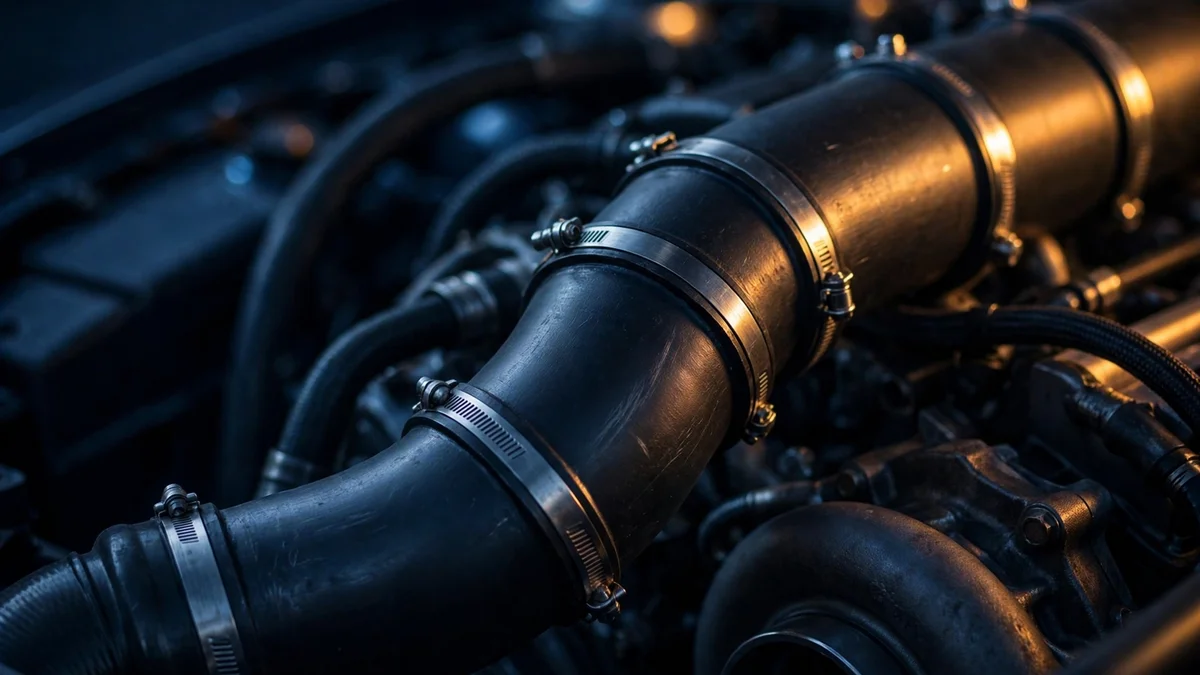
On every turbocharged BMW — and every 3 Series since 2012 is turbocharged — the turbo compresses incoming air so the engine can burn more fuel and make more power. That air travels from the turbo, through the intercooler (which cools it back down so it is denser), and into the throttle body. The charge pipe is the tube that makes that last leg: intercooler outlet to throttle body.
The factory charge pipe is plastic. BMW chose it the way every manufacturer does: light, cheap to mold into the engine bay’s odd shapes, and quiet. It handles stock boost pressure — until it does not. Thousands of heat cycles bake the plastic brittle, boost pulses hammer it under every hard pull, and engine vibration flexes it at its mounts. The pipe does not wear out gradually; it holds pressure right up until a crack opens, and from that moment the engine cannot make full boost. That suddenness is exactly why the failure feels so dramatic.
The failure signature: what a blown charge pipe feels like
A cracked charge pipe has one of the most distinctive symptom fingerprints in BMW ownership. It shows up under load — almost never at idle or gentle cruising — because that is when the turbo produces real boost pressure for the crack to vent.
The signature, in order, usually goes like this. You ask for power: merging, passing, climbing a grade. The turbo spools, and just as boost builds you hear it — a sharp hiss or rushing air from the front of the car, like a tire deflating at speed. Owners describe anything from a tea-kettle whistle to a loud pressurized leak, and it always tracks with the throttle: more boost, more hiss. At the same moment, the pull goes flat. The engine revs but the car stops accelerating the way it should.
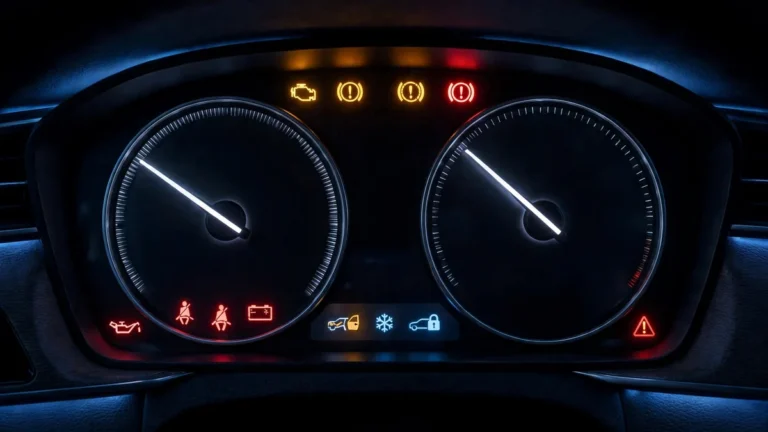
Then comes the warning. The engine computer commands a certain boost level, the boost-pressure sensor reports less than expected, and the computer concludes something in the powertrain is wrong. It throws a drivetrain malfunction or reduced-power warning and may trim output to protect itself. Here is the maddening part: lift off the throttle, the load disappears, the sensor readings return to normal, and the warning often clears on its own. The next mile feels completely fine — until the next time you ask for boost. That intermittence is the hallmark. If your car is flat all the time, even at light throttle, you are probably looking at a different problem.
The table below maps each symptom to how strongly it points at the charge pipe versus the alternatives a shop might suggest.
| Symptom | How charge-pipe-like | What else it could be |
|---|---|---|
| Hiss or rushing air under acceleration | Very strong — pressurized air escaping is nearly diagnostic | Loose clamp, torn intake boot, quieter vacuum leak |
| Flat power only under load | Very strong — the crack only vents under boost | Worn wastegate, boost solenoid, fuel delivery issue |
| Drivetrain warning that clears when you lift off | Strong — classic intermittent, load-only pattern | Ignition misfire, VANOS fault, weak battery (see the drivetrain malfunction guide) |
| Boost-related fault codes (30FF, 310B, 120308) | Strong — the ECU flags underboost, never the pipe by name | Boost solenoid, wastegate actuator, charge-pressure sensor |
| Power loss at all times, even cruising | Weak — points away from the charge pipe | Fuel pump, major misfire, transmission limp mode |
| Warning with shaking or rough idle | Weak — a cracked pipe idles normally | Ignition coils or spark plugs, vacuum leak |
Two subtleties. First, a cracked pipe idles and cruises normally — the pipe only carries air, so without boost pressure behind the crack, nothing changes. If your car shakes at idle or misfires, the charge pipe is not your culprit. Second, a clean scan does not rule the pipe out: small cracks leak only at full boost, and shop-parking-lot scans say nothing about wide-open throttle on a highway on-ramp. That is why the hands-on check in the next section matters as much as any scanner.
Confirming a cracked pipe: where to look and how to test
The good news: this is one of the few BMW problems you can often confirm with eyes and hands. A BMW master-certified technician on BimmerForums calls a broken charge pipe at the throttle body “the most common cause” of boost-pressure-too-low fault codes — and the crack usually sits where you can see it once you know where to look.
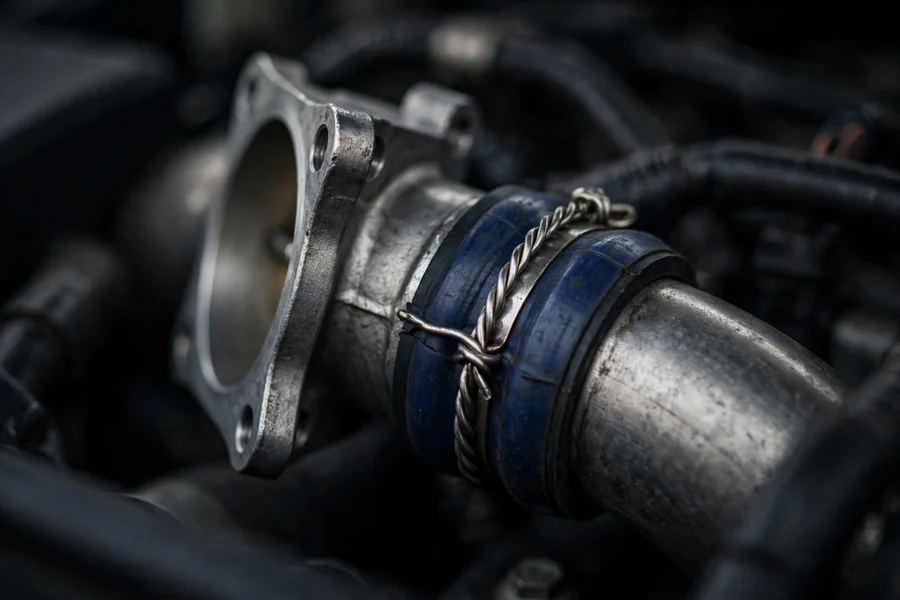
Crack site number one is the throttle-body coupler: the end of the pipe where it meets the throttle body, held by the BMW C-clip and O-ring. Engine flex works this joint hardest, so most failures begin here. In dramatic cases the pipe does not just crack — an owner-reported account on E90Post describes a stock pipe tearing itself off the throttle body entirely — but partial cracks that hiss under load are far more common on stock-tuned cars. Sites two and three: the intercooler-end joint, and any molded mounting boss, where stress concentrates. Check all three with the engine off and cool.
Here is the practical check, in order:
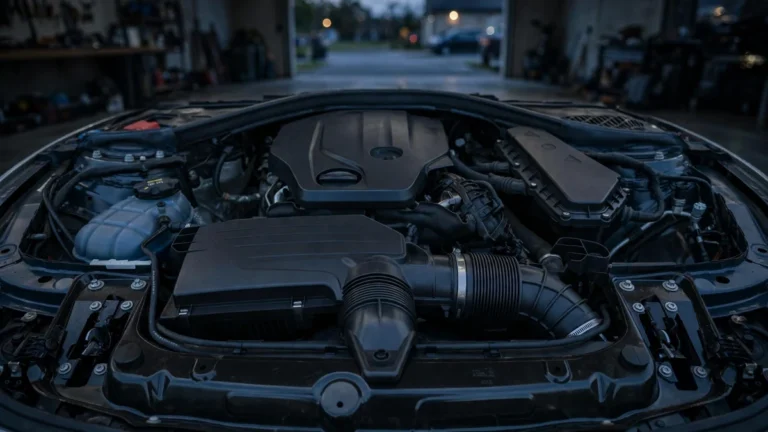
- Find the pipe. On an N20/N26 F30, it is the large plastic tube running across the front of the engine from the intercooler up to the throttle body.
- Inspect the throttle-body end first. Shine a flashlight on the coupler. Look for hairline cracks radiating from the C-clip groove, plastic that has gone chalky or yellowed, and any fine oil film — oil mist rides in the charge air and escapes through the crack, leaving a classic tell-tale coating.
- Flex it gently. With the engine off and cool, wiggle the pipe at the throttle-body end. A healthy joint feels solid; a cracked one may rock, click, or visibly open and close the crack. Do not force anything.
- Check the clamp positions. On pipes that have been off before, a screw clamp seated outside its groove can squeal and leak under load with no crack at all — confirm the clamps sit in their channels.
- Listen with a helper. Have someone hold the engine around 2,000–3,000 rpm in park while you listen at the pipe with the hood up. A leak under even mild load is often audible from the engine bay.
If the visual check is inconclusive, the definitive test is a smoke or pressure test of the charge system. A smoke machine pushes visible vapor through the intake tract with the engine off, and any leak — charge pipe, intercooler end tanks, boost hoses — announces itself with a wisp of smoke. Many independent BMW shops offer this for a diagnostic hour or less, and it catches the small, load-only cracks a static inspection can miss while separating a charge-pipe crack from the other boost-system leaks that hiss the same way.
One more check while you are in there: the MAP (manifold absolute pressure) sensor sits on the charge pipe near the throttle body. Inspect its seal — a flattened or torn seal leaks boost exactly like a crack, and it costs almost nothing to replace when the pipe is already out.
Symptom checker: is it your charge pipe?
Answer the five questions below. The checker scores your symptoms against the charge-pipe pattern — a triage aid, not a diagnosis.
Charge pipe symptom checker
Five questions — about 30 seconds. Your answers never leave this page.
Which engines crack charge pipes: N20, N26, B46, B48, B58
The failure mode is remarkably consistent across engines: an independent BMW specialist’s teardown on the N20, B48, N55, and B58 notes the mode is the same everywhere — only the timing shifts with heat exposure, mileage, and driving style. Match the pipe — especially an aftermarket upgrade — to your exact engine, because pipes are not interchangeable across engines.
| Engine | 3 Series models | Charge pipe notes |
|---|---|---|
| N20 | 320i / 328i, F30 2012–2016 (incl. xDrive) | The classic case: widely documented failures, and proven aluminum upgrades. |
| N26 | 328i SULEV, F30 2012–2016 (certain states) | The N20’s twin — same pipe, same crack sites. (See our N20 vs N26 guide for what actually differs.) |
| B46 | 330i, F30 LCI 2016+; G20 330i | Still a plastic pipe on the hot side of the bay; fewer high-mileage failures reported only because the cars are newer. |
| B48 | G20 330i (some markets) | Same documented failure mode; thinner aftermarket support — confirm fitment before ordering. |
| B58 | 340i, F30 2016–2018; M340i, G20 | Higher boost and underhood heat; the same plastic-pipe failure applies, with B58-specific upgrades available. |
Two fitment warnings. First, RWD and xDrive cars can use different pipe routings on some applications, and automatic vs. manual variants exist for certain kits — check the fitment chart for your exact car. Second, the SULEV N26 uses the identical pipe, but in emissions-sensitive states keep the stock part on hand.
The codes it throws — and what they really mean
A cracked charge pipe has never stored a code that says “charge pipe.” There is no sensor on the pipe, so the computer can only describe what it measured: boost pressure lower than the turbo’s speed and the wastegate’s position said it should be. It names the system, not the part. That one sentence explains most of the misdiagnosis around this failure — including why a technician can stare at a boost code and quote you a turbo.
The codes a leaking pipe most commonly produces:
- 30FF — boost pressure too low. An owner on BimmerFest posted 30FF alongside 310B with exactly the highway-speed-under-load trigger pattern.
- 310B — boost pressure too low, second bank of the same plausibility check. Usually paired with 30FF on the same event.
- 120308 — boost pressure control fault. The master tech in the linked thread flags the throttle-body-end charge pipe as the first check for this family of codes.
- P00BD / P00BF — mass airflow readings too high. The pipe leaks air after the airflow sensor, so the engine meters air that never reaches the cylinders. Owners on F80 BimmerPost report these codes alongside a popped-off charge pipe.
Two caveats keep the codes honest. First, a clean scan does not exonerate the pipe: small cracks leak only at high boost, and the plausibility checks that set these codes do not always trip. Second, these codes overlap with the boost solenoid and wastegate faults that live on the same symptom territory. The symptom logic still applies: hiss plus load-only failure plus a normal idle tilts the field toward the pipe; constant power loss or misfires point elsewhere. If the warning story is broader than the charge pipe, step across to our drivetrain malfunction guide, which maps every other trigger of that warning by engine rather than re-deriving it here.
The fix: OEM replacement vs aluminum upgrade
Once the crack is confirmed, there are two philosophies, and only one of them ends the story permanently.
Option one: another OEM plastic pipe. The cheapest way back on the road today. The catch is structural: the replacement is the same design, in the same plastic, going back into the same hot engine bay — and it can crack again in a similar mileage window. If you sell the car next year, that may be acceptable. If you plan to keep it, you are buying the same failure twice.
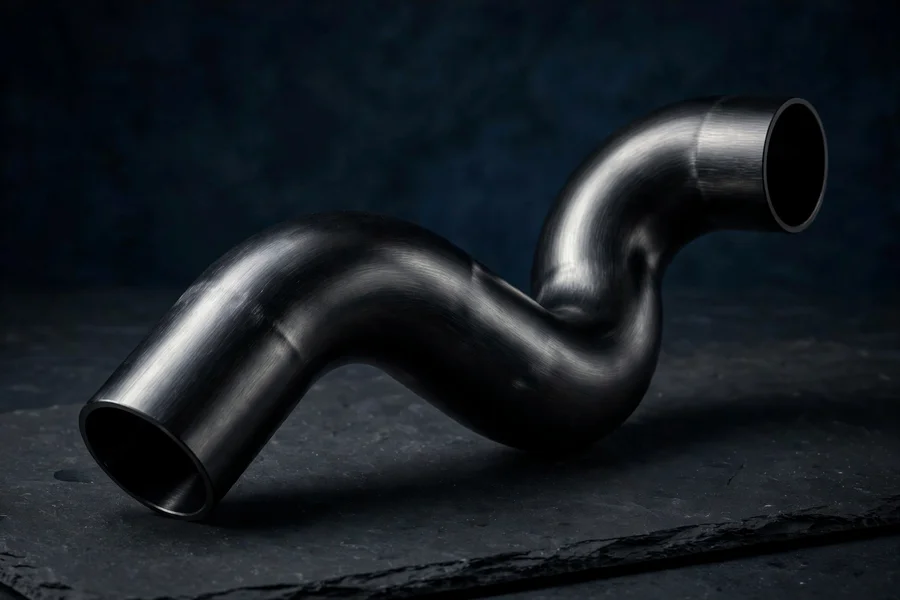
Option two: an aluminum upgrade pipe. Aluminum does not have a cracking mode: no heat embrittlement, no stress fracture at the coupler — the failure mode stops existing. Most aftermarket pipes also flow slightly better, with smooth mandrel bends and larger diameters, and they reuse the factory C-clip and O-ring mounting so they fit and seal like the original. The price surprise is how small the premium is: the most popular aluminum pipes cost about the same as one shop hour of labor. Here is the current field for the N20/N26, with prices as listed by the vendors (approximate, as of September 2026 — confirm before ordering):
| Pipe | Approx. price* | What you get |
|---|---|---|
| MAD N20/N26 charge pipe | ~$169 (MSRP $209) | Aluminum, factory C-clip/O-ring fitment, two sealed meth bungs, lifetime warranty |
| VRSF N20/N26 charge pipe kit | ~$220 | Powder-coated black aluminum, CNC billet throttle-body flange, plugged 1/8″ NPT bung, couplers/clamps included, lifetime warranty |
| Racing Dynamics N20 charge pipe | ~$260 | Mandrel-bent aluminum, CNC throttle-body flange, water-injection bung, hoses and clamps included |
| Evolution Racewerks N20 charge pipe | ~$315–$350 | Established US-made option; price varies by finish and retailer (a second retailer listed it near $315) |
| FTP Motorsport charge + boost pipe kit | ~$370 | Aluminum charge and boost pipes as a set, NPT bung with plug; listed price was for the F10 N20 kit — verify your F30-specific kit |
*Prices are approximate ranges as listed in September 2026 and move with sales and stock; treat them as a comparison, not a quote.
How to choose comes down to budget and intent. At roughly $170, the MAD pipe is the value pick — aluminum, lifetime warranty, factory-style fitment. The VRSF at ~$220 adds the CNC billet throttle-body flange for the sealing surface that cracks first on the OEM part. The Racing Dynamics and Evolution Racewerks pipes at ~$260–$350 are the premium end. The FTP kit at ~$370 replaces the boost pipe too — sensible if that pipe is the same age and the labor is already being spent.
What none of these pipes do is add meaningful power on a stock-tune car. Treat vendor claims of throttle response and reduced lag as pleasant side effects; the reason to buy is that the cracking mode is gone.
How hard is the install?
For a bolt-on part, this one sits in the friendly middle. A published F30 installation guide lists 1 to 1.5 hours and rates the job 3 out of 5 in difficulty: basic metric sockets, T20 and T25 Torx bits, a flat screwdriver, and a jack or lift. Owners who have done it report a consistent theme — the new pipe goes in easily; the factory pipe comes out fighting, with one forum owner admitting it “fought me tooth and nail” before breaking on the way out.
- Transfer the hardware. Aftermarket pipes reuse the factory C-clip and O-ring — move them from the old pipe, and replace the O-ring if it is flattened or hardened.
- Seat the C-clip correctly. Installed backwards, the pipe can slip off under boost — a classic post-install hiss blamed on the new part.
- Baby the MAP sensor connector. The release tab is fragile: push the connector in first, then pull the tab back. Yanking the tab breaks it.
- Re-check clamps after a heat cycle. Snug everything, drive to temperature once, let it cool, and re-check. Boost finds the clamp you forgot.
Not DIYing? It is a cheap shop job: roughly an hour of book labor plus the part. Have the shop quote the aluminum pipe rather than the OEM one — the labor is identical either way — and inspect the whole boost system while it is apart.
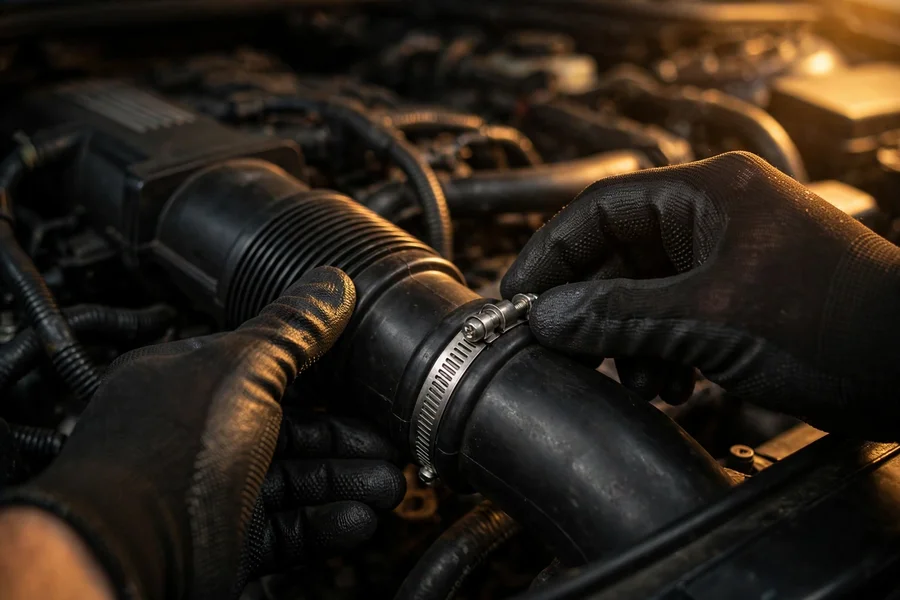
The preventive-maintenance argument: replace it before it cracks
Here is the argument almost nobody makes about charge pipes, and it is the strongest one in this guide: on a higher-mileage turbo BMW, the charge pipe belongs with the water pump and thermostat — a part you replace on your schedule rather than on its schedule.
A cracked charge pipe rarely fails in your driveway. It fails at highway speed, under load — exactly when a tow is most expensive. One tow or one shop diagnostic aimed at the wrong cause costs more than the ~$170 aluminum pipe that would have prevented the episode. And this is a one-time purchase: aluminum has no embrittlement clock, so the upgrade is not a recurring interval — it is the interval you delete.
The case is strongest in three situations. First, mileage: past roughly 60,000–80,000 miles on the original plastic pipe, the pipe is living on borrowed heat cycles — hot climates pull that window earlier. Second, tuning: any tune that raises boost asks more of the exact joint that cracks first, and owner reports of pipes letting go after tuning are a consistent pattern. Third, ownership horizon: keeping the car for years makes the one-time aluminum price cheaper than the plastic part plus a tow, a diagnostic, and a repeat.
The counterargument gets one sentence: if the car is low-mileage, stock-tuned, and heading to a new owner soon, the OEM pipe is a defensible cheap fix. For everyone else, replacing a plastic charge pipe that has not cracked yet is not paranoia — it is the cheapest tow you will never have to call.
Charge pipe failure: quick answers
What does a blown charge pipe sound like?
Can I drive with a cracked charge pipe?
How much does a BMW charge pipe replacement cost?
Is an aluminum charge pipe worth it?
Will a tune blow my stock charge pipe?
Can a cracked charge pipe cause a check engine light?
How long does a BMW charge pipe last?
A cracked charge pipe is the rare BMW failure where the cheap fix is also the permanent one. If your car hisses under boost, falls flat under load, and throws a warning that clears when you back off, do the five-minute flashlight check at the throttle-body coupler before anyone sells you a turbo. If the story is bigger than the pipe — misfires, constant power loss, shaking — step back to the drivetrain malfunction hub, which maps every other cause of that warning by engine. For the full ownership picture, our complete 3 Series guide ties this failure into the maintenance schedule it belongs to, and the N20 vs N26 comparison covers what actually differs between the two four-cylinders — the charge pipe is not one of those things.