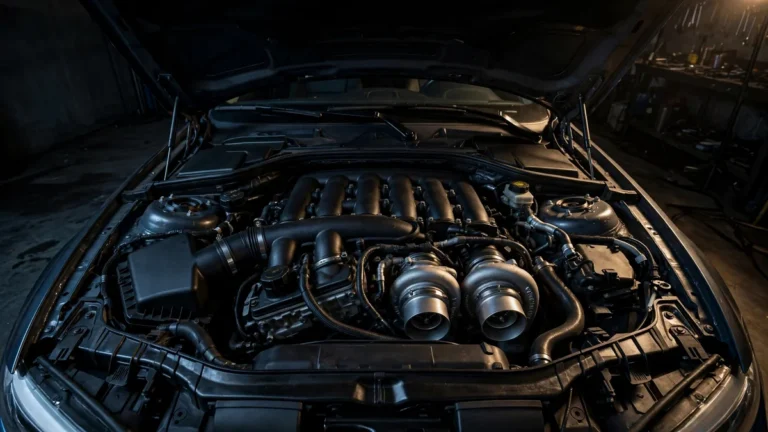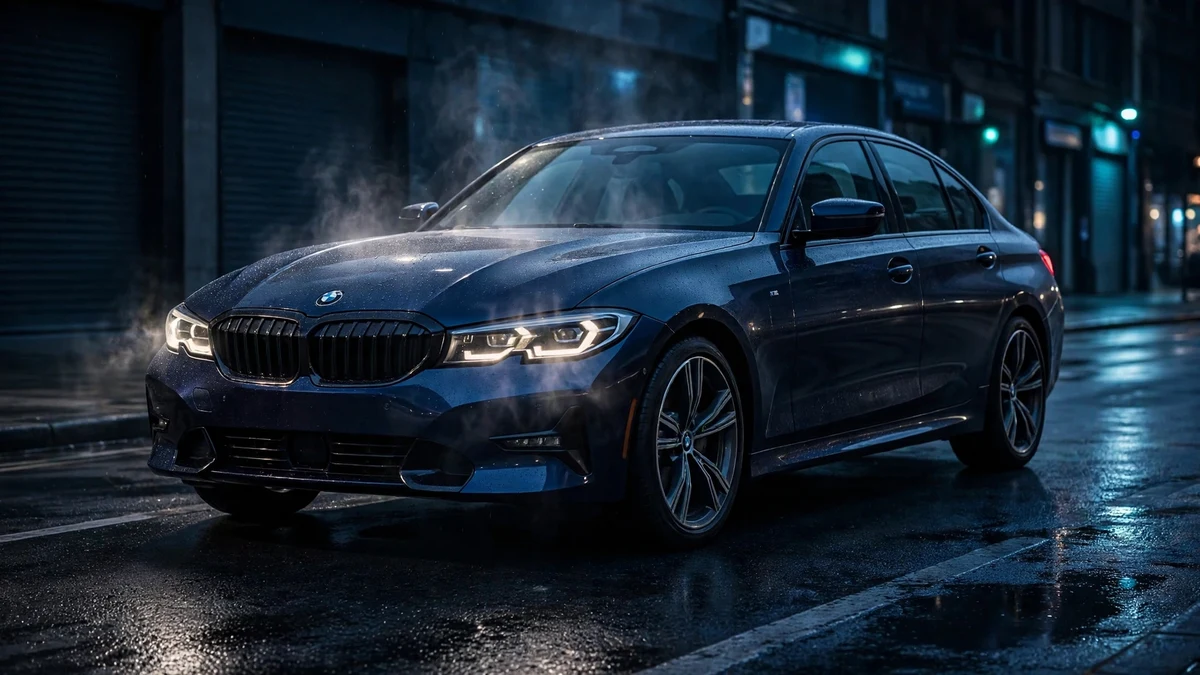
BMW 3 Series Overheating? Causes & What to Do Now
Short answer: BMW 3 Series overheating is usually a circulation or coolant-level problem, not a mystery. The most common cause on E90 and early F30 cars is the electric water pump dying electrically with the reservoir still full — but a dead cooling fan, a stuck thermostat, a coolant leak, or (rarely) a failed head gasket can all trigger the same temperature warning. The pattern of the overheat — when it happens, the coolant level, and fan behavior — is what points to the cause.
In this guide
- What to do the moment the temperature warning appears
- The five causes of BMW 3 Series overheating, ranked
- Overheating fault codes: what the DME is telling you
- Overheating by generation: E90, F30, and G20 differences
- Overheat triage picker: match your symptoms to the cause
- Repair cost bands: what each fix typically runs
- Getting it fixed: repair options, difficulty, and what to tell the shop
- BMW 3 Series overheating FAQ
An overheating 3 Series is a fork in the road: react correctly and you’re looking at a repair bill and a healthy engine; react badly and a fixable problem can become a warped cylinder head. This hub covers roadside triage, the five causes ranked by likelihood, the fault codes that separate them, and what each fix costs.
What to do the moment the temperature warning appears
BMW 3 Series overheating plays out as a two-stage warning, and each stage has a different correct response:
| What you see | What it means | What to do |
|---|---|---|
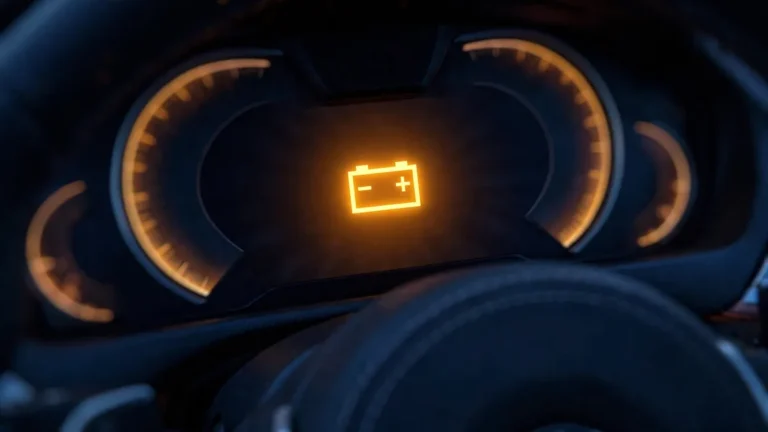
| Yellow temperature warning (“engine overheating — drive moderately”) | Above-normal temps; the DME wants reduced load and a stop soon. On the E90 it often follows the fan roaring at full speed. | Turn off the A/C and pull over as soon as practical. Do not continue the journey hoping it settles. |
| Red temperature warning (and possibly limp mode) | Temperatures have exceeded safe limits; the DME cuts power to protect the engine — the car may feel like it’s dying. | Pull over immediately and shut the engine off. Wait for full cool-down, then arrange a tow. Do not restart and limp home — that is a gamble, not a strategy. |
| Steam from the engine bay | Coolant is escaping under pressure — a burst hose, a failed expansion tank, or a radiator leak. | Stop and shut the engine off. Driving on guarantees a dry engine. |
| No warning, but the fan screams at full speed | On E90 and early F30 cars, the fan at full tilt with no warning is the pump’s earliest distress signal. | Do not drive far — read the pump failure sequence and plan a tow or a very short, careful drive to a shop. |
Two rules, whatever the cause. First: never open the expansion tank cap on a hot engine — it will vent boiling coolant and steam. Wait at least an hour, or until the upper radiator hose is cool to the touch. Second: never add cold water or coolant to a hot, dry engine — thermal shock can crack the head. If the reservoir is empty after an overheat, cool the engine completely first; a refill is only a diagnostic step toward the leak, not a fix. Our low coolant warning guide covers safe top-ups and leak tracing.
One thing that is not an emergency: on G20 330i cars, 110°C on a diagnostic readout is not overheating — the B48 runs at 103–113°C by design (see the generation section). No warning, no problem.
The five causes of BMW 3 Series overheating, ranked
Every 3 Series overheat falls into one of five buckets, ranked by likelihood, each with a signature pattern. Learn the signatures and most overheats diagnose themselves on the roadside.
| # | Cause | Signature pattern | Coolant level | Fan behavior |
|---|---|---|---|---|
| 1 | Electric water pump failure (E90, early F30) | Sudden overheat, sometimes with no warning lights first. Fan jumps to very high speed at random, then the yellow → red sequence follows. | Often full — the pump fails electrically without leaking a drop. | Roars at full speed — the DME trying to shed heat without circulation. |
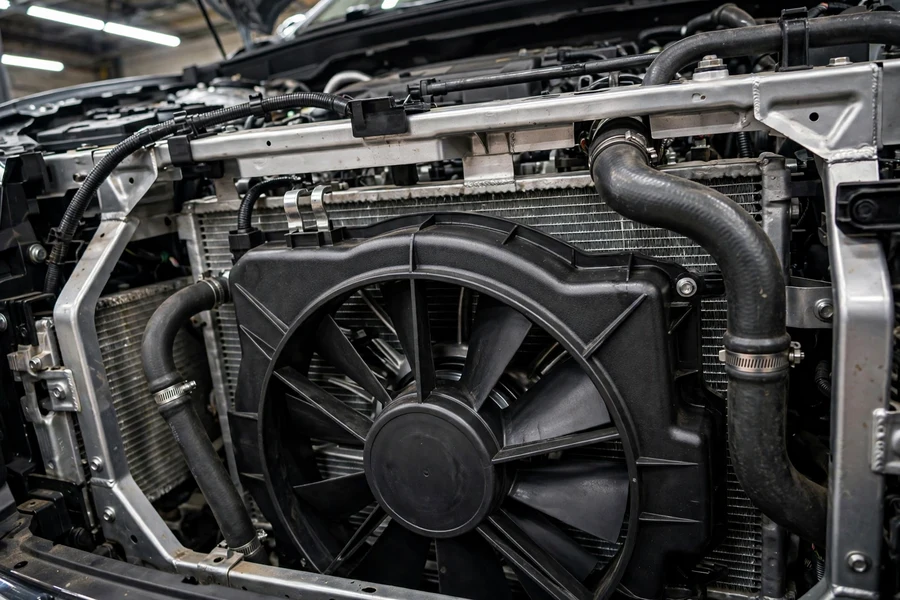
| 2 | Cooling fan / fan control failure | Overheats only in traffic or at idle; cools once the car is moving. At speed, ram air does the fan’s job. | Normal. | Silent when it should be running — never engages as temperatures climb. |
| 3 | Stuck thermostat (map-controlled unit) | Stuck shut: rapid overheat with a normal-looking level. Stuck open: the engine never warms up, temperature drops above ~50 mph, fuel consumption rises. | Normal. | Usually normal — may not roar because flow is restricted, not absent (stuck shut). |
| 4 | Coolant leak (hoses, expansion tank, radiator, seals) | Temperature creeps up over days or weeks as the level falls; overheats once it’s too low. Steam, a sweet smell, and white crust around hoses or the tank are the tells. | Dropping repeatedly — every top-up is temporary. | Normal — too little coolant to move heat. |
| 5 | Head gasket / internal engine failure (rare) | Persistent overheat despite a full system and a working pump, fan, and thermostat. Across a decade of owner reports, this diagnosis almost never materializes on N52/N54/N55 engines. | May be normal, or milky “coffee cream” residue / exhaust smell in the tank. | Normal. |
Cause 1 in more detail: the electric water pump. This is the cooling system’s most notorious failure: the pump’s electronics give out suddenly while the impeller and housing look perfect. Our water pump deep-dive documents the full signature and fault codes (2E81–2E85) — if the pattern matches, go straight there.
Cause 2: the fan and its controls. The giveaway is situational: overheating in stop-and-go traffic or idling that settles once moving — at speed, ram air does the fan’s job. Suspects: fan motor, control module, fuse, or wiring; fault code 2EFE points here. One trap: a screaming fan with no warning and no codes can occasionally be a fan-control issue — but usually it’s the pump’s first symptom.
Cause 3: the thermostat. BMW’s map-controlled thermostat is, by community consensus, designed to fail open rather than shut — trading a cold-running engine for a cooked one. Stuck open, the engine never warms up: the gauge sits low on E90 cars, the temperature can drop at sustained speed above ~50 mph, and fuel consumption rises — a clue from mechanic Q&A threads, not a BMW document. Stuck shut is the dangerous direction: rapid overheat, normal coolant, no fan drama. Standard practice: replace the thermostat with the pump — adjacent parts, overlapping labor.
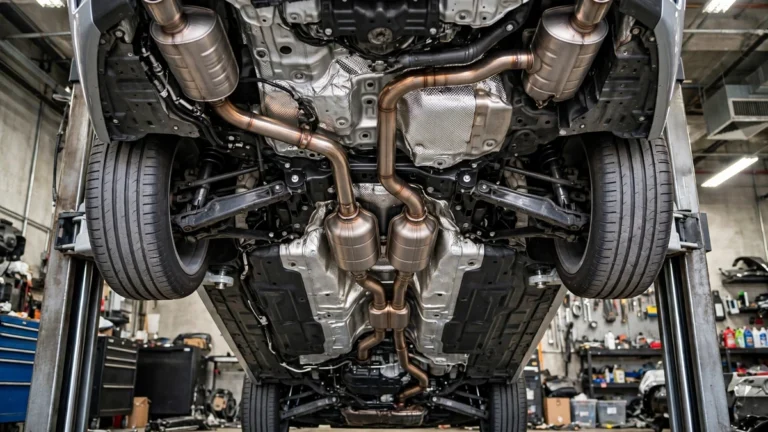
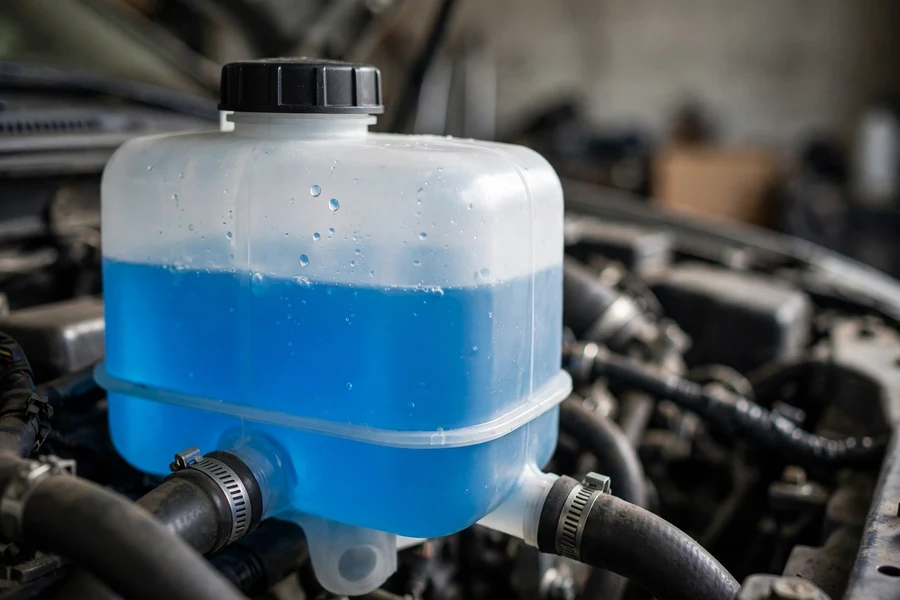
Cause 4: coolant leaks. Anywhere the system loses coolant becomes an overheat cause once the level falls: hoses, the expansion tank (a known crack point), radiator end tanks, the mechanical pump seal on G20 cars — and one edge case: on N52 engines a coolant hose runs through the oil filter housing, so an OFH gasket leak can leak coolant too. Tracing is complicated by the undertray splash shield, which redirects drips to its lowest edge — possibly the opposite side from the leak — so raise the front, remove the shield (seven quarter-turn screws plus plastic rivets), and trace with a flashlight. Tiny G20 losses (~250 ml per 9,000 km) can be acceptable aged O-ring seepage; only a dash warning makes one worth chasing (single community thread, not BMW policy).
Cause 5: head gasket. The diagnosis owners fear most and need least: on N52/N54/N55 engines a blown head gasket is rare — forum veterans count cases on one hand across a decade. Signs: exhaust smell in the expansion tank, the system still pressurized the morning after a full-warmup drive, milky cross-contamination in the tank. Only when two or three appear — with pump, fan, thermostat, and level verified — does it move up the list. It is also the one cause where driving on turns a repair into an engine.
Overheating fault codes: what the DME is telling you
The DME monitors the cooling system constantly, so a scan often names the cause before you open the hood. The caveat: many are manufacturer-specific codes that only a BMW-capable scan tool (INPA, ISTA, a BMW-aware app reader) surfaces, and thermostat codes can appear without ever lighting the check-engine light. A generic parts-store reader may come back clean while the DME holds the answer. Descriptions below reflect owner code reads and BMW service-procedure text — community consensus, not factory documentation:
| Fault code | DME description | Points to |
|---|---|---|
| 2E81 | Electric coolant pump, speed deviation | Water pump — speed doesn’t match the DME’s command. Often the earliest stored sign of a dying pump. |
| 2E82 | Electric coolant pump cutoff (over-current) | Water pump — over-current shutdown. The classic “pump has actually failed” code. |
| 2E83 | Coolant pump, reduced power (dry run) | Water pump — or trapped air after a coolant service. Suspect incomplete bleeding before condemning the pump. |
| 2E85 | Electric coolant pump, communication — no voltage at emergency operation input | Water pump circuit — check wiring, power, and ground before replacing the pump. |
| 2EF4 (279B) | Characteristic map thermostat | Thermostat — a real BMW DME fault. BMW service bulletin SI B12 23 07 traced one instance of this code to DME software calibration, fixed by reprogramming, not parts. |
| 2EF5 / 2EF7 | Map thermostat, activation — open circuit | Thermostat — may appear without a CEL; only shows on BMW-capable scans. |
| 2EFE | DME: fan activation / cooling fan | Cooling fan — the fan never engages; owners report the car climbing toward 250°F with the fan silent. |
| P0128 | Coolant thermostat (map-controlled thermostat, mechanical) | Thermostat — the generic OBD-II equivalent of the map-thermostat codes. |
Pull codes with the best tool you have, and let the code family pick the section you read next: 2E81/2E82 with the fan-blast history means the water pump deep-dive; 2EF4/2EF5/2EF7 with long warm-ups means the thermostat section; 2EFE with traffic-only overheating means the fan. Codes with no check-engine light are normal for this system — if a generic reader says “no codes” but symptoms persist, get a BMW-capable scan rather than declaring the car healthy. Our check engine light guide explains which cooling faults do and don’t trigger the dash.
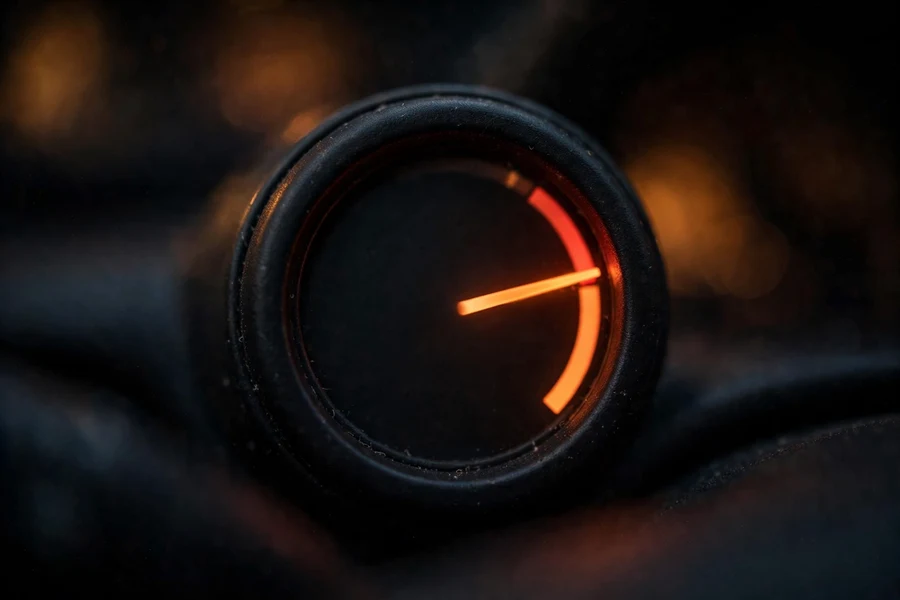
Overheating by generation: E90, F30, and G20 differences
Which cause to suspect first depends on your 3 Series: the cooling architecture changed twice across three generations, and your generation determines whether you even have a temperature gauge.
| Generation | Engines | Cooling architecture | Overheating character |
|---|---|---|---|
| E90 (2006–2013) | N51, N52, N54, N55 | Electric water pump, map thermostat, analog-style temp gauge | Fan blast → yellow → red → limp mode. The gauge gives early warning later cars lack; pump failures dominate here. |
| F30 (2012–2016) | N20, N26 (320i/328i) | Electric water pump, map thermostat, no analog gauge — warning lights only | Same sudden pump failure, no gauge trend — react to the yellow warning fast. The generation covered by recall 24V-608 (below). |
| F30 LCI / G20 (2016+) | B46, B48 (330i), B58 (M340i) | Belt-driven mechanical water pump, heat management module; normal temps 103–113°C | Mechanical pumps fail gradually — weeping seals, bearing wear. Watch reservoir level and temperature trends instead of fault codes. |
The F30 recall every N20 owner should know. NHTSA recall 24V-608 (August 2024) covers 720,796 US BMWs, including 236,702 units of the 2012–2016 328i and 328xi. The water pump’s electrical plug connector can suffer fluid ingress → short circuit → fire risk; BMW knew of ~18 complaints and field reports, with no accidents or injuries known. The remedy is free: dealers inspect the pump and connector, replace as needed, and fit a protective shield (owner letters went out October 2024). Drive a 2012–2016 F30 and never acted on that letter? The NHTSA recall document has the full model table.
The G20 temperature “problem” that isn’t one. B48 owners who watch live data sometimes panic at 110°C. Don’t — normal B-series operating temperature is 103–113°C by owner measurement, and engine management deliberately runs these engines hot. Overheating on a G20 means the yellow or red warning, not a three-digit number on your scanner. Watch gradual coolant loss instead — the mechanical pump’s weep is the new failure mode. One nuance: owner experience clusters B48/B58 pump and thermostat failures around 60,000–70,000 miles — but that comes from a single low-authority page, so treat it as an estimate. BMW publishes no scheduled cooling interval; specialist consensus is proactive pump-and-thermostat replacement at 60,000–80,000 miles and a coolant flush every 2–4 years. The honest caveat: pumps have failed at 20,000 miles and originals survived past 140,000. Mileage is risk management, not a timetable.
Overheat triage picker: match your symptoms to the cause
Answer four questions and the picker ranks the likely cause, tells you how urgently to act, and points you at the right deep-dive.
Overheat Triage Picker
Answer what you can.
Answer the questions above to see the likely cause and what to do next.
Safety note: a red temperature warning means pull over and shut the engine off now — no pattern-matching tool overrides that.
Repair cost bands: what each fix typically runs
Overheating repairs span from a free recall fix to a four-figure dealer invoice, depending on the cause, who does the work, and what preventive work you bundle. Every figure below is owner-reported US dollars — several from forum invoices years old — so treat them as bands, not quotes. The bars are scaled to a $2,000 reference.
| Repair | DIY (parts) | Independent specialist | Dealer |
|---|---|---|---|
| Water pump + thermostat (E90/F30 electric pump) | $450–$550 | ~$1,000+ | $1,100–$1,600 (up to ~$2,000 reported) |
| Thermostat only | ~$60 (part) | $150–$350 (single source estimate) | $900 with hoses (single owner-reported quote) |
| Cooling fan replacement | Parts + 1–2 hours | Varies widely by fan assembly | Varies widely by fan assembly |
| Expansion tank | Part + ~1 hour | $250–$500 (estimate) | $250–$500+ (estimate) |
| B58 mechanical water pump | $150–$250 (mechanical pump, thermostat, coolant) | $500–$800 (estimate) | $900–$1,200 (estimate) |
Getting it fixed: repair options, difficulty, and what to tell the shop
The water pump job: the canonical repair. The electric pump is cause number one on E90 and early F30 cars, and the thermostat is always replaced with it. Honest difficulty: moderate — 3 to 5 hours for a first-timer, with shops billing 3–4 hours. The shape of the job: raise the front, remove the splash shield, drain the system, disconnect connectors and hoses, unbolt the pump and thermostat, install new parts with fresh bolts, refill with the correct BMW coolant, and bleed. Two details owners get wrong: the mounting bolts are single-use aluminum stretch bolts, and bleeding is mandatory — trapped air is the most common cause of a 2E83 “dry run” code after a DIY replacement. The quick-disconnect fittings get brittle and snap easily; xDrive models add a reinforcement plate under the pump. One gap we won’t paper over: torque specs for the pump and thermostat bolts were not verifiable from a real source, so we don’t publish them — use the BMW repair instructions (TIS/ISTA), never a forum guess.
Fan, thermostat, and leak repairs. A fan fault is usually the friendliest fix here: fuses and wiring first (cheap), then the fan assembly — often a 1–2 hour DIY. A thermostat-only replacement is ~$60 in parts and well under two shop hours, though near the pump’s failure window most specialists recommend doing both — the right call, not upselling. Leak repairs are priced by location: a split hose is a Saturday-morning fix, an expansion tank a few hundred dollars at a shop, a radiator a bigger but straightforward job — all sharing the step owners skip: a proper pressure test. A small loss may not show on a quick 10-minute test at 1 bar — per the ISTA manual (cited second-hand), the test runs at 1.4 or 2.0 bar depending on cap rating. If a test “found nothing” but the level keeps dropping, ask whether they tested at full rated pressure.
What to tell the shop. Walk in with the pattern, not just the symptom: “overheats in traffic, cools on the highway, fan never comes on” points at the fan circuit; “yellow then red, fan roaring, reservoir full” is the pump script; “level drops weekly, sweet smell” is a leak hunt. Bring fault codes if you have them. Ask explicitly whether a pump quote includes the thermostat, new bolts, and the correct coolant — and whether the free 24V-608 recall remedy is already applied on your 2012–2016 328i/328xi. If the overheat arrived with a drivetrain malfunction warning and reduced power, that cut is the DME protecting the engine — not a drivetrain failure.
Prevention, honestly framed. There is no factory-published cooling-service interval — BMW never set one — so all preventive advice is specialist and owner consensus. The consensus: consider proactive pump and thermostat replacement at 60,000–80,000 miles (earlier for long road trips), flush the coolant every 2–4 years with the correct BMW coolant, and scan for pump codes at each service past 60,000 miles — a stored 2E81 with no symptoms is the pump’s closest thing to an advance warning. After any cooling repair, verify: no warnings, normal warm-up, stable level, no new codes. Our maintenance schedule and the complete 3 Series guide put the cooling system alongside the car’s other wear items — including how the B-series cars changed the game (see our F30 vs G20 comparison).
BMW 3 Series overheating FAQ
Can I keep driving my BMW 3 Series if the temperature warning comes on?
Only to a safe stopping place. Yellow: reduce load and pull over as soon as practical. Red or limp mode: stop immediately, shut the engine off, and call for a tow. Driving on risks warping the aluminum cylinder head or blowing the head gasket — repairs costing several times more than the original cause.
Why does my 3 Series overheat in traffic but cool down on the highway?
That pattern points to the cooling fan. At a standstill the fan is the only airflow through the radiator; at speed, ram air takes over. If the fan motor, control module, fuse, or wiring has failed, the car overheats in traffic and recovers once moving. Fault code 2EFE confirms it on a BMW-capable scan.
How do I tell a water pump failure apart from a stuck thermostat?
A failing electric water pump usually announces itself with the radiator fan roaring at full speed — sometimes before any warning light — and codes 2E81 or 2E82, with the reservoir often still full. A stuck thermostat differs: stuck shut, rapid overheat with a normal-looking level and no fan drama; stuck open, the engine never warms up and the temperature drops at sustained speed. In practice both are replaced together — adjacent parts, shared labor.
Is 110°C normal for a G20 330i?
Yes. The B48 is designed to run at 103–113°C for efficiency and emissions, so 110°C on a readout is normal operation, not overheating. Overheating on a G20 means the yellow or red warning — not a three-digit number.
My coolant keeps disappearing but there is no puddle — where is it going?
The undertray splash shield redirects drips to its lowest edge, possibly on the opposite side from the leak, so a missing puddle proves nothing — raise the front, remove the shield, and trace with a flashlight. Common sources include hoses, the expansion tank, radiator end tanks, and — on N52 engines — the oil filter housing gasket (a coolant hose runs through the housing). Small seepage may not show on a low-pressure test; ask whether the shop tested at the full rated 1.4 or 2.0 bar.
The right decision is almost always the unglamorous one: stop, let it cool, diagnose before you drive. If your triage pointed at the pump, the water pump failure guide takes it from here; if the level keeps dropping, the low coolant warning guide covers top-ups and leak tracing. If the car won’t turn over after an overheat, our won’t-start guide is the next step — be honest with your shop about how far it was driven hot.