BMW 3 Series Won’t Start? Diagnose It in Minutes (Clicks, Silence, or Cranks)
If your BMW 3 Series won’t start, the most useful thing you can do is listen. What the car sounds like in the first five seconds — clicks, silence, or a healthy crank that never catches — splits the problem into three completely different diagnoses, and guessing the wrong branch is how owners replace a battery and a starter and still get towed. This guide walks you through a decision tree built for BMWs: the 60-second safety check, the three sound branches, the BMW-specific traps (E90 steering lock, key authorization, IBS sensor), and when to stop diagnosing and call a tow.
It sits in our Troubleshooting hub, alongside the battery-drain diagnosis guide and the complete 3 Series guide. Battery issues are the most common no-start cause by a wide margin — this article compresses that branch into links to our dedicated battery guides and spends its depth on the non-battery branches other articles gloss over.
The short answer
When your BMW 3 Series won’t start, a single click or rapid clicking points to the battery or the starter; total silence with a good battery points to key/start authorization, the E90 electronic steering lock, or the starter; a strong crank that won’t fire means fuel, ignition, or a missing engine-position signal. Test the battery under load before replacing anything — the two branches share almost no parts. BMW bulletin SI B61 29 06 documents the early-E90 steering lock as a no-crank cause fixed by straightening the steering wheel.
In this guide
- The 60-second safety and context check
- What do you hear? Pick your branch
- The battery branch (compressed)
- Branch 1: the starter motor
- Branch 2: key, immobilizer and the E90 steering lock
- Branch 2b: the IBS sensor test
- Branch 3: fuel delivery
- Fuse and relay checks
- When to tow instead of diagnosing
- What no-start fixes actually cost
- Frequently asked questions
The 60-second safety and context check
Before touching any diagnosis, clear the silly-but-real causes. They account for a surprising share of “won’t start” calls, and they cost nothing to rule out:
- Foot firmly on the brake. Push-button BMWs need the brake pedal to start; automatics also need Park. A rock-hard pedal with the engine off is normal — press it anyway.
- Key inside the car. A Comfort Access key left outside the door or in a cabin dead zone can fail detection while the unlock button still works.
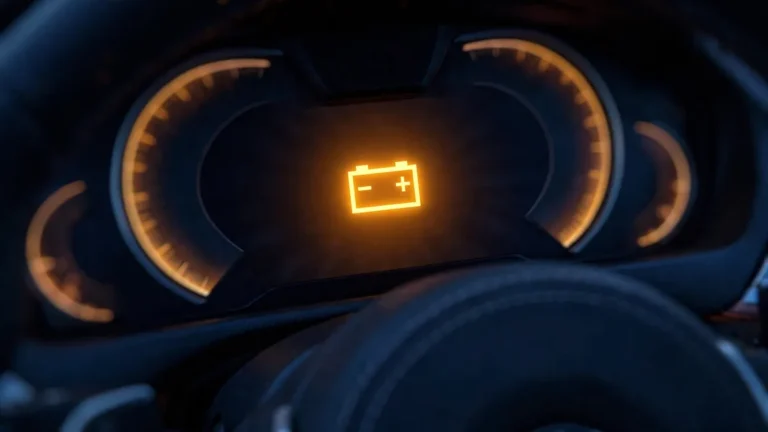
- Scan the cluster before you clear anything. Note every warning — steering-lock icon, key warning, “no key detected” — and don’t clear codes yet. A BMW retains fault memory, and clearing first erases evidence the diagnosis needs.
- Check the fuel gauge, then doubt it. Sender errors happen; if the gauge reads empty or the low-fuel warning has been on, fuel is suspect until proven otherwise.
- Note the context. Fine yesterday and dead overnight? Died after a fill-up? Struggled to crank for weeks? The history usually points at the branch.
Stop and tow if: you smell strong fuel or exhaust inside the cabin, you hear metallic rattling while cranking, the car overheated before dying, or you see smoke. Those are not driveway-diagnosis problems.
What do you hear? Pick your branch
Press the start button and listen. Pick the tab that matches — each one routes you to the right section. The split is the foundation of the whole guide: a no-crank and a crank-no-start share almost no parts, which is why cars arrive at shops with a new battery and a new starter and the original problem.

You’re in the no-crank branch. A click means the start signal is reaching the starter area but the motor isn’t turning the engine. The shortlist: a battery that collapses under load, a burned starter-solenoid contact, or a resistive current path (corroded terminals or ground).
- Rapid clicking is almost always the battery — enough power to pull the solenoid in, but voltage collapses the moment the starter draws current.
- A single heavy click with a known-good battery leans toward the starter solenoid or the starter itself — see the starter branch.
You’re in the no-crank branch too — a different sub-branch. Total silence means the starter may never be receiving the command to engage. Candidates: a dead or disconnected battery, a start-authorization fault (the car doesn’t recognize the key), the E90 electronic steering lock, or a completely dead starter solenoid.
- Steering-lock icon on the cluster? On early E90s this is a documented no-crank cause — see key, immobilizer and steering lock.
- Key warning or “no key detected”? The car may not be authorizing the start — same section.
You’re in the crank-no-start branch. The battery, starter and key authorization are all doing their job. The engine is missing fuel pressure, ignition, a usable crankshaft-position signal, or the mechanical conditions to fire. Skip every battery and starter section — those parts are proven good.
- First checks: fuel level, fuel-pump prime sound, and a BMW-capable fault-code scan — see the fuel branch.
- Died right after a fill-up? Wrong or contaminated fuel is a real and checkable cause.
- Running fine, then suddenly dead? A failed fuel pump or fuel-pump control module and a lost crank signal are the usual suspects.
The battery branch (compressed)
The battery is the most common no-start cause on any 3 Series — an aging battery can read close to 12 volts at rest and still collapse the moment the starter draws several hundred amps. We keep this branch short because four dedicated battery guides cover it in depth:
- Dead right now, need it running: our guide to jump-starting a BMW 3 Series covers the under-hood jump points and the correct sequence.
- The battery dies repeatedly: if a jump fixes it today and it’s dead again in days, you have a drain, not a battery — see how to find a hidden battery drain.
- “Increased battery discharge” warning: a specific BMW energy-management message with its own meaning — explained in the increased battery discharge warning guide.
- Just replaced the battery: a new BMW battery must be registered so the charging strategy adapts — skip this and the new battery dies early. See the BMW battery registration guide.
The battery rule before you continue: have the battery tested — a conductance or load test, not just a voltage reading — before condemning the starter. Weak batteries produce the full no-crank range: rapid clicks, a single click, and silence.
Branch 1: the starter motor
If the battery tests good and the car still won’t crank, the starter is the next suspect — and on 3 Series cars it’s a wear item with a recognizable pattern. Owner reports on E90Post and Bimmerforums describe starters failing from roughly 73,000 to 115,000 miles, often with warning signs: unusually long cranks before starting, the engine cranking and then “giving up,” and slow, labored cranking when cold. The end stage is a single click and nothing — or sudden, total silence.
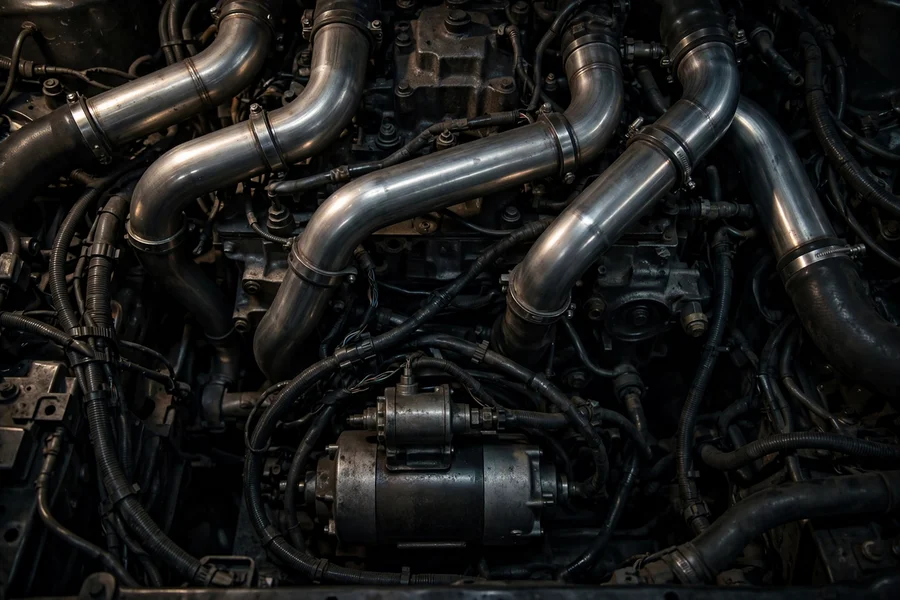
Before condemning the starter, rule out the current path — this is the most skipped step in driveway diagnosis:
- Clean the terminals. Green corrosion on the terminals or a corroded chassis-ground point creates resistance that starves the starter when it needs current most — a recurring cause of repeat “click” comebacks after a starter has already been replaced.
- Do the solenoid-listen test. Have a helper press start while you listen at the open hood: a single loud click from the starter area means the solenoid is engaging but the motor isn’t turning — that points at the starter. Rapid light clicking points back at the battery.
E90 labor note: the starter sits under the intake manifold, so replacement is a half-day job at a shop even though the part itself is modest — one E90 owner reported doing it himself for about $90 in parts. That labor cost is why you verify the battery and grounds first rather than guessing.
Branch 2: key, immobilizer and the E90 steering lock
Total silence with a healthy battery — especially on an E90 — often means the car never authorized the start. BMWs won’t engage the starter unless the key is recognized and, on early E90s, unless the electronic steering lock (ELV) releases. Start here before assuming anything mechanical.
The E90 steering-lock no-start (TSB-verified)
This one is documented by BMW itself, not just forums. Service bulletin SI B61 29 06 (May 2016) covers E90, E91, E92 and E93 3 Series built to September 2006 (manual) and December 2006 (automatic): a no-crank, no-start with the ELV warning in the cluster. Two causes: the steering column resting against the lock from steering-gear torque — yellow warning (CC ID 187), no faults stored, fix is to relieve the torque on the wheel and retry, no repair needed — or a CAS/ELV communication fault or low battery, showing the warning in yellow or red and requiring BMW diagnostics without clearing the fault memory first. Read BMW’s SI B61 29 06 on oemdtc.
How this looks from the driver’s seat: you press start, and instead of the usual soft clunk of the steering lock releasing, you get silence — possibly with a steering-wheel-with-padlock icon. Try this: straighten the wheels, gently rock the steering wheel left and right to unload the lock while pressing start. If it starts, you just experienced Cause 1. If the red warning persists, the car needs a scan — don’t keep hammering the start button.
Key recognition and start authorization
On the E90 the CAS module manages the key; on F30 and G20 cars the FEM and BDC must recognize the key and permit the starter before anything engages. The failure owners see: a key-warning icon or “no key detected” message, the dash otherwise normal, and the starter never engaging. Causes include a weak key-fob battery (most common), radio interference or a metal object shielding the key, antenna faults, or — less often — a failed module. Two quick tests: try your spare key — if it starts, the problem is the primary key — and on supported BMWs hold the rear of the key against the marked emergency-detection area on the steering column, per the owner’s manual, which can let a weak fob be recognized well enough to drive to a shop.
- E90 Comfort Access cars: the ELV bulletin advises inserting the remote key into the key holder to rule out Comfort Access detection issues.
- Dead fob battery: E90 Comfort Access keys have a replaceable fob battery; non-Comfort-Access E90 keys charge while driving. Either way, a weak fob reads as a no-start.
- Both keys fail identically: that points away from the key toward the car’s side — CAS/FEM/BDC or the ELV — and toward a BMW-capable scan, which can read why recognition failed. A generic OBD-II reader generally can’t reach these modules.
Branch 2b: the IBS sensor test
This one is an owner-reported pattern from BMW forums, not a documented procedure. The IBS (intelligent battery sensor) on the negative battery terminal feeds the car’s energy management. Owners report a faulty IBS can hold the car in a no-crank state: disconnect the small blue IBS connector and try starting. If it then cranks, the IBS is the suspect.
IBS test caveats: this only diagnoses — it doesn’t fix. Replace the sensor rather than leaving it disconnected, and re-register the battery afterward (see the battery registration guide). Confidence: medium-low — a consistent owner-reported pattern, not factory documentation.
Branch 3: fuel delivery
If the engine spins strongly but never catches, the starting hardware has done its job — the missing piece is fuel, ignition, a usable engine-position signal, or compression. Work through fuel first.
- Listen for the fuel-pump prime. With a door open, switch the ignition on (don’t crank) and listen under the rear seat for a brief buzz as the low-pressure pump primes. Hearing it suggests the pump is operating — but sound alone can’t confirm pressure, and some BMW pumps are very quiet, so silence isn’t conclusive either, as an independent BMW shop’s guide cautions.
- Reconsider the fuel level. A faulty level sender can leave you cranking on fumes with the gauge showing a quarter tank. If the no-start followed a long stretch without refueling, add known-good fuel first.
- Died right after a fill-up? Wrong fuel or a contaminated batch will crank forever and never fire.
- The fuel-pump control module (EKP). The EKP drives the in-tank pump; owner reports describe it failing with fault codes 006292 and 006293 — sometimes after the engine dies under load and restarts once cooled. Replacement modules need programming, so this is an indie-or-dealer job.
- Fuel-pump relay and fuse. A failed relay can prevent delivery even with a good pump — check these before condemning the pump (see below).
- High-pressure side. Direct-injection engines (N20/N26, B48/B58) need very high rail pressure. If the pump primes but rail pressure doesn’t come up during cranking, the engine spins and never fires. This needs a gauge or live scan data, not a guess.
- Lost crankshaft-position signal. The DME needs a usable crank signal to time injection and ignition. If it’s missing at cranking speed, the engine turns cleanly and never fires — a BMW-capable scan usually reveals this; a generic reader may not.
- Timing. If valve timing has jumped — a known failure mode on N20/N26 cars with neglected timing chains — the engine cranks but can’t fire. Metallic rattling while cranking is a tow-now sign.
Fuse and relay checks
Fuses are the cheapest possible fix and the most embarrassing one to miss — check them before authorizing any expensive part. Locations vary by generation (E90: glovebox and trunk; F30: trunk and engine bay), so use your owner’s manual diagram. Inspect the fuel pump, DME/engine electronics, and starter circuit fuses: a visibly broken element is a diagnosis, not a mystery. Replace only with the same rating — if the new fuse blows immediately, stop; you have a short, and that’s a shop’s problem.
For relays, the fuel-pump relay is the one that matters for a crank-no-start. A common owner test is swapping it with an identical non-critical relay — if the car starts, buy a new relay. Never bypass a relay with a jumper unless you know exactly what you’re doing; a relay exists to protect the circuit.
When to tow instead of diagnosing
There’s a point where driveway diagnosis ends and a flatbed begins. Tow it when: the car is unsafe; the red steering-lock warning persists after the wheel trick; the engine cranks with metallic rattling; you smell fuel or see smoke; the battery, grounds, fuses and key tests all check out; or you’ve spent an hour and learned nothing new. A BMW-capable diagnostic costs less than one wrong part.
If the car must be moved onto a tow truck and the transmission is locked in Park, BMWs have generation-specific mechanical overrides:
- E90 automatics: a small red release lever under the shifter boot — pull up the boot, push the lever down, and the selector moves to Neutral for loading.
- F30 cars with the electronic shifter: the manual override is a lever on the side of the transmission, which means safely raising the car and removing the undertray — leave this one to the tow operator roadside.
- Dead battery, locked out: the fob contains a physical key blade — use it in the driver’s door lock cylinder to get in, then use the under-hood jump points to power the electronics.
Before the tow truck arrives: run a BMW-capable fault-code scan (not a generic OBD-II reader) covering the CAS/FEM/BDC start-authorization status, the DME, and battery-management data — before anything is cleared or disconnected.
What no-start fixes actually cost
No-start repair costs are mostly labor stories, not parts stories — and we won’t invent market benchmarks we can’t verify. What follows are real owner-reported figures from forums, each a single data point. Use them as order-of-magnitude orientation, not quotes.
| Fix | Owner-reported figure | Context & confidence |
|---|---|---|
| Starter replacement, DIY | ~$90 in parts | One E90 owner, self-reported. Parts only — the job is labor-heavy (intake manifold removal). |
| Fuel-pump control module programming | $500 dealer quote | One 2011 328i owner quoted by BMW San Francisco for EKP module programming; he repaired the module himself. |
| Key slot + CAS replacement | $1,600 dealer quote | One 2006 E90 owner quoted for a defective key slot and possible CAS module replacement. |
| Battery replacement with registration | ~$200 shop figure for registration alone | From the battery registration guide’s sources. Full battery + registration runs higher — see the battery registration guide cost table. |
| Professional diagnostic | Not stated — ask first | We found no verifiable published figure; call your local indie for theirs. |
Frequently asked questions
If this tree got you started, keep the momentum in our battery cluster: learn how to jump-start a BMW 3 Series, find out why your 3 Series battery keeps dying, decode the increased battery discharge warning, and get battery registration done on any new battery. For the full picture, see the BMW 3 Series complete guide.
How this guide was built: the no-crank vs. crank-no-start framework comes from an independent BMW shop’s diagnostic guide (verified live); the E90 steering-lock procedure is from BMW bulletin SI B61 29 06 (May 2016), via the live NHTSA/OEM PDF. The starter mileage window, IBS disconnect test, EKP fault codes, and neutral-override procedures are owner-reported patterns, labeled as such. Cost figures are single-owner quotes, not benchmarks. Last verified: September 2026.