BMW Alternator Failure: Symptoms & Charging System Tests
Short answer: BMW alternator failure symptoms are a red battery warning light while driving, headlights that dim or flicker with electrical load, and a car that dies minutes after a jump-start. The giveaway that separates it from a bad battery: a dead battery starts with a jump and keeps running, while a dead alternator kills the car again once the cables come off. Confirm with a loaded voltage test — 13.5–14.8 V at the battery terminals under load means healthy charging — and check BSD-line fault codes before buying a replacement unit.
In this guide
- Why BMW charging systems are different (and why generic advice misleads)
- BMW alternator failure symptoms: the signature list
- Battery or alternator? The decision tree
- The voltage tests that actually diagnose a BMW alternator
- Hidden dash menu Test 9: monitor voltage while driving
- The BSD line: check these codes before buying an alternator
- Interactive: battery or alternator? Find your verdict
- The 180A gotcha: ordering the right alternator
- Replacement costs: dealer vs. independent shop vs. DIY
- What the DIY replacement involves (honest difficulty)
- BMW alternator failure FAQ
Few BMW faults cause as much misdiagnosis as charging trouble. The symptom set overlaps almost perfectly with a dying battery — slow crank, electrical weirdness, a no-start on a cold morning — so many owners buy a new battery first and watch it die again within weeks. This guide covers the other half of the equation: the alternator, and how BMW’s intelligent charging system changes every test you’ve been taught.
Scope note: this is the charging-system article. Battery-side problems — an aging battery, parasitic drain, the “increased battery discharge” warning, or an unregistered new battery — have their own causes and fixes. This article routes you to the right guide whenever the evidence points battery-side: increased battery discharge warning, battery keeps dying, and battery registration.
Why BMW charging systems are different (and why generic advice misleads)
On most older cars, the alternator is a simple creature: the engine spins it, an internal regulator holds output near 14 volts, and a single at-idle reading tells you whether it works. Modern BMWs abandoned that simplicity around the E90 generation with intelligent alternator control — part of the brake energy regeneration system. The DME (engine control unit) commands charging output over a single-wire BSD (bit-serial data) line, varying the target voltage with battery temperature, charge state, and driving conditions. Under acceleration, the DME may deliberately drop voltage to about 12.0 V to reduce engine drag, then ramp it to about 14.7 V while coasting, when the energy is “free.”
Owners with plug-in voltmeters confirmed this 12.0–14.7 V swing on healthy cars — owner-measured illustrations, not factory spec. The key point: a single at-idle voltage reading cannot diagnose a BMW alternator. Reading 12.4 V at idle and declaring it dead is the most common misdiagnosis here; the correct test is voltage under full electrical load, covered in the testing section below.
Two more BMW-specific wrinkles matter. First, the alternator is not standalone-regulated — the DME commands charging over the BSD line, so a communication fault on that bus can masquerade as alternator failure (more in the BSD section). Second, the intelligent battery sensor (IBS) and power management modulate charging based on what the car believes about the battery — an unregistered new battery can suppress charging and mimic a bad alternator. Our battery registration guide covers that side in detail.
BMW alternator failure symptoms: the signature list
Alternator failure usually announces itself while driving — the alternator powers the car and recharges the battery with the engine running, so its absence shows up the moment demand exceeds what the battery alone can supply. The distinguishing detail for each symptom:
| Symptom | What it looks like | Why it points at the alternator |
|---|---|---|
| Battery/charging warning light while driving | Red battery icon appears on the dash with the engine running | The most alternator-specific symptom: a battery problem shows up at startup, a charging problem while driving. |
| Progressive electrical failure | Warning light, then warning messages pile up, electronics go erratic, engine sputters and dies — sometimes over a span of miles | The car is running purely on battery. Each system drops out as voltage decays. One owner report describes roughly 17 miles of progressive failure before the engine died. |
| Dies minutes after a jump-start | Jump it, starts fine, remove cables, dies again shortly after | The key separator: a dead battery starts with a jump and keeps running. If it dies once the cables are off, the alternator isn’t replacing charge. |
| Headlights flicker or dim with electrical load | Lights pulse at idle or stoplights when the blower, heated seats, or defroster kick in | Flicker that tracks electrical load (not road speed) points at insufficient or unstable charging output. |
| Erratic voltage / dim battery-light glow at night | Voltage jumping wildly (e.g., 13 to 18 V), A/C and cluster lights blinking, or a faintly glowing battery light while running | Voltage-regulator failure mode. Some remanufactured units spike and reset modules — one case was only fixed by a second, OEM alternator. |
| Whining or grinding from the front of the engine | Bearing noise that changes with engine speed; in one owner account a partially-seizing alternator was dragging on the belt and the car felt underpowered | Bearing failure. Check the serpentine belt and tensioner at the same time. |
| Burning rubber / hot electrical smell | Acrid smell near the belt area after driving | An overheating alternator or a slipping belt. Pull over and inspect rather than driving on. |
Two symptoms do not point at the alternator: a battery that dies overnight while the car runs fine once started is a parasitic drain — see our battery keeps dying guide. The “increased battery discharge” warning with no other symptoms is power-management behavior — covered in the discharge warning guide. The decision tree below makes the routing mechanical.
Battery or alternator? The decision tree
Run through this five-branch tree before buying anything. Battery-side branches link to the dedicated guides rather than re-teaching them here:
- Won’t start or cranks slowly → jump it → starts and keeps running fine. The battery was dead, but the alternator is working. Investigate battery age, parasitic drain, and discharge warnings — see the battery keeps dying guide. Not an alternator problem.
- Starts with a jump, dies minutes after the cables are removed. The alternator isn’t charging. Confirm with the loaded voltage test below, then check the BSD codes before ordering parts. (Jump procedure: our jump-start guide.)
- Red battery light while driving. A charging-system fault. Check the serpentine belt first (a snapped belt looks identical to a dead alternator — our belt guide covers what to look for), then run the voltage tests, then scan for BSD/IBS codes.
- Battery dies overnight or over days parked; the car runs perfectly once started. Parasitic drain or battery self-discharge — not the alternator. Start with the battery keeps dying guide.
- “Increased battery discharge” warning and nothing else. Power management / IBS behavior, commonly a short-trip profile. See the discharge warning guide.
One more fork: if the battery was recently replaced and never registered, the IBS misjudges battery age and state of charge and power management can hold back charging — a fault that wears an alternator costume. Confirm registration first — our battery registration guide walks through it.
The voltage tests that actually diagnose a BMW alternator
You need a multimeter and ten minutes. Because of BMW’s intelligent charging, test in this order — the loaded test is the one that counts:
Voltage reference: what the numbers mean
| Test condition | Reading | Verdict |
|---|---|---|
| Engine running, at battery terminals | 13.5–14.8 V | Healthy charging (nominal ~14.4 V). This published band comes from independent BMW repair guides; it is not a BMW factory spec. |
| Engine running, full electrical load* | Below 13.5 V and stays there | Charging problem. The alternator can’t keep up with demand. |
| Engine running, any condition | Below 12 V | Alternator output effectively gone — the car is running on battery alone. Plan a tow, not a longer drive. |
| Engine off, battery rested (car asleep ~30 min) | ~12.6 V | Fully charged battery. Around 12.4 V is roughly 75% charged; below 12.0 V, charge the battery before any alternator testing or your results are meaningless. |
| Running, light load, normal driving | 12.0–14.7 V swinging | Normal intelligent-charging behavior — the DME commands the swing. This is exactly why one idle reading misleads. |
| At the alternator’s large (B+) terminal, running | 13.8–14.0 V | Forum rule of thumb for the alternator’s own output, per experienced BMW techs. |
Step-by-step: the loaded test
- Charge the battery first. A flat battery gives garbage readings — confirm ~12.6 V resting before testing.
- Measure at the battery with the engine off to confirm the resting number, then start the car.
- Turn everything on — blower, high beams, heated seats, defroster — and hold ~1,500–2,000 RPM for 30–60 seconds while watching the meter.
- Read the number under load. If it holds in the 13.5–14.8 V band, the alternator is charging properly. If it sags and stays below 13.5 V, you have a charging problem. Below 12 V running means output is essentially gone.
- Measure at the alternator’s B+ terminal too. Test at both the under-hood jumper post and the battery — strong voltage at the post but low at the battery means a bad cable or connection, not a bad alternator.
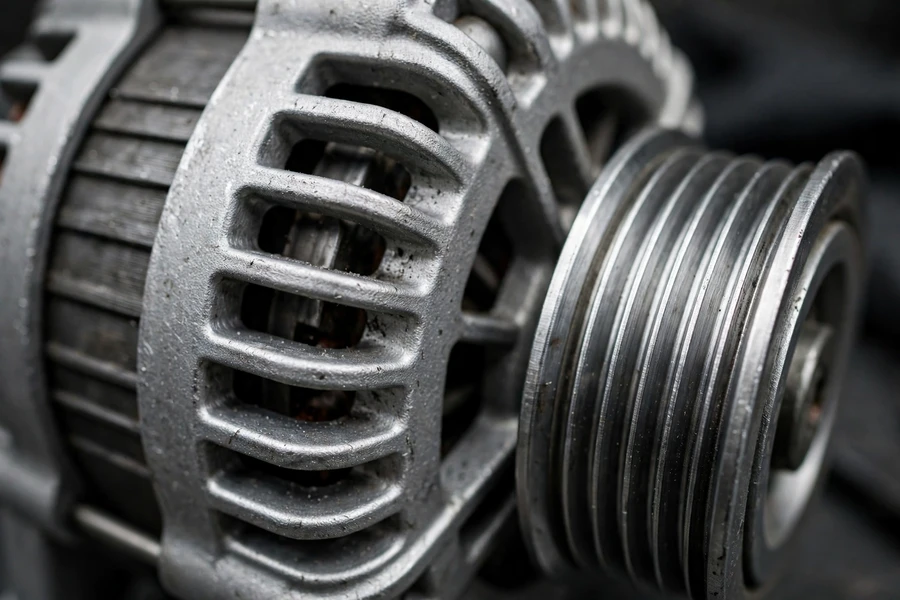
Two caveats. First, auto-parts-store free alternator tests are reported unreliable on these cars — the IBS must be disconnected for bench-style testers to read correctly, and many store testers don’t. Trust your own loaded test over a store printout. Second, if the car won’t hold a charge long enough to run the tests, you already have most of your answer.
Hidden dash menu Test 9: monitor voltage while driving
Every E90, F30, and later 3 Series has a hidden engineering menu in the cluster, and Test 9 shows live battery voltage while you drive — no tools required. It’s the cheapest way to catch what a static reading misses: the intelligent-charging swing, and intermittent regulator faults that appear only while driving.
How to read it: with Test 9 displaying live voltage, drive through normal conditions — acceleration, cruising, coasting, idling at a stoplight with accessories on. A healthy system shows the swing described above: ~12.0 V under acceleration, ~14.7 V coasting. What you’re watching for instead is a pattern that never recovers — voltage that sits below 13.5 V under load and stays there, or erupts into wild swings (owners have reported 13-to-18 V jumps with a failing regulator, with the A/C and cluster lights blinking in time). Treat the menu as a diagnostic window, not a driving toy — glance at it like a gauge, and keep your eyes on the road.
The BSD line: check these codes before buying an alternator
The DME commands charging over this single wire. A fault on any component on that bus can masquerade as alternator failure — one independent shop had to isolate each BSD component (alternator, IBS, oil sensor, water pump) before finding the real culprit. Scan for these codes before you buy a unit.
| Fault code | What it indicates | What to do |
|---|---|---|
| 2E97 | Generator (alternator) fault | The most direct alternator code. One documented case cleared only after installing the correct-type alternator — wrong-type units (wrong BSD protocol) can charge incorrectly or throw codes. Match type, not just fitment. |
| 2DED | Power management: standby current control | Often background/parasitic-drain related rather than alternator. If this is your only code, investigate drain first — see the battery keeps dying guide. |
| 2DEC | Power management (voltage issue) | Linked to voltage-spike and flickering-headlight cases. Points at unstable charging — regulator or BSD communication. |
| 2DEB | Power management / charging plausibility | Seen with overcharging around 15 V on aging or unregistered batteries. Forum technicians note ~15 V on these cars isn’t panic territory — worry above ~15.5 V. |
| 2E8B | Intelligent battery sensor (IBS), signal | Often appears transiently after an IBS disconnect/reconnect; usually ignorable if it doesn’t return. If it persists, the IBS itself can suppress charging. |
| 378F | BSD communication fault (coolant pump / line faults) | Confirms a BSD-bus problem rather than a dead alternator. Isolate components on the bus before condemning the unit. |
The practical takeaway: if you have 2E97 with charging symptoms and the loaded test fails, you’re looking at an alternator. If you have BSD or power-management codes without a failed loaded test, you’re looking at a communication or sensor problem — and a new alternator won’t fix it. And if the small BSD signal-wire plug at the alternator’s rear (the single small wire — often violet) isn’t clipped on firmly, reconnecting it has fixed more than one “dead alternator.” Check the plug before you check the catalog.
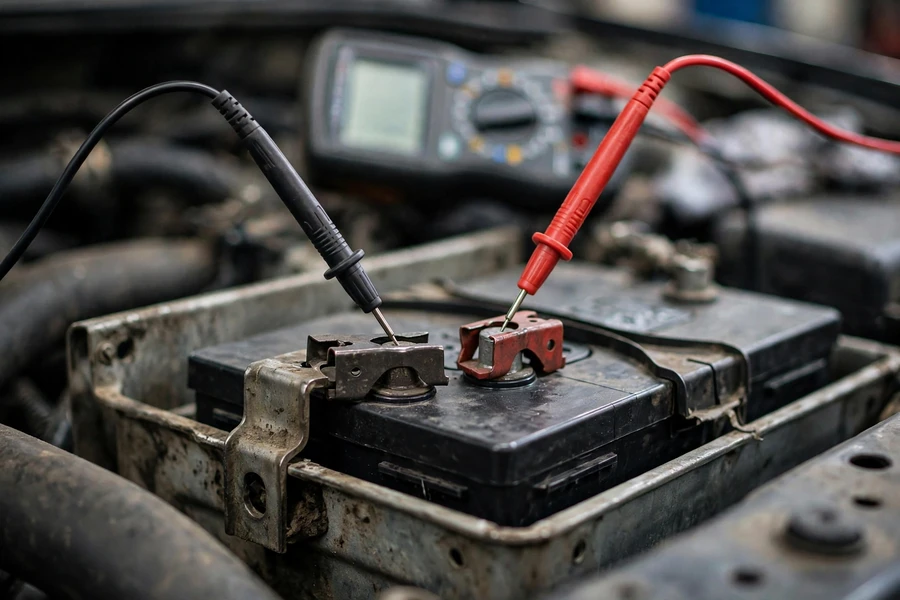
Interactive: battery or alternator? Find your verdict
Answer three questions and get a verdict with the correct next step — including which guide to follow if the problem turns out to be battery-side. This is a triage tool, not a substitute for the loaded voltage test.
Battery or alternator? Get your verdict
Three questions, four verdicts. Answer all three to see the most likely cause and your next step.
Answer all three questions above to see your verdict.
This picker routes you to the right starting point. The loaded voltage test in this article’s testing section is the definitive check.
The 180A gotcha: ordering the right alternator
Amperage and alternator type must match the car. BMW parts departments report roughly 95% of US E90s take a 180A alternator, yet some catalogs list a 150/155A unit that’s wrong for most of them. Beyond amperage, the BSD protocol/type must match — ISTA+ flags “incorrect type of alternator installed,” and one documented 2E97 case cleared only after the correct-type unit went in. Ordering by “fits your car” from a generic catalog is how owners buy the job twice.
| Check this | How | Why it matters |
|---|---|---|
| Amperage | Read the label on your old unit; confirm by VIN with a BMW parts department | ~95% of US E90s are 180A. A 150/155A catalog listing is wrong for most of these cars. |
| Alternator type / BSD protocol | Match the OE part number or confirm with a BMW specialist | A wrong-type unit can charge incorrectly or throw 2E97 even when brand new. |
| Regulator-only repair | Ask your rebuilder; ~$120 indy repair reported in one case | Viable when bearings are good and the failure is regulation-only — but most DIYers replace the whole unit for the warranty. |
Verify by VIN and by the old unit’s label before the car is apart — discovering a wrong-type alternator mid-job is the most expensive kind of lesson. Also inspect what’s around it: coolant or oil contamination from nearby leaks accelerates alternator failure (one owner report describes coolant spray killing two successive units), so trace contamination to its source rather than just bolting on another alternator.
Replacement costs: dealer vs. independent shop vs. DIY
The figures below mix owner-reported invoices with current retail listings. Dealer and independent-shop bands are typical ranges, not quotes — labor rates vary sharply by region, and no current citable US dealer quote was found, so the dealer band is an estimate built from OE part pricing plus dealer labor. Note one anomaly: a BMW repair site quotes “4–6 hours of labor” for the indy job, which conflicts with DIY guides calling this a 1–2 hour job — the consensus picture is typically 1–3 hours of labor depending on model, so get any shop’s hours in writing.
| Route | Typical cost | Notes |
|---|---|---|
| DIY (parts only) | $256–$500 (new 180A unit); ~$300–$550 with belt | Current retail band for a new 180A E90 328i alternator from auto-parts listings (2026). Add a serpentine belt while you’re in there. |
| DIY (regulator/brushes only) | ~$120+ | Only sensible when the bearings are quiet and healthy — an option, not the default. |
| Independent BMW specialist | ~$650–$850 total | Reported average from a BMW repair source. Flagged caveat: the source’s “4–6 hours” labor claim conflicts with DIY timing; verify hours with the shop. |
| Dealer | ~$1,000–$1,500 (estimate) | Built from OE part ($600+) plus dealer labor. One owner report cites an indy quote of $1,250 for an OEM replacement; an old dealer price for an E38 was $1,200 part-only. No current dealer quote located. |

What the DIY replacement involves (honest difficulty)
Difficulty: moderate. Owner-documented guides call it a 1–2 hour job with basic hand tools on most 3 Series — no special pullers, and on most cars the electric fan unbolts rather than needing a fan-clutch tool. If you’ve done a belt or a battery, you have the skill set; if you haven’t turned a wrench on the car before, budget a full afternoon and read a model-specific guide first.
- Disconnect the battery negative terminal first. You’re handling the B+ cable, which runs unfused from the battery. This is the one non-negotiable safety step.
- Remove intake ducting / airbox for access.
- Release the belt tensioner and slip the belt off the alternator pulley. Inspect the belt and tensioner while you’re there — our serpentine belt guide covers what a worn belt looks like and when replacement is due.
- Remove the 2–3 mounting bolts and pull the alternator free.
- Disconnect the electrical connectors — the large B+ cable and the small BSD signal-wire plug at the rear.
- Reverse with the new unit — confirm amperage and type match the old unit before bolting in (the 180A gotcha).
- After replacement: clear stored codes, run the loaded voltage test, and confirm battery registration is current — details in our battery registration guide.
No verifiable torque specs were found for the alternator mounting bolts or the B+ terminal nut, so none are printed here — or look them up in a model-specific factory manual. If the alternator looks fine but the car still won’t charge, revisit the BSD section before condemning anything else.
For the broader picture of 3 Series ownership — what else wears out at this mileage and what preventive maintenance actually pays — our complete 3 Series guide ties the whole maintenance landscape together.
BMW alternator failure FAQ
How do I tell if my BMW alternator is bad or the battery is just dead?
Jump the car. If it starts and keeps running fine, the battery was dead and the alternator is working. If it dies minutes after the jump cables are removed, the alternator isn’t charging. For confirmation, run a loaded voltage test: with everything electrical on at 1,500–2,000 RPM, healthy charging reads 13.5–14.8 V at the battery terminals.
Is 12 volts at idle normal on a BMW?
It can be. BMW’s intelligent alternator control deliberately varies voltage with driving conditions — dropping toward about 12.0 V under acceleration and rising to about 14.7 V while coasting. A single at-idle reading is not diagnostic on these cars. The reliable test is voltage under full electrical load, which should hold 13.5–14.8 V if the alternator is healthy.
Can a bad battery cause alternator-like symptoms on a BMW?
Yes — and the most common trap is an unregistered new battery. The intelligent battery sensor misjudges the battery’s age and state of charge, and power management can hold back charging, which looks exactly like a failing alternator. Always confirm the battery is registered before condemning the alternator.
What BMW fault codes indicate alternator failure?
2E97 is the direct generator (alternator) fault code. 2DEC, 2DED, and 2DEB are power-management codes tied to voltage issues, standby current control, and charging plausibility. Because the alternator shares its BSD communication line with the IBS, oil level sensor, and water pump, a BSD communication fault (such as 378F) can masquerade as alternator failure — check these codes before buying a replacement. Code meanings are as reported by BMW diagnostic tools, not factory documentation.
How much does it cost to replace a BMW 3 Series alternator?
DIY parts run about $256–$500 for a new 180A unit (the correct rating for roughly 95% of US E90s), or roughly $300–$550 with a new serpentine belt. Independent BMW specialists typically charge about $650–$850 total. Dealer replacement is an estimated $1,000–$1,500. Labor is typically 1–3 hours depending on the model.