BMW ABS/DSC Trifecta: 7 Causes Ranked by Cost
Short answer: BMW ABS DSC warning lights glowing together — the amber ABS, DSC triangle, and BRAKE lamps — are nicknamed the “trifecta,” and they mean the stability-control system has detected a fault and switched itself off. The most common cause is a failed wheel speed sensor, followed by the steering-angle sensor, a failing DSC/ABS control module, brake pressure sensors, a cracked reluctor ring, or simply a weak battery. Your regular brakes still work, so drive gently to a diagnosis — but ABS and traction control are offline until the fault is fixed. Read the codes with a BMW-capable scan tool (generic OBD2 readers cannot see DSC faults), then work through the diagnosis steps below.
In this guide
- What the “trifecta” actually is — and what each lamp means
- What each light combination means
- Causes ranked from most to least common
- BMW DSC fault-code table (community-sourced mappings)
- Step-by-step diagnosis you can do at home
- Interactive diagnostic picker: match lights and symptoms to the cause
- Repair options with honest difficulty ratings and cost bands
- When it’s safe to drive — and when it isn’t
- Five frequently asked questions
What the “trifecta” actually is
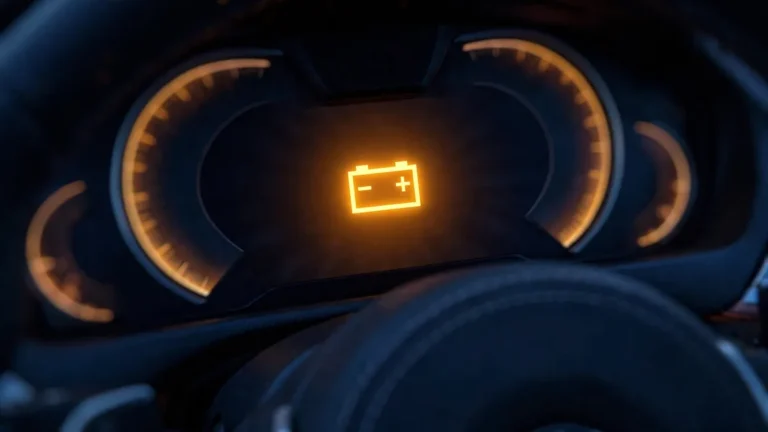
Three amber lamps, one problem. The ABS lamp covers the anti-lock braking system, the DSC triangle — a triangle with a circular arrow and an exclamation point — covers Dynamic Stability Control (BMW’s stability and traction control), and the amber BRAKE lamp is the general brake-system warning. When all three glow steady yellow together, BMW owners call it the trifecta, and it means the DSC control unit has logged a fault somewhere in the stability/anti-lock subsystem and disabled both ABS and DSC as a self-protection measure.
Why does one fault light three lamps? Because the DSC unit is the hub everything else reports to. Dozens of times per second it fuses data from the four wheel speed sensors, the steering-angle sensor, the yaw-rate sensor, the lateral-acceleration sensor, and the brake pressure sensors. Corrupt any single input and the unit can no longer trust its math — so it flags every system that depends on that math. That is also why a trifecta can take down innocent bystanders: cruise control may quit, the speedometer can die on some chassis, hill-start assist and the run-flat monitor may drop out, and xDrive cars can fall back to a default torque split.
Color matters enormously here. The trifecta’s BRAKE lamp is amber. A red BRAKE warning is a different, more urgent message — low brake fluid or the parking brake — and it gets its own row in the combination table below. Learn the difference before you diagnose anything, because the two point at completely different systems.
Finally, expect the classic pattern: the lights reset every time you switch the car off, then return a few minutes into a drive. Heat and vibration make marginal sensors and fatigued solder joints fail only once warm, which is why the fault looks “fixed” every single morning. An intermittent trifecta is still a trifecta — it just hasn’t hardened yet.
Every light combination, decoded
Not every BMW ABS DSC warning light event is the full trifecta. Match what you see to the table below before you start replacing parts.
| What you see | What it usually means | First move |
|---|---|---|
| Amber ABS + amber BRAKE + DSC triangle, all steady — the trifecta | A fault in the DSC/ABS subsystem; anti-lock braking and stability control are disabled | Scan the DSC module with a BMW-capable tool and note the codes |
| DSC triangle alone, steady | Steering-angle, yaw-rate, or pressure-sensor fault — or DSC was manually switched off | Hold the DSC button for 3+ seconds to rule out “DSC off”; then scan |
| DSC triangle flashing | Normal: DSC is actively stabilizing the car right now | Ease off the throttle; if it flashes constantly on dry roads, check tires and pressures |
| ABS lamp alone | An ABS-specific fault, often a sensor circuit in its early stages | Scan soon — this frequently matures into the full trifecta |
| Red BRAKE lamp, alone or with others | Low brake fluid or the parking brake is engaged | Check the reservoir immediately; a sinking pedal means stop driving |
| Amber BRAKE + DSC triangle, no ABS lamp | Brake pressure sensor or steering-angle plausibility fault | Scan for pressure-sensor (5E20/5E24) or steering-angle (5E30) codes |
| Trifecta plus a dead speedometer | The wheel speed sensor that feeds the instrument cluster has failed | The scan identifies the corner — replace that sensor only |
Causes, ranked from most to least common
Across owner repair reports and independent-shop experience, the same culprits appear again and again. They are ranked below by how often each one actually turns out to be the fix — start at the top and work down instead of throwing parts at the car.
1. Wheel speed sensor failure — the runaway #1
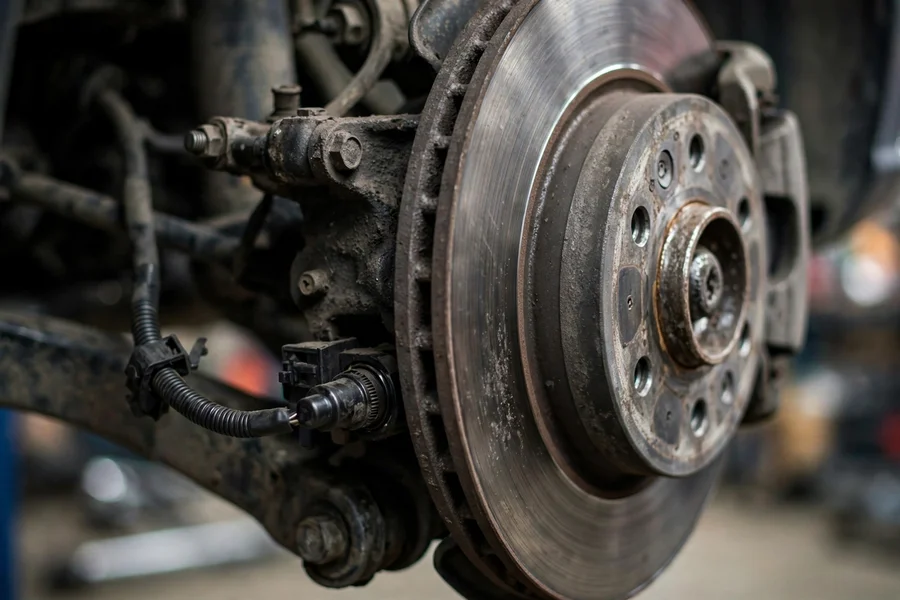
Each wheel carries an active (Hall-effect) speed sensor that reads a toothed reluctor ring as the wheel turns. These sensors live in the worst real estate on the car: inches from the brake rotor, bathed in heat, water, and road salt. When one drops out — even for a few milliseconds — the DSC unit sees an impossible speed mismatch between corners and shuts the whole subsystem down. Failure mileage is typically high, but road-salt regions kill them noticeably earlier. The good news: diagnosis is definitive. Graph all four sensors in live data on a straight road and the faulty corner reveals itself as a dropout, a freeze, or a lag. Replacement is one bolt and one connector — the easiest repair on this list.
2. Cracked or corroded reluctor (pulse) ring
The sensor is only half of the system — it reads a toothed ring on the hub or axle. Rust jacking and cracks distort the tooth pattern, producing an erratic signal that mimics a bad sensor, especially at low speed. This is the classic “I already replaced the sensor and the lights came back” trap: if a corner-specific code survives a new sensor, inspect the ring before condemning anything more expensive. On many 3 Series the rear rings are integrated with the axle or CV joint, which turns a cheap part into genuine labor.
3. Steering-angle sensor
Mounted in the steering column as part of the switch cluster, the steering-angle sensor tells DSC where you are pointing the car. Worn or contaminated internal contacts make its signal drift, and DSC disables itself rather than stabilize the car on bad data. Classic triggers are a battery disconnect, a wheel alignment, or any steering-wheel removal. Before spending money, try the lock-to-lock recalibration described in the diagnosis section — it resolves a surprising share of these.
4. DSC/ABS control module
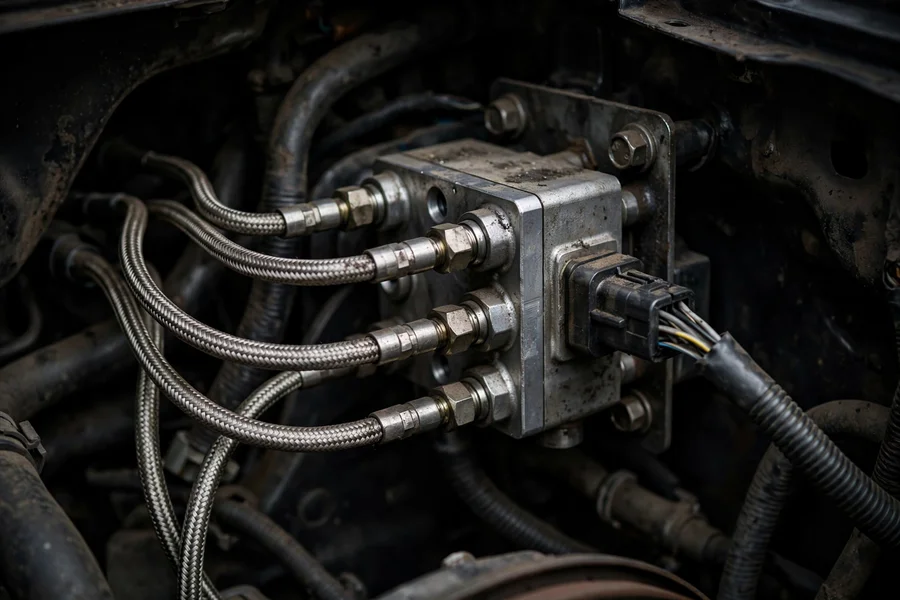
The module is the electronics bolted to the hydraulic valve block in the engine bay. Years of heat cycling fatigue its solder joints; the module then reports phantom sensor faults — sometimes implicating multiple corners at once — or logs pump and ECU-internal codes (5DF0, 5DF1). The key clue: all four wheel speed sensors test good, yet the trifecta persists. A mail-in rebuild service typically costs $150–$300 and fixes the majority; a brand-new unit runs $800–$2,000 plus dealer coding, so rebuild first.
5. Brake pressure sensors
Two pressure sensors on the DSC hydraulic unit monitor front and rear brake-line pressure. When one drifts out of plausibility, the unit logs 5E20/5E24 and lights the trifecta — sometimes as amber BRAKE plus DSC without the ABS lamp. The sensors themselves are inexpensive; access to the hydraulic block is the actual work.
6. Weak battery or low system voltage
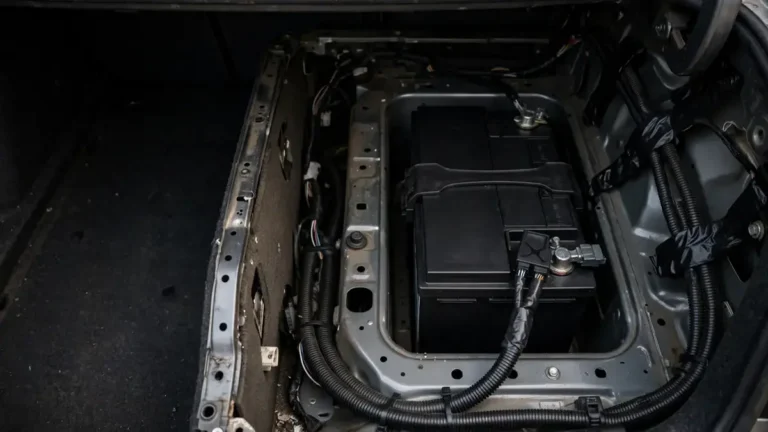
BMW chassis electronics are famously voltage-sensitive. A tired battery — especially after a jump start, a long sit, or a failing alternator — can throw a spray of DSC/ABS codes with nothing mechanically wrong at all. Always check resting voltage (about 12.6 volts) and load-test the battery early in diagnosis. It is the cheapest fix on this list and the most embarrassing one to miss.
7. Damaged wiring or connectors
The harness to each wheel sensor flexes with the suspension and gets abraded inside the wheel well; the large connector at the DSC module can corrode. Trifectas that come and go with bumps, steering input, or wet weather point here. A careful visual inspection costs nothing — do it before buying any part.
8. Low brake fluid — the red-lamp exception
Low fluid does not cause the amber trifecta, but it is the #1 cause of a brake warning on its own. If your BRAKE lamp is red rather than amber, check the reservoir first: worn pads lower the level as caliper pistons extend, and an actual leak is a stop-driving issue, covered in the safety section below.
| Cause | How common | Typical code clue |
|---|---|---|
| Wheel speed sensor | Most common | Corner-specific codes (5D90–5DC4 range) |
| Reluctor ring | Common | Same corner code persists after a new sensor |
| Steering-angle sensor | Common | 5E30, 5E1E |
| DSC/ABS module | Common | 5DF0, 5DF1, or phantom multi-corner faults |
| Brake pressure sensors | Occasional | 5E20, 5E24 |
| Weak battery / low voltage | Occasional | Assorted codes after a jump start or long sit |
| Wiring or connector damage | Occasional | Intermittent; bump- or weather-related |
| Low brake fluid | Red BRAKE lamp only | No DSC code — check the reservoir |
BMW DSC fault-code table
BMW does not publish plain-English descriptions of its chassis fault codes, so every “translation” you will find — including this one — is community-sourced: mappings observed by owners and independent specialists using BMW-capable tools, cross-checked across forums and scan-tool databases. Exact wording varies between scan tools and DSC generations (the E46’s Bosch 5.7, the E90’s MK60 variants, and later units all phrase things differently), so treat the code number as the reliable part and the description as a pointer, not gospel. One more critical note: a generic OBD2 reader only talks to the engine computer. DSC codes live in the chassis module and require a BMW-capable scan tool to read at all.
| Code | Community-reported meaning | It points at |
|---|---|---|
| 5DF0 | Hydraulic unit: pump motor | DSC hydraulic pump circuit or module power stage |
| 5DF1 | ECU internal fault | The DSC control module itself |
| 5DE0 / 5DE1 | Brake-pad wear plausibility, front / rear | Pad-wear sensor circuit — often secondary to a module fault, not worn pads |
| 5D90–5D94 | Front-left wheel speed sensor (electrical failure / plausibility) | FL sensor, its ring, or its wiring |
| 5DA0–5DA4 | Front-right wheel speed sensor | FR sensor, its ring, or its wiring |
| 5DB0–5DB4 | Rear-left wheel speed sensor | RL sensor, its ring, or its wiring |
| 5DC0–5DC4 | Rear-right wheel speed sensor | RR sensor, its ring, or its wiring |
| 5E20 / 5E24 | Brake pressure sensor 1 / 2 | Pressure sensors on the DSC hydraulic unit |
| 5E30 | Steering-angle sensor adjustment / plausibility | Steering-angle sensor in the column cluster |
| 5E38 | Rotation-rate (yaw) sensor | Yaw-rate sensor circuit |
| 5E3C | Rotation-rate signal plausibility | Yaw signal disagreeing with wheel speeds — check sensors first |
| 5E4F | Continuous control plausibility | DSC intervening on suspect data — usually a sensor dropout behind it |
| 5E5C | Run-flat indicator initialization | Reset the run-flat/RPA system after tire work |
| 5E1E | CAN timeout, steering-angle sensor | Communication fault to the angle sensor, not necessarily the sensor itself |
A word of caution from the community’s hard-won experience: a failing DSC module often reports erroneous wheel speed sensor faults — most notoriously implicating a rear sensor that tests perfectly fine. If your scan names a different corner every time, or all four sensors test good, suspect the module rather than buying four sensors.
Step-by-step diagnosis
Work this list in order. Each step either identifies the fault or eliminates a suspect, and the most expensive conclusions come last — which is exactly how you avoid a $1,500 guess.
- Document the lamps. Photograph the cluster. Note exactly which lamps are lit, their color (amber vs red), whether they are steady or flashing, and when they appear — cold start, ten minutes in, over bumps, only in the rain. That pattern is diagnostic gold later.
- Red brake lamp? Check fluid first. Pop the hood, check the brake fluid reservoir level, and confirm the parking brake is fully released. Low fluid or a sinking pedal is a stop-driving issue — jump to the safety section instead of continuing here.
- Scan with a BMW-capable tool. A generic code reader only talks to the engine computer; DSC/ABS codes live in the chassis module and are invisible to it. You need a tool that reads every BMW control unit — our OBD2 scanner guide for BMW lists options at several budgets.
- Record, clear, drive, rescan. Write down every code, clear them all, then drive normally until the lights return and scan again. Codes that come straight back are hard faults; codes that need a full drive cycle to reappear are intermittent — usually a sensor or a connection, not the module.
- Run live data — the single most decisive test. Graph all four wheel speed sensors on a straight, smooth road at steady speed. A healthy set tracks together within a couple of km/h; the faulty corner drops out, freezes, or lags behind the other three. This one test correctly identifies the problem more often than every other step combined.
- Inspect the suspect corner. Wheel off: confirm the sensor is seated and its bolt is tight, trace the harness through the wheel well for chafing, unplug the connector and look for green corrosion, and examine the reluctor ring for cracks or heavy rust.
- Multimeter-check the circuit if you want certainty. Unplug the DSC module harness and diode-test each sensor circuit, comparing all four corners against each other. Active sensors show a diode drop in one direction and open in the other — you are looking for the outlier, not chasing an absolute number, so one odd corner condemns its circuit.
- Reset steering angle and check voltage. With the engine running, turn the wheel fully left, then fully right, then center it and drive — this recalibrates the steering-angle sensor on many chassis. Then check battery resting voltage (about 12.6 volts), load-test the battery, and inspect the DSC fuses (fuse locations here).
- Interpret what is left. If all four sensors test good and the codes are 5DF0/5DF1 — or the scan blames a different corner every time — the DSC/ABS module is the prime suspect. Do not buy a new one yet: the mail-in rebuild route in the repair section costs a fraction of new.
Interactive: which fault matches your symptoms?
Answer two questions for the most likely cause, with the reasoning shown. This narrows the field — always confirm with a scan before buying parts.
Trifecta diagnostic picker
Two questions, then a likely cause — with the reasoning shown.
Choose both answers and press Diagnose.
Repair options: difficulty and honest cost bands
Bands below are US-market ranges from repair-estimate sites and owner reports — your region and shop will vary. The golden rule of this job: diagnose first, buy parts second. A sub-$100 sensor fixes most trifectas; guessing at a four-figure module is how this repair gets expensive.
| Repair | DIY difficulty | Parts band | Typical shop band |
|---|---|---|---|
| Wheel speed sensor | Easy — one bolt, one connector | $40–$120 | $150–$300 |
| Reluctor / pulse ring | Hard — axle or hub disassembly on most cars | $30–$80 | $300–$600 |
| Steering-angle sensor | Medium — steering wheel and airbag removal | $150–$300 | $350–$700 incl. calibration |
| DSC module mail-in rebuild | Medium — remove module, car sits about a week | $150–$300 | $250–$450 incl. removal and refit |
| New DSC hydraulic unit + coding | Pro — brake hydraulics plus dealer-level coding | $800–$2,000 | $1,200–$2,800 |
| Brake pressure sensor | Medium — access to the hydraulic block | $100–$150 | $200–$300 fitted |
| Battery replacement + registration | Easy | $180–$300 | $250–$400 |
| Wiring / connector repair | Easy to Medium | Under $50 in materials | $100–$250 |
Wheel speed sensor is the DIY sweet spot: one small bolt, one connector, and routing the new harness exactly along the factory clips. Buy from a reputable brand — a cheap sensor that reads slightly off will set plausibility codes and put you back at square one. Clear the codes after fitting; the lamps should stay off on the test drive.
Reluctor ring: the part is cheap, the labor is not. Where the ring is integrated with the wheel bearing or CV joint, you are doing that bigger job to fix a $40 ring — get a firm quote first, and confirm the ring is truly the fault (a new sensor that doesn’t fix the corner code is the tell).
Steering-angle sensor carries one serious caveat: you are removing the steering wheel, which means handling the airbag. Disconnect the battery, wait at least 15 minutes, and never probe airbag circuits with a multimeter. After fitting, the sensor needs calibration — the lock-to-lock procedure, plus a scan-tool calibration at a shop if the lamp persists.
DSC module rebuild vs new: a rebuild keeps your original coding, so there is no dealer visit — you unbolt the electronics (leave the hydraulic block and brake lines alone), mail it, and refit about a week later. A brand-new unit needs VIN coding and steering-angle calibration on top of the part price; budget $100–$200 for that at a dealer or BMW specialist.
When it’s safe to drive — and when it isn’t
The trifecta disables the electronic helpers, not the brakes — pedal, pads, and rotors work exactly as before. You have lost anti-lock in a panic stop and stability control in a slide, so adjust accordingly:
- Safe, with caution: driving gently to a diagnosis appointment. Brake earlier, increase following distance, and avoid sudden maneuvers — drive it like a pre-ABS classic.
- Be extra careful in rain, standing water, snow, and gravel — the exact conditions ABS and DSC exist for.
- Get it diagnosed within days, not months. You do not want to discover the helpers are gone during an emergency stop.
- Stop driving and get it towed if the brake lamp is red with low fluid, the pedal sinks or feels spongy, or there is grinding or pulling under braking.
- Stop driving if DSC intervenes on its own — braking wheels or cutting power without cause. That is unpredictable behavior, not merely missing helpers, and it needs immediate diagnosis.
- Stop driving if any brake warning appeared immediately after brake work — a fitting may be loose.
While your DSC module is away for a rebuild, the car behaves exactly like a trifecta car — normal brakes, no ABS, no DSC. Drive it the same careful way and avoid bad weather.
Frequently asked questions
Can I still drive with the ABS and DSC lights on?
Yes, carefully. The hydraulic brakes are unaffected — the pedal feels the same and the car stops the same in normal driving. What you have lost are the electronic safety nets: anti-lock braking in a panic stop and stability control in a slide. Keep speeds moderate, leave extra following distance, stay out of heavy rain and snow if you can, and get the fault diagnosed within days.
Will disconnecting the battery reset the trifecta?
Only cosmetically. Every trifecta resets on power-down, so the lamps will go out — and come back, usually within one drive, because the underlying fault is still there. Worse, a disconnect can wipe the steering-angle calibration and add a fresh fault on top of the old one. Fix the cause first, then clear the codes with a scan tool.
Can a cheap generic OBD2 scanner read BMW ABS/DSC codes?
No. Generic readers only communicate with the engine computer, and DSC faults live in the chassis module — invisible to a basic reader. You need a BMW-capable tool that reads all control units; our OBD2 scanner guide for BMW compares options at several budgets.
Why do the lights turn off when I restart the car, then come back?
Because most trifecta faults are heat- or vibration-dependent. A marginal wheel speed sensor reads fine cold and drops out once warm; fatigued solder joints in the DSC module make contact cold and open up hot. Each restart clears the lamp, and the fault re-sets once the component returns to its failure zone. The pattern is itself a clue: intermittent-on-warmup points at a sensor or connection rather than a hard module failure.
Should I replace all four wheel speed sensors at once?
No. Replace only the corner your diagnosis identifies — sensors do not wear as a set, and there is no labor saving in doing all four since each is a separate ten-minute job. One caution: a failing DSC module is notorious for falsely reporting a rear sensor fault, so if a new sensor does not fix the named corner, suspect the module or the reluctor ring before buying three more sensors.
Keep diagnosing with the related guides: the BMW 3 Series complete guide links every troubleshooting article on the site, the fuse box diagrams help you check DSC fuses by location, and the TPMS reset guide covers the run-flat initialization behind code 5E5C.