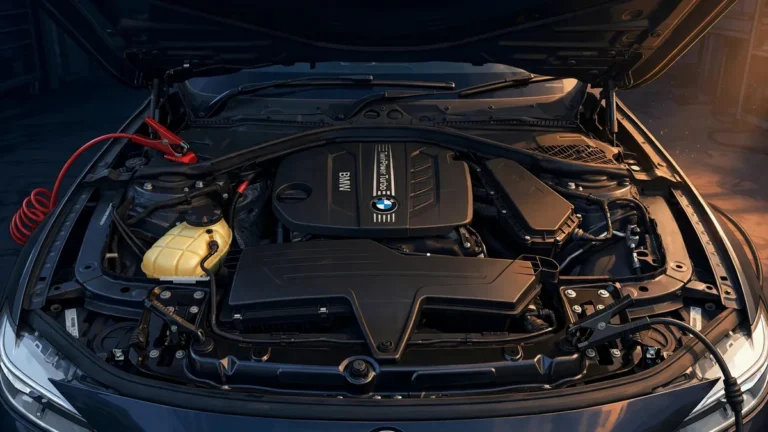
Clicking on Turns? BMW CV Axle Replacement Costs
Short answer
BMW CV axle replacement is the fix for the classic symptom: a rhythmic clicking or popping when you turn, which almost always means a worn outer CV joint. Expect $450–$1,000 per axle at an independent BMW shop with a quality aftermarket shaft, $900–$2,400+ at the dealer, or $110–$500 in parts if you do it yourself. A torn boot with no noise can be rebooted for a few hundred dollars; once it clicks, the joint is finished and the whole axle gets replaced. Rear-wheel-drive cars have two rear half-shafts; xDrive cars have four axles, and the two front ones fail first. This guide covers every generation from the E90 through the G20: which joint your noise points to, boot vs full-axle math, real US cost bands, and honest DIY difficulty.
In this guide
- Which axles does your 3 Series have?
- The 5 sounds that point to a CV axle — and the one that doesn’t
- E90, F30, G20: what changes by generation
- Boot vs full axle: the replacement decision
- Triage & cost picker: what’s your noise worth fixing?
- Real cost bands: parts, labor, and per-axle totals
- DIY: honest difficulty, tools, and the job step by step
- How to make your axles last
- CV axle FAQ
Which axles does your 3 Series have?
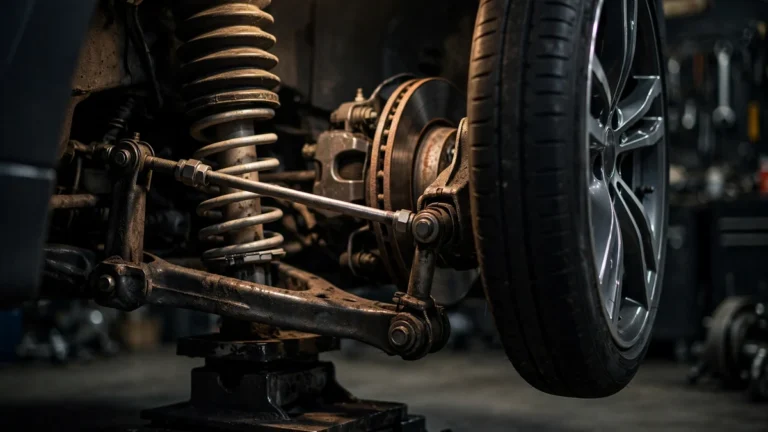
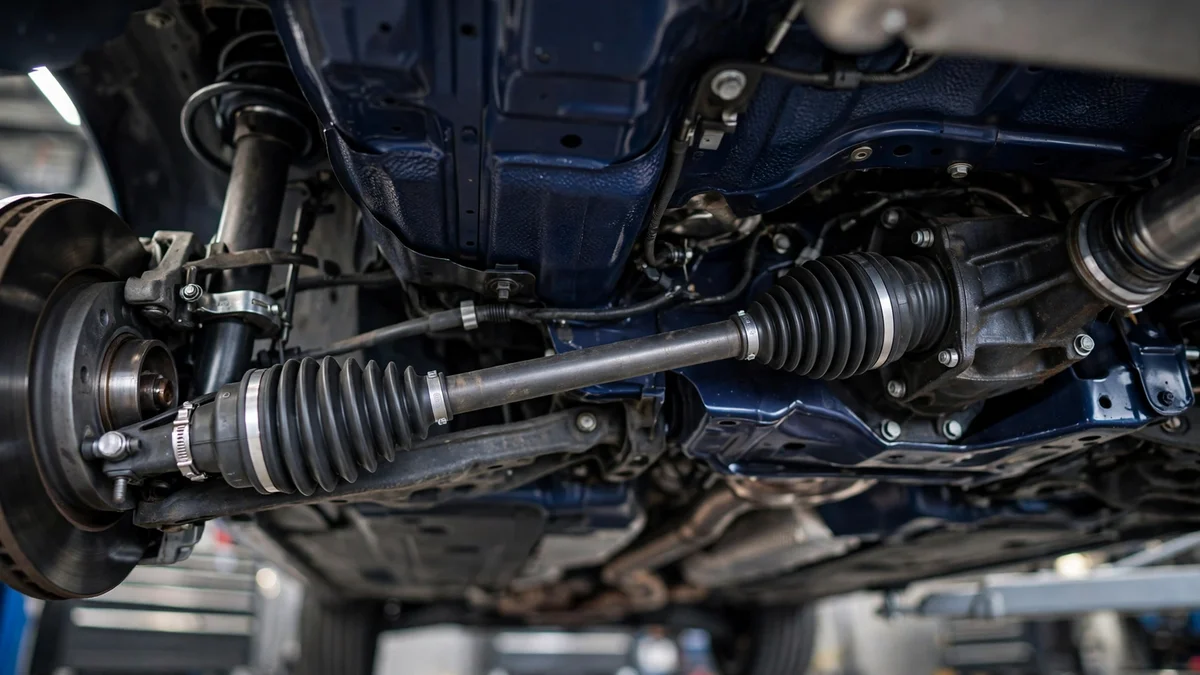
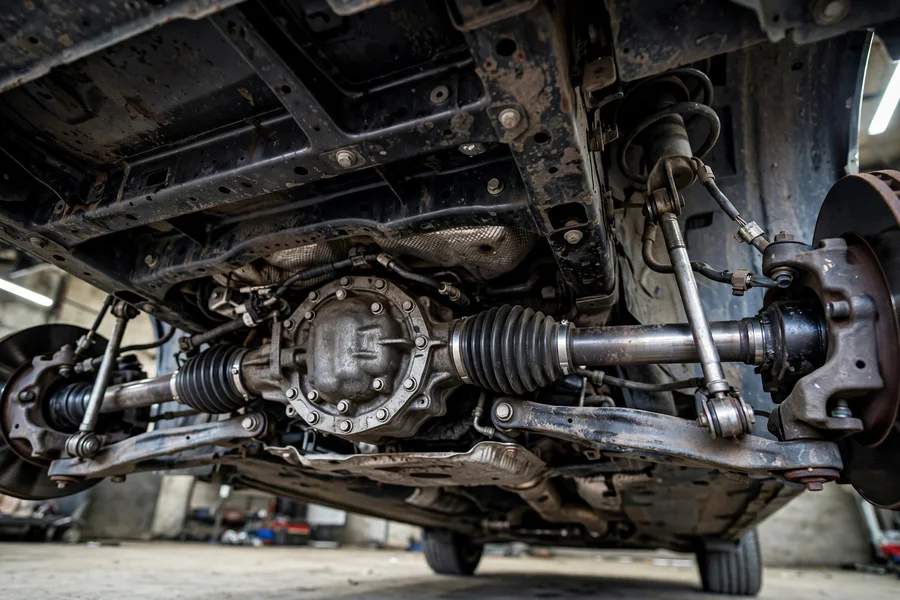
Every 3 Series from the E90 (2006–2011) through the F30 (2012–2018) and the G20 (2019–present) sends power to the wheels through CV axles — steel half-shafts with a constant-velocity joint at each end. The outer joint lives behind the wheel hub and flexes with steering angle; the inner joint plugs into the differential and absorbs the shaft’s in-and-out movement as the suspension travels. Each joint is sealed inside a ribbed rubber CV boot packed with grease.
How many you have depends on the drivetrain. A rear-wheel-drive 3 Series has two rear half-shafts and nothing up front. An xDrive car adds two front axles driven off a front differential, for four CV axles total — and those two front shafts are the ones that fail most often, because the outer joints work hardest on a car that both steers and drives its front wheels. The xDrive vs RWD comparison covers the tradeoffs of the system in more depth, including the transfer case that feeds that front differential.
One useful piece of parts-counter trivia: GKN is BMW’s longtime OEM axle supplier — GKN-branded shafts are listed as the OEM option in BMW driveline catalogs — which is why a GKN axle from the aftermarket is effectively the same part as the dealer’s without the BMW logo box. That fact drives most of the cost strategy in this guide: Genuine BMW axles are by far the most expensive way to buy a shaft, and rarely necessary for a car out of warranty.
The 5 sounds that point to a CV axle — and the one that doesn’t
CV joints rarely fail silently. Each type of joint wear has a signature sound, and matching your noise to the table below tells you which end of the axle is guilty before you ever pick up a wrench. The single most reliable test costs nothing: find an empty parking lot, roll the windows down, and drive slow circles with the steering near full lock, then repeat in reverse. A bad outer joint gets louder in reverse, a trick BMW owners have used for years to confirm the diagnosis.
| What you hear | What it means | Which joint | Urgency |
|---|---|---|---|
| Rhythmic clicking or popping on turns, worse at low speed and full lock | Worn joint with internal play; grease has been gone a while | Outer CV joint | High — replace the axle within weeks, not months |
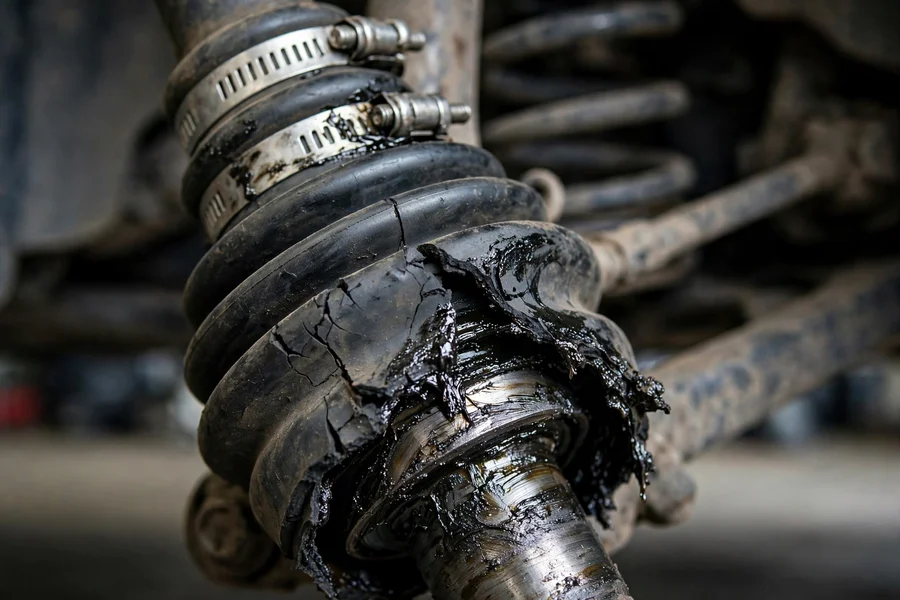
| Grease flung onto the inside of the wheel or the wheel well, no noise yet | Torn or split boot; the joint is exposed to grit and water | Boot (joint still healthy) | Moderate — inspect now, reboot before it starts clicking |
| Vibration or shudder under acceleration, typically 25–45 mph, worse uphill | Worn inner joint that can no longer run smoothly under load | Inner CV joint | Moderate — have it diagnosed; it won’t heal |
| Clunk when pulling away from a stop or when lifting off the throttle | Excessive play in an inner joint (or, less often, differential backlash) | Inner CV joint | Moderate — inspect; rule out the driveshaft and diff |
| Humming or growl that changes when you weave left and right | Not a CV joint — this is a wheel bearing or a tire | Neither | See the wheel bearing guide, not this one |
Two details worth knowing before you order parts. First, outer joints fail far more often than inner ones, because they articulate the most and their boots take the most abuse from road debris. Second, the right-side shaft tends to go first — a pattern reported across BMW owner communities, where failed right axles cluster around 80,000–120,000 miles on xDrive cars. That’s community-sourced data, not a factory figure, but it’s consistent enough to make the right front boot the first thing you check during an inspection.
Don’t confuse a CV click with a wheel bearing’s hum or a differential’s whine: CV joints click in rhythm with wheel speed and only when loaded through a turn, bearings drone constantly above a certain speed, and differentials whir under throttle. If your noise is a hum that changes with steering load, the wheel bearing noise guide is the one you want, not an axle.
E90, F30, G20: what changes by generation
The axle architecture is the same across all three generations — half-shafts with an inner and outer CV joint each — but age, parts pricing, and one common misdiagnosis differ enough to matter when you’re budgeting the job.
| Generation | Axle reality | Watch out for |
|---|---|---|
| E90 (2006–2011) | Oldest fleet, highest failure rates. xDrive front outer joints are the classic 80k–120k-mile failure, and the aftermarket is deep — quality OEM-supplier shafts are easy to find and cheap. | Transfer-case binding. On xDrive E90s, a shudder or bind on tight low-speed turns can be the transfer case, not a CV joint. A CV click is rhythmic with wheel speed; transfer-case binding feels like the car fighting itself through the turn. |
| F30 (2012–2018) | Same weak points as the E90: xDrive front outers first, rears far less often. Genuine BMW front axles have listed near $1,450, which is why almost nobody buys them out of warranty — GKN-tier aftermarket owns this segment. | Don’t assume a vibration is the axle. The F30’s longer service life means tired tires, worn bushings, and wheel balance issues are all in play at the mileages where axles fail; rule the cheap stuff out first. |
| G20 (2019–present) | Youngest fleet, fewest reported failures so far. When a G20 axle does fail, parts pricing runs higher and aftermarket coverage is thinner than for the E90/F30. | Dealer-heavy quotes. With fewer aftermarket options, get an independent BMW specialist’s quote before accepting a dealer number — the spread is widest on the newest chassis. |
The misdiagnosis point deserves emphasis because it costs people real money: if your xDrive car shudders or binds on full-lock parking-lot turns but never produces that rhythmic click-click-click, the transfer case deserves investigation before any axle gets ordered. Owners have traced that exact symptom to transfer-case fluid condition, and the transfer case fluid service is a fraction of an axle replacement. Rhythmic clicking that gets louder in reverse, though — that’s the axle, every time.
Boot vs full axle: the replacement decision
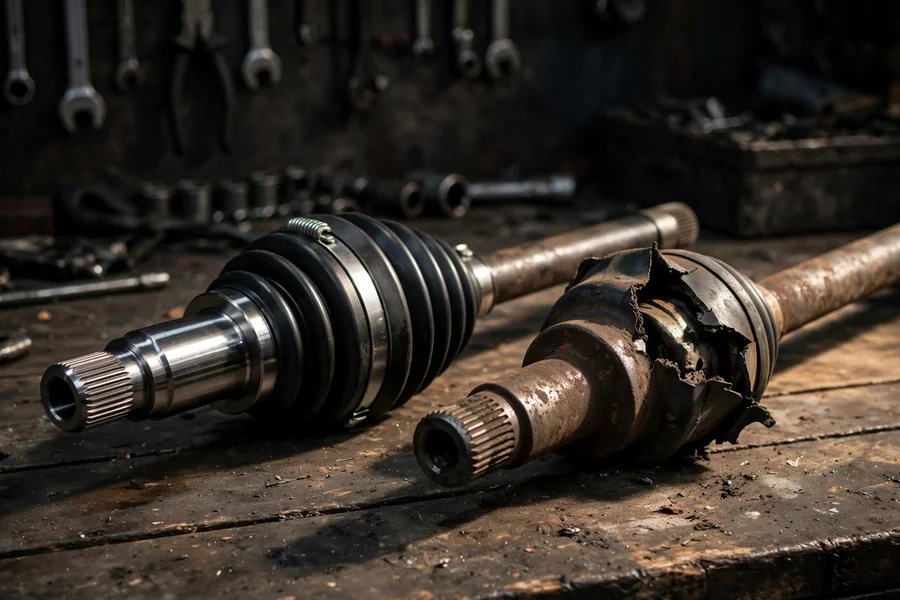
This is the question that decides whether the job costs a few hundred dollars or closer to a thousand. The rule is brutally simple: a torn boot with no noise can be saved; a clicking joint cannot. Once a CV joint clicks, its internal races and bearings are scored. Rebooting it — new boot, fresh grease, same worn joint — just buys you a quiet month or two before the click returns, a lesson plenty of owners have learned the expensive way. The full axle, which arrives with both joints and both boots brand new, is the only honest repair for a noisy shaft.
| What you find | The right call | Typical indy shop cost | Why |
|---|---|---|---|
| Boot torn, caught early, zero noise, low miles on the tear | Reboot kit (boot + grease + clamps) | $250–$450 | Joint is still healthy; you’re paying mostly for labor |
| Any clicking, popping, or vibration from the joint | Replace the whole axle | $450–$1,000+ | The joint is scored; a reboot leaves the damage in place |
| Boot torn and the car has high miles or unknown history | Replace the whole axle | $450–$1,000+ | Contamination is almost certain; the cost gap to a full axle is small |
| One boot torn, the others original, car over 100k miles | Replace the bad axle; inspect the other three boots (xDrive) | $450–$1,000+ per axle | Boots age together; the next tear is usually close behind |
| Axle replaced, but the old shaft was a quality OEM unit | Keep it as a core or spare | $0 | Some owners rebuild OEM cores with new joints and boots |
Note the cost math that pushes most shops toward full axles: the labor to pull an axle is nearly identical whether you reboot it or replace it, and the part-price gap between a boot kit and a complete aftermarket axle is often only $100–$200. That’s why independent shops quote boot jobs around $350 a side but usually recommend the full axle once there’s any noise — the reboot saves little and warranties nothing. If your shop suggests rebooting a joint that already clicks, get a second opinion.
There is no requirement to replace axles in pairs. A silent, dry-booted axle on the other side can stay. But since boots age at the same rate, always have the remaining boots inspected while the car is on the lift — catching the next tear early is the difference between a $300 reboot and another full axle.
Triage & cost picker: what’s your noise worth fixing?
Pick your symptom, which axle position is involved, and how you want the work done. The picker gives you a diagnosis, the recommended fix, and the realistic cost band — all numbers are typical US ranges, and every figure is an estimate, not a quote.
CV axle triage & cost picker
Answer three questions and get a diagnosis plus a realistic cost band.
Bands are typical US estimates compiled from parts-catalog pricing and owner-reported shop quotes — not quotes. Your car, city, and axle brand move the needle.
Real cost bands: parts, labor, and per-axle totals
CV axle pricing has a wider spread than most 3 Series repairs because the part itself ranges from a $110 aftermarket shaft to a $1,400+ Genuine BMW one. The tables below use typical US online-catalog pricing observed in September 2026 for parts, and community-reported shop rates — independents around $80–$120 an hour, dealers $125–$230 an hour depending on market. Treat every number as a band, not a promise: your chassis, your corner, and your city move it.
| Axle part tier | Typical price per axle | What you’re buying |
|---|---|---|
| Budget new aftermarket | $110–$200 | New (not reman) shafts from value brands; cheapest way back on the road, but quality is inconsistent and some owners report vibration with the cheapest units |
| OEM-supplier aftermarket | $190–$490 | GKN (BMW’s OEM axle supplier), Meyle, or Febi shafts — the value sweet spot. GKN front xDrive axles list around $400–$490; Meyle rear shafts around $220 |
| Genuine BMW | $480–$1,450+ | The dealer part in the BMW box. F30 front axles have listed near $1,450; you are paying mostly for the badge and the warranty |
| Boot kit (reboot only) | $25–$60 | Boot, grease packet, and clamps for one joint; only makes sense with zero joint noise |
| New axle nut | $8–$20 | Replace it every time — axle nuts are single-use by design |
| Repair path | Total per axle | Labor reality |
|---|---|---|
| DIY (OEM-supplier axle) | $135–$560 | Your Saturday: 2–3 hours for a rear shaft, 3–5 for an xDrive front. Parts plus a new axle nut and shop supplies |
| Independent BMW shop | $450–$1,200 | Roughly 1.5–4 hours of labor plus a marked-up part. RWD rear shafts sit at the low end; xDrive fronts at the high end |
| BMW dealer | $900–$2,400+ | Genuine BMW axle plus dealer labor rates. Dealer work usually carries a 2-year parts-and-labor warranty, which is the main thing you’re buying over an indy |
| Boot-only job at an indy | $250–$450 | Same labor as an axle swap for far less part cost — only worthwhile with a fresh tear and a silent joint |
Three things push you toward the top of any band. xDrive front axles cost more both in parts and labor — the shafts themselves are pricier and access around the front differential is tighter. Seized hub splines can add an hour of fighting, penetrating oil, and creative language, especially on cars that have seen road salt. And dealer list pricing on Genuine BMW axles is simply in another league from OEM-supplier aftermarket; if the car is out of warranty, a GKN shaft from a reputable parts house is the move most long-term owners make.
One cost trap to avoid: the bargain-bin axle. Ultra-cheap new axles have a documented habit of introducing a vibration the old shaft never had, which sends owners back to buy the GKN-tier part anyway. The spread between a $130 no-name shaft and a $220–$300 OEM-supplier shaft is the cheapest insurance in this whole job.
DIY: honest difficulty, tools, and the job step by step
Replacing a CV axle is one of the more satisfying driveway jobs: no special BMW software, no coding, no fluids to bleed. The honest rating is 3 out of 5 for a RWD rear shaft and 4 out of 5 for an xDrive front, where the front differential crowds the work and the inner joint can be stubborn. Budget an afternoon for a rear axle and most of a day — plus a contingency hour for seized splines — for an xDrive front.
Tools and parts
- Jack, jack stands, and wheel chocks — the car must be rock-solid; see how to jack up a 3 Series safely before you start
- New axle (correct side and drivetrain position — left and right often differ), plus a new axle nut
- Large axle-nut socket (size varies by corner and generation — verify against a fitment reference for your exact car), breaker bar, and torque wrench
- Pry bar or slide hammer for popping the inner joint out of the differential, penetrating oil, wire brush
- Basic sockets, Torx bits, and a trim tool for the fender liner and ABS sensor bracket
The job, in order
- Break the axle nut loose on the ground. With the wheel on and the car in park (or in gear with the parking brake set on a manual), crack the axle nut before lifting — you need the tire’s grip to hold the hub.
- Lift and secure. Jack the corner, set it on a stand, chock the other wheels, remove the road wheel.
- Clear the hub. Unbolt the brake caliper and hang it from the spring — don’t let it dangle by the hose — and pull the rotor if it blocks the axle’s path. The brake pad DIY shows the caliper routine if you’ve never done it.
- Free the ABS sensor. Unclip the wheel-speed sensor wire from its brackets so it has slack; yanking a sensor out of a rusted bore is a classic way to turn an axle job into an ABS/DSC warning light job.
- Pop the outer joint out of the hub. Remove the axle nut fully, then push the splined shaft inward through the hub. If it’s seized — common on salt-belt cars — soak it in penetrating oil and work it patiently; a hub puller or careful hammer taps on the shaft end (with the nut threaded on flush to protect the threads) usually win.
- Release the inner joint. A sharp pry-bar pop between the joint housing and the differential releases the circlip. Have a drain pan ready: some diffs weep a little gear oil when the shaft comes out.
- Compare old and new. Lay the shafts side by side — length, spline count, ABS reluctor ring, and boot positions must match before the new one goes near the car.
- Install in reverse. Guide the outer splines through the hub, then seat the inner joint with a firm push until you feel the circlip snap home. Tug it to confirm it’s locked.
- New nut, factory torque. Fit the new axle nut and tighten it to the factory specification for your chassis (your repair manual or a BMW technical reference — this fastener is safety-critical, so don’t guess), then stake or crimp it as the design requires.
- Reassemble and road-test. Brakes back on, wheel torqued to spec, then slow full-lock circles in both directions in a parking lot. Silence is the pass grade.
Pitfalls that catch first-timers
- Seized hub splines are the number-one job killer. Penetrating oil the night before is worth more than any tool. Heat is a last resort — it’s aimed at the hub, never the bearing, and never near the boot.
- Don’t pull the shaft by the boot. The inner joint can separate internally if you yank the shaft like a rope; pull on the joint housing itself.
- xDrive fronts are the hard mode. There’s less swing room around the front differential, and on some cars the diff needs to be loosened or lowered slightly to free the shaft — check a model-specific procedure for your chassis before assuming the rear-axle playbook applies.
- Never reuse the axle nut. It’s a single-use fastener; a reused nut can back off, and the wheel bearing preload depends on it being right.
- Protect the ABS reluctor. A nicked tone ring or stretched sensor wire means warning lights and a second disassembly.
How to make your axles last
CV joints don’t have a service interval — they last as long as their boots keep grease in and grit out. That makes the maintenance plan simple: inspect all four boots (two on a RWD car) at every oil change or tire rotation. Look for cracks in the rubber bellows, shiny grease spray on the inside of the wheel or the surrounding underbody, and clamps that have walked off their seats. A torn boot caught within days or weeks is a $25–$60 kit and a reboot; the same tear ignored for months is a full axle.
Driving habits matter at the margins. Habitually cranking to full steering lock and launching hard puts maximum articulation and load through the outer joints at once — easing off the lock a few degrees in tight parking maneuvers costs nothing and spares the joints. On xDrive cars, keep all four tires matched in size and within the tread-depth tolerance BMW specifies, since a meaningful rolling-diameter mismatch makes the driveline — axles included — work against itself; the maintenance schedule is a good place to fold boot inspections into your routine.
Finally, reboot promptly and reboot well. If a boot tears at 60,000 miles and you catch it fast, a quality boot kit genuinely resets the clock on that joint. If you’re already hearing the click, skip straight to the axle — the xDrive transfer case service can wait, but a clicking joint can’t.
CV axle FAQ
Can I keep driving with a clicking CV joint?
Short trips only, and get it fixed within weeks. A clicking joint is already damaged and will only get worse; a complete failure means that wheel loses drive suddenly, which can leave you stranded or damage the hub and differential. If the clicking is loud or constant, have the car towed rather than driven.
Should I replace both CV axles at the same time?
No. There is no requirement to replace axles in pairs — a quiet axle with intact boots can stay. But boots age at the same rate, so have the remaining boots inspected while the car is on the lift; the next tear is often close behind.
Is it better to reboot a CV joint or replace the whole axle?
Reboot only if the boot is torn but the joint is still silent, which means the tear was caught early. If the joint clicks, pops, or vibrates, the internal surfaces are scored and a new boot will not fix it — replace the full axle, which comes with both joints and boots new.
Why do xDrive front axles cost more to replace?
Two reasons: the front axle parts themselves are pricier (OEM-supplier front shafts run roughly $400–$500 versus ~$220 for some rear shafts), and labor is higher because the front differential crowds the work. Expect xDrive front quotes at the top of every cost band.
How long do BMW 3 Series CV axles last?
Owner-reported data clusters front-axle failures on xDrive cars around 80,000–120,000 miles, with the right side often going first; rear half-shafts frequently last longer. Boots are the real wear item — inspect them at every oil change, because a joint only survives as long as its boot does.