How Safe Is the BMW 3 Series? Ratings Explained
Short answer: BMW 3 Series safety ratings are strong across every modern generation — but the details matter. The G20 earned a five-star Euro NCAP rating in 2019 with 97% for adult occupants (BMW’s best large-family-car result under the current protocol at the time), IIHS Top Safety Pick awards in the early 2020s, and five-star NHTSA overall scores for the 2022 and 2025 models. The F30 earned five Euro NCAP stars in 2012 (95% adult) and an IIHS Top Safety Pick+ for 2017 cars built after November 2016. The twist: the 2026 3 Series earned no IIHS award — not because it got less safe, but because IIHS keeps raising the bar (updated moderate-overlap test, new vehicle-to-vehicle crash-prevention requirement). This guide breaks down every verified rating by generation, explains what changed in the test criteria, and includes an interactive rating explorer.
In this guide
- How IIHS and Euro NCAP ratings actually work
- The master table: every verified 3 Series rating by generation
- G20 (2019–2026): Euro NCAP five stars, IIHS awards, then no award
- F30 (2012–2018): Euro NCAP five stars and IIHS Top Safety Pick+
- E90 (2006–2011): what the old tests do and do not tell you
- Why the 2026 3 Series missed an IIHS award (the bar moved)
- How to read a safety rating like an engineer
- What ratings mean when you are buying used
- Interactive: safety rating explorer
- Quiz: which rating matters most?
- Five frequently asked questions
How IIHS and Euro NCAP ratings actually work
The 3 Series is rated by three independent organizations, and they measure different things on different scales. Mixing them up is the most common mistake in safety discussions — so here is the decoder ring:
| IIHS (U.S.) | Euro NCAP (Europe) | NHTSA (U.S.) | |
|---|---|---|---|
| Scale | Good / Acceptable / Marginal / Poor per test; Top Safety Pick / Top Safety Pick+ awards | 0–5 stars overall; percentages in four categories | 1–5 stars overall and per test |
| What it tests | Crashworthiness (overlap, side, roof), headlights, crash prevention | Adult occupant, child occupant, vulnerable road users, safety assist | Frontal crash, side crash, rollover resistance |
| Awards | TSP / TSP+ with criteria that tighten over time | Stars under the protocol in force at test time | Star ratings per model year |
| Key quirk | Headlight ratings can decide the award — the same car wins or loses on its lights | Stars from different years are not directly comparable (protocols change) | Listed by specific model year on NHTSA’s site |
Two principles govern everything below. First: compare within a system, never across them. A Euro NCAP five-star result and an IIHS Top Safety Pick are both excellent, but they are earned under different tests — one does not “beat” the other. Second: ratings are dated. Both IIHS and Euro NCAP revise their protocols every few years, so a 2012 five-star result and a 2019 five-star result were earned under different rules. The stars describe the car against the test of its day, not against today’s cars.
The master table: verified 3 Series safety ratings
| Generation | Euro NCAP | IIHS | NHTSA overall |
|---|---|---|---|
| E90 (2006–2011) | Tested under pre-2009 protocol; not comparable to modern stars (see text) | Tested under older criteria; check IIHS archive by model year | Rated by model year; check NHTSA’s site |
| F30 (2012–2018) | 5 stars (2012): adult 95%, child 84%, pedestrian 78%, safety assist 86% | Top Safety Pick+ (2017, built after Nov 2016; optional LED headlights Acceptable, standard Poor) | Listed by model year; no single verified figure presented here |
| G20 (2019–2026) | 5 stars (2019): adult 97%, child 87%, vulnerable road users 87%, safety assist 76% | Top Safety Pick (2022, with qualifying headlights); no award (2026 — see text) | 5 stars overall (2022, 2025) |
G20 (2019–2026): five stars, awards, then the bar moved
The G20 has the most complete — and most instructive — safety record of any 3 Series, because it spans the era when both major rating bodies rewrote their tests.
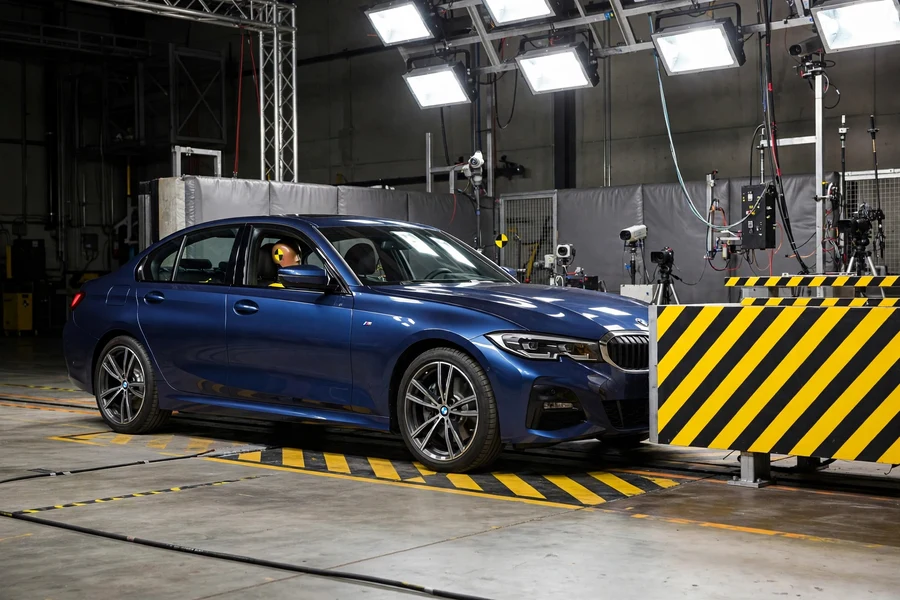
Euro NCAP 2019: five stars, 97% adult occupant
In 2019 Euro NCAP awarded the G20 3 Series five stars, with 97% for adult occupant protection, 87% for child occupants, 87% for vulnerable road users, and 76% for safety assist. BMW’s own release for the result noted that the 97% adult-occupant score was the best result for a large family car since the current test format was introduced — a genuine best-in-class achievement, not just a pass. The score reflects the G20’s structural engineering: a rigid passenger cell, comprehensive airbag coverage, and the driver-assistance systems (autonomous emergency braking, lane support) that feed the safety-assist percentage. One honest footnote: Euro NCAP ratings expire after roughly six to seven years, and this 2019 result expired in January 2026 — it is the correct historical credential for the generation, not a claim that the car would earn five stars under the 2026 protocol.
IIHS: Top Safety Pick (2022), then no award (2026)
The G20’s IIHS history is a case study in moving goalposts. In the early 2020s the car collected the Institute’s honors: it was named a 2022 Top Safety Pick when equipped with the optional adaptive headlights (headlight ratings decide these awards — more below). But when IIHS re-tested the 3 Series for 2026 under its current criteria, the car earned no award, with this scorecard:
| 2026 IIHS test | 3 Series rating |
|---|---|
| Small overlap front | Good |
| Side impact | Good |
| Updated moderate overlap front | Acceptable |
| Headlights | Acceptable |
| Vehicle-to-vehicle front crash prevention | Marginal |
The details matter. The updated moderate-overlap test now scores rear-seat dummy protection: the 3 Series was marked down because the rear dummy’s lap belt moved off the pelvis toward the abdomen — a back-seat issue, not a front-seat one. The vehicle-to-vehicle crash-prevention test — which IIHS introduced for the 2024 award cycle — rated the car Marginal. Neither test existed in its current form when the G20 was designed. The car did not get less safe; the exam got harder. That is the correct reading, and it applies to most cars that “lost” awards in the 2024–2026 cycles.
NHTSA: five stars overall (2022, 2025)
NHTSA’s simpler 5-star program gave the 3 Series five stars overall for both the 2022 and 2025 model years — the federal government’s top rating, covering frontal crash, side crash, and rollover resistance. NHTSA rates by specific model year, so if you are shopping a different year, look it up directly rather than assuming the five-star result carries across.
F30 (2012–2018): five Euro NCAP stars, IIHS Top Safety Pick+
The F30’s safety record was excellent for its era — with the era caveat doing real work in that sentence.
Euro NCAP 2012: five stars
Euro NCAP awarded the F30 five stars in 2012: 95% adult occupant, 84% child occupant, 78% pedestrian protection, 86% safety assist. Strong numbers — but earned under the 2012 protocol, which demanded less of driver-assistance systems and vulnerable-road-user protection than the 2019 protocol the G20 faced. Both cars earned five stars; the G20 earned its five stars against a tougher test. This is why the “compare within era” principle matters: the F30 was among the safest cars of 2012, full stop, and that is the correct way to state it.
IIHS 2017: Top Safety Pick+ (built after November 2016)
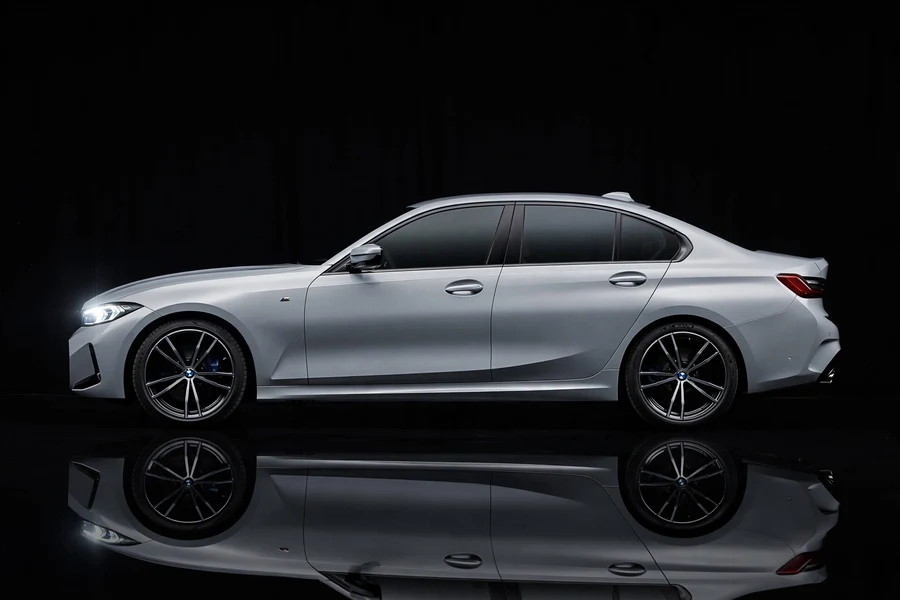
For 2017, IIHS named 3 Series sedans built after November 2016 a Top Safety Pick+ — the Institute’s highest honor. The build-date cutoff is the interesting part: BMW improved the headlights mid-year, and the award depended on it. The optional LED headlights were rated Acceptable while the standard headlights were rated Poor — the same car, two headlight grades, and the award hinged on which ones it wore. This is the clearest possible illustration of the headlight quirk: on modern IIHS scorecards, lights are not a footnote, they are often the deciding factor.
For used F30 shoppers, the takeaway is concrete: a late-build 2017+ car with the LED headlight option carries the stronger safety credential than an otherwise identical car with standard lights. Check the build date (driver’s door jamb sticker) and the headlight type, not just the model year.
Side by side: F30 vs. G20 Euro NCAP scores
The two five-star results deserve a direct comparison — with the protocol caveat front and center:
| Euro NCAP category | F30 (2012) | G20 (2019) | What changed between tests |
|---|---|---|---|
| Adult occupant | 95% | 97% | More demanding side-pole and whiplash assessment |
| Child occupant | 84% | 87% | Stricter child-restraint installation checks |
| Pedestrian / vulnerable road users | 78% | 87% | Added cyclist scenarios and autonomous-braking tests |
| Safety assist | 86% | 76% | 2019 protocol demanded far more assistance tech for points |
The apparent paradox — the G20 scoring lower on safety assist (76%) than the F30 (86%) despite being the newer, better-equipped car — is the protocol change made visible. By 2019 Euro NCAP awarded safety-assist points for a much longer menu of systems (advanced lane support, more demanding autonomous-braking scenarios, driver monitoring), so a higher percentage was harder to earn. The G20’s 76% under the 2019 rules represents more actual assistance technology than the F30’s 86% under the 2012 rules. Percentages are comparable only within the same protocol year — another reason the stars alone never tell the whole story.
The headlight story: why lights decide awards
If one theme runs through the 3 Series’ entire IIHS history, it is headlights. The Institute began rating headlights in 2016, and the results upended award lists across the industry — BMW included:
- 2017 F30: Top Safety Pick+ required the optional LED headlights (Acceptable); the standard headlights were rated Poor. Two grades of light, two different safety credentials, one car.
- 2022 G20: Top Safety Pick required the qualifying optional/adaptive headlights. Same pattern, five years later.
- 2026 G20: headlights rated Acceptable — good enough not to embarrass, not good enough to carry an award under the current criteria.
IIHS headlight ratings measure real nighttime seeing distance and glare — not styling. The practical lesson for shoppers has nothing to do with awards: on a dark road, the difference between Poor and Good headlights is the difference between seeing an obstacle in time and not. When two used 3 Series are otherwise equal, the one with the better headlight option is the safer car in the most literal sense — regardless of what any award says. Check which headlights the car has (the option list or a nighttime test drive tells you), and budget for quality replacement bulbs or assemblies if they are degraded: cloudy, aged headlights perform worse than their original rating.
E90 (2006–2011): reading the old tests honestly
The E90 predates the modern rating era, and honesty requires saying what the old results do and do not prove. Euro NCAP tested the E90 under its pre-2009 protocol — a fundamentally different test from anything applied to the F30 or G20, with different dummies, different scoring, and far less emphasis on driver assistance (which barely existed). Whatever stars the E90 earned then cannot be placed on the same scale as a 2012 or 2019 five-star result. If you want the archived result, Euro NCAP’s own site carries it — but read it as history, not as a comparison.
More useful for E90 owners than any old star rating: the car’s actual safety equipment and its recall status. An E90 with completed Takata airbag campaigns (see our 3 Series recall guide) and intact airbags, seatbelts, and ABS/DSC is meaningfully safer than the same car with open campaigns — a bigger real-world difference than any protocol-era star gap. Safety on a fifteen-year-old car is about maintenance, not the brochure.

How to read a safety rating like an engineer
- Percentages beat stars. Euro NCAP’s category percentages (the G20’s 97% adult, 76% safety assist) tell you far more than the star count. Two five-star cars with 97% and 82% adult scores are not equally protective.
- Check the test year, not just the stars. A 2012 five-star and a 2019 five-star faced different protocols. Newer test year at the same star level generally means a more thoroughly evaluated car.
- Headlights decide IIHS awards. The F30’s 2017 TSP+ turned on optional-vs-standard headlights; the G20’s 2022 TSP required the upgraded lights. When comparing two used cars, the headlight option can matter more than the model year.
- Rear-seat scores are the new frontier. IIHS’s updated moderate-overlap test scores the rear dummy — the G20’s Acceptable came from a rear lap-belt issue. If you regularly carry rear passengers (especially children), weight this test heavily.
- Crash prevention is now half the award. Since 2024, IIHS’s vehicle-to-vehicle crash-prevention test gates the Plus award. A car with perfect crashworthiness but Marginal auto-braking cannot win — which is exactly what happened to the 2026 3 Series.
- Recalls are part of safety. No rating bureau re-tests a fifteen-year-old car, but open campaigns (notably Takata airbags) are live safety issues. Run the VIN in our recall guide alongside any rating comparison.
Where the tests are heading
The 2026 scorecard is a preview of the next decade of safety testing. IIHS’s direction of travel is clear from the tests it has added: rear occupants (the updated moderate-overlap test now scores the back seat, where children sit), crash prevention (vehicle-to-vehicle automatic braking is now an award gate, with pedestrian scenarios expanding), and nighttime visibility (headlight standards keep tightening). Euro NCAP’s direction rhymes: more assistance systems required for points, more vulnerable-road-user scenarios, more driver-monitoring expectations.
For 3 Series shoppers, the implication is straightforward: cars designed before ~2023 will keep “losing” awards they once won, across every brand, because the exams keep adding chapters the cars were never written for. Judge a used car against the test of its day — the G20’s 2019 Euro NCAP result and early-2020s IIHS awards describe a car that was among the safest of its era — and judge a new car against today’s tests. Conflating the two is how good cars get unfair reputations.
What the ratings mean when you are buying used
Translate the scorecards into shopping advice:
- G20 (2019+): the safe default. Five Euro NCAP stars with a 97% adult score, five NHTSA stars, and early IIHS awards. The 2026 “no award” reflects tougher tests, not a worse car — do not let it scare you off a G20.
- F30 (2012–2018): check the build date and headlights. Late-2016+ builds with LED headlights carry the TSP+ credential. Earlier cars are still structurally sound, but the lights are the weaker point.
- E90 (2006–2011): buy on condition and recalls. Old ratings are not comparable; what matters is completed Takata and fire-risk campaigns, working airbags/ABS/DSC, and honest maintenance. Our pre-purchase inspection checklist covers the mechanical side.
- Any generation: verify, don’t assume. Ratings describe the car as tested — with its original equipment, intact. A crashed-and-repaired car, a car with warning lights (see our warning-light guide), or one with open recalls is not the car the bureau tested.
Questions to ask the seller (safety edition)
Ratings describe the car as it left the factory. These questions establish whether the car in front of you still is that car:
- Are there any open recalls? Run the VIN yourself in our recall guide — do not take the seller’s word for it. An open Takata airbag campaign is a safety defect, not a paperwork issue.
- Has it been in a crash? Structural repairs, replaced airbags, or a salvage title void the assumptions behind every rating on this page. A clean history report plus straight panel gaps is the minimum.
- Do all the airbag and ABS/DSC warning lights behave? They should illuminate at startup and extinguish. A warning light that never comes on can mean a bulb was removed to hide a fault — our warning-light guide shows the normal startup sequence.
- Which headlights does it have? On F30 and G20 cars, the headlight option affects both the IIHS credential and real nighttime safety. Confirm the option, not just “LEDs.”
- Are the tires and brakes current? The best crash structure in the world cannot compensate for bald tires in the rain. Check tread depth and pad life during the inspection.
And the meta-advice: the safest 3 Series is the well-maintained one. Tires with tread, brakes with life, suspension that is not worn out, and a driver who respects the difference between Acceptable and Good headlights on a dark road — those decide outcomes more often than the gap between 95% and 97% on a lab scorecard.
Interactive: safety rating explorer
Pick a 3 Series era and a rating system to see the verified results — and what they mean for you.
Quiz: which rating matters most?
Five scenarios. Pick the rating insight that actually helps — the way an engineer would.
1. Two 3 Series both have five Euro NCAP stars, but one scored 97% adult occupant and the other 82%. You should…
2. The 2026 3 Series earned no IIHS award while the 2022 earned Top Safety Pick. The correct conclusion is…
3. A 2017 F30’s IIHS Top Safety Pick+ depended most critically on…
4. Comparing a 2012 five-star Euro NCAP result with a 2019 five-star result, you should remember that…
5. For a 2008 E90, the most meaningful safety check you can do today is…
3 Series safety ratings: five frequently asked questions
Yes — every modern generation has earned top-tier ratings in its era. The G20 holds five Euro NCAP stars (97% adult occupant), five NHTSA stars (2022, 2025), and IIHS Top Safety Pick awards from the early 2020s. The F30 earned five Euro NCAP stars and a 2017 IIHS Top Safety Pick+. Real-world safety on older cars depends more on maintenance and completed recalls than on the original rating.
Because IIHS raised the bar, not because the car got worse. The 2024+ criteria added rear-occupant scoring to the moderate-overlap test (the 3 Series lost points on a rear lap-belt issue) and a new vehicle-to-vehicle crash-prevention test (rated Marginal). The car still scored Good in small overlap and side impact — it simply predates the newest tests.
IIHS (U.S.) rates individual tests Good-to-Poor and awards Top Safety Pick / Top Safety Pick+ under criteria that tighten over time — headlight grades often decide the award. Euro NCAP (Europe) awards 0–5 stars with percentage scores in four categories (adult, child, vulnerable road users, safety assist) under the protocol in force at test time. Compare within each system, never across them.
Enormously at IIHS. The 2017 F30’s Top Safety Pick+ hinged on optional LED headlights (Acceptable) versus standard ones (Poor), and the G20’s 2022 Top Safety Pick required the upgraded headlights. When shopping used, the headlight option on the car can matter more for its safety credential than the model year.
By verified ratings, the G20 (2019+) — five Euro NCAP stars with 97% adult occupant protection, five NHTSA stars, and the most modern crash-prevention hardware. The F30 was among the safest cars of its day (five Euro NCAP stars in 2012, IIHS TSP+ in 2017). For E90-era cars, current condition and completed recalls matter more than any archived rating.