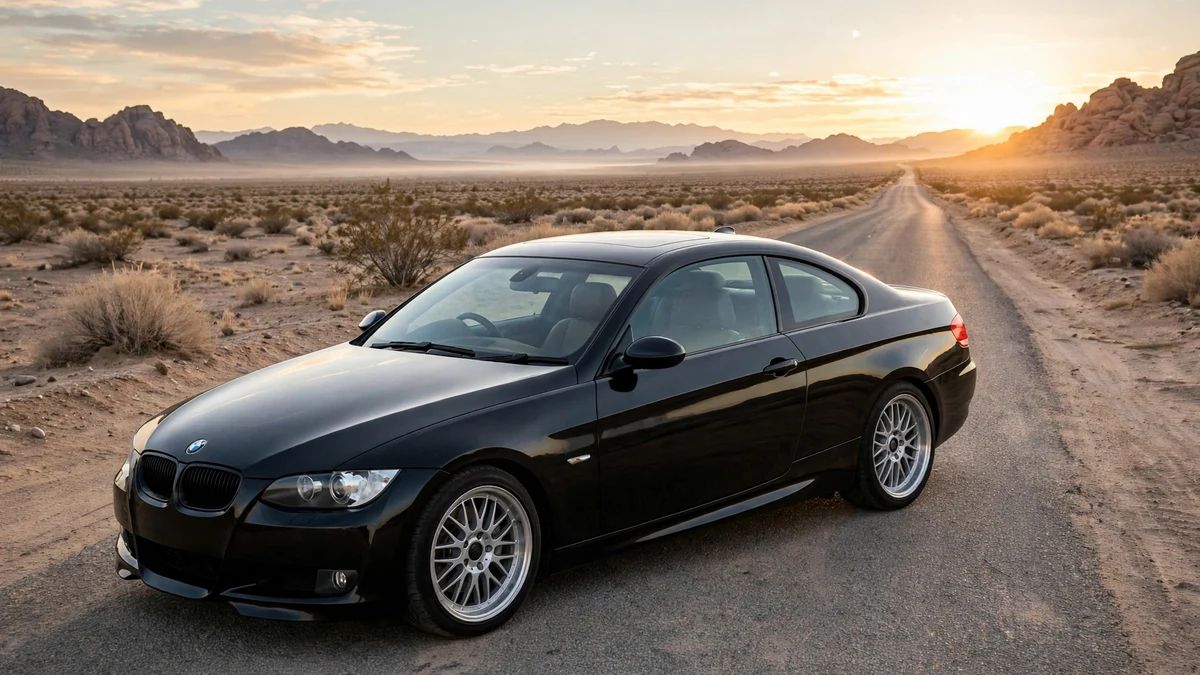
Is the N54 335i Worth the Risk in 2026?
Few engines inspire the mix of lust and fear that BMW’s N54 does — and after two decades of owner experience, we finally have the data to tell which feeling each specific car deserves. The twin-turbo 3.0L inline-six that powered the 2007–2010 335i made 300 horsepower feel effortless, launched a thousand tuning careers, and earned a reputation for expensive failures in roughly equal measure. High-pressure fuel pumps, piezo injectors, wastegate rattle, carbon buildup — the N54’s rap sheet is long, but it’s also one of the best-documented engines in BMW history, which means a smart, systematic buyer can inspect around the risks. This N54 335i guide separates the documented issues from the internet folklore, walks through the exact step-by-step inspection that finds them, and answers the real question honestly: is the N54 335i worth the risk in 2026? For the general used-BMW buying process, pair this with our used 3 Series buying guide — everything here is N54-specific.
Short answer
Is the N54 335i worth the risk? Yes — if you buy on evidence, not hope. The N54’s documented issues (HPFP failures, piezo injector problems, wastegate/turbo wear, intake-valve carbon buildup, electric water pump, charge-pipe failures) are all inspectable and mostly already fixed on surviving cars — a 2007–2010 335i still on the road in 2026 has either had the work done or needs it now, and the service records tell you which. Budget roughly $8,000–$15,000 for a clean, documented car (owner-reported 2026 bands), keep a $2,500–$4,000 first-year reserve for the issues the records don’t show, and get a specialist PPI that includes a boost-leak and code scan. Buy a modified car only with full documentation of the modifications and supporting maintenance. The N54 isn’t unreliable — it’s maintenance-intensive, and those are different things.
In this guide
- The N54 legend: why this engine matters
- N54 335i specs at a glance
- Documented issues: the full rap sheet
- Folklore vs. fact: what the internet gets wrong
- The N54 inspection protocol
- Where to find the good N54s
- What to pay in 2026
- The N54 maintenance schedule
- Ownership costs: the honest math
- Interactive: N54 pre-purchase risk scorer
- Interactive: N54 symptom decoder
- Frequently asked questions
The N54 legend: why this engine matters
Context first: when the N54 debuted in the 2007 335i, it was BMW’s first mass-production turbocharged gasoline engine in decades, and it reset expectations. Two small turbochargers (one per three cylinders) meant near-instant response; direct injection and an aluminum block meant efficiency; 300 hp and 300 lb-ft meant the 335i ran with cars costing far more. The tuning community quickly discovered the N54’s internals were massively overbuilt — the forged crank, strong rods, and closed-deck-adjacent block shrugged off power levels far beyond stock, making the N54 the definitive BMW tuning platform of its era. That reputation cuts both ways for buyers in 2026: the same overbuilt internals that make 400+ hp possible also attracted a generation of owners who modified first and maintained later. Every used N54 falls somewhere on the spectrum from “stock, dealer-maintained, garage-kept” to “three owners of increasing ambition,” and figuring out where your candidate sits is the entire buying process. The N54 was replaced in the regular 335i by the single-turbo N55 for 2011 (the N54 continued in the 335is and a few other models), so the classic N54 335i is specifically the 2007–2010 car.
A note on the 335is (2011–2013): the N54’s swan song got 320 hp and 330 lb-ft (370 with overboost), a standard M sport package, and the 7-speed DCT option alongside the 6-speed manual. It’s the most desirable N54 3 Series — newer, better equipped, and holding value best — but it trades at a real premium and the exact same inspection protocol applies. Don’t let the halo badge make you lazy about the checks; a neglected 335is is just an expensive neglected N54.
N54 335i specs at a glance
| Spec | 335i (2007–2010) | 335is (2011–2013) |
|---|---|---|
| Engine | N54B30 3.0L twin-turbo inline-6 | N54B30 with revised tuning |
| Power / torque | 300 hp / 300 lb-ft | 320 hp / 330 lb-ft (370 with overboost) |
| Transmission | 6-speed manual or 6-speed automatic | 6-speed manual or 7-speed DCT |
| Drivetrain | RWD or xDrive | |
| 0–60 mph | ~5.1 sec | ~5.0 sec |
| Body styles | Sedan (E90), coupe (E92), convertible (E93) | |
| Fuel requirement | Premium (91+ octane) | |
Documented issues: the full rap sheet
Every issue below is documented — BMW service bulletins, warranty extensions, class actions, or overwhelming owner evidence — with owner-reported independent-shop costs. This is the N54’s maintenance curriculum; a car with records showing these done is a car with its risks retired. Read this section as a shopping list: every completed item is value, every missing item is a negotiating point.
High-pressure fuel pump (HPFP). The signature N54 failure. Early pumps failed at high rates, causing long cranks, limp mode, and stalling; BMW extended HPFP warranty coverage to 10 years/120,000 miles on covered cars — now expired by age on every 2007–2010 car. The redesigned pumps are far more reliable, and most surviving cars are on their second or third pump. Check records for HPFP replacement; on the test drive, watch for extended cranking or the “half-engine” limp-mode warning. Owner-reported replacement cost: $600–$1,200.
Piezo fuel injectors. The N54’s index-rated piezo injectors are precise, expensive (roughly $200–$300 each, six of them), and finicky — they must be coded to the DME when replaced, and BMW’s guidance evolved toward replacing them in banks with matching index numbers. Misfires, rough idle, and fuel-trim codes point here. Our N54 injector guide covers the full procedure. Records of injector replacement (especially a full set of high-index injectors) are a major plus.
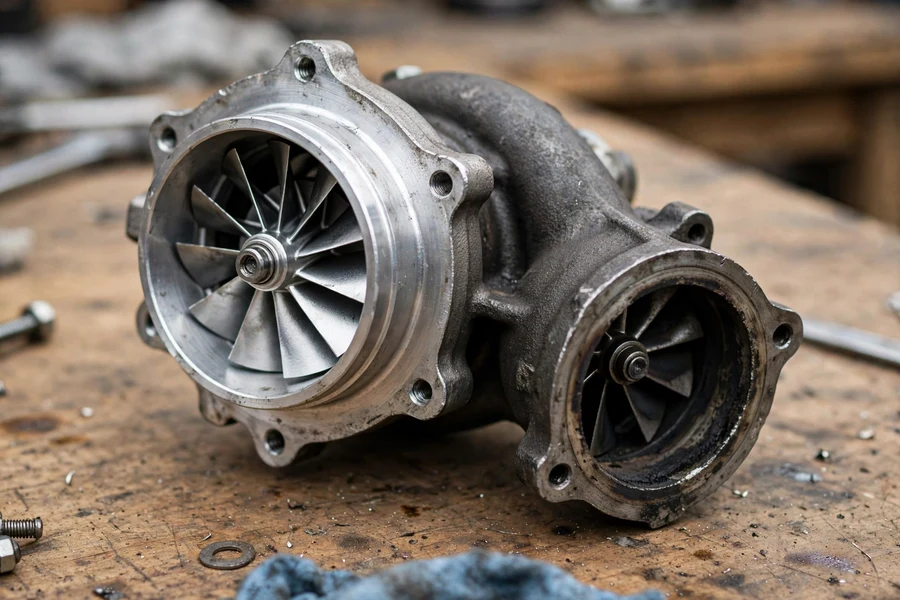
Turbos and wastegates. The twin Mitsubishi turbos’ wastegate actuators wear, producing the infamous wastegate rattle — a metallic clatter on deceleration and light throttle. BMW extended turbo/wastegate warranty coverage to 8 years/82,000 miles on covered vehicles (also expired by age now). Rattle alone is annoying; wastegates stuck or turbos smoking are expensive — replacement turbos run $2,500–$5,000 fitted at an independent shop. Listen carefully on the test drive: our wastegate rattle guide has audio-description cues. Oil smoke on cold start or heavy boost points to turbo seal wear.
Intake-valve carbon buildup. Direct injection means fuel never washes the intake valves, so carbon accumulates — causing misfires, rough idle, and power loss by 60,000–80,000 miles. Walnut-shell blasting ($400–$700) restores them; it’s maintenance, not a defect, and every direct-injected BMW needs it. See our walnut blasting guide. Ask when it was last done.
Electric water pump and thermostat. The N54’s electric pump fails without much warning, typically between 60,000–100,000 miles — and failure means pull over immediately, because these engines don’t tolerate overheating. Preventive replacement every 60,000–80,000 miles is the community standard. Owner-reported cost: $800–$1,200. Our water pump guide covers the procedure.
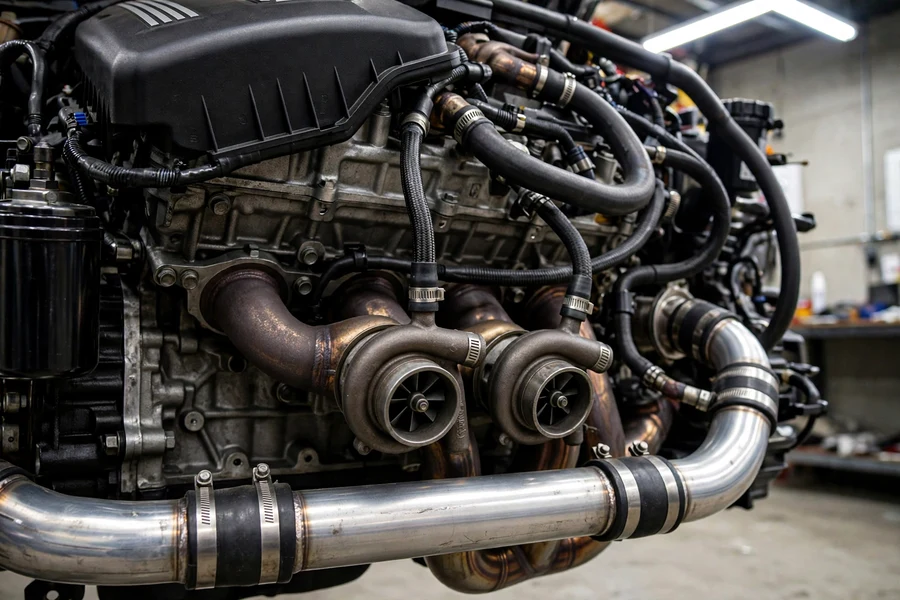
Charge pipe. The stock plastic charge pipe cracks under boost — especially on tuned cars — causing sudden power loss and underboost codes. The permanent fix is an aluminum aftermarket pipe ($300–$600 fitted). If the car still has the stock plastic pipe, it’s a “when” not “if” item.
Oil filter housing gasket and belt ingestion. The OFHG seeps with age (roughly $400–$700 to fix), and the N54 has a specific nightmare scenario: oil from the leak degrades the serpentine belt, which can shred and get pulled behind the crank pulley — destroying the front main seal and, in bad cases, the engine. Fix OFHG leaks immediately; this is the one N54 leak that can total the car. Our oil leak guide covers diagnosis.
Valve cover and gasket. The plastic valve cover warps and cracks with heat age; the gasket seeps. Budget $500–$900 for the assembly at an independent shop. Often done alongside other top-end work.
Ignition coils and spark plugs. Tuned cars eat coils; stock cars need plugs every 40,000–60,000 miles. Misfires under boost are coils until proven otherwise — cheap and easy, roughly $80–$120 per coil.
Folklore vs. fact: what the internet gets wrong
“The N54 is unreliable.” The N54 is maintenance-intensive, not unreliable. Its issues are documented, predictable, and fixable — the opposite of the random failures that define truly unreliable engines. Owners who do the maintenance describe the N54 as a reliable car; owners who don’t describe it as a nightmare. Both are telling the truth about their own cars.
“All N54s need new turbos.” No. Wastegate rattle is common; actual turbo failure is not. Many N54s run their original turbos past 150,000 miles. Rattle is a negotiating point, not an automatic $4,000 bill — though you should price the possibility.
“Never buy a tuned N54.” More precisely: never buy a tuned N54 without documentation. A car with a reputable tune, supporting modifications (intercooler, charge pipe, plugs), and maintenance records from an owner who understood the platform can be a better car than a neglected stock one. A car with a cheap tune, no records, and bald tires is someone else’s abandoned project. The tune isn’t the problem; the owner is.
“The N55 is always the better buy.” The N55 (2011+ 335i) fixed the HPFP and injector issues and is genuinely lower-maintenance. But it gives up the N54’s twin-turbo response and tuning headroom, and clean N54 cars often price lower. It’s a trade-off, not a hierarchy — buy the engine that matches your tolerance for maintenance involvement. See our 328i vs. 335i guide for the broader 3 Series decision.
The N54 inspection protocol
Do this in order, and do all of it. The N54 rewards systematic inspection because every major issue has a tell.
1. Records first. Demand the full history and look specifically for: HPFP replacement, injector work (index numbers), turbo/wastegate work, water pump and thermostat, walnut blasting, OFHG and valve cover, charge pipe, and oil change intervals. A folder of receipts for these is worth thousands; their absence prices the car accordingly.
2. Cold start. Start the engine stone cold. Listen for wastegate rattle (metallic clatter, especially on light throttle and deceleration), watch the exhaust for blue smoke (turbo seals), note extended cranking (HPFP), and feel for rough idle (injectors, carbon, coils).
3. Code scan. Bring a BMW-capable scanner or have the PPI include it. Misfire codes, fuel-trim codes, underboost codes, and shadow codes the seller “cleared last week” all tell stories. Check that the monitors are set — cleared codes with unset monitors means someone reset the light for your visit.
4. Boost test. On the test drive, do several full-throttle pulls through the gears. Power should build smoothly to redline with no stuttering, no half-engine warnings, and no smoke in the mirror. Any limp mode, misfire under boost, or sudden power loss is a walk-away until diagnosed.
5. Leaks and heat. OFHG area, valve cover seam, oil pan, and the serpentine belt’s condition (oil-soaked belt = fix the leak yesterday). Coolant level and color in the expansion tank. After the drive, check for the smell of burning oil and look under the car.
6. Modifications audit. Identify every modification: tune (which one, who installed it), downpipes, intercooler, intake, charge pipe, suspension. Reputable parts with records are fine; eBay parts and mystery tunes are not. Check that emissions equipment is intact — deleted cats cause inspection failures and resale pain.
7. Specialist PPI. Non-negotiable. An independent BMW specialist puts it on a lift, scans it properly, checks boost for leaks, and gives you the real deferred-maintenance number. The $200 or so is the cheapest money in N54 ownership.
What to pay in 2026
N54 335i pricing reflects the market’s understanding of the maintenance curve: documented cars command real premiums, and undocumented cars are cheap for a reason.
| Tier | 2026 band* | What it looks like |
|---|---|---|
| Rough / needs work | ~$4,000–$7,000 | High miles, needs turbos or injectors, maybe modified poorly — project only |
| Average driver | ~$7,000–$11,000 | Honest car, some records, will need $2,000–$4,000 in the first year |
| Clean documented | ~$11,000–$16,000 | Records for the big jobs, stock or properly modified, ready to enjoy |
| Exceptional / low-mile | ~$16,000–$22,000+ | Sub-70k miles, full history, collector-grade — increasingly rare |
*Approximate owner-reported US bands; coupes and manuals carry premiums, convertibles and xDrive vary by market. The pricing logic: a $7,000 car needing $5,000 in deferred maintenance is a $12,000 car with extra steps and no warranty on the work. The $13,000 car with the receipts is usually the cheaper car. Modified-car pricing: quality modifications with records add modest value to the right buyer; they add nothing to a dealer’s offer and can subtract value for conservative buyers. Never pay a premium for modifications you can’t verify. 335is premium: the 2011–2013 335is (N54 with 320 hp, DCT option) trades above equivalent 335is — it’s the collector pick of the N54 family, but the same inspection rules apply.
Where to find the good N54s
The best N54s rarely sit on generic used-car lots — they trade within the enthusiast community: marque club classifieds, enthusiast auction sites, and BMW specialist dealers who know what a documented car is worth. Set up saved searches with strict filters (manual transmission, coupe or sedan, your region plus shipping distance) and be ready to move fast — clean, documented, stock-ish cars sell within days. When evaluating sellers, prefer long-term owners with folders of receipts over dealers who “just got it in” and flippers with fresh detail jobs. Ask every seller the same opening questions: what’s been replaced (HPFP, injectors, turbos, water pump, walnut blast)? Who did the work? Is it tuned, and by whom? Why are you selling? The answers — and how quickly and specifically they come — tell you most of what the PPI will confirm. And budget travel: the right N54 500 miles away beats the wrong one across town, every time.
Ownership costs: the honest math
Budget roughly $2,000–$3,500 per year in maintenance and repairs at an independent BMW specialist for a sorted car (owner-reported) — more in the first year while you baseline it, less once the big jobs are done. DIY owners with the N54’s enormous knowledge base spend roughly half. The cost drivers are the rap sheet above: injectors, turbos, water pump, gaskets, walnut blasting every 60,000–80,000 miles. Fuel is premium at roughly 20 mpg combined (EPA, fueleconomy.gov) — the N54 is not an economy engine. Insurance reflects the performance: get a quote before buying, especially if you’re under 30. The honest math that makes the N54 work: buy the documented car at the fair price, keep the maintenance reserve funded, and the cost per smile is the lowest in the BMW world. Buy the cheap car with no records, and the math inverts — the “bargain” 335i is the most expensive BMW you can buy.
Beyond maintenance, budget the running costs honestly. Fuel: premium only, at roughly 20 mpg combined (EPA, fueleconomy.gov) — 12,000 miles a year means about 600 gallons of premium, roughly $2,500–$2,900 annually at typical prices, and tuned cars drink more. Insurance: the 335i insures as the performance car it is — meaningfully more than a 328i, especially for younger drivers; get a quote before you buy. Tires: the staggered performance rubber these cars wear runs $1,000–$1,600 a set and lasts 20,000–30,000 miles with enthusiastic driving. None of this is surprising for a 300-hp sports sedan, but buyers coming from four-cylinder cars routinely underestimate the fuel and tire bills — the purchase price is the cheapest part of N54 ownership.
The N54 maintenance schedule
BMW’s factory intervals were written for lease returns; the N54 community’s schedule is written for 200,000 miles. Engine oil: every 5,000 miles with BMW LL-01-approved oil — non-negotiable on a twin-turbo direct-injection engine; the turbos cook oil, and clean oil is turbo life. Spark plugs: every 40,000 miles stock, every 20,000–25,000 miles tuned. Ignition coils: replace as they fail, but tuned cars should carry a spare. Coolant: every 4 years with BMW blue coolant; water pump and thermostat preventively every 60,000–80,000 miles. Walnut blasting: every 60,000–80,000 miles. Transmission: fluid and filter every 60,000 miles (both the manual’s gear oil and the automatic’s fluid — “lifetime” means the lifetime of the warranty). Differential: every 50,000–60,000 miles. Charge pipe: replace the stock plastic pipe with aluminum once, permanently. Intake filters, cabin filters, brake fluid: standard intervals. Follow this and the N54’s rap sheet becomes a maintenance checklist instead of a series of emergencies — which is exactly how the high-mile N54 owners you read about got there.
Interactive: N54 pre-purchase risk scorer
Score the specific 335i you’re considering across the six factors that determine N54 ownership pain. The scorer weights service history and modification quality heaviest — because on the N54, the previous owner matters more than the odometer.
N54 pre-purchase risk scorer
Mileage bands below are built from this guide’s service intervals.
Interactive: N54 symptom decoder
Hearing something odd on a test drive — or living with it already? Pick the symptom for the most likely N54 causes, typical owner-reported costs, and how urgently it needs attention.
Symptom decoder
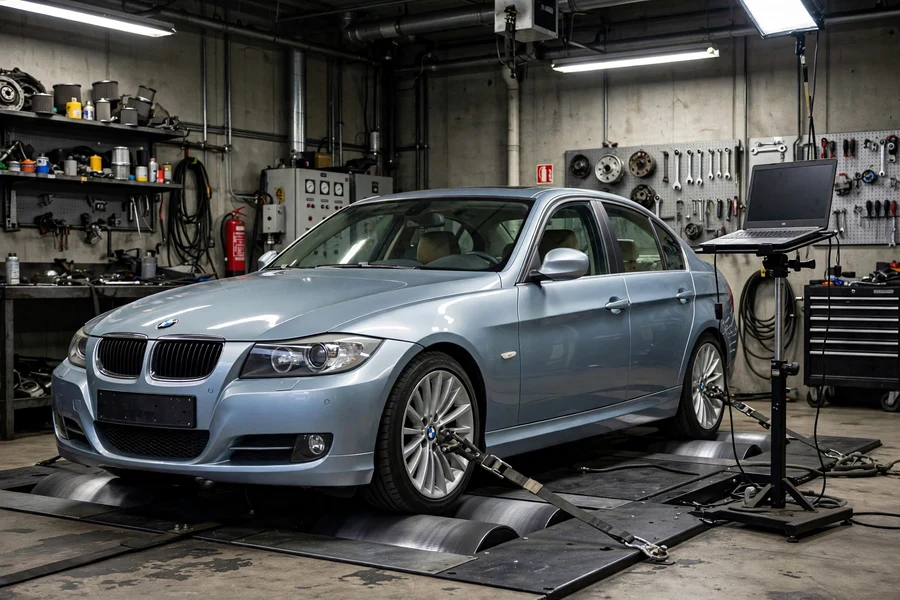
The N54 335i is the enthusiast’s bargain of the BMW world — 300 twin-turbocharged horsepower for the price of a used Camry, with a documented maintenance curriculum instead of mysteries. The risk is real but it’s priced in: the market discounts undocumented cars precisely because the work is known, and rewards documented ones because the work is done. Run the risk scorer above on your candidate, decode any symptoms before you negotiate, get the specialist PPI, and keep the first-year reserve funded. Do that, and the N54 isn’t a gamble — it’s the best performance-per-dollar BMW ever sold, a twin-turbo inline-six with supercar-baiting tuning headroom for the price of a used family sedan. Skip it, and you’ll fund someone’s forum horror story. The choice, as always with the N54, is the owner’s — which now means you.
Frequently asked questions
Is the N54 engine reliable?
It’s maintenance-intensive rather than unreliable: the issues (HPFP, injectors, wastegates, water pump, carbon buildup) are documented, predictable, and fixable. Owners who maintain the car describe it as reliable; the horror stories come from deferred maintenance and poor modifications. Service records are the reliability predictor — they tell you whether the previous owner did the maintenance the engine demands.
What are the most common N54 problems?
High-pressure fuel pump failures, piezo injector failures, wastegate rattle and turbo wear, intake-valve carbon buildup, electric water pump failure, cracked charge pipes, oil filter housing gasket leaks (with belt-ingestion risk), and valve cover leaks. All are well-documented with known fixes and owner-reported costs in this guide — and critically, all are inspectable before purchase, which is what separates the N54 from genuinely unpredictable engines.
Should I buy a modified N54 335i?
Only with full documentation. Quality modifications (reputable tune, intercooler, aluminum charge pipe, fresh plugs/coils) with maintenance records can make a better car than a neglected stock one — the supporting mods show the owner understood the platform. A mystery tune with no records is the classic abandoned-project warning — walk away no matter how tempting the price, because you’re buying someone’s deferred problems at full retail.
How much does it cost to maintain an N54 335i?
Roughly $2,000–$3,500 per year at an independent BMW specialist for a sorted car (owner-reported), more in the first baselining year. DIY owners spend roughly half thanks to the enormous knowledge base. Keep a $2,500–$4,000 reserve in year one for the issues the records don’t show.
N54 vs. N55: which 335i should I buy?
The N55 (2011+, single turbo) is lower-maintenance — it fixed the HPFP and injector issues. The N54 (2007–2010) offers twin-turbo response and far greater tuning headroom, usually at lower purchase prices. Buy the N55 for easier ownership, the N54 for character and tuning potential — with the inspection discipline in this guide.