Is Your BMW’s DISA Valve Dead? 7 Symptoms & the Fix
Short answer: BMW DISA valve failure on the N52 is usually a broken or worn flap on one of the two electric intake valves in the 3-stage manifold. The signature is a rattle between roughly 1,800 and 3,000 RPM, a noticeable loss of low-end torque, and lean codes (P0171/P0174) or BMW-specific codes 2AA8/2AA9/2AAB/2AAC. The large outer valve can be reached with the manifold in place; the small inner one can’t, so the standard repair replaces both — revised BMW units with an improved shaft design — for roughly $600–$1,000 at an independent shop or $300–$650 in parts for DIY.
In this guide
- What the DISA valves do
- The N52’s two DISA valves
- Which 3 Series have them
- How DISA valves fail
- BMW DISA valve failure symptoms
- Fault codes: 2AA8–2AAC and lean codes
- Diagnosing a bad DISA: four tests
- DISA valve symptom checker
- Repair options: revised units, rebuild kits, new manifold
- DIY difficulty and repair costs
- While the manifold is off
- DISA valve FAQ
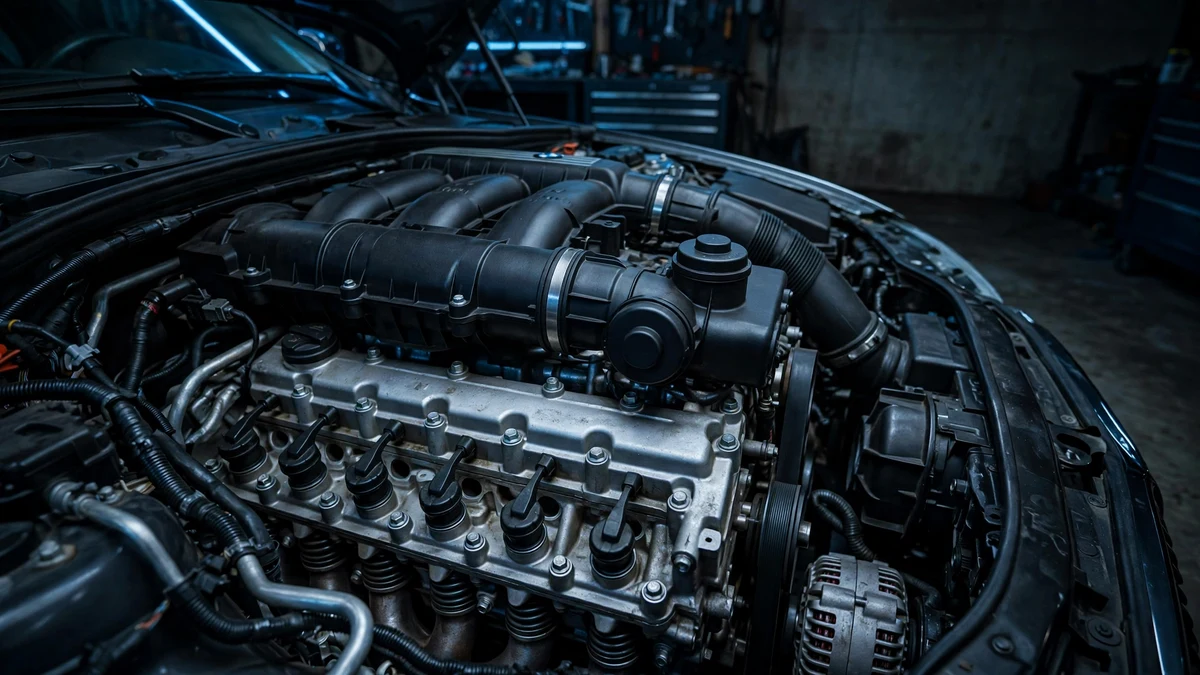
The N52 is one of BMW’s most respected engines — naturally aspirated, magnesium-block, and generally durable well past 150,000 miles. But it has a known weak link hidden inside its intake manifold: the DISA valves. These are the electrically actuated flaps that make the manifold “3-stage,” reshaping the intake runners on the fly to trade between low-RPM torque and high-RPM power. When one fails, the car doesn’t die. It just gets slower, rattlier, and thirstier — a decline so gradual many owners mistake it for normal aging.
Unlike a coil or a sensor, DISA failure has a physical, mechanical dimension: a flap with a worn pivot pin that can break free inside the manifold — and in documented owner cases, get sucked into a cylinder. This guide covers both N52 DISA valves, how each fails, the real symptoms and fault codes, the tests that separate DISA failure from its many mimics, and the repair economics: revised BMW units versus rebuild kits, dealer versus independent versus DIY.
What the DISA valves do
DISA stands for Differenzierte SAuganlage — “differentiated intake system.” The physics is old: intake air has inertia, and runner length determines at which engine speed the pressure wave arrives at the intake valve at the right moment. Long runners tune the wave for low-RPM torque; short runners for high-RPM horsepower.
Most engines pick one runner length as a compromise. The N52’s 3-stage manifold changes the runner geometry in three steps across the rev range. The DISA valves are the actuators that make this happen: two electrically driven flaps inside the manifold, commanded by the DME (engine control unit), that open and close at programmed RPM thresholds to connect or isolate different runner paths. Below roughly 2,000 RPM, the flaps set the manifold for maximum runner length (torque); as revs climb, they switch the geometry in stages, ending with the shortest path for peak power near redline.
This is why DISA failure feels the way it does. A failed flap stuck in the wrong position — or fluttering on a worn pivot — means the manifold is tuned for the wrong RPM. The engine runs and idles, but the resonance tuning is gone: low-end torque falls off, throttle response gets lazy, and fuel economy drops as the DME compensates for airflow the geometry no longer matches.
The N52’s two DISA valves
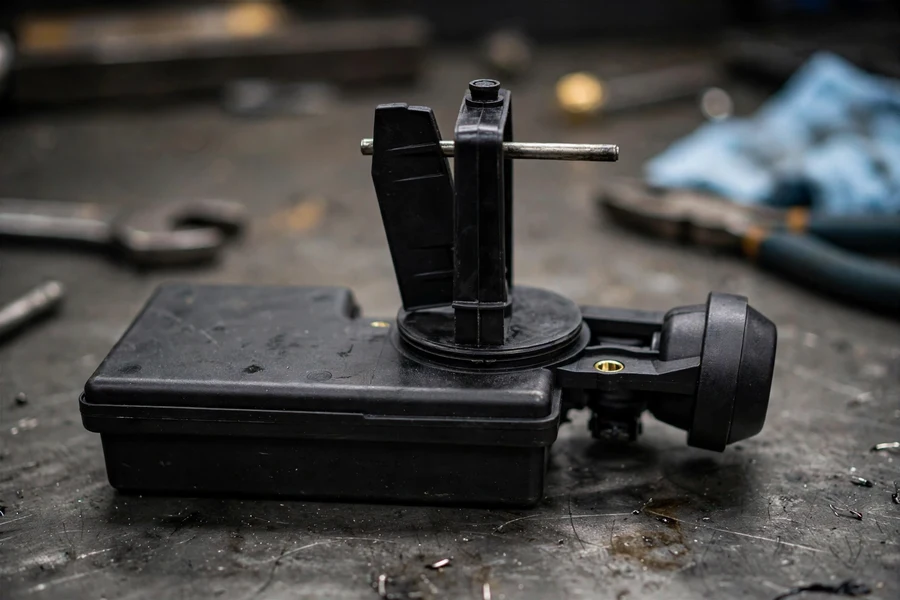
There are two, and they’re not interchangeable. The large (outer) DISA mounts on the manifold’s side and can be removed with the manifold in place. The small (inner) DISA lives inside the manifold — accessible only after removal. Both are electrically actuated by the DME (unlike the M54’s vacuum DISA): adjustment unit 1 (large), unit 2 (small).
| Valve | Position | What it controls | Access |
|---|---|---|---|
| Large (outer) DISA | Side of the intake manifold | The main runner-length switch — connects the two plenum halves, dominating mid-range torque | Removable with the manifold in place |
| Small (inner) DISA | Inside the manifold, at the runner junction | The fine-tuning stage — the third runner-geometry stage, affecting upper-mid-range breathing | Manifold removal required |
At rest unpowered, the large flap sits closed and the small flap open — a useful bench-test reference. The DME commands each flap and checks the response; a mismatch stores a self-diagnosis fault (the 2AAB/2AAC codes below).
Which 3 Series have them
Not every N52 has a 3-stage manifold — the dual-DISA setup was reserved for high-output variants. Single-stage cars have no DISA valves to fail. Fitment below is well-established owner knowledge, not BMW-published spec:
| Model | Engine | DISA? |
|---|---|---|
| E90 330i (2006) | N52B30, 255 hp | Yes — 3-stage stock. The dual-DISA manifold other N52 cars get upgraded with. |
| E90 325i (2006) | N52B30, 215 hp | No — single-stage stock. The 3-stage swap is a popular mod, but these have no DISA valves from the factory. |
| E90/E92/E93 328i (2007–2013) | N52K, 230 hp | Mostly no — single-stage stock. Exception: SULEV N51 cars (emissions-strict states) have the 3-stage dual-DISA manifold. |
| E90 323i (Canada) | N52B25, 2.5L | No. The 2.5L N52 never got the 3-stage manifold. |
Unsure what you have? Don’t order parts on a guess: pop the engine cover and look at the driver’s side of the intake manifold for the large round DISA housing. No housing, no DISA.
How DISA valves fail
DISA failure is rarely electronic — it’s mechanical wear in a hot, vibrating plastic housing. Four failure modes, in rough order of frequency:
| Failure mode | What’s happening | Typical mileage |
|---|---|---|
| Flap pivot pin wear / breakage | The pivot pin works loose from vibration; the flap flutters (rattle), then breaks free. This is the failure that drops debris into the intake. | 80,000–150,000 miles |
| Actuator motor / electronics failure | The motor or circuit board dies — often from oil intrusion. The DME gets no response and sets a self-diagnosis code. No rattle. | 100,000+ miles |
| Stuck flap (carbon/varnish) | Deposits gum the flap in position — often found half-open on removal. The DME’s plausibility check catches it. | High mileage |
| Housing o-ring / seal leak | The seal hardens and leaks unmetered air — lean codes and rough idle, no rattle. | 100,000+ miles |
Now the part everyone worries about: yes, the pin and flap pieces can be ingested by the engine. When the pivot pin works fully loose or the flap breaks, the pieces sit in the intake tract with six cylinders’ worth of airflow pulling past them. Owner reports on E90post document cases where a loose DISA pin was suspected of damaging a cylinder — and BMW eventually revised the part with an improved shaft design precisely because the original could break off into the manifold. So the risk is real and documented, not forum folklore.
But keep the proportions honest: the common outcome of DISA failure is a rattle and lost torque, not a destroyed engine. Most failed valves announce themselves with months of audible warning — the classic 1,800–3,000 RPM rattle — before anything breaks free. Owners who pull the manifold for another job and find a floating flap are the rule; ingested-pin engine damage is the rare exception, and it’s concentrated in the early, unrevised part numbers. The takeaway isn’t panic — it’s that a DISA rattle is a “diagnose this month” job, not a “drive on it for two years” job.
BMW DISA valve failure symptoms
DISA symptoms split into mechanical (noise) and performance (torque, idle, economy). A dead actuator motor makes no noise at all — but the classic failure has both.
| Symptom | What you notice | How specific to DISA |
|---|---|---|
| Rattle at 1,800–3,000 RPM | A buzzing rattle from the intake under light-to-moderate throttle in the mid-range, fading above or below it — the flap fluttering on its worn pivot. | Very — this RPM-banded intake rattle is the DISA signature. Few other faults behave this way. |
| Loss of low-end torque | The car feels flat pulling away and lazy merging; the N52’s low-RPM shove is gone. Owners consistently report the car has “new life” after replacement. | High — especially paired with the rattle. |
| Hesitation uphill / under load | The engine feels breathless on grades; bouncy, unstable RPM at stoplights. | Moderate — VANOS and fuel issues can do this too. |
| Rough or bouncing idle | The RPM needle wavers at a stop. Worse with a leaking DISA seal (unmetered air) than with a worn flap. | Moderate — vacuum leaks, VANOS, and Valvetronic share this symptom. |
| Worse fuel economy | A gradual MPG decline as the DME compensates for wrong manifold geometry. One owner documented 18.8 to 20.1 MPG after replacing a stuck small DISA — a single data point, but directionally consistent. | Low on its own — only meaningful alongside other symptoms. |
| Check engine / SES light | Solid (not flashing) light with lean or DISA-specific codes — see our check engine light causes guide. | High once the code is DISA-specific. |
The rattle is both the best diagnostic clue and the most misattributed symptom. It’s not lifter tick (idle, cold), not VANOS rattle (startup or diesel-like idle clatter), and not an accessory pulley (which tracks engine speed linearly, not a mid-range band). The DISA rattle lives in a specific RPM window because the flap only flutters when airflow hits the resonance that excites its loose pivot. If your rattle has an RPM address, DISA moves to the top of the suspect list.
Fault codes: 2AA8–2AAC and lean codes
A scan is the fastest way to confirm DISA failure — with the right codes and tool. Generic SAE codes show the consequences (lean mixture); BMW hex codes name the cause but need a BMW-capable tool (see our OBD2 scanner guide). Definitions below are from BMW DME fault documentation as reported by the community:
| Code | Meaning | What it tells you |
|---|---|---|
| 2AA8 | Variable intake unit, adjustment motor: input signal | Electrical fault in the large (outer) DISA’s motor circuit — wiring, connector, or motor. |
| 2AA9 | Variable intake unit 2, adjustment motor: input signal | Same, for the small (inner) DISA — community experience ties this to the inner valve. |
| 2AAA | Variable intake unit, plausibility | Commanded vs. actual flap position disagree — classic for a stuck or carbon-gummed flap. |
| 2AAB | Variable intake unit, self-diagnosis | The DME’s self-test of the large DISA failed — flap didn’t respond as commanded. |
| 2AAC | Variable intake unit 2, self-diagnosis | Self-test failure on the small (inner) DISA — owner reports consistently tie this code to the inner valve. |
| P0171 / P0174 | System too lean, bank 1 / bank 2 | Unmetered air — a leaking DISA seal is one candidate among several. Never condemn a DISA on lean codes alone. |
| P1083 / P1085 | BMW-specific lean codes, fuel control banks 1 / 2 | BMW’s own lean codes, commonly reported with DISA seal leaks. Same caveat as P0171/P0174. |
The DISA-specific codes often appear as shadow codes — stored without lighting the dash. Owners have pulled 2AAC from cars that “seem to run fine,” then found a dead inner DISA on the actuation test. Lean codes with the mid-range rattle is a strong combination: the rattle says mechanical wear, the lean codes say the seal leaks too.
Diagnosing a bad DISA: four tests
Diagnose in this order — each test is cheap, and you stop at the first definitive answer. Don’t start by buying parts.
Test 1: The RPM-band listening test
Drive with the windows up and the radio off. Roll into the throttle gently from about 1,500 RPM in a higher gear and listen for a buzzing rattle that appears around 1,800 RPM, peaks near 2,500, and fades by 3,000+. A rattle strictly confined to this band — not at idle, not at redline — is the single best free indicator of flap pivot wear.
Test 2: The scan
Read the DME with a BMW-capable scanner — a generic reader misses shadow codes. Look for 2AA8–2AAC (near-definitive) or lean codes (suggestive only). 2AAC points to the inner valve, 2AAB to the outer. Clear, drive a full warm-up cycle through the 1,800–3,000 RPM band under load, and rescan.
Test 3: The actuation test (the definitive electrical test)
BMW’s ISTA software — and some aftermarket BMW tools like the Foxwell NT510/520 — can command each DISA valve to cycle. Engine off, ignition on, listen: each valve should produce a crisp click-clack. A silent valve is dead; a sluggish one is dying. Crisp actuation plus a rattle means the pivot is worn even though the motor works.
Test 4: The physical inspection
Pull the large DISA and grab the flap: it should move smoothly with no lateral play. Shake the unit — any internal rattle means the pivot is worn. Confirm the pivot pin is still present; if it’s missing, stop and find it before it finds a cylinder. The small DISA needs manifold removal to inspect — which is why both units get replaced once you’re that deep.
Run one differential before committing: VANOS and Valvetronic problems share the low-end torque loss and rough idle but don’t produce the RPM-banded intake rattle, and they set their own codes (2A82/2A87 family). Torque loss and rough idle with no rattle and no DISA codes means looking at VANOS and Valvetronic first. A leaking valve cover gasket is another rough-idle suspect that shares the lean-code side of the picture.
DISA valve symptom checker
Four questions — noise, codes, which N52, actuation test. It doesn’t replace the physical inspection, but it stops most wrong-part purchases.
Is it the DISA valves?
Four questions about what you hear and what the scan says.
Answer all four questions and your verdict appears here.
A screening aid, not a diagnosis. When in doubt, the physical inspection (Test 4 above) has the final word.
Repair options: revised units, rebuild kits, new manifold
The repair is conceptually simple — the labor is the manifold removal, and everything after is bolt-in. Three approaches, most to least advisable:
Option 1: Replace both DISA units with the revised BMW parts (recommended)
This is what dealers and good independents do. BMW superseded the originals with revised part numbers featuring an improved flap shaft design — aimed at the break-off failure. Revised units rarely show the classic wear even at high mileage. The large and small units are different parts; order for the correct position.
Why both, even if only one failed? The small inner valve is only reachable with the manifold off, and manifold removal is the entire labor cost. The surviving valve has lived the same heat cycles, oil vapor, and vibration as the failed one. Replacing one now and paying the full labor again when the other fails is the most expensive way to do this job. The only exception: a young large (outer) valve with a clear one-off cause can be swapped in place without touching the manifold.
Option 2: Aluminum rebuild kits (budget route)
Aftermarket aluminum flap-and-pin rebuild kits replace the wear-prone plastic internals, typically ~$80 per valve. Owner reports are mixed-positive: they fix the rattle when the actuator motor is healthy. Caveats: a kit can’t save a dead motor, and you reuse the old electronics and seal. Crisp actuation test + mechanical failure = the kit legitimately halves the parts bill. Dead motor = buy the complete unit.
Option 3: Full manifold replacement (only if damaged)
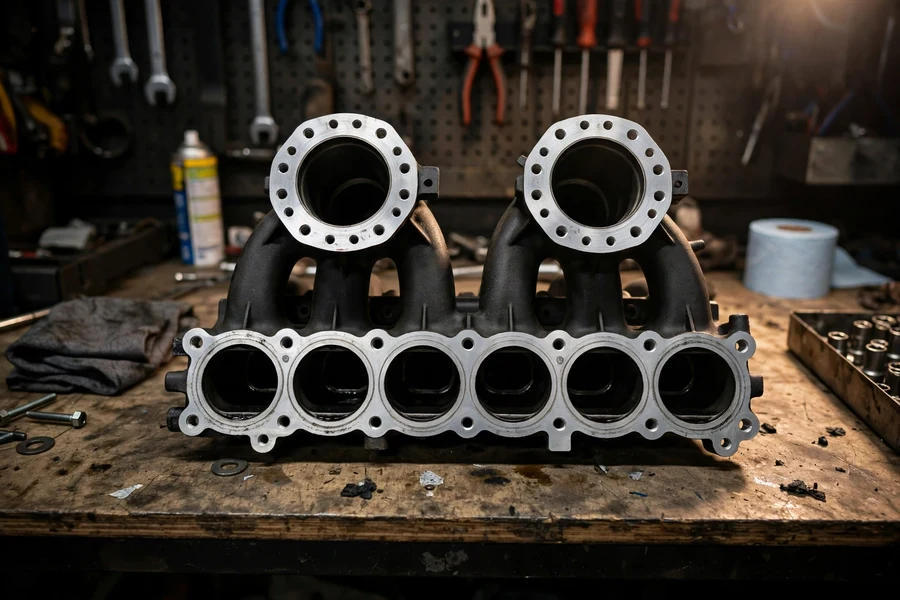
A complete new or remanufactured 3-stage manifold is the answer only when the manifold itself is compromised: a broken flap scored the housing, bores are damaged, or gasket surfaces leak. It’s the most expensive option by far and overkill for a straightforward valve failure.
Whichever option you choose, replace the intake manifold profile gaskets and throttle body seal while it’s apart. They’re cheap and already in your hands — reusing heat-flattened gaskets is how a DISA job becomes a lean-code comeback a month later.
DIY difficulty and repair costs
Honest difficulty: 6 out of 10 — intermediate/advanced, but not because of the valves. Swapping the units is trivial — a few bolts and a connector each. The job is the manifold removal: throttle body, EVAP and fuel vapor lines, crankcase ventilation hoses, a dozen connectors, hidden fasteners under the cowl. First-timer: half a day. Repeat: under three hours.
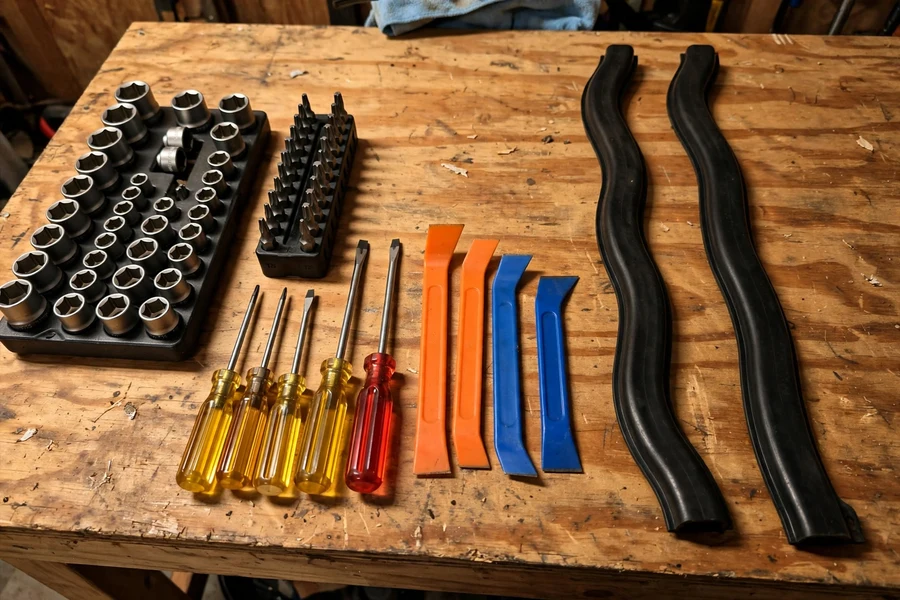
What makes it a 6: the plastic manifold and brittle decade-old hoses punish impatience. Crankcase vent hoses snap if forced — have replacements on hand. Label every connector, stuff rags into the open intake ports the moment the manifold lifts, and torque fasteners to spec — overtightening cracks the flange.
One safety-critical step: when you remove each DISA unit, verify the pivot pin is still in it. A missing pin is somewhere in the intake tract — find it before reassembly. Installing a new valve over a loose pin in the manifold is exactly how ingestion damage happens.
| Route | Parts | Labor | Typical total |
|---|---|---|---|
| Dealer | Two revised OE DISA units (~$400–$700) | 3–4 hours at dealer rates | $1,000–$1,600 |
| Independent specialist | Two revised OE or quality OEM-supplier units (~$300–$600) | 2.5–4 hours at indie rates | $600–$1,000 |
| DIY, both revised units | Two units + gaskets + throttle seal | Your Saturday | $300–$650 |
| DIY, rebuild kits | Two aluminum rebuild kits + gaskets | Your Saturday + bench time | $200–$300 |
These are typical US ranges for 2026, assembled from owner-reported invoices and current parts pricing — not quotes. The ratio that holds everywhere: the parts are the minority of a shop bill; the manifold removal is the majority. That’s the economic argument for doing both valves and every gasket in one visit.
While the manifold is off
Manifold-off access on the N52 is rare and valuable. At minimum, do the gaskets (profile gaskets, throttle body seal). Inspect the crankcase ventilation hoses you disconnected and replace any that are brittle — they cause the lean codes and oil consumption N52s are known for. Clean the throttle body while it’s in your hand.
Two bigger considerations: the starter motor lives under the intake manifold on the N52 — if cranking is getting lazy past 100,000 miles, this is the cheapest that job will ever be (see our starter motor failure guide). And if spark plugs are due, they’re right there — our spark plug replacement guide has the N52 intervals. Fold it all into your 3 Series maintenance schedule.
DISA valve FAQ
Can I drive with a bad DISA valve on my BMW?
Yes, for a while — a failed DISA valve won’t strand you. The car runs, just with less low-end torque, worse economy, and (usually) a rattle. The reason not to ignore it indefinitely is the mechanical failure mode: a worn flap pivot can eventually break and drop the flap or its pin into the intake, and documented owner cases show ingested pins damaging cylinders. Treat the rattle as a diagnose-this-month job.
Should I replace one DISA valve or both?
Both — with one exception. The small inner valve is only reachable with the manifold removed, and that’s the entire labor cost. The surviving valve has endured the same heat and vibration as the failed one. The exception: a young large (outer) valve with a clear one-off failure can be swapped in place without removing the manifold.
Are the revised BMW DISA valves actually better?
BMW superseded the originals with revised part numbers featuring an improved flap shaft design — aimed squarely at the break-off-into-the-manifold failure. Owner and specialist experience reports revised units rarely show the classic pivot wear even at high mileage. Confirm you’re getting the current revision, not old-stock originals.
Do aluminum DISA rebuild kits work?
For purely mechanical failure, yes — owners report the aluminum flap-and-pin kits (around $80 per valve) fix the rattle when the actuator motor is healthy. They can’t save a dead motor, so run the actuation test first: crisp clicks mean the kit is viable; a silent valve means you need the complete unit.
How long do N52 DISA valves last?
BMW publishes no replacement interval — they’re replace-on-failure parts. Owner experience clusters failures in the 80,000–150,000-mile window. Revised part numbers appear substantially more durable. There’s no preventive schedule worth following; instead, listen for the 1,800–3,000 RPM rattle and scan for shadow codes (2AA8–2AAC) during routine diagnostics.
DISA failure is one of the more honest problems an N52 can develop: it announces itself with a rattle in a specific RPM band, the codes name the system, and the repair is a known quantity. Avoid the diagnosis-side mistakes — ordering valves for a single-stage-manifold car, condemning a valve on lean codes alone, or replacing one valve and paying the manifold-removal labor twice. Run the four tests in order, replace both revised units in one visit, and the N52 gets its torque back. The complete BMW 3 Series guide puts this job in context.