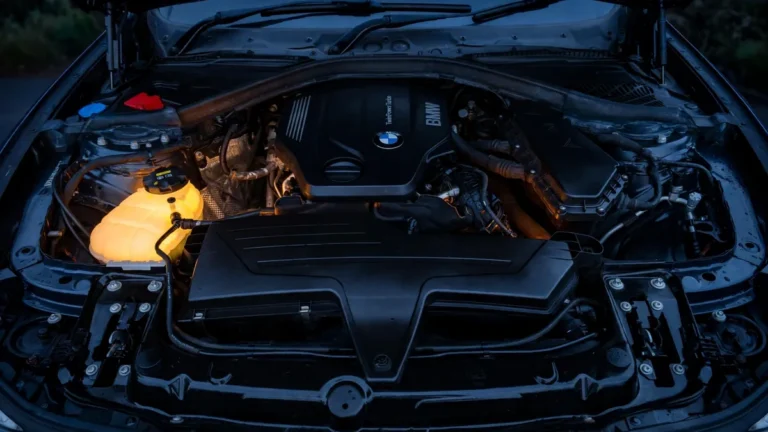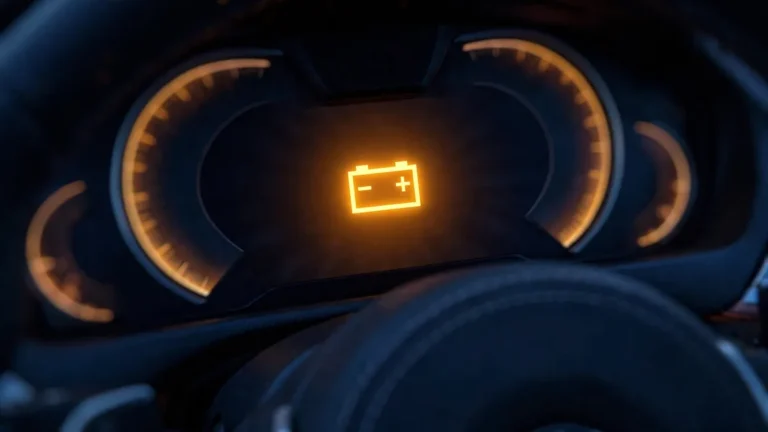

BMW 3 Series Battery Keeps Dying? How to Find the Hidden Drain
A dead battery once is bad luck; every few days is a pattern. When your bmw 3 series battery keeps dying no matter how many times you jump it, the battery is usually the victim, not the cause. Something is either killing it while parked (a parasitic drain), starving it while you drive (a charging fault), or the battery was already on its last legs long before you noticed.
Three related problems, three different articles: a “battery discharge” message on the dash is covered in our increased battery discharge warning guide. A battery that dies within weeks of replacement usually just needs registration. This article owns the full recurring-dead-battery workup: ranked causes, a symptom finder, the definitive parasitic-draw test, and real fix costs.
The short answer
If your bmw 3 series battery keeps dying, the battery is usually the victim, not the criminal. Likely causes: an aging battery, too many short trips, a parasitic drain from a module that never sleeps, or a replacement that was never registered. One multimeter test — car fully asleep, under 50 mA — identifies the culprit in about 30 minutes.
- What “keeps dying” actually means
- The 5-minute triage
- The 6 most likely causes, ranked
- Which pattern is yours?
- The parasitic-draw test, step by step
- Fuse-pull isolation
- What it costs to fix
- Still dies after all this?
- Keeping it from coming back
What “keeps dying” actually means — and what it doesn’t
There’s an important distinction hiding inside the phrase “battery keeps dying.” A battery that died once and won’t hold a charge again is usually just done. The real mystery is the battery that recovers after a jump or a charge, works for days, then dies again — repeatedly. That means energy is leaving faster than it should, either while you drive (undercharging) or while you sleep (parasitic drain). Crucially, it means buying a new battery may not help at all: a faulty component drains the new battery just as fast as the old one. The symptom finder below sorts your case into one of four patterns — start there if you’re unsure which problem you have.
The 5-minute triage: do these checks before you spend anything
Before spending anything, run this five-minute checklist:
- Dead right now? Get moving with our BMW 3 Series jump-start guide — you jump from the under-hood terminals, not the trunk battery.
- Move the key away from the car. On Comfort Access cars, a fob stored close by (a hook by the garage door) can keep waking the car. Park the fob well away overnight as a free test.
- Unplug everything — chargers, dashcams, radar detectors, trackers in 12V sockets or the OBD port. Aftermarket accessories are a classic drain source (AUTODOC reports 20–1000 mA).
- Check for stuck lights — glovebox, trunk, vanity, map. One that never turns off flattens a battery in a day or two; trunk and glovebox lights are repeat offenders.
- Lock the car — even in your own garage — so the modules begin their shutdown sequence.
- Read the battery’s age from its date-code sticker. At 4–5 years old it’s a leading suspect regardless of everything else.
If the triage reveals nothing, don’t replace parts yet — the sections below tell you what to test, in what order.
The 6 most likely reasons your BMW 3 Series battery keeps dying, ranked
Ranked by how often each turns out to be the answer on the 3 Series:
| # | Cause | Likelihood | Telltale clue | Fix |
|---|---|---|---|---|
| 1 | Aging battery (4–5+ years) | Very high | Slow cranking even when freshly charged; dies faster in cold | Replace + register |
| 2 | Short-trip pattern | High | Only driven a few miles at a time; recovers after a long highway drive | Longer drives / smart charger |
| 3 | Parasitic drain — Comfort Access handles, IBS, telematics, stuck module, aftermarket accessory | High | Dead after sitting 2–4 days; shifter light stays on; a door handle feels warm | Multimeter test → fuse-pull → repair the circuit |
| 4 | Unregistered replacement battery | Medium-high | Brand-new battery dies within weeks; false warnings | Register it — see the registration guide |
| 5 | Alternator / diode fault | Medium | Dies even after long drives; drain returns only after the ignition cycles | Alternator test / replacement |
| 6 | Key kept near the car | Low, free to test | Car seems to wake overnight in home garages | Store the fob far from the car |
Confidence labels: the 4–5-year lifespan comes from BMW-owner guides (BMWInsights, 2026). Comfort Access handles as a top culprit (~125–200 mA) comes from AUTODOC’s F20 dataset — model data, not a 3 Series factory spec. The ~40 mA sleeping figure is the most quoted in BMW-STEP-aligned community guidance.
Which pattern is yours? Match your symptom to the test path
Four patterns cover nearly every recurring-dead-battery case. Pick yours — each tab gives the ordered test path:
- Triage above first — unplug accessories, move the key away, lock the car, check for stuck lights.
- Check battery age. 4–5+ years old makes it suspect number one; a parts-store load test confirms it in minutes.
- Run the parasitic-draw test (below) — the definitive answer for “dies while parked.”
- Draw high? Do fuse-pull isolation (below). Usual suspects: Comfort Access handles (feel for warmth), the IBS sensor, telematics, or a module that never sleeps.
- Suspect the charging system, not a drain. A long drive should fully recharge a healthy battery.
- Check charging voltage — roughly 13.5–14.5 V at the battery with the engine running (varies; a sanity check, not a spec).
- Suspect the IBS (on the negative cable). A faulty IBS misreports state of charge and can prevent proper charging.
- Test the alternator for diode leakage. Fingerprint: the drain disappears when you disconnect and reconnect the battery, and only returns after the ignition cycles on again.
- Was it registered? The number-one cause of “new battery keeps dying.” An unregistered battery gets the wrong charging strategy and can be ruined within weeks — see the registration guide.
- Registered? Run the parasitic-draw test. A new battery doesn’t fix a drain — the faulty component kills it just as fast.
- Confirm the right type. Most modern 3 Series need an AGM battery of the correct capacity.
- Test the battery first. Cold cuts available capacity — a battery merely weak in summer is dead in winter. At 4+ years old, get a proper load test.
- Battery passes? Run the parasitic-draw test. A small drain survivable in summer turns fatal when cold halves your margin.
- Parked outside? A smart trickle charger during cold snaps is cheap insurance — as is driving 2–3 times a week for 20+ minutes.
The parasitic-draw test: the definitive 30-minute procedure
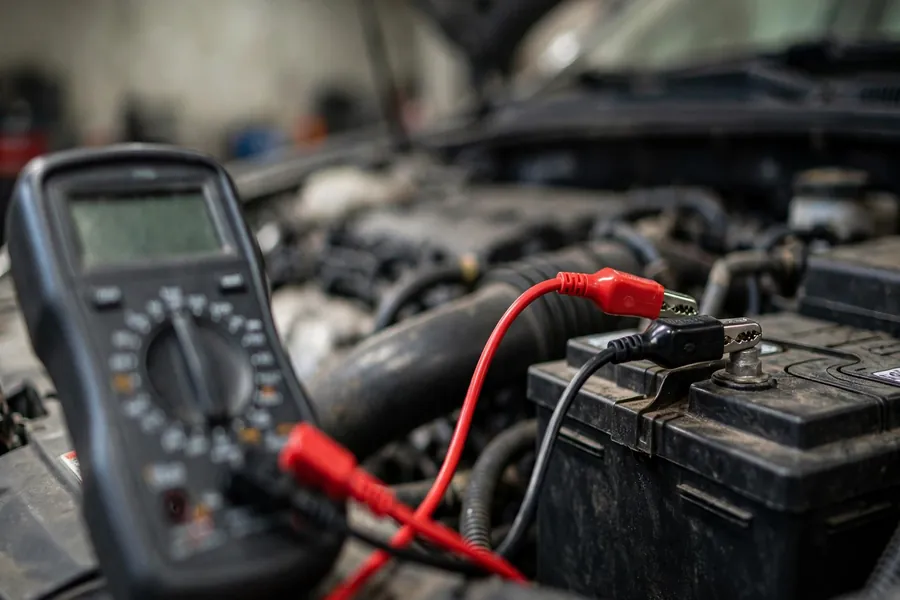
This test is the answer: it measures exactly how much current your 3 Series pulls while fully asleep.
Safety first. Wear eye protection; batteries can vent hydrogen — no sparks or flames nearby. Disconnect the negative cable first, reconnect it last. Expect some warning lights and reset adaptations (windows, steering angle, presets); most clear after a short drive. Never probe airbag wiring — this test only touches the battery terminals. If you’re not comfortable, pay a shop for the diagnostic.
- Prep the car. Turn everything off, remove the fob from the car, unplug all accessories. Open the trunk (the battery lives there on most 3 Series) and manually latch any open doors with a screwdriver so the car thinks they’re closed. Disable the trunk light if you can.
- Set up the multimeter for current. Move the red lead to the meter’s 10A/20A input (not the mA input — starting on the mA range can blow the meter’s fuse) and select DC amps.
- Connect in series on the negative side. Disconnect the negative battery cable. Touch one probe to the negative battery post and the other to the disconnected cable, so all current flows through the meter.
- Wait for sleep — about 16 minutes. Connecting the meter wakes the car’s modules. Leave everything alone and let the car fall fully asleep (~16 minutes in BMW community testing; allow up to 30–60 for heavily optioned cars).
- Read the number. A sleeping 3 Series should draw under 50 mA — the pass/fail line quoted across BMW community and STEP-aligned guidance, with ~40 mA the figure most often cited for a healthy sleeping car. (A range, not a factory spec: some sources use 25–50 mA, others flag anything over ~60 mA.) Solidly above that — 100 mA, 200 mA, an amp or more — is a confirmed parasitic drain.
- Sanity-check with the shifter light. If the shifter’s gear indicator light is still on, the car is awake — your reading isn’t valid yet. Wait longer.
Why start on the 10A input? A waking car can briefly pull several amps — starting on the milliamp range can blow the meter’s fuse. Once the car is asleep and the reading is small, switch to mA for precision, then wait for sleep again, since switching wakes things up.
If the reading is under 50 mA, you do not have a parasitic drain — look at battery age, charging system, or the “still dies” section below. If it’s over, the next section finds the guilty circuit.
Fuse-pull isolation: finding the guilty circuit
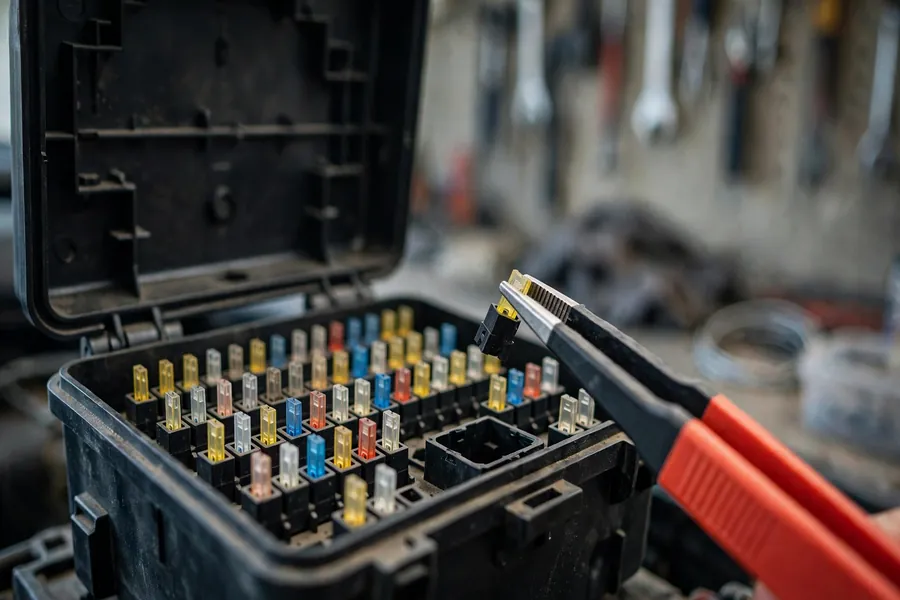
With a confirmed drain, pull fuses one at a time while watching the meter. When the reading drops, the last fuse you pulled feeds the problem circuit.
- Keep the meter connected in series exactly as in the test above, with the car fully asleep and the drain visible.
- Open the fuse boxes (glovebox and trunk on most 3 Series; the owner’s manual shows them) without disturbing the car’s sleep state.
- Pull fuses one at a time, watching the meter after each. Smaller fuses first, big main fuses last. Don’t forget relays — stuck relay contacts can drain too.
- When the draw drops back under ~50 mA, you’ve found the circuit. Note the fuse number.
- Identify what’s on that fuse from the fuse diagram in the owner’s manual or fuse-box cover. Common hits: Comfort Access, telematics/navigation, interior lighting, climate control, the IBS circuit.
- Inspect the components. Comfort Access: feel each door handle — a faulty one often runs warm from an internal short. Lights: verify they actually turn off. IBS: check the sensor and wiring on the negative cable.
- Re-test after the repair to confirm the draw is gone — then re-check the battery, since weeks of draining shorten its life.
Shortcut: if your 3 Series has Comfort Access and one door handle feels warm ~30 minutes after locking, you’ve likely found your drain before pulling a single fuse — faulty handles are the most reported parasitic-drain source in BMW owner data (reported draw 125–200 mA, AUTODOC dataset).
What it costs to fix a recurring dead battery
Costs depend on the culprit — which is exactly why the test-first approach saves money. US-market bands:
| Fix | DIY | Independent shop | Dealer |
|---|---|---|---|
| New AGM battery + registration | Battery cost only | $200–$300 (~$100–$200 less than dealer) | $300–$400+ incl. registration |
| Parasitic-drain diagnosis | $0 (your multimeter + an hour) | $150–$300 — often credited toward repair | Above indie rates; confirm rate first |
| Comfort Access handle replacement | Used handle ~£80–150 (UK parts data) | Parts + 1–2 hrs labor | Get a quote |
| IBS sensor cable | Parts only | Parts + ~1 hr labor | Get a quote |
| Alternator replacement | Heavy DIY | Get a quote | Get a quote |
| Smart trickle charger (prevention) | $40–$100 | — | — |
Replacing the battery first and diagnosing second is the expensive mistake — the draw test is free DIY or $150–$300 at a shop.
“Everything tests normal, but it still dies”
When the multimeter says innocent: (1) the battery is worn out — resting voltage can look fine while capacity is gone, so get a proper load test; (2) the drain is intermittent — a module waking randomly at 3 a.m. won’t be caught in 30 minutes, which is when a shop’s overnight current-logging earns its fee; (3) the car undercharges while you drive — alternator or IBS faults don’t show in a parked test; (4) the replacement was never registered (see the registration guide). If you’ve worked this list, ask a shop specifically for a parasitic-draw diagnosis — not just “a new battery.”
See the BMW 3 Series complete guide and the troubleshooting hub for the rest of our diagnostics.
Keeping it from coming back: 7 habits
- Drive it properly: 2–3 times a week for 20+ minutes. Repeated 5-minute trips never fully recharge.
- Lock the car every time — even in your own garage — so modules shut down on schedule.
- Unplug accessories when you park; dashcams and chargers are self-inflicted drains.
- Store the fob away from the car overnight with Comfort Access.
- Use a smart maintainer for cars that sit weeks at a time or through winter.
- Replace at 4–5 years on principle — BMW electronics punish marginal voltage.
- Always register a new battery (AGM for AGM) — see the battery registration guide.
Frequently asked questions
By David Keller for BMW Guidebook. Synthesized from BMW owner-community testing guides (Bimmerforums), STEP-aligned community figures for sleep current, and BMW-owner references (AUTODOC, BMWInsights, Gulf Euro Clinic). Milliamp thresholds are community/sourced ranges, not factory specs; costs are US-market unless labeled otherwise. Last verified: September 2026.