BMW 3 Series Oil Leaks: Find Yours Before It Shreds the Belt
A BMW 3 Series oil leak is less a question of if than where. Across the E90, F30 and G20 generations, two gaskets account for most leaks: the oil filter housing gasket (OFHG) and the valve cover gasket (VCG) — the oil pan gasket runs a distant third and is misdiagnosed more often than it actually fails. The part most owners miss: the same leak means very different things by car. On an E90, an ignored OFHG leak can drip onto the serpentine belt, shred it, and let the belt get pulled into the engine.
This guide is a leak locator first and a repair-cost reference second: a symptom-by-location diagnostic, deep dives on the three main leak points, generation-by-generation leak profiles, and realistic US repair costs by channel — dealer, independent specialist and DIY. It pairs with our used 3 Series buying guide (leaks are a top inspection item), the 3 Series reliability record by model year, and the BMW 3 Series oil change interval guide.
The short answer
A BMW 3 Series oil leak is almost always one of two things: the oil filter housing gasket (oil at the front) or the valve cover gasket (burning oil smell). On an E90, fix an OFHG leak within days — oil on the belt can shred it and destroy the engine. Typical costs: $400–$700 at an independent shop, $600–$1,000 at a dealer, under $160 in parts DIY. The oil pan gasket is the expensive one ($1,200–$1,800+ at an indy) but rarely the real culprit.
In this guide
- Why 3 Series engines leak: the design story
- Find your leak: location → source → urgency
- Oil filter housing gasket: the #1 leak (and the E90 belt danger)
- Valve cover gasket: the burning-smell leak
- Oil pan gasket: expensive — and often misdiagnosed
- Leak profiles by generation: E90 vs F30 vs G20
- Repair costs: dealer vs independent vs DIY
- What happens if you ignore it
- The bottom line
- Frequently asked questions
Why 3 Series engines leak: the design story
BMW 3 Series engines do not leak because they are poorly built — they leak because of where things sit and what they are made of. Four design realities explain almost every leak you will ever find:
- The oil filter housing sits low on the front of the block — above the serpentine belt. The drive belt runs right underneath the housing, so a weeping gasket becomes a belt-contamination problem. On N52/N54/N55 and N20 engines, the gasket sealing the housing to the block is a thin rubber profile gasket that, as BimmerWorld documents, shrinks and turns hard and brittle with age and heat cycles.
- The OFHG is a high-pressure seal. Unlike a valve cover gasket that holds back splashing oil, it sits in the pressurized oil circuit — FCP Euro’s procedure guide notes an OFHG leak is a high-pressure leak, so it worsens quickly and can rob the engine of lubrication.
- The plastic era changed the failure mode. Older BMWs used aluminum or magnesium valve covers; the N20 switched to a composite (plastic) cover, and the B46/B48 moved the oil filter housing itself to plastic. Plastic does not just seep — it warps and cracks, so the fix is often the whole component, not just the gasket.
- Most of these cars are in the leak window right now. The bulk of 3 Series on US roads sit between 60,000 and 120,000 miles — exactly when rubber gaskets have absorbed a decade of heat cycles.
Find your leak: location → source → urgency
Pick where you are seeing (or smelling) oil. Each panel names the likely source, its urgency, and what to check next — and if more than one fits, work in order: upper-engine leaks run down and disguise themselves as lower ones.
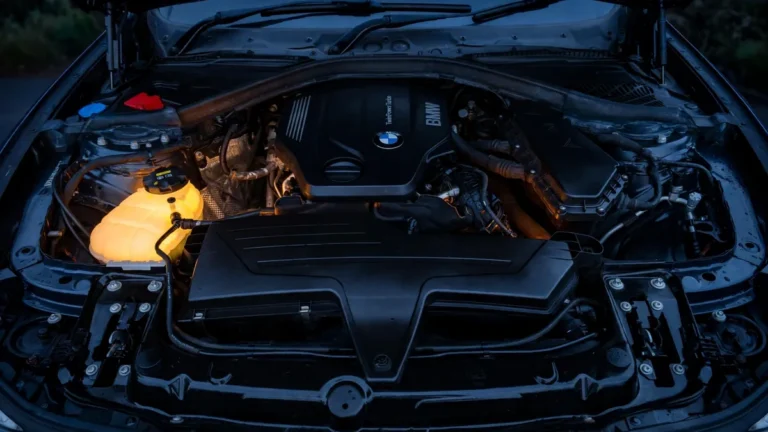
Oil at the front of the engine — oil filter housing gasket. FCP Euro: look for oil residue toward the front of the motor — the timing cover is usually coated in oil when the OFHG fails. On B46/B48 cars, the plastic housing itself may be cracked.
- Likely source: oil filter housing gasket (N52/N54/N55/N20); cracked plastic housing (B46/B48).
- Urgency: HIGH. Oil drips onto the serpentine belt below. On E90/F30 cars, fix within days — see the belt-shred danger.
- Next step: flashlight-check the housing-to-block seam; see if the belt looks damp or glazed.
Burning oil smell, oil along the top of the engine — valve cover gasket. The fingerprint: hot-oil smell through the vents when you stop, plus a wet, greasy valve-cover perimeter. FCP Euro: frequent top-ups, burning smell as the engine heats up, an oily engine bay — and eventually oil in the spark plug wells causing misfires.
- Likely source: valve cover gasket. On 2012–2015 F30 (N20/N26), suspect the composite cover itself — it cracks, and BMW recommends replacing the whole assembly.
- Urgency: MEDIUM. Fix within weeks; top off the oil meanwhile. Oil weeping onto the exhaust manifold is a fire risk over time.
- Next step: inspect around the back of the valve cover — leaks often start at the rear, out of sight.
Drips under the car — confirm it is really the oil pan. Oil on the driveway or a soaked splash shield feels like an oil pan gasket — but on E90/F30 cars it very often is not. A leaking oil filter housing gasket sends oil running down into the top of the oil pan, where it looks exactly like a pan leak.
- Likely source: OFHG runoff — check the front of the engine first; genuine oil pan failure is the fallback.
- Urgency: LOW–MEDIUM. Diagnose before you spend — the pan job requires dropping the subframe.
- Next step: clean the engine, drive it, re-inspect the housing-to-block seam before authorizing a $1,200+ repair.
Oil at the back of the engine or bellhousing. Three usual explanations, only one expensive: valve cover gasket runoff and the N52’s Valvetronic/eccentric-shaft sensor seals — all far cheaper than a rear main seal.
- Likely source: valve cover gasket runoff or sensor seals first; rear main (crankshaft) seal second.
- Urgency: MEDIUM. The cover and seals are accessible; a rear main seal means the transmission comes out.
- Next step: have an independent BMW specialist rule out the top-of-engine sources on a lift before anyone quotes a rear main seal.
Oil and coolant mixing — act fast. On engines with an oil heat exchanger, the oil filter housing gasket separates oil and coolant passages — a failed gasket cross-contaminates both, as does a cracked B46/B48 housing. Signs: milky residue under the oil cap, oily film in the expansion tank, coolant vanishing with no external drip.
- Likely source: oil filter housing gasket (oil-cooler-equipped cars) or cracked plastic OFH (B46/B48).
- Urgency: HIGH. Coolant in the oil destroys bearings; oil in the coolant fouls the cooling system.
- Next step: if contamination is confirmed, stop driving and tow it in — a flush plus gasket/housing beats an engine rebuild.
Oil filter housing gasket: the #1 BMW 3 Series leak
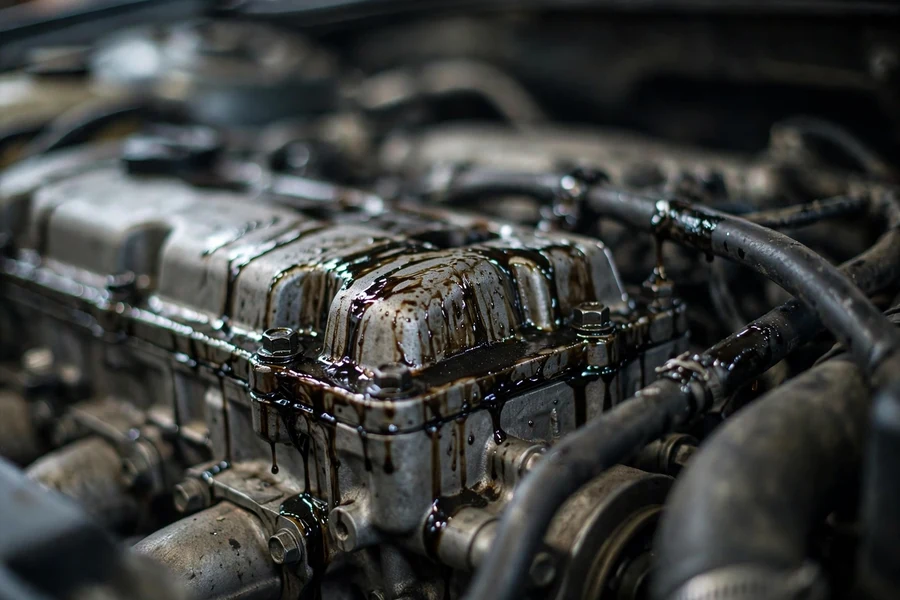
If you learn one thing about BMW oil leaks, make it this: the oil filter housing gasket is the single most common leak on every 3 Series generation with a BMW-built engine. The housing bolts to the side of the block and routes oil through the filter (and, on many cars, an oil-to-coolant heat exchanger). Its gasket is a thin rubber profile seal that hardens and shrinks after years of heat cycles — starting as a weep at the housing-to-block seam and becoming a steady drip down the front of the engine.
On N52, N54, N55 and N20 engines, the fix is the gasket itself: three E-Torx bolts hold the housing to the block, and the job is a few hours for a shop — longer on turbo cars, where the intake manifold crowds access. Replace the oil cooler gasket and oil pressure switch while it is off — same spot, same failure schedule.
⚠️ The E90 belt-shred danger: why this gasket is not optional. The oil filter housing sits directly above the serpentine belt: leaking oil drips onto the belt, the belt degrades and shreds — and then the real damage starts. As BimmerWorld documents, the shredded belt can wrap around the crankshaft and get drawn through the crankshaft seal and into the crankcase; FCP Euro puts it bluntly — ignoring this gasket can lead to the serpentine belt being ingested by the motor, resulting in catastrophic failure. A $15 gasket becomes a new engine. If you own an E90 and see oil at the front of the engine, treat it as urgent: fix within days, keep the oil topped off, and replace the belt and tensioner if they show oil contamination.
The B46/B48 difference. On the 2017+ F30 330i and all G20 330i models, the oil filter housing itself is plastic, and it cracks. BimmerWorld notes the internal gasket flange can crack or snap, letting a gasket fall out of position — at which point a new gasket alone will not fix it; the whole housing assembly must be replaced. BMW has revised the design several times since 2017. The intake manifold has to come off, which is why one G20 330i owner reported 7 hours of labor at an independent shop.
Valve cover gasket: the burning-smell leak
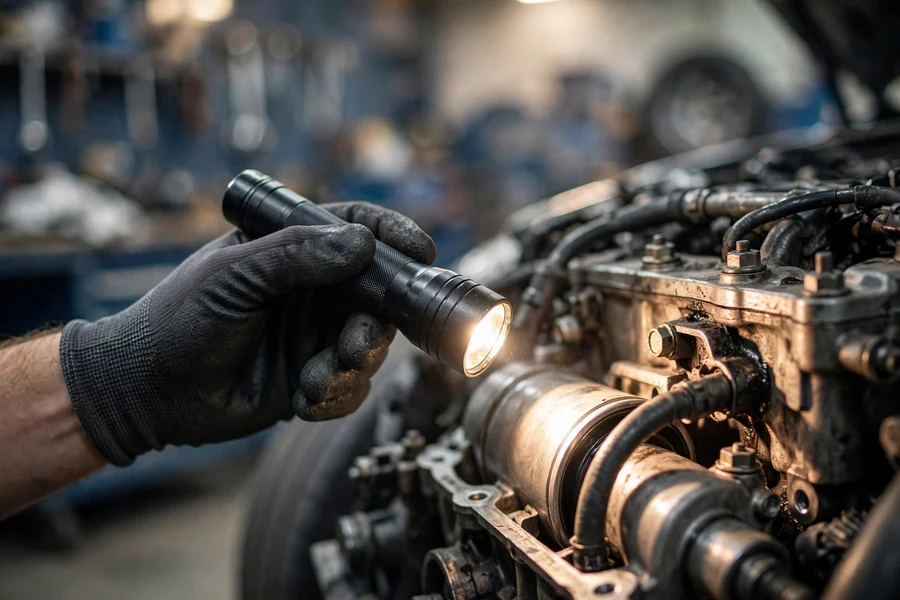
The valve cover gasket seals the top of the cylinder head. When it weeps, oil runs onto the exhaust manifold below — which is why the signature symptom is a burning-oil smell through the cabin vents when you stop, often long before a drip reaches the driveway. Left alone, oil pools in the spark plug wells and causes misfires; FCP Euro warns it can eventually result in fire inside the engine bay. The fix: pull the cover, replace the gasket and spark-plug tube seals, reinstall — but it is a half-day job, about 5 hours the first time, with the cowl, coils, Valvetronic motor and wiring harness all coming off to reach the cover.
E90 / N52: early N52 engines used a magnesium valve cover with one-time-use aluminum bolts that break; the updated N52N switched to a plastic cover with encapsulated bolts. Either way, the gasket itself is the usual fix, quoted at roughly $600–$1,000 (FCP Euro). Also check the Valvetronic motor gasket and eccentric-shaft sensor seal — they weep on the same schedule.
F30 / N20 and N26: this is where “just the gasket” stops being the answer. The N20’s valve cover is composite plastic — it warps, turns brittle and cracks after thousands of heat cycles, typically around 100,000 miles. BimmerWorld reports BMW recommends replacing the complete assembly rather than just the gasket. A second failure mode: the plastic tabs holding the PCV valve snap off, making cover replacement the proper fix regardless of gasket condition. The burning-oil-at-the-drive-thru smell is the tell.
G20 / B48: the B48 valve cover follows the same composite playbook, and weeping is appearing on higher-mileage examples. The pattern is not yet as well documented as the N20’s — treat any G20 valve-cover diagnosis as provisional — but the same rules apply: inspect the cover for cracks before assuming a gasket-only fix.
Oil pan gasket: expensive — and often misdiagnosed
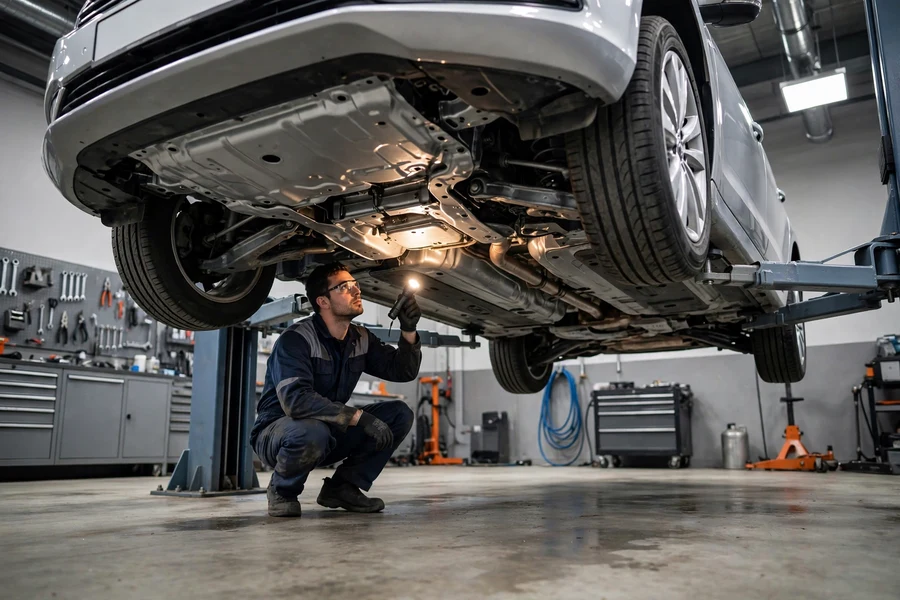
The oil pan gasket seals the pan to the bottom of the block, and replacing it is one of the most labor-intensive routine repairs on a 3 Series: the engine must be supported while the front subframe is dropped — and on xDrive cars the front differential and both axles come out too. Book time runs around 8 hours; owner-reported independent-shop bills for E90/F30 cars cluster around $1,200–$1,800, dealers higher. The gasket itself costs around $100; you are paying for access.
Here is the catch that saves people real money: on E90 and F30 cars, a diagnosed “oil pan gasket leak” is frequently not the oil pan gasket at all. Oil from a leaking oil filter housing gasket runs down the front of the block and collects on top of the oil pan, where it looks exactly like a pan leak. Specialists check the OFHG seam first — every time — and only authorize the subframe-drop job after the upper leaks are ruled out. If a shop quotes you an oil pan gasket without cleaning and re-inspecting the front of the engine, get a second opinion.
Leak profiles by generation: E90 vs F30 vs G20
The leak changes with the hardware — use this table to keep the diagnosis matched to your car’s generation.
| E90 (2006–2011) | F30 (2012–2018) | G20 (2019–present) | |
|---|---|---|---|
| Flagship leak | OFHG on N52/N54/N55 — the belt-ingestion cars | OFHG on N20/N55; plastic OFH housing on B46/B48 (2017+) | Plastic oil filter housing assembly (B48) |
| Signature danger | Oil drips on serpentine belt → belt shreds → pulled through crank seal into the crankcase | N20 composite valve cover cracks (~100k miles) — cover assembly, not just gasket; same belt risk on N20/N55 | Housing’s internal gasket flange cracks → whole-housing replacement; intake manifold must come off |
| Valve cover | Gasket weeps; early N52 magnesium cover has one-time-use aluminum bolts that break | Composite cover: replace the full assembly with gaskets and hardware per BMW’s recommendation | Weeping appearing on higher-mileage cars; pattern still forming |
| Oil pan gasket | Rarely the real culprit — usually OFHG runoff | Same misdiagnosis trap; xDrive adds differential/axle labor | Too early for a clear pattern |
| Typical leak-onset mileage | 60,000–100,000 miles | 70,000–120,000 miles | 80,000+ miles (provisional) |
Repair costs: dealer vs independent vs DIY
There is no BMW-published price list for these jobs: the figures below combine owner-reported invoices, specialist procedure guides and the BMW Insights oil-leak cost guide. Ranges are wide because labor rates vary enormously by region — $100/hr at a rural independent vs $200+/hr at a metro dealer changes every number. Treat them as planning figures, not quotes.
| Repair (typical US range) | Dealer | Independent specialist | DIY parts |
|---|---|---|---|
| OFHG gasket — N52/N54/N55/N20 (E90, early F30) | $600–$1,000 | $400–$700 | $50–$150 |
| Valve cover gasket — N52 (E90, gasket-only) | $600–$1,000 | $400–$700 | $70–$160 |
| Valve cover assembly — N20/N26 (F30, complete cover per BMW’s recommendation) | $900–$1,500 | $600–$1,100 | $150–$450 |
| Oil pan gasket — RWD E90/F30 (subframe drop; xDrive higher) | $1,800–$2,600 | $1,200–$1,800 | $100–$250 |
| OFH housing assembly — B46/B48 (2017+ F30 330i, G20; whole housing, not just gasket) | $2,000–$3,000 | $1,200–$2,500 | $400–$800 |
Three things move you within these bands. Region matters most — shop rates are the whole ballgame. While-you-are-in-there work adds cost but saves a second teardown: oil cooler gasket and pressure switch with the OFHG, tube seals with the VCG, a new belt and tensioner if oil-contaminated. And get a second opinion on an oil pan quote ($100–$200) — it regularly saves $1,000 when the real leak is the $15 OFHG gasket.
What happens if you ignore it
Small seeps can be monitored; real leaks cannot be wished away. The escalation ladder, roughly in order:
- Belt ingestion (E90/F30 OFHG): the catastrophic one: oil on the belt → belt shreds → fragments wrap the crankshaft and get pulled through the crank seal. A gasket job becomes an engine-out repair.
- Oil starvation: the OFHG leaks under pressure — the level can drop faster than you expect between checks, accelerating bearing wear before any warning appears.
- Misfires and fire risk (VCG): oil pooling in the spark plug wells causes misfires; oil cooking on the exhaust manifold is a genuine fire hazard on N20 cars with cracked covers.
- Cross-contamination: on oil-cooler-equipped engines and cracked B48 housings, oil and coolant mix — coolant in the oil destroys bearings.
- Sensor and belt collateral: oil-soaked belts, tensioners and connectors fail early, adding line items to the bill.
- Resale value: a weeping engine bay is the first thing a specialist spots on a pre-purchase inspection — it costs you in negotiation.
The practical rule: seepage you can watch, drips you fix, and anything involving the belt path or coolant mixing gets fixed now. Check your oil level weekly while a leak is active.
The bottom line
Most BMW 3 Series oil leaks are a two-gasket story: check the oil filter housing gasket for oil at the front of the engine, and the valve cover gasket when you smell burning oil — and on N20 and B48 cars, be ready for the cover or housing itself to be the failed part. E90 owners carry the extra rule: never let an OFHG leak sit, because the belt underneath it is the fuse to a much bigger explosion. Shopping rather than fixing? Make leak inspection part of your routine with the used 3 Series buying guide and check your model year in the 3 Series reliability record — or see the complete BMW 3 Series guide for the full picture.
Frequently asked questions
Leak patterns synthesize specialist procedure guides (FCP Euro, BimmerWorld), long-term owner reports, and forum consensus — not BMW-published data. Cost ranges are compiled from owner-reported invoices and specialist guides as of September 2026; regional labor rates move every figure, and the B48 oil filter housing and oil pan gasket figures carry medium confidence (~8-hour book time and real invoices skew much higher than some published guides suggest). G20 leak patterns are provisional. Last verified: September 2026.