
BMW Drivetrain Malfunction: What It Really Means and What to Do First
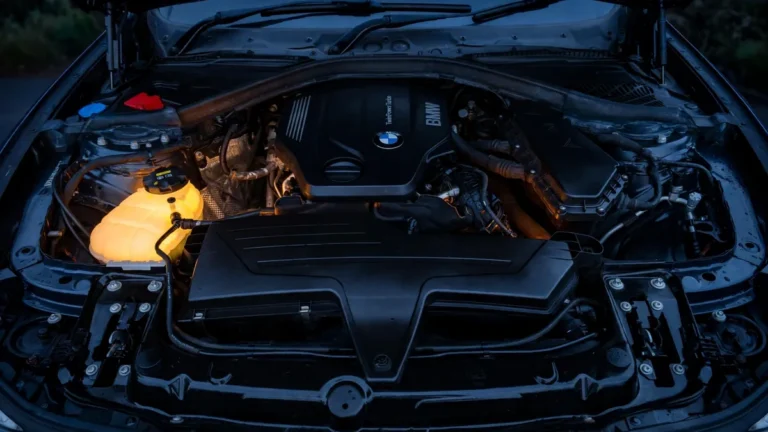
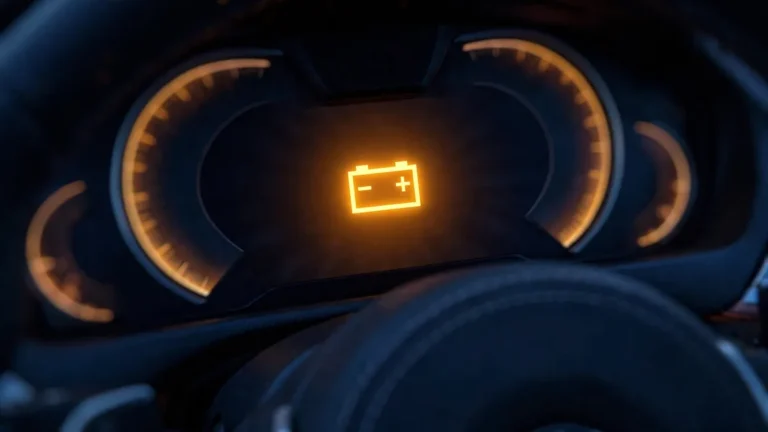
You are cruising along and the cluster suddenly throws a BMW drivetrain malfunction warning — usually telling you to continue at a moderate speed. It is the most misunderstood message BMW makes. Owners imagine a broken transmission or a dead engine, yet the warning is a catch-all: the computer detected something wrong in the engine, turbocharging system, transmission, or the sensors watching them, and it is telling you to calm down while it protects itself.
This guide does three things the thin Q&A pages ranking for this warning do not: it decodes what the warning means, maps the real cause clusters by engine — N20/N26 wastegate and VANOS, B46/B48 charge-pipe and sensors, N55 ignition — and gives you a symptom-to-cause finder to narrow it down before a shop touches the car. It lives in our complete 3 Series guide’s Troubleshooting family; the weak-battery trigger is covered in our battery keeps dying and increased battery discharge guides rather than rewritten here.
The short answer
A BMW drivetrain malfunction warning is the DME’s generic “powertrain fault detected” alert — not a diagnosis. The most common 3 Series triggers: a cracked charge pipe (boost leak), a worn N20 turbo wastegate, VANOS solenoid faults, ignition misfires, or a weak battery confusing the electronics. Car still smooth? Drive gently and book a BMW-specific scan within days. Shaking, flashing check-engine light, or major power loss? Pull over and stop.
In this guide
- What the warning actually means
- The first 10 minutes: safe to drive or pull over?
- Symptom finder: your symptom → likely cause
- Cause families by engine
- The weak-battery trigger
- Diagnostic and repair cost bands
- Urgent vs monitor: how to judge your case
- Frequently asked questions
What the warning actually means (and what limp mode does)
Your BMW’s DME constantly compares commanded values against measured ones — boost pressure, camshaft timing, ignition quality, system voltage. When the gap gets too big, it logs a fault, throws the “Drivetrain malfunction” message, and usually enters limp mode: reduced power and capped boost. The intent is always the same: protect the hardware, and get the fault diagnosed.
Three things this warning is not:
- Not a diagnosis. There is no “charge pipe sensor.” The DME names only the system it measured — underboost, plausibility, timing — never the part. The ECU “infers the leak from boost-pressure, plausibility, and airflow data” (Motronix). That is why a scan is non-negotiable.
- Not necessarily catastrophic. A faulty sensor, a cracked vacuum line, or low voltage can light the same warning as a damaged turbo.
- Not always about the drivetrain. Despite the name, engine-side faults are the most common triggers; actual transmission failure is comparatively rare.

The first 10 minutes: safe to drive or pull over?
The message is designed to be read while you are moving. Run this playbook in order:
- Ease off and assess. Reduce speed, cancel cruise control, avoid hard acceleration and high revs. The car is already protecting itself; don’t fight it.
- Read the car, not just the message. Engine smooth or shaking? Check-engine light steady or flashing? Smoke, burning smell, knocking, temperature spike? These divide “drive on gently” from “stop now.”
- One restart is allowed if it’s running smoothly. Pull over safely, switch fully off, wait 2–5 minutes, restart. If the warning returns, don’t keep restarting — drive gently to safety or a shop.
- Don’t ignore it for days. A self-clearing warning (common with charge-pipe cracks) still leaves freeze-frame data — but the fault is developing. Book the scan within days, not weeks.
| What you observe | Verdict | Why |
|---|---|---|
| Yellow message only, car runs normally | Drive gently, scan within days | Likely a transient sensor/plausibility fault |
| Reduced power but smooth | Drive to safety or a shop at moderate speed | Classic limp mode — controlled protection, not active damage |
| Engine shaking or rough at idle | Stop as soon as safe; minimize driving | Active misfire — unburned fuel can destroy the catalytic converter |
| Flashing check-engine light | Pull over and stop the engine | A flashing MIL means catalyst-damaging misfire happening now |
| Smoke, burning smell, knocking, temperature climbing | Stop immediately | Mechanical damage or fire risk — limp mode doesn’t cover these |
| Transmission stuck or won’t engage gears | Stop; arrange a tow | Gearbox protection mode — driving risks internal damage |
Don’t drive hard “to see if it goes away.” With a boost leak or misfire, full throttle is when the fault is worst.
Symptom finder: your symptom → likely cause family
The warning alone says almost nothing. The symptoms around it say everything. Pick the description that best matches your car — each panel maps your symptom to the most likely cause, the codes a scan would show, and your next step.
Likely cause: boost leak — cracked charge pipe.
- Fine at part throttle, flat on hard acceleration, hiss under load. The warning often clears on restart and returns on the next hard pull — the crack only vents under boost.
- Codes: 120308 or 30FF — underboost codes, never a “charge pipe” code.
- Next step: a boost-leak / smoke test first.
Likely cause: worn turbo wastegate (N20/N26).
- Cold-vs-hot test: a clack-clack at idle that fades warm is a worn wastegate bushing; a rattle that persists hot, or brings power loss, is worn past tolerance.
- Early rattle usually stores no code; once it becomes underboost: 120308, 30FF, or 123412 / 123432 on 2014+ cars.
- 2011–2013 cars: check the vacuum pressure converter and lines first.
Likely cause: ignition or fueling — coils, plugs, injectors.
- A stumble under load or lumpy idle. On N55 sixes, individual coil failure is a known mid-mileage pattern.
- Codes are cylinder-specific. Rule out aged plugs and coils first — the cheapest fix here.
- Note which cylinder; see if the fault moves when a coil is swapped. Shaking hard or flashing MIL? Stop.
Likely cause: sensor, software, or voltage.
- Car drives perfectly? Suspect a transient sensor reading, outdated DME software, or low voltage (battery section).
- The scan often shows plausibility codes, not hard failures. Example: a 2016 340i’s faults were fixed by a dealer software update (bimmerforums).
- Next step: a BMW-capable scan with freeze-frame data — within days, even if the warning cleared.
The DME has derated the engine.
- Sustained limp mode (120408): the DME saw something serious — underboost, VANOS faults (N26: P052B / P054B / P13C0 / P13C9), valvetronic faults (N55: 134F10), or fueling problems.
- 20A703 is a temperature derate — check coolant, not boost.
- Moderate-speed drive to safety, then a full scan. Don’t keep restarting to “reset” it.
Stop driving. This panel is the exception.
- Flashing check-engine light, strong vibration, smoke, burning or fuel smells, loud knocking, or a climbing temperature gauge — limp mode limits load; it cannot stop a misfire destroying a catalyst or a mechanical fault getting worse.
- Switch off and arrange a tow. Note what happened and when — “shaking at 70 mph, then the light flashed” helps the technician more than the warning text.
Cause families by engine
This is the flowchart nobody publishes: which faults actually cluster on which engines. The codes below are BMW-internal formats as reported by owners and specialists — real scan results, not manufacturer-published tables.
| Code family | What the DME measured | Engines where it clusters | Confidence |
|---|---|---|---|
| 120308 | Boost pressure too low | N20/N26, B48, N55 | High — specialist-documented |
| 30FF | Charge-air pressure too low | N20/N26, N55 | Medium-high — widely owner-reported |
| 121531 | Boost pressure below operating range | Any turbo engine with leak or sensor fault | Medium — owner-reported |
| 120408 | Switch-off as consequence (limp derate) | Any — the limp-mode derate itself | High — appears with other boost faults |
| 123412 / 123432 | Electric wastegate adaptation failed | B46/B48 | Medium — owner ISTA readouts |
| P052B / P054B / P13C0 / P13C9 | VANOS inlet/exhaust uncontrollable | N20/N26 | Medium — forum case clusters |
| 134F10 / 134F04 | Valvetronic adjustment range fault | N55 (and N52 on E90) | Medium — owner-reported |
| 213901 / 1FB101 / 213501 | Power management: battery startability, deep discharge | Any — low-voltage trigger | Medium — real owner scans; see the battery section |
N20/N26 — wastegate, VANOS, charge pipe.
- Wastegate wear (120308 / 30FF): flapper, shaft and bushing wear over heat cycles — first a rattle (diagnosed by ear, usually no code), later underboost with limp mode. 2011–2013 cars: check the vacuum pressure converter and lines first. 2014+ electric actuators need coding after replacement.
- VANOS solenoids (P052B / P054B / P13C0 / P13C9): simultaneous inlet and exhaust faults point to a common cause — check oil condition and specification first, then solenoids and cam sensors.
- Charge pipe: OE plastic cracks at the throttle-body coupler in the mid- to high-mileage window.
- Weak battery: see below — a 335i owner’s malfunction arrived with battery-discharge codes.
B46/B48 — charge pipe and sensors first.
- Charge pipe: the plastic-coupler pattern continues — B48 cars sit in “the mid-mileage window where the first crack tends to appear” (Motronix). Same signature: fine at light throttle, flat and hissing under load.
- Sensor plausibility: boost/pressure sensor or wiring faults throw plausibility codes with no mechanical failure.
- Electric wastegate adaptation (123412 / 123432): owner scans show adaptation faults on B-series engines — usually actuator or adaptation, not a dead turbo.
N55 — ignition, fueling, boost.
- Coils and plugs: individual coil failure is a known mid-mileage pattern — often the cheapest fix in this guide.
- Fueling: HPFP/injector weakness can present as misfire-like behavior under load.
- Charge pipe: the same plastic-coupler failure — inspect before any turbo diagnosis.
N52 (E90) — VANOS and valvetronic, no turbo involved.
- VANOS solenoids: the classic N52 limp-mode trigger — solenoids clog with oil debris; cleaning or replacing them is routine specialist work.
- Valvetronic: actuator power-supply faults (the 2A69/2A6A family) can put the car in limp — sometimes pointing at undervoltage, looping back to the battery.
B58 — robust, so suspect software, sensors, and voltage first.
- Genuine mechanical drivetrain failures are the least likely of any engine here.
- Software: a 2016 340i owner’s faults were resolved by a dealer software update (forum report). On old software, ask about I-level updates.
- Charge pipe, sensors, ignition: the plastic-plumbing pattern, sensor-plausibility faults, and coil wear behave as on the B48.
The weak-battery trigger (read this before buying parts)
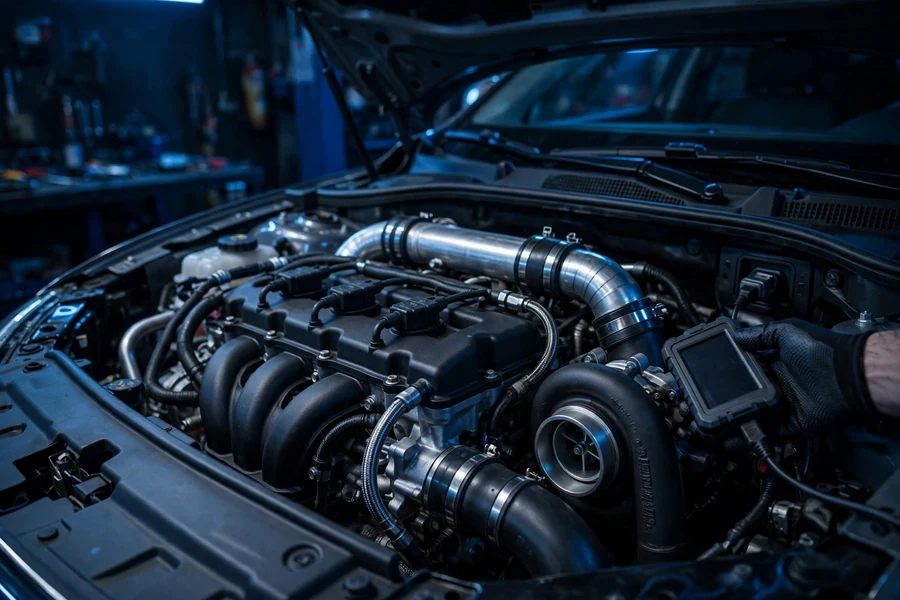
Here is the plot twist: a failing battery can trigger a drivetrain malfunction warning with no drivetrain fault at all. BMW’s electronics are voltage-sensitive — when system voltage sags, control modules report implausible signals and the DME logs power-management codes alongside the warning.
This is not theory. One 2014 335i owner’s malfunction arrived with 213901, 1FB101, and 213501 (power management / battery startability / deep discharge) — plus a valvetronic fault likely induced by the low voltage (f30.bimmerpost owner report). On bimmerforums, the first reply to a pile of wastegate codes was simply: “How old is the battery?” Voltage gets ruled out before parts get ordered.
Battery, not engine, is suspect when: the warning appeared after the car sat unused or a cold snap, alongside other electrical weirdness (start/stop disabled, slow cranking, random unrelated warnings); the battery is 4–5+ years old; or the scan shows power-management codes mixed with the drivetrain fault. Battery diagnosis lives in our dedicated guides:
- BMW 3 Series battery keeps dying — the 6 most likely causes, the parasitic-draw test, and fuse-pull isolation.
- BMW increased battery discharge warning — why low voltage throws unrelated-looking faults.
One caution specific to this warning: a replacement battery must be registered to the car (and coded if capacity or type changed). An unregistered new battery can itself cause voltage-management codes — bringing the drivetrain warning right back.
Diagnostic and repair cost bands
No single “official” cost table exists for a catch-all warning — prices vary by market, shop, and what the scan finds. The bands below are broad, owner-reported US ranges for sanity-checking quotes, and the diagnostic fee decides which band you are actually in.
| Item | Broad owner-reported band (US) | Notes |
|---|---|---|
| BMW-specific diagnostic scan | $100–$200 | Tells you which row you’re in; some shops credit it toward the repair |
| Ignition service (plugs + coils) | Low hundreds | Cheapest fix in this guide; labor varies with access |
| VANOS solenoids (pair, fitted) | Low-to-mid hundreds | Cleaning is cheaper than replacing; owners report both |
| Charge pipe (OE plastic or aluminum upgrade) | Mid hundreds | Aluminum costs more once, removes the cracking failure mode |
| Wastegate actuator / linkage repair | Mid hundreds to low four figures | Varies hugely between actuator-only, linkage kit, and full turbo work |
| Turbocharger replacement | Four figures | Get multiple quotes |
| Valvetronic hardware | High hundreds to four figures | Complex N55/N52 cases — diagnose with ISTA before approving |
| Transmission investigation | Four figures | Rare as a cause — a “transmission rebuild” quote here deserves a second opinion |
Two quote traps: the turbocharger misdiagnosis — a charge pipe or wastegate-linkage problem diagnosed as a dead turbo is the most expensive wrong answer here — and the clear-the-codes invoice: clearing codes without a diagnosis is not a repair.

Urgent vs monitor: how to judge your case
After the scan, your situation falls into one of two buckets:
- Monitor, then repair soon: warning appeared once or intermittently; car drives normally; codes point to boost-plausibility, a sensor, voltage, or outdated software. Drive gently, avoid hard acceleration, book a specialist within days.
- Urgent — repair now: sustained limp mode, shaking/misfire, flashing MIL, smoke, smells, temperature issues, or transmission engagement problems. Minimize driving or stop entirely (see the decision table).
One final judgment call: recurrence is the real severity scale. A warning that returns after every restart — or within days of being cleared — is no longer transient. It is a hard fault the DME keeps failing, and every recurrence is the car telling you the component is deteriorating.
Frequently asked questions
That is the playbook: read the car’s behavior in the first 10 minutes, narrow seven cause families to one or two with the symptom finder, confirm with a BMW-specific scan (voltage first), and match the cause to your engine. Keep this warning in our complete 3 Series guide’s Troubleshooting family — and if voltage is even slightly suspect, work through our battery keeps dying and increased battery discharge guides before spending a dollar on engine parts.
Cause mappings synthesize owner scan reports on f30.bimmerpost.com and bimmerforums.com (flagged inline where forum patterns, not documented faults), plus specialist write-ups from Motronix and M.S. Motor, verified live at write time. Codes are real reported formats — confirm each with an ISTA scan. Cost bands are owner-reported US ranges, not quotes. Last verified: September 2026.